
Dalit woman alleges sexual exploitation in Lucknow
Lucknow: A Dalit woman accused a man from Hardoi of sexually exploiting her under the pretext of marriage, filming obscene videos without consent and later blackmailing her. The accused also pressured the woman to convert to Christianity, threatening to circulate the videos when she demanded marriage. According to the victim, the incident dates back four years when she met the accused, Rakesh Kumar Pandey alias Avinash Pandey, at his mobile repair shop in Sarvodaya Nagar. Their acquaintance soon turned into an affair. She alleged that about three years ago, Rakesh took her to a relative’s house on the pretext of a birthday party, spiked her drink and sexually assaulted her while filming the act. Despite promising marriage, he kept delaying and eventually refused. When she insisted, he began to blackmail her with the videos and forcibly continued sexual exploitation. The woman said she severed all contact, but the harassment continued through calls from different numbers. Later, Rakesh allegedly revealed his Christian faith and demanded that the woman and her family convert. When she resisted, he sent her obscene videos and photos to friends and relatives and began demanding money and property. She also claimed to receive death threats. ACP Ghazipur (Indiranagar) Anindya Vikram Singh confirmed that a case was registered and efforts are underway to trace and detain the accused. Courtesy : TOI Note: This news is originally published on https://timesofindia.com/ and is for use by the non-military/non-commercial community, especially those in the human rights sector.
MP Khandwa gangrape-murder case: Limits of brutality crossed with tribal woman, questions raised on women’s safety system in the state

The Congress delegation met the family members of the deceased. The delegation included Shobha Ojha, Vijayalakshmi Sadho and MLA Jhuma Solanki. They demanded a compensation of Rs 25 lakh from the government and a government job for a family member. Bhopal. The incident of gangrape and murder of a tribal woman in Khalwa police station area of Khandwa district of Madhya Pradesh has shaken the entire state. This incident, which shames humanity, not only raises questions on law and order, but also exposes the government’s insensitivity towards the safety of the tribal society. The deceased woman was 45 years old and she was the victim of brutality by two youths of her own village – Sunil and Hari. The brutality was done by catching her on the way while returning from the field On Friday night, after a wedding ceremony in the village, the woman had gone to drop her relatives to the field. The farm was just half a kilometer away, but she did not return home overnight. The next morning, when the family went out to search for her, a woman told them that the victim was in the shed behind her house. On reaching there, she was found unconscious. On regaining consciousness, she told her son and daughter-in-law, “Something wrong has happened to me, now I will not survive… Sunil and Hari did it forcefully.” She died shortly after. Statement given before death, intestines and uterus were out According to the son and daughter-in-law of the deceased, the condition of the woman was very critical. There was excessive bleeding from the private part and the uterus was out. The postmortem report also confirmed that the intestines were out, the uterus was torn and the body was soaked in blood. According to the doctors, a hand or some object was inserted in the private part, which damaged the internal organs and caused death due to excessive bleeding. Police sent the accused to jail The police had taken both the accused into custody on Saturday itself and on Sunday night they were taken to the crime scene to confirm the crime scene. Both the accused were produced in the court on Monday and taken on two-day police remand. Khandwa SP Manoj Kumar Rai said that the clothes of the accused and the deceased and other evidence found from the crime scene have been sent for FSL investigation. It has also been said that this case will be registered in the category of marked crime and taken to the fast track court. According to Congress leaders, the victim could not even get first aid. The government ambulance did not come, and the family had to take the body to the district hospital in a private vehicle. This incident exposes the poor health system of the state. Congress team met the victim’s family The Congress delegation met the family of the deceased. The team included Shobha Ojha, Vijayalakshmi Sadho and MLA Jhuma Solanki. They demanded a compensation of Rs 25 lakh from the government and a government job for one member of the family. Shobha Ojha alleged that “the administration is trying to convert the rape case into murder. Looking at the condition of the crime scene, it is doubtful how the incident could have happened there.” Vikrant Bhuria targeted the government National President of Adivasi Congress and MLA Dr. Vikrant Bhuria said in a press conference in Delhi, “MP is becoming the rape and liquor capital. A 45-year-old tribal woman was gang-raped and her uterus and intestines were removed with an iron rod. This is not just murder, but a blot on the face of civilization.” Bhuria further said that “Prime Minister Modi should ensure before coming to Bhopal Mahila Sammelan on May 31 that how will the sisters be protected in Madhya Pradesh?” Courtesy : Ankit Pachauri, Hindi News
MP Khandwa gangrape-murder case: Limits of brutality crossed with tribal woman, questions raised on women’s safety system in the state

The Congress delegation met the family members of the deceased. The delegation included Shobha Ojha, Vijayalakshmi Sadho and MLA Jhuma Solanki. They demanded a compensation of Rs 25 lakh from the government and a government job for a family member. Bhopal. The incident of gangrape and murder of a tribal woman in Khalwa police station area of Khandwa district of Madhya Pradesh has shaken the entire state. This incident, which shames humanity, not only raises questions on law and order, but also exposes the government’s insensitivity towards the safety of the tribal society. The deceased woman was 45 years old and she was the victim of brutality by two youths of her own village – Sunil and Hari. The brutality was done by catching her on the way while returning from the field On Friday night, after a wedding ceremony in the village, the woman had gone to drop her relatives to the field. The farm was just half a kilometer away, but she did not return home overnight. The next morning, when the family went out to search for her, a woman told them that the victim was in the shed behind her house. On reaching there, she was found unconscious. On regaining consciousness, she told her son and daughter-in-law, “Something wrong has happened to me, now I will not survive… Sunil and Hari did it forcefully.” She died shortly after. Statement given before death, intestines and uterus were out According to the son and daughter-in-law of the deceased, the condition of the woman was very critical. There was excessive bleeding from the private part and the uterus was out. The postmortem report also confirmed that the intestines were out, the uterus was torn and the body was soaked in blood. According to the doctors, a hand or some object was inserted in the private part, which damaged the internal organs and caused death due to excessive bleeding. Police sent the accused to jail The police had taken both the accused into custody on Saturday itself and on Sunday night they were taken to the crime scene to confirm the crime scene. Both the accused were produced in the court on Monday and taken on two-day police remand. Khandwa SP Manoj Kumar Rai said that the clothes of the accused and the deceased and other evidence found from the crime scene have been sent for FSL investigation. It has also been said that this case will be registered in the category of marked crime and taken to the fast track court. According to Congress leaders, the victim could not even get first aid. The government ambulance did not come, and the family had to take the body to the district hospital in a private vehicle. This incident exposes the poor health system of the state. Congress team met the victim’s family The Congress delegation met the family of the deceased. The team included Shobha Ojha, Vijayalakshmi Sadho and MLA Jhuma Solanki. They demanded a compensation of Rs 25 lakh from the government and a government job for one member of the family. Shobha Ojha alleged that “the administration is trying to convert the rape case into murder. Looking at the condition of the crime scene, it is doubtful how the incident could have happened there.” Vikrant Bhuria targeted the government National President of Adivasi Congress and MLA Dr. Vikrant Bhuria said in a press conference in Delhi, “MP is becoming the rape and liquor capital. A 45-year-old tribal woman was gang-raped and her uterus and intestines were removed with an iron rod. This is not just murder, but a blot on the face of civilization.” Bhuria further said that “Prime Minister Modi should ensure before coming to Bhopal Mahila Sammelan on May 31 that how will the sisters be protected in Madhya Pradesh?” Courtesy : Ankit Pachauri, Hindi News
Devdasi daughter denied passport for not having father’s name — what happened next will break your heart
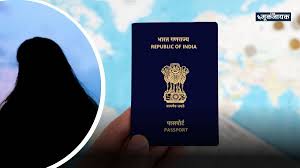
When denied a passport for not having father’s name, a Dalit woman recounts her painful journey within a broken system that punishes those born outside patriarchal norms. When denied a passport for not having father’s name, a Dalit woman recounts her painful journey within a broken system that punishes those born outside patriarchal norms. How many times do I have to prove my existence? How many forms do I have to fill out to explain why I don’t have a father’s name? Why does this system punish us even while pretending to give us a future, when we were born outside the rules of patriarchy? Since 2023, I have been humiliated while trying to get a passport, and in the process I have been caught in a trap of a question that haunts me daily: If the state does not acknowledge my existence, then who am I? In that one moment, I was mocked for not having a father’s name, and something broke inside me. I left that office defeated not just by the rejection of my passport application, but also crushed by the burden of being completely invisible. For the first time in my life, I felt erased. I cried uncontrollably on my way back—not for a piece of paper, but for the dignity that was taken away from me in that moment. I am not alone. This is not just my individual battle—it is a reflection of the larger systemic failures that continue to oppress marginalized communities. A system that continues to erase people like me—Dalit women and their children—whose existence is inconvenient to the social order. When I was selected for a PhD abroad, it was more than an academic achievement—it was a victory against a system that had long tried to silence people like me. I was ready to leave. But then the passport office stopped me. I was rejected not for lack of ability or merit, but because my mother, who was once a Devadasi, raised me alone. The Devadasi system, which is rooted in caste-based oppression, has devastated thousands of women in Karnataka. My mother, like thousands of others, was dedicated to the temple as a child—an act that stripped her of her autonomy. She was pushed into a life of servitude, denied the right to marry, and forced to serve the gods through religious rituals. Yet, she raised me with dignity, strength, and rebellion—working as a laborer to send me to school. I saw her resist silently, not breaking under the same burden that crushed so many others. The term Devadasi refers to an age-old practice where young girls were ‘married off’ to temples and forced to serve the deity. Though it was meant to honor the gods, over time the practice became exploitative. Devadasis faced poverty, sexual abuse, and social exclusion. Despite laws prohibiting the practice, more than 70,000 devadasis still survive in India today, according to a 2015 NHRC report. Research by Janshakti and NLSIU shows that more than 60% of their children drop out of school due to stigma, poverty, and bureaucratic neglect. In April 2023, I applied for a passport in Delhi, thinking I had my documents in order. I carried everything I thought the system wanted—Aadhaar, voter ID, education certificates, and a government-issued certificate proving my mother’s devadasi status. I had been in Delhi for over a year, working in youth programs and leading research in public education. My passport application should have been a normal process. But what ensued was a nightmare. The officer flipped through my file without much interest, until he reached the column for “father’s name.” She stared at him, then looked at me with disdain. “Everyone has a father,” she sneered. “Don’t talk like an illiterate.” People around me laughed. I stood silent, holding the proof of my existence and my mother’s struggle. The sting of their laughter was something I had never imagined. I explained that I was raised by my mother alone. I mentioned the Maharashtra High Court ruling that allows the mother’s name alone to be used in official documents. But no one paid attention. The officer rejected my application. “You can try, but it may be rejected in police verification,” she said. The verification officer, who initially seemed sympathetic, later reported a discrepancy—again, pointing to the blank column for father’s name. I appealed, sent emails, made rounds of offices. No one responded. Hours of waiting, pleading, and explaining were met with humiliation. To the system, I was not a human being—I was a problem. The burden of caste and patriarchy turned me into an administrative inconvenience. Though the officer eventually processed my application, he warned: “At your own risk.” And he was right. It was rejected at police verification. For the next two years, I physically and emotionally chased a document that was supposed to confirm my existence. I went to the Delhi PSK again and again, hoping someone would look beyond the blank column for father’s name and see a human being—one with credentials, purpose, and dreams. I filed appeals, wrote emails, made rounds of offices. Silence. After almost a year, I gave up and withdrew the application. Still, I was not ready to give up. In March 2025, I applied again in Bengaluru under the tatkal category. The last date to submit my scholarship documents was near, and without a passport, I would have lost my chance. This time, I was denied admission at the token counter itself. The officer—whose sole job was to issue tokens—had sealed my fate even before I reached the verification desk. When I said I didn’t have a father’s name, people around me laughed. Without any sympathy, the officer looked me in the eyes and said, “You should know your father’s name. Don’t talk like an illiterate.” My blood froze. The same laughter. The same shame. The same dismissal. After pleading with the token officer without success, I gave up and sat in a corner and talked to my sister—both of
Kerala: Dalit woman was made to sit in police station for 20 hours, given toilet water to drink, theft allegation turned out to be false – now delay in recording statement!
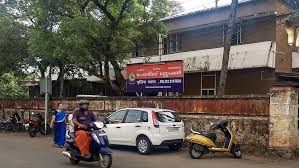
The voice of domestic help Bindu R, who was a victim of illegal detention and caste harassment at Perurkada police station, is now echoing across Kerala, the Chief Minister called the case unacceptable. Thiruvananthapuram: The process of recording the statement of Dalit woman Bindu R, who was a victim of illegal detention and mental harassment at Perurkada police station, is getting delayed. The reason for this is that the State Human Rights Commission (SHRC) has directed that the presence of a woman lawyer appointed by the District Legal Services Authority (DLSA) will be mandatory while recording the statement. After this direction, Crime Branch DYSP K.A. Vidyadharan has written a letter to the Secretary of Thiruvananthapuram DLSA demanding the appointment of a woman lawyer as soon as possible. The investigation of the case has been assigned to the Crime Branch DySP of Pathanamthitta as the SHRC had made it clear that since the case involved policemen serving in Thiruvananthapuram district, the investigation should be assigned to an officer from outside the district. According to sources, the SHRC has given directions to ensure that all legal procedures are followed and the rights and dignity of the victim are protected. Once Bindu’s statement is recorded, the investigating officer will begin examining documents from the Peroorkada police station. This will include examining the sentry report and other certified copies to find out if more policemen were involved in the case. These documents are expected to reveal the extent to which the police station staff abused their powers and intimidated Bindu. Bindu, who worked as a domestic help, was illegally detained and mentally tortured for about 20 hours on April 23 by her employer Omana Davis on false charges of theft. Following the incident, SI S.G. Prasad and ASI Prasanna Kumar of the Peroorkada police station have been suspended for their actions. Prasanna, who was handling the station’s General Diary (GD), is accused of aiding the illegal detention, making casteist remarks, and even making Bindu drink toilet water when she demanded drinking water. Prasad was suspended based on a report by the Assistant Commissioner of Special Branch. Though an FIR was lodged against Bindu, she was later released after the complainant admitted that the jewellery was found at home. Bindu approached the Chief Minister’s Office over the matter, but there, Chief Minister’s political secretary P. Sasi allegedly ignored her complaint. However, when the matter led to public outrage, Chief Minister Pinarayi Vijayan strongly condemned it, calling it “unacceptable”. This was the whole case Bindu, who is a domestic worker and hails from Chullimanoor, was accused by her employer of stealing a gold chain on April 23. Based on this complaint, the Perurkada police called her and called her to the police station. On reaching the police station, the victim repeatedly said that she was innocent, but the police did not listen to her. According to Bindu, a woman police officer took her to a room, made her remove her clothes and searched her. Then the police took her to her house and searched it too. During this time, she was not allowed to talk to the family, nor was she given food and water. Bindu told the media, “When I asked for water, a policeman said – ‘Go to the toilet and drink from there’.” Detained overnight, threatened to implicate daughters Bindu said that she was kept in the police station all night and the interrogation continued till the next morning. An FIR was registered and the police threatened her that if she did not admit to the theft, her minor daughters would also be implicated in the case. Later, when the house owner and her daughter visited the police station again, they said they had been ‘forgiven’. Some time later, the stolen gold chain was found in the house, and the complainant herself admitted that the allegation was false. Complaint ignored in CMO When Bindu, with the help of a lawyer, submitted a written complaint to the Chief Minister’s political secretary P. Sasi, she claims that Sasi neither read the complaint nor gave any assurance. “He said that such things happen and advised me to approach the court,” Bindu had said. However, later the CMO clarified that the police were directed to take action after receiving the complaint. But according to Bindu, she had also urged the CMO to register a case against the woman who had falsely accused her, which was rejected. Courtesy : Rajan Chaudhary, Hindi News
SHRC delays Dalit woman’s statement recording in Peroorkada custodial harassment case
Bindu was kept in illegal custody and mentally harassed for nearly 20 hours on April 23 after being accused of theft by her employer, Omana Davis. THIRUVANANTHAPURAM: The recording of the statement of the dalit woman, who was allegedly mentally harassed in Peroorkada police station, by crime branch (CB) will be delayed after the State Human Rights Commission (SHRC) stipulated that a woman lawyer deputed by the District Legal Services Authority (DLSA) should be present during the proceedings. Following this, Crime Branch DySP K A Vidyadharan has written to the secretary of Thiruvananthapuram DLSA urging a speedy appointment of a woman lawyer. Crime Branch Pathanamthitta DySP was given the investigation charge on the SHRC directive as the commission wanted an officer from outside the district to probe the case, which is sensational and involves serving police officers. Sources said SHRC directed the police to ensure the presence of a female lawyer to assist the victim, Bindu R, and to ensure that the proceedings are in line with the law. Meanwhile, sources said after the woman’s statement is recorded, the officer will verify the documents from Peroorkada station to assess whether more police personnel were involved in the case. The attested copies of documents, including sentry report, will be sought from the station and they will be verified. These documents, it’s expected, would reveal to what extent the cops misused laws to mentally harass the woman, who worked as a domestic worker, while she was illegally detained in the station. Bindu was kept in illegal custody and mentally harassed for nearly 20 hours on April 23 after being accused of theft by her employer, Omana Davis. The complaint, which alleged that an 18g gold chain had gone missing, later turned out to be baseless. Two officers from the Peroorkada station — SI S G Prasad and ASI Prasanna Kumar — have already been suspended for their involvement in the incident. Prasanna, who was in charge of maintaining the station’s general diary (GD), allegedly aided in the illegal detention, made casteist remarks and told Bindu to consume water from the toilet when she requested drinking water. Prasad’s suspension was based on an adverse report filed by the special branch assistant commissioner, who had probed the incident. Though an FIR was registered, she was later released after the complainant admitted that the ornaments were found at home. Later, Bindu approached the chief minister’s office but faced setback as his political secretary P Sasi allegedly dismissed her complaint. The issue gained momentum after public outcry, prompting Chief Minister Pinarayi Vijayan to call the incident ‘unacceptable’. Courtesy : TNIE Note: This news is originally published on https://thenewindianexpress.com/ and is for use by the non-military/non-commercial community, especially those in the human rights sector.
The story of appointment, dismissal and return of Rajasthan tribal judge Pinky Meena: Supreme Court said—Participation of women in judiciary will break gender stereotypes

The court said, “Pinky Meena has proved her merit in the Rajasthan Judicial Service Examination while fighting social stigma and completing her education under difficult circumstances. Her dismissal is akin to a ‘death sentence’ given for a minor irregularity (omission to hide information).” New Delhi- The Supreme Court, while giving a historic verdict in an important case of Rajasthan High Court, has provided great relief to Pinky Meena, belonging to the tribal community, against her dismissal from the services of a civil judge. In its judgment given on 22 May 2025, the Supreme Court quashed the order of 24 August 2023 passed by the Rajasthan High Court, in which Pinky Meena’s writ petition was dismissed. Along with this, the Supreme Court also quashed the show cause notice issued on 17 February 2020 and the dismissal order of 29 May 2020. In this decision, Pinky Meena has been directed to be reinstated in service with immediate effect and to provide all consequential benefits such as seniority fixation and pay fixation (excluding the previous salary). Background of the case Pinky Meena had got selected for the post of Civil Judge and Judicial Magistrate in Rajasthan Judicial Service (RJS) on the basis of her educational qualification and hard work. She has a degree of Bachelor of Arts (BA), Bachelor of Education (B.Ed), Bachelor of Laws (LLB) and Master of Laws (LLM). She started serving as a second class teacher in the Education Department of Rajasthan Government from 30 December 2014. On 18 November 2017, an advertisement was issued by the Rajasthan High Court for the post of Civil Judge, in which Pinky applied and cleared the preliminary examination, main examination and interview. On 11 February 2019, she was issued an appointment letter as Civil Judge, and she started training from 6 March 2019, which she completed with excellent performance on 7 March 2020. However, after her appointment, complaints were filed against her by persons named Abhishek Verma and Ram Niwas Meena, based on which the Rajasthan High Court issued a show cause notice against her and later terminated her services. High Court’s decision and appeal in the Supreme Court The Rajasthan High Court on 24 August 2023 dismissed the writ petition of Pinky Meena, upholding the show cause notice and dismissal order. The High Court in its judgment held that Pinky had concealed information regarding her previous government job and educational qualifications as a teacher, which amounted to irregularity under Rule 14 of the Rajasthan Judicial Service Rules, 2010. Against this, Pinky filed a Special Leave Petition (SLP) in the Supreme Court, which was heard by a bench of Justice Satish Chandra Sharma and Justice B.V. Nagarathna. Allegations against Pinky Meena and her reply The Rajasthan High Court had levelled five main allegations against Pinky: Pursuing LLB and B.Ed simultaneously: The High Court alleged that Pinky obtained LLB and B.Ed degrees in the same year, which is not permissible under Rajasthan University Ordinance 168-A. Pinky responded by saying that the LLB first year examination is not considered the main examination of the degree. Fraud in attendance during LLM: The High Court claimed that Pinky obtained the LLM degree as a regular student while serving as a teacher, which is improper. Pinky clarified that regular classes for LLM are not usually held. Concealing information about previous job: The High Court said that Pinky concealed information about her government job at the time of interview. Pinky replied that at the time of interview (November 2, 2018) she had already resigned, and there was no column in the checklist to provide such information. Absence of NOC: The High Court alleged that Pinky did not obtain a No Objection Certificate (NOC) from the Education Department for the RJS exam. Pinky said that there is no such condition in the RJS rules. Concealment of appointment information: The High Court claimed that Pinky concealed information about her RJS appointment from both the Education Department and the High Court. Pinky responded that she was not in government service at the time of appointment, so there was no need to provide any information. The Supreme Court examined these allegations and found that all these allegations relate to the time when Pinky was not in judicial service but was working in the Education Department. The Court held that no action was taken by the Education Department in these matters, and it is not appropriate to make them the basis for her dismissal in judicial service. What the Supreme Court said The Supreme Court, in its 21-page judgment, not only ordered the reinstatement of Pinky Meena in service, but also made it clear that her dismissal violates the principles of natural justice and Articles 14 and 16 of the Constitution. The court made several important observations in its judgment, which underline the gravity and social context of the case. The court said, “Pinky Meena has proved her worth in the Rajasthan Judicial Service Examination while fighting social stigma and completing her education under difficult circumstances. Her dismissal is akin to a ‘death sentence’ for a minor irregularity (omission to conceal information).” The court also held that Pinky did not disclose information about her previous government job, but it is not a serious misconduct, as she had resigned from her job on 25 October 2018, and at the time of the interview (2 November 2018) she was not in government service. The court stressed on the violation of the principles of natural justice and said, “Pinky was not given an opportunity of a fair hearing during the investigation. The inquiry officer conducted the investigation behind her back, and the investigation report was not provided to her. This is a clear violation of the principles of natural justice.” Citing the case of Shamsher Singh vs State of Punjab (1974), the Court clarified that if the termination of service of a probationer is done on the ground of misconduct, it is mandatory to give him an opportunity for proper inquiry and hearing, otherwise it would
Caste-related abuses, dragged by hair, attempt to tear clothes — tragedy for Dalit couple in Bhadohi! Police register case against 6
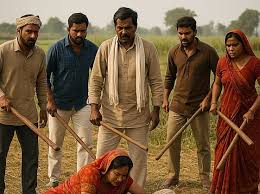
Brave attack on Dalit farmer and his wife in Anaich village of Bhadohi in dispute over cattle grazing, caste-related abuses and assault, police register case against 6 accused. Bhadohi (Uttar Pradesh): A Dalit farmer and his wife were brutally assaulted and caste-related abuses were hurled at them on Friday morning in Anaich village under Unjh police station area of Bhadohi district. Police gave this information on Sunday. The incident took place after a dispute over cattle entering the field and grazing the crop. Police have registered a case against six people in this matter. According to the police, the complainant Deepak Kumar Pasi is a landless Dalit farmer who cultivates urad (black lentil) on sharecropping basis on the land of a village landlord. Superintendent of Police (SP) Abhimanyu Mangalik said, “When Deepak complained about Rajaram Yadav’s cows and buffaloes entering his crop, Rajaram got angry. He abused Deepak using caste-related language and along with his associates beat him with sticks and iron rods.” According to the complaint, the attackers dragged Deepak’s wife Sumitra by her hair around the field, beat her and tried to tear her clothes. Deepak, Sumitra and other members of their family were injured in the attack. Deepak and Sumitra were admitted to the hospital due to serious injuries, while the other four members of the family were discharged after first aid. Based on Deepak’s complaint, the police have registered a case against Rajaram Yadav, Diljeet Yadav, Arvind Yadav, Rajendra Yadav, Parvati Devi and Tara Devi. The police is investigating the matter. Courtesy: Rajan Chaudhary, Hindi News
Dalit family thrashed, woman disrobed over cattle row in UP village; six booked
SP Abhimanyu Manglik said Rajaram Yadav got enraged when Deepak objected to his cattle grazing and, with others, hurled caste slurs and assaulted him with rods. BHADOHI: A Dalit farmer and his wife were beaten with sticks and iron rods and subjected to caste-based abuse in a village in UP, police on Sunday said. The incident took place Friday morning in Anaich village, under the Oonjh Police Station area, over grazing of cattle. Six people have been booked in the matter. According to police, the complainant was Deepak Kumar Pasi, a landless Dalit farmer, who cultivates urad (black gram) on a sharecropping basis in a local villager’s field. Deepak, police said, objected to another villager’s cattle grazing in his field when he, his wife, Sumitra, his elder brother, and his mother were assaulted. Superintendent of Police (SP) Abhimanyu Manglik said, “When Deepak complained about Rajaram Yadav’s cattle grazing in his field, Rajaram became enraged. He hurled at Deepak casteist slurs and with the help of others beat him with sticks and iron rods.” According to the complaint, the attackers dragged Sumitra by her hair across the field, beat her, and disrobed her. Deepak and Sumitra were admitted to a hospital due to the serious injuries, while the four other of his family members were discharged with little treatment. Based on Deepak’s complaint, police have booked Rajaram Yadav, Dilajeet Yadav, Arvind Yadav, Rajendra Yadav, Parvati Devi, and Tara Devi. Courtesy : TNIE Note: This news is originally published on https:/thenewindianexpress.com/ and is for use by the non-military/non-commercial community, especially those in the human rights sector.
Gujarat: How Dalit women are fighting hard to retain a 36-acre plot in Dholka
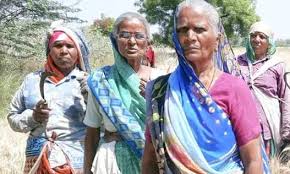
For over three decades, Baluben Makwana and others are battling gender disparity, caste hierarchy and an apathetic administration to retain land they transformed On May 16, a group of young men from the Darbar community, a backward caste, barged into the home of 76-year-old Dalit woman Baluben Makwana, in Vautha village of Ahmedabad’s Dholka taluka and threatened her. Makwana’s crime? Not only is she a Dalit and a woman but she also runs a farmers’ cooperative comprised entirely of Dalit women. For over three decades, they have been fighting against all odds to retain their ownership of a 36-acre plot of agricultural land in Dholka. The Darbars may be categorised as backward castes but in the ‘social order’ they rank several notches higher than Dalits. To the men who threatened Makwana that’s all that matters. Positioned higher in the social order, they see nothing inappropriate, let alone criminal, about demanding that the septuagenarian and her Jai Bheem Mahila Kheti Mandal (JBMKM) vacate the plot they transformed from a wasteland into a fertile agricultural land through 36 years of relentless hard work. Chasing a ‘mad dream’ This caste ‘privilege’ dates back ages. The Darbars have long been the dominant caste group in Vautha because of their large numbers in this village of 2,500-odd families. For generations, Vautha’s 70 Dalit families had lived at one end of the village and earned a livelihood by skinning dead animals and manual scavenging. It was this decades-old ‘system’ that Makwana shook up in 1989 when she mobilised 50 other Dalit women of Vautha to form the JBMKM. Priti Vaghela, a former member of Navsarjan Trust, Gujarat’s oldest Dalit rights organisation, which helped to form the JBMKM told The Federal, “Dalits of Vautha belong to the Valmiki sub-group, which is considered lowest in the social hierarchy even among the Dalits. In Vautha, Dalits are particularly vulnerable as the men are not earning much and are forcing the women into manual scavenging.” Vaghela recalled that prior to 1989, Dalit women of Vautha would be forced to clean open latrines used by upper caste women because the Dalit men didn’t earn enough to run a household. “At first, we thought we should form a collective of Dalit men to cultivate the land but most Dalit men backed off after being attacked by Darbar men. That’s when we encouraged their wives to get into farming. Over the years, sun or rain, they toiled for hours and stood tall against all atrocities by the Darbars,” explained Vaghela. Together, the 51 Dalit women that came together to form the JBMKM took a 36-acre plot, then a notified wasteland, from the local municipal body. Over the next decade, while locals, including their own family members, and the administration scoffed at their mad dream to become self-reliant farmers, Makwana and her comrades quietly toiled away nurturing the ‘wasteland’ they could call their own. By 2000, the JBMKM had achieved what many believed was impossible. The wasteland was now not only cultivable but was producing two crops a year. The yield was not just enough to meet their daily needs but there was also sufficient surplus to sell in the market and earn a modest income for the collective. In many ways, the JBMKM gave Vautha a new identity. The village known to Gujaratis largely for the Vautha Mela, an annual animal fair the village hosts along the Saptsangam, the confluence of the Vatrak and Sabarmati rivers, had become synonymous with this Dalit women’s farming collective. Troubles begin Then the troubles began – threats from castes higher in the social hierarchy, land grab attempts and even pressures from the administration to return the plot the women had ‘acquired’ without any official documentation to establish their ownership. Since then, fending off caste bullies and even government officials who storm in at their whim and fancy demanding that she and the other Dalit women farmers give up the land, has become part of Makwana’s daily chores. “This is not the first time the Darbars have threatened us to vacate the land we have cultivated for years with our blood and sweat. Thankfully, no one was hurt this time. They just swung around some furniture and punctured the tyre of the tractor we own. This happens every time during harvest season. They also try to destroy the crops but we have always managed to ward them off,” Makwana told The Federal. Last month, things had taken a nasty, although not unfamiliar, turn. The Darbars arrived with a posse of policemen from the local thana, shared Makwana. “The police tried to intimidate us and said we will be arrested under the Gujarat Land Grabbing (Prohibition) Act, 2020,” she said. The Act criminalizes land grabbing and involves 10 to 14 years of imprisonment along with a fine in case of a conviction. “We told them that we will give our lives but we won’t give up this land,” added the JBMKM founder. Fruits of hard labour Makwana claimed that it was purely the hard work and determination of the women in her collective that transformed the 36-acre wasteland plot into a sprawling agricultural field that today yields groundnut, castor and cotton crops. The sale of crops helps the JBMKM to register annual earnings of around Rs 8 lakh annually. “I still remember the first time I hit the wasteland with my spade. It was completely infested with gando baval (prosopis julifora, a thorny invasive wild shrub that is difficult to clear out as it regenerates if even a tiny root is left inside the earth; its pods are also toxic for livestock). For the initial few years, we did not have support of our families either. It took us 10 years to make this land cultivable. In the year 2000, we sold our first yield and by 2004 we bought a tractor as the land had started yielding two crops a year. That is when the Darbars began making trouble; now everyone wants a piece of it,” Makwana