
Crimes against women, Dalits dampen Majhi govt.’s one-year celebrations in Odisha

Since the so-called ‘double-engine’ government came to power, law and order in Odisha has collapsed, says Congress Legislature Party leader Rama Chandra Kadam Prime Minister Narendra Modi, along with CM Mohan Majhi, arrives to address a public meeting to mark the first anniversary of the BJP government in Odisha, in Bhubaneswar on June 20. Prime Minister Narendra Modi, along with CM Mohan Majhi, arrives to address a public meeting to mark the first anniversary of the BJP government in Odisha, in Bhubaneswar on June 20. | Photo Credit: File Photo A spate of brutal crimes against women and a growing challenge to the rule of law by emboldened criminals have cast a long shadow over the Mohan Majhi government’s celebrations marking its first year in office in Odisha. Both the Congress and the Biju Janata Dal (BJD) have intensified their attack on the Bharatiya Janata Party (BJP) government, alleging a breakdown of law and order in Odisha. Even as preparations peaked for Prime Minister Narendra Modi’s scheduled visit on June 20, a gang rape incident on June 15 sparked massive outrage in the State. A college student visiting Gopalpur beach in Ganjam district was allegedly gang-raped, filmed, and threatened by her attackers. Condemning the incident, Congress leader Priyanka Gandhi Vadra accused the Majhi government of failing to ensure the safety of women. Although Berhampur police arrested 10 suspects, public anger did not subside. The All India Congress Committee (AICC) constituted a fact-finding team led by senior party leader Deepa Dasmunsi to assess the situation on the ground. BJD only did politics for 24 years, our Government has ushered in new era in Odisha: CM Majhi Soon after, reports emerged of the alleged gang rape and murder of a 17-year-old tribal girl under Pandapada police station in Keonjhar district. In another incident, a woman from New Delhi was molested in Jajpur district. As the government machinery focused on milestone celebrations, reports of heinous crimes dampened the mood and raised serious questions about governance. The disturbing pattern continued when a woman in Mayurbhanj district was allegedly abducted by three motorcycle-borne assailants and gang-raped near Karanjia on Wednesday. In a separate case, a Berhampur health centre operator — reportedly linked to the BJP — was arrested for raping a minor. Photographs of the accused with senior BJP leaders, including the Chief Minister, further embarrassed the ruling party. The student and youth wings of the BJD staged protests across educational institutions on Wednesday, denouncing the rising cases of atrocities against women, particularly the Gopalpur case. Citing information published by the Home Department and presented in the State Assembly, the BJD said, “Over 3,054 rape cases were reported in the last year alone, marking a steep rise in serious crimes like rape, abduction, and murder. This points to a severely deteriorating security environment for women and children in Odisha.” ‘Poor law and order’ The party also criticised the weakening of support mechanisms. “Under the Naveen Patnaik government, more than 600 police stations had functional women and child desks. Those are now barely operational, leaving victims helpless. The government’s inefficiency has emboldened criminals,” it said. In yet another shocking incident this week, two Dalit men in Ganjam district — accused of cattle smuggling — were tonsured, forced to eat grass, and made to drink dirty water. The victims claimed they were only transporting three cows to sell in order to arrange items for a family wedding. “Since the so-called ‘double-engine’ government came to power, law and order in Odisha has collapsed,” said Congress Legislature Party leader Rama Chandra Kadam, who led a fact-finding team to Ganjam. “Criminals act with impunity, and the Home Department is a mute spectator. Attacks on Dalits, tribals, and minorities are increasing by the day,” he said, addressing a press conference on Thursday. Satyasundar Barik Courtesy : The Hindu Note: This news is originally published on https:/thehindu.com/ and is for use by the non-military/non-commercial community, especially those in the human rights sector.
Case of occupation of Dalit family’s land: Woman pleads for justice in Alapur, accuses opposition of forceful occupation
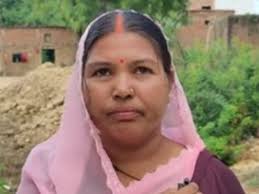
A Dalit woman is struggling to save her leased land in Durgupur village of Jahangirganj police station area of Ambedkar Nagar. Bhanmati wife Suresh Kumar told in the complaint letter that Sheshnath Pandey of the village is trying to forcibly occupy her land. According to the victim, the disputed land is her old garhauni. Her old house has collapsed. She has the papers of the garhauni. Sheshnath Pandey is trying to forcibly occupy the land by putting soil. On protesting, the accused threatens with sticks. The situation of dispute persists every day. The victim has lodged a complaint in the police station in this matter. Along with this, a complaint letter has also been submitted to the SDM and Tehsildar. The officials have ordered the measurement of the land. But till now the victim has not got justice. She is constantly facing troubles. Vishwanath Yadav Courtesy: Hindi News
Indian court rules a transgender woman is a woman

The Andhra Pradesh High Court on June 16 issued a landmark ruling that says Indian law cannot deny transgender women recognition as women solely because they cannot bear children. Justice Venkata Jyothirmai Pratapa, who presided over the case, rejected arguments that tie womanhood exclusively to reproductive capacity, declaring such views “legally unsustainable” and contrary to the Indian constitution’s guarantees of dignity, equality, and identity. The decision, rooted in the Supreme Court’s 2014 National Legal Services Authority v. Union of India ruling that recognized individuals as a “third gender” with equal fundamental rights, marks a significant step toward gender justice in India. “A trans woman, born male and later transitioning to female, is legally entitled to recognition as a woman,” Pratapa declared. The court emphasized this recognition is enshrined in Articles 14, 15, and 21 of the constitution; which guarantee equality before the law, prohibit discrimination based on sex, and protect the right to life and personal liberty respectively. Pratapa further clarified that trans women are entitled to the same protections as cisgender women under Section 498A of the Indian penal code, which addresses cruelty by a husband or his relatives. “Denying such protection by questioning their womanhood amounts to discrimination,” said the High Court in its ruling. The ruling came in response to a petition filed by Viswanathan Krishnamurthy and his parents, who sought to dismiss a dowry harassment case brought by Pokala Sabhana, a trans woman. Shabana alleged that Krishnamurthy and his family subjected her to cruelty and demanded dowry, charges that prompted her to seek protection under Section 498A. The court’s decision to uphold her legal standing as a woman ensures that trans women can access critical protections against domestic abuse, setting a precedent for future cases. Section 498A’s applicability to trans women, as the court affirmed, extends critical protections against domestic cruelty to marginalized groups. Trans women can now seek legal recourse under this provision for physical, emotional, or economic abuse, including dowry-related harassment, by their husbands or in-laws. This recognition ensures access to police intervention, potential arrest of perpetrators, and penalties under the Indian penal code, aligning trans women’s marital protections with those afforded to cisgender women. By including trans women under Section 498A, the ruling strengthens their ability to combat domestic violence and assert their rights within familial structures. Shabana and Krishnamurthy lived together in Ongole, a city in Andhra Pradesh, for a short time before Krishnamurthy relocated to Chennai and ceased communication, according to the court document the Washington Blade obtained. Shabana filed a complaint at the Ongole Women’s Police Station, alleging her in-laws threatened her life and that Krishnamurthy abused her. Based on her accusations, the police registered a case against Krishnamurthy and his parents under Section 498A. Krishnamurthy and his parents in 2022 petitioned the Andhra Pradesh High Court to dismiss the case, arguing that Shabana, as a trans woman, could not invoke Section 498A, a provision typically applied to cisgender women. The petitioners’ counsel argued that trans women, due to their inability to conceive, do not meet the legal definition of a woman and thus cannot invoke Section 498A. They also contended Shabana’s cruelty and dowry harassment allegations were baseless and lacked evidentiary support. The Andhra Pradesh High Court rejected the petitioners’ arguments, ruling that gender identity does not hinge on the ability to bear children and other biological factors. The court affirmed that trans women, like Shabana, have the right to file complaints under Section 498A and are entitled to all constitutional protections afforded to women under the constitution. While affirming that trans women are legally recognized as women, the Andhra Pradesh High Court dismissed the case against Krishnamurthy and his family, citing insufficient evidence rather than gender-based arguments. The court noted Shabana’s claims of dowry demands and cruelty lacked supporting material. It ruled that proceeding with the trial without prima facie evidence would constitute a misuse of the judicial process. “I am relieved, the delighted and thank the Andhra Pradesh High Court and the judge for upholding our basic human right to be identified as what we want. What better reason could that be for celebrating this Pride Month,” said Kalki Subramaniam, a prominent trans activist and artist. “For transgender community, especially trans women this verdict means a lot.” Subramaniam told the Blade that the verdict is a momentous achievement. She described it as a significant stride toward justice, dignity, and equality for trans people throughout India. “By affirming their legal status as women, the court has shattered discriminatory barriers and reinforced the fundamental principle that identity is valid and deserving of full legal protection,” said Subramaniam. “This ruling marks a significant moment of progress, sending a clear message that our legal frameworks are evolving to be more inclusive and reflective of the diverse realities of our society. It is a victory of human rights and a beacon of hope for a more equitable future.” Meera Parida, a prominent trans activist in Odisha, told the Blade the ruling is a significant triumph. “Only because a trans woman cannot bear a child, she is not a woman — that’s not good,” she said. “This is a respectful judgement for all of us,” added Parida. “This is restoring equality and somewhere because of this verdict the stigmatization wall will fall and people will respect us. I respect this verdict.” “This verdict is very progressive and a crucial step forward to the transgender community and gender equality,” Rani Patel, president and founder of Aarohan, an organization that works to address educational disparities among underprivileged communities and advocates for LGBTQ rights, told the Blade. “People said that we should give them separate toilets and classrooms, but that totally excludes them from the community. Many women also cannot give birth to a child, so that is totally different.” “If someone is carrying themselves as female, they should be honored with their status,” added Patel. “Since the purpose of the verdict is to recognize trans women as women, they will get all the status
Karnataka: Parents boycott School over Dalit cook

Chamarajanagar: A concerning incident has come to light from Chamarajanagar district in Karnataka, where parents have allegedly withdrawn their children from a government school following the appointment of a Dalit woman as the head cook. The incident has been reported from the Government Higher Primary School in Homma village in Chamarajanagar district. Of the 22 students enrolled, parents of 21 students have withdrawn their children, leaving only one student currently attending the school. According to the head cook and the kitchen staff, only seven out of the 22 students used to eat the Mid-Day Meals prepared at the school. Sources indicated that the appointment of a Dalit woman as the head cook had triggered dissatisfaction among some parents. Reportedly, several parents unhappy with the appointment collected Transfer Certificates (TCs) for their children and admitted them to other schools. As a result, the school is now on the verge of closure, sources added. Local residents allege that caste-based bias is the sole reason for withdrawing the children, pointing to the cook’s Dalit identity. In the academic year 2024–25, the school initially had 22 students. Of these, 12 have already taken TCs, and withdrawal applications have been submitted for the remaining students. With no students left, the school now faces imminent closure, sources said. Currently, the school has just one student attending the classes and two teachers. The parents of the remaining student have also requested a TC to transfer their child elsewhere, according to sources. After the development went viral on social media, the district administration rushed to the school on Wednesday and held a series of meetings with teachers and parents. Officials from the Education Department and the Department of Social Welfare also visited the Homma village school. Chamarajanagar SP, B.T. Kavitha, Zilla Panchayat CEO Mona Roat, and DDPI Ramachandra Raje Urs personally spoke to parents and teachers regarding the development. Parents told CEO Roat that they had withdrawn their children due to the poor quality of teaching at the school. However, the team of officials managed to convince the parents of eight children to re-enroll them in the school. SP Kavitha stated that a comprehensive investigation will be undertaken to determine why the children were not consuming meals at the school. “If it is found that untouchability was practiced and a complaint is lodged, strict action will be taken against those responsible,” she said. Roat noted that the preliminary report suggested the students were withdrawn due to poor education quality, but new claims have emerged. “We are receiving conflicting reports regarding the students’ transfer. We have assured the parents that qualified teachers will be posted at the school and action will be taken wherever necessary,” she said. Posted by Marziya Sharif Courtesy : Siasat Note: This news is originally published on https:/siasat.com/ and is for use by the non-military/non-commercial community, especially those in the human rights sector.
45-year-old woman gangraped, the brutes pulled out her uterus with an iron rod and threw it out
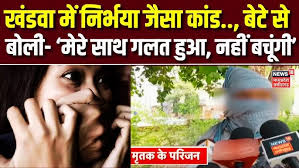
Khandwa Gang Rape Case: A case of brutality has come to light in Khandwa district of Madhya Pradesh, which will remind you of the Nirbhaya incident of Delhi. The brutes first gangraped the woman, then pulled out her uterus and threw it away. Khandwa: A heart-wrenching incident has come to light in the district. A 45-year-old woman was brutally raped in a village in the tribal area of Khalwa. According to the information, two brutes first gang-raped the woman, then inserted an iron rod or some other object in her private part and pulled out her uterus. The victim died in agony on the spot. The police have taken both the accused into custody. According to the police, on Saturday, the 16-and-a-half-year-old daughter of the victim reported that her mother was lying in a bloody condition inside the house of an acquaintance Hari Palvi (35). When the police team reached the spot, the woman was lying unconscious on the ground in a semi-nude state. The villagers told the police that at the time of the incident, Sunil Dhurve (26) and Hari Palvi (35) were present with the woman. Both are acquaintances of the woman. The police have taken both of them into custody and started questioning them. According to ASP Khandwa Rajesh Raghuvanshi, it has come to light that the woman was gang-raped. Both the accused have been taken into custody. The post-mortem report is awaited. The body was on the ground, the uterus was lying nearby. When the police reached the spot, the woman was already dead. There were injury marks on the body. Blood was flowing from the private part. The uterus was lying outside. It seemed as if some brutal person had inserted something like a spear or wood in the private part. The police told that the woman also has two children. Both the accused are acquaintances of the woman. On Friday, everyone had attended a wedding function. After this, the victim reached Hari’s house with him. Here Hari and Sunil drank alcohol. After that both of them committed brutality. Curated by: Ambikeshwar Chaturvedi I work for Madhya Pradesh and Chhattisgarh in Navbharat Times Digital. After working in Vikalp newspaper in journalism, I reached Times Internet. Started the journey from Deoria in Uttar Pradesh. Now I am working in Bhopal. Courtesy : Hindi News
SHRC seeks probe into death of dalit woman

Idukki: State human rights commission has directed Idukki’s district police chief to investigate death of a dalit woman in Peermade’s Meenmutty forest area and submit findings within four weeks. The order came during an SHRC sitting at Peermade Govt Guest House. Seetha, 42, from Plakkathadam colony, was found dead on June 13. SHRC chairman Justice Alexander Thomas issued this directive following a petition by human rights activist Guinness Madasamy requesting an independent probe. While Seetha’s husband Binu claimed she was killed by an elephant when they were collecting forest produce with their children, the postmortem results didn’t support this claim. Binu told relatives that he and the children narrowly escaped the alleged attack. The case will be reviewed once the report is received. TNN Courtesy : TOI Note: This news is originally published on https:/timesofindia.com/ and is for use by the non-military/non-commercial community, especially those in the human rights sector.
Man ‘Urinates’ On Dalit Woman’s Face After He Fails To ‘Rape’ Her In Uttar Pradesh

The alleged rape attempt was made when her in-laws were away from home and the woman was at home with her two-month-old daughter. Barabanki: A youth in Uttar Pradesh’s Barabanki district allegedly made a rape attempt on a Dalit woman in the absence of her elderly family members and urinated on her face after he failed to do so. The incident occurred on Tuesday at a village that falls under Ramsanehi Ghat police station limits. Police have registered a case on the complaint of the victim. In the FIR, she alleged that on the evening of June 10, when her mother-in-law had gone to visit relatives and her father-in-law was out for some work, Abhinav Verma entered the house and found her alone. He allegedly started molesting her. When the woman shouted, the accused stuffed a cloth in her mouth and tried to rape her. When the victim tried to push the accused and run away, he threatened to pick up and throw her two-month-old daughter. The woman has told the police that she lives with her two-month-old daughter, her mother-in-law, and her father-in-law. Her husband works in Surat. According to the FIR, the accused abused the victim using casteist language. He also threatened to kill her, she alleged. When the victim’s father-in-law returned, she told him about the incident. Police Inspector Ankit Tripathi stated that a case has been registered based on the victim’s complaint, and action is being taken. An investigation is in and the accused will be arrested soon, Tripathi said. Courtesy : ETV Bharat Note: This news is originally published on https:/timesofindia.com/ and is for use by the non-military/non-commercial community, especially those in the human rights sector.
Rajasthan: Dalit woman sarpanch and her husband attacked with axe over MNREGA road construction, caste-related abuses also hurled
A Dalit woman sarpanch and her husband were attacked with an axe on June 8 in Kharesh village in Rajasthan’s Deedwana district while they were overseeing a road construction project under the MNREGA scheme. The accused, Bhanwar Singh, allegedly believed that the road construction was encroaching upon his land. According to Deedwana SP Hanuman Prasad, “It was a land dispute. The road is being constructed near the house of accused Bhanwar Singh. He felt that his land was being encroached upon.” Singh allegedly hurled caste-related abuses and chased the Dalit couple with an axe. A video of the incident shows several women trying to stop Singh and snatch the axe from his hands. “The Dalit sarpanch and her husband were not seriously injured,” SP Prasad confirmed, The Observer Post reported. “We have registered a case under Sections 115 (voluntarily causing hurt) and 126 (wrongful restraint) of the Indian Justice Code as well as relevant sections of the SC/ST (Prevention of Atrocities) Act, 1989.” Bhanwar Singh is currently absconding. Police say the case is under investigation. The attack has sparked anger on social media and people are expressing disbelief over the deteriorating law and order situation in Rajasthan. Many have criticised the government and police for inaction. Courtesy : Hindi News
Dalit woman judge sought leave, Jharkhand High Court made ‘adverse remarks’ in ACR — Supreme Court issued notice!

Allegation of adverse remarks being recorded after filing a petition in the Supreme Court against denial of child care leave. New Delhi: The Supreme Court on Wednesday issued a notice to the Jharkhand High Court. This notice has been issued on the latest application filed by a Dalit woman judge, in which she has alleged that adverse remarks were made in her Annual Confidential Report (ACR) after filing a petition in the apex court against not getting childcare leave. A bench of Justice Prashant Kumar Mishra and Justice Manmohan recorded the argument of senior advocate A.K. Sinha, who appeared on behalf of the Jharkhand High Court. He told the court that as per the suggestion given by the Supreme Court on June 6, the High Court has now decided to grant 92 days of childcare leave to the woman judge. However, the counsel appearing for the judge raised serious concerns before the bench and said that the adverse remarks were made in the ACR only after the petition was filed on May 23. The judge’s counsel said, “One more thing is very disturbing. Some remarks have been made in my ACR now, which have been made after the filing of this petition. I am an officer from the Scheduled Caste category and I have disposed of a large number of cases.” He also said that the judge concerned is “one of the best performing officers.” The counsel questioned the timing of the ACR remarks and said, “Please look at the timing…” To this, the Supreme Court directed the Jharkhand High Court administration to file a reply to the allegations levelled by the judge that adverse remarks were made in his ACR after the petition was filed. Courtesy : Rajan Chaudhary, Hindi News
Train bullies target nun in Odisha: 18-hour cop ordeal after false charges by Bajrang Dal hecklers
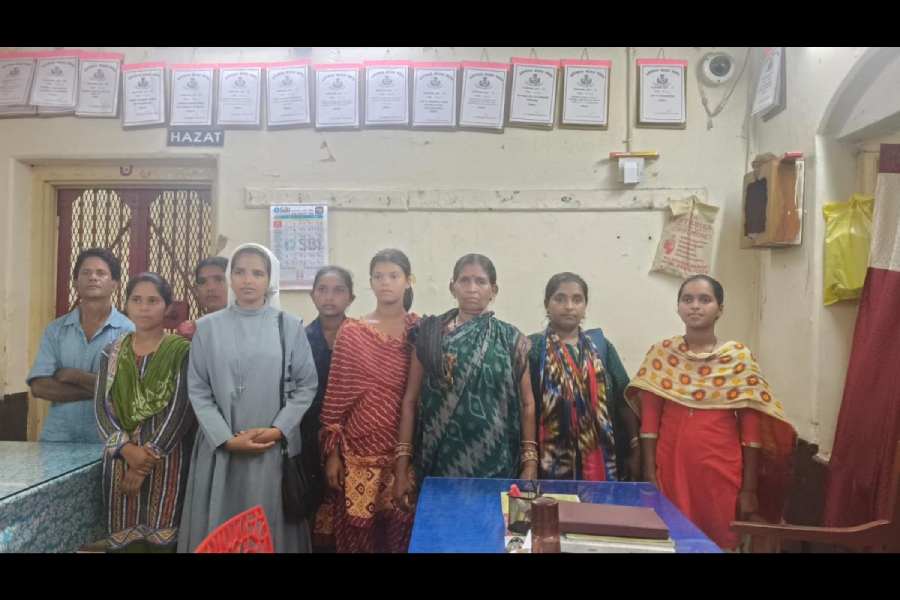
Nun Rachana Nayak was released after she proved that her six young companions — two men and four women — were all Christians by birth and were travelling for enrolment in training courses A 29-year-old nun was forced off a train by suspected Bajrang Dal activists and detained for 18 hours at a police station in Odisha on charges of trafficking in women and illegal conversions that an investigation later proved false. Nun Rachana Nayak was released after she proved that her six young companions — two men and four women — were all Christians by birth and were travelling for enrolment in training courses. In an indication of the insecurity among minorities, Catholic Church authorities advised members travelling with girls from the community to carry written consent from their parents and village pradhans, as well as baptism certificates proving they are Christian. The incident comes a year after the BJP assumed power in Odisha, and weeks after it released one of the killers of missionary Graham Staines and his two young sons, who were burnt alive in 1999 by a mob led by a Bajrang Dal activist. Nayak, a nun with the Holy Family Convent in Bhopal, and her companions were surrounded, threatened and forced off the train by a group of 30 at Khurda Junction, about 20km from Bhubaneswar. They were detained by the Government Railway Police (GRP) and allowed to leave only on Sunday evening following the intervention of three women human rights lawyers. “They had boarded the Rajya Rani Express from Berhampur on Saturday evening. One of the young men happened to be the nun’s younger brother,” Sujata Jena, one of the women lawyers, told The Telegraph. “They were headed for Jharsuguda, from where they planned to travel to Chhattisgarh where the girls would have received training in various skills and in spoken English.” Jena said the four young women had been selected through a rigorous process of career counselling, and all of them were Catholics. “Some people began heckling them on the train and accused the nun of involvement in religious conversions,” she said. Religious conversions, unless conducted through inducement, fraud or force, are not illegal. “As soon as the train reached Khurda Junction around 11pm on Saturday, around 30 people gathered and began abusing the nun and the four girls. They forced the entire group off the train,” Jena said. “Apart from religious conversions, they accused the nun of trafficking in women. The Railway Protection Force intervened and took all of them to the police station.” Jena added: “They pleaded they were all Christians and that the nun had nothing to do with religious conversions, but no one listened to them.” She said the women lawyers got to know about the matter on Sunday morning and rushed to Khurda. “During the investigation, it came out that all those detained were aged above 18 except for one girl, who was 17. All of them are literate,” she said. “All of them have now been released with full security and without any charges. The police treated them with dignity.” Jena said the women’s parents arrived at the police station and took them back to their villages, unwilling after the ordeal to let them go on to Chhattisgarh. The two young men too left for home. A GRP team escorted Nayak up to Bhubaneswar. Shankar Rao, inspector-in-charge, GRP Khurda, said: “The nun and the four girls know each other. All of them are Christians. The nun hails from Berhampur. She was involved neither in religious conversions nor trafficking. No FIR has been registered by the nun (against the hecklers).” Sources said the nun belongs to the Holy Family order, a local congregation founded in Kerala. Catholic Church sources in Delhi said that apart from written parental consent and baptism certificates, members travelling with girls had been advised to carry “a letter of admission to a senior secondary school to prove they are travelling for higher education”. Courtesy : Subhashish Mohanty, The Telegraph Note: This news is originally published on https://thetelegraph.com/ and is for use by the non-military/non-commercial community, especially those in the human rights sector.