
Dalit woman brutally murdered in Hardoi, head and face were crushed in an attempt to erase identity
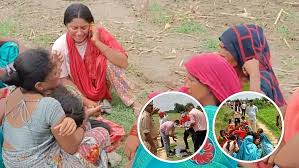
Dead body found in field near Gaura Road, mobile and purse missing, forensic investigation underway Hardoi/UP. A case of brutal murder of a Dalit woman has come to light in Madhoganj police station area of the district. The body of the woman was found on Monday morning on the way to the fields about 120 meters inside Gaura Road. The condition of the body was so horrific that her face and head were badly crushed, making it very difficult to identify. According to media reports, the deceased has been identified as Rani alias Ganga (48) wife of Ram Autar, resident of Axiya village. On Sunday morning around 9 am, she had gone to see her nephew at Singh Hospital in Sandila. While returning, she also contacted her husband Ram Autar on phone till Baghauli on the way. After this, there was no contact with him. On Monday morning, when the villagers saw the body of the woman lying on the way to the fields near Gaura Road, sensation spread in the area. On receiving the information, the police reached the spot and took the body into custody and sent it for post-mortem. The deceased’s slippers were found at the scene, but her mobile phone, purse and Aadhar card were missing. The body was found just one kilometer away from the house The deceased’s body was found just one kilometer away from her village. Vimala Guest House is also located about 100 meters away from the scene. In the initial investigation, the police suspect that the woman’s murder was planned and the head and face were crushed with the intention of erasing the identity. Rani was the mother of 8 children There is chaos in the family. The deceased Rani has 8 children, including two sons and six daughters. Five daughters are married, while one daughter and both sons are still unmarried. Husband Ram Avtar takes care of his family by farming. Police started investigation As soon as the information of the incident was received, the police and forensic team reached the spot and collected evidence. SHO Vijay Kumar said that the body has been sent for post-mortem and the forensic team has also examined the spot. All aspects of the murder are being seriously investigated and the incident will be revealed soon. This heinous murder has spread panic and anger in the area. Local people are demanding immediate arrest and strict punishment of the accused. Rajan Chaudhary Courtesy : Hindi News
SC Commission seeks report on Dalit woman’s assault at Siwan police station

Taking cognisance of an alleged assault on a Dalit woman inside Siwan police station, Haryana State Commission for Scheduled Castes chairperson Ravinder Singh Baliala has directed the ADGP, Karnal Range, to submit a fact-finding report within a week. During a public hearing at the Mini-Secretariat in Kaithal, Baliala also asked the Director General Health Services to provide the medical report of the victim. The report must be prepared by a special medical board that includes a doctor from PGI Rohtak. He further instructed that provisions of the SC/ST (Prevention of Atrocities) Act be added to the FIR already registered on the woman’s complaint. The matter came up during the Commission’s hearing into various caste-related grievances. The session began with a complaint from the family of a missing girl, which is reportedly linked to the same case. Several participants then alleged that a Dalit woman was brutally mistreated while in custody at the Siwan police station. Following this, the chairperson summoned senior district officials, including the doctor at Siwan civil hospital who allegedly refused to treat the woman initially, to appear before the Commission on July 15. The district hospital has also been directed to submit the complete medical treatment records of the victim. Superintendent of Police Astha Modi informed the Commission that two police personnel were immediately shifted to police lines after the complaint was received. She said a Special Investigation Team (SIT) from Karnal had been constituted to investigate the matter and action would be taken based on the findings. Emphasising the seriousness of the incident, Baliala said: “Officers must take complaints from the Scheduled Caste community seriously. Justice must be delivered swiftly and fairly. This Commission was established under the 2018 Act with powers equivalent to the National SC Commission and we will use every one of them to protect the rights and dignity of the marginalised.” He added that the Commission’s approach ensures impartiality. “Even the accused are given an opportunity to present their side to ensure that no innocent person is wrongfully implicated,” he said. Baliala appreciated the Kaithal district administration’s cooperation in addressing caste-related issues, stating, “The district’s response to complaints from the Scheduled Caste community has been largely satisfactory.” During the hearing, the Commission reviewed 11 listed cases and took note of around 15 fresh complaints submitted directly during the session. Directions were issued on the spot to police and administrative officials for immediate follow-up. Courtesy : The Tribune Note: This news is originally published on https:/thetribune.com/ and is for use by the non-military/non-commercial community, especially those in the human rights sector.
Dalit woman ends life after facing theft allegations
TIRUVANNAMALAI, A 35-year-old Dalit woman near Chengam town in Tiruvannamalai died of 85% burn injuries at Government Medical College Hospital in Chengalpattu on Wednesday after her husband’s family suspected her of stealing 39 sovereigns of gold jewellery. An inquiry led by S. Rajkumar, Revenue Divisional Officer (RDO), Tiruvannamalai, has been initiated on the death of the woman as the victim was married only a year ago. Police said the deceased victim has been identified as T. Yamuna, a native of Nagapattinam district. Initial inquiry revealed that S. Thennarasu, 42, a native of Sorpanandal village near Chengam town, was running a pharmacy in Chengam town. He has two married sisters, namely K. Vijaya (53) and B. Kumarai (50). A few years ago, he got acquainted with Yamuna, a divorcee. They fell in love and got married in June 2024. Police said the couple lived in Thennarasu’s elder sister Vijaya’s house in Sathanur village as the latter lived with her daughter alone in the house. A month ago, Vijaya complained to her brother that her gold jewellery of 39 sovereigns was missing from the cupboard in the house. Family members searched for the missing jewellery but they were unable to trace it. They lodged a complaint with Sathanur police. Police said Vijaya suspected that Yamuna stole the jewellery”. Police said that the suspicion on Yamuna’s role in the theft intensified as the couple moved to Thennarasu’s second sister Kumari’s house in Sorpanandal village a week ago. On Tuesday (July 8), Kumari was making dinner for the family including the couple when Yamuna told her that she would go for a walk on the terrace. Around 8 p.m., family members found her injured. Yamuna was rushed to Government Medical College Hospital in Tiruvannamalai town where doctors gave first aid and referred her to a similar government hospital in Chengalpattu where she succumbed to her injuries around 9 a.m. on Wednesday. Based on a complaint by G. Dinakaran, Yamuna’s younger brother, a case was registered by Pachal police. The body was handed over to the victim’s family members after postmortem. A probe is underway. (Assistance for those with suicidal thoughts is available in TN’s health helpline 104 and Sneha’s suicide prevention helpline 044-24640050). Courtesy : The Hindu Bureau, The Hindu Note: This news is originally published on https:/thehindu.com/ and is for use by the non-military/non-commercial community, especially those in the human rights sector.
‘Saheli Smart Card’: Women, Transgender Commuters To Get Free Bus Travel As Delhi Government Plans To Roll Out Smart Card From August 15

Delhi government will be rolling out the ‘Saheli Smart Card’ for women and transgender people, allowing them to travel the Delhi Transport Corporation (DTC) and cluster buses for free of cost. According to sources, the Saheli Smart Card scheme is expected to be rolled out on August 15, Independence Day. New Delhi, July 8: Delhi government will be rolling out the ‘Saheli Smart Card’ for women and transgender people, allowing them to travel the Delhi Transport Corporation (DTC) and cluster buses for free of cost. According to sources, the Saheli Smart Card scheme is expected to be rolled out on August 15, Independence Day. The scheme is meant to replace the ‘Pink Ticket’ system which was launched by the Aam Aadmi Party (AAP)-led government. Pink passes were given to the resident women of Delhi and bus operators were compensated according to the number of tickets sold. “Women and transgender persons residing in Delhi aged 12 and above will be able to travel free of cost on DTC and Cluster buses,” according to the source. Ban on End-of-Life Vehicles: Delhi Govt To Make Changes to Vehicle Policy, To Scrap Only Polluting Vehicles. The ‘Pink Ticket’ scheme was launched by AAP in 2019. According to the Delhi government’s own data, a total of 100 crore pink tickets had been issued to women till the end of January 2023. By November 2024, over 150 crore pink tickets were issued. “In 2022, free travel for women via Pink tickets contributed to nearly 32 per cent of the total number of passengers travelling in a month,” the statement said. “In 2019-20, Delhi buses had a ridership of more than 160 crores. Due to COVID in the years 2020 and 2021, it dropped to 71 crores in 2020-21, slightly recovering to 93 crores in 2021-22. Since April 2022 till today, it has reached nearly 125 crores, almost 75 per cent of the pre covid numbers,” the statement added. However on March 29, the Bharatiya Janata Party-led government had claimed that the scheme had been mismanaged, along with the whole Delhi Transport Corporation, which led to a loss of Rs 70,471 crore. Delhi Govt Plans to Relieve Fire Service of Inspection, Issuing NOC Tasks. “They (AAP) turned a profitable department into a loss-making one. DTC suffered a loss of Rs 70,471 crore. There was an operational loss of Rs 14,198 crore. Buses were run on only 468 routes out of 814. Money was spent only on advertisements. Even the Rs 233 crore received from the Centre was not spent. There used to be 4344 buses, but during their tenure, the number reduced to 3937,” Delhi CM said in the Assembly. CM Rekha Gupta was referencing a report by the Comptroller and Auditor General of India (CAG) which suggested that due to the government’s mismanagement and negligence, crores of rupees from Delhi taxpayers have been wasted. This report is now being referred to the Committee on Government Undertakings with instructions to submit its report within three months. (This is an unedited and auto-generated story from Syndicated News feed, LatestLY Staff may not have modified or edited the content body) Courtesy : LatestLY Note: This news is originally published on https:/latestly.com/ and is for use by the non-military/non-commercial community, especially those in the human rights sector.
Tamil Nadu: Dalit woman brutally murdered in Kanchipuram, body found among junk in factory

38-year-old woman working in a cardboard factory in Enathur, Tamil Nadu beaten to death with iron rod, jewellery robbery also suspected, Dalit organisations demand fair probe. Tamil Nadu: A 38-year-old Dalit woman working in a cardboard box manufacturing unit near Enathur in Kanchipuram district was found dead with serious head injuries on Saturday evening (July 5). The woman has been identified as Selvi alias Hepsi, who hailed from Andi Siruvallur village and had joined the factory just a week ago. According to the police, Selvi was killed by being beaten with an iron rod. Her jewellery weighing about six sovereigns – gold chain, earrings and thali (mangalsutra) – was found missing from the spot. Selvi left home for work on Saturday morning but did not return till late night. After this, her husband Suresh and other family members went to look for her. On reaching the factory premises, they found an employee Senthil lying outside in a highly intoxicated state. When they did not get any clear answer from him, the family members went inside the warehouse, where Selvi’s body was found hidden among the junk. After this, the Ponnerikkarai police was informed. The body was sent to Kanchipuram Government Hospital for postmortem. Initial investigation by the police has not found any clear signs of sexual assault. However, the police is investigating whether the motive behind the murder was only to loot the jewellery or there is some other reason behind it. Officials are also trying to find out whether the incident was committed by an insider or an outsider had entered the factory. Factory owner Praveen Kumar and another employee have been detained for questioning. At the same time, Senthil is reported to have absconded and his search is on. Since Selvi belonged to the Scheduled Caste community, Dalit organizations have demanded a fair and transparent investigation after this incident. CCTV footage of the area is being scanned to find out if any outsider was involved in the incident. At present, the investigation of the case is going on. Courtesy: Rajan Chaudhary, Hindi News
Invisible no more: One Dalit woman’s reckoning with India
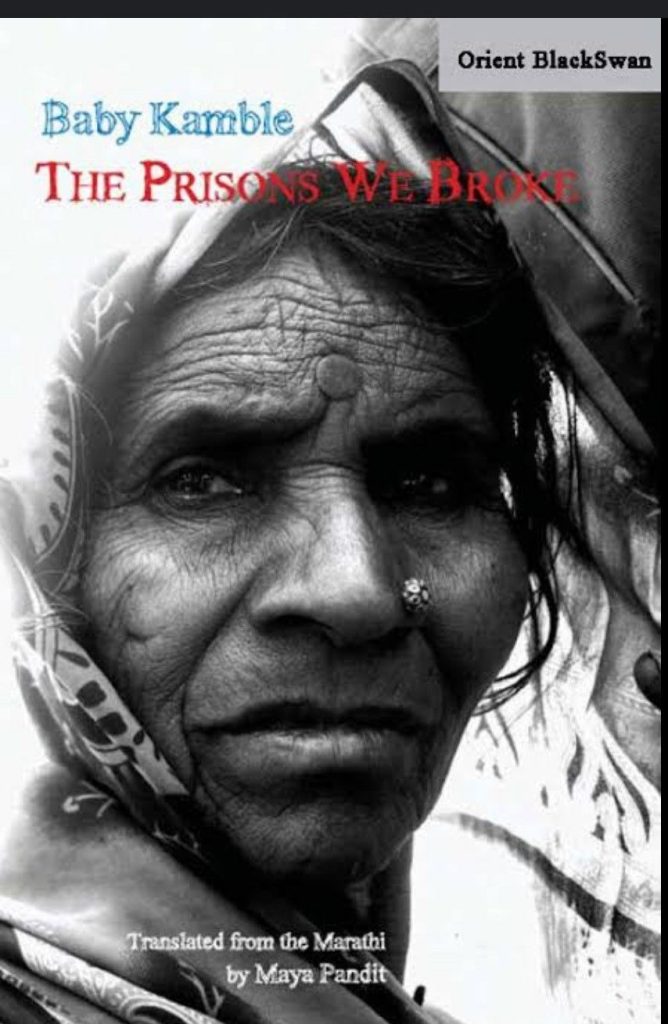
As India’s Prime Minister Narendra Modi concluded his first state visit to Trinidad and Tobago last week (July 3-4), Bookshelf turns its attention to the women whose lives remain far from the glare of diplomatic ceremony—specifically, one Dalit woman whose literary voice has, at last, been restored to India’s bookshelf. In a republic where women are both talismans and casualties of development, Babytai Kamble’s memoir The Prisons We Broke (1986) remains a visceral, necessary reckoning. India is unmistakably global: a nuclear and space power with the world’s fifth-largest economy, a rising voice in G20 diplomacy, and a nation whose digital reach now stretches from the mangrove swamps of the Sundarbans to the arid edges of Rajasthan, from the Himalayan foothills to the beaches of Kanyakumari. Its cities—Bengaluru, Hyderabad, Gurugram—are latticed with flyovers, metro rails, and IT campuses. Its marbled shopping centres are crammed with international brands. Undersea cables thread the coasts of Kerala and Tamil Nadu, feeding the world’s data demand. Expressways cleave through farmland, connecting state capitals to Special Economic Zones. And yet: less than ten per cent of Indians own 77 per cent of the nation’s wealth (Oxfam India, 2023). In 2025, 20 protests occur daily. Seven states—including Jammu and Kashmir, Punjab, Nagaland, Manipur, Assam, Mizoram, and Tripura—signal separatist aspirations. And for the vast majority of India’s women, class, caste, and gender remain overlapping restraints. The tensions that grip India—economic inequality, regional unrest, and daily dissent—are mirrored most acutely in the lives of its women, especially those at the bottom of the caste ladder. To understand Babytai Kamble’s voice, one must understand caste. Though outlawed by India’s 1950 Constitution, caste remains the invisible architecture of Indian society. There are four traditional varnas—Brahmins (priests), Kshatriyas (warriors), Vaishyas (traders), and Shudras (labourers)—but Dalits, formerly called “Untouchables”, fall outside this system altogether. They are often assigned the most stigmatised and dangerous forms of labour and are subject to violent discrimination and social exclusion. India has over 600,000 villages. While its megacities—Mumbai, Delhi, Chennai—are connected to global circuits of capital, fashion, and information, its villages often lack running water, functioning schools, or electricity. The worlds of village and city rarely converge. In the villages, caste still determines one’s job, marriage prospects, and even access to drinking water. Babytai Kamble was born in 1929 in Maharashtra to a Dalit family of the Mahar caste. To understand the force of her life and work, one must understand that Dalits—the so-called “broken people”—have historically been barred from temples, schools, wells, and even the shadow of upper-caste Hindus. They were condemned to “polluting” work: leather tanning, waste removal, corpse disposal. Even today, Dalits face systemic discrimination in education, employment, and justice. Dalit women endure a double marginalisation. They are often victims of caste-based sexual violence, denied political voice, and excluded even from feminist discourse. The 2022 UN Women India report documented that Dalit women suffer higher rates of illiteracy, child marriage, and domestic abuse. Their lives remain largely unrecorded. Kamble broke that silence with her memoir, Jina Amucha (Our Life)/ Translated in English as The Prisons We Broke by Maya Pandit and published by Orient Blackswan (2008), it was among the first autobiographies by a Dalit woman. Kamble wrote not in English or Sanskritised Hindi, but in raw, spoken Marathi. Her story of growing up in Phaltan, a village where menstruating women were sent to cow sheds and Dalits to the margins, is told in searing detail: “We were surrounded by dirt and squalor. The stench of dead animals filled the air. The Brahmins and Marathas walked past us holding their noses, their heads high, like we were invisible.” Kamble describes watching her mother sweep dung from upper-caste homes before being handed stale bread for wages. When her father, a labourer, fell ill, no Brahmin doctor would treat him. The women in her mohalla ( neighbourhood) worked from before dawn until dusk, and were often mocked or assaulted by the men whose homes they scrubbed. Kamble was a follower of B R Ambedkar, the Dalit lawyer and economist who drafted India’s Constitution and converted to Buddhism, rejecting Hindu casteism. Kamble followed him, both spiritually and intellectually. Education, for her, was a form of resistance. She wrote by night, after tending to her children and chores, her fingers aching from the day’s work. “We had no lamp oil. I wrote with the firelight from our chulha (mud stove). I wrote because I had to remember. If I didn’t, who would?” Kamble’s work remained unpublished for decades. She was a school dropout, a woman, a Dalit—three strikes in India’s literary world. But by the 1980s, Marathi Dalit literature had begun to find voice, and Kamble’s work was passed from hand to hand, copied by women who recognised their lives in it. In The Prisons We Broke, Kamble writes: “We were women twice bound. First by men, then by caste. Our wombs birthed labourers for the world that despised us.” This was no lament. It was a ledger of what had been done and by whom. If Kamble’s childhood was spent watching from outside the classroom door, today’s middle- and upper-class Indian girls walk into air-conditioned international schools, toggling between Instagram and exam prep. The gulf is not merely of wealth, but of inherited dignity. Dalit girls still face the possibility of rape on the walk to school. In a 2020 Human Rights Watch report, Dalit students were routinely denied entry to temples, made to clean toilets at school, and barred from dining halls. Meanwhile, India’s privileged women—especially urban professionals—inhabit a different republic. They wear shorts in nightclubs, brunch in rose gardens, and glide through traffic in Pradas and Bentleys along highways and byways built under the ocean. They have destination weddings in Europe, spend weekends in Dubai, summers in Switzerland, and have access to the best education in India and abroad at Ivy League universities. In the villages, privileged women of India will never see that girls their age still walk barefoot to government schools without functioning
India: High Court Rules That Transgender Women Are Women

In a landmark judgment, a high court in the world’s most populous nation has ruled that womanhood is not defined by biology and that transgender women are entitled to the same legal protections as cisgender women. The 16 June ruling by the Andhra Pradesh High Court in India came in response to a case brought by Pokala Sabhana, a 24-year-old transgender woman in a heterosexual marriage. Sabhana had filed a complaint against her husband and in-laws under Section 498A of the Indian Penal Code, which aims to protect women from domestic violence and harassment. The court ruled on both the substance of the complaint as well as her eligibility for protection under the law. On the first count, it found that there was insufficient evidence to support Sabhana’s allegations against the accused and ultimately dismissed her claim. However, it strongly rejected her husband and his family’s argument that Sabhana was not entitled to lodge the complaint in the first place because she could not be considered a “woman” under the law as she cannot bear children. Court Affirms Gender Identity Rights “A trans woman, born male and later transitioning to female, is legally entitled to recognition as a woman,” stated the court. “Denying such protection by questioning their womanhood amounts to discrimination.” The judgement added that the argument that Sabhana, “being a trans woman, cannot be regarded as a ‘woman’ merely because she is incapable of biological reproduction, is deeply flawed and legally impermissible.” The court further concluded that she “cannot be deprived of her right to lodge a complaint against her husband or the relatives of her husband for the alleged offences.” A Stark Contrast to the UK The Indian court’s progressive stance stands in sharp contrast to the UK Supreme Court decision in April, which ruled that the legal definition of “woman” under that country’s Equality Act does not include transgender women. The UK ruling sent shockwaves around the world and has been widely cited by anti-trans groups and campaigners to justify exclusionary and discriminatory agendas. In South Africa, the Democratic Alliance’s Helen Zille caused a firestorm when she applauded the ruling, describing efforts to uphold trans rights as “a contagion as dangerous, socially, as Covid was, medically.” Courtesy : MAMBA Note: This news is originally published on https:/mambaonline.com/ and is for use by the non-military/non-commercial community, especially those in the human rights sector.
Impact of the news: Case of discrimination against Dalit woman and girl in Pratibha Sthali Vidyalaya, Jabalpur, State Scheduled Caste Commission sought report
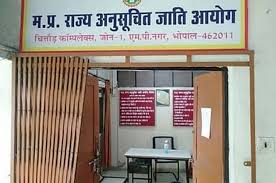
The Commission took cognizance after the news of ‘The Mooknayak’, sought report in 15 days. Bhopal. The case of caste discrimination against a single mother and her daughter of Scheduled Caste category in Pratibha Sthali Gyanodya Vidyalaya, Jabalpur, Madhya Pradesh has forced the Madhya Pradesh State Scheduled Caste Commission to take strict action. Taking cognizance of this serious matter, the Commission has sought an investigation report from the Assistant Commissioner, Tribal Affairs Department, Jabalpur within 15 days. It has also been directed that if the Right to Education Act 2009 or Article 21 (A) of the Constitution has been violated by the school, then necessary legal action should be taken against the culprits. This matter came to light when last year ‘The Mooknayak’ published a detailed report on this subject. The report said that Sunita Arya, a Scheduled Caste community resident of Jabalpur, had applied to Pratibha Sthali Vidyalaya to get her daughter admitted in Class 4. But the school administration not only refused to admit her, but also treated her in an insulting manner using casteist words. She was discriminated against only because she is a Dalit and her daughter was born in a live-in relationship and is biologically Jain (general). Sunita Arya alleges that the school administration looked at her negatively on the basis of her caste identity and used words like ‘Ahirwar’, ‘Chamar’ during the conversation. Apart from this, the school administration also raised the question about the family status of the girl, as Sunita Arya is a single mother. Sunita had also attached a DNA test report with her application, which proves that the girl is the biological child of her and her partner Manish Jain and there should be no doubt about any kind of identity. Despite this, the school did not admit the girl. Talking to The Muknayak representative, Sunita Arya says that she had applied for admission of her daughter in class 4 in Pratibha Sthali Vidyalaya, Jabalpur. But the school administration rejected her application saying that the family status of the girl is not clear. Sunita says that she even got a DNA report, which proves that the girl is the child of her and Manish Jain, who belongs to the Jain community. Still she was insulted on the basis of caste. The school people called her by derogatory words like ‘Ahirwar’ and ‘Chamar’. Sunita alleges that the school administration treated her in a discriminatory manner and mentally harassed her. She also told that casteist language was also used in the conversation on WhatsApp by the school management, copies of which she has submitted to the Scheduled Caste Commission. Sunita says that being a mother, she wanted her daughter to study in a good school, but she was treated unfairly due to caste and daughter being born during living. Allegation of mental harassment, evidence submitted to the commission Sunita has claimed in the application submitted to the commission that she was mentally harassed and treated in a discriminatory manner by the school management. She has also submitted screenshots of WhatsApp conversations with the school and other documents to the commission, which mention caste-based behavior and insensitive comments made by the school. Apart from this, Sunita Arya has also rejected the preliminary investigation report of this case and in the counter-claim sent to the commission, she has said that facts have been hidden in the investigation and conclusions have been drawn in a fabricated manner. Commission’s strictness: Looking at the seriousness of the matter, the commission has clarified in this case that if the reply is not received within the stipulated time limit (15 days), then it will take suo motu cognizance and take action using the powers conferred on it like a civil court. Secretary of the State Scheduled Caste Commission, Seema Soni, said that the commission is looking into the matter as a violation of the fundamental rights of the Constitution and if the faults are proved, action can be taken against the school management under the Scheduled Castes and Scheduled Tribes (Prevention of Atrocities) Act, 1989. What is the legal provision? Right to Education Act, 2009 Gives the right to free and compulsory education to all children between 6 and 14 years. Article 21 (A) of the Indian Constitution Provides the fundamental right to primary education to every child. Scheduled Castes and Scheduled Tribes (Prevention of Atrocities) Act, 1989 Provides strict punishment for discriminating or insulting any Scheduled Caste or Scheduled Tribe person on the basis of caste. Courtesy: Ankit Pachauri, Hindi News
Impact of the news: Case of discrimination against Dalit woman and girl in Pratibha Sthali Vidyalaya, Jabalpur, State Scheduled Caste Commission sought report
Dalit woman brutally beaten in Hisar police station? Police accused of third degree torture!
Commotion due to allegations of serious atrocities on woman in Siwan police station area, family alleges- Police is trying to suppress the matter Kaithal (Haryana). A case of alleged brutal assault and third degree torture of a Dalit woman in police custody has come to light in the Siwan police station area of the district. The woman was admitted to the government hospital in Kaithal by her family in critical condition. She has deep injury marks on her body and bleeding from her internal organs. The family alleges that the woman was detained by the police on Saturday for questioning in the case of a missing girl. She was later released, but during this time she was brutally treated. The victim’s side said in a complaint to the Superintendent of Police (SP) that during the interrogation, a female policeman and four male policemen brutally beat her in a closed room. The family says that the woman is innocent and was treated inhumanly. Seeing her condition, there is great anger among the family and local people. As soon as the information of the incident was received, the citizens of Siwan and the family of the woman reached the DC and SP office and demanded strict action against the guilty policemen. The woman’s husband Rohtash and nephew Sachin alleged that the police are pressurizing the family to suppress the matter and withdraw the complaint. Municipal Council President Representative Sandeep Saini, BJP leader Shaili Munjal and former District Councilor Master Ratiram have also demanded a fair investigation and legal action against the culprits. Haryana Scheduled Caste Commission has also taken cognizance of the matter. Commission member Ravi Taranwali said that the matter of atrocities against the Dalit woman has come to his notice. He has asked the Kaithal SP to submit a report in two days. The commission will take action after receiving the report. On the other hand, Deputy Commissioner Preeti has also sought a report from the police and has given instructions to provide free legal aid to the woman. A delegation of residents of Siwan village alleged in a complaint to the DC that the woman was beaten up in the police station premises, due to which she suffered serious injuries. The DC has assured appropriate action. Statements of police officials According to Amar Ujala’s report, DSP, Sushil Kumar said on the incident, “The woman is an accused in a case. If she has been mistreated, it will be investigated.” While station in-charge Om Prakash said in his statement, “The allegations are baseless and false. The woman was called for questioning on Saturday, but she was not beaten up.” Courtesy : Rajan Chaudhary, Hindi News