
Every day 7 Dalit-tribal women are raped in Madhya Pradesh, shocking figures placed in the assembly
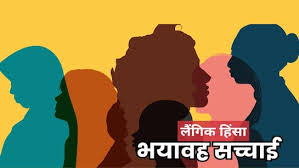
Crime Against Women: The scale of a civilized society is the condition of the women living there. The figures placed in the assembly regarding violence and crime against Dalit and tribal women in Madhya Pradesh are horrifying, which are pointing towards the condition and plight of women living in the society. Rape Victim In MP: In response to the question of opposition MLA Arif Masood in the Madhya Pradesh Assembly on Tuesday, the Madhya Pradesh government presented shocking figures of sexual crimes against Dalit and tribal women in the state every day. These figures have once again brought to the fore the horrific truth of caste and gender violence present in the society. The scale of a civilized society is the condition of the women living there. The figures placed in the assembly regarding violence and crime against Dalit and tribal women in Madhya Pradesh are horrifying, which are pointing towards the condition and plight of women living in the society. A total of 7418 SC-ST women were raped between 2022 and 2024 According to the data presented in the house of the monsoon session of Madhya Pradesh Legislative Assembly, a total of 7418 incidents of rape of Scheduled Caste (SC) and Scheduled Tribe (ST) women occurred in the state between the last three years i.e. 2022 to 2024. In these, 558 women were murdered, and 338 women were gang-raped. On an average, 5 SC/ST women were victims of sexual violence every day in the state The data shows that on an average, 7 Dalit or tribal women were raped every day in the state. In this period, a total of 1906 women became victims of domestic violence. That is, every day two SC/ST women continued to face harassment in their own house. During this period, 5983 incidents of molestation of women were registered, that is, every day 5 SC/ST women were victims of sexual violence. In the last three years, a total of 44,978 crimes against Dalit and tribal women were reported in Madhya Pradesh, which shows that on an average every day in Madhya Pradesh, 41 Dalit or tribal women are subjected to some form of crime. Women from marginalized sections are still the most insecure It is worth noting that about 38 percent of the total population of Madhya Pradesh comes from SC/ST communities, in which 16 percent are SC and 22 percent are ST, despite this, crime on such a wide scale shows that women from the most marginalized sections of the society are still the most insecure. The horrifying government data presented in the assembly also revealed that tribal women became more victims of sexual and fatal crimes, while Dalit women had to face more domestic violence and molestation. Even after 76 years of independence, the safety of SC-ST women is not guaranteed? These figures presented in the assembly raise the question that are our laws, our system, and our thinking still unable to guarantee the safety of women from these sections? And the most serious question is, are these just statistics, or the cries of thousands of lives that never reached the court? Reported by: Akash Dwivedi Edited by: Shiv Om Gupta Courtesy : Hindi News
MPDO booked for sexual harassment of Dalit woman in Andhra’s Prakasam

In response, Madiga Reservation Porata Samiti (MRPS) leaders staged a protest in front of the Mandal Office on Saturday. ONGOLE: A Mandal Parishad Development Officer (MPDO) in Tarlupadu mandal of Prakasam district was booked for sexual harassment and under the SC/ST (Prevention of Atrocities) Act, following a complaint by a Dalit woman staff member. According to Tarlupadu SI Brahmanaidu, the accused officer, Chakrapani Prasad, allegedly harassed the woman—an office assistant on daily wages for the past 10 years—on two consecutive days last week. The first incident occurred on Monday evening when he allegedly misbehaved with her after calling her into his room. The following day, she did not attend work out of fear. On Wednesday, the officer reportedly tried to forcibly pull her into the restroom, causing minor injuries to her hand. She later filed a complaint at the Tarlupadu police station on Thursday night. In response, Madiga Reservation Porata Samiti (MRPS) leaders staged a protest in front of the Mandal Office on Saturday. Tahsildar assured them that the matter would be reported to higher authorities. The accused officer is currently absconding. Courtesy : TNIE Note: This news is originally published on https://thenewindianexpress.com/bha and is used purely for non-profit/non-commercial purposes, especially human rights.
United States Olympic and Paralympic Committee bans transgender from women’s events, citing Donald Trump order

In a sweeping policy shift aligned with a recent federal directive, the United States Olympic and Paralympic Committee (USOPC) has officially barred transgender women from competing in women’s events at the Olympics and Paralympics.The ban, effective July 21, 2025, stems directly from President Donald Trump’s executive order titled “Keeping Men Out of Women’s Sports.” The USOPC updated its Athlete Safety Policy with a new subsection titled “Additional Requirements,” referencing both the executive order and the Ted Stevens Olympic & Amateur Sports Act. Go Beyond The Boundary with our YouTube channel. SUBSCRIBE NOW! “The USOPC is committed to protecting opportunities for athletes participating in sport,” the policy states. “We will continue to collaborate with stakeholders… to ensure women have a fair and safe competition environment consistent with Executive Order 14201.” In a memo, USOPC CEO Sarah Hirshland and President Gene Sykes told Team USA athletes: “As a federally chartered organisation, we have an obligation to comply with federal expectations.” Trump’s executive order, issued in February 2025, mandates that any school or institution permitting transgender girls to compete in girls’ sports will risk losing federal funding. It requires the immediate enforcement of single-sex sports teams and locker rooms, citing Title IX protections for women’s sports. “Our revised policy emphasises the importance of ensuring fair and safe competition environments for women,” the USOPC reiterated in its message to national governing bodies, urging all affiliated organisations to align with the new standards. The decision also mirrors changes within the NCAA, which recently revised its transgender participation rules to restrict women’s competitions to athletes assigned female at birth. The timing of the policy change is significant, as Los Angeles prepares to host the 2028 Summer Olympics. Courtesy : TOI Note: This news is originally published on https://timesofindia.com/bha and is used purely for non-profit/non-commercial purposes, especially human rights.
Dalit women reclaiming Punjab’s farmlands. ‘We are born on this land, have a right to it’
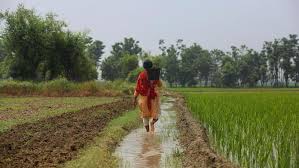
In village after village in the Malwa region, Dalit women have won the right to farm common land. They are now protesting and courting arrest to demand a new casteless settlement: Begumpura. Sangrur: Jasveer Kaur arrives on a shiny blue tractor and climbs down, her torn chappals sinking into the tilled soil. With glittering eyes and a faint smile, she surveys the newly planted paddy crop. “This land is ours,” she said proudly. It took Kaur several years of struggle to reach this moment. The seven acres of land in Sangrur’s Herike village aren’t in her name, but she fought and won the right to farm it. In village after village in the Malwa region, Dalit women like her are demanding what was long denied. They have already leveraged a 1961 law and turned it into a rallying cry for land, dignity, and ownership. The fire of hakk, or rights, is burning in their bellies. Now, Jasveer and hundreds of other women are part of a fresh agitation to claim 927 acres of unused estate land in Bir Aishwan village. They are marching, protesting, and courting arrest to demand a new settlement: Begumpura, a casteless village imagined by poet-saint Ravidas. “The Constitution of India has given us the right to own land, then why are we not given land just because we are from a lower caste?” said 41-year-old Jasveer. “We are born on this land and we have every right to have a piece of it.” Mustard fields, the Green Revolution, and, more recently, the farmers’ protests are the stories most associated with farming in Punjab. But beneath this image is a fraught history of caste discrimination. Dominant castes—primarily Jat Sikhs, along with Kamboj and Saini Sikhs—have sway over most of the farmland. Dalits, who make up about 32 per cent of Punjab’s population, own just 3.5 per cent of the state’s land. Most work as daily-wage labourers through heat waves and biting cold for around Rs 300 a day, planting and harvesting crops they have no claim on. But then, the Dalits in rural Punjab started fighting back. Their first weapon was a law that Punjab had passed in 1961. Under the Punjab Village Common Lands (Regulation) Act, one-third of village common land—known as panchayat land or shamlat deh— to be allotted to Scheduled Castes or Dalits for agricultural use. On paper, it gave Dalits the right to lease and farm these plots through panchayat auctions. In practice, the land stayed in the hands of dominant castes through dummy bidders and threats. The first major pushback came in 2008, when Dalit labourers in Benra village, Sangrur, took over panchayat land. In 2014, the Zameen Prapti Sangharsh Committee (ZPSC) began organising across the region, turning scattered protests into a coordinated campaign. Dalit women emerged as the heroes of this uprising. In their chappals and salwar-kameez, they stood on the roads, held up placards, and demanded their land. They faced off against Jats and other Chaudhrys (landlords) and braved arrests and beatings. The fierce battle spread like wildfire across the state. We women did not tell our husbands about the abuse we faced every day on the paddy fields because we feared we would not be allowed to work. Today we are here fighting for land In the Malwa region alone, Dalit families are now cultivating around 4,000 acres of land, according to the ZPSC. And now, many like Jasveer are demanding more. They are fighting for be-chirag (heirless) land to be redistributed to landless Dalits. The grit of Punjab’s Dalit women comes from years of daily indignities and casteist slurs on farms where they laboured or collected fodder. Today, they know they don’t have to tolerate it. “Dalit women have faced exploitation in the fields. They reared cattle and gathered fodder from the lands of the dominant caste,” said Ronki Ram, political science professor at Panjab University. “They did not want to depend on others’ land anymore and be subjected to everyday exploitation.” From a ‘nightmare’ to victory Until four years ago, Jasveer Kaur was just another woman in Herike village—feeding cattle, collecting fodder, raising her children, and working on a landlord’s fields. Her husband sold food from a thela, and the family scraped by on her daily earnings of Rs 300 from farm labour and selling milk. Men in the gurdwara called her “Churu Chamar”. Now she says they worry that Dalits like her might soon be called something else: landowners. On a pleasant July morning, the monsoon breeze brushed Jasveer’s hip-length hair as she briskly combed it. She was getting ready for a day in the fields. On such days, she likes to plait her hair. She gulped down three rotis with aloo ki sabzi and drank a glass of chilled water. Then she picked up her bright red dupatta and rushed to feed her three buffaloes—the mother, the father, and their newborn daughter. “Till three years ago, I was working at the farmland of the Chaudhrys. I used to collect the grass to feed the cattle from their field,” she said, as she scattered bhusa (fodder) for the animals. In many villages here, Dalit families rely on a mix of cattle rearing and daily-wage labour. Selling milk brings in some income, but fodder is always a challenge. For years, women like Jasveer gathered grass from the dominant caste’s fields and were regularly insulted for it. “It was a nightmare. It was usual for them to use abuse targeting our mothers and forefathers,” she recalled. Jasveer’s transformation began when members of the Zameen Prapti Sangharsh Committee came to Herike in 2021. She had never heard of the 1961 land law before. For the first time, someone told her she had a right to the soil beneath her feet. That same year, she and 14 other Dalit families in the village raised their voices during a panchayat land auction. They sat on dharnas and refused to work on the fields. After two years of pressure, the gram
‘SECL Chudi-Sari Pehne Lo’: When tribal women staged a semi-nude protest in Korba, Chhattisgarh!
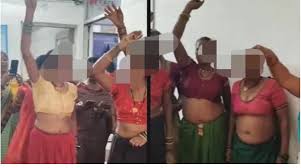
This is the first time that women have staged a semi-nude protest inside such an office. Korba- A shocking incident came to light in Kusmunda area of Korba district of Chhattisgarh, when about 20-25 land-displaced tribal women staged a semi-nude protest at the main gate of the office of South Eastern Coalfields Limited (SECL). On July 18, the women staged this protest demanding proper compensation, jobs and rehabilitation after the acquisition of their ancestral lands. This is the first time that women have staged a semi-nude protest inside such an office. The women waved their bangles and sarees and shouted slogans- SECL Chudi-Sari Pehne Lo! Seeing this kind of anger and anger among the women, the administration was also shocked and the clips of the protest went viral on social media, after which the Chhattisgarh government was also severely criticized. Korba is a major industrial and mining area of Chhattisgarh, known for coal mines and power generation. SECL’s coal mines in Kusmunda are one of the largest mining projects in India. Large scale land acquisition was done for these projects, which includes ancestral lands of Korwa and other scheduled tribes. These communities were earning their livelihood through farming and forest resources on these lands for generations. Under the Forest Rights Act 2006, they have been given rights over land and forest resources, but these provisions have been violated repeatedly. SECL acquired these lands for coal mining and in return the affected families were promised compensation, jobs and rehabilitation. However, even after many years these promises have not been fulfilled, due to which there is deep disappointment and anger among the tribal communities. The employment case of land-displaced people has been pending for a long time, for which many years have passed since applying, but the land-displaced people could not get employment. The protesting women told that they had demonstrated and struck many times in the mine earlier also. The affected families said that their lands were snatched but they neither got proper compensation, nor jobs, nor rehabilitation facilities. SECL had promised jobs for the land displaced, but in many cases fake appointments were made. Some families alleged that other people were given jobs in their name or their rights were completely ignored. After the land snatching, these families have lost their livelihood and are facing financial difficulties. The protesting women said that their lands were snatched in the name of industrial development, but the big industrialists got the benefit, while the local tribal community was neglected. The president of Bhu-Visthaap Rojgar Ekta Mahila Kisan Kusmunda said that the persons employed fraudulently in place of the real land displaced should be removed. Also, repeated applications were made to keep the real heir. Despite complaining to the local administration and SECL officials several times, no concrete action was taken, which pushed these women to this extreme step. This protest attracted widespread attention at the social and administrative level. The incident was widely discussed on social media, especially on Twitter, and many called it a symbol of the government’s insensitivity. However, no official government statement or action has been confirmed in the matter yet. The protest also reflects the growing threat to the cultural and social identity of tribal communities. After the land was taken away, these communities have not only become economically weak, but their cultural roots are also in danger. Geetha Sunil Pillai Courtesy : Hindi News
Dalit woman and pregnant niece attacked in Gujarat! Caste violence captured in CCTV footage – Know what is the whole matter?

The Dalit woman accused the neighbors of using casteist abuses, assault and threats, while the other side also complained of forceful intrusion and attack. Gujarat: A dispute between neighbors that started over underground electricity repairs in Baroda village in Daskroi taluka of Ahmedabad district escalated to allegations of casteist abuses and assault. Both sides have lodged a police complaint against each other. According to the police, a 66-year-old Dalit woman has alleged that her upper caste neighbors abused her and her pregnant niece with casteist words, physically assaulted them and threatened to kill them. The incident took place on Sunday evening when the woman warned not to dig deep in the electricity repair work going on near her house, as there was a possibility of underground wiring. In the complaint, the woman said that when she was not heeded and the work continued, the dispute escalated and turned into violence. It is alleged that the neighbours snatched her stick and beat her as well as her niece. The woman says that the niece has injuries on her face and legs. She has submitted three video clips of the incident to the police as evidence and also named two people who allegedly intervened during the incident. On the other hand, the neighbours have also filed a complaint in return. They alleged that the Dalit woman and her niece forcibly entered their house and attacked them with an iron pipe and a wooden stick. The upper caste complainants say that they were threatened that they would be implicated in a false atrocity case and expelled from the society. The Vivekanand Nagar police station has registered an FIR under relevant sections of the Indian Penal Code (BNS) and the Scheduled Castes/Scheduled Tribes (Prevention of Atrocities) Act on the basis of complaints from both sides. Police say that the investigation into the case is ongoing. Rajan Chaudhary Courtesy : Hindi News
“They only wanted to sleep with me, not marry me!” — Dalit woman’s dating story reveals the reality of upper caste men
People are shocked to know the story of caste bias shared by Dalit woman. However, this truth of society is not new, such biases have been going on for a long time. New Delhi. Caste discrimination in India is not limited to social or economic circles — it still affects the foundation of relationships today. Recently, a Dalit woman shared her dating experience on the social media platform Reddit, which created a stir on the Internet. She told how Indian men looked at her not as an equal and respectable partner, but as a ‘sexual object’. This woman wrote that initially men would praise her beauty and intelligence, but as soon as they came to know about her caste, their behavior changed completely. Most of the men broke off the relationship citing ‘family pressure’. She said, “They would say, ‘You have no shortcomings, but our families will not accept it.’ Or else: ‘You deserve someone who doesn’t have to struggle so much.’” The woman also said that she had to listen to derogatory comments many times like – “You don’t look like a Dalit”. She wrote that she was used only as a ‘sexual experiment’, never seen as a life partner. The woman further said, “Dalit women are ‘more wild’, ‘better in bed’ – I was repeatedly fetishised in this way. I am a thrill for them, but not a permanent relationship. I feel like I am a ‘hidden phase’ that they go through but never mention.” Not only in personal relationships, but also in her career, the thinking of men was discriminatory. The woman wrote that her achievements were described as a result of reservation, not her hard work. She said, “I studied, built a career, took care of myself — but that was never enough.” After this emotional and bitter experience, the woman has now given up dating. She says, “I haven’t stopped believing in love, but I have stopped allowing myself to go through this painful cycle again and again. I am not someone’s experiment, thrill or hidden phase. We are not ‘disposable’. We are not someone’s hidden stories of their lives.” She concluded by appealing to all women to understand themselves, respect themselves and not compromise their dignity. Rajan Chaudhary Courtesy : Hindi News
Transgender track star Sadie Schreiner rushes to the court after being banned from the women’s category

Add Your Heading Text HereSports and discrimination can’t go hand in hand. Sports ask to expand the horizon, not to shrink it. But when it causes some unfair advantage to a section over others, discrimination might be the answer to settle for, no matter if that, in any way, can’t sit well with athletes like Sadie Schreiner. The transgender woman athlete, however, isn’t one to brood about that seething dissatisfaction in silence; she’s, in fact, taking it to the next stage against Princeton University, New Jersey. The 21-year-old runner is charging a lawsuit. Sadie Schreiner puts Princeton University on notice Reports suggested Princeton University barred the athlete from taking part in a women’s race held on May 3 at the Larry Ellis Invitational. Officials allegedly informed Schreiner 15 minutes before the race kicked off that the event would be specifically restricted to females, not trans women. “I do not want to assume, but you are transgender,” a Princeton official told Schreiner, as per the suit, typically leading it to the controversy that holds that official accountable to ”blatant and willful disregard of rights as a transgender woman…thereby causing Sadie Schreiner foreseeable and emotional harm.” — KarenFOrlando (@KarenFOrlando) But there’s another side to the story. It’s easier for a trans woman with equal physical strength to a man to easily dominate women in any athleric competition. To limit this massive loophole in the law, President Trump issued an executive order, separating trans women from the core women’s game back in February. Now, Sadie is challenging not only the Princeton school authority but also the president’s order, straight away. Sadie Schreiner makes it a point to stick to her ground “Among all the hurdles transfers usually have, there is an extra layer because it is trans, 50% of the country banned me from participating and that meant I couldn’t attend any of those colleges even if they reached out to me with a full ride,” Schreiner imposed her own logic over the national new norm back in December last year when many schools, sports governing bodies started to go by the president rule, banning number of trans athletes from the elite female category competitions. LGBT advocacy and human rights organisations might have her back in the fight, but it reflects a more critical question of social sentiment vs athletic fairness. The two-time All-American in the 200- and 400-meter events has been aiming to make it to the 2032 US Olympic team. It’s awful how she felt derogated after she was left running alone around the track by a single executive move. She said she felt ‘defeated’ listening to the news for the first time. The 21-year-old can’t see herself compete in anything but in the track and field events at any point. While her future looks to be in severe jeopardy, hopefully, there will be some middle path, safeguarding the interests of all parties. Courtesy : TOI Note: This news is originally published on https:/timesofindia.com/ and is for use by the non-military/non-commercial community, especially those in the human rights sector.
‘I Am Someone To Sleep With, Not Marry’: Dalit Woman Shares Painful Dating Story

Discriminated for her caste and mistreated by men, this lady took to Reddit and revealed her terrible dating experience, writing a viral online post. Even love fails to transcend centuries-old caste-based discrimination in India. A Dalit woman’s horror account of dating Indian men left everyone shocked on the internet, as she wrote about being treated as a sexual object, not an equal and respectful partner. In a Reddit post, this lady revealed how multiple men shattered the hope and confidence with which she entered the dating world, underlining how deeply caste still impacts relationships in the country. The woman said men would initially approach her for her appearance and intelligence, but soon lose interest as they found out about her caste. The revelation brought a complete U-turn in their behaviour, cutting down all contact while giving family pressure as a major excuse behind the break-up. “‘It’s not you,’ they’d say. ‘But our families would never accept it.’ Or worse: ‘You deserve someone who won’t have to fight this hard’,” the Reddit user wrote, disclosing how she faced derogatory remarks, such as “You don’t look like a Dalit”, and being treated as a mere sexual object. “I’ve been told that Dalit women are ‘wild’, ‘great in bed’, ‘more open-minded’. I’ve been fetishised more times than I can count. To them, I’m exciting, a break from the norm. I’m someone to sleep with, not someone to marry. I’ve begun to feel like I’m part of a private ritual that savarna men go through before they settle down with someone from their caste. I’m the hidden phase they never speak of: the shame wrapped in lust.” The woman’s traumatic dating experience also included facing career-based insults, with men assuming that her achievements were down to the caste reservations offered to her. “I’ve worked incredibly hard to be where I am. I’ve studied, built a career and supported myself. But even then, it’s not enough,” she wrote. The lady also declared she has stopped dating altogether. “Not because I stopped believing in love, but because I couldn’t keep subjecting myself to this cycle of fetish, rejection, erasure, and pain. I couldn’t keep being someone’s experiment, someone’s thrill, someone’s secret. We are not disposable. We are not secret histories in someone else’s life,” she added, calling on all women to respect and value themselves. Curated By : Buzz Staff About the Author Buzz Staff, A team of writers at News18.com bring you stories on what’s creating the buzz on the Internet while exploring science, cricket, tech, gender, Bollywood, and culture. Courtesy : News18 Note: This news is originally published on https:/newa18.com/ and is for use by the non-military/non-commercial community, especially those in the human rights sector.
Painful death of pregnant tribal woman in Rewa, MP: Flood water came on the bridge, could not reach hospital
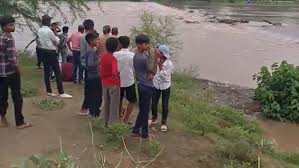
The family said – life could have been saved if treatment was received on time, administration ordered investigation Bhopal. A pregnant woman lost her life due to careless system and bad roads in Rewa district of Madhya Pradesh. The woman could not reach the hospital on time because flood water had come on the bridge built on the river. She kept suffering for two hours and then died there. The incident is of Bhatigwan village of Jawa tehsil, where this tragic accident happened late on Sunday night. After the last rites on Monday, the family demanded justice from the administration. There was no road in the in-laws’ house, so the woman came to live in her maternal home 26-year-old Priya Rani Kol, a resident of Bhatigwan village, has her in-laws in Barhat village. Due to lack of road in Barhat, she came to her maternal home when she was pregnant, so that she could get timely treatment at the time of delivery. Her health suddenly deteriorated on Sunday night. When the family was taking her to the nearest Jawa hospital, flood water came on the bridge of Mahna river on the way. Priya kept suffering for two hours on the banks of the river. The woman and her family could not cross the bridge. Everyone was stranded on one side of the river. During this time, the family called a doctor from the village. By the time the doctor arrived, the woman’s condition had become critical. The doctor declared her dead after examination. The family reached Barhat with Priya’s body, but the road was closed due to floods. In such a situation, the body was brought to the village after taking a 40-km long detour and then the last rites were performed. Life could have been saved if treatment was received Priya’s sister-in-law Shanti Kol said, “If treatment was received on time, Rani could have been saved. This bridge is so low that every time it rains, water flows over it. But the administration never paid attention to it.” Priya’s father-in-law said that the daughter-in-law was sent to her maternal home because there was no road in the in-laws’ house. It was easy to go to the hospital from there, but the flood blocked the way there too. Pregnant women of Sidhi also opened a front Amidst this incident in Rewa, eight pregnant women of Khaddi Khurd village in Sidhi district have opened a front against bad roads. These women are being led by Bagheli social media influencer Leela Sahu, who is also pregnant. She says that the condition of the roads worsens in the rain, making it risky to reach the hospital. Collector ordered an inquiry Rewa Collector Pratibha Pal has ordered an inquiry considering the seriousness of the matter. She said that the administration will find out why the woman could not get timely medical facility and what steps can be taken to prevent such accidents in future. Ankit Pachauri Courtesy : Hindi News