
Dalit woman raped in Jagdishpur: Pradhan’s brother accused; called on pretext of getting benefits of housing scheme

A case of rape of a 50-year-old Dalit woman has come to light on Thursday in Bhale Sultan Memorial Police Station area of Jagdishpur. The brother of the village head is accused of calling the woman to his nursery on the pretext of getting benefits of housing scheme. Finding her alone there, he raped the woman. Amethi, The victim told the police that the accused had been talking to her about getting benefits of housing scheme for several days. When the woman informed her husband about the incident, the husband talked to the accused about it. The accused not only abused her, but also threatened to kill her if she informed anyone about the incident. According to SHO Tanuj Pal, a case has been registered on the complaint of the victim. The woman has been sent for medical examination. The police team reached the spot and is investigating the matter. The search for the accused is on and soon he will be arrested and legal action will be taken. Courtesy : Hindi News
Case of kidnapping of Dalit girl in Barabanki: Allegation of the brother of the girl recovered from Mumbai – the accused are pressuring to convert
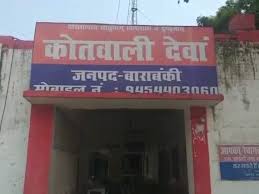
A case of kidnapping of a Dalit girl has come to light in June from Deva area of Barabanki. The girl’s brother has alleged that the accused are pressuring his sister to convert. They are threatening to kill her if she refuses to convert. A video of the girl’s brother has also surfaced. In the video, he is claiming that the accused have a connection with Changur. The brother has also given an application to the police station in-charge Deva on August 14. In the application, the girl’s brother told that a youth from the area along with his friends kidnapped his sister. The accused started pressuring her to convert. When the girl refused, she was sent to Mumbai. She was kept hostage there. The girl called her brother and informed him about being held hostage in Mumbai. After this, with the help of the police, the girl was recovered from Mumbai. Deva Kotwal Ajay Kumar Tripathi says that he has not received any complaint letter. He said that an old video of the girl has surfaced. In this video, she is saying that she went with the young man voluntarily. Police is investigating the matter. Sarfaraz Warsi Courtesy: Hindi News
20-year-old Dalit girl’s charred body found in Karnataka’s Chitradurga, boyfriend held

On Tuesday evening, the mother identified her daughter’s charred body at the mortuary of Chitradurga District Hospital based on a tattoo on her hand. CHITRADURGA: A 20-year-old Dalit college student was allegedly murdered and burnt to death by her boyfriend in Chitradurga. The police have taken the accused, a 21-year-old unemployed school-dropout, into custody for questioning. Various Dalit organisations and ABVP, the student wing of the BJP, alleged the victim was raped and murdered. The police are, however, yet to confirm the charges of rape. Superintendent of Police Ranjit Kumar Bandaru said the body of a young woman was found in a charred state on Tuesday in a vacant plot on NH 48 in Gonur village under Chitradurga Rural Police Station limits. The police suspect the victim was killed and the body burnt using petrol by the accused. The victim was a second year BA student at Government Women’s College in Chitradurga. She stayed at the college hostel and had informed the hostel warden that she will be going to her village at Koverahatti in Hiriyur taluk on August 14. She told her family that she was going out with a friend Chethan. Later when she did not reach home and could not be reached on her mobile phone, the victim’s mother went to the hostel on Tuesday to check her whereabouts. The mother also lodged a complaint with the police. On Tuesday evening, the mother identified her daughter’s charred body at the mortuary of Chitradurga District Hospital based on a tattoo on her hand. ‘Dispute between victim, accused led to murder’ Sources in the police department said the victim and Chethan were in love. The police suspect that there were disagreements between the two and it might have led to the murder. On Wednesday, the body of the victim was handed over to the family after postmortem. The protesters demanded the arrest of the accused and blocked roads in various parts of Chitradurga city. Meanwhile, Planning and Statistics Minister D Sudhakar condemned the murder. The minister handed over a compensation cheque of Rs 5 lakh to the victim’s family, including Rs 2.50 lakh from the district administration and Rs 2.50 lakh by himself. Courtesy : TNIE Note: This news is originally published on https:/thenewindianexpress.com/bha and is used purely for non-profit/non-commercial purposes, especially human rights.
Communal Tensions Erupt After 40-Year-Old Dalit Woman Brutally Murdered In Madhya Pradesh’s Burhanpur
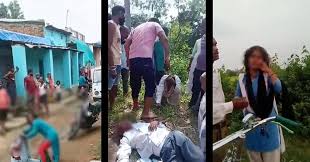
The city observes Burhanpur Bandh and markets remained closed; accused in police custody Burhanpur (Madhya Pradesh): Madhya Pradesh’s Burhanpur district observed a ‘Bandh’ on Thursday morning as communal tensions flared up after the brutal murder of a 40-year-old woman by a man belonging to a minority community on Wednesday evening. SP Ashutosh Bagri said that the accused has been arrested and FSL team is collecting evidence from the spot for further investigation. After the post-mortem, enraged members of Vishwa Hindu Parishad (VHP), Bajrang Dal, Hindu Mahasabha, Bhim Army, and BSP took out a funeral procession in the town on Thursday morning. Police made tight security arrangements to maintain law and order in the town. Traversing the main streets of the town, they submitted a memorandum to SDM Ajmer Singh Gaur, demanding capital punishment for the accused. During the rally, participants raised slogans and urged people to close their businesses. They expressed concerns over rising violence and urged authorities to take strict action against the perpetrators. They had also gheraoed Shikarpura police station, demanding capital punishment against the accused on Wednesday evening. MLA Archana Chitnis met the victim’s family and assured them of strict action against the accused and financial assistance. She said she had talked to CM Mohan Yadav. As per reports, the incident occurred at victim Sharda Sirture’s home, when accused Sheikh Salim, of Maharashtra, barged into the house and attacked her with a hammer. Sharda’s brother-in-law Mithun Sirture tried to intervene and got into a scuffle with Salim. However, Salim pushed him away and struck Sharda on the head three to four times. She sustained a skull fracture and bled profusely. She was rushed to the hospital but succumbed to her injuries at the district hospital. Sharda’s husband, Manoj Sirture, said that she had left home for work on Wednesday and he was not at home during the incident, as their son was in hospital. SP Bagri said that prima facie, the incident occurred due to personal relations between the victim and accused, which had gone sour for some reason. To maintain peace, additional police forces have been deployed in the area as community members seek justice for Sharda. Courtesy : TFPJ Note: This news is originally published on https:/thefreepressjournal.com/bha and is used purely for non-profit/non-commercial purposes, especially human rights.
In The Salt Pans Of Thoothukudi, A Rs-10 Patriarchal Tax On Dalit Women Speaks To Enduring National Discrimination
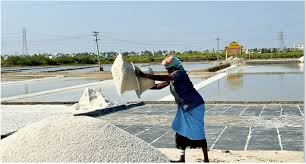
A mural beneath an overpass in Thoothukudi, Tamil Nadu, depicts a woman salt worker, highlighting the role of women in the region’s salt economy/ MANIDEEP GUDELA Decades after equal pay laws, Dalit women in the Thoothukudi salt pans of Tamil Nadu still earn Rs 10 less daily or Rs 300 less monthly than men. They carry 25-kg baskets under the scorching sun, yet tradition justifies the gap and serves as a reminder that men are still regarded as superior. Despite court rulings and hard labour, gender—and caste—discrimination persists across generations. Thoothukudi, Tamil Nadu: At sunrise, the salt pans in this southeastern district shimmer like glass and, by noon, feel like a furnace, with temperatures soaring to 40 deg C. The feet of the women workers—mostly Dalits—are cracked from years of standing in saline water. Their backs are bent under the weight of 25-kg salt sacks, carried from drying plots to storage sheds. For this exhausting, debilitating work, they earn Rs 590 a day—less than the Rs 679 daily state minimum wage paid to skilled workers at a nearby power plant. That wage is barely enough to live on—but what galls the women most is that they earn Rs 10 less than the men. Not because they work less. Not because the industry cannot afford to pay them equally. But simply, they say, because tradition demands it. The Rs 10 missing from a woman’s wage is so small it can almost go unnoticed. But that invisibility makes it a daily, invisible denial of dignity. The patriarchal tax is compounded across generations. “The mother accepted Rs 1 less—a supervisor recalls that was the gap in his parents’ time. Today, the daughter accepts Rs 10 less. If the pattern continues, a few decades from now, the granddaughter will take home Rs 100 less for the same work.” The Tax That Preserves Power It is clear that the Rs-10 patriarchal tax in Thoothukudi is not about profit. It appears to be a tool to preserve a social hierarchy that reinforces and reminds women of their place in power structures. At the end of the month, a woman would have earned Rs 300 less than a man, less than half a day’s wage. The underpaying is not because the owner needs the savings, but because underpaying women is a societal tradition that goes unchallenged. In a 20-acre salt pan, where 25 people work, 20 of them women, the Rs-10 wage gap—you could call it a patriarchal tax on women—amounts to a savings of no more than Rs 6,000 for the employer. That is a negligible sum for the industry, yet it is a calculated reminder of who holds power and who is subservient. R (name changed), a salt pan supervisor in his fifties, overseeing the day’s work. Supervisors, mostly men, manage operations, monitor tasks on site, and keep track of the workers/ MANIDEEP GUDELA Such stories are common in India’s informal economy, which employs about 85% of India’s workforce of about 440 million, with marginalised communities constituting approximately 70% of this workforce: this is also where more than 81% of Indian women work. This is where the most pervasive forms of gendered labour exploitation occur, deeply rooted in caste and patriarchal structures within the production system, with women in the informal sector earning 34% less than their male counterparts. This was evident in Thoothukudi, home to one of India’s major salt-producing belts. The Paraiyars: Bottom Of The Heap Tamil Nadu ranks second in salt production in India, with Thoothukudi district at the heart of the state’s salt industry. Spread over 25,000 acres, the industry in Thoothukudi contributes 70% of the state’s salt output, playing a crucial role in the local economy, directly employing 30,000 workers. A 45-year-old woman, who says she has worked for over two decades in the salt pan, pours dried salt into heaps using an aluminium basket/ MANIDEEP GUDELA Dalit women, primarily from the Paraiyar community, form the backbone of this labour-intensive industry. Known locally as uppalaththu kooli (salt pan labourers), their families have worked in the salt pans for generations. Historically landless, Paraiyars are concentrated in Tamil Nadu’s central and southern districts. The salt pans, mostly leased from the government, are controlled by the Nadars—a powerful, dominant caste in the region. That Dalit women make up the majority of the workforce is no coincidence. Caste has long dictated who performs the most gruelling and degrading labour; gender only deepens this entrenched hierarchy. Dalit men are slightly better off, often working in supervisory or processing roles. It is the women who remain trapped in the most physically demanding tasks. “Our work is more tedious than theirs,” said G*, who is in her 50s and has worked at the pans for over 40 years. “We have to draw pan lines, refill the plots with brine, and sometimes collect the salt too. The men only collect salt—we largely have to do everything.” Salt work is seasonal and closely tied to rainfall. The season typically begins in February and continues until August or September, depending on the monsoon. Workers are paid a daily wage. “There’s no salary on days when there’s no work,” said G. “During the monsoon, we have no income. Even if we’re injured and return home midway through the day, we lose the entire day’s wage.” A Microcosm Of A National, Global System The wage gap in Thoothukudi’s salt pans isn’t an exception. It’s a microcosm of the global system that devalues women’s labour, a pattern of exploitation rooted in patriarchal and capitalist structures. Even though 43% of Tamil Nadu women participated in the workforce (vs 32.5% nationally), according to Periodic Labour Force Survey (PLFS) data for 2020-21, the latest available, the state has one of India’s widest gender pay gaps with women earning just 74 paise for every rupee men earn in regular salaried jobs. This is not limited to Tamil Nadu. According to the ministry of agriculture’s data for 2020-21, a woman agriculture field labourer earns Rs 88 per
Pune | Three Dalit Women Allege Illegal Arrest | Protests Erupt Outside District Collector’s Office
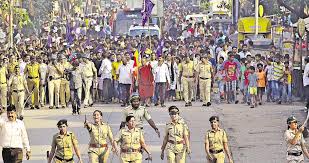
On August 1, Pune Police allegedly took three young Dalit women into illegal custody. According to the women, police raided their homes, hurled casteist slurs, made derogatory comments about their sexuality, and physically assaulted them. A week had passed since the alleged harassment and atrocities inflicted on three women in Pune; however, no FIR has been registered yet. The police claim that, based on a preliminary inquiry, there is no evidence to support the women’s allegations, and therefore, an FIR cannot be filed. The city witnessed a protest outside the District Collector’s office, demanding that action be taken against the police. Courtesy : Outlook India Note: This news is originally published on https:/outlookindia.com/bha and is used purely for non-profit/non-commercial purposes, especially human rights.
Women, transgender drivers get autos
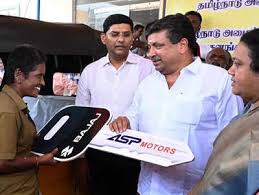
Add Your Heading Text HereMadurai: IT minister Palanivel Thiaga Rajan on Thursday distributed welfare assistance, including 11 autorickshaws, to women and transgender drivers at a function at Periyar complex bus stand. The initiative was organised by the department of labour welfare and skill development for beneficiaries registered with Tamil Nadu Unorganised Drivers and Automotive Repair Workers Welfare Board. Nine of the autos were handed over to women drivers. District collector K J Praveen Kumar and mayor Indrani Ponvasanth were present. Officials said that since 2023, as many as 1,126 women autorickshaw drivers from the district applied for financial assistance under the scheme. So far, 644 of them received ₹1 lakh subsidy each. The scheme aims to support self-employment opportunities and improve livelihood security for drivers from marginalised communities in the unorganised sector. PTR said the govt remains committed to ensuring that inclusive welfare programmes reach all eligible beneficiaries. Efforts are being made to streamline application and disbursal processes to help more people benefit from such schemes, he added. Courtesy : TOI Note: This news is originally published on https:/timesofindia.com/bha and is used purely for non-profit/non-commercial purposes, especially human rights.
Death of Dalit woman in Ayodhya: There was no money even for the last rites, social worker took responsibility of the children
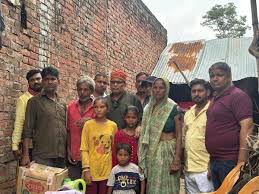
A Dalit family in Bakchuna village of Milkipur tehsil area of Ayodhya was devastated when the female member of the family, Deepanjali Pasi, died suddenly. The poverty was such that the woman’s last rites could not be performed for a day. When this news reached social worker Rajan Pandey, he not only helped financially, but also took the responsibility of the four orphaned children on his shoulders. Deepanjali Pasi’s husband Vijay Pasi is very poor and this family has only an 8×8 feet tin shed room in the name of livelihood. After Deepanjali’s death, four innocent children became helpless. According to the neighbors, the entire family had no ration, no clothes and no one to come forward for help. Social worker extended a helping hand As soon as social worker Rajan Pandey got this information, he sent his three sons to the village and immediately arranged for the last rites. After this, he himself reached the village and brought with him two cots, mattress, carpet, blanket and five sets of clothes. He also provided three months’ ration – which included pulses, rice, flour, refined oil and vegetables. He also gave immediate financial help of Rs 5,000 Rajan Pandey became emotional and said – These children are my children now. As long as I breathe, it is my responsibility to raise them. Expressing displeasure at the administration, he said that so many poor people are living in the village, yet they neither got housing nor any government assistance. Targeting the administration and leaders, Rajan Pandey questioned the inaction of the village head and village panchayat officer and demanded immediate action from the Sub-District Magistrate Milkipur and Block Development Officer Amaniganj. He alleged that there are queues of leaders during elections, but no one comes to look after the families suffering like this. Vijay Pathak Courtesy: Hindi News
“Caste is acquired by birth, does not change by marriage”: Himachal High Court denies relief under SC/ST Act to woman accused who married a Dalit man, know the full case

The court specifically emphasized that a non-Dalit person cannot enter the Dalit community through marriage. If this is believed, it will promote caste discrimination in society. The trial court had acquitted her on the ground that she had married a Dalit man and thus she is now a member of the Dalit community herself. The High Court completely rejected this argument. Shimla- The Himachal Pradesh High Court has clarified in an important order that caste is determined by birth and cannot change after marriage. This order has come in a case where a non-Dalit woman had described herself as a member of the Dalit community after marrying a Dalit man. Rejecting this argument, the court has ordered to restart the case going on against her under the SC/ST (Prevention of Atrocities) Act. The case began when the accused Sarojini was booked under Sections 451, 323, 504, 506 of the IPC and Section 3(1)(s) of the SC/ST Act for having an affair with a Dalit man. The trial court had acquitted her on the ground that she had married a Dalit man and was thus now a member of the Dalit community herself. The High Court completely rejected this argument. The bench of Justice Rakesh Kainthala made it clear in its judgment that “caste is an innate identity which does not change throughout life”. The court said that if caste change is allowed after marriage, it would undermine the basic purpose of the SC/ST Act. The court cited the Supreme Court’s Valsamma Paul case (1996) in this matter. Justice Kainthala quoted the Bombay High Court’s observation: “The misery of a person born in a Scheduled Caste does not end by marrying a person from an upper caste. The label attached at birth persists irrespective of the marital relationship.” Similarly, the Karnataka High Court’s judgment in Bhimappa Jantakal vs State of Karnataka (2022) was cited, which held that “a Scheduled Caste woman does not lose her Scheduled Caste status on marrying a forward caste man, and the caste identity of her children continues to be retained.” All these judgments had made it clear that caste is acquired by birth and cannot be changed either by marriage or in any other manner. The court particularly emphasised that a non-Dalit person cannot enter the Dalit community through marriage. If this is held, it will promote caste discrimination in society. The High Court has set aside the trial court’s decision and remanded the case for reconsideration. The court has directed that the trial court should frame charges afresh after hearing both the parties. Along with this, both the parties have been directed to appear in court on August 1. This decision is being considered a big step towards social justice. This decision is not only important from the legal point of view but it will also have far-reaching consequences socially. This has made it clear that caste identity is not something that a person can change as per his convenience. The court clarified that its decision is only to clarify the legal position and it is not a comment on the merit of the case. Now the hearing of this case will start again in the trial court. Geetha Sunil Pillai Courtesy : Hindi News
Man gets life term for raping Dalit woman, sharing obscene photos

Agra: A 38-year-old man was sentenced to life imprisonment for raping a Dalit woman and circulating her obscene photos to her relatives. The SC/ST court in Agra, presided over by Judge Pushkar Upadhyay, also imposed a fine of ₹90,000 on the convict. Additional district govt counsel (ADGC) Hemant Dixit said on Saturday that the 30-year-old woman’s mother, a farmer, had filed a police complaint against the accused in March 2022. “My daughter and the man were friends and used to speak regularly. After her engagement, we asked her to stop talking to him. But around Jan 2021, he convinced her to meet him one last time. During that meeting, he took obscene photos of her and forcefully did wrong things. My daughter returned home and told me everything. Out of shame, we didn’t report it and got her married,” the mother told the court during the trial. She added, “After the wedding, the man began sending my daughter’s obscene photos to our relatives, including to the mobile phone of my brother-in-law’s son-in-law. The pictures were sent to many relatives.” Based on the FIR, police booked the accused under IPC sections 376 (rape), 504 (intentional insult to provoke breach of peace), 506 (criminal intimidation), 509 (insulting the modesty of a woman), along with section 67 of the IT Act and relevant provisions of the SC/ST (Prevention of Atrocities) Act. The man was arrested shortly after and remained in jail throughout the trial. A chargesheet was filed weeks later. “After examining all witnesses and material evidence, the SC/ST court convicted the accused on Thursday and sentenced him to life imprisonment,” ADGC Dixit said. Courtesy : TOI Note: This news is originally published on https://timesofindia.com/bha and is used purely for non-profit/non-commercial purposes, especially human rights.