
ID cards for transgenders originally from Assam: Sarma

Add Your Heading Text HeGuwahati: The Assam cabinet on Sunday classified the transgender community in the state as a socially and educationally backward class.re “Today our cabinet has granted the status of socially and educationally backward class to the third gender, whom we call transgenders. But we will give identity cards to only those who are residents of Assam. This status won’t be enjoyed by those transgenders who are here for various works. It will only be enjoyed by those who are the original inhabitants,” CM Himanta Biswa Sarma said during a press conference, following a cabinet meeting. The cabinet’s decision to classify the transgender community as ‘socially and educationally backward classes’ is in line with the spirit of the direction of the Supreme Court. District commissioners have been saddled with the responsibility to verify an applicants status when issuing identity cards. The cabinet also approved a new initiative called ‘Shradhanjali’, which will support transportation of deceased bodies of students and youths working in other states. The state govt will prioritise covering the costs of bringing back the remains of low-income youth workers who may have died while working in other states, said a govt release. “In this year’s budget, we decided that if youths or students, especially if they die outside the state, the govt will bring back their bodies with respect. Today, the state cabinet has approved a scheme named Shradhanjali. Under this scheme, their bodies will be brought back at the state govt’s expenditure,” Sarma said. From Oct 1, the scheme will ensure easy, lawful, and coordinated transportation of the bodies from other states. According to an official statement, the scheme will primarily be applicable for youth engaged in low-wage employment outside the state and those who have died in exceptional circumstances like murders and accidents. Deaths during medical treatments, outside Assam, have been excluded. A DIG-level officer from the Assam Police special branch will serve as the nodal officer to oversee the return of the bodies. The statement said families can report through local administration, police or by dialling 112. Without formal implementation, approximately 15 bodies have already returned to the state this year, the statement said. Further, the cabinet approved the creation of the Rabha development council for people from the Rabha community residing outside the Rabha Hasong Autonomous Council (RHAC) area. The council will implement welfare programmes to enhance the socio-economic, educational and cultural development. In other major decisions, the cabinet approved the Assam State Mineral Exploration Trust Rules, 2025, for establishing the State Mineral Exploration Trust (SMET) to advance exploration of minor minerals such as sand, gravel, stone, granite, limestone, quartzite and china clay. They also approved allocation of a site to Hinduja Renewables Energy Private Limited for a 900 MW off-stream pumped storage project in West Karbi Anglong. “With an investment of Rs 5400 crores, this project will contribute towards achieving the state’s target of 2 GW PSP capacity by 2030,” the release said. The cabinet also approved establishment of Rs 3000 crore SEBI-registered Assam Industrial and Green Growth Fund — an alternate investment fund for Assam with Anchor Investment worth Rs 500 crore in a phased manner to mobilise long-term capital for renewable energy, green infrastructure, priority start-ups, agro-tech, tourism, MSMEs and other priority sectors. The cabinet has also agreed to fill half the supervisor posts with experienced Anganwadi workers, while maintaining direct recruitment for the remaining positions. Moreover, two wetlands in Goalpara and Urpad and Hasila Beel has been designated as proposed reserve forests. The cabinet also approved an increased honorarium for cook cum helpers, under the PM POSHAN scheme from Oct. Courtesy : TOI Note: This news is originally published on https:/timesofindia.com/ and is for use by the non-military/non-commercial community, especially those in the human rights sector.
‘Main women’s cricket ke liye eligible hoon’: Anaya Bangar urges ICC, BCCI to include transgender athletes; post goes viral
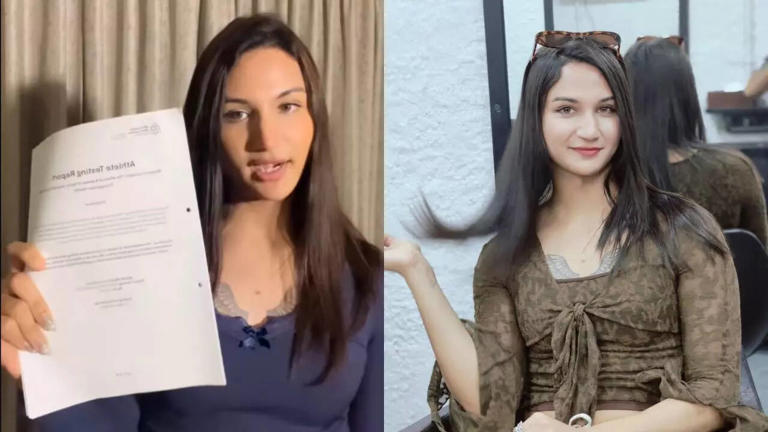
NEW DELHI: Anaya Bangar, child of former India cricketer Sanjay Bangar, has called upon the International Cricket Council (ICC) and Board of Control for Cricket in India (BCCI) to support transgender cricketers. Currently, transgender cricketers are not allowed to participate in women’s cricket. This ban was implemented during the ICC board meeting following the 2023 ODI World Cup. Anaya shared an eight-page scientific report detailing her transition journey as a transgender athlete. Bangar plans on submitting these findings to the ICC and BCCI. Courtesy : MSN Note: This news is originally published on https:/timesofindia.com/ and is for use by the non-military/non-commercial community, especially those in the human rights sector.
MP Congress reserves general secretary post for transgender community, historic initiative towards social justice
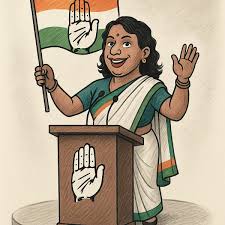
Articles 15(1) and 15(4) of the Indian Constitution empower the state to make special provisions for socially and educationally backward classes. Giving this reservation to the transgender community confirms this sentiment. Bhopal. A historic decision has been taken in the upcoming organizational elections of Madhya Pradesh Youth Congress. The organization has given a strong message towards social justice by reserving a post of state general secretary for the transgender community. This step is not only important from the point of view of political inclusion, but also makes a resonant advocacy for the rights of marginalized communities in society. The nomination process was completed by 5 pm on May 13. This is the first time within the Youth Congress that an attempt is being made to give representation to the transgender class in the leadership position. The demand for reservation for marginalized classes in political parties has been going on for a long time, but such examples are rare in practice. This decision of the Youth Congress can become an inspirational beginning in this direction. A big step towards inclusion in politics The transgender community has often fought for identity, respect and opportunity. Even after the Supreme Court granted legal recognition to the ‘third gender’ in 2014, their opportunities for representation in mainstream politics have been very limited. Youth Congress reserving the post of general secretary shows that the organization now wants to prepare the ground for change by giving this class an opportunity to lead. Sociologists and human rights activists have praised this decision. Talking to The Mooknayak, sociologist Dr. Imtiaz Khan said, “Representation in politics is the basis of real participation. By giving reservation to the transgender community, Youth Congress has taken the initiative to give practical shape to the principle of social justice of the Constitution.” The contribution of the transgender community in the politics of Madhya Pradesh has been historic and inspiring. But today the situation is at zero. In the year 2000, Shabnam Mausi won the by-election from Sohagpur assembly seat and got the honour of becoming the country’s first transgender MLA. She defeated candidates from major parties like BJP and Congress while contesting as an independent candidate and secured around 40.8% of the votes. Her victory paved a new path for the transgender community not only in the political arena but also at the social level. Shabnam Mausi stressed on issues like corruption, unemployment and poverty during her tenure and raised her voice for the rights of the transgender community in society. Madhya Pradesh gave the country not only the first transgender MLA but also the first transgender mayor. In 1999, Kamla achieved this feat by winning the election for the post of mayor of Katni Municipal Corporation. However, later the court annulled her election, saying that she was not eligible for the women’s reserved seat. Despite this, Kamla ‘Bua’ won the mayor’s post in the Sagar Municipal Corporation election in 2009, which was another significant achievement for the transgender community. These achievements opened new doors of participation in politics for the transgender community and promoted their acceptance in society. But then transgender representation was not seen. Bhopal-based researcher Pragya Sharma, while talking to The Muknayak on the conditions of the transgender community, said that the biggest problem of this community is social disdain. Being kept away from the mainstream of society, discrimination and humiliating behavior have become the biggest reasons for backwardness in their lives. Their access to basic facilities like education, employment and health is extremely limited. Pragya Sharma believes that political representation of the transgender community can prove to be a big initiative towards changing this situation. If they get an opportunity to participate in the decision-making process, they will not only be able to raise their voice, but will also be able to play an active role in policy making, which will ensure their rights and dignity. The Constitution gives rights Article 15(1) and 15(4) of the Indian Constitution gives the state the right to make special provisions for socially and educationally backward classes. Giving this reservation to the transgender community confirms this sentiment. This decision has the potential to bring change not only in politics but also in society. It is also clear under the Transgender Act, 2019 that governments and institutions should ensure special opportunities in employment and education for this community. Understanding this responsibility, Youth Congress has set a strong example by giving reservation in leadership roles. Transgender Sanjana Singh welcomed the decision of the Congress Party and told The Mooknayak that the transgender community should get equal opportunities not only in the political field but in every field of life. She said that this step is a commendable initiative towards inclusiveness and equality, which will promote the participation of transgenders in society. Congress Party is in favor of social justice Speaking to The Mooknayak, Congress spokesperson Vivek Tripathi said, “The Youth Congress has reserved the post of state general secretary for the transgender community. This is a symbol of our commitment towards social justice. Our national president Mallikarjun Kharge and the entire party, including Rahul Gandhi, are in favour of giving political representation to the deprived and marginalised communities. Therefore, we are trying to bring such communities forward in the organisational structure. This initiative of the party will be recognised as a bold step in political history.” Cortesy : Ankit Pachauri, Hindi News
Man beaten to death on beach; transgender, partner arrested

Chennai: A transgender woman and an autorickshaw driver have been arrested on charges of for beating a 50-year-old man to death on Marina beach on Sunday. The victim, identified as Venkatesan, was found unconscious with severe head injuries near the Nethaji statue on the beach; he later died. According to police, Venkatesan was a regular visitor to the beach. On Sunday, beachgoers found him unconscious on the sand and called police. He was rushed to a nearby hospital but was declared dead shortly after arrival. His body was sent to Royapettah Govt Hospital for postmortem examination. Marina police registered a case of suspicious death. CCTV footage from the area showed that Venkatesan was assaulted with stones by two people. Investigators identified the suspects as Rakesh, 25, an auto driver from Royapettah, and Arundhati, 19, a transgender from Mattanguppam, Triplicane. Police detained them. Investigators said Rakesh and Arundhati, who were in a relationship, were chatting on the beach. While Rakesh moved away for sometime, Venkatesan approached Arundhati and sexually harassed her. “Arundhati struck Venkatesan with a pin and stone. Rakesh, upon returning and learning of the incident, joined in the assault. The combined attack left Venkatesan fatally injured,” a police officer said. Following their confession, the two were arrested on Monday and produced before a magistrate. They were remanded in judicial custody and lodged in Puzhal Central Prison. tnn Courtesy : TOI Note: This news is originally published on https:/timesofindia.com/ and is for use by the non-military/non-commercial community, especially those in the human rights sector.
PMC’s welfare schemes for transgender community translate into nothing on ground
Pune: Over a year after the Pune Municipal Corporation announced a range of welfare schemes for the transgender community, not a single benefit, monetory or otherwise, reflected on the ground. Schemes rollout in Jan 2024 promised a comprehensive upliftment package for the transgender community. Along with the healthcare stipend, PMC also proposed Rs 15,000 grants for self-help groups (SHGs) run by transgender people, one-time vocational training and self-employment assistance of Rs 10,000 for transgender persons between 18 and 45 years. Civic authorities were also reported to be actively looking for empty plots to build shelter homes for the city’s transgender population, a part of the initiatives announced. None of the schemes moved forward. Transgender activists call it another chapter in a long history of tokenism. “There has been no consideration, no call for discussion, nothing from PMC,” Bindumadhav Khire, an LGBTQ+ rights activist and founder of Samapathik Trust, told TOI. “We even wrote a letter to PMC asking for access to one of the many abandoned school buildings in the city. We offered to run a shelter home for the transgender community there free of cost, find our own funding and manage the space. We only asked for one or two rooms. We said we were open to a dialogue, but no one ever responded. They say all the right things in public, but do nothing,” the activist said. “The social justice department, where I was part of the transgender grievance committee, was no different. I eventually resigned because they never acted on anything,” Khire told TOI. Among these schemes, one of the most publicized was monthly Rs1,000 healthcare allowance for transgender people over the age of 45. It was meant to begin in early 2024, but it is stuck in the proposal stage without any progress on budget, disbursement, etc, to date. “All these initiatives are in the proposal stage,” confirmed Nitin Udas, deputy commissioner, social empowerment department, PMC. “A major issue is the lack of documentation for transgender people to apply for any such schemes for their welfare,” Udas said. Members of the community say that lack of documentation is an old excuse. “We are asked for Aadhaar, bank account details, name match with IDs. But most of us do not have these documents because the system still hasn’t caught up with our identities and gender. All these welfare schemes are just lip service,” said Parvati Chavan (52), a transwoman. MSID:: 121863304 413 | Courtesy : TOI Note: This news is originally published on https:/timesofindia.com/ and is for use by the non-military/non-commercial community, especially those in the human rights sector.
Rob Gronkowski doesn’t support transgender men competing in women’s sports

As the debate over transgender participation in women’s sports reaches a new peak in 2025, a quote from Rob Gronkowski is suddenly back in circulation and it’s as blunt as ever. The NFL legend’s comments are being revisited online as leagues, lawmakers, and athletes take firm positions on who should be allowed to compete in female categories. “There are men’s sports for men, women’s for women”: Rob Gronk’s words strike again in a divided sports world In an October 2023 interview with Fox News and the Daily Caller, Rob Gronkowski made his stance crystal clear: — _MLFootball (@_MLFootball) “There’s really no argument. It’s the obvious,” he said. “There are men’s sports for men, there’s women’s sports for women. It should just stay like that. How it’s been is how it should be. Men play men’s sports, women play women’s sports. It’s as simple as that. It’s really unfair if a man went into a women’s sport and played it. It just doesn’t really make much sense to me.” At the time, the comment made headlines but now, nearly two years later, it’s resurfacing across social media as new policies echo the very sentiment Gronk voiced. The timing isn’t random. In February 2025, the U.S. government issued a sweeping executive order redefining Title IX protections, stating that women’s sports teams must be “reserved for biological females.” Since then, several leagues including the NCAA, USA Track & Field, and swimming’s World Aquatics have adjusted their eligibility rules in line with that definition. With the sports world recalibrating, Gronkowski’s 2023 soundbite is being clipped, quoted, and reposted as symbolic of a broader shift. Other athletes are echoing similar opinions and fueling the fire Gronk’s stance isn’t isolated. In recent months, several current and former athletes have joined the conversation: Jonathan Isaac (NBA) praised the Title IX move and emphasized protecting fairness in women’s sports. Riley Gaines, former collegiate swimmer, has become a prominent voice advocating for biological sex-based competition. Meanwhile, some athletes including WNBA players and Olympic stars are pushing back, calling the new rules discriminatory and harmful to trans youth. So Gronk’s words now sit at the intersection of sport, law, and culture, a flashpoint in a fast-evolving conversation. Rob Gronkowski’s 2023 remarks weren’t part of any campaign or legislative effort, they were just his raw, unfiltered opinion. But in 2025, they’ve taken on new weight. As sports organizations codify rules and public figures line up on either side of the aisle, Gronk’s quote serves as a reminder of how deeply personal, political, and polarizing this debate has become. Courtesy : TOI Note: This news is originally published on https:/timesofindia.com/ and is for use by the non-military/non-commercial community, especially those in the human rights sector.
Transgender people name colony after collector
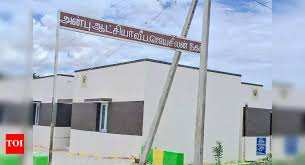
Virudhunagar: As many as 24 transgender people who received permanent residences in Virudhunagar under a housing initiative have named the colony ‘Anbu Aatchiyar VP Jeyaseelan Nagar’ (Beloved collector V P Jeyaseelan Nagar) as a mark of gratitude to the district collector. They installed a board with the name, saying that no amount of thanks would be enough for finally managing to get a roof over their heads. It was in February that collector V P Jeyaseelan inaugurated 24 newly established houses for transgender people under the ‘Kalaignar Kanavu Illam’ scheme at Kovilpulikuthi under E Kumaralingapuram panchayat. Apart from the houses, Rs24 lakh from CSR funds was used to provide basic facilities, including water and electricity connections. Paver blocks and small bridges were constructed in the vicinity of the houses with Rs21.15 lakh from panchayat union public funds. The collector also assured continuous support to the transgender community for their upliftment. Around two months ago, the transgender people who moved into the colony came up with the idea of putting up a name board for the colony. The colony thus became ‘Anbu Aatchiyar VP Jeyaseelan Nagar’ in recognition of his contributions and support to the community. “We were all living in rented houses before. Being transgenders, many landlords often charged us more, which we couldn’t afford as we had no jobs with regular salaries. If a normal person paid Rs2,000 as rent, we had to shell out Rs4,000. Only after moving here did we feel free. It was a godsend for us,” said Santhini, a resident. She said employment remains one of the major challenges for transgender people even now. “I applied to be an anganwadi worker several times but am yet to be successful. Unless we get employed, we can’t come out of this cycle of being looked down upon in society,” she said. Shilpa, another resident, said permanent housing was a luxury for them, and demanded reservation in govt jobs for transgender people so that they get more opportunities. Courtesy : TOI Note: This news is originally published on https:/timesofindia.com/ and is for use by the non-military/non-commercial community, especially those in the human rights sector.
Beyond Binaries: The Kerala High Court Judgement On Transgender Parenthood
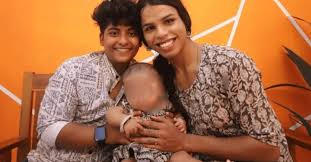
The Kerala High Court recently ruled in favour of a writ petition filed by a transgender couple seeking the issuance of a birth certificate for their child which mentioned them as “parent” rather than “mother” and “father”. n a recent historic and landmark judgement, one that could ripple beyond Kerala and can have a resounding impact on the institutional visibility of the queer community, the Kerala High Court recently ruled in favour of a writ petition filed by a transgender couple seeking the issuance of a birth certificate for their child which mentioned them as “parent” rather than “mother” and “father”. Stating the concerns raised as valid, the single Judge Bench of Ziyad Rahman A.A., J., held that the issuance of a certificate in the format as prescribed under the provisions contained in the Registration of Births and Deaths Act, 1969 (RBD Act) and Kerala Registration of Births and Deaths Rules, 1999, can cause severe difficulties to the child in life ahead. The Court also asserted that the laws that are not in line with societal changes need to evolve, and the Court must intervene to address the concerns of the concerned parties. Birth certificates being foundational documents determine access to a host of rights. Thus allowing the use of gender-neutral terminology, this ruling holds significant importance as it challenges one of the many structural ways the state invisiblises the queer community. The case in detail: challenging the binary institutional framework The couple, Ziya Paval (transgender woman) and Zahad (transgender man), had made waves back in 2023 when they became the first known transgender couple in India to have a biological child. Upon birth the Kozhikode Corporation issued a birth certificate that listed Zahad as the “mother (transgender)” and Ziya as the “father (transgender)”, ignoring and contradicting their self-identified genders. The couple felt distressed, stating that such a discrepancy could create serious problems in the life of the child—with regards to identification documents and school admission— since the biological mother of the child identified herself as a male under the Transgender Persons (Protection of Rights) Act, 2019, and was living as a male member of the society. Source: YourStory They approached the Kozhikode Corporation to issue a new birth certificate describing them simply as “parent” rather than mother and father or mentioning their gender. The Corporation dismissed their request, stating that the certificate was prescribed in accordance with the format contained in the RBD Act 1969 and the Kerala Registration of Births and Deaths Rules, 1999, which only accommodates the traditional binary nomenclature. The couple’s request was not entertained, as the corporation held that there were no other statutory provisions under which they could issue an alternative gender-neutral birth certificate. This decision led the couple to file the writ petition seeking a legal route to reinstate their fundamental rights of equality and the right to self-perceived gender identity as stated under the Transgender Persons (Protection of Rights) Act, 2019. This decision led the couple to file the writ petition seeking a legal route to reinstate their fundamental rights of equality and the right to self-perceived gender identity as stated under the Transgender Persons (Protection of Rights) Act, 2019. ‘Since scientifically there’s some contradiction in the fact that males give birth to a child, the petitioners requested the authorities to avoid the names of the father and mother but simply write ‘Parent’ to avoid further embarrassment which the third petitioner (child) would have to face during her lifetime, viz., school admission, Adhar Card, PAN Card, Passport and various other documents including job and connected matters,’ the transgender couple had explained in their petition. The apprehension of discrimination based on lived realities of transgender individuals The Kerala Court evoked the National Legal Services Authority v. Union of India (2014) judgement where the Supreme Court legally recognised the “third gender”/transgender persons and ruled that they are entitled to the fundamental rights and protection under the Constitution. Represented by Padma Lakshmi, Kerala’s first transgender lawyer argued that the rejection of their request violated their fundamental right to equality under Article 14 of the constitution. The Court maintained that the grievance raised by the couple can not be sidelined since the parental status of the couple was totally in contradiction to the life pursued by them presently. Thus, the confusions and prejudices, as perceived by the couple, in prospect were genuine and very likely to occur. Source: Rediff The Court also adjudicated that even though the child—the recipient of the birth certificate— was not a transgender person, his identity was linked and inseparable from that of the parents, who are a transgender couple, thus providing him equal protection under the Transgender Persons Act 2019. Legal precedent and the evolving nature of society Further, the court stated that the law cannot remain static, and the laws need to evolve in accordance with the changes in the society and lifestyle of people. This was consolidated by referencing the Supreme Court verdict in the Badshah v. Urmila Badshah Godse (2014) judgement, where the Supreme Court had addressed the importance of adopting different approaches in “social justice adjudication” and “social context adjudication” when interpreting laws. This meant that courts need to interpret the legal meaning reflecting the lived realities rather than being congested by the rigid and outdated categories. This statement signified the importance of purposive interpretation of existing laws to accommodate arrangements that usually expunge the queer community, thus allowing one to look beyond cis-heteronormativity. The Court also pointed out that the RBD Act was framed considering the binary concept of gender, and there was no concept of legal recognition of the third gender. The Court also pointed out that the RBD Act was framed considering the binary concept of gender, and there was no concept of legal recognition of the third gender. It held that necessary modifications could be made in appropriate cases where the interests of the transgender persons were involved. It also held that when statutory language does not account for the societal transformation,
Who is Riley Gaines, the swimmer at the center of a viral transgender sports clash involving Simone Biles?

The social media clash between Olympic gymnast Simone Biles and NCAA swimmer-turned-activist Riley Gaines over transgender inclusion in sports seems to be non-stop. The row began after Gaines criticized the Minnesota State High School League for disabling comments on a post celebrating Champlin Park High School’s girls’ softball team, which includes a transgender woman player. Gaines suggested the league was shielding the team from public scrutiny. In response, Simone Biles publicly condemned Gaines on X (formerly Twitter), calling her “truly sick” and a “straight up sore loser,” referring to Gaines’ tie for fifth place with transgender swimmer Lia Thomas at the 2022 NCAA Championships. Biles urged Gaines to stop “bullying” trans athletes and instead focus on creating inclusive spaces in sports—possibly through new competition categories. “One thing’s for sure,” Biles added, “no one in sports is safe with you around.” As the clash sparks wider attention, here’s a closer look at who Riley Gaines is, what drives her activism, and how she became one of the most polarizing figures in the sports and political landscape. Early life and education Born and raised in Nashville, Tennessee, Riley Gaines comes from a deeply athletic family. Her father, Brad Gaines, played football at Vanderbilt University, and her mother, Telisha Gaines, was a softball player at Donelson Christian Academy and Austin Peay State University. Riley attended Station Camp High School in Gallatin, where she quickly made a name for herself in competitive swimming, winning both the 100-yard butterfly and freestyle at the 2017 TISCA High School Swim & Dive Championship. She later attended the University of Kentucky, competing at the highest collegiate level in NCAA Division I swimming. While her exact degree remains unpublicized, her athletic record was formidable. Swimming career and turning point Gaines earned 12 NCAA All-American honors during her college swimming career. Her most notable—and controversial—finish came at the 2022 NCAA Women’s Championships, where she tied for fifth place in the 200-yard freestyle with transgender swimmer Lia Thomas. This moment proved pivotal. Gaines later said she felt “cheated, betrayed, and violated,” claiming it was unfair to compete against a transgender woman. She retired from competitive swimming shortly after and shifted her focus to activism. Media presence and activism Since leaving the pool, Gaines has emerged as a high-profile conservative commentator and vocal critic of transgender inclusion in women’s sports. In 2023, she launched the Gaines for Girls podcast, which tackles topics like gender identity and fairness in athletics. She has become a fixture on right-wing media platforms such as Fox News and OutKick. In August 2024, Gaines founded the Riley Gaines Center at the Leadership Institute, aimed at supporting legislation and advocacy to ban transgender women from competing in women’s sports categories. One of the most notable flashpoints in her public activism came in April 2023, when she was invited to speak at San Francisco State University by conservative student group Turning Point USA. Protests erupted, and Gaines claimed she was physically assaulted and had to be escorted out by police. Political ties and legislative efforts Gaines is deeply connected to conservative politics. She initially endorsed Florida Governor Ron DeSantis for president in 2024 but later switched her support to Donald Trump following an assassination attempt against him. She appeared alongside Trump in February 2025 as he signed an executive order banning transgender girls and women from participating in women’s sports. She has also lent her voice and image to campaigns for Republican figures like Rand Paul, Herschel Walker, Daniel Cameron, Kim Reynolds, and Tudor Dixon. She’s testified before multiple state legislatures, including those in Texas and Kansas, backing laws that restrict transgender participation in women’s sports. In May 2025, she became part of a lawsuit filed by Female Athletes United, arguing that transgender inclusion violates Title IX protections. Net worth and media earnings As of June 2025, there is no verified estimate of Riley Gaines’ net worth. However, speculative figures from unconfirmed sources place it between $500,000 and $2 million. Her income likely stems from media appearances, podcast hosting, speaking fees, and her role at the Leadership Institute. Courtesy : TOI Note: This news is originally published on https:/timesofindia.com/ and is for use by the non-military/non-commercial community, especially those in the human rights sector.
Reflection of inclusivity: Delhi Chief Minister sets up transgender welfare board
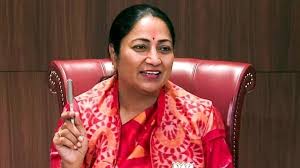
BJP leader Rekha Gupta-led Delhi government has set up a Transgender Welfare and Empowerment Board to frame policies, recommend welfare schemes and address the grievances of the transgender community. The Delhi government has set up a Transgender Welfare and Empowerment Board in a landmark initiative aimed at upholding the dignity and rights of the transgender community. Chief Minister Rekha Gupta described the move as a “reflection of inclusive governance”. She stressed that the decision goes beyond administrative action to reflect the government’s deep commitment to equity and social justice. The newly formed board will be tasked with framing policies, recommending welfare schemes, coordinating with departments, and addressing grievances related to the transgender community. A key provision under the new framework will be the simplified process for transgender individuals to obtain identity certificates and ID cards by self-declaring their gender at the District Magistrate’s office. To further support the community, the government has announced a series of targeted initiatives, including the construction of third-gender toilets in government buildings, dedicated hospital wards and healthcare services, and a transparent online ID card issuance system. Additional plans include sensitisation campaigns in schools and workplaces, temporary shelters, employment training programmes, and tailored social security schemes. Chief Minister Rekha Gupta reiterated that these initiatives aim to make Delhi a model of equality and inclusion. “This is not just a legal step but a reflection of our resolve to empower the transgender community and uphold the constitutional values of justice and dignity for all,” she said. Sharing the details, Rekha Gupta added, “This is a practical and powerful step towards building an empowered viksit (developed) Delhi. Our government is committed to ensuring equal rights for all.” Anmol Nath Bali, Sushant Mehra Edited & Published By:Atul Mishra Courtesy : India Today Note: This news is originally published on https://indiatoday.com/ and is for use by the non-military/non-commercial community, especially those in the human rights sector.