
Officials must treat transgender persons with respect, says Udupi DC

Udupi: Deputy commissioner Vidya Kumari K stressed that officials must treat transgender persons with dignity and respect when they visit govt offices and ensure their work is carried out as per the rules. At an awareness workshop on transgender rights held at the deputy commissioner’s office in Rajathadri, she said, “Everyone is equal before the law. The Constitution prohibits discrimination based on caste, community, or gender. Any disrespectful behaviour towards transgender persons by govt staff will invite legal action.” The DC noted that the govt has introduced various schemes and welfare programmes for the upliftment of the transgender community. She said awareness must be created about these schemes so that transgender persons can benefit from them. “They are also eligible for guarantee schemes. They must be ensured access to benefits such as housing and employment,” she added. Zilla panchayat CEO Prateek Bayal said that transgender individuals can avail themselves of income-generating opportunities through the National Rural Livelihood Mission. “If they form self-help groups, they can receive skill training and financial assistance for self-employment,” he said. If transgender persons apply for housing or sites at the gram panchayats, they will be given priority. Those with the required qualifications will be considered for employment in govt outsourcing agencies, he added. Akkai Padmashali, activist and founder of Ondede, said that achievement has no gender. “India’s legal system upholds the rights of the transgender community and supports their right to live independently. They should be given opportunities to become educated and attain high positions,” she said. Further, she said, “When someone is born male but grows into a woman, the transgender community is forced to face many challenges. Society must accept us as women and create opportunities for us to live with dignity and become part of the mainstream.” During the interaction, several transgender individuals shared their concerns. They said that as they enter adolescence, they are often forced to leave their families and move to other cities. “We struggle to find housing. Even if we are educated, we hardly get jobs, forcing us into begging. We urge that opportunities be created for us in terms of jobs and housing,” they appealed. Courtesy : TOI Note: This news is originally published on https://timesofindia.com/ and is for use by the non-military/non-commercial community, especially those in the human rights sector.
Transgender person beaten to death over family dispute in UP

Muzaffarnagar (UP), (PTI) A 25-year-old transgender person was allegedly beaten to death and two others were seriously injured in a clash between family members over a house dispute on Thursday in a village here, police said. The deceased was identified as Muskan, police said. Circle Officer (CO) Gajendra Pal Singh said that a dispute broke out when Muskan and her sister-in-law confronted each other over the distribution of a house in Manwada village. However, it soon escalated and turned violent. Muska was allegedly beaten to death in the clash while two other suffered injuries, Singh said. A case has been registered and further investigation is underway, Singh added. PTI COR CDN HIG HIG This report is auto-generated from PTI news service. ThePrint holds no responsibility for its content. Courtesy : The Print Note: This news is originally published on https://theprint.com/ and is for use by the non-military/non-commercial community, especially those in the human rights sector.
Renovated public toilet in Sector 22 PwD & trans-friendly

Chandigarh: Municipal commissioner Amit Kumar Friday inaugurated the renovated public toilet at the booth market in Sector 22B. It can now be easily accessible for PwDs, the visually impaired, and children. Besides, it has a dedicated transgender washroom and a sanitary vending machine for women. The renovation was undertaken on a special demand from the market association and was completed in accordance with the latest Swachh Bharat Mission guidelines. tnn Courtesy : TOI Note: This news is originally published on https://timesofindia.com/ and is for use by the non-military/non-commercial community, especially those in the human rights sector.
Judge rules federal prisons must continue providing hormone therapy to transgender inmates

WASHINGTON: The federal Bureau of Prisons must continue providing hormone therapy and social accommodations to hundreds of transgender inmates following an executive order signed by President Donald Trump that led to a disruption in medical treatment, a federal judge ruled Tuesday. US District Judge Royce Lamberth said a federal law prohibits prison officials from arbitrarily depriving inmates of medications and other lifestyle accommodations that its own medical staff has deemed to be appropriate. The judge said the transgender inmates who sued to block Trump’s executive order are trying to lessen the personal anguish caused by their gender dysphoria, which is the distress that a person feels because their assigned gender and gender identity don’t match. “In light of the plaintiffs’ largely personal motives for undergoing gender-affirming care, neither the BOP nor the Executive Order provides any serious explanation as to why the treatment modalities covered by the Executive Order or implementing memoranda should be handled differently than any other mental health intervention,” he wrote. The Bureau of Prisons is providing hormone therapy to more than 600 inmates diagnosed with gender dysphoria. The bureau doesn’t dispute that gender dysphoria can cause severe side effects, including depression, anxiety and suicidal thoughts, the judge said. The Republican president’s executive order required the bureau to revise its medical care policies so that federal funds aren’t spent “for the purpose of conforming an inmate’s appearance to that of the opposite sex.” Lamberth’s ruling isn’t limited to the plaintiffs named in the lawsuit. He agreed to certify a class of plaintiffs consisting of anyone who is or will be incarcerated in federal prisons. Trump’s order also directed the federal Bureau of Prisons to ensure that “males are not detained in women’s prisons.” In February, however, Lamberth agreed to temporarily block prison officials from transferring three incarcerated transgender women to men’s facilities and terminating their access to hormone therapy. The plaintiffs are represented by attorneys from the Transgender Law Center and the American Civil Liberties Union. Lamberth, a senior judge, was nominated to the bench by President Ronald Reagan in 1987. Courtesy : TOI Note: This news is originally published on https://timesofindia.com/ and is for use by the non-military/non-commercial community, especially those in the human rights sector.
Judge rules federal prisons must continue providing hormone therapy to transgender inmates

WASHINGTON: The federal Bureau of Prisons must continue providing hormone therapy and social accommodations to hundreds of transgender inmates following an executive order signed by President Donald Trump that led to a disruption in medical treatment, a federal judge ruled Tuesday. US District Judge Royce Lamberth said a federal law prohibits prison officials from arbitrarily depriving inmates of medications and other lifestyle accommodations that its own medical staff has deemed to be appropriate. The judge said the transgender inmates who sued to block Trump’s executive order are trying to lessen the personal anguish caused by their gender dysphoria, which is the distress that a person feels because their assigned gender and gender identity don’t match. “In light of the plaintiffs’ largely personal motives for undergoing gender-affirming care, neither the BOP nor the Executive Order provides any serious explanation as to why the treatment modalities covered by the Executive Order or implementing memoranda should be handled differently than any other mental health intervention,” he wrote. The Bureau of Prisons is providing hormone therapy to more than 600 inmates diagnosed with gender dysphoria. The bureau doesn’t dispute that gender dysphoria can cause severe side effects, including depression, anxiety and suicidal thoughts, the judge said. The Republican president’s executive order required the bureau to revise its medical care policies so that federal funds aren’t spent “for the purpose of conforming an inmate’s appearance to that of the opposite sex.” Lamberth’s ruling isn’t limited to the plaintiffs named in the lawsuit. He agreed to certify a class of plaintiffs consisting of anyone who is or will be incarcerated in federal prisons. Trump’s order also directed the federal Bureau of Prisons to ensure that “males are not detained in women’s prisons.” In February, however, Lamberth agreed to temporarily block prison officials from transferring three incarcerated transgender women to men’s facilities and terminating their access to hormone therapy. The plaintiffs are represented by attorneys from the Transgender Law Center and the American Civil Liberties Union. Lamberth, a senior judge, was nominated to the bench by President Ronald Reagan in 1987. Courtesy : TOI Note: This news is originally published on https://timesofindia.com/ and is for use by the non-military/non-commercial community, especially those in the human rights sector.
Kerala HC allows transgender couple’s plea to have their names entered as ‘parents’, instead of father and mother, in child’s birth certificate
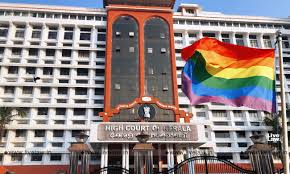
Kochi: In a significant judgment, Kerala high court has allowed a transgender couple’s petition to have their names entered in their child’s birth certificate as ‘parents’, by omitting the usual columns specifying ‘father’ and ‘mother’. The bench of Justice A A Ziyad Rahman passed the order on a petition filed by Zahhad, a transman, and Ziya Paval, a transwoman — both natives of Kozhikode and India’s first transgender parents. Zahhad had given birth to a child in Feb 2023. The birth certificate, issued by Kozhikode corporation under the Kerala Registration of Birth and Death Rules, 1999, listed Ziya as the father and Zahhad as the mother. The petitioners approached the corporation officials to change the details to reflect both as parents rather than as mother and father, but their request was rejected. The couple then approached high court, contending that Zahhad, now living as a man in society, being identified as the mother would cause complications in the future. They expressed concerns that a certificate indicating a man had given birth could cause difficulties for the child during school admissions, passport and Aadhaar applications, and other official processes. They sought a directive to denote them simply as ‘parents,’ without assigning the roles of father and mother. Allowing the plea, the bench directed the Kozhikode corporation to modify the birth certificate within two months by removing the columns for father and mother and incorporating the names of the petitioners as parents without referring to their genders. A detailed judgment is awaited. Courtesy : TOI Note: This news is originally published on https://timesofindia.com/ and is for use by the non-military/non-commercial community, especially those in the human rights sector.
Decision Paralysis Caused By Fund Freeze: How Suspension Of USAID Affects Transgender Healthcare In India
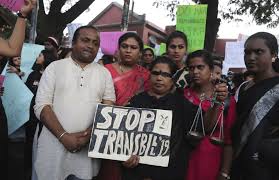
USAID has granted a waiver for certain life-saving treatments like administering the antiretroviral treatment for HIV but this pulling of funds may prevent several from seeking preventive care for HIV-AIDS. The suspension of funds from the US Agency for International Development (USAID) has resulted in a series of significant consequences. USAID, since its inception in the 1960s, has provided humanitarian foreign aid across countries, funding myriad development programmes. USAID funds were suspended for 90 days for review, followed by a stop-work directive that paused several of its aided programmes. One of these programmes was the Mitr Clinic Project for transgender people (established in 2003), run by health workers, doctors and mental health professionals. It was possible through a collaborative effort by Johns Hopkins University, the Indian government and USAID, especially seeing that other state-established legislations did not reach transgender individuals as much. The first Mitr Clinic was established in Hyderabad and later set up in Pune and Thane as well, reporting over 6000 transgender individuals accessing their facilities (of the nearly 4.87 lakh transgender individuals in India as per the Census 2011). These clinics served as more than just medical centres, as they became a comfortable and inclusive space for transgender individuals seeking legal aid, hormone therapy guidance and mental health support. USAID has granted a waiver for certain life-saving treatments like administering the antiretroviral treatment for HIV (reports of over 6-10 percent of Mitr Clinic patients were HIV positive), but this pulling of funds may prevent several from seeking preventive care for HIV-AIDS. Although it is true that public hospitals and private healthcare sectors can provide the same services, transgender individuals have reported to feel socially safer in Mitr clinics due to prevalent stigma, harsh treatment and discriminatory behaviour from healthcare professionals in other spaces. With the potential closure of these clinics due to fewer funds, transgender individuals face the threat of losing a socially accessible space for basic healthcare needs. US’s gender-deaf policies: What freezing USAID means for the future Perhaps the most controversial executive order by US President Donald Trump has been his mandate about recognising only two sexes (male and female). This completely erases the legal recognition of transgender, intersex and non-binary individuals in the USA. The suspension of USAID funds has come about due to President Trump’s bout of ‘America-First,’ policies, including the termination of diversity, equity and inclusion programmes across the federal government. His announcement of eliminating more than 90 percent of USAID foreign aid contracts implies that the funding from several projects is going to be cut. Source: BBC Long-time supporter of the USA’s executive Elon Musk commented on USAID’s funding of Mitr Clinics, “That’s what American tax dollars were funding.” It has sparked debate and demands about why foreign aid is supporting inclusivity policies in other countries when it should be the state’s own mechanism doing the same. The USA has been pivotal in influencing development projects across the world in terms of its funding, trade contracts and diplomatic relations. These collaborative efforts are important in ensuring the best qualitative service reaches those who are most in need of them, i.e., the marginalised. The gendered manner in which policies are being revised, funding is being cut and inclusivity is being compromised spells danger for how the future of the marginalised is being imagined. Bureaucratic paralysis: India’s responses to transgender voices Contrary to the USA’s turn in recognition, India legally recognises transgender individuals under the third gender category (due to the landmark judgement by the Supreme Court in 2014). The Indian state has since followed with other acts, such as the Transgender Persons (Protection of Rights) Act in 2019 (which encouraged them to apply for an identity certificate as a legal document) and financial relief packages during the COVID pandemic. Source: The Wire However, these initiatives were not without difficulties, since around 23 percent of Identity Certificate applications were pending, and several individuals did not have the financial means to access the relief packages. The Mitr Clinic establishment was one among the most successful initiatives in this regard, which shockingly faces an uncertain future in the wake of recent international events. The Indian State’s navigation of such hurdles and revision of policies faces a paralytic difficulty. Its implementation of inclusive and recognition acts seems to function in a staccato manner, the act being passed but not really addressing the lived needs and experiences of transgender individuals. For instance, while the state takes pride in announcing its inclusive nature in recognising transgender individuals and improving accessibility into political, economic and healthcare spaces, on the ground level they do not implement policies to improve how these individuals are viewed socially. Transgender individuals still face social barriers in accessing these spaces due to how they are viewed by the general public with difference, prejudice and insensitivity. Although legally recognised on paper, they are socially mocked while navigating bureaucratic hurdles, the emotional tax and fear due to which they avoid availing beneficial schemes. The Indian state thus needs to implement a better framework to address these policies on a large scale and all-round manner. A call for action to improve status quo Several NGOs, members of the LGBTQIA+ community and Mitr Clinic healthcare professionals have called upon the Union government and their respective state governments to provide funds for its functioning. The clinics in Pune and Thane have been forced to shut down, resulting in displaced health care professionals, large-scale unemployment and a barrier for transgender individuals in accessing a socially inclusive space for health care facilities. They call upon both state and non-state actors for a collaborative effort in instituting funds for Mitr Clinics again, due to its key role in improving social accessibility. Source: Maktoob Media The potential closure of Mitr Clinics reveals the precariousness of trans-specific services in the absence of consistent state-backed support. The situation shows how marginalised groups, especially those in the Global South, often become collateral damage in the ideological and financial reorientations of powerful nations. Current policies under the
California sports body widens entry for ‘biological female’ athletes amid trans athlete controversy

The California interscholastic federation (CIF) announced a rule change this week to allow more girls to participate in the upcoming state track-and-field championships following public backlash over the inclusion of a transgender athlete, reported AP. In a statement issued Tuesday, the CIF said it would implement a “pilot entry process” to extend entry to more “biological female” athletes. The new rule allows any athlete who missed the automatic qualifying mark but had the next-best result in their section final to compete at the state level. “The CIF believes this pilot entry process achieves the participation opportunities we seek to afford our student-athletes,” the organisation said. The change only applies to this weekend’s competition. The CIF did not say how many athletes would be affected or whether the rule applies to all events or only those where a transgender athlete has qualified for the final. This could be the first time a high school sports governing body in the US has expanded competition in response to the participation of a transgender athlete. The change was introduced after US President Trump criticised the participation of trans athlete AB Hernandez, a transgender athlete competing in girls track and field. Trump threatened Tuesday to pull federal funding from California if the state did not bar transgender students from competing in girls’ sports. “THIS IS NOT FAIR, AND TOTALLY DEMEANING TO WOMEN AND GIRLS,” Trump wrote on Truth Social. Hernandez is set to compete in the girls varsity triple jump, high jump, and long jump at the state finals. She won the Division 3 girls long jump and triple jump and placed seventh in the high jump at the Southern Section Division Finals on May 19. Parents and conservative advocates opposed to transgender girls competing in girls sports have criticized Hernandez and heckled her during postseason meets. After losing to Hernandez in the long jump at the sectional final, La Canada High School’s Katie McGuinness called on the CIF to revise its policy. California governor Gavin Newsom recently said on his podcast that it is “deeply unfair” for transgender girls to participate in girls sports. Last month, Democratic state lawmakers in California blocked bills that would have barred transgender girls from participating in girls sports. Courtesy : TOI Note: This news is originally published on https://timesofindia.com/ and is for use by the non-military/non-commercial community, especially those in the human rights sector.
California changed rules for a track-and-field meet after a trans athlete’s success. What to know

California is opening up its track-and-field championship to more girls after a transgender athlete drew controversy for qualifying for the meet SACRAMENTO, Calif. — California is opening up its track-and-field championship to more girls after a transgender athlete drew controversy for qualifying for the meet. The California Interscholastic Federation announced the temporary rule change Tuesday after high school junior AB Hernandez’s success drew backlash, including from President Donald Trump. He criticized the athlete’s participation in a social media post Tuesday, though the group said it decided on the rule change before that. Here’s what to know: Former California Gov. Jerry Brown signed a law in 2013 allowing students to participate in sex-segregated school programs, including on sports teams, and use bathrooms and other facilities that align with their gender identity. A Republican-led effort to block that law failed recently in the Democratic-dominated Legislature. Another proposal that also failed would have required the federation to ban students whose sex was assigned male at birth from participating on a girls school sports team. The federation said it was launching a “pilot entry process” to allow more girls participate in the championship track-and-field meet. Under the change, “any biological female student-athlete who would have earned the next qualifying mark for one of their Section’s automatic qualifying entries in the CIF State meet, and did not achieve the CIF State at-large mark in the finals at their Section meet” could compete, the group said. If a transgender athlete medals, their ranking would not displace a “biological female” student from medaling, the federation confirmed. In high jump, triple jump and long jump — all of the state championship events Hernandez qualified to compete in — a “biological female” who would have earned podium placement will get the medal for that place and will be reflected in the records, the federal said. The federation did not specify how they define “biological female” or how they would verify whether a competitor meets that definition. Experts from organizations including the American Medical Association, American Psychiatric Association and American Psychological Association say gender is a spectrum, not a binary structure consisting of only males and females. Hernandez, a trans athlete in Southern California, is at the center of the debate. She won the long jump and triple jump during the division finals and is expected to perform well this weekend. She also set a triple jump meet record at the Ontario Relays earlier this year. Critics have accused her of having an unfair advantage over other athletes. Hernandez told the publication Capital & Main earlier this month that she couldn’t worry about the actions of critics, who have called out her participation and heckled her at postseason meets. “I’m still a child, you’re an adult, and for you to act like a child shows how you are as a person,” she said. She noted that she has lost some of her events, saying that disproved arguments that she can’t be beat. The rule change may discriminate against transgender athletes, said Elana Redfield, a policy director at the UCLA School of Law Williams Institute, which researches sexual orientation and gender identity policies. “The CIF policy creates two sets of rules — one for transgender girls, who must earn a place through traditional measures of competition, and another for ‘biological females,’ some of whom are allowed an extra chance to earn a spot,” Redfield said in an email. The change seems to “thread a fine needle” by trying to ensure cisgender girls aren’t denied a competition slot while still allowing trans athletes to participate, Redfield said. Doriane Lambelet Coleman, a professor at Duke Law School, said the change would help ensure that “no female athlete loses a place on a team or in a competition when a trans girl is included.” “Unlike inclusion policies that ignore sex differences, doing it this way doesn’t gaslight the other girls about their biology,” said Coleman, who has researches subjects including children, sports and law and wrote recently on the evolving definition of sex. Izzy Gardon, a spokesperson for California Gov. Gavin Newsom, called the rule change “a reasonable, respectful way to navigate a complex issue without compromising competitive fairness” and said the governor thought it was a thoughtful approach. Newsom angered some liberal allies earlier this year when he questioned the fairness of transgender girls participation in girls sports. Courtesy : SOPHIE AUSTIN, ABC News Note: This news is originally published on https://abcnews.com/ and is for use by the non-military/non-commercial community, especially those in the human rights sector.
After Trans athlete’s victory, crowd cheers second-place girl as ‘Real Champion’

At a recent high school track meet in California, 16-year-old Reese Hogan finished second in the girls’ triple jump, and set a new personal and school record. The first-place spot went to AB Hernandez, a transgender athlete from Jurupa Valley. While Hernandez was awarded the top position, many in the crowd applauded Hogan as the “real champion.” After the podium ceremony, Hogan briefly stood on the first-place platform for a photo, smiling proudly. Her quiet protest sparked strong reactions online, especially from people who believe girls’ sports should be limited to athletes assigned female at birth. What’s the Protect Girls’ Sports movement The Protect Girls’ Sports movement is an effort aimed at safeguarding fair competition and equal opportunities for female athletes in school and professional sports. It focuses on ensuring that girls’ sports teams remain reserved for athletes who were assigned female at birth, based on biological differences that impact performance. Advocates argue that this protection is necessary to maintain a level playing field, prevent unfair advantages, and preserve the integrity of women’s sports. The movement also highlights the importance of supporting girls’ participation in athletics, promoting their physical and mental well-being, and celebrating their achievements in a space designed specifically for them. Support grows online After the event, Hogan received praise on social media, including from former NCAA swimmer and activist Riley Gaines. Gaines, who is known for speaking out on transgender athletes in women’s sports, posted, “Congrats to Reese Hogan, the REAL champ!” She and others shared the video of Hogan stepping onto the top podium once Hernandez had walked away, calling it a bold but respectful move. — Riley_Gaines_ (@Riley_Gaines_) Tensions rise over the protest This isn’t Hogan’s first quiet protest. Just days earlier, she and several other girls wore “Protect Girls Sports” shirts at a track prelim event. Officials told them to remove the shirts immediately before competing. According to the athletes, the request felt forceful and unfair, especially since other students wearing non-school shirts were not treated the same way. The girls complied to avoid being disqualified. Event officials respond The California Interscholastic Federation (CIF) later confirmed that the shirt removal incident happened. They said all athletes must wear school-issued uniforms during competitions. However, witnesses claimed that only the girls wearing the “Protect Girls Sports” shirts were asked to remove them, raising questions about equal treatment and free expression. Despite the controversy, Hernandez now qualifies for the CIF Masters Meet. Meanwhile, the debate about fairness in girls’ sports continues to grow across the country. For many, Reese Hogan’s quiet stand has made her more than just an athlete — she’s become a symbol in a much larger conversation. The incident at the CIF Southern Section Finals, where Reese Hogan, a 16-year-old high school athlete, posed on the first-place podium after finishing second to a transgender athlete, has ignited a broader conversation about fairness in women’s sports. Hogan’s symbolic gesture, though controversial, underscores a growing concern among female athletes regarding the inclusion of transgender women in women’s competitions. While it’s essential to support and respect transgender athletes, it’s equally important to ensure that the integrity and fairness of women’s sports are maintained. Courtesy : TOI Note: This news is originally published on https://timesofindia.com/ and is for use by the non-military/non-commercial community, especially those in the human rights sector.