
Bengaluru’s Rainbow Habba 2025 showcases transgender achievers
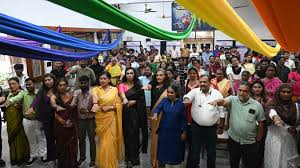
The occasion featured India’s first transgender ventriloquist, Jaanu, and a trans woman gym trainer, Ani Mangalore.They shared their experiences and challenges. Rainbow Habba 2025, which celebrates gender and sexual diversity, was held on a grand scale in the city on Saturday. The occasion featured India’s first transgender ventriloquist, Jaanu, and a trans woman gym trainer, Ani Mangalore. They shared their experiences and challenges. Siddappa Hukkeri from Belagavi was felicitated for securing a peon’s post in the the Hassan District Court through the 1% reservation for transgender individuals. During his felicitation, Hukkeri highlighted the role of Manohar Elevarthi, Rajesh Srinivas, and Nisha Gulur from Sangama Foundation, an LGBT rights group based in Bengaluru, which had submitted a Public Interest Litigation in 2022 seeking 1% reservation in state government jobs for transgender minorities to help trans people earn a respectable livelihood rather than resort to begging. Courtesy : DH Note: This news is originally published on https:/deccanherald.com/ and is for use by the non-military/non-commercial community, especially those in the human rights sector.
Saree-Bindi and Surgery: Five Bangladeshis living as transgenders in Delhi caught, used app for this work

Police campaign against illegal immigrants continues in Delhi. On Saturday, more than 100 slums in Ashok Vihar were searched. From where 18 were caught including five Bangladeshis living in the guise of transgenders. The Foreign Cell of North-West District has caught 18 Bangladeshis living illegally, out of which five were living as transgenders. Police have recovered seven phones from their possession, in which the banned IMO app was downloaded. With the help of the app, they used to talk to their relatives living in Bangladesh. Additional Deputy Commissioner of Police of the district, Sikandar Singh, said that under the campaign, the police team conducted a thorough search of 100 slums and 150 lanes in Ashok Vihar these days. During this, a suspicious person was caught and interrogated. At first he told that he was a citizen of West Bengal, but on strict interrogation, he confessed to being a Bangladeshi citizen. On his information, the police caught a total of 13 members of his family. It included 10 adults and 3 children. They were living in India without any documents. At the same time, the police have arrested five Bangladeshi citizens from the same area who were asking for money at traffic signals in the guise of transgenders. All of them used to wear heavy makeup, saree, salwar suit, fake hair, bangles, bindi to look like women. During interrogation, they told that they had also undergone hormonal treatment and minor surgery to hide their identity. Some had also changed their voice and gestures. The police officer said that all those arrested are residents of Dhaka, Bangladesh. The police presented all of them in the Foreign Registration Office for deportation. From where they have been sent to the detention center. Published by: Anuj Kumar Courtesy: Hindi News
Exclusive: Park Sung-hoon discusses playing transgender Hyun-ju on Squid Game 3

Actor Park Sung-hoon takes on a groundbreaking role as Hyun-ju, a transgender woman, in Squid Game 3. His performance highlights empathy and moral strength amid the series’ intense drama. Actor Park Sung-hoon has played his share of antagonists’ characters that make you grit your teeth and occasionally hurl popcorn at the screen. But in ‘Squid Game 3’, the Korean star flips the script in more ways than one. As Hyun-ju, a transgender woman who displays remarkable empathy and strength amidst the series’ trademark chaos, Sung-hoon delivers a performance that’s tender, layered, and full of quiet power. In an exclusive chat with India Today, the actor opened up about the challenges and choices that came with portraying Hyun-ju, and what made him say yes when most people turned down the offer. “So, I did have my concerns and worries being a cisgender actor playing a transgender character,” he admitted. “I thought it would be a challenge, but I knew that it would help me grow as a person and as an actor,” he explained. What makes Hyun-ju compelling isn’t just her identity, but the way she navigates the brutal games with unwavering grace. “I think Hyun-ju being a transgender woman is just one of the qualities that she has,” Sung-hoon said. “She has other amazing qualities – like she’s a selfless person, she cares about others and she has a good moral compass. So, I wanted to focus on those qualities.” That emphasis on humanity pays off in one of the most heart-wrenching scenes of the season, where Hyun-ju makes a moral choice that will get fans talking. When asked whether he would make the same decision in real life, the actor didn’t hesitate. “I definitely would make the same choice that Hyun-ju made, because I love kids and I know that the sacred value of life surpasses everything else. And now that I have three, not two friends, I would have run back to them. But one difference that I would have is that after finding the exit and opening the door, I would look back once at the exit maybe,” he remarked. This role marks a significant tonal shift for the ‘Queen of Tears’ actor, who previously stirred strong reactions as the manipulative Ha Do-yeong in ‘The Glory’. “Because I’ve been doing a lot of villains lately, I think this was a really nice air-freshening thing for me,” he added with a laugh. When it comes to his personal ranking of roles that have shaped him, ‘Squid Game’s’ Hyun-ju has earned his top billing. “Ranking first would be Hyun-ju, definitely, and ranking second would be Eun-seong of ‘Queen of Tears’, and ranking third is a character that I’m currently filming for a Korean TV show called ‘Efficient Dating for Singles’.” And as for his fans in India? Park had a special message: “I want to make the time to definitely go see the Indian fans as soon as possible.” ‘Squid Game 3’ premieres on Netflix today. The season has a total of 6 episodes. Courtesy : India Today Note: This news is originally published on https:/indiatoday.com/ and is for use by the non-military/non-commercial community, especially those in the human rights sector.
Transgenders to earn economic aid, dignity from CM Yuva scheme
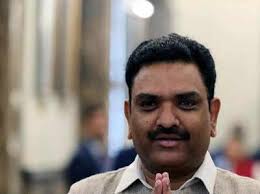
Lucknow: In a landmark decision, transgenders will now be linked to the Mukhyamantri Yuva Udyami Vikas Abhiyan, through which they will receive skill-based training and financial assistance in the form of loans to pursue self-employment. Stating that a decision in this regard was taken after instructions from Chief Minister Yogi Adityanath, social welfare minister Asim Arun said, “The visionary initiative aims not only to uplift transgender community economically but also to restore their dignity and rightful place in society. Officials have been directed to ensure that transgender individuals were connected to relevant govt schemes in every district.” He added that following success of the Mukhyamantri Yuva Udyami Vikas Abhiyan among youth of UP, state govt had decided to extend it to the transgender community and make it more exclusive. “At the onset, each district in the state has been directed to employ at least two transgender individuals,” the minister said. With this, enterprising transgender individuals will also be encouraged to start their ventures with access to bank loans and guidance. One good option can be to establish a dedicated welfare centre for transgender community. UP is to start 100 such centres in the state. Announced by Governor Anandiben Patel, these centres are to serve as a bridge to connect transgender individuals with education, digital literacy, culinary arts, tailoring, computer training, beauty services, and more—paving way for holistic development. In line with this commitment, govt is ensuring that transgender individuals receive access to essential welfare schemes, including ration card, Ayushman Bharat Yojana, Pradhan Mantri Awas Yojana and pension benefits. To facilitate this, a separate survey of transgender population is being planned to identify and eliminate any gaps in service delivery. Various departments have also been directed to run targeted awareness campaigns. Courtesy : TOI Note: This news is originally published on https:/timesofindia.com/ and is for use by the non-military/non-commercial community, especially those in the human rights sector.
Indian court rules a transgender woman is a woman
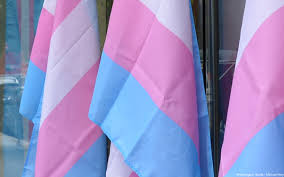
The Andhra Pradesh High Court on June 16 issued a landmark ruling that says Indian law cannot deny transgender women recognition as women solely because they cannot bear children. Justice Venkata Jyothirmai Pratapa, who presided over the case, rejected arguments that tie womanhood exclusively to reproductive capacity, declaring such views “legally unsustainable” and contrary to the Indian constitution’s guarantees of dignity, equality, and identity. The decision, rooted in the Supreme Court’s 2014 National Legal Services Authority v. Union of India ruling that recognized individuals as a “third gender” with equal fundamental rights, marks a significant step toward gender justice in India. “A trans woman, born male and later transitioning to female, is legally entitled to recognition as a woman,” Pratapa declared. The court emphasized this recognition is enshrined in Articles 14, 15, and 21 of the constitution; which guarantee equality before the law, prohibit discrimination based on sex, and protect the right to life and personal liberty respectively. Pratapa further clarified that trans women are entitled to the same protections as cisgender women under Section 498A of the Indian penal code, which addresses cruelty by a husband or his relatives. “Denying such protection by questioning their womanhood amounts to discrimination,” said the High Court in its ruling. The ruling came in response to a petition filed by Viswanathan Krishnamurthy and his parents, who sought to dismiss a dowry harassment case brought by Pokala Sabhana, a trans woman. Shabana alleged that Krishnamurthy and his family subjected her to cruelty and demanded dowry, charges that prompted her to seek protection under Section 498A. The court’s decision to uphold her legal standing as a woman ensures that trans women can access critical protections against domestic abuse, setting a precedent for future cases. Section 498A’s applicability to trans women, as the court affirmed, extends critical protections against domestic cruelty to marginalized groups. Trans women can now seek legal recourse under this provision for physical, emotional, or economic abuse, including dowry-related harassment, by their husbands or in-laws. This recognition ensures access to police intervention, potential arrest of perpetrators, and penalties under the Indian penal code, aligning trans women’s marital protections with those afforded to cisgender women. By including trans women under Section 498A, the ruling strengthens their ability to combat domestic violence and assert their rights within familial structures. Shabana and Krishnamurthy lived together in Ongole, a city in Andhra Pradesh, for a short time before Krishnamurthy relocated to Chennai and ceased communication, according to the court document the Washington Blade obtained. Shabana filed a complaint at the Ongole Women’s Police Station, alleging her in-laws threatened her life and that Krishnamurthy abused her. Based on her accusations, the police registered a case against Krishnamurthy and his parents under Section 498A. Krishnamurthy and his parents in 2022 petitioned the Andhra Pradesh High Court to dismiss the case, arguing that Shabana, as a trans woman, could not invoke Section 498A, a provision typically applied to cisgender women. The petitioners’ counsel argued that trans women, due to their inability to conceive, do not meet the legal definition of a woman and thus cannot invoke Section 498A. They also contended Shabana’s cruelty and dowry harassment allegations were baseless and lacked evidentiary support. The Andhra Pradesh High Court rejected the petitioners’ arguments, ruling that gender identity does not hinge on the ability to bear children and other biological factors. The court affirmed that trans women, like Shabana, have the right to file complaints under Section 498A and are entitled to all constitutional protections afforded to women under the constitution. While affirming that trans women are legally recognized as women, the Andhra Pradesh High Court dismissed the case against Krishnamurthy and his family, citing insufficient evidence rather than gender-based arguments. The court noted Shabana’s claims of dowry demands and cruelty lacked supporting material. It ruled that proceeding with the trial without prima facie evidence would constitute a misuse of the judicial process. “I am relieved, the delighted and thank the Andhra Pradesh High Court and the judge for upholding our basic human right to be identified as what we want. What better reason could that be for celebrating this Pride Month,” said Kalki Subramaniam, a prominent trans activist and artist. “For transgender community, especially trans women this verdict means a lot.” Subramaniam told the Blade that the verdict is a momentous achievement. She described it as a significant stride toward justice, dignity, and equality for trans people throughout India. “By affirming their legal status as women, the court has shattered discriminatory barriers and reinforced the fundamental principle that identity is valid and deserving of full legal protection,” said Subramaniam. “This ruling marks a significant moment of progress, sending a clear message that our legal frameworks are evolving to be more inclusive and reflective of the diverse realities of our society. It is a victory of human rights and a beacon of hope for a more equitable future.” Meera Parida, a prominent trans activist in Odisha, told the Blade the ruling is a significant triumph. “Only because a trans woman cannot bear a child, she is not a woman — that’s not good,” she said. “This is a respectful judgement for all of us,” added Parida. “This is restoring equality and somewhere because of this verdict the stigmatization wall will fall and people will respect us. I respect this verdict.” “This verdict is very progressive and a crucial step forward to the transgender community and gender equality,” Rani Patel, president and founder of Aarohan, an organization that works to address educational disparities among underprivileged communities and advocates for LGBTQ rights, told the Blade. “People said that we should give them separate toilets and classrooms, but that totally excludes them from the community. Many women also cannot give birth to a child, so that is totally different.” “If someone is carrying themselves as female, they should be honored with their status,” added Patel. “Since the purpose of the verdict is to recognize trans women as women, they will get all the status
Blood Donation Barriers: Santa Khurai’s Long SC Fight for Trans Rights
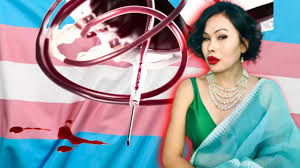
Blood donation bans in India unfairly target transgender people. Santa Khurai’s 2021 Supreme Court fight, dragging on, challenges the 2017 guidelines for trans equality. Blood donation remains a deeply contested issue for transgender individuals in India, where discriminatory policies perpetuate exclusion and stigma. The Guidelines for Blood Donor Selection & Blood Donor Referral, 2017, issued by the National Blood Transfusion Council (NBTC) and the National AIDS Control Organisation (NACO), permanently bar transgender people, along with men who have sex with men and female sex workers, from donating blood, citing them as “at risk” for HIV and other infections. This blanket ban, rooted in outdated assumptions rather than individual risk assessment, dehumanises entire communities, denying them the fundamental right to contribute to life-saving efforts. Santa Khurai, a transgender activist and Nupi Maanbi (transgender woman) from Manipur, decided to challenge this injustice. Through her 2021 Public Interest Litigation (PIL) in the Supreme Court, Khurai is fighting to dismantle these discriminatory guidelines, advocating for equality and dignity for transgender persons in India’s healthcare system. Confronting Transgender Discrimination in Blood Donation We Have a Request for You: Keep Our Journalism Alive We are a small, dedicated team at The Probe, committed to in-depth, slow journalism that dives deeper than daily headlines. We can’t sustain our vital work without your support. Please consider contributing to our social impact projects: Support Us or Become a Member of The Probe. Even your smallest support will help us keep our journalism alive. Her resolve to challenge India’s discriminatory blood donation guidelines was sparked by the lived experiences of her community. In her words, “Initially, I wasn’t aware of the existence of these guidelines. But after listening to numerous community experiences, I realised how unjust they were. Through my work with trans communities, it became clear that the guideline is rooted in deep-seated prejudice—especially against trans women, who are often hyper-visible and marginalised. These biases are reflected in laws, policies, societal attitudes, and even within families. The ban on blood donation is just one glaring example of this discrimination. I felt it was essential to challenge this unfair guideline, not just for the trans community but for all people pushed to the margins—sex workers, for instance, who also face targeted exclusion.” Khurai speaks about a distressing incident in 2013 at Jawaharlal Nehru Institute of Medical Sciences (JNIMS), a prominent medical college and hospital in Imphal, Manipur. Three transgender women approached Khurai with a harrowing account. They had gone to JNIMS’s blood bank to donate blood, one of them for her own aunt, a patient in need. “They had gone to donate blood but they were publicly humiliated by the staff at the blood bank.” Nearly a decade later, in 2021, a similar incident unfolded at Shija Hospitals and Research Institute, a private healthcare facility in Langol, Imphal West. Two transgender women were denied the opportunity to donate blood, facing rejection rooted in the same discriminatory 2017 NBTC/NACO guidelines. Khurai shared the gravity of this moment: “This incident was particularly poignant because Dr. Beoncy Laishram, a trailblazing transgender doctor and Resident Medical Officer at Shija Hospitals, intervened to support them. As Manipur’s first and only transgender doctor, a post-operative trans woman who underwent sex reassignment surgery in Puducherry, Dr. Laishram is a symbol of hope for Nupi Maanbi. Yet, her efforts to advocate for the blood donation rights for these women were met with disdain”. Stay informed with The Probe. Get original stories, exclusive insights, and thoughtful, in-depth analysis delivered straight to your phone. Join our WhatsApp channel now! Click the link to join: https://whatsapp.com/channel/0029VaXEzAk90x2otXl7Lo0L The 2021 incident at Shija Hospitals took a particularly insulting turn when blood bank officials mocked Dr. Laishram’s credentials, questioning if she was merely an Ayurvedic doctor, despite her role as a qualified Resident Medical Officer. Khurai recalled this indignity: “This was so humiliating. The doctor told me exactly what she went through and later shared a copy of the 2017 guidelines, which was my first direct encounter with the policy.” Trans Women’s Greater Exclusion The discrimination embedded in India’s blood donation policies disproportionately targets transgender women due to their hyper-visibility and societal marginalisation. Khurai highlighted this stark disparity: “I then spoke to several gay men and trans men who told me they had donated blood multiple times without facing any hostility. That contrast made it clear that the discrimination was specifically targeted at trans women, who face higher visibility and marginalisation.” The 2017 guidelines blatantly violate Articles 14, 15, and 21 of the Indian Constitution. Article 14 guarantees equality before the law, Article 15 prohibits discrimination based on sex—interpreted to include gender identity in landmark rulings like NALSA v. Union of India (2014)—and Article 21 ensures the right to life and personal liberty, encompassing dignity. Santa Khurai argues that the 2017 guidelines undermine these constitutional protections by singling out transgender women, among others, without scientific justification, thus perpetuating stigma. “It discriminates against individuals based on gender identity and sexual orientation—specifically targeting trans women—and therefore contradicts the constitutional promise of equality and dignity,” she stated. The discriminatory impact of the 2017 guidelines is particularly severe for transgender women, who face heightened scrutiny due to their visibility, unlike trans men or closeted gay men who may evade such barriers. This stigma is deeply ingrained in public consciousness.” This targeted stigmatisation, coupled with the guidelines’ restrictions, denies trans women the basic act of altruism—saving lives—while cisgender and heterosexual individuals face no such barriers. The 2014 NALSA judgment, which recognised transgender rights to self-determination under Articles 14, 15, and 21, should have paved the way for inclusive policies. However, Khurai notes, “Despite this judgment, its implementation remains inconsistent across the country. The executive has failed to enforce it effectively.” Khurai urges India to emulate inclusive blood donation models like the UK’s, which has eliminated bans on gay, bisexual, and transgender individuals, adopting a gender-neutral, behaviour-based screening process through the FAIR approach, ensuring safety without stigmatising entire communities. “The UK model is something India can replicate. They’ve lifted
First transgender woman to earn PhD in Tamil Nadu appointed assistant professor
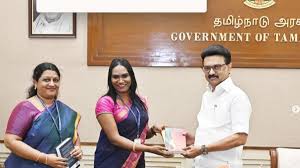
N Jency became Tamil Nadu’s first transgender woman to earn a PhD and secure Assistant Professor position at Loyola College, Chennai. Her achievement draws state recognition and highlights educational excellence as a pathway to transgender community advancement. In a groundbreaking achievement for transgender representation in higher education, N Jency has become the first transgender woman in Tamil Nadu to complete a PhD and secure an appointment as Assistant Professor in the English Department at Loyola College, Chennai. ACADEMIC EXCELLENCE AGAINST ALL ODDS Jency’s journey from a village in Tiruvallur district, Tiruttani, to the halls of one of Chennai’s most prestigious institutions represents years of perseverance through significant challenges. Her academic record includes gold medals in both her undergraduate and master’s degree courses, demonstrating consistent excellence throughout her educational career. Her appointment has drawn recognition from the highest levels of state government, with Chief Minister MK Stalin publicly congratulating Jency on her achievement. “Congratulations Dr Jency. Let several hundreds more reach success through education, as you serve as a guiding light. Let the mighty force called education win over hurdles and rejections,” Chief Minister Stalin stated in his official response to the appointment. During a meeting with the Chief Minister, Jency expressed her gratitude for the government’s support of social justice initiatives while sharing her broader vision for transgender inclusion in education. A VOICE FOR COMMUNITY REPRESENTATION Jency emphasised that her success extends beyond personal achievement. “This is not my own victory but one that belongs to my trans community,” she said. “I did suffer a lot to reach this position. Education is the modification of human behaviour, and that is what brought me to this position.” Her message to society was direct and compelling: “I urge society not to treat a transgender person differently or chase them away from home, but to educate them. Take me as an example — I was a gold medallist in UG and MA. I reached this position while my family was not initially able to accept me. When you accept nature, why can’t you accept us who are also part of nature?” A CALL FOR PERMANENT POSITIONS Jency has also requested Chief Minister Stalin to consider her for a permanent staff position at a Tamil Nadu government college, viewing such an appointment as a powerful example for other members of the transgender community. “I don’t have a father, but I ask the CM, thinking of him as my father, to allot a permanent staff role in a Tamil Nadu government college, as it would become an example for those in my community to concentrate on education,” she said. This appointment at Loyola College marks a significant step forward for transgender inclusion in Tamil Nadu’s academic institutions. Courtesy : Pramod Madhav, India Today Note: This news is originally published on https:/indiatoday.com/ and is for use by the non-military/non-commercial community, especially those in the human rights sector.
Assam CM announces 50% reservation in supervisor posts for Anganwadi workers; transgender community to get OBC status

NEW DELHI: Assam chief minister Himanta Biswa Sarma on Sunday announced two key cabinet decisions — a significant increase in reservation for Anganwadi workers in supervisor posts and the grant of social and backward classes (OBC) status to the transgender community in the state. “Earlier, 25% of the supervisor posts were reserved for Anganwadi workers. Now, 50% of the supervisor posts will be reserved for Anganwadi workers. The remaining 50% posts will be recruited through the state-level recruitment process,” Sarma said. In another major decision aimed at social inclusion, the Assam cabinet approved OBC status for the transgender community. “Today, the Assam cabinet has approved to provide social and backwards classes status to the transgender community. We will provide identity cards only to those people in the transgender community who are the original inhabitants of Assam,” the chief minister added Courtesy : TOI Note: This news is originally published on https:/timesofindia.com/ and is for use by the non-military/non-commercial community, especially those in the human rights sector.
First transgender woman to earn PhD in Tamil Nadu appointed assistant professor
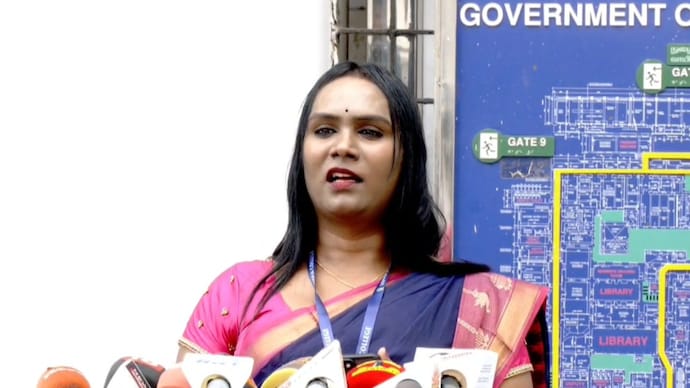
N Jency became Tamil Nadu’s first transgender woman to earn a PhD and secure Assistant Professor position at Loyola College, Chennai. Her achievement draws state recognition and highlights educational excellence as a pathway to transgender community advancement. In a groundbreaking achievement for transgender representation in higher education, N Jency has become the first transgender woman in Tamil Nadu to complete a PhD and secure an appointment as Assistant Professor in the English Department at Loyola College, Chennai. ACADEMIC EXCELLENCE AGAINST ALL ODDS Jency’s journey from a village in Tiruvallur district, Tiruttani, to the halls of one of Chennai’s most prestigious institutions represents years of perseverance through significant challenges. Her academic record includes gold medals in both her undergraduate and master’s degree courses, demonstrating consistent excellence throughout her educational career. Courtesy : Pramod Madhav, India Today Note: This news is originally published on https:/indiatoday.com/ and is for use by the non-military/non-commercial community, especially those in the human rights sector.
Transgender community, activists demand space for talks, acceptance, & infrastructure
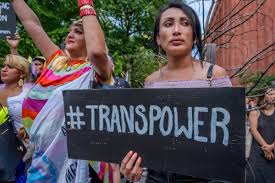
Ranchi: A pride month sensitisation programme was held on Saturday bringing together transgender individuals, mental health professionals, civil society organisations, and govt representatives. The event was organised by the Child in Need Institute (CINI) under its G-SAFE+ initiative, in collaboration with RINPAS and other community stakeholders. The aim of the event was to create a space for dialogue on the legal, psychological, and infrastructural needs of the transgender community while celebrating their identity and resilience. Citing the poor implementation of the Supreme Court’s judgment that mandated transgender welfare boards in every state, Jharkhand high court Ritwik Sinha said, “We are talking about rights, but they remain largely on paper. There is zero follow-up.” Mental health emerged as a key focus, with statistics revealing that mental health issues are four times more prevalent among transgender individuals. Dr Manisha Kiran, the HOD of Psychiatric and Social Work at RINPAS, attributed high school dropout rates to bullying and lack of support. Discrimination, emotional negligence, minority stress and rejection, verbal and sometimes physical abuse, along with stigma, push the trans community into anxiety, depression, self-harm, suicidal ideation, and substance abuse. “The govt should actively involve members of the transgender community in lawmaking for the community and needs to invest in research in this area, as the lack of data in the region hinders effective policy making,” said S J Sangeeta of CINI. Amarjeet Shergil of Utthaan CBO, a group led by LGBTQIA+ members from Jamshedpur, lamented the lack of basic facilities in Ranchi for transgender community. “Jamshedpur and Chaibasa have separate washrooms, but Ranchi doesn’t. We’re seen as provocateurs — people murder, rape, and abuse us, but no police reports are filed,” she said, calling for dedicated transgender cells in police stations. Courtesy : TOI Note: This news is originally published on https:/thetelegraph.com/ and is for use by the non-military/non-commercial community, especially those in the human rights sector.