
Sensitisation drive for hosp staff on transgender patients’ rights
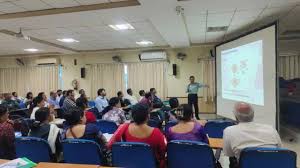
Kolkata: Shahanawaz, a transgender (TG) woman, was taken to SSKM Hospital with acute abdominal pain caused by appendicitis. The Alipore resident alleged that even while she was in extreme pain, doctors at the emergency department kept whispering to each other and offered her only a painkiller. Unable to bear the excruciating pain, she went to a nursing home to get her appendix removed. “I could understand they were discussing my gender and where to admit me. I was then rushed to a nursing home as the treatment was delayed. This was five years ago. But nothing much has changed since then,” said Shahanawaz. Shahanawaz is not alone; the TG community at large faces multiple problems in accessing healthcare services. The fear of being rejected and the negative experiences they face force many to shun medical care unless it is an emergency situation. “There is no doubt that TG persons face a lot of hurdles while seeking medical attention due to a lack of sensitisation. It is a painful experience for them. This sensitisation has to percolate down to the lowest rung of healthcare providers from the top,” said Kaustav Nayak, director of the Institute of Health & Family Welfare Kolkata, during a sensitisation programme at Swasthya Bhawan. Organised by the department of psychiatric social work, Institute of Psychiatry (IOP) IPGMER, and National Institute of Social Defense (TG division), doctors, paramedics, and even security guards of govt hospitals attended the three-day-long programme. “From being bullied in school because of our gender identity, which does not fall into the binary, to discrimination at hospitals, life is tough for a TG person,” said Kajal Roy, who dropped out of school. Anuprabha Das Mazumder, another TG woman, said she was forced to get her dengue treatment done in a cabin of a private hospital in 2022, even though she would have opted for a ward as her condition was not serious. “Apart from two private hospitals – one with a TG clinic and the other reserving one or two beds for patients from the community, there is no structured policy that would ensure equitable healthcare access, especially in public healthcare systems,” said Bappaditya Mukherjee, of Prantakatha, an organisation that works on gender issues and also runs a clinic for the TG community. Mayank Kumar, assistant professor at IOP’s department of psychiatric social work, hopes that such sensitisation programmes will evoke acceptable behaviour from the healthcare community. Plastic and reconstructive surgeon Manish Mukul Ghosh deliberated on the facts of sex reassignment surgery that many from the community undergo. Courtesy : TOI Note: This news is originally published on https:/timesofindia.com/ and is for use by the non-military/non-commercial community, especially those in the human rights sector.
Headlines of The DayAfter US stopped aid, India’s first transgender-led health clinic reopens

Months after India’s first transgender-led health clinic — Mitr Clinic — was shut down following a funding freeze by USAID, the landmark facility has made a comeback with a new name and renewed financial backing. Now reopened as Sabrang Clinic, the community-run healthcare centre resumed services in May 2025 with support from the Tata Trusts, project lead Subash Ghosh said. “Once the USAID issue happened in January, we had to shut down operations. But we reached out to several philanthropic organisations and individuals. And now, Tata Trusts is supporting us,” Mr. Ghosh told The Hindu in an exclusive conversation. Launched in 2021 in Hyderabad’s Narayanguda, Mitr Clinic broke new ground not only as a dedicated healthcare facility for transgender people, but also as the first in India to be entirely staffed and managed by members of the trans community. “From doctors to clinic managers, everyone is from the community. Over 3,000 patients have been served since the clinic started,” he said. Services offered General health services Counselling and clinical consultation on Hormone Replacement Therapy, Breast Augmentation, Gender Affirmation Procedures and Mental Health Treatment for Human Immunodeficiency Virus (HIV)/Sexually Transmitted Infection (STI) Psychological support The staff at the clinic includes one medical officer, one nurse, one counsellor, and two outreach workers. The clinic runs from Monday to Saturday, 10 a.m. to 6 p.m. A lifeline after USAID The shutdown in January 2025 left many transgender people and members of LGBTQIA+ community without access to trusted, stigma-free healthcare. During the interim, the clinic team continued providing online consultations and medicine delivery support until new funding could be secured. That lifeline arrived in April, when the Tata Trusts committed to supporting the clinic for three years. “We got the confirmation in April, and operations resumed from May. They have committed ₹1,500 per person per year,” said Ghosh. Under the earlier USAID programme, funding stood at ₹1,900 per person per year. While the Tata Trusts now fully funds the clinic’s core clinical team, senior staff positions are jointly supported by Tata and YRG Care, an NGO that was also associated with Mitr Clinic. “We had to phase out some roles due to financial constraints, but we are actively reaching out to other donors to help us scale up again,” Ghosh added. A government-inspired model took shape before closure While Mitr Clinic was still operational, the Telangana government launched its own trans-inclusive health facilities in all the 33 districts. The Maitri Clinic drew on learnings from the Mitr model. “We were already working with the Social Welfare Department and the Health Department. They took our approach forward,” said Ghosh. Both clinics coexisted briefly, each serving as a critical lifeline for the transgender and other members of LGBTQIA+ community. Although the Sabrang team considered State support, they chose to independently restart operations to avoid further delays. “Our clinic had more than just a physical space. We had online support systems, strong community outreach, and a trust network built over years. It was important to get that back quickly,” he said. Why ‘Sabrang’? The name Sabrang, meaning ‘all colours’, signals a more expansive vision for inclusive healthcare. “Earlier, we focused solely on transgender communities. But now we recognise that others, especially people from different marginalised groups, including queer and gender-diverse individuals, face similar barriers to healthcare,” said Ghosh. As India’s first transgender-led clinic returns in a renewed form, its commitment remains unchanged: healthcare that is dignified, accessible, and community-driven. “We have come back stronger, more inclusive, and more determined. It is still a space created by the community, only now, we are reaching more people who need it,” Ghosh said. The Hindu Courtesy : Medical Buyer Note: This news is originally published on https:/medicalbuyer.com/ and is for use by the non-military/non-commercial community, especially those in the human rights sector.
India: High Court Rules That Transgender Women Are Women
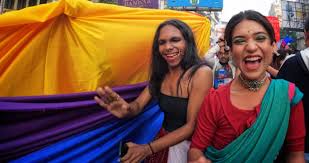
In a landmark judgment, a high court in the world’s most populous nation has ruled that womanhood is not defined by biology and that transgender women are entitled to the same legal protections as cisgender women. The 16 June ruling by the Andhra Pradesh High Court in India came in response to a case brought by Pokala Sabhana, a 24-year-old transgender woman in a heterosexual marriage. Sabhana had filed a complaint against her husband and in-laws under Section 498A of the Indian Penal Code, which aims to protect women from domestic violence and harassment. The court ruled on both the substance of the complaint as well as her eligibility for protection under the law. On the first count, it found that there was insufficient evidence to support Sabhana’s allegations against the accused and ultimately dismissed her claim. However, it strongly rejected her husband and his family’s argument that Sabhana was not entitled to lodge the complaint in the first place because she could not be considered a “woman” under the law as she cannot bear children. Court Affirms Gender Identity Rights “A trans woman, born male and later transitioning to female, is legally entitled to recognition as a woman,” stated the court. “Denying such protection by questioning their womanhood amounts to discrimination.” The judgement added that the argument that Sabhana, “being a trans woman, cannot be regarded as a ‘woman’ merely because she is incapable of biological reproduction, is deeply flawed and legally impermissible.” The court further concluded that she “cannot be deprived of her right to lodge a complaint against her husband or the relatives of her husband for the alleged offences.” A Stark Contrast to the UK The Indian court’s progressive stance stands in sharp contrast to the UK Supreme Court decision in April, which ruled that the legal definition of “woman” under that country’s Equality Act does not include transgender women. The UK ruling sent shockwaves around the world and has been widely cited by anti-trans groups and campaigners to justify exclusionary and discriminatory agendas. In South Africa, the Democratic Alliance’s Helen Zille caused a firestorm when she applauded the ruling, describing efforts to uphold trans rights as “a contagion as dangerous, socially, as Covid was, medically.” Courtesy : MAMBA Note: This news is originally published on https:/mambaonline.com/ and is for use by the non-military/non-commercial community, especially those in the human rights sector.
India’s First Transgender-Led Health Clinic
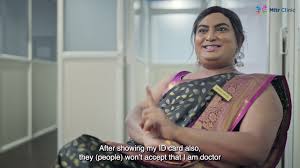
Context: India’s first transgender-led health clinic, previously known as Mitr Clinic, has reopened in Hyderabad as Sabrang Clinic with renewed funding from Tata Trusts after facing a shutdown due to USAID’s funding freeze. About India’s First Transgender-Led Health Clinic: What it is? Sabrang Clinic (formerly Mitr Clinic) is India’s first healthcare facility entirely staffed and managed by transgender individuals, offering specialized medical services for the transgender community. Features: Provides gender-affirming care, HIV/AIDS treatment, mental health support, and general healthcare. Ensures a stigma-free, inclusive environment for transgender patients. Significance: Addresses healthcare disparities faced by transgender people due to discrimination in mainstream medical facilities. Empowers the transgender community by creating employment opportunities in healthcare. Relevance for UPSC Syllabus: GS Paper II (Governance): Issues related to marginalized communities, healthcare access, and government policies like the Transgender Persons (Protection of Rights) Act, 2019. GS Paper I (Society): Social empowerment, inclusivity, and challenges faced by transgender persons in India. Essay/Ethics: Questions on equality, discrimination, and ethical healthcare delivery. Courtesy : INSIGHTIAS Note: This news is originally published on https:/insightias.com/ and is for use by the non-military/non-commercial community, especially those in the human rights sector.
### Operation Smile: Workshop Organized on Protection of Transgender Rights
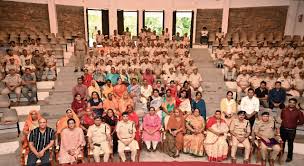
Udaipur,Under the directives of Additional Director General of Police, Civil Rights & Anti Human Trafficking (AHT), Rajasthan, Jaipur, and in compliance with the state-wide Operation Smile initiative, a range-level workshop for the transgender community was organized on Thursday at Vidya Bhawan Auditorium, Fatehpura, Udaipur. The event was held under the guidance of Inspector General of Police Rajesh Meena, Udaipur Range, and jointly hosted by the Udaipur Range Police and UNICEF Rajasthan. The objective of the workshop was to sensitize designated police officers at the station level regarding grievance redressal for transgender individuals and to educate the community about their legal rights. While presiding over the session, Additional Superintendent of Police Harsh Ratnu emphasized that integrating the transgender community into mainstream society is the responsibility of every citizen. He addressed the nodal officers of designated police stations and representatives of the transgender community from the division, sharing the efforts made by the police department to safeguard their rights. ASP Ratnu also instructed the police nodal officers to thoroughly study the Transgender Persons (Protection of Rights) Act and ensure its proper implementation at the police station level. He underlined the importance of sensitivity and non-discrimination while dealing with any marginalized group. Insights from Experts and Officials Pushpa Mai, Director of Nai Bhaur Sansthan and lead trainer for the session, provided detailed insights into the rules and conduct expected of police officials under the 2019 Transgender Rights Act. She elaborated on state government initiatives for the upliftment of the transgender community, emphasizing efforts to provide equal facilities, recognition, health care, and safe environments. ASP Mukesh Sankhla from Chittorgarh elaborated on provisions under the POCSO Act and urged police personnel working with the transgender community to act in accordance with the law. He also encouraged community members to approach nearby police stations or officials without hesitation, ensuring their cases would be prioritized. A Call for Human-Centric Policing DySP Chetna Bhathi described the transgender community as a representation of “Ardhanarishwar” and called for human-centric and compassionate policing. She said the community holds a unique place in society and that working sensitively towards their protection earns divine blessings. Amit Bhatt, Advisor with the Department of Social Justice and Empowerment, explained the online registration process for transgender individuals and highlighted several schemes for them including pensions, scholarships, the Smile Scheme, Garima Greh, the Transgender Welfare Board, and psychological support services. Mental Health and Support Services Dr. Jitendra Jeengar, Psychiatrist at Geetanjali Medical College, emphasized mental health as a fundamental need across all genders and communities. He spoke about increasing cases of depression and shared strategies for managing mental health through proper nutrition and lifestyle. He also introduced helpline number 14416 for mental health support. UNICEF Divisional Advisor Sindhu Binujeet highlighted the objectives of the workshop, urging police officials to handle all genders with empathy at the Women Help Desks and police stations. She noted that such programs are regularly organized to bridge the gap between the police and the transgender community. Active Participation and Discussions The event included the screening of gender equality videos and presentations. An open discussion was held where participants shared challenges they face related to transgender issues. Attendees included Additional SP Banwari Lal (Salumber), Additional SP Balveer Singh (Pratapgarh), nodal officers from across the range, members of the transgender community, representatives from Childline, and officers from the office of IG Police. Over 200 participants were present. The program was effectively anchored by Kuldeep Verma, while representatives from the Policing for Care initiative including Dilip Salvi and Sunil Vyas also participated actively. This workshop marked a progressive step in promoting inclusive policing and ensuring the rights and dignity of the transgender community are protected and respected. Courtesy : Pressnote Note: This news is originally published on https:/pressnote.com/ and is for use by the non-military/non-commercial community, especially those in the human rights sector.
India’s first transgender clinic reopens in Hyderabad with aid from Tata Trusts
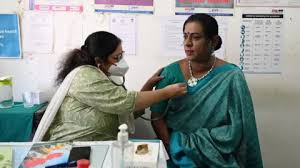
Mitra Clinic, now Sabrang, was not only a dedicated healthcare facility for transgender people, but also as the first in India to be entirely staffed and managed by members of trans community India’s first transgender clinic in Hyderabad, which had shut down in January following a USAID funding freeze, reopened under a new name, Sabrang, in Hyderabad. India’s first transgender clinic in Hyderabad, which had shut down in January following a USAID funding freeze, reopened under a new name, Sabrang, in Hyderabad. | Photo Credit: SIDDHANT THAKUR Months after India’s first transgender-led health clinic — Mitr Clinic — was shut down following a funding freeze by USAID, the landmark facility has made a comeback with a new name and renewed financial backing. Now reopened as Sabrang Clinic, the community-run healthcare centre resumed services in May 2025 with support from the Tata Trusts, project lead Subash Ghosh said. “Once the USAID issue happened in January, we had to shut down operations. But we reached out to several philanthropic organisations and individuals. And now, Tata Trusts is supporting us,” Mr. Ghosh told The Hindu in an exclusive conversation. How will freeze on USAID affect the world? Launched in 2021 in Hyderabad’s Narayanguda, Mitr Clinic broke new ground not only as a dedicated healthcare facility for transgender people, but also as the first in India to be entirely staffed and managed by members of the trans community. “From doctors to clinic managers, everyone is from the community. Over 3,000 patients have been served since the clinic started,” he said. Services offered General health services Counselling and clinical consultation on Hormone Replacement Therapy, Breast Augmentation, Gender Affirmation Procedures and Mental Health Treatment for Human Immunodeficiency Virus (HIV)/Sexually Transmitted Infection (STI) Psychological support The staff at the clinic includes one medical officer, one nurse, one counsellor, and two outreach workers. The clinic runs from Monday to Saturday, 10 a.m. to 6 p.m. A lifeline after USAID The shutdown in January 2025 left many transgender people and members of LGBTQIA+ community without access to trusted, stigma-free healthcare. During the interim, the clinic team continued providing online consultations and medicine delivery support until new funding could be secured. That lifeline arrived in April, when the Tata Trusts committed to supporting the clinic for three years. “We got the confirmation in April, and operations resumed from May. They have committed ₹1,500 per person per year,” said Mr. Ghosh. Under the earlier USAID programme, funding stood at ₹1,900 per person per year. While the Tata Trusts now fully funds the clinic’s core clinical team, senior staff positions are jointly supported by Tata and YRG Care, an NGO that was also associated with Mitr Clinic. “We had to phase out some roles due to financial constraints, but we are actively reaching out to other donors to help us scale up again,” Mr. Ghosh added. A government-inspired model took shape before closure While Mitr Clinic was still operational, the Telangana government launched its own trans-inclusive health facilities in all the 33 districts. The Maitri Clinic drew on learnings from the Mitr model. “We were already working with the Social Welfare Department and the Health Department. They took our approach forward,” said Mr. Ghosh. Both clinics coexisted briefly, each serving as a critical lifeline for the transgender and other members of LGBTQIA+ community. Although the Sabrang team considered State support, they chose to independently restart operations to avoid further delays. “Our clinic had more than just a physical space. We had online support systems, strong community outreach, and a trust network built over years. It was important to get that back quickly,” he said. Why ‘Sabrang’? The name Sabrang, meaning ‘all colours’, signals a more expansive vision for inclusive healthcare. “Earlier, we focused solely on transgender communities. But now we recognise that others, especially people from different marginalised groups, including queer and gender-diverse individuals, face similar barriers to healthcare,” said Mr. Ghosh. As India’s first transgender-led clinic returns in a renewed form, its commitment remains unchanged: healthcare that is dignified, accessible, and community-driven. “We have come back stronger, more inclusive, and more determined. It is still a space created by the community, only now, we are reaching more people who need it,” Mr. Ghosh said. Courtesy : Siddharth Kumar Singh, The Hindu Note: This news is originally published on https:/thehindu.com/ and is for use by the non-military/non-commercial community, especially those in the human rights sector.
Deported 45 days ago, transperson from Bangladesh slips back into Delhi — ‘to be with live-in partner’

Sources in the police said that Khan, despite being handed over to Bangladeshi authorities, did not return home in May A team from the Delhi Police’s Foreigner Cell, which has been apprehending Bangladeshis staying in India illegally, was in for a surprise when they found that a person they had deported to Bangladesh only 45 days ago, with assistance from the Foreigners Regional Registration Office (FRRO), was back in the Capital. The transgender, Suhan Khan (30), was apprehended in a raid near Azadpur Mandi on Monday. During questioning, Khan allegedly said that he had returned to India to be with his friend, whom he claimed was his lover, and had been staying at Outer Delhi’s Nihal Vihar. Khan had been arrested by the same team from the Foreigner Cell on May 15, while he was found begging in the Azadpur Mandi area, sources in the police said. Deputy Commissioner of Police (Northwest) Bhisham Singh said that Khan’s return to India and getting apprehended again highlights both the persistent efforts by some individuals to re-enter the country illegally and the unwavering vigilance of the Delhi Police. “This incident sends a strong message that any attempt to circumvent legal immigration processes will be met with strict action,” he added. Sources in the police said that Khan, despite being handed over to Bangladeshi authorities, did not return home in May. “He stayed for a few days in temporary shelters near the Akhaura integrated check post in Agartala and somehow managed to trespass the border again. He then took a train to Delhi and reached Nihal Vihar by bus – all in the same month of his deportation,” a source said. “Khan said he was in love with his live-in partner, which is why he came back to India,” the source added. Khan, a native of Sylhet district in Bangladesh, had initially come to Delhi 10 years ago. He had illegally crossed the West Bengal border and arrived in Delhi, where he initially worked as a daily wage labourer and later became a beggar at traffic signals. On May 15, he was deported for the first time. According to a senior police officer, the FRRO will be informed about the development. “The deportation process is handled by the FRRO. Under this, deportees or individuals staying illegally are sent back to their countries in batches or groups. The India-Bangladesh border is so porous that despite the deployment of the Border Security Force, people can still cross it easily,” the officer said. Earlier, many Bangladeshi nationals had re-entered India months or weeks after their deportation, he added. Courtesy : Hindi News
Transgender actress Shubhi Sharma on real acceptance in the industry; says ‘Let us work, we have households to run’

As Pride Month is celebrated across the globe, Indian transgender actress Shubhi Sharma, who rose to fame with the show Dhruv Tara, has shared a heartfelt note on the ongoing struggle for inclusion within the entertainment industry. While the celebrations aim to recognize LGBTQ+ voices, Shubhi says that real acceptance still feels distant. “Pride Month is celebrated across the world. Even our country, India, is also celebrating. Transgender individuals are welcome, they are asked about their journey, struggles and achievements. But I feel it’s all about documenting things to make society look good. There isn’t much that our society is ready to return us,” she says bluntly. Shweta Tiwari shares snaps from her wildlife trip to Mauritius with kids Palak and Reyansh Opening up about a recent experience, Shubhi shares, “I was looking for work and had auditioned for Chakravarti Samrat Prithviraj Chauhan. It was a good role — a transgender character. But later, they decided to cast a male artist dressed as a transwoman. If this doesn’t mean we are sidelined, then what does?” She adds with grace and honesty, “I’m fine if they don’t cast me — maybe I didn’t fit the role. But at least they could have offered the part to another trans person. We deserve those opportunities.” Shweta Tiwari’s ex-husband Raja Chaudhary accuses her of not letting him meet daughter Palak; says, “She made me sign a contract to…” Shubhi’s message is simple but powerful: “My only request is — if you truly believe in Pride Month, then accept us. Let us work. We have households to run. We don’t seek pity or charity — we seek respect. I hope someday society will stand with us, not just speak about us.” Her words serve as a stark reminder that representation without inclusion is incomplete — and that real change lies in action, not tokenism. Courtesy : TOI Note: This news is originally published on https:/timesofindia.com/ and is for use by the non-military/non-commercial community, especially those in the human rights sector.
Mitr Clinic gets new avatar: India’s first transgender clinic in Hyderabad gets new lease of life
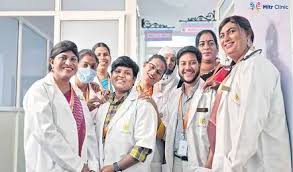
HYDERABAD: Mitr Clinic, India’s first exclusive clinic for transgenders set up in 2021 in Narayanguda, had a new lease of life after one of India’s top MNCs came to their rescue to fund the clinic after USAID stepped back. Having reopened on May 2, 2025, the Mitr Clinic has donned a new name – Sabrang. Managed by the YR Gaitonde Centre for AIDS Research and Education (YRGCARE), an NGO focusing on HIV/AIDS treatment, the clinic will be open from Monday to Saturday, 10am to 6pm. It was in Jan 2025 when the clinic was forced to close after its funding from the United States Agency for International Development (USAID) was halted. All USAID funding was frozen following an order from US President Donald Trump. As a result, many members of the transgender community who were dependent on the clinic found it difficult to access the healthcare they needed. “Many prefer to come to this clinic since it provides privacy to the transgender community. Until Jan, the clinic used to serve 350 members of the LGBTQIA+ community,” said a member of the community. For 24-year-old Radhakrishnan, who works as a traffic assistant with the state police, Sabrang is where he hopes to continue his transition to a trans man. “For a few months, when the clinic was closed, I struggled. I was used to visiting Mitr regularly for hormone therapy. I had nowhere else to go when it was shut,” he said. Similarly, Ayesha Meera, a transgender woman who used to work as a counsellor for Mitr and now works as an advocacy officer for the Trans Equality Society, said: “I used to live in Tenali and travel 7-8 hours every day for hormone therapy at Mitr. Now that the clinic is open again, I can continue doing it.” Meanwhile, June being Pride Month, the clinic manager organised a pot-luck on Saturday, attended by their regular patients. “Here, I am not made to feel ashamed, and I feel comfortable. At other clinics, I was taunted and looked down upon,” a transgender person told TOI. “The HIV treatment programme is extensive. They provide PREP (Pre-Exposure Prophylaxis, a medication to prevent HIV, anti-retroviral therapy, and PEP (Post-Exposure Prophylaxis, a medication to cure HIV). It’s also a place for the community to socialise and bond – it’s more like a second home,” said Rohit Mohite, a sexual health manager. Courtesy : TOI Note: This news is originally published on https:/timesofindia.com/ and is for use by the non-military/non-commercial community, especially those in the human rights sector.
Bengaluru’s Rainbow Habba 2025 showcases transgender achievers
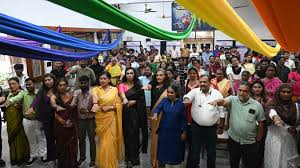
The occasion featured India’s first transgender ventriloquist, Jaanu, and a trans woman gym trainer, Ani Mangalore.They shared their experiences and challenges. Rainbow Habba 2025, which celebrates gender and sexual diversity, was held on a grand scale in the city on Saturday. The occasion featured India’s first transgender ventriloquist, Jaanu, and a trans woman gym trainer, Ani Mangalore. They shared their experiences and challenges. Siddappa Hukkeri from Belagavi was felicitated for securing a peon’s post in the the Hassan District Court through the 1% reservation for transgender individuals. During his felicitation, Hukkeri highlighted the role of Manohar Elevarthi, Rajesh Srinivas, and Nisha Gulur from Sangama Foundation, an LGBT rights group based in Bengaluru, which had submitted a Public Interest Litigation in 2022 seeking 1% reservation in state government jobs for transgender minorities to help trans people earn a respectable livelihood rather than resort to begging. Courtesy : DH Note: This news is originally published on https:/deccanherald.com/ and is for use by the non-military/non-commercial community, especially those in the human rights sector.