
Kerala HC Orders Bar Council Of India To Approve 2 Seats For Transgender Students In All State Law Colleges
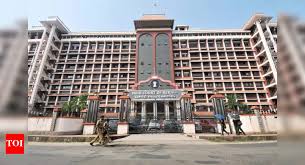
The Kerala High Court directed the Bar Council of India to approve two seats for transgender students in all state law colleges. Justice V.G. Arun issued the interim order after noting delays by the BCI, following a petition by a transgender woman denied admission despite qualifying KLEE 2025, citing NALSA v. India and the Transgender Persons Act. Kochi: The Kerala High Court on Friday directed the Bar Council of India (BCI) to approve two seats for transgender students in all law colleges across the state. Interim Order Issued Justice V.G. Arun issued the interim order while hearing a petition seeking to expedite the decision on the proposal, which had been pending before the BCI. The court observed that the matter could not be kept waiting indefinitely for the Council to act. During the hearing, the petitioner’s counsel informed the court that at an earlier session, the BCI had been directed to finalise a date for holding its General Council meeting to decide on the matter. However, the BCI’s standing counsel told the court that the proposal was placed before the Standing Committee for Legal Education, which, after deliberation, decided that the final call must be taken by the General Council. The standing counsel added that it was not possible to say when the next meeting of the General Council would be held. Taking note of this delay, Justice Arun remarked, “In my opinion, the issue cannot wait endlessly for the General Council of the Bar Council to meet.” Accordingly, the court issued an interim direction to the BCI to approve the Kerala Government’s request, communicated through a letter dated August 6, for the creation of two seats for transgender students across all law colleges in the state. The court also instructed that the approval should be given within ten days of receiving a copy of the order. The directive came while hearing a petition filed by a transgender woman who was denied admission to Government Law College, Kozhikode, despite qualifying in the Commissioner for Entrance Examinations’ Kerala Law Entrance Examination (KLEE) 2025. The petitioner also cited the landmark NALSA v. Union of India judgment and the Transgender Persons (Protection of Rights) Act, 2019, in support of her claim. (Except for the headline, this article has not been edited by FPJ’s editorial team and is auto-generated from an agency feed.) Courtesy : TFPJ Note: This news is originally published on https:/thefreepressjournal.com/bha and is used purely for non-profit/non-commercial purposes, especially human rights
Legal rights exist, but safe healthcare remains out of reach for Pakistan’s transgender people

Rachita ShingariDespite legal protections under the 2018 Transgender Persons Act, Pakistan’s trans community faces stigma, high costs, and a lack of trained surgeons, forcing many into secret, unsafe procedures. Bunty, a trans woman from Lahore, underwent a rare confidential breast augmentation, highlighting these risks. Over 70% of trans people still receive poor-quality care, with most hospitals failing to provide respectful, gender-sensitive services. A 2025 policy in Khyber Pakhtunkhwa now mandates separate wards, washrooms, and counters for trans patients, signaling a crucial step toward safe, dignified healthcare — though social and institutional barriers remain. #TransRights #GenderAffirmation #InclusiveHealthcare #Pakistan #TransVisibility #HumanRights #KhyberPakhtunkhwa #HealthJustice #LGBTQ Rachita Shingari Courtesy : India Today Note: This news is originally published on https:/indiatoday.com/bha and is used purely for non-profit/non-commercial purposes, especially human rights
Kerala HC orders Bar Council to approve two seats for transgender students
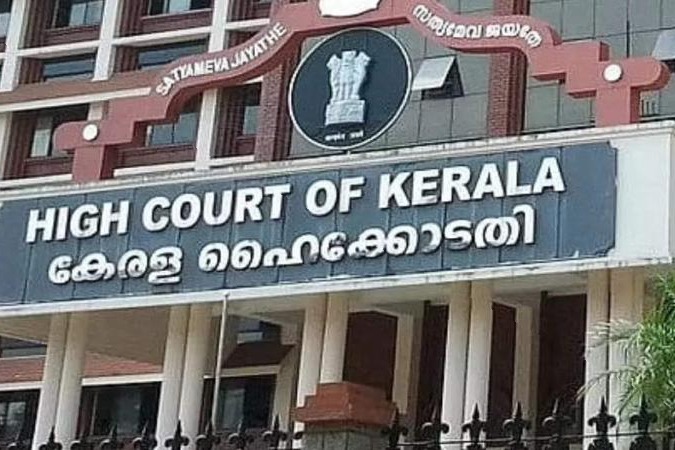
Kochi, : The Kerala High Court on Friday directed the Bar Council of India (BCI) to approve two seats for transgender students in all law colleges across the state. Justice V.G. Arun issued the interim order while hearing a petition seeking to expedite the decision on the proposal, which had been pending before the BCI. The court observed that the matter could not be kept waiting indefinitely for the Council to act. During the hearing, the petitioner’s counsel informed the court that at an earlier session, the BCI had been directed to finalise a date for holding its General Council meeting to decide on the matter. However, the BCI’s standing counsel told the court that the proposal was placed before the Standing Committee for Legal Education, which, after deliberation, decided that the final call must be taken by the General Council. The standing counsel added that it was not possible to say when the next meeting of the General Council would be held. Taking note of this delay, Justice Arun remarked, “In my opinion, the issue cannot wait endlessly for the General Council of the Bar Council to meet.” Accordingly, the court issued an interim direction to the BCI to approve the Kerala Government’s request, communicated through a letter dated August 6, for the creation of two seats for transgender students across all law colleges in the state. The court also instructed that the approval should be given within ten days of receiving a copy of the order. The directive came while hearing a petition filed by a transgender woman who was denied admission to Government Law College, Kozhikode, despite qualifying in the Commissioner for Entrance Examinations’ Kerala Law Entrance Examination (KLEE) 2025. The petitioner also cited the landmark NALSA v. Union of India judgment and the Transgender Persons (Protection of Rights) Act, 2019, in support of her claim. Courtesy : AP7AM Note: This news is originally published on https:/ap7am.com/bha and is used purely for non-profit/non-commercial purposes, especially human rights
Breaking Barriers: Dr. Priya Makes History as Kerala’s First Transgender Doctor, Symbolising Courage and Inclusion
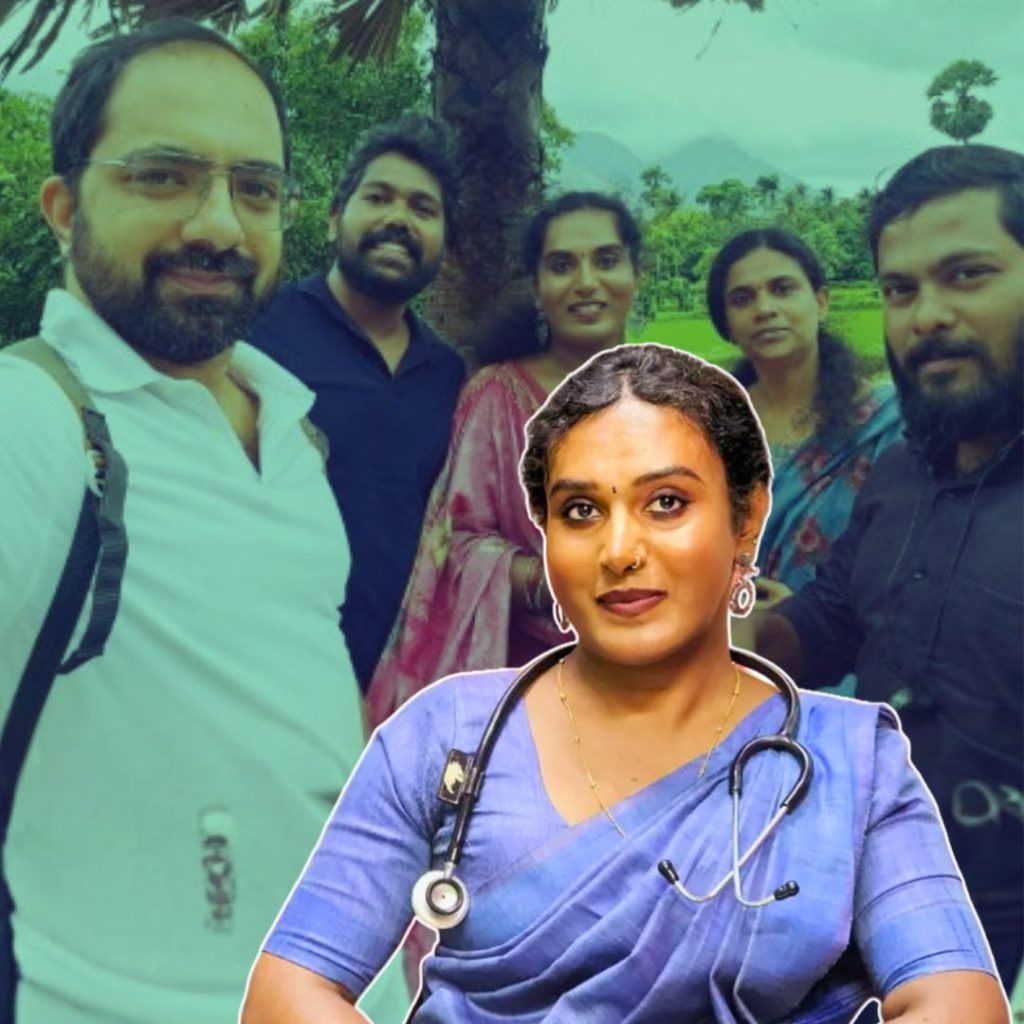
Dr. Priya’s groundbreaking journey from discrimination to becoming Kerala’s first transgender doctor embodies hope, resilience, and social change. Dr. Priya from Kerala has become the state’s first transgender doctor, a groundbreaking achievement that highlights the intersection of medicine, gender identity, and social acceptance. With a medical degree and clinical experience, she has broken barriers despite facing early childhood discrimination and ongoing societal stigma. Kerala’s Health Minister Veena George and various rights activists have welcomed her success, calling it a symbol of hope for marginalized youth seeking dignity and opportunity. Recent updates also mention challenges linked to a brief suspension by the French Medical Council earlier this year, though she continues her medical career in Kerala with community support. Overcoming Personal and Professional Barriers Born as Jinu Sasidharan, Dr. Priya struggled with her gender identity from an early age. As a child, she realised she identified as female but faced fear and embarrassment in revealing her truth. She decided to pursue education as a coping mechanism, completing a BAMS degree and then an MD from Mangaluru. Her medical journey was accompanied by hormone treatment and gender-affirming surgery, which she underwent after joining Sitaram Hospital in Thrissur. In her own words, “Life is precious. I don’t need a mask to hide my identity.” Her transitioning process included not only surgery but ongoing treatments such as voice therapy, exemplifying her commitment to living authentically while upholding her professional role. Colleagues commend her diligence and empathetic approach, depicting her as a compassionate physician dedicated to patient care irrespective of societal labels. “She is a trailblazer who demonstrates how identity and ability coexist harmoniously,” a senior official from the Kerala Medical Council noted. Societal Context and Support Systems Kerala stands out in India for progressive transgender policies. The state offers free gender affirmation surgeries and scholarships for transgender students. Yet, discrimination in education and workplaces remains a pervasive challenge. Dr. Priya’s achievement spotlights how formal policy reforms must be complemented by societal attitude shifts. Community activists argue that despite legislative support, inclusion requires enhanced awareness and anti-discrimination measures in institutional environments. Dr. Priya’s family has been a pillar of strength, providing emotional and financial support through her struggles. Their role underscores the importance of familial acceptance in transgender journeys. Public officials, including Health Minister Veena George, touted her success as a “milestone for Kerala and India,” encouraging young transgender persons to dream beyond historical limitations. However, it is worth noting that earlier in 2025, Dr. Priya faced a one-month suspension by the French Medical Council while working there, following allegations related to her practice. While the details remain confidential, the incident reflects additional layers of challenge transgender professionals may face on international platforms, compounding pressures beyond gender identity alone. The Logical Indian’s Perspective Dr. Priya’s story epitomises resilience and the pursuit of equality through courage and professionalism. At The Logical Indian, we believe that true inclusivity transcends legal rights and requires changing hearts and minds within communities and workplaces alike. Her journey signals how society enriches itself by embracing diversity rather than fearing difference. Her success should inspire not just admiration but concrete action: implementing inclusive policies, fostering safe environments in education and healthcare, and celebrating achievements of marginalized communities without prejudice. The Logical Indian urges readers to reflect on how everyday interactions in schools, workplaces, and social spaces can become platforms for empathy, dialogue, and respect. Syed Muskan Shafiq Courtesy : The Logical Indian Note: This news is originally published on https:/thelogicalindian.com/bha and is used purely for non-profit/non-commercial purposes, especially human rights
Beyond the binary: Supreme Court reclaims the promise of transgender equality

The Supreme Court’s judgement in Jane Kaushik v Union of India, delivered on 17 October 2025, reopens a conversation about what equality truly demands for transgender persons. The judgement, pronounced by a Bench of Justices J.B. Pardiwala and R. Mahadevan, represents both a rebuke of bureaucratic neglect and a reaffirmation of constitutional compassion. From recognition to realisation The Court’s recognition of the right to self-identify one’s gender in NALSA v Union of India (2014), was celebrated as an epochal moment. The subsequent enactment of the Transgender Persons (Protection of Rights) Act, 2019 and the 2020 Rules promised a legal scaffold for this recognition. Yet, as Jane Kaushik demonstrates, the distance between promise and practice remains vast. The Court found that state institutions have displayed a “grossly apathetic attitude” toward implementing the Act and its Rules. The Court attributed this to deep-rooted societal stigma and the lack of bureaucratic will. The petitioner, a transwoman teacher, had been dismissed by private schools in Uttar Pradesh and Gujarat after she revealed her gender identity. The Court refused to treat her experience as an isolated instance. Instead, it placed the case within the broader constitutional arc that connects substantive equality under Article 14 with dignity under Article 21 — insisting that the two are inseparable for transgender citizens. The Court’s mandate The Court set up an eight-member Advisory Committee headed by former Delhi High Court judge Asha Menon. The committee, the Court held, would consult stakeholders and formulate a practical policy draft or report for the Union’s consideration, to give effect to the provisions of the 2019 Act. In particular, the Committee is tasked with formulating a viable and comprehensive equal opportunity policy for the transgender community in the arenas of employment and education. The Committee has been asked to suggest suitable measures to accommodate transgender persons reasonably in public spaces and workplaces, without them being forced to keep their identity a secret or reveal their identity, violating their right to privacy. The Court then directed the Union government to frame its own equal opportunity policy within three months of receiving the report from the Advisory Committee. Critique of the 2019 Act The Court reasoned that reasonable accommodation was implicit in the 2019 Act and was a positive obligation on the state. However, the 2019 Act only spells out rights for transgender persons, and falls short of creating any mechanism for them to realise the benefit of these rights—thereby aggravating their struggle. This is so because the 2019 Act, the Bench observed, does not spell reasonable accommodation the way it is done in the Rights of Persons with Disabilities Act, 2016. However, the decisions of the Supreme Court in NALSA and Shanavi Ponnuswamy v Ministry of Civil Aviation (2022) have employed the concept of reasonable accommodation in the context of discrimination faced by transgender persons in employment. The Bench observed that the 2019 Act represents a significant step towards giving horizontal application to constitutional rights, as it imposes enforceable duties on both the State and private establishments to prevent discrimination against transgender persons. The Court noted with dismay that the Act’s limited enforcement mechanisms weakened its transformative potential. The Court, therefore, reminded non-State actors to guarantee the non-discrimination against transgender persons who continue to be victims of prejudice, stigma and social stratification. The Bench criticised the 2019 Act for diluting the sanctity of the right to self-determination as envisioned in NALSA. No need for permission from employer for SRS Equally significant is the Court’s clarification that no transgender or gender diverse person is bound to take permission from their employer to undergo gender-affirming medical procedures such as Sexual Reassignment Surgery (SRS), unless the nature of their work is such that it is based on one’s gender identity. Employers, it said, may only require a reasonable notice to update records or workplace documentation. Rationale for compensation The Court noted that the petitioner was entitled to be awarded compensation as she had suffered due to the violation of her fundamental rights. Otherwise, it would render the fundamental right a hollow promise, the Bench held. The Bench reasoned that it is not just state action, that is amenable to review, but also omissions, especially those that result in the state failing to fulfil its obligation to protect fundamental rights. “If not for such inaction and apathy, the petitioner would have been in a significantly better position to exercise her rights, especially those related to employment”, the Bench held. The Bench directed the two schools, the Union government and the state of Uttar Pradesh and Gujarat to pay ₹50,000 each as compensation. The Bench reasoned that the Union and the state governments were liable due to their failure to provide relevant mechanisms which prevented her from seeking appropriate redressal. Excoriation of the Union and the States The judgement includes a searing critique of the Union’s inaction. The Bench observed that the Union feigned ignorance and chose not to act, despite clear directions of the Court, in its order dated 8 September 2022, to develop suitable measures and place a policy on record. The judgement cited the answer of Sushree Pratima Bhoumik, the then Union Minister of State, for Social Justice and Empowerment, who in the Rajya Sabha stated that there was no need for any policy as the 2019 Act provided appropriate remedies. The Court described the Union’s intentions as “limpid”, stating : “Such a stance is in blatant disregard to the mandate of Chapter IV of the 2019 Act which obligates the appropriate Government to take steps in order to secure the full and effective participation of transgender persons and their inclusion in society”. The Bench found the persisting inaction as deeply disturbing. The Bench noted with dismay that States other than West Bengal, Tamil Nadu and Delhi, have not brought forth any rules along the lines of the 2020 Rules to implement the 2019 Act. It found that Odisha and Kerala were the only States that undertook comprehensive policy measures. “The other States have situated
Delhi Government Introduces Saheli Smart Card For Free Travel For Women And Transgender Residents
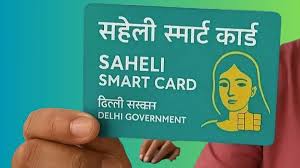
The Delhi government plans to introduce the Saheli Smart Card for women and transgender residents on Bhai Dooj, October 23, 2025. This digital card will replace the current paper-based pink tickets, allowing free travel on Delhi Transport Corporation (DTC) and Cluster buses. Applicants must be Delhi residents aged 12 or older to obtain the card. They need valid proof of residence. Registration is online through the DTC portal, and cards are issued after full KYC verification via designated banks. Cards won’t be available at bus counters but will be delivered to applicants’ addresses post-verification. Key Features of Saheli Smart Card The Saheli Smart Card is a personalized lifetime pass featuring the holder’s photograph and name. It operates under the National Common Mobility Card (NCMC) and Cluster buses, it can be recharged for use on other transport systems like the Delhi Metro and select merchant purchases. Cards remain valid for a lifetime with no restrictions on time or usage for travel. The registration process is entirely digital, aiming to enhance transparency and prevent misuse seen with previous paper pink tickets. Eligibility and Registration The scheme is open to all women and transgender individuals who are bona fide residents of Delhi. Applicants must submit documents such as an Aadhaar card, PAN card, Delhi residence proof, and a passport-size photo during KYC verification. The government’s initiative aims to provide safe, convenient, and free public transport for women while addressing revenue leakages. Chief Minister Rekha Gupta has accelerated preparations for the rollout on Bhai Dooj 2025, focusing on ease of travel and welfare for women commuters. Government Intent and Impact The introduction of the Saheli Smart Card marks a significant step towards modernizing public transport in Delhi. It ensures that benefits reach rightful users while promoting secure and inclusive mobility across the city’s bus and metro networks starting Bhai Dooj 2025. Courtesy : Oneindia Note: This news is originally published on https:/oneindia.com/bha and is used purely for non-profit/non-commercial purposes, especially human rights
Two transgender persons from Bangladesh living illegally in north-west Delhi held

Delhi police on Wednesday apprehended two transgender persons from Bangladesh living illegally in north-west Delhi’s Mahindra Park and were involved in “objectionable” activities. The deportation process has been initiated for the infiltrators, said police on Wednesday. Stating that they have launched an operation to identify illegal immigrants in the locality, Deputy Commissioner of Police (North West) Bhisham Singh said, “On October 15, we received information regarding the movement of suspected Bangladeshi nationals near the New Subzi Mandi area. Acting on actionable intelligence, we conducted raids and found two suspicious persons.” According to the police, the suspects admitted to their Bangladeshi origin during interrogation and presented their Bangladeshi identity cards and birth certificates. “Interrogation revealed that they had homes in the Khulna and Barguna districts of Bangladesh. They had been communicating with their family members via the IMO application, which is banned in India,” the DCP added. Police also seized their smartphones, which contained call logs to Bangladesh and photographs of Bangladeshi documents in their phone galleries. The deportation process has been initiated in coordination with the Foreigners Regional Registration Office, the police said. The Hindu Bureau Courtesy : The Hindu Note: This news is originally published on https:/thehindu.com/bha and is used purely for non-profit/non-commercial purposes, especially human rights
SC orders dedicated toll-free helpline to address complaints under Transgender Rights Act

The apex court sets strict three-month deadline for compliance and forms advisory panel to prevent harassment and discrimination against transgender persons The Supreme Court has directed the Centre to set up a “dedicated nationwide toll-free helpline number” in coordination with the states and Union Territories to address all complaints relating to contraventions of the provisions of the Transgender Persons (Protection of Rights) Act. The court launched a scathing attack on various governments for failing to prevent and act against continuing discrimination, humiliation and harassment of transgender persons across the country. “If any such information regarding the violation of the provisions of the 2019 Act and 2020 Rules, respectively, is received by the helpline, it shall immediately report such information to the Transgender Protection Cells under the charge of the District Magistrate in each District and under the Director General of Police of the State, as the case may require. This nationwide toll-free helpline number would have a wider scope than the grievance redressal mechanism envisioned under Rule 13(5) of the 2020 Rules,” the apex court said in a judgment while issuing a slew of directions to the authorities. “The Union of India and all the States respectively shall ensure that the aforesaid directions are strictly complied with within a period of three months from the date of the pronouncement of this judgment,” a bench of Justice J.B. Pardiwala and Justice R. Mahadevan said. The bench also formed an advisory committee headed by former Delhi High Court judge, Justice Asha Menon, as chairperson to evolve steps to prevent the harassment, humiliation and discrimination of transgender persons. “To facilitate the same, we direct the Chief Secretaries of all the States/ Union Territories to nominate a high-ranking officer, not below the rank of Joint Secretary in the Department of Social Justice & Empowerment of the respective State/ Union Territory, to act as the nodal officer on behalf of the respective State/ Union Territory. We further direct all the concerned departments/ authorities of the respective State/ Union Territory to cooperate with the nodal officer concerned…,” the bench said. The court passed the direction while dealing with a writ petition filed by Jane Kaushik, a transgender woman who had challenged her termination as a teacher by two schools. The court ordered a cumulative compensation of ₹2 lakh to Kaushik to be paid equally by the Centre, the two schools and the states which failed to act against the institutions. Courtesy : The Telegraph Note: This news is originally published on https:/thetelegraph.com/bha and is used purely for non-profit/non-commercial purposes, especially human rights
9 Trans People Attempt Suicide In Mumbai Over Remarks On Spiritual Leader

All the nine people tried to die by suicide on the first floor of the non-profit’s office in Mumbai. Nine people – all of them transgenders — allegedly tried to die by suicide in Mumbai in protest against derogatory comments made by some people against their spiritual leader, Salma Khan, and the non-profit Kinnar Maa Sansthan. Mumbai-based Kinnar Maa Sansthan works for the well-being of transgender and Hijra communities across India. The police said a transgender person alleged they were hurt by the derogatory comments against their spiritual leader. All the nine people tried to die by suicide on the first floor of the non-profit’s office in Mumbai, the official said. They were taken to a hospital and later discharged after treatment. They are out of danger. The incident comes a week after 25 people from the transgender community consumed phenyl in Madhya Pradesh’s Indore. “Around 25 people from the transgender community have been admitted to our hospital. They have claimed to have consumed phenyl together, but this cannot be immediately confirmed,” Dr Basant Kumar Ningwal, Superintendent-in-Charge of the government-run Maharaja Yashwantrao Hospital (MYH), told news agency PTI. A police officer said the incident may be linked to a dispute between two local groups of the transgender community. Helplines Vandrevala Foundation for Mental Health 9999666555 or help@vandrevalafoundation.com TISS iCall 022-25521111 (Monday-Saturday: 8 am to 10 pm) (If you need support or know someone who does, please reach out to your nearest mental health specialist.) Courtesy : NDTV Note: This news is originally published on https:/ndtv.com/bha and is used purely for non-profit/non-commercial purposes, especially human rights
Transgender case: 10k cash reward for info on accused

Indore: The Indore police announced a cash reward of Rs 10,000 each for information leading to the arrest of three absconding accused — Pankaj Jain, Akshay Kumayu, and Raja Hashmi — in connection with the Pandrinath transgender case. The trio was on the run despite multiple attempts by police to trace them. Deputy Commissioner of Police (Zone-4), Anand Kaladgi, declared the reward under police regulations to encourage citizens to share information that could help trace and apprehend the accused. Despite extensive efforts, the trio evaded arrest since the registration of the cases. According to police records, the accused were wanted in two separate cases registered under various sections of the Bharatiya Nyaya Sanhita, 2023, and the Transgender Persons (Protection of Rights) Act, 2019. Pankaj Jain was named under Sections 333, 115(2), and 351(2) of the BNS, along with Section 18 of the Transgender Act. In another case, he, along with Akshay Kumayu and Raja Hashmi, faced charges under Sections 119(1), 3(5), 308(4), and 351(2) of the BNS. Despite repeated search operations and inquiries, the whereabouts of the accused remain unknown. Taking note of the seriousness of the offences, police appealed to the public to come forward with any information that could aid their capture. Authorities assured that the identity of informants would be kept strictly confidential and that the DCP Zone-4 would make the final decision regarding the reward distribution. Courtesy : TOI Note: This news is originally published on https:/timesofindia.com/bha and is used purely for non-profit/non-commercial purposes, especially human rights