
Over 20 households, over 200 disciples… A Bangladeshi transgender, Babu Ayanal Khan, had been living in India as Jyoti for 30 years.
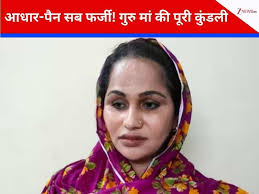
The 44-year-old transgender, known as the Miraculous Jyoti Maa in Mumbai’s Shivaji Nagar, turned out to be a Bangladeshi citizen. Police investigations revealed that she had been operating an illegal network in India under a fake identity for the past 30 years. Shivaji Nagar: In the Govandi, Rafiq Nagar, Kurla, Deonar, Narpoli, and Trombay areas, the 44-year-old transgender, posing as Jyoti Maa, would bless her devotees 24 hours a day. People would bow their heads and pray, believing Jyoti Maa to be a goddess. Jyoti Maa’s influence can be gauged by the fact that many local leaders even visited her court. In such circumstances, no one could have imagined that the Jyoti Maa, whom they considered a miraculous goddess, was actually a vicious criminal. According to the Shivaji Nagar police, several cases have been registered against this alleged Jyoti Maa for kidnapping, assault, and other serious charges. Furthermore, this transgender person is not an Indian citizen but a Bangladeshi citizen who has been living in India illegally for the past 30 years by changing his name and identity. Come to India at the age of 14 This Bangladeshi transgender person, Jyoti Maa, alias Babu Ayanal Khan, entered India illegally at the age of 14. Here, he concealed his true identity and lived in Muslim-dominated areas, and then, seeing an opportunity, established a base in Govandi. Local police reported that Babu Ayanal Khan, alias Jyoti Maa, has built a large network of transgender people over the years, including over 200 transgender followers. Investigations have revealed that he owns over 20 houses and other properties in Mumbai and its suburbs. His followers are implicated in most of the incidents reported against transgender people on trains, highways, in homes, and elsewhere. Most of these transgender people are fake. Police are now conducting a thorough investigation into this gang and its illegal assets and network. It is suspected that Jyoti Ma possesses assets worth crores of rupees. This is how Jyoti Ma’s activities were exposed An officer with the Shivaji Nagar police stated that a crackdown is underway against Bangladeshi immigrants living illegally. Recently, eight Bangladeshi nationals were arrested in the Govandi area, some of whom were transgender. After rigorous interrogation, police obtained information about Jyoti Ma, also known as Babu Ayanal Khan, leading to Khan’s arrest. The investigation also revealed that Jyoti Ma helped Bangladeshi immigrants settle in Mumbai. When police examined her documents, her birth certificate, Aadhaar card, and PAN card were all found to be fake. Her gang of transgender individuals are active in the Shivaji Nagar, Govandi, Rafiq Nagar, Kurla, Deonar, Narpoli, and Trombay areas, and are said to be living there using fake documents. The hunt for these illegal Bangladeshi immigrants continues. However, Shivaji Nagar police produced Jyoti Ma, alias Babu Ayanal Khan, in a local court, where he was remanded to judicial custody. Authored by: Manish Jha •Edited by: Rahul Mahajan About the Author Manish Jha, who began his career in TV journalism, moved from Madhubani, Bihar, and settled completely in Mumbai. In his 14-year career, he has worked on the desk in addition to reporting. He has been covering crime stories for NBT for the past seven years. Courtesy: Hindi News
Two-month-old baby rescued after transgender woman brings her to hospital

Chennai: A two-month-old baby girl was rescued by authorities in Tiruvallur on Tuesday after a transgender woman brought her to the Tiruvallur Govt Hospital for treatment. The hospital staff grew suspicious and informed the police and child welfare committee officials. Police said the transgender woman, identified as Mavathi alias Malathi (30), brought the sick baby to the hospital. When the doctor asked about the baby’s family, Malathi gave confusing answers, which made the hospital staff suspicious. During questioning, Malathi told police that she bought the baby from a poor couple in Andhra Pradesh for 2.1 lakh, adding that the parents could not afford to raise the child. An officer said, “We are checking her statement and trying to find the baby’s real parents. The reason for buying the baby is not yet clear.” Officials from the child welfare committee (CWC) later examined the baby at the hospital and said she was healthy and safe. The baby was then moved to a government-run home for infants. Police have registered a case and are looking for the baby’s biological parents. Courtesy : TOI Note: This news is originally published on https:/timesofindia.com/bha and is used purely for non-profit/non-commercial purposes, especially human rights
‘Trans rights reduced to dead letters’: SC, appoints panel to frame job, education policy
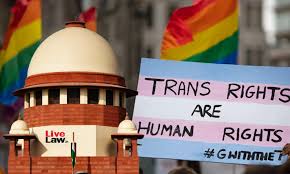
NEW DELHI: It was 11 years ago that Supreme Court recognised transgender people as the ‘third gender’ and upheld their fundamental right to equality and dignity. Observing that discrimination still continued, however, the court on Friday appointed a committee headed by a retired Delhi HC judge to frame a comprehensive equal opportunity policy for the community in the arenas of employment and education. It also directed setting up of a transgender protection cell and a dedicated nationwide toll-free helpline number. A bench of Justices J B Pardiwala and R Mahadevan expressed its anguish over the “lethargic” attitude of the Centre and states to protect the community’s rights. It said the Transgender Persons (Protection of Rights) Act, 2019 — which sought to prevent social exclusion, discrimination, unemployment and lack of educational and medical facilities faced by transgender persons — remained in law books and was never implemented in true spirit. The law was “brutishly reduced to dead letters”, SC said, for which both Centre and states were to blame. “We are pained to observe that there has either been a superficial and sporadic, or a complete lack of implementation of measures to ensure the prevention of discrimination against transgender persons in various spheres of life, both public and private… The right against discrimination of transgender and gender diverse persons has long been recognised by this court ever since the judgment in NALSA (supra) wherein it was held that the ground of ‘sex’ under Article 15 of the Constitution also includes the analogous ground of gender identity,” SC said. The court said all stakeholders concerned had not only exhibited “a serious and perennial lack of action”, but also reinforced discrimination towards the community despite the existence of a statutory framework. It said govt authorities must provide due respect and consideration to the constitutional value underlying public participation. “There is no gainsaying that the Union of India and the states need to do a lot more to create mechanisms for the transgender persons to translate their rights into reality. The lethargy exhibited on part of the govt concerned has also led the non-state establishments to put the compliance of the 2019 Act and of the Transgender Persons (Protection of Rights) Rules, 2020 in a cold freeze. This abeyance of rights is a matter of serious concern,” it said. Courtesy : TOI Note: This news is originally published on https:/timesofindia.com/bha and is used purely for non-profit/non-commercial purposes, especially human rights
SC flags discrimination faced by transgender persons, directs Centre to form equal opportunity policy
The Bench said the Transgender Persons Act of 2019 and its corresponding rules have been ‘brutishly reduced to dead letters,’ and the Centre and the states have exhibited a ‘grossly apathetic’ attitude towards them. NEW DELHI: In a significant verdict, the Supreme Court on Friday expressed concern over the discrimination faced by transgender persons despite the enactment of a law in 2019, and directed the Centre to come out with an “equal opportunity policy” within three months of a report submitted by an advisory panel. A bench of Justices J B Pardiwala and R Mahadevan said the Transgender Persons (Protection of Rights) Act of 2019 and its corresponding rules have been “brutishly reduced to dead letters,” and the Centre and the states have exhibited a “grossly apathetic” attitude towards them. “The community continues to face discrimination and marginalisation, with a scarcity of healthcare, economic opportunities, and non-inclusive educational policies adding to their struggles,” the bench said. Expressing dismay over the discrimination, the bench said that despite more than 10 years since this court’s judgment in the NALSA case in 2014 that prompted Parliament to bring in place a statute in 2019, the transgender community has to preponderantly resort to the writ jurisdiction of High Courts and this court to redress their grievances. On discrimination in employment and professional spaces, the bench said that despite the enforcement of the 2019 Act and the 2020 rules, the transgender community faces entry barriers in employment and professional spaces. “Systemic barriers like the absence of the option of a ‘third gender’ make the entry of transgender persons in the organised workforce impossible. Even if they are hired, they are expected to keep their identity hidden, which is grossly violative of one’s right to dignity under Article 21,” the bench said. The top court delivered its verdict on a plea filed by a transgender woman who was aggrieved by the discrimination and humiliation she faced in employment, which allegedly resulted in her termination from two private schools in Uttar Pradesh and Gujarat. The court directed the Centre, Uttar Pradesh and Gujarat governments, and the school in Gujarat to pay Rs 50,000 each to the petitioner for the discrimination she faced. The bench constituted an advisory committee to address the concerns of the transgender community, headed by former Delhi High Court judge Asha Menon, saying, “The issue at hand requires a more incisive study by a dedicated committee, well-equipped to recommend a viable equal opportunity policy that ought to be introduced by the Union and state governments as well as provide insightful suggestions on other aspects affecting the lives of the transgender community.” The bench asked the panel to prepare its report and/or draft policy within six months from the date of judgment and directed the Centre to “bring forth its own equal opportunity policy in place, within three months from the date the committee submits its report and/or policy draft.” In case any establishment does not have a policy of its own, the policy that the Union would bring in place shall be enforceable at such an establishment, it said. The top court, in its 177-page verdict, made some suggestions, saying it was disheartened to note that there are several provisions in both the 2019 Act and the 2020 Rules, which remain mere aspirations on paper despite the same being couched in a mandatory language. Exercising its plenary powers under Article 142 of the Constitution, the top court directed that the appellate authority before which transgender persons may exercise their right to appeal against the decision of the district magistrate be designated as per Rule 9 of the 2020 Rules in every State and Union territory. It also said a welfare board for transgender persons, as envisaged under the 2020 Rules, be created in every state and UT for the purpose of protecting their rights and interests and also facilitating access to schemes and welfare measures. The top court directed the setting up of a Transgender Protection Cell under the charge of the district magistrate in each district and under the director general of police in each state and UT to monitor the prosecution of cases of offences against transgender persons. “The Union of India and all the states shall ensure that the aforesaid directions are strictly complied with within a period of three months from the date of the pronouncement of this judgment,” the bench said, adding that a dedicated nationwide toll-free helpline number be set up to address the contravention of any provision of the 2019 law. It made various suggestions, including asking the Centre to consider formulating and issuing specific directions to ensure that no transwoman is arrested without the presence of a female officer. The bench said that members of the transgender community face challenges within public institutions such as educational establishments, hospitals, transport hubs, and government offices due to the lack of effective measures ensuring reasonable accommodation. It suggested that all establishments, including workplaces, may endeavour towards cultivating an environment that is gender-inclusive and conducive to the free expression of identity by transgender persons, without fear or stigma. “Security check-ins at airports, Metro stations, bus stands, seaports, workplaces, shopping complexes, malls, cinema halls, and other public spaces may create special gender-diverse screening points for transgender persons along with the sensitisation of security personnel at such security checks,” it said. Courtesy : TNIE Note: This news is originally published on https:/thenewindianexpress.com/bha and is used purely for non-profit/non-commercial purposes, especially human rights
‘Trans rights reduced to dead letters’: SC, appoints panel to frame job, education policy
NEW DELHI: It was 11 years ago that Supreme Court recognised transgender people as the ‘third gender’ and upheld their fundamental right to equality and dignity. Observing that discrimination still continued, however, the court on Friday appointed a committee headed by a retired Delhi HC judge to frame a comprehensive equal opportunity policy for the community in the arenas of employment and education. It also directed setting up of a transgender protection cell and a dedicated nationwide toll-free helpline number. A bench of Justices J B Pardiwala and R Mahadevan expressed its anguish over the “lethargic” attitude of the Centre and states to protect the community’s rights. It said the Transgender Persons (Protection of Rights) Act, 2019 — which sought to prevent social exclusion, discrimination, unemployment and lack of educational and medical facilities faced by transgender persons — remained in law books and was never implemented in true spirit. The law was “brutishly reduced to dead letters”, SC said, for which both Centre and states were to blame. “We are pained to observe that there has either been a superficial and sporadic, or a complete lack of implementation of measures to ensure the prevention of discrimination against transgender persons in various spheres of life, both public and private… The right against discrimination of transgender and gender diverse persons has long been recognised by this court ever since the judgment in NALSA (supra) wherein it was held that the ground of ‘sex’ under Article 15 of the Constitution also includes the analogous ground of gender identity,” SC said. The court said all stakeholders concerned had not only exhibited “a serious and perennial lack of action”, but also reinforced discrimination towards the community despite the existence of a statutory framework. It said govt authorities must provide due respect and consideration to the constitutional value underlying public participation. “There is no gainsaying that the Union of India and the states need to do a lot more to create mechanisms for the transgender persons to translate their rights into reality. The lethargy exhibited on part of the govt concerned has also led the non-state establishments to put the compliance of the 2019 Act and of the Transgender Persons (Protection of Rights) Rules, 2020 in a cold freeze. This abeyance of rights is a matter of serious concern,” it said. Courtesy : TOI Note: This news is originally published on https:/timesofindia.com/bha and is used purely for non-profit/non-commercial purposes, especially human rights
NYC schools sue the US Education Department over $47M in grant cuts tied to transgender policies: Here’s why it matters

New York City Public Schools have taken the federal government to court in a dispute that could reshape how protections for transgender students are enforced nationwide. The lawsuit, filed Thursday in Manhattan federal court, challenges the US Education Department’s decision to withhold $47 million in grants for 19 specialty magnet schools, citing policies that allow transgender students to use bathrooms and play sports consistent with their gender identity, the Associated Press reports. Funding at stake The conflict began with a September letter from the US Department of Education, led by Secretary Linda McMahon, warning that the city’s policies could violate Title IX, the federal law prohibiting sex-based discrimination in education. School officials were given a deadline to revise these policies or risk losing both current and future funding. According to Craig Trainor, the acting assistant secretary for civil rights, the department’s concern is that “male students who identify as female or transgender are given unqualified access to female intimate spaces,” as reported by the Associated Press. New York City was one of several districts, including Chicago and Fairfax County in Virginia, to receive such warnings. Chancellor Melissa Aviles-Ramos framed the department’s threat as a violation of both law and principle. She told the Associated Press, “US DOE’s threat to cut off tens of millions of dollars in magnet funding unless we cancelled our protections for transgender and gender expansive students is contrary to federal, state, and local law and, just as importantly, our values as New York City Public Schools.” Legal and policy implications The 48-page lawsuit seeks to reverse the department’s decision, asserting that New York City’s policies are fully compliant with Title IX and that the Education Department’s interpretation is inconsistent with state and city laws prohibiting gender-based discrimination. The department, in turn, has dismissed the suit. An agency spokesperson told the Associated Press that “The Department sees no merit in this lawsuit.” The spokesperson emphasized that the magnet school grant program “requires certification of civil rights compliance, which we could obviously not do in the face of NYC’s continued determination to violate the rights of female students under Title IX.” A broader context The dispute over New York City is part of a wider national conversation on transgender rights in schools. In a related development, New York State Education Commissioner Betty Rosa ordered the Massapequa School District, located in a Long Island suburb, to temporarily halt enforcement of bathroom restrictions for transgender students. The New York Civil Liberties Union is challenging a policy that barred students from using facilities aligning with their gender identity. In response to the commissioner’s order, the district said it will continue offering a gender-neutral locker room and bathroom option to any student who prefers it, the Associated Press reports. What this means for students and schools Beyond the immediate question of funding, the lawsuit underscores how federal and local interpretations of Title IX can directly affect students’ daily experiences. For magnet schools that rely on grant money to offer specialized programs, the stakes extend from policy debates to classroom resources, extracurricular activities, and equitable access for all students. As the case unfolds, it could set a precedent on how civil rights protections for transgender students intersect with federal funding, providing clarity, or further contention, on the scope of Title IX in public education. For students, educators, and policymakers, the outcome is likely to resonate far beyond New York City’s school district. Courtesy : TOI Note: This news is originally published on https:/timesofindia.com/bha and is used purely for non-profit/non-commercial purposes, especially human rights
Karnataka HC restrains use of ‘strip and search’ in transgender survey
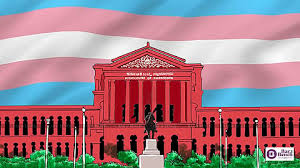
NEW DELHI: The Karnataka high court has restrained government officials from using any “strip and search” methods to identify participants in the ongoing state-run transgender survey, news agency PTI reported. A division bench comprising chief justice Vibhu Bakhru and Justice C M Poonacha issued the interim order on Wednesday while hearing a petition filed by the Anita Humanitarian Foundation, which has challenged the legality of the ‘Gender Minority Survey’. The court also directed that all information collected since the survey began on 15 September must be kept confidential and not shared with any third party. The petitioner argued that the exercise violates the Transgender Persons (Protection of Rights) Act, 2019, and Articles 14 and 21 of the Constitution. The foundation’s counsel alleged that transgender individuals were being subjected to strip searches in hospitals by persons who may not share the same gender identity. It was also submitted that transgender persons already hold official identity cards, making such verification unnecessary. Issuing notice to the state government, the bench asked it to file its statement of objections by 5 December, the next date of hearing. “In the meantime, the Government of Karnataka and those conducting the survey shall inform transgender persons that participation is voluntary,” the court said. “We restrain the respondents from conducting any identification by strip and search method till the next hearing. The information collected during the survey shall be kept strictly confidential and not disseminated.” The bench further directed the Department of Social Welfare to submit an affidavit within three days detailing how it plans to ensure confidentiality of the data gathered. The petition also calls for the creation of a compensation and rehabilitation fund for transgender and gender-diverse persons who were allegedly subjected to forced verification or humiliation during the survey. It additionally seeks a public apology from the state for what it terms an “illegal, invasive and unconstitutional process” and demands accountability from officials involved in the exercise. The foundation has urged the government to frame any future transgender welfare policies only after consulting representatives of the transgender and LGBTQIA+ communities, in line with the Supreme Court’s NALSA v. Union of India judgment and Section 4 of the Transgender Persons (Protection of Rights) Act, 2019. (With inputs from PTI) Courtesy : TOI Note: This news is originally published on https:/timesofindia.com/bha and is used purely for non-profit/non-commercial purposes, especially human rights
Lack of inclusivity prompts transgender electors to mull election boycott
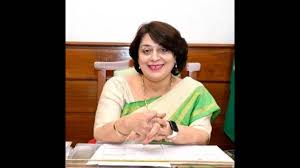
Patna: Transgender voters in the city have threatened to boycott the upcoming assembly elections, citing a lack of inclusive measures by the Election Commission of India (ECI). Community activists argue that despite legal protections to them under the Transgender Persons Act, 2019, they continue to face stigma, misrepresentation, and logistical barriers that prevent them from exercising their democratic rights. With only 4.17% turnout recorded in the 2020 assembly elections and a glaring mismatch between registered and actual transgender voters, the activists claim that the ECI’s current approach fails to recognise the dignity and identity of thousands of them. Although Patna district lists 156 registered transgender voters across 14 constituencies, the community members estimate their actual number to be around 7,000, highlighting a significant discrepancy in official records. Rajan Singh, member of the Bihar state Kinnar Kalyan Board, Govt of Bihar, criticised the ECI over this negligence. “As of now, nothing has been done to increase inclusivity of transgender — no trans icon, no separate polling booth or queue or bathroom, for our community at polling booths,” he said. “Would you tell a female to stand in a male queue?” Singh reiterated. In addition, the community is dismayed by the absence of a visible ‘trans icon’ for these assembly polls. Although an ECI official mentioned Monica Das, a previous icon for this year poll. However, Das contradicted the statement, confirming that they are not the official trans-icon for this elections. Highlighting further identity issues, Priti Kinnar, a transgender candidate from the Jan Suraaj party in the Bhorey constituency of Gopalganj, is listed as a male candidate in official documents. Singh believes it is the ECI’s responsibility to correct this error and uphold the candidate’s true identity. Anupriya, a member of the Kinnar Kalyan Board and a prominent trans rights activist, shed light on the challenges faced by the transgender community. They pointed out the lack of access to essential social entitlements and the prevalence of voter IDs that still reflect outdated or incorrect names and identities—often referred to as “dead names.” Anupriya emphasised that the community often lacks the resources and digital literacy needed to navigate online registration systems, making targeted Aadhaar and voter ID drives crucial. While stressing that boycotting elections is not the goal, the board member added, “Every vote matters. Voting is the most fundamental right in a democracy, and our community wants to exercise it. We hope that the next govt will ensure equal provisions and recognition for men, women, and transgender alike.” The ECI and district administration are conducting SVEEP (Systematic Voters’ Education and Electoral Participation) initiative to increase trans participation, but no other specific provisions are in place. The community questions, “If PWD can have the provision of voting from home, then why can’t transgender people have the same? That will help them fight the stigma and exercise their voting rights at the same time.” Lack of inclusivity prompts transgender electors to mull election boycott Courtesy : TOI Note: This news is originally published on https:/timesofindia.com/bha and is used purely for non-profit/non-commercial purposes, especially human rights
Tensions in Indore transgender dera: How feud between 2 factions turned violent; mass suicide bid stuns city

INDORE: About 24 transgenders consumed floor cleaner in an apparent mass suicide bid at Nandlalpura dera during a protest on Wednesday night. They were rushed to MY Hospital, where doctors claimed they were out of danger. It was not clear what the motive behind the act was, but the protest erupted hours after a case of assault and criminal intimidation was registered against a man who claimed to be a journalist and allegedly forced himself on a trans person. Police couldn’t confirm why the transgenders protested till last reports. The transgenders later gathered outside MY Hospital, where a group of them again attempted suicide by pouring inflammable substances over themselves. Hundreds of transgenders protest at MYH, Nandlalpura Even a few journalists, including ToI’s photojournalist Praveen Barnale, were doused with kerosene during the chaotic events as the transgenders poured the inflammable liquid on themselves in a mass self-immolation attempt. “We received inputs about a commotion at the transgenders’ dera (gathering) in Nandlalpura, following which a team was rushed to the spot. Twenty-four members of the transgender community consumed a suspicious substance, which appeared to be a floor cleaner. They were rushed to the hospital in ambulances and police vehicles, where their condition was stated to be stable. We are yet to record statements of the victims, after which the reason behind this will be clear,” DCP Anand Kaldagi told ToI. Preliminary reports suggest that the protests stemmed from a complex sequence of events that started with a clash between two transgender communities. This led to allegations of religious conversions as well an accusation against the self-proclaimed journalist that sought sexual favours from a trans person. DCP Kaldagi, however, said the protest had nothing to do with that incident. However, the exact cause could not be ascertained as the transgenders turned their ire on media persons. CCTV footage purportedly showing the transgenders sitting in a room and consuming the floor cleaner together also emerged, and later went viral on social media. The police released a press note saying the reasons behind the protest or the suicide attempts haven’t been determined yet. “All affected persons were admitted to MY Hospital, where they are receiving treatment under the close supervision of both police and health officials. All senior officials, including Additional DCP Dishesh Agarwal and ACP (Sanyogitaganj), were present at the site, and the Chief Medical and Health Officer was instructed to ensure proper medical care for everyone,” the release stated. It added that the district and police administrations were put on high alert following the incident. Collector Shivam Verma was closely monitoring the situation and taking constant updates. SDM Pradeep Soni, Tehsildar, CMHO Dr Hasani, and senior doctors at MY Hospital were overseeing and monitoring the treatment of all patients. Meanwhile, the protest by transgenders continued till late night, and hundreds of them gathered at Nandlalpura and at MY Hospital, staging a demonstration and raising slogans. They also attacked media persons who tried to approach them. Videos of messages from the transgender community across the country, including UP, suggested that they were planning to reach Indore to support the agitation. The dispute stemmed from a long-running clash over property and leadership between two factions of the transgender community. The factions led by Payal Guru and Seema Guru clashed multiple times in recent months over the control of leadership. To address the ongoing tension, Police Commissioner Santosh Singh, earlier, constituted a Special Investigation Team (SIT). Initially, the team was headed by DCP Rishikesh Meena, but following his transfer, the investigation stalled. Recently, members of both factions accused each other of misconduct, and the group even staged a protest outside the Annapurna police station. Courtesy : TOI Note: This news is originally published on https:/timesofindia.com/bha and is used purely for non-profit/non-commercial purposes, especially human rights
Madhya Pradesh: Hindutva groups accuse Muslims of “transgender jihad”, encroaching government land
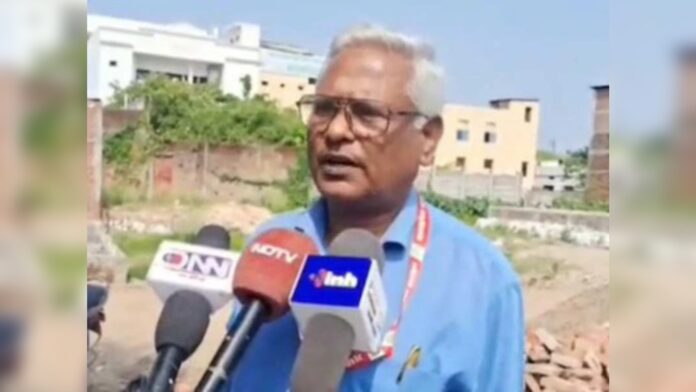
A fresh controversy has erupted in Jabalpur, Madhya Pradesh after some Hindu organisations levelled allegations of “Kinnar Jihad”—an alleged, yet to be proven plot to settle transgender individuals on government land in collaboration with Muslims. The claim has sparked outrage and fears of communal tension in the Ayesha Nagar area of Adhartal tehsil. According to reports, a construction project had been ongoing on a piece of government land for nearly a year. Right-wing activists protested at the site, alleging that the land was being illegally occupied and that a madrasa was being built with funding linked to a transgender individual. Following the uproar, senior administrative officials, including the Tehsildar, Sub-Divisional Magistrate (SDM), and Station House Officer (SHO), reached the site and ordered the demolition of the under-construction structure. Notices were also issued to halt any further development, an action widely seen as a result of pressure from the protesting groups. Hindu organisation members Manoj Rajak and Abhilasha Singh claimed that the site was part of a larger “conspiracy.” Rajak alleged, “Government land was being usurped in the name of religious education. Money was being channelled through a transgender person to establish a madrasa, and classes were about to begin.” He further asserted that “plans were underway for both land jihad and transgender jihad.” However, local Muslims have categorically denied these accusations, calling them fabricated and malicious. Imam Abdul Rahman of the Ayesha Nagar Mosque stated, “These claims are entirely false. The construction was meant for a small madrasa to educate our children. Linking it to any so-called jihad is a deliberate attempt to spread hatred.” Community member Saira Bano said the recurring use of terms like love jihad, land jihad, and now Kinnar jihad has created a climate of fear. “It seems there’s a new label every day to target Muslims. We are being demonised for trying to live and educate our children peacefully,” she said. Several human rights defenders have criticised the allegations, describing them as part of a broader campaign to stigmatise minorities in Madhya Pradesh. Anil Khan, an NGO worker, noted, “Such narratives are designed to deepen divisions. Administrative tools are being weaponised to silence marginalised groups.” Meanwhile, district officials maintained that their intervention was purely administrative. An official statement said the action was taken only to address concerns over unauthorised construction on government land, and not on communal grounds. Despite these assurances, residents and civil society groups argue that the issue has been politicised and communalised, turning a legal matter into a narrative of hate. Imam Abdul Rahman urged authorities to restore calm and truth: “We respect the law, but false propaganda must stop. Education should not be portrayed as a threat.” As tensions simmer, residents of Ayesha Nagar are appealing for peace, justice, and impartial investigation, warning that such polarising rhetoric could further fracture the fragile social fabric of the region. Courtesy : Muslim Mirror Note: This news is originally published on https:/muslimmirror.com/bha and is used purely for non-profit/non-commercial purposes, especially human rights