
Delhi Cabinet clears ‘DURGA’ scheme

New Delhi: Delhi Cabinet Wednesday approved the Driving Upliftment and Rozgar for Women/Transgender Green e-Auto (‘DURGA’) scheme to provide women and transgender persons an opportunity to own and drive electric autos and earn a livelihood through self-employment. In the first phase, 1,300 pink electric autos — 1,170 for women and 130 for transgender persons — will be deployed. A maximum of 90 e-autos for women and up to 10 e-autos for transgender individuals will be allocated in each district. Applications will be invited through a dedicated portal and benefits will be available to applicants who meet the prescribed eligibility criteria. “The scheme is aimed at providing women and transgender persons with safe, clean and dignified employment opportunities,” said CM Rekha Gupta, who chaired the Cabinet meeting. “It also seeks to promote women’s safety, greater participation of transgender persons in the transport sector, last-mile connectivity and clean and sustainable urban transport.” The scheme, she said, has been designed keeping in mind commuting and safety challenges faced by women and transgender passengers, particularly during early morning and late evening hours. Govt said the scheme would also help create jobs in allied sectors. Under the scheme, women applicants must be aged 20 to 40 years, be residents of Delhi and have a valid voter identity card, LMV driving licence and PSV badge. A woman with more than three children will not be eligible. The applicant or her family must not own any registered transport vehicle or three-wheeler, and the family’s income in FY 2025-26 must not exceed Rs 5 lakh. Transgender applicants will have to submit a valid transgender certificate issued by the district magistrate’s office and meet the age, Delhi residency, voter identity card, LMV licence and PSV badge requirements. The e-autos will have a mandatory three-year lock-in period, during which they cannot be sold, transferred or disposed of in any other manner. The e-autos will carry ‘DURGA’ branding and special identification features. According to govt, this will make the vehicles easily identifiable and help strengthen passengers’ trust and confidence in them. The scheme also proposes a special arrangement to integrate the e-autos with the public transport network. Delhi Metro Rail Corporation said that space for EV charging facilities has already been made available in the parking areas of 70 Metro stations. Courtesy : TOI Note: This news is originally published on https:/timesofindia.com/bha and is used purely for non-profit/non-commercial purposes, especially human rights
Parliament passes Transgender Persons Amendment Bill, 2026 with Rajya Sabha approving it today
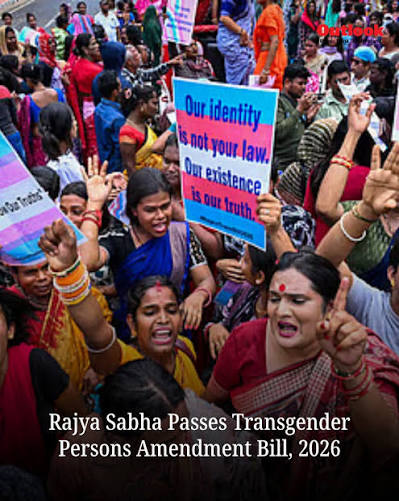
Parliament has passed the Transgender Persons (Protection of Rights) Amendment Bill, 2026, with the Rajya Sabha approving it today. The bill was passed by the Lok Sabha yesterday by a voice vote amid an Opposition-led walkout. The bill seeks to redefine the category of transgender, removes the provision of self-perceived gender identity and excludes several socio-cultural identities as well as transmasculine individuals from its ambit. It also further defines transgender persons within a biological framework, based on intersex variations and differences in sexual development. Replying to the discussion on the Bill in the Rajya Sabha, Social Justice and Empowerment Minister Dr Virendra Kumar said the government is compassionate towards the well-being of the transgender community. He said the Bill has provisions to empower the transgenders and give them dignity. The Minister said that the NDA government has taken several initiatives to bring transgender people to the mainstream and stop discrimination against them. Starting the discussion in the Upper House, Congress MP Renuka Chowdhury said this bill dilutes the privacy of an individual provided under the Constitution. Opposing the Bill, Ms Chowdhury said self-identification cannot be taken away through bureaucratic certification. Criticizing the government, she said that the proposed bill undermines the fundamental rights and dignity of transgender persons. Calling such a move wrong and illegal, she argued that forcing transgender persons to provide their identity through official certificates is against the spirit of equality and dignity guaranteed by the constitution. She also questioned the government’s approach for not properly consulting with the transgender community before bringing the Bill. She also referred to the Supreme Court’s landmark NALSA judgement of 2014, which recognized the right of transgender persons to self-identify their gender. Ms Chowdhury said the proposed Bill violates the principles laid down in that judgement and fails to respect an already established legal framework. DMK MP Tiruchi Shiva also opposed the Bill, saying that even if the Bill is passed in Parliament with a majority, it will be struck down by the Supreme Court. He further added that the Bill violates Articles 14, 15, 19 and 21 of the Constitution and it deprives the community of the right to freedom, dignity and self-determination. Supporting the Bill, BJP MP Medha Vishram Kulkarni said, ” This Bill ensures justice, dignity, protection from criminalisation and legal safeguards for transgender persons. She also thanked Prime Minister Narendra Modi for bringing this bill with certain amendments in order to ensure that the benefits reach the deserving people in a proper manner. She said there is a need for a law that brings justice to real transgender individuals and punishes fake ones. Mrs Kulkarni said the benefits should be extended to those who are transgender by birth. She said that the amendment to extend punishment will bring down the rate of crime and forced identities. TMC’s Saket Gokhale said that 31% of Transgender people in India have attempted suicide because of the discrimination that they are facing. He alleged that now the government is going to start discriminating against them as though social discrimination were not enough. He called it unacceptable. Mr Gokhale expressed concern that gender is going to be decided by the Chief Medical Officer and a District Magistrate, and the bill does not prescribe any qualifications for the Chief Medical Officer. Sanjay Singh of AAP said the Bill is a big let-down for the transgender community. He accused the government of not doing anything for the community. RJD’s Manoj Kr Jha said that prejudices against transgender people should stop, and they should be able to live with dignity. He added that self-determination of gender should not be taken away. CPI(M)’s John Brittas said it is a black-letter day and the Bill is taking India a century back. He pleaded with the government to either withdraw the Bill or refer it to a Select Committee. Jaya Bachchan of the Samajwadi Party also questioned the government over the legislation. She sought to know what the urgency was in bringing the Bill, without examining it with the depth and care that it deserved. Courtesy : NOA Note: This news is originally published on https:/newsonair.com/bha and is used purely for non-profit/non-commercial purposes, especially human rights
‘The Trans Act has made my life hell’: How India’s trans community is navigating daily life since the change
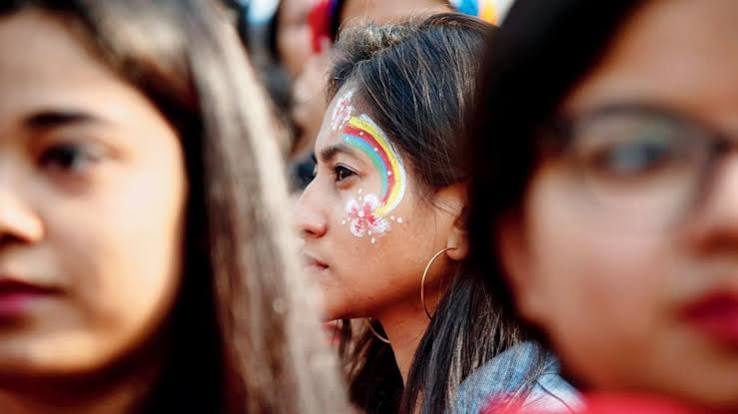
This month-end will mark six months since the Transgender (Protection of Rights) Amendment Bill 2026 became an Act. We trace the trail of devastation it has wrought by making gender-affirming care a humiliation ritual for many Back in July, Anaya Bangar, daughter of cricketer Sanjay Bangar, made a video talking about the toll it had taken on her to legally transition to a woman after the Transgender (Protection of Rights) Amendment Act, 2026, came into force. “I was asked to undress and have my whole body assessed in a room full of doctors that included men and… an invasive gynecological exam was also performed. I remember lying there thinking, ‘Why do I have to prove that body, to be recognised as who I am on paper?’” she asks. Her video came at a time when most of the country — and even a section of the trans community — had no idea how things were going to change with the amendment. “I am sharing this because not all of us know what this process can involve, and I hope we can all agree that legal recognition should respect people’s dignity,” Bangar says in the clip. Despite this paper’s sustained reportage on the Act, the protests against it, and the emotional and psychological toll it has taken on queer folk, even we had to brace ourselves while hearing the stories that have emerged from the trans community. Under the guise of making the process more structured, what has unfolded is multiple stories of trans persons being told to run from pillar to post for their documentation, arguing in one government office after another with babus who are too scared to give approvals, leaving them no choice but to stand in front of a medical panel that has little to no context of the trans experience. ‘I do not exist on paper’ Vibhu’s life is stuck in red tape as he starts the process for legal recognition as a trans man again Vibhu is 25 years old and works in United Kingdom as diversity, equity, and inclusion (DEI) advisor. He underwent gender-affirming surgery on June 15. The process is designed to humiliate and force you to give up, he says. “I started planning to get my surgery done in India in January-February, and then the Act came into effect.” Amid stress over the cost of the surgery, and rising airfares, his doctor in India told him that his surgeries had been suspended. “I panicked. I had been saving up for all this. Then a day later, the doctor texted back saying they are doing it. That was really a horrible day,” he adds. Vibhu’s Transgender (TG) card is now invalid. He wants to be recognised as a man on paper. If cisgender persons think they have it rough at government offices, Vibhu’a account should be eye-opener: “The staff is not trained, so all they say is ‘I don’t know, go to the next guy’, or ‘Yaha nahi, waha daliye [don’t submit the papers here, please go there]’. Most of the employees at the Aadhaar office felt they could announce to other people sitting there that I am trans. Not that I am ashamed of it; I am fine screaming to the world, but a government employee should not be.” “They [government staff] would say ‘Naam aur gender change karna toh hume nahi aata hai [We don’t know how to change your name and gender]’. You cannot change your name and gender at the same time, so you will just have to come back again.. And the way they give you all this information is also in a voice laced with stigma,” he adds. ‘They wouldn’t let me have surgery till my mom spoke up’ Sarvagya, who underwent a hysterectomy on September 7, after weeks of bureaucracy and humiliation Twenty-six-year-old Sarvagya hails from a small town in Rajasthan. He began his hormone therapy in 2022 and was due to transition surgically early this year, but the Trans Act delayed his plans. “I got my gender identity dysphoria certificate and then started my hormone replacement therapy in June 2022. It took me two years to gather Rs 1.5 lakh for the mastectomy [top surgery], which I did in 2024. At the time, it was very easy and seamless. All I had to tell the doctor was ‘This is my issue, and this is what I want to do’. My maternal family was against it, so I did the surgery on my own with the support of two friends,” he recalls. “Next, I was due for a hysterectomy [removal of the uterus]. I had planned to do this last year, but could not save up enough,” he adds. Then, the amendment came into effect in March, and Sarvagya was in a panic. “In August, I was facing some gastric issues, and an ultrasound followed by The PET-CT revealed a massive 30 cm tumour emerging from left ovary and had grown through my abdomen and pelvis, occupying almost the entire space.. I asked the doctor if they could do a hysterectomy while removing the tumour, but then my primary surgeon got a call from the medical staff of the hospital, stating that they cannot perform the surgery without some clearances,” he says. “Then it hit me. I asked my surgeon, ‘Is this regarding the Trans Act?’ A few hours later, they confirmed that it was,” he adds. What followed was a humiliation ritual similar to Bangar’s ordeal. “They made me sit in front of a medical board, which consisted of 10 doctors. Despite the fact that I hold a transgender card from 2023 that I got from the government, despite legally transitioning in 2024, and holding every document. They said they would remove the tumour, but not the uterus,” he recalls. By then, Sarvagya had won the support of his family, and brought his mother to testify before the medical board. “They told my mother that if she agreed to this, her child would be
Parliament passes Transgender Persons Amendment Bill, 2026 with Rajya Sabha approving it today
Parliament has passed the Transgender Persons (Protection of Rights) Amendment Bill, 2026, with the Rajya Sabha approving it today. The bill was passed by the Lok Sabha yesterday by a voice vote amid an Opposition-led walkout. The bill seeks to redefine the category of transgender, removes the provision of self-perceived gender identity and excludes several socio-cultural identities as well as transmasculine individuals from its ambit. It also further defines transgender persons within a biological framework, based on intersex variations and differences in sexual development. Replying to the discussion on the Bill in the Rajya Sabha, Social Justice and Empowerment Minister Dr Virendra Kumar said the government is compassionate towards the well-being of the transgender community. He said the Bill has provisions to empower the transgenders and give them dignity. The Minister said that the NDA government has taken several initiatives to bring transgender people to the mainstream and stop discrimination against them. Starting the discussion in the Upper House, Congress MP Renuka Chowdhury said this bill dilutes the privacy of an individual provided under the Constitution. Opposing the Bill, Ms Chowdhury said self-identification cannot be taken away through bureaucratic certification. Criticizing the government, she said that the proposed bill undermines the fundamental rights and dignity of transgender persons. Calling such a move wrong and illegal, she argued that forcing transgender persons to provide their identity through official certificates is against the spirit of equality and dignity guaranteed by the constitution. She also questioned the government’s approach for not properly consulting with the transgender community before bringing the Bill. She also referred to the Supreme Court’s landmark NALSA judgement of 2014, which recognized the right of transgender persons to self-identify their gender. Ms Chowdhury said the proposed Bill violates the principles laid down in that judgement and fails to respect an already established legal framework. DMK MP Tiruchi Shiva also opposed the Bill, saying that even if the Bill is passed in Parliament with a majority, it will be struck down by the Supreme Court. He further added that the Bill violates Articles 14, 15, 19 and 21 of the Constitution and it deprives the community of the right to freedom, dignity and self-determination. Supporting the Bill, BJP MP Medha Vishram Kulkarni said, ” This Bill ensures justice, dignity, protection from criminalisation and legal safeguards for transgender persons. She also thanked Prime Minister Narendra Modi for bringing this bill with certain amendments in order to ensure that the benefits reach the deserving people in a proper manner. She said there is a need for a law that brings justice to real transgender individuals and punishes fake ones. Mrs Kulkarni said the benefits should be extended to those who are transgender by birth. She said that the amendment to extend punishment will bring down the rate of crime and forced identities. TMC’s Saket Gokhale said that 31% of Transgender people in India have attempted suicide because of the discrimination that they are facing. He alleged that now the government is going to start discriminating against them as though social discrimination were not enough. He called it unacceptable. Mr Gokhale expressed concern that gender is going to be decided by the Chief Medical Officer and a District Magistrate, and the bill does not prescribe any qualifications for the Chief Medical Officer. Sanjay Singh of AAP said the Bill is a big let-down for the transgender community. He accused the government of not doing anything for the community. RJD’s Manoj Kr Jha said that prejudices against transgender people should stop, and they should be able to live with dignity. He added that self-determination of gender should not be taken away. CPI(M)’s John Brittas said it is a black-letter day and the Bill is taking India a century back. He pleaded with the government to either withdraw the Bill or refer it to a Select Committee. Jaya Bachchan of the Samajwadi Party also questioned the government over the legislation. She sought to know what the urgency was in bringing the Bill, without examining it with the depth and care that it deserved. Courtesy : NOA Note: This news is originally published on https:/newsonair.com/bha and is used purely for non-profit/non-commercial purposes, especially human rights
Delhi to hold special voter camps for homeless, trans and sex workers
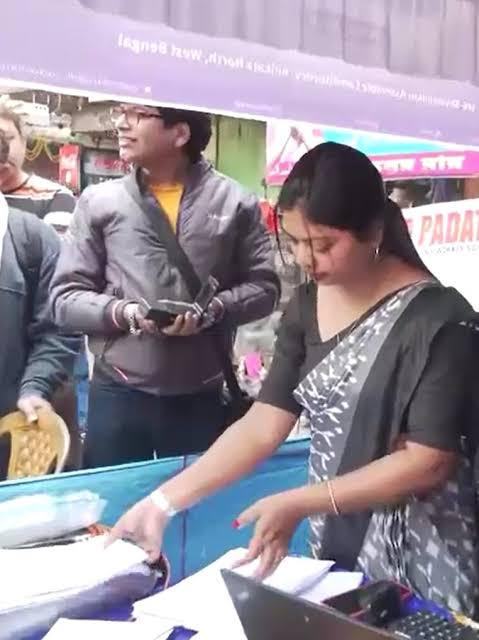
Delhi election officials will hold evening camps at shelters and other locations to help homeless citizens, transgender persons and sex workers enrol during the electoral roll revision. The outreach follows a sharp drop in third-gender electors and aims to ease document and address barriers for eligible voters. Election Commission held a special voter registration camp for over 800 sex workers in Sonagachi to address documentation issues. The camps will be organised on September 23 and 24 from 5 pm to 9 pm at all Delhi Urban Shelter Improvement Board night shelters. Poll officials in Delhi on Thursday said special camps will be held at night shelters and other identified locations across the city to reach homeless citizens, transgender persons and sex workers who may face difficulty in proving their identity or residence during the ongoing special intensive revision of electoral rolls. The camps will be organised on September 23 and 24 from 5 pm to 9 pm at all Delhi Urban Shelter Improvement Board night shelters and other such locations across the capital’s 13 districts, according to a statement issued by the Delhi Chief Electoral Officer. Separate outreach for transgender persons and sex workers will be carried out in coordination with NGOs working with these communities, with booth-level officers deployed at the designated locations during the camps. The exercise comes amid a 64.55 per cent fall in the number of third-gender electors in Delhi’s draft roll. Their number has dropped from 1,261 in the electoral roll used for the 2025 Assembly polls to 447 in the draft published on August 31. Transgender persons and community representatives have earlier raised concerns over hurdles in the revision process, including differences in names across identity documents, difficulty in providing proof of permanent residence and lack of access to documents held by estranged family members. Booth-level officers said details of homeless voters can also be difficult to verify during an enumeration exercise that relies heavily on address and documentary records. “Several homeless people lack fixed addresses, family records or other documents ordinarily used to establish their identity and residence,” a booth-level officer said. However, the Delhi CEO office said anyone who qualifies as an “ordinary resident” would be included in the final electoral roll. “Online submission of forms on the BLO app should be encouraged. However, physical form should also be obtained without fail from the applicants,” the statement said. Officials have also been instructed to process applications from the three groups strictly under the Election Commission’s Manual of Electoral Rolls-2023 and ensure that no ineligible person is enrolled. The initiative is part of a wider effort to encourage participation in the claims and objections phase of the special intensive revision. General special camps will also be held at all polling station locations in Delhi on September 20 and 27 from 10 am to 5 pm. At these camps, voters can check the draft roll, submit forms and seek help in filing applications through the Election Commission’s Voters’ Service Portal or the ECINet mobile application. The draft roll published on August 31 has 97,53,577 electors, including 49,88,993 men and 47,64,137 women, compared with 1,55,24,858 electors on the rolls for the 2025 Assembly polls. Those left out of the draft roll can file claims for inclusion till September 30 through Form 6 along with supporting documents, while the examination and disposal of claims and objections will continue till October 29. The final electoral roll is due on November 4. Courtesy : India Today Note: This news is originally published on https:/indiatoday.com/bha and is used purely for non-profit/non-commercial purposes, especially human rights
Kerala HC seeks State response on transgender post-operative aid
Transgender Person in Kerala Seeks Assistance for Post-Op Treatment Kochi, The Kerala High Court on Thursday sought the State government’s response to a plea by a transgender person over the non-payment of financial assistance for post-operative treatment.Try Time Trackers Justice Bechu Kurian Thomas gave the Government Pleader time to get instructions and the court posted the case for further hearing on October 8. The petitioner said he comes from a financially poor background and is currently unemployed. He had undergone Sex Reassignment Surgery and he was initially given Rs 62,563 as financial assistance for the surgery. After the Sex Reassignment Surgery, he applied for financial assistance for post-operative care and treatment, relying on a government order issued on November 14, 2018. The government order provides Rs 3,000 per month for 12 months to transgender persons who have undergone Sex Reassignment Surgery. The total assistance under the scheme is Rs 36,000 and the petitioner said he received Rs 15,000 for five months but the remaining Rs 21,000 for seven months was not paid. He said he made repeated requests to the authorities for the remaining amount but there was no payment coming forth. He has now approached the High Court seeking directions to the government officials to release the balance amount. The petitioner has also contended that the denial of the assistance violated his fundamental rights under Articles 14 and 21 of the Constitution. He relied on a Supreme Court judgment in Jane Kaushik vs. Union of India in support of his argument.Stream History Documentaries The petitioner has sought an order directing the authorities to release the remaining Rs 21,000. As an interim relief, he has also sought a direction to the authorities to consider a representation submitted before the Director of Social Justice. The petitioner also pointed out that he had learnt from others in the transgender community that funds released for their benefit were sometimes not fully utilised and subsequently lapsed, resulting in beneficiaries being deprived of the intended assistance. The High Court has now sought the State’s response before considering the matter further and the case will now be heard on October 8. Courtesy : The Hawk Note: This news is originally published on https:/thehawk.com/bha and is used purely for non-profit/non-commercial purposes, especially human rights
India’s transgender law change leaves many uncertain
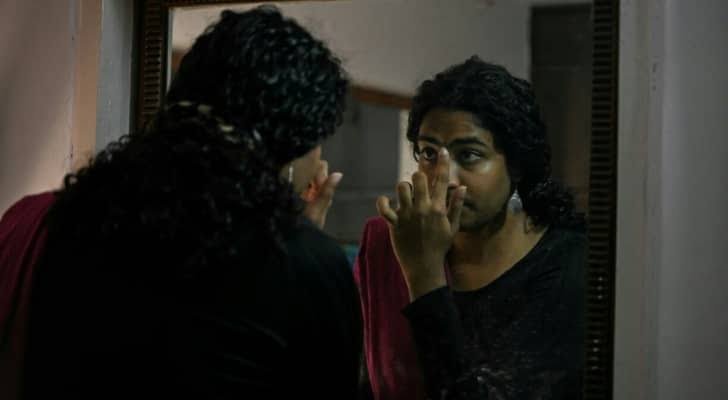
Doctors face potential liability and lack clear protocols, while the online portal issuing transgender identity cards has shut down. Activists have challenged the law in the Supreme Court, arguing that mandatory medical verification violates constitutional rights to self-identification. Recent amendments to India’s transgender legislation have caused widespread disruptions in gender-affirming healthcare, leaving patients across the country without access to prescribed medications or safe medical supervision. The amendment introduced strict penalties for forcing individuals to assume a transgender identity through surgical, chemical, or hormonal procedures. While government authorities stated the changes aim to protect vulnerable groups from exploitation, forced identity, and trafficking, the lack of implementation guidelines has created severe uncertainty among healthcare providers. In Hyderabad, 23-year-old communications specialist and transgender activist Kali Sidharth Medepalli was forced to go 10 days without a prescribed testosterone blocker after her clinic abruptly halted treatment following the law’s passage. “Everything shut down,” Kali told AFP, describing how she experienced hot flushes and body aches before obtaining her medicine with an existing prescription to self-medicate. “Ideally, you should have a doctor doing this for you… I don’t know the future. I can’t plan it anymore.” Doctors face legal risks The regulatory ambiguity has placed medical professionals in a dilemma between potential legal liability and their professional duties. “How can I refuse care? I took an oath that above all do no harm,” said Sanjay Sharma, head of the Association for Transgender Health in India and a retired air force commodore. Sharma noted that while some private clinics continue to offer care, they are requiring extra paperwork, consent forms, and higher fees to protect themselves legally. This has created severe barriers for individuals without financial resources or strong support networks. Identity certification stalled The amendment has also disrupted the official process for updating legal identity documents. Applicants must now go through a designated medical board recommendation before a magistrate can issue a transgender identity certificate, but the government’s dedicated online portal has stopped functioning since the law took effect. Bhukya Ahalya, 21, who transitioned in 2025 and survives by begging at traffic signals, explained that she cannot secure regular employment without an updated identity card matching her gender identity. “Everyone wants me to move on from this life,” Ahalya told AFP. “But when I want to move on, when I want to earn a respectful life, I don’t get a TG (transgender) card.” The amendment is currently being challenged in the Supreme Court, with petitioners citing constitutional protections covering dignity, personal autonomy, privacy, and the right to self-identification. The Ministry of Social Justice and Empowerment did not respond to requests from AFP for clarification regarding the rules or the status of the identity card portal. Courtesy : Roya News Note: This news is originally published on https:/royanews.com/bha and is used purely for non-profit/non-commercial purposes, especially human rights
Inside India’s first transwomen rescue squad, trained in Kolhapur

The first batch of 10 transwomen, all associated with the Kolhapur-based Maitri NGO, went through their inaugural training module from May 26 to 28. In the last week of August, a group of people gathered at Rajaram Lake, pulled on orange life jackets, checked their ropes, and spent 10 days practising rescue drills in the water. It looked like routine disaster-response training – until you learned who they were. This is India’s first transgender disaster management and rescue team, and for its members, the life jacket has come to mean something far bigger than safety gear. The Kolhapur District Disaster Management Authority has trained over 2,500 volunteers in the last decade. In 2019, it created the state’s first all-women rescue unit, the ‘Aapda Sakhi’ team, which now counts more than 500 trained volunteers. But ahead of this year’s monsoon, officials decided to try something unique. “We thought, why not train a transwomen team,” said Prasad Sankpal, District Disaster Management Officer, Kolhapur. “So a first-of-its-kind transgender disaster management and rescue team initiative was begun in the country.” The first batch of 10 transwomen, all associated with the Kolhapur-based Maitri NGO, went through their inaugural training module from May 26 to 28. Since then, the district has trained 15 transwomen in total, with fresh rounds of practice held every three months – the most recent a 10-day exercise at Rajaram Lake in the last week of August. Recruits learned rescue swimming, how to operate an inflatable rescue boat, dry and wet lifesaving techniques, motorboat handling and maintenance, and First Aid and CPR. “So far the results are excellent,” Sankpal said. “The institutional strengthening is already visible – the volunteers now help victims of road accidents without any instructions.” More than a rescue team For the women themselves, the initiative is about something the training manual doesn’t cover. “Even today, people see us as sex workers or beggars,” said Mayuri Alvekar, founder of Maitri NGO, who brought the other volunteers on board. “I believe that such opportunities of working with the administration would help promote inclusivity and give us space in mainstream society, while changing the perspective towards us. We have been helping people during disasters or rescue needs but faced discrimination. However, now we are getting recognition and, most importantly, an identity.” “To take the initiative further, I have also created a similar volunteer team in Dhule and Parbhani,” Alvekar added. Suhasini Devmane, another team member and Maharashtra’s first transgender tourist guide, spent eight years as an ayurvedic panchakarma expert while hiding who she was. “Despite a desire to contribute to society, many of us had previously been unable to participate in social initiatives due to a lack of opportunities,” she said. “For over eight years, I had to hide my identity – else I would have lost my job, and my financial situation didn’t allow for that risk then. I believe this training will not only change society’s perspective towards transgender people but also boost the self-confidence of individuals within the community.” Shivani Gajabar, who is currently pursuing a Master of Social Work degree at Shivaji University, Kolhapur, says the acceptance hasn’t fully arrived yet. “Even today, transgender community members feel alienated from mainstream society,” she said. “Though giving us a platform in the disaster management rescue team is a welcome step and would help bring inclusivity – and we all would give our best while saving lives – I feel there is a long way ahead to fill the gap. Even when I go regularly to attend classes, no one sits on my bench. I’m all alone.” Her family cut off contact when she left home in Class 7. “They used to think I could not do any considerable work,” she said. “However, now, being part of the disaster management rescue team, my family members have started communicating with me again.” What next The administration isn’t stopping at floods and drowning rescues. “There are around 30 categories of man-made and natural disasters, including wildlife rescues involving snakes and crocodiles in Kolhapur, and the transwomen volunteers will gradually be trained for these as well,” Sankpal said. One gap the authorities want to close: money. The volunteers currently work for free. “We are also planning to deploy them for crowd management during upcoming festivals such as Navaratri, Anant Chaturdashi, and the Jyotiba Yatra among others. Also, efforts are underway to grant home guard status to the transwomen volunteers, which would come with an honorarium,” Sankpal told The Indian Express. Written by: Shubham Kurale Courtesy : TIR Note: This news is originally published on https:/theindianexpress.com/bha and is used purely for non-profit/non-commercial purposes, especially human rights
Transgender group demands ₹2 lakh from a man who arrived to take delivery of a luxury car, users give mixed reactions;

A video is going viral on social media these days. In this video, it is claimed that a transgender group demanded ₹2 lakh from a man who arrived to take delivery of a luxury car. Transgender group surrounds luxury car. Image Source: The joyous moment of a man receiving the delivery of a new luxury car in Hyderabad unexpectedly became a subject of controversy. It is claimed that, immediately after the delivery, a group from the transgender community surrounded the car and allegedly demanded ₹2 lakh. The video of the incident quickly went viral on social media, where internet users called it “madness.” However, other users cited the helplessness of transgender people and pointed to their financial problems. Video surfaced on X This video was shared on X by the handle @Netajinonsense1. The video shows four or five transgender people standing around the new car outside the showroom. They are seen standing in front of and around the car, some leaning on or lying in front of it. The driver is trying to move, but the group refuses to budge. According to reports and alleged claims, the group demanded ₹2 lakh (200,000 rupees) in the name of “shagun” (good luck) or congratulations. However, this claim cannot be verified due to the lack of sound in the video. The incident reportedly occurred during a new car delivery in Hyderabad. The car owner took delivery and was stopped by the group as he left the showroom. Whether the money was paid or not is unclear. The video shows a tense situation. User Reactions Social media reactions were swift. Some said that even buying a luxury car was a problem. Others cited past incidents, such as demands for money at housewarmings or other ceremonies. Some users demanded strict action against those extorting money from people. Users also came out in support of transgender people. Some users said that the issue cannot be viewed solely on the basis of the incidents depicted in such videos. They pointed to the economic and social hardships faced by transgender people, saying that the broader reasons behind such practices also need to be addressed. Significantly, this incident highlights the growing number of complaints about demands for money for new car deliveries, housewarmings, and other joyous occasions. Many people pointed out on social media that such incidents are becoming common. Many users believe that such controversies increase tension in society. It is important to understand the difference between voluntary donation and coercion. Written By: Shaswat Gupta Courtesy: Hindi News
Caught On Camera: Transgender Group Surrounds BMW Owner After New Car Delivery, Demands ₹2 Lakh In Hyderabad

Around four people confronted the driver and stood around the vehicle before eventually moving aside. However, the exact date and location, video’s authenticity and claims surrounding the incident have not been independently verified Hyderabad: A purported video from Hyderabad is going viral on social media, showing a group of transgender persons allegedly obstructing and harassing the owner of a newly delivered BMW car. In the video, around four transgender persons can be seen standing in front and around the luxury car, apparently preventing it from moving. They are also seen making gestures towards the person sitting behind the steering wheel while continuing to block the vehicle. The video shows the group remaining in front of the car for some time despite the driver’s apparent attempts to move ahead. After a while, the person behind the wheel moves the car forward, following which the group steps aside and allows the vehicle to pass. Several bystanders can also be seen recording the incident on their mobile phones. According to a report by the Deccan Chronicle, the transgender group was allegedly demanding Rs 2 lakh from the BMW car owner. The report comes amid a video circulating widely on social media, purportedly showing the group blocking the luxury car and confronting the man. The exact date and location of the incident have not been independently established. Free Press Journal could not independently verify the authenticity of the viral video or the claims surrounding the incident. Courtesy : TFPJ Note: This news is originally published on https:/thefreepressjournal.com/bha and is used purely for non-profit/non-commercial purposes, especially human rights