
Indian national Raj Jasuja thrashed by transwomen in Thailand after allegedly refusing to pay for escort service

An Indian tourist was hospitalised after he was allegedly attacked by a group of transgender women in Thailand’s Pattaya city following a dispute over payment for sex services, according to the Thaiger.The incident happened on December 27 when rescue workers from the Sawang Boriboon Foundation received a call at around 5.30am about an injured foreign tourist near the beachside entrance of Walking Street. The victim was identified as 52-year-old Indian national Raj Jasuja, with visible injuries to his face and the back of his head, according to the responders who found him at the scene. He was given first aid before being taken to hospital for further treatment. An Indian man who refuses to pay for a “service” is beaten by a group of trans men in Thailand. pic.twitter.com/oSYav9bjg4 — RadioGenoa (@RadioGenoa) January 3, 2026 A 19-year-old Thai witness, Pongpol Boonchid, told police and rescue workers that the altercation began after Raj was seen arguing with a transgender sex worker near the entrance to Walking Street. The dispute escalated when the two began chasing and hitting each other. According to the witness, the transgender woman then called several friends, who joined in and assaulted the Indian tourist as a group. The dispute is believed to have started over money, after the tourist allegedly did not pay the full amount agreed for the service. Raj has not spoken publicly about what happened. Police later told local media that officers would ask the injured tourist to file a formal complaint once he had fully recovered, after which a legal investigation would proceed. Similar incidents involving Indian tourists and transgender sex workers have been reported in Pattaya in recent months, according to the Thaiger. In September, an Indian man was attacked after allegedly touching a transgender woman without consent during a dispute over services. In another case in October, three Thai transwomen allegedly assaulted two Indian nationals at a hotel following an argument over payment and fled with cash worth around 24,000 baht. Thai police said the investigation is ongoing, with officers checking more witness statements and available CCTV footage. Courtesy : TOI Note: This news is originally published on https:/timesofindia.com/bha and is used purely for non-profit/non-commercial purposes, especially human rights
How India Systematically Excludes Its Transgender Population
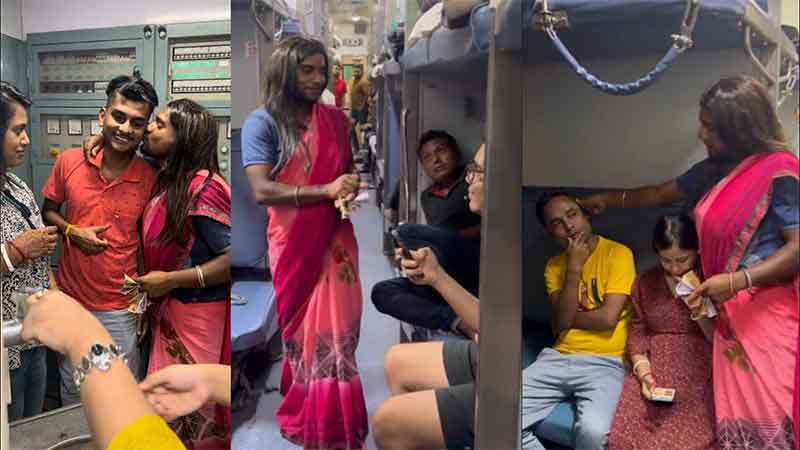
India systematically excludes its transgender population through deep-seated social prejudice, leading to familial rejection, educational dropout, economic marginalization (forcing many into begging or sex work), and barriers in healthcare and housing, despite legal recognitions like the NALSA Supreme Court ruling and the Transgender Persons Act. This exclusion stems from a binary view of gender, cultural stigma, and insufficient implementation of inclusive policies, leaving trans individuals vulnerable to violence, discrimination, and poverty, even as laws offer rights. The Indian Constitution promises equality before law, prohibition of discrimination, and the right to live with dignity. Yet for transgender persons, these guarantees remain largely ornamental. Despite judicial recognition, legislative frameworks, and rhetorical commitments to inclusion, transgender Indians continue to live as citizens without citizenship – visible in census numbers, invisible in policy outcomes, and excluded from the social contract. Their marginalisation is not episodic; it is structural, measurable, and deepened by a stark rural-urban divide. The evidence is unambiguous. According to the National Human Rights Commission, the literacy rate among transgender persons stands at around 56%, nearly twenty percentage points below the national average. Nearly half of all transgender persons never attend school, while many who do are forced to drop out due to relentless bullying, harassment, and institutional hostility. Schools, instead of functioning as sites of social mobility, become early theatres of exclusion. There are few mechanisms for redress, almost no trained counsellors, and little accountability for teachers or administrators who allow discrimination to flourish. This educational exclusion feeds directly into economic dispossession. The NHRC’s findings are staggering: 92% of transgender persons are denied participation in formal economic activity. Even when educated or skilled, they face routine rejection in hiring, promotions, and workplace retention. As a result, nearly 96% are pushed into informal, precarious, or socially stigmatised work — begging, ceremonial performances, sex work, or daily wage labour. Only about 6% have ever accessed formal employment in the private sector or civil society organisations. Income data reinforces the picture: barely 1% earn more than ₹25,000 per month, placing the overwhelming majority far below any threshold of economic security. Housing exclusion compounds this precarity. Transgender persons routinely face discrimination by landlords, are denied rental agreements, or are evicted under social pressure. Many are forced into unsafe shared spaces or community enclaves, while others experience homelessness. Despite being officially enumerated in the Census, transgender persons remain absent from housing policy design. Welfare housing schemes rarely specify transgender beneficiaries, and where state initiatives exist, they are small, urban-focused, and poorly implemented. Health outcomes reveal the human cost of systemic exclusion. HIV prevalence among transgender persons in India is estimated at 3.8%, nearly twenty times the national average. This disparity is not incidental; it reflects forced economic marginalisation, limited access to preventive healthcare, and discrimination within medical institutions themselves. Mental health indicators are even more alarming. Studies suggest that around 31% of transgender persons have attempted suicide, with nearly half doing so before the age of 20. These are not individual pathologies; they are predictable outcomes of sustained social rejection. Judicially, India has acknowledged these injustices. The Supreme Court’s NALSA judgment (2014) recognised transgender persons as a third gender and affirmed their entitlement to fundamental rights, including affirmative action in education and employment. Politically, however, this promise has been diluted. The Transgender Persons (Protection of Rights) Act, 2019 prohibits discrimination but avoids structural remedies. It offers no reservations, weak penalties for violations, and bureaucratic identity certification processes that many transgender persons experience as humiliating and exclusionary. Enforcement remains negligible, and accountability mechanisms are virtually absent. Within this already exclusionary landscape, the rural–urban divide intensifies marginalisation. Urban centres, for all their hostility, provide relative anonymity, access to NGOs, healthcare facilities, legal aid, and occasional employment opportunities. Cities host transgender collectives, shelters, and advocacy networks – uneven and insufficient, but real. Rural India offers almost none of this. Transgender persons in villages face near-total invisibility. Family rejection in rural settings carries harsher consequences, where social surveillance is constant and escape routes limited. Schools, primary health centres, panchayats, and police stations are often deeply uninformed or openly hostile. There are fewer NGOs, no shelters, limited digital access, and virtually no targeted welfare outreach. Documentation barriers – identity cards, residence proof, certificates — further exclude rural transgender persons from schemes that exist largely on paper. This produces a predictable pattern: distress migration. Transgender persons are pushed out of villages into cities, arriving without education, skills, housing, or safety nets. Their subsequent precarity is then moralised and criminalised, rather than understood as the outcome of systematic exclusion. Mainstreaming transgender persons cannot be reduced to symbolic inclusion or occasional welfare schemes. It requires constitutional seriousness. First, the state must honour the Supreme Court’s mandate by introducing reservations in education and public employment, treating transgender persons as a socially and educationally backward class. Second, anti-discrimination provisions must be enforceable, with clear penalties and independent grievance mechanisms. Third, economic inclusion must move beyond skill development to guaranteed job placement, supported by incentives and obligations for employers. Fourth, housing schemes — urban and rural — must explicitly include transgender beneficiaries. Fifth, public healthcare must integrate gender-affirming care and mental health services as standard, not optional, provisions. Equally critical is local governance. Panchayats, ASHA workers, school teachers, police personnel, and district officials must be trained not as benevolent actors, but as constitutional duty-bearers. Without decentralised accountability, rural exclusion will persist regardless of national laws. Finally, data is political. India cannot govern what it refuses to measure adequately. Comprehensive, disaggregated data on education, employment, housing, health, and rural–urban distribution is essential for evidence-based policymaking and democratic accountability. Transgender Indians are not seeking charity or exceptional treatment. They are asking for what the Constitution already guarantees: the right to exist without fear, to learn without humiliation, to work with dignity, and to belong as equal citizens. Until those rights are realised — in villages as much as in cities – their exclusion will remain one of the republic’s most profound moral and political failures. Dr. Ranjan Solomon
Transgender groups clash, 4 injured

Balasore: A violent clash between two transgender groups in Bhadrak town on Tuesday left four persons injured, triggering tense scenes at the Bhadrak Town police station. The incident took place near Charampa when members of one transgender group were returning home after buying vegetables. They were allegedly attacked by members of a rival group armed with sharp weapons. The victims sustained injuries on their heads, backs, ears and other parts of the body. According to complaints lodged with the police, the attackers not only assaulted the victims but also forcibly cut their hair and looted Rs 10,000 in cash along with a mobile phone. Following the incident, a large number of transgender persons gathered at the Bhadrak Town police station demanding the immediate arrest of those involved. The situation turned tense as protesters raised slogans and staged a demonstration on the police station premises. IIC, Bhadrak Town, Prabhanshu Mishra said, “Three persons have been detained for questioning. Statements of the injured have been recorded.” Police sources said the violence appears to be linked to a long-standing rivalry between the two groups, allegedly led by Sanjana Shashmal and Jharanarani. Courtesy : TOI Note: This news is originally published on https:/timesofindia.com/bha and is used purely for non-profit/non-commercial purposes, especially human rights
DH Changemakers 2026 | How a transgender woman is empowering her community through livestock farming
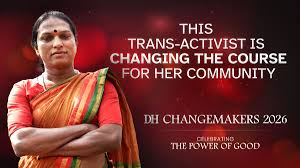
Arundathi, a transgender woman from Karnataka, is creating new opportunities for her community through livestock farming, skills training and legal support. From her small farm near Bharamasagara in Chitradurga, she helps transgender and other marginalised people raise goats and chickens so they can move away from begging and sex work and build steady, dignified livelihoods. Her simple pay-it-forward idea means that once someone becomes self-reliant, they pass on animals to another person in need, slowly spreading opportunity across districts. Along with livelihood support, Arundathi also helps people get Aadhaar cards, voter IDs and access to government schemes, making sure they are seen, recognised and included. Courtesy : DH Note: This news is originally published on https:/deccanherald.com/bha and is used purely for non-profit/non-commercial purposes, especially human rights
Odisha launches Sweekruti scheme for transgenders welfare and empowerment
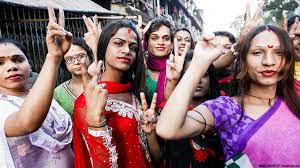
New state initiative provides financial aid, scholarships, skill training, legal support and housing to transgender persons and their families, aiming at social inclusion and dignity BHUBANESWAR: The Odisha government has launched a comprehensive welfare scheme for ensuring social inclusion, dignity and empowerment of transgender persons by addressing long-standing gaps in education, employment, healthcare, housing and legal support. Sources said the scheme Sweekruti, being implemented by the Social Security and Empowerment of Persons with Disabilities (SSEPD) department, has been designed to provide a structured, rights-based framework for the welfare of the transgender community and their families. Odisha, with a total transgender population of around 20,300 (as per the last census), is the first state to give transgender people social welfare benefits aimed at improving their overall socio-economic status. The scheme focuses on a set of key strategies that include financial assistance to parents of transgender children, pre and post-matric scholarships for transgender students, skill upgradation and entrepreneurship development training, strengthening of self-help groups, support for critical healthcare and group insurance, provision of legal aid and counselling. According to a resolution issued by the department, a key feature of the scheme is monthly financial assistance of Rs 1,500 to parents or guardians of transgender children to help them raise their children amid social stigma, discrimination and violence. This support will be provided until the child attains 18 years of age. In order to support education, eligible transgender students from families with an annual income not exceeding Rs 2.4 lakh will receive monthly scholarships ranging from `1,000 to `5,000, depending on the course pursued. Many transgenders are often denied entry into boys’ or girls’ hostels and refused rental housing, forcing them to drop out of education or employment, particularly when they migrate to cities such as Bhubaneswar, Cuttack, Rourkela, Berhampur, Balasore and Sambalpur. Secretary of the department RS Gopalan said Sweekruti will support the setting up of dedicated hostels for transgender persons by colleges, universities, urban local bodies and organisations working with the community. Transgenders will receive a stipend of Rs 3,000 per month for the duration of their studies. “The scheme will help districts set up rehabilitation centres to provide abandoned transgender persons, aged above 18 years and below 60 years, with shelter, basic amenities and capacity-building/skill development training,” he said. Hemant Kumar Rout Courtesy : TNIE Note: This news is originally published on https:/thenewindianexpress.com/bha and is used purely for non-profit/non-commercial purposes, especially human rights
Transgender community takes out procession in Secunderabad: Shri Khatu Shyam Nishan Kalash Yatra organized, people gathered to watch the procession
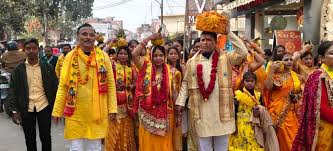
On Thursday afternoon, the Shri Khatu Shyam Nishan Kalash procession was taken out by the transgender community in Secunderabad town. The procession started from the ancient Baldev Temple on GT Road in the town and was led by the prominent Guru Rani Kinnar. Transgenders, dressed in colorful traditional attire, paraded through the town to the beat of drums and other musical instruments. The procession passed through Vijay Dwar, Bada Kabadi Bazaar, and Hanuman Chowk before concluding at the Shiva Temple in Ramwada. Along the route, townspeople showered flowers on the procession. A large number of people gathered to watch the procession. The police administration maintained security arrangements during this time. On this occasion, Guru Rani Kinnar said that this tradition is a symbol of the cultural identity of the transgender community and conveys a message of love and brotherhood in society. She also informed that a night-long vigil (Jagran) would be organized at the Shiva Temple to mark the New Year. Hemant Kumar, Secunderabad Courtesy: Hindi News
Classrooms as catalysts for transgender inclusion

Introducing transgender awareness in schools and colleges can help nurture a more just and empathetic society By Dr I Madhavi, Head, Department of English & Other Languages, School of Humanities and Social Sciences, GITAM Deemed to be University. Bengaluru Campus. In recent years, India has made important legal strides in recognising the rights of transgender persons, yet much remains to be done on the ground, especially in education. The true test of social change lies not only in policy documents but in classrooms, where the minds of future citizens are shaped. Teaching children about gender diversity, especially transgender identity, is no longer optional; it is essential for building a just and inclusive society. While topics such as environmental conservation and digital literacy have found their way into school textbooks and discussions, gender identity, particularly transgender existence, is still largely absent from mainstream school curricula. This silence becomes the root of misunderstanding, stigma, and discrimination faced by transgender individuals throughout their lives. Children are not born with prejudice. What they learn at home, school, and through the media shapes their worldview. If schools do not create space for inclusive education that normalises diverse gender identities, students grow up with rigid and often biased notions of male and female roles. This deeply affects the way transgender persons are perceived and treated in society. Transgender persons in India face widespread social stigma, ranging from family rejection and school dropout to bullying, unemployment, and housing discrimination. This stigma is not only a result of ignorance but of a systemic failure to address gender diversity as part of the educational foundation. By introducing children to the idea that gender is not binary and that transgender people have always been part of Indian society, we can plant the seeds of empathy and respect. These conversations do not have to be heavy or complicated. They can begin by exploring stories, using inclusive language, engaging in theatre, and learning from real-life role models. When students learn that transgender persons are human beings with dreams, emotions, and talents, just like anyone else, it helps counter deeply rooted stereotypes. Teachers play a critical role in this transformation. As mentors, educators, and influencers of young minds, they can either reinforce existing biases or become powerful allies in shaping inclusive attitudes. To support transgender inclusion, teachers must first be sensitised themselves. State-led training programs, orientation modules, and inclusion handbooks can equip teachers with the right tools to create gender-inclusive classrooms. Simple gestures, such as using correct pronouns, acknowledging transgender achievers in lessons, or celebrating inclusive days, go a long way in sending a message of acceptance. Teachers can also ensure that transgender students feel safe and respected in school spaces, encouraging them to continue their education and pursue their aspirations without fear. Tamil Nadu has been one of the few states to take pioneering steps in this direction. The government model schools in Tamil Nadu have taken a step further, conducting awareness programs, theatre performances, and community-led sessions that highlight the lives and experiences of transgender individuals. These schools have shown that children, when taught early, are fully capable of understanding and accepting diversity. This model offers a powerful blueprint that other states, including Karnataka, can adopt and build upon. In Karnataka, while the government has made commendable efforts through its State Policy for Transgenders, 2017, and welfare boards, there is still a gap in school-level sensitisation. It is time for the Department of Education and the Karnataka State Curriculum Framework to take proactive steps in integrating transgender awareness into textbooks, teacher training, and student engagement activities. This is not just about inclusion it is about dignity, justice, and human rights. When children learn to respect all identities, they grow into adults who build a fairer, more empathetic society. Importantly, the conversation around gender inclusivity must not end at the school level. There is a crucial need to carry this awareness forward into higher secondary education and further into colleges and universities. Adolescents are at a stage where identity formation is intense, and it is during this time that structured, sensitive education about gender diversity can leave a lasting impact. Higher education institutions must not only include transgender studies in their syllabi but also create safe and affirming spaces for transgender and gender-nonconforming students. Moreover, research scholars can be encouraged to undertake projects related to queer identities, inclusion, and rights as part of their academic work. When inclusive pedagogy is embedded at every level, from classroom discussions to PhD research, it contributes to a knowledge ecosystem that validates and empowers transgender lives in an organic and sustained way. Courtesy : Edex Live Note: This news is originally published on https:/edexlive.com/bha and is used purely for non-profit/non-commercial purposes, especially human rights
‘Jyotirgamaya’ brightens up lives of transgender persons
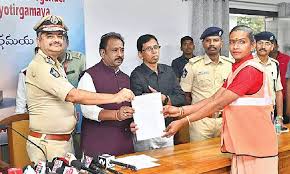
Visakhapatnam: Movedby the disturbing sight of transgender persons demanding tips from motorists and shop-keepers, Visakhapatnam Police Commissioner Shankhabrata Bagchi, who has been promoted as Director General of Police (super time scale), preferred compassion over indifference. What began as a moment of concern soon transformed into an effective social movement under the banner ‘Jyotirgamaya’, a mission aimed at restoring dignity to those who have been looked down upon or rather ignored by society. Launched with the vision of making Visakhapatnam a beggar-free city, ‘Jyotirgamaya’ sought purpose over punishment. “Every individual has a right to live with dignity,” Shankhabrata Bagchi opined, stressing that beggars and transgender persons deserve opportunities and not negligence. As part of the mission, 25 transgender persons received appointment letters as sanitation workers and other jobs. More than 250 individuals who once survived on seeking alms have been rescued from streets across the city and provided safe shelter. For many, it marked the first step towards leading a dignified life. As part of its mission, ‘Jyotirgamaya’ focused on empowering transgender community. In coordination with dedicated volunteers, Vizag city police conducted an extensive survey, identifying over 150 transgender persons living in vulnerable conditions. Through the endeavour, the aim was clear— empower them with meaningful employment and improved social acceptance.Handing over appointment letters to a transgender in the presence of CP, Mayor Peela Srinivasa Rao said the vision found strong backing from the State government under the leadership of N Chandrababu Naidu and the employment opportunities were extended through outsourcing system. Inducting transgender persons into Greater Visakhapatnam Municipal Corporation (GVMC), the Commissioner of Police underlined that efforts are taken to make sure the transgender community live with dignity and self-respect. The CP urged transgender persons to put an end to demanding tips and look forward to leading a respectful life with improved acceptance in society. By Vasu Potnuru Courtesy : THI Note: This news is originally published on https:/thehansindia.com/bha and is used purely for non-profit/non-commercial purposes, especially human rights
20 transgenders hired as sanitation workers in Vizag
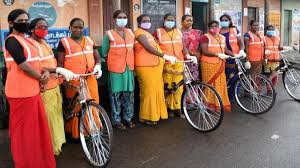
Visakhapatnam: Vizag city police, with support from local bodies and various organisations, are helping transgender individuals find employment. Under “Mission Jyotirgamaya,” Vizag city police chief Dr Shanka Brata Bagchi has been working to provide livelihood and dignity to the transgender community in the city. As a first step, 20 transgender persons have been appointed as sanitation workers with GVMC, and five others have availed loans from SBI to start small businesses. The city police said they aim to create employment opportunities for all transgender individuals in Vizag in the coming days. Courtesy : TOI Note: This news is originally published on https:/timesofindia.com/bha and is used purely for non-profit/non-commercial purposes, especially human rights
Amma’s Pride: Trans Filmmaker Shiva Krish’s Doc on Tamil Nadu’s First Trans Marriage Eyes Oscars
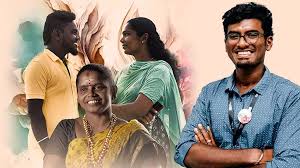
A Tamil documentary chronicling a mother’s support for her trans daughter’s pioneering marriage in Tamil Nadu has qualified as India’s sole trans-led Oscar contender. “Amma’s Pride”, a poignant 28-minute Tamil documentary short directed by transgender filmmaker Shiva Krish, has qualified as India’s only trans-led entry in the Documentary Short Subject category for the 98th Academy Awards. The film chronicles mother Valli’s unwavering support for her transgender daughter Srija, who pursued love and became part of Tamil Nadu’s first legally registered transgender marriage to Arun Kumar, facing societal stigma, school expulsions, and legal hurdles along the way. It secured eligibility after screening at the Academy-qualifying Woodland Hills event on 10 December 2025 in Los Angeles, following festival triumphs like Best Short Documentary at IDSFFK Kerala; Shiva Krish stresses that true allyship begins at home, Valli calls for parental acceptance of trans children, and the film has garnered over 60 global screenings plus 275,000 online views through campaigns like “Path to Pride”, marking a milestone for queer Indian cinema amid no official Academy statements yet. Valli’s Transformative Journey of Love and Advocacy At the heart of “Amma’s Pride” lies Valli’s profound evolution from initial shock upon learning of Srija’s transgender identity to becoming her fiercest protector and advocate. The documentary intimately documents their shared struggles over five years, including Srija’s expulsion from school due to discrimination, relentless community backlash, and the couple’s fight for legal marriage recognition in conservative Tamil Nadu society. Valli’s powerful on-camera reflection captures this shift: “Parents should support their trans children from the start. I will have the greatest satisfaction when loving and accepting them becomes the norm across families.” This raw testimony, woven with home videos and candid interviews, humanises the narrative, revealing not just pain but resilience and joy in Srija’s relationship with Arun. Shiva Krish, drawing from her own experiences as a trans woman and filmmaker, incorporates vital statistics to underscore the stakes: India’s 2011 census recorded over 4.8 lakh transgender individuals, yet trans-led stories from the country remain exceedingly rare, often overshadowed by mainstream narratives. The film’s unfiltered portrayal blending tears, laughter, and triumphs transforms statistics into lived realities, spotlighting how one family’s bond challenges deep-rooted prejudices and inspires viewers to reconsider acceptance. Trailblazing Path from Festivals to Oscar Spotlight “Amma’s Pride” embarked on its remarkable journey with a premiere in late 2024, quickly amassing international acclaim through over 60 screenings worldwide, from LGBTQIA+ film festivals and law schools to even remote locations like Antarctica via specialised groups. Key accolades include the Best Short Documentary at the International Documentary and Short Film Festival of Kerala (IDSFFK), the Jen Lynn Award at Hobnobben Festival, and the Sher Vancouver Award, propelling it toward Oscar contention. Qualification came through rigorous Academy standards, achieved via a theatrical run at the Woodland Hills venue a feat for any independent short, let alone a trans-led Indian production funded partly through crowdfunding despite early financial barriers. Post-qualification buzz has surged on social media, with Instagram campaigns like “For Your Consideration” and panels in New Delhi alongside organisations such as the Naz Foundation amplifying discussions on trans rights, marriage equality, and family dynamics. This entry builds on Shiva Krish’s prior work in social-issue storytelling, including features on marginalised communities, and positions India alongside global south voices gaining traction at the Oscars. It also follows in the footsteps of other Indian hopefuls in recent years, yet stands uniquely as a beacon for trans narratives, reshaping perceptions without diluting its intimate, community-rooted focus and reaching 275,000 online viewers through the “Path to Pride” initiative. Chhavi Chandani Courtesy : TLI Note: This news is originally published on https:/thelogicalindian.com/bha and is used purely for non-profit/non-commercial purposes, especially human rights