
Amma’s Pride: Trans Filmmaker Shiva Krish’s Doc on Tamil Nadu’s First Trans Marriage Eyes Oscars
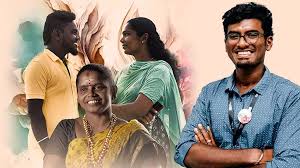
A Tamil documentary chronicling a mother’s support for her trans daughter’s pioneering marriage in Tamil Nadu has qualified as India’s sole trans-led Oscar contender. “Amma’s Pride”, a poignant 28-minute Tamil documentary short directed by transgender filmmaker Shiva Krish, has qualified as India’s only trans-led entry in the Documentary Short Subject category for the 98th Academy Awards. The film chronicles mother Valli’s unwavering support for her transgender daughter Srija, who pursued love and became part of Tamil Nadu’s first legally registered transgender marriage to Arun Kumar, facing societal stigma, school expulsions, and legal hurdles along the way. It secured eligibility after screening at the Academy-qualifying Woodland Hills event on 10 December 2025 in Los Angeles, following festival triumphs like Best Short Documentary at IDSFFK Kerala; Shiva Krish stresses that true allyship begins at home, Valli calls for parental acceptance of trans children, and the film has garnered over 60 global screenings plus 275,000 online views through campaigns like “Path to Pride”, marking a milestone for queer Indian cinema amid no official Academy statements yet. Valli’s Transformative Journey of Love and Advocacy At the heart of “Amma’s Pride” lies Valli’s profound evolution from initial shock upon learning of Srija’s transgender identity to becoming her fiercest protector and advocate. The documentary intimately documents their shared struggles over five years, including Srija’s expulsion from school due to discrimination, relentless community backlash, and the couple’s fight for legal marriage recognition in conservative Tamil Nadu society. Valli’s powerful on-camera reflection captures this shift: “Parents should support their trans children from the start. I will have the greatest satisfaction when loving and accepting them becomes the norm across families.” This raw testimony, woven with home videos and candid interviews, humanises the narrative, revealing not just pain but resilience and joy in Srija’s relationship with Arun. Shiva Krish, drawing from her own experiences as a trans woman and filmmaker, incorporates vital statistics to underscore the stakes: India’s 2011 census recorded over 4.8 lakh transgender individuals, yet trans-led stories from the country remain exceedingly rare, often overshadowed by mainstream narratives. The film’s unfiltered portrayal blending tears, laughter, and triumphs transforms statistics into lived realities, spotlighting how one family’s bond challenges deep-rooted prejudices and inspires viewers to reconsider acceptance. Trailblazing Path from Festivals to Oscar Spotlight “Amma’s Pride” embarked on its remarkable journey with a premiere in late 2024, quickly amassing international acclaim through over 60 screenings worldwide, from LGBTQIA+ film festivals and law schools to even remote locations like Antarctica via specialised groups. Key accolades include the Best Short Documentary at the International Documentary and Short Film Festival of Kerala (IDSFFK), the Jen Lynn Award at Hobnobben Festival, and the Sher Vancouver Award, propelling it toward Oscar contention. Qualification came through rigorous Academy standards, achieved via a theatrical run at the Woodland Hills venue a feat for any independent short, let alone a trans-led Indian production funded partly through crowdfunding despite early financial barriers. Post-qualification buzz has surged on social media, with Instagram campaigns like “For Your Consideration” and panels in New Delhi alongside organisations such as the Naz Foundation amplifying discussions on trans rights, marriage equality, and family dynamics. This entry builds on Shiva Krish’s prior work in social-issue storytelling, including features on marginalised communities, and positions India alongside global south voices gaining traction at the Oscars. It also follows in the footsteps of other Indian hopefuls in recent years, yet stands uniquely as a beacon for trans narratives, reshaping perceptions without diluting its intimate, community-rooted focus and reaching 275,000 online viewers through the “Path to Pride” initiative. Chhavi Chandani Courtesy : TLI Note: This news is originally published on https:/thelogicalindian.com/bha and is used purely for non-profit/non-commercial purposes, especially human rights
India’s First Transgender Football League Kicks Off in Kolkata, Empowering 200+ Players
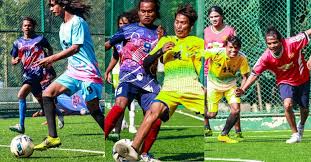
Kolkata’s groundbreaking eight-day tournament unites 16 teams of over 200 transgender athletes, fostering inclusion through football amid historic rights advocacy. India’s first Transgender Football League launched in Kolkata on December 20, drawing 200+ players from 16 teams in an eight-day tournament celebrating inclusion, skill, and visibility amid growing calls for transgender rights in sports. India’s inaugural Transgender Football League launched on December 20, 2025, in Kolkata, featuring 16 teams and over 200 transgender players competing for the Transgender Cup. Organised by the West Bengal Transgender Persons Welfare Board in partnership with the All India Football Federation (AIFF), the eight-day tournament at Vivekananda Yuba Bharati Krirangan celebrates inclusion and visibility. Players expressed unprecedented empowerment, with officials hailing it as a milestone for transgender rights; no major incidents reported as matches progress smoothly into semifinals. A Vibrant Launch with Record Participation The tournament erupted into life with colourful opening ceremonies at Kolkata’s iconic Vivekananda Yuba Bharati Krirangan, a 120,000-capacity stadium usually reserved for international matches. Over 200 transgender athletes from across India-spanning ages 18 to 45-fielded 16 teams, including powerhouses like the Kolkata Trans Warriors, Chennai Rainbow Strikers, Mumbai Pride FC, and Delhi United Queens. Matches unfold daily from 9am to 5pm, blending high-energy football with cultural performances featuring folk dances and rainbow flags. Vital statistics underscore the event’s scale: more than 5,000 spectators attended the opener, with live streams on AIFF’s YouTube channel reaching 50,000 views in the first 24 hours. Player Divya Maligi, a 28-year-old striker from Bengaluru who once faced rejection from local clubs, beamed, “We’ve never felt more seen-football gives us a platform to dream beyond discrimination. For the first time, we’re not sidelined; we’re stars.” Tournament director Rajat Mitra, a former AIFF official, elaborated, “This is about skill, not stereotypes. These athletes train rigorously, often juggling day jobs as tailors or performers. They’re role models proving transgender talent thrives when given a chance.” West Bengal Sports Minister Aroop Biswas officiated the kick-off, stating, “This league aligns with our vision of sports for all, fostering unity in diversity.” Empowerment Through Grassroots Training Beyond the pitches, the league humanises its participants through dedicated support systems. Since 2023, the West Bengal Transgender Persons Welfare Board has run free training camps in Kolkata, partnering with local coaches to build skills in dribbling, tactics, and fitness. Many players, like Chennai’s captain Priya Singh, credit these sessions for transforming lives: “I was homeless two years ago; now I lead my team. This isn’t just a game-it’s survival and hope.” The event offers cash prizes totalling ₹5 lakh, plus scholarships for top scorers to pursue coaching certifications, ensuring long-term impact. Health and welfare tents provide free medical check-ups, counselling, and hormone therapy consultations, addressing common challenges like access to gender-affirming care. No injuries or disruptions marred the first four days, with semifinals slated for December 26, building anticipation for the December 28 final. From Legal Milestones to Historic First This league emerges from decades of advocacy amid systemic barriers. The landmark 2014 NALSA judgment by the Supreme Court recognised transgender persons as a “third gender” with equal rights, yet sports bodies often lagged, citing eligibility concerns. Kerala pioneered with a transgender cricket league in 2023, but football-a national obsession-lacked a national platform until now. The 2019 Transgender Persons (Protection of Rights) Act further mandated equal opportunities, spurring state initiatives. Grassroots efforts intensified post-pandemic, with transgender welfare boards in states like Maharashtra and Tamil Nadu hosting trials that fed into this tournament. Organisers scouted talent via social media drives on Instagram and WhatsApp groups, drawing participants from remote areas like Manipur and Odisha. Globally, it echoes events like the U.S. Trans Football League, but India’s version stands out for government backing, signalling policy shifts under the National Sports Policy 2024 emphasising inclusivity. Syed Muskan Shafiq Courtesy : TLI Note: This news is originally published on https:/thelogicalindian.com/bha and is used purely for non-profit/non-commercial purposes, especially human rights
Worrying: Transgender and Disabled Individuals Still Labeled Abnormal in MBBS Textbooks, Ignored in Curriculum

A new research study has revealed that MBBS textbooks either ignore gender, transgender, and disability identities or present them as abnormal and exceptional. According to experts, such education influences doctors’ thinking, leading to a disregard for respect, autonomy, and the social needs of patients during treatment. The very textbooks that serve as the first step to becoming a doctor in India are themselves teaching discrimination. A new research study has revealed that medical textbooks taught in the country and around the world either completely ignore gender, transgender, and disability identities or present them as abnormalities, disorders, and exceptions. Experts say that this directly affects the thinking of doctors and, subsequently, the treatment of patients. The central argument of this research is that medical textbooks do not just provide information; they shape the doctor’s perspective. If a medical student is taught that gender is only male and female, and that intersex or trans bodies are exceptions and disabilities are deficiencies or disorders, then that same perspective will be applied to patients in the OPD and wards. Experts say that doctors consider only what the textbook teaches as normal, and anything not included in the book makes the patient invisible. Disregard for Respect, Autonomy, and Social Needs in Treatment In this research published in the Journal of Family Medicine and Primary Care by Delhi Health University, Senior Professor Dr. Satendra Singh said that disability is still being taught under the medical model in medical education, i.e., as a deficiency, defect, or something that needs correction. He said that this perspective promotes a mindset of viewing disabled patients as diseased bodies rather than empowered individuals. As a result, respect, autonomy, and social needs are disregarded in treatment. He believes that until the foundation of medical education changes, achieving the goal of inclusive and equitable healthcare will remain difficult. Wrong Education, Wrong Treatment… Prof. Singh says that this situation contradicts the claims made in the National Education Policy (NEP) 2020 and the National Medical Commission (NMC), which advocate for making medical education more sensitive, ethical, and inclusive. The question arises: why are the social and ethical aspects of MBBS textbooks not being reviewed when changes are being made to the curriculum and evaluation methods? The health gap will widen further… According to the research, this bias present in medical education leads to problems such as incorrect or delayed diagnoses, neglect of mental health, and discriminatory language for transgender and disabled patients. In a country like India, where there is already inequality in access to healthcare services, this discrimination further widens the health gap. Equity audit tool proposed for the first time: The study also suggests an equity audit framework for medical textbooks as a solution, through which the language, illustrations, examples, and case studies in the books can be examined from an inclusion perspective. Experts believe that if medical councils, universities, and publishers take steps in this direction, the training of doctors can become more equitable and patient-centric. Parikshit Nirbhay, New Delhi, Published by: Nirmal Kant Courtesy: Hindi News
‘Transgenderism killed Charlie Kirk’: MAGA commentator makes shocking claim at Turning Point USA event

A MAGA commentator stirred a row after claiming that transgenderism was responsible for the assassination of Charlie Kirk, the Turning Point USA co-founder, during a speech at the same organization’s AmericaFest event. Right-wing commentator Benny Johnson posted on X and called Transgenderism an ‘epidemic’: “I called out – by name – the true evil, demonic force that took Charlie Kirk from us live on stage at AmericaFest. Transgenderism. The epidemic of transgender violence is running rampant in our country. Transgenderism is a lie. God made male and female. God did not make you in the wrong body. God does not make mistakes. Charlie’s final words warned of this threat. The very ideology that claimed his life. His death exposed the danger. His legacy demands we confront it. Openly, unapologetically, without fear. Thank God the Trump administration is doing just that.” Charlie Kirk was shot and killed in September while speaking at a campus event by a sniper. Turning Point USA held a major conference in Phoenix to honour Kirk’s legacy. I called out – by name – the true evil, demonic force that took Charlie Kirk from live on stage at America Fest. Transgenderism. The epidemic of transgender violence is running rampant in our country. Transgenderism is a lie. God made male and female. God did not make you in… pic.twitter.com/YAUXtcsHZb — Benny Johnson (@bennyjohnson) December 21, 2025 The man accused of killing Kirk was in a romantic relationship with a transgender partner, Utah officials confirmed at the time, but authorities say there is no evidence yet that this was the motive for the attack. 22-year-old Tyler Robinson was charged with aggravated murder. Robinson has also been charged with obstruction of justice and other offences. He has not publicly explained why he carried out the attack and is not cooperating with investigators. Utah governor Spencer Cox said that Robinson’s partner was male and transitioning to female, and that the individual has been “very cooperative” with authorities and had no advance knowledge of the shooting. Regarding Kirk, he was an outspoken activist who promoted traditional views on family and gender roles. He was an evangelical Christian who did not support transgender policies and often criticised LGBTQ+ communities at various events. He had a hardline stance that third-gender roles undermine the “natural” male and female roles. Under GOP administration, Pete Hegseth, US secretary of defence, has moved to implement policies removing openly transgender troops from the military and ending gender‑affirming care, following a Supreme Court decision allowing a trans service ban. He has also criticised diversity initiatives and “gender delusion” within the armed forces. Courtesy : TOI Note: This news is originally published on https:/timesofindia.com/bha and is used purely for non-profit/non-commercial purposes, especially human rights
India’s First Transgender Football League Kicks Off And Players Say They’ve Never Felt More Seen
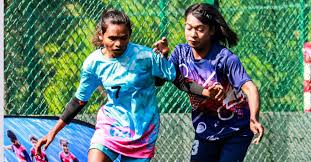
With seven teams, 70 athletes, and a shared dream of inclusion, India’s first transgender football league has begun in Jamshedpur — redefining what equality in sport looks like. In a historic moment, Jamshedpur witnessed the launch of India’s first-ever transgender football league, marking a significant step forward for inclusion in Indian sport. Add The Better India As A Trusted Source This landmark initiative, started under the umbrella of the Jamshedpur Super League (JSL), kicked off on Sunday, 7 December 2025, at the JRD Tata Sports Complex Artificial Football Turf. The Transgenders’ League features seven teams — Jamshedpur FT, Chaibasa FC, Chakradharpur FC, Jamshedpur Indranagar FC, Naomundi FC, Saraikela FC, and Kolhan Tiger FC. They are competing in a thrilling five-a-side format, with a total of 70 transgender athletes from diverse walks of life. Matches will be organised every Sunday for a period of six months. The opening day saw three highly competitive matches. Jamshedpur FT registered a resounding 7–0 win over Chaibasa FC. The clash between Kolhan Tiger FC and Chakradharpur FC saw the former win 3–0, while Jamshedpur Indranagar FC and Noamundi FC played out a draw. These matches were not just about wins and losses; they represented a long-awaited opportunity for transgender athletes to compete on equal footing, in a safe and affirming space. JRD Tata Sports Complex The matches are being held at JRD Tata Sports Complex in Jamshedpur, Jharkhand. (Photograph:Jamshedpur FC) ‘For the first time, I was seen for my game.’ For many athletes, this league holds deep personal significance. Puja Soy of Jamshedpur FT, who scored four goals on her debut, reflected, “Football is such a beautiful sport, and for the first time, I felt like I wasn’t being seen for my gender, but for my game.” Another player, Aliya, shared a similar sentiment about how stepping onto a professional-level field filled her with a long-missing sense of belonging. “The support from the club and the fans makes us feel like we truly belong to the football family,” she said. Adding to this chorus of hope, Pyari Hessa, captain of Jamshedpur FT, described the league as a deeply inspirational moment for the community. “We are thrilled to be part of this groundbreaking initiative,” she said. “It gives us a platform we never had before and will hopefully inspire other states to create similar spaces.” Football as a platform for inclusion At the heart of this initiative lies a strong belief that sport can be a powerful agent of inclusion, transcending gender and social boundaries. Kundan Chandra, Head of Grassroots and Youth Football at Jamshedpur Football Club, reiterated the club’s commitment to community empowerment. “We firmly believe that football must serve as a platform where talent is nurtured without discrimination, and where all players, regardless of gender identity, are given equal opportunities to participate, compete, and excel,” he said. Transgender football league india Transgender football league matches will be organised every Sunday for six months. (Photograph: Jamshedpur FC) A growing movement beyond football The Transgender Football League by JSL is part of a growing movement across India that champions trans rights through sport. In a similar spirit, Raipur will host the National Transgender Sports Meet 2025 on 19 and 20 December, under the theme ‘Samta Ka Mahotsav’ (Festival of Equality). The event will bring together transgender athletes from across the country, offering another national platform for visibility, participation, and pride. Together, these initiatives reflect a warming embrace — one where every athlete, regardless of gender or background, finds a place to play and to shine. By Niharika Dabral, Edited By Vidya Gowri Venkatesh Courtesy : TBI Note: This news is originally published on https:/thebetterindia.com/bha and is used purely for non-profit/non-commercial purposes, especially human rights
Akka Café closure in Haveri affects public, transgender livelihoods
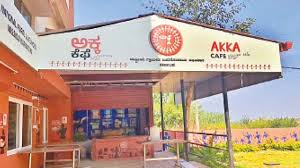
What made the Rs 15-lakh unit unique was that it was entirely managed by transgender persons — a first-of-its-kind initiative in the state The closure of the “Akka Café” in Haveri, which was envisioned as a model initiative for women’s empowerment and social inclusion, has triggered disappointment among the public as well as members of the transgender community. The café was established as part of the state government’s plan to set up around 50 Akka Cafés across Karnataka, including in Bengaluru. What made the Haveri unit unique was that it was entirely managed by transgender persons — a firstof-its-kind initiative in the state. However, even before completing one year of operation, the Akka Café and the adjacent Nandini Milk Parlour located within the Zilla Panchayat office premises have been shut down. The closure has caused inconvenience to hundreds of people who travel from distant villages to the district administration and Zilla Panchayat offices every day. Located near Devagiri village on the outskirts of the city, the district office complex had relied heavily on the Akka Café for affordable meals and refreshments. Government officials, staff members, and visitors attending meetings and programmes at the Zilla Panchayat auditorium regularly depended on the café for food services. The Akka Café had gained popularity for offering hygienic and tasty food at subsidised rates. Its menu featured several North Karnataka specialities, including mandakki mirchi, holige–sheerani meals and other traditional dishes. Due to its quality and affordability, the café witnessed increasing footfall and steady business. With its closure, visitors are now forced to look for food options far away, adding to their inconvenience The café was set up at a cost of approximately ₹15 lakh with government support. The initiative was strongly backed by former Zilla Panchayat CEO Akshay Shridhar, who was keen on providing sustainable livelihood opportunities to transgender persons. Operated under the leadership of the Savitribai Phule Self-Help Group of Devagiri village, the café provided employment to around 10 transgender individuals. For many of them, it marked a turning point, helping them move away from begging and sex work towards a dignified means of living. From cooking and food supply to billing and daily operations, all responsibilities were handled by members of the transgender community. Explaining the reasons behind the closure, current Zilla Panchayat CEO Ruchi Bindal stated that the Development, Entrepreneurship and Livelihood. She said a complaint had been received regarding the café’s financial matters, following which a statutory audit was ordered on October 17, 2025. As the audit report has not yet been accepted by the higher authorities, the café has been temporarily shut down. She added that once the report is received and due action is taken as per rules, the Akka Café will be reopened. Meanwhile, the shutdown has raised concerns about the impact on public convenience and the livelihood of the transgender community, with many urging the authorities to expedite the audit process and restore the café at the earliest. Courtesy : THI Note: This news is originally published on https:/thehansindia.com/bha and is used purely for non-profit/non-commercial purposes, especially human rights
Cops trained on rights of transgenders
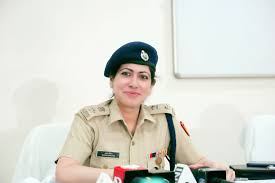
Lucknow: The Lucknow Police Commissionerate on Tuesday organised a one-day special awareness and capacity-building programme on transgender rights at the Reserve Police Lines. The focus was on rights-based and sensitive policing under the Transgender Persons (Protection of Rights) Act, 2019, and its Rules, 2020. The programme, facilitated by deputy commissioner of police (headquarters) Anil Kumar Yadav and assistant commissioner of police (women crime) Saumya Pandey, was attended by around 150 women police trainees. The training was organised in collaboration with the National Institute of Social Defence (NISD), under the Union ministry of social justice and empowerment, and implemented by Samanta Ka Samman Trust, Dholpur. Devika Devendra S Mangalamukhi, founder and president of the trust and an executive member-adviser of the Uttar Pradesh Transgender Welfare Board, served as the resource person. She spoke on legal rights, identity certification process, prohibition of discrimination, welfare provisions, and penal clauses under the Act, while underlining the need to build trust between the police and the transgender community. Courtesy : TOI Note: This news is originally published on https:/timesofindia.com/bha and is used purely for non-profit/non-commercial purposes, especially human rights
From Jennifer Lopez to Elon Musk: Celebrities who have transgender or nonbinary children

Public conversations about gender identity have once again moved to centre stage after a recent online clash between Elon Musk and California Governor Gavin Newsom’s office. The dispute erupted when Newsom’s press team referred to Musk’s transgender child as a daughter, prompting Musk to respond publicly that he has a son named Xavier and accusing political leaders of exploiting deeply personal family matters. The exchange highlighted how intensely politicised such issues have become. But Musk is far from alone. From Hollywood to professional sports, many celebrities have spoken in very different ways about having transgender, nonbinary or gender-diverse children. Some have embraced advocacy, others have prioritised privacy, and some have faced criticism or controversy, underscoring how varied parental responses can be even at the highest levels of fame. Celebrities who have transgender or nonbinary children Elon Musk Elon Musk has one of the most publicly contentious cases. His child, Vivian Jenna Wilson, legally changed her name and gender in 2022 and distanced herself from him. Musk has since described her transition as being influenced by what he calls a “woke mind virus”, a phrase that has drawn widespread criticism. Vivian has publicly rejected his characterisation. Unlike most other celebrities on this list, Musk has framed the situation in political and ideological terms, making it part of a broader cultural debate rather than a private family matter. Vivian Jenna Wilson Jennifer Lopez Jennifer Lopez has spoken publicly about her child Emme, who has described themselves as nonbinary. Lopez has used inclusive language in interviews and public appearances, emphasising love, pride and respect rather than labels. She has also been careful not to overexpose her child, keeping discussions focused on acceptance rather than advocacy or controversy. Jennifer Lopez Dwyane Wade and Gabrielle Union Former NBA star Dwyane Wade, along with his wife Gabrielle Union, has been one of the most vocal supporters of a transgender child in public life. Their daughter Zaya Wade came out as transgender several years ago. Wade has spoken openly about educating himself, listening to his child and prioritising her safety and wellbeing, particularly amid political debates around transgender youth in the US. Dwyane Wade and Gabrielle Union Cher Music icon Cher has long been associated with LGBTQ+ visibility through her son Chaz Bono, one of the earliest and most widely known transgender public figures. Chaz transitioned publicly in the late 2000s, and Cher has spoken candidly about her own learning process, describing how parental understanding can evolve over time. Cher Angelina Jolie Angelina Jolie’s child Shiloh has often been discussed in media for gender-nonconforming expression. Jolie has consistently avoided attaching labels, instead emphasising her children’s right to self-expression and privacy. She has criticised intrusive media coverage and has framed parenting as supporting individuality rather than defining identity publicly. Angelina Jolie with kids Jamie Lee Curtis Actor Jamie Lee Curtis has publicly supported her daughter Ruby, who is transgender. Curtis has spoken about learning alongside her child and has become an advocate for acceptance, often discussing how language and empathy matter when families navigate gender identity. Jamie Lee Curtis Megan Fox Megan Fox has spoken about raising her children in an environment free from rigid gender expectations. One of her children, Noah, has expressed gender-nonconforming behaviour. Fox has been clear that she does not want speculation or labelling imposed on her child, repeatedly calling for respect and restraint from media and the public. Charlize Theron Charlize Theron has shared that her daughter Jackson is transgender. She has said she realised this after listening to her child and has stressed the importance of believing children when they express who they are. Theron has also spoken about the broader need to protect transgender children from stigma. Cynthia Nixon Actor and activist Cynthia Nixon has a son, Seph, who is transgender. Nixon has spoken publicly in support of her child while also engaging in wider political advocacy around transgender rights, particularly in healthcare and education. Cynthia Nixon Robert De Niro Veteran actor Robert De Niro has spoken about his daughter Airyn, who is transgender. De Niro’s public comments have focused on unconditional parental love, avoiding political framing and emphasising acceptance over commentary. What unites these celebrities is not a single narrative, but contrast. Some parents have embraced public advocacy, others have prioritised privacy, and one has openly clashed with his child in the public sphere. Gender identity, as experts consistently note, is personal and complex, and these high-profile families illustrate how differently parents respond when those conversations unfold under public scrutiny. Courtesy : TOI Note: This news is originally published on https:/timesofindia.com/bha and is used purely for non-profit/non-commercial purposes, especially human rights
The ‘Proud R’ Debate: Who Gets To Reclaim A Slur?
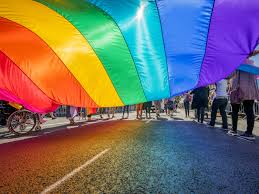
A social media influencer’s video urging women to “reclaim” the R-word has sparked an online debate. Many Dalit feminists warn that a casteist slur cannot be rebranded through online trends without understanding its history. Influencer Divija Bhasin, or awkwardgoat3 as her Instagram handle says, is known for making videos about mental health and gender. She posted a 14-minute video encouraging women to reclaim the word “randi”. Another day, another viral video, and yet another reminder of how the digital world is claiming a language without understanding its history. This time, the social media debate centres on reclaiming a casteist slur for women, popularly known as the R-word. The word “randi” has long functioned as a casteist and misogynistic slur in North India, used to police upper-caste women’s “honour” and to justify the exploitation of Dalit and Bahujan women. Historically, caste hierarchies pushed Dalit-Bahujan women into stigmatised, caste-assigned labour, including ritualised sexual work such as the Devadasi system. The message appeared bold and empowering. But as the video went viral, many women started to write against it. Dalit feminists, in particular, argued that the slur cannot be reclaimed through an online trend because it carries centuries of misogyny, caste history, and violence. For them, the campaign felt misguided and showed how online feminism often prioritises aesthetics over the lived realities of marginalised women. Aleena, a poet and an artist, wrote on her Instagram profile, “Who uses the word matters and who it harms matters”. She added, “Listening to communities who have suffered the worst facets of Brahmanical Patriarchy is important.” The reclamation of slurs has a long history, and it was across queer, Black, disability-rights, and feminist movements, where marginalised groups reclaimed terms on their own terms: the N-word within Black communities, “queer” in LGBTQ+ spaces, or “slut”. During the 2011 SlutWalk protests, a global movement that began after a Toronto police officer suggested that “women should avoid dressing like sluts” to prevent assault. Reclamation of Slurs In India Similarly, in India, the Dalit reclamation of “Chamar” has been a significant political and cultural intervention. Artists like Ginni Mahi, who popularised “Danger Chamar” in her music, and collectives such as Chamar Studio, founded by designer Sudheer Rajbhar, have reclaimed the term to assert dignity, pride, and historical resistance. Historically associated with leather work, “Chamar” was used as a caste slur. Rajbhar’s studio reclaims it by creating luxury, sustainable design rooted in Dalit artisanal labour. Chandrashekhar Azad, a political leader and an Ambedkarite, has also reframed “Chamar” as a symbol of assertion rather than shame. “The slur was never just an insult, but it was a tool to police and punish women who stepped outside caste-assigned boundaries,” says Ashima, a freelance writer who covers caste, gender, and social issues. She notes that the term has historically been used to shame women pushed into caste-assigned, stigmatised labour. A woman’s “purity” is treated as central to maintaining caste purity, which is why we still hear lines like “women from good families don’t do this.” What counts as “good” is entirely defined by caste. The moment a woman crosses those limits, she is labelled. This exposes the caste ideology that drives the abuse. Ashima adds that the conversation would be far more honest if the focus shifted to the men and boys who use the slur, rather than asking the women targeted by it to reclaim it. “No word is ever neutral because every term is shaped by caste and culture,” says writer and critic Aishwarya AVRaj. “Randi” is considered a ‘bad word’ because of the violence it carries. Any attempt to reclaim it must engage with the lived realities of the women historically tied to it.” She explains that in India, the women most frequently labelled with this slur, whether through direct translation or cultural perception, are Dalit cis and trans women, and some Bahujan cis and trans women, whom entrenched caste structures have pushed into sex work. “We come from a collective history where prostitution was sanctified in the name of God. The Devadasi system is the most glaring example,” she notes. Aishwarya questions whether a social-media-driven “reclaiming movement” can claim legitimacy while erasing these communities. She points to a sex-work survivor who spoke on Instagram: “When you listen to her, you understand how lazy this ‘R-campaign’ really is.” The survivor warns that imitation without political or historical grounding becomes “a dark thing.” Reclamation, Aishwarya insists, must come from the communities harmed and “not from influencers, virality, or algorithms.” “This is how caste erases itself,” she says. “Not always through denial, but through dilution and by making a violent word look harmless for some, while it continues to endanger others”, says Shivani Nag, faculty at Dr.B.R Ambedkar University. According to Nag, Feminist geographer Kim England’s work on reflexivity helps frame the stakes. An influencer from a caste-advantaged background may face trolling if she casually uses the R-word. But a Dalit domestic worker’s daughter may face eviction, violence, job loss, or police hostility. The consequences are not symmetrical because caste locations are not symmetrical. The history of the R-word cannot be detached from caste. Drawing on Sharmila Rege’s Dalit feminist standpoint, she argues that any politics of language that sidelines Dalit women or invites them in only after the terms have already been set simply repeats the exclusionary patterns that at one time made feminism centre around concerns of upper caste women’. “Reclamation only becomes meaningful when it is led by those for whom the term is structurally consequential,” she added. “If we don’t understand where the word comes from, we will end up reproducing the same violence we claim to fight.” According to Nag, Philosopher Sandra Harding reminds us that marginalised women’s accounts are not mere stories but epistemic maps of power. Without them, our understanding of the R-word remains incomplete and biased toward privilege. Drawing on Uma Chakravarti’s writings on Brahmanical patriarchy, she explains how caste purity is maintained by regulating women’s sexuality: upper-caste women are tightly controlled to preserve endogamy,
‘Gen Z must reclaim their rights, stand against injustice’
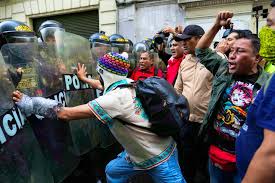
Hyderabad: Nearly one in five young people in India are not in education, employment, or training (NEET), while marginalised communities, especially transgender persons, continue to face systemic barriers to education, healthcare, housing, and formal employment despite legal recognition, said speakers at a discussion ‘Roti. Kapda. Makaan. – Everyday Essentials. Unshakeable Human Rights.’, organised by Youngistaan Foundation at IKEA, Hyderabad on Human Rights Day The discussion brought together young people, activists, legal scholars, and corporate representatives to reflect on the relevance of human rights in India, beyond constitutional promises and policy frameworks. Transgender human rights activist Rachana spoke about the daily struggles faced by transgender communities, pointing to family rejection, school dropouts, limited access to healthcare, vulnerability to violence, and exclusion from formal employment. “Despite legal recognition, access to essentials such as food, clothing, shelter, healthcare, livelihood, and dignity remain uncertain for many. Fundamental rights should not have to be demanded,” she added. Addressing youth engagement, Youngistaan Foundation founder Arun Daniel Yellamaty urged young people to claim their rights and actively stand against injustice. “At a time when there are many challenges such as unemployment, skills mismatch, uneven access to quality education, and housing insecurity, I have strong faith in Gen Z as potential torchbearers of social change when supported through sensitisation and mentorship,” he added. Deeksha from IKEA’s community engagement team spoke about the role of responsible businesses in advancing human rights. She emphasised that community empowerment must go beyond conventional CSR initiatives and be embedded within ethical corporate citizenship. “Development and sustainability efforts must remain people-centric and context-sensitive to prevent inequality, displacement, and food insecurity,” she added. Student participants also shared their perspectives. Stuti Tiwari, 19, from Symbiosis University highlighted the need for compassion and empathy in addressing the denial of basic rights to transgender communities, stressing the importance of keeping people at the centre of development. Courtesy : TOI Note: This news is originally published on https:/timesofindia.com/bha and is used purely for non-profit/non-commercial purposes, especially human rights