
0 Maternal Deaths, 3,000 Water Bodies & A Transgender Colony Named After Him | IAS Story | TamilNadu

When V. P. Jeyaseelan became District Collector of Virudhunagar district, he didn’t chase headlines — he delivered measurable change. As an IAS officer in Tamil Nadu, his governance model focused on real impact: Increased college enrollment from 65% to 95% ✔ Restored 3,000+ water bodies ✔ Achieved zero maternal deaths ✔ Empowered women, persons with disabilities, and the transgender community In a rare tribute, members of the transgender community honored him by naming their colony after him — a powerful testament to inclusive governance. This is what transformational leadership looks like. If one district can change this much under one officer, imagine the possibilities across India. V P Jeyaseelan IAS, Virudhunagar District Collector, Tamil Nadu IAS officer, Good Governance India, Zero Maternal Deaths Model, Water Body Restoration Tamil Nadu, College Enrollment Growth India, Transgender Welfare Initiatives India, Inclusive Governance Model, District Administration Success Story, Social Impact Leadership India, IAS Officer Inspiration, Bureaucracy Success Story, Public Administration India Courtesy : The Better India Note: This news is originally published on https:/thebetterindia.com/bha and is used purely for non-profit/non-commercial purposes, especially human rights
Transgender found hanging in West Champaran

Bettiah: A 30-year-old transgender was found hanging inside a rented room under suspicious circumstances in Dumwaliya locality of Bagaha town in West Champaran district on Saturday morning. The deceased was identified as Renu Devi, a native of Maharajganj district. She had been living alone in rented accommodation for the past 2 to 3 months. According to locals, the door of the room remained closed for a long time on Saturday morning. Despite repeated knocks and calls by neighbours, there was no response from inside. Suspecting something amiss, they alerted Dial 112. A police team arrived at the spot and informed Patkhauli police station. Patkhauli SHO Hridayanand Singh said that upon receiving the information, a police team rushed to the spot. “The room was locked from inside. When the door was forced open, the body was found hanging,” he said. Senior officials, including Superintendent of Police Ramanand Kumar Kaushal, were informed immediately. A forensic science laboratory (FSL) team later visited the site and collected evidence. The body was sent to the subdivisional hospital for post-mortem examination. Police said preliminary investigation suggests that the deceased was originally from Maharajganj district of Uttar Pradesh and had been staying in the house of a local resident. Another transgender person, identified as Laila, lives in a nearby room and is being questioned as part of the investigation. Police have taken the house owner into custody for questioning. While the case appears to be one of suicide at first glance, police said the exact cause of death would be ascertained only after the post-mortem report is received. Further investigation is under way, considering all possible angles. Meanwhile, Bablu Kinnar, associated with a local transgender group, said that the deceased was not affiliated with their community. Our group members live in their own houses under the guidance of our guru Hemlata. Courtesy : TOI Note: This news is originally published on https:/timesofindia.com/bha and is used purely for non-profit/non-commercial purposes, especially human rights
IndiaActivists push for better counting of transgender Indians in 2026 Census

2011 count noted 488,000 trans people in country India is preparing to conduct a nationwide Census in April, the first since 2011. Interim projections based on the previous Census placed India ahead of China as the world’s most populous country. A Technical Group on Population Projections projection in July 2020, chaired by the Registrar General of India, estimated the country’s population in 2023 was 1.388 billion. Transgender Indians are now raising concerns about the data collectors and their sensitization. Activists have raised concerns about whether data collectors are adequately sensitive to the community ahead of the Census. Government training material emphasizes household engagement, data privacy and sensitivity while asking personal questions, but publicly available flyers do not outline specific guidance or training related to recording trans identity during enumeration. Concerns around the counting of trans people in India are not new. The 2011 Census recorded around 488,000 trans people, a figure activists and researchers have described as a likely undercount due to stigma, misclassification, and a reluctance to self-identify. Subsequent surveys and field reports have pointed to inconsistencies in how gender identity is recorded and the absence of uniform sensitivity among Census data collectors. Rights groups and policy researchers have also warned that gaps in official data affect access to welfare schemes, legal recognition, and targeted public policy, making accurate counting central to future Census exercises. A decade after the 2011 Census formally recorded trans people as a distinct category, multiple studies have continued to document entrenched socio-economic disparities. Research has pointed to lower literacy rates, limited workforce participation and barriers to healthcare access within the community. A National Human Rights Commission-supported study cited in subsequent reporting found a significant proportion of trans respondents reported employment discrimination, underscoring the gap between formal recognition and lived economic inclusion. Educational exclusion has remained a persistent concern within the trans community. Studies have documented higher dropout rates, lower literacy levels and barriers to continuing education, often linked to stigma, discrimination and limited institutional support. Policy researchers note that despite formal recognition in official data after 2011, targeted interventions addressing school retention and access for trans people have remained uneven. Access to housing schemes has reflected similar gaps. The Washington Blade in December reported only a small number of trans people have benefited from India’s flagship low-income housing program, despite its nationwide rollout and eligibility provisions. The findings underscored continuing barriers to inclusion in welfare delivery systems. The Social Justice and Empowerment Ministry and the Office of the Registrar General and Census Commissioner did not respond to the Blade’s multiple requests for comment regarding sensitization measures for Census data collectors and the recording of trans identity in the upcoming Census. Karnataka state in southern India last September conducted its first statewide baseline survey of gender minorities. The Department of Women and Child Development, in collaboration with the Karnataka State Women’s Development Corporation, launched the initiative to document the lives of trans people across 31 administrative districts. When the results were released, the survey identified 10,365 trans people. The country’s 2011 Census, by comparison, recorded 20,266 trans people in Karnataka, nearly double the 2025 figure. The discrepancy raised questions about how the state’s recorded trans population appeared to decline over 14 years. The discrepancy in Karnataka’s survey has intensified scrutiny over how gender minorities are counted. Reports questioned the methodology used in the 2025 exercise, which was conducted over 45 days beginning in mid-September. Instead of door-to-door enumeration, trans people were required to report to designated registration sites — primarily district-level public hospitals and sub-district government health facilities. The approach presented barriers for potential participants, particularly those in rural areas, those without reliable transportation, those wary of institutional settings due to prior discrimination, or those who did not know about the count, raising the possibility of exclusion. Bihar state in eastern India in January 2023 conducted a caste-based survey that included trans respondents. The final report identified 825 trans people in the state, compared with 40,827 recorded in the 2011 Census. Activists disputed the figure, calling it inaccurate and pointing to community estimates that suggested higher numbers, including in Patna, the state capital, raising concerns about significant undercounting. The 2011 Census marked the first attempt to enumerate trans people at the national level, but researchers and activists have described the exercise as limited in scope. It recorded 487,803 people under the “other” category, a classification used for respondents who did not identify as male or female. Analysts have argued that the figure likely underestimated the community’s size. The Census questionnaire provided three sex categories — “male,” “female,” and “other” — a framework that critics said did not fully capture the diversity of gender identity and may have affected how some respondents chose to identify. During the 2011 Census, enumeration practices varied across regions. In states such as Tamil Nadu, local reporting indicated estimates were at times derived from existing administrative records, including state-issued trans identity cards, rather than solely through door-to-door identification. Such approaches risked excluding individuals who did not possess identity documentation or were not registered with welfare boards, raising concerns about gaps in coverage. Official data from the Social Justice and Empowerment Ministry shows only a few hundred trans people as of early 2025 have been issued identity cards through the national portal, despite nearly 2,000 applications being submitted. Many are still pending or have been rejected. Critics of the 2011 Census said many Census data collectors were not adequately trained or sensitized to engage with gender identity beyond traditional binary classifications. Similar, detailed guidelines specific to trans sensitization have not been publicly made available for the 2026 Census, according to an examination of training materials and official circulars. Akkai Padmashali, a trans rights activist, told the Blade that Census data collectors in earlier exercises were often not sensitized and lacked awareness of intersex people and gender-diverse communities. She said trans people and other gender and sexual minorities continue to face social exclusion and require careful handling during door-to-door data collection. Padmashali
Bhopal News: Transgender Feel Social Prejudice In Accessing Healthcare Services; Study
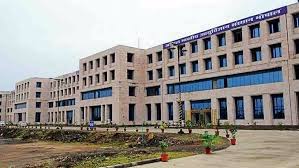
The study also emphasized that sensitivity, cultural understanding, and a respectful approach in the behavior of healthcare workers are extremely important. It further highlighted that policy-level reforms, training of healthcare professionals, and the creation of a safe environment are necessary to ensure equal and respectful healthcare services for the transgender community. Bhopal (Madhya Pradesh): AIIMS research revealed that transgender people feel social prejudice and discriminated in accessing health care services. Nursing student of AIIMS Komal Kathale presented research paper titled, A study to explore the expectations and experiences related to healthcare services among the transgender population in a tertiary care hospital: A qualitative study.” The study attempted to understand the real-life experiences of transgender individuals. The findings revealed that while accessing healthcare services, they face several challenges such as social prejudice, discrimination, communication gaps, and the lack of gender-sensitive services. The study also emphasized that sensitivity, cultural understanding, and a respectful approach in the behaviour of healthcare workers are extremely important. It further highlighted that policy-level reforms, training of healthcare professionals, and the creation of a safe environment are necessary to ensure equal and respectful healthcare services for the transgender community. Komal Kathale, a 2nd year MSc nursing student of the College of Nursing, AIIMS Bhopal, secured first position in the postgraduate category at National Scientific Paper Presentation 2026. The conference was organised by Symbiosis College of Nursing, Symbiosis International University, Pune, in which participants from across the country took part. Courtesy : TFPJ Note: This news is originally published on https:/thefreepressjournal.com/bha and is used purely for non-profit/non-commercial purposes, especially human rights
Social stigma and data gaps limit transgender enumeration in India, complicating the State’s policy design

In January 2026, the Karnataka government announced findings from a statewide survey on transgender persons. This is undeniably significant because the National Family Health Survey (2019-21) and the Periodic Labour Force Survey do not even enumerate transgender persons as a distinct demographic category, despite their recognition as a separate gender category by the Supreme Court of India. The recent Karnataka survey identified 10,365 transgender persons in the state, which is, however, only about half the population recorded in the 2011 National Census. It also significantly diverges from estimates produced by other datasets. Electoral data from the Karnataka assembly elections (2023) listed 4,927 registered transgender voters, while Election Commission figures from the 2024 Lok Sabha polls recorded 5,012 transgender electors. In contrast, community activists’ macro-estimates for 2024-25 place their population at over 200,000. A recent ethnographic study conducted as part of an ongoing project at the Institute of Social and Economic Change (ISEC), Bengaluru, finds an approximate estimate of more than 300,000 transgender people in Karnataka. Inconsistencies are visible in other state datasets as well. The statewide transgender survey conducted in Kerala (2014-15) estimated their population at over 25,000, which is an exponential divergence from the mere 3,902 persons recorded in the 2011 Census. These inconsistencies across surveys signal layered processes of undercounting, which deepens the statistical opacity surrounding transgender population in India. Thus, what is at stake is not merely demographic precision but persistent data inconsistency that shadows transgender realities in India. The questions that arise are: why do transgender populations appear differently across datasets? And why do the State and its enumeration regimes continue to find transgender populations difficult to count? Why do the numbers differ? The first explanation lies in methodology. Typically, population surveys rely on door-to-door enumeration, simultaneously mapping spatial coverage and demographic triangulation across documentation systems. In contrast, relying on community outreach and voluntary disclosure makes surveys contingent on network reach and willingness to self-identify. This introduces data distortions: those outside welfare databases, facing bureaucratic barriers in updating certificates, or geographically dispersed beyond outreach clusters risk exclusion. The dataset thus becomes vulnerable to network reach and assumptions of homogeneous identity assertion, rather than ground realities. The second explanation lies in definitional rigidity. Due to the Euro-American origin of the term ‘transgender’, many local non-binary identities do not neatly fit into this category. Therefore, who is counted as transgender varies across categories, welfare eligibility criteria, medical certification regimes, and community self-identification practices. Moreover, there are significant variations in terms of individuals who currently identify as transgender; those who transition into binary male or female identities after medical or social transition; andthose who occupy a liminal space within ritual and cultural frameworks. Thus, rigid definitional categories struggle to resolve who counts. In turn, it becomes a regulatory act to compress the very population into homogeneity, which it claims to represent. Third, stigma shapes participation. Uneven response rates, due to a wariness of being included in state databases, are widely acknowledged as a structural challenge in surveys that involve gender minorities. Disclosure can carry perceived risks, ranging from employment precarity and housing discrimination to heightened institutional scrutiny. For transgender community, where historical interactions with the State have been marked by surveillance, exclusion, or bureaucratic friction, willingness to self-identify within official data systems remains understandably uneven. Fourth, in states like Karnataka that experience a high rate of migration and mobility, demographic capture is bound to be complex, especially for transgender communities who often have limited access to structured labour markets. Consequently, they often inhabit circulatory geographies, moving between districts, informal economies, and seasonal labour networks. Thus, typical survey methods struggle to capture populations that are spatially fluid and temporally mobile. Finally, household rejection produces statistical erasure. A significant proportion of the transgender population lacks family acceptance. Expulsion from natal homes pushes them into alternative kinship structures unrecognised by typical survey methods, rendering them demographically invisible. These discrepancies are not technical errors. They emerge from structural conditions that make transgender lives difficult to enumerate within conventional demographic frameworks. It is also precisely what makes enumeration consequential to frameworks of recognition, resource allocation, and policy design. Beyond the statistics Counting matters because numbers produce policy legitimacy. Welfare boards require demographic baselines, reservations depend on quantification, and budget allocation follows population scale. Therefore, any survey of the socially and historically marginalised transgender communities must move beyond extraction towards collaboration. Such an enumeration requires partnership with community networks, involving experts, and most importantly, recognising the dynamic forms of transgender identity and a method that is informed by their realities. Without such shifts, surveys risk becoming instruments of symbolic inclusion rather than structural transformation. While the Karnataka survey signals administrative willingness to map the welfare needs of the marginalised and produce targeted interventions, which is welcome, it also reveals the epistemic limits of demographic knowledge itself in other Indian states. Transgender lives exceed the statistical frames designed to contain them. They move across everyday experiences of precarities, kinship reconfigurations, and identity transitions that resist bureaucratic fixity. Enumeration, in this context, becomes necessary, but often insufficient. There is already a lot of work in trans scholarship which argues that AI’s facial recognition software is a regulatory regime for trans people and how it perpetuates biases. The noted inadequacies in transgender enumeration undermine the sustainable formulation of economic, housing, and social policies for them, which are missing in most Indian states. But Karnataka and Kerala provide examples for other Indian states to follow, not only to make these populations inclusive but also to contain inconsistencies in their counting, as most states move to present their budgets. Swarupa Deb Kala S Sridhar (The writers are, respectively, a post-doctoral scholar and a professor at the Institute for Social and Economic Change) Disclaimer: The views expressed above are the author’s own. They do not necessarily reflect the views of DH. Courtesy : DH Note: This news is originally published on https:/deccanherald.com/bha and is used purely for non-profit/non-commercial purposes, especially human rights
Transgenders, sexual minorities should be judges: Justice Bhuyan
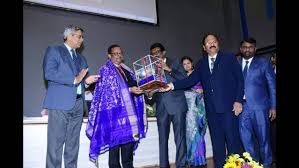
Hyderabad: Justice Ujjal Bhuyan of the Supreme Court said on Saturday that the judiciary must be an inclusive “rainbow institution” that reflected India’s diversity, moving beyond being a bastion of a single gender or dominant communities. Delivering the keynote address on constitutional morality and the role of the district judiciary at the Telangana Judicial Academy in Hyderabad, he said he wanted to see transgenders and sexual minorities serving as judges. He recalled his tenure as Telangana Chief Justice, where he and Justice CV Bhaskar Reddy declared the Telangana Eunuchs Act unconstitutional in 2023, asserting that constitutional morality must supersede cultural prejudices. The 1919 Act ordered eunuchs to register with the authorities and provide details such as residence, for they were “reasonably suspected of kidnapping boys”. It allowed transgender people to be arrested without a warrant. Justice Bhuyan further noted that LGBT individuals had been stereotyped and prejudiced. “Constitutional morality does not permit such discrimination and must supersede cultural morality,” he told judicial officers from across the state. He emphasised that the district judiciary was the backbone of the system and the primary interface with citizens. He described Article 227 as a “shield, not a sword”, positioning the high court as a mentor rather than a mere court of appeal. He noted that justice must not only be done but be seen to be done. To illustrate societal fault lines, he cited a 2025 incident in Delhi where his daughter’s friend, a PhD student, was denied housing due to her community, and a recent protest in Odisha against a Dalit woman preparing midday meals.”This is the tip of the iceberg showing the societal fault lines that persist even after 75 years of Independence,” he said. Justice Bhuyan highlighted icons who began in trial courts, including Justices Hansraj Khanna, AM Ahmadi, and M Fathima Beevi. He made special mention of Kanya Nathan, who topped the Kerala civil judge exam despite visual impairment, following a 2025 Supreme Court ruling that impairment is not a disqualification. Finally, he urged the judiciary to address “metaphorical distance” caused by high fees and legal illiteracy, noting the common confusion between the granting of bail and acquittal. Calling Hyderabad his second home, he thanked the fraternity for their openness. Judges of the Telangana High Court, members of the Telangana Judges’ Association, and the Academy Board of Governors also participated in the event. Courtesy : TOI Note: This news is originally published on https:/timesofindia.com/bha and is used purely for non-profit/non-commercial purposes, especially human rights
OPSC adds 3rd gender category to OCSE application
Bhubaneswar: Odisha Public Service Commission (OPSC) added a third gender or transgender category in the online application form for the Odisha Civil Services Examination (OCSE)-2025. The commission also extended the deadline for registration and fee payment to Feb 27 up to 5 pm. Candidates who complete registration will be able to submit their final online application by March 7. In a notice issued on Feb 19, OPSC said the required change was made in the gender selection column. It also clarified that applicants choosing the third gender or transgender option must upload an identity certificate or card issued by the competent authority. They must also provide supporting documents for any name change after obtaining third gender or transgender status. The move followed recent directions from the Odisha Human Rights Commission (OHRC), which urged the state govt to introduce a third gender or transgender option in recruitment application forms and to extend the OCSE application timeline. The OHRC’s intervention came after a petition filed by a transgender person from Cuttack, who alleged that the absence of a third gender category in the OCSE form effectively blocked transgender candidates from applying. The petitioner argued that this exclusion amounted to discrimination and violated constitutional guarantees of equality and non-discrimination. On Jan 22, after hearing the matter, the OHRC recommended that the state ensure 1% reservation for transgender candidates in recruitment examinations, including OCSE. It also advised the general administration and social security departments to take steps to include the third gender or transgender option across govt recruitment forms. The commission further recommended that all recruiting agencies and boards, including OPSC, be instructed to implement the change. Additionally, the OHRC asked the govt to extend the application deadline by at least 15 days to allow affected candidates adequate time to apply. Courtesy : TOI Note: This news is originally published on https:/timesofindia.com/bha and is used purely for non-profit/non-commercial purposes, especially human rights
Man hangs self after ‘killing’ transgender in UP’s Ballia
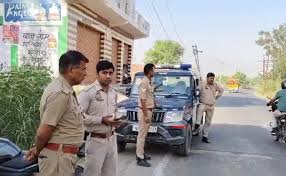
In Ballia, UP, a man named Ravi Gupta (30) allegedly killed 65-year-old transgender Rekha, whose body was found on his roof, before he hanged himself. Rekha was reported missing, and CCTV showed her entering Gupta’s house. Police registered a case against five people, including the deceased man and his father. Ballia (UP), Feb 19 (PTI) A man hanged himself in the Bairia area here after allegedly killing a 65-year-old transgender who had gone missing, police said on Thursday. The transgender, identified as Rekha, had gone missing on Tuesday, they said. Members of the transgender community had searched for her and later lodged a missing persons complaint at the Bairia police station when she could not be traced. Her mobile phone was later found in a field near Pura Phatak in Raniganj, police said. Superintendent of Police Omveer Singh told reporters that Ravi Gupta (30) was found hanging from a ceiling hook in his room on the third floor of his house in the Raniganj area on Wednesday night, after his family informed the police. CCTV footage of the house showed Rekha entering the residence, Station House Officer Rajendra Prasad Singh said. On a sustained search of the house, the body of the transgender was found wrapped in polythene in a box kept on the roof with injury marks, he said. According to police, Rekha was a native of Bihar’s Chhapra and lived in a rented accommodation in Raniganj. The SP said a case has been registered against five persons, including the deceased and his father, and three members of the family. Further legal proceedings are being carried out. PTI COR CDN APL APL This report is auto-generated from PTI news service. ThePrint holds no responsibility for its content. Courtesy : The Print Note: This news is originally published on https:/theprint.com/bha and is used purely for non-profit/non-commercial purposes, especially human rights
DM’s certificate under Transgender Act conclusive proof of gender for passport: Allahabad HC

The bench said Clause 5 of the DM’s certificate allows name and gender updates in all records, and passport authorities cannot seek fresh medical tests or extra documents. PRAYAGRAJ: The certificate issued by a district magistrate under Section 7 of the Transgender Persons (Protection of Rights) Act, 2019 is conclusive proof of a person’s gender identity for the purpose of issuance of a passport, the Allahabad High Court has ruled. A division bench comprising Justice Atul Sreedharan and Justice Siddharth Nandan observed that the passport authority “cannot insist on a fresh medical examination” or “seek changes in the birth certificate” for effecting a change of gender in a passport. The court passed the order on February 10 while disposing of a petition filed by Khush R Goel, who had challenged a June 23, 2025 order of the passport authorities directing him to undergo a fresh medical examination at a clinic empanelled by them for change of gender in his passport. According to the plea, the petitioner was born a female but later identified as a transgender person. After attaining majority, he underwent gender reassignment surgery and transitioned to male. He subsequently approached the district magistrate and obtained a certificate under the 2019 Act, which entitles the holder to change name and gender in all official documents. However, when he sought correction of gender in his passport, the authorities directed him to undergo a fresh medical examination. The bench noted that Clause 5 of the certificate issued by the district magistrate specifically entitles the holder to update name and gender in all official documents. It held that once such a certificate is issued, there is no requirement for the passport authorities to demand any further medical examination or additional documents. Emphasising the object behind the enactment of the 2019 law, the court observed that Parliament brought in the statute to address the social ostracism faced by transgender persons and to ensure their dignity and equal rights, so that they are not compelled to suppress their identities contrary to their innate personality. Holding that the district magistrate’s certificate “gives a quietus to the controversy,” the court disposed of the petition and set aside the requirement of further medical examination. Courtesy : TNIE Note: This news is originally published on https:/timesofindia.com/bha and is used purely for non-profit/non-commercial purposes, especially human rights
Who was Robert Dorgan? All about the transgender suspect in the Pawtucket Dennis M. Lynch Arena hockey shooting

Robert Dorgan was a 56-year-old transgender person from Rhode Island who was also known as Roberta Esposito. Police claims he was the suspect in a deadly shooting during a high school hockey game in Pawtucket. The incident happened at Dennis M. Lynch Arena and left three people dead, including Dorgan. Three others were hurt and are in critical condition. According to Pawtucket Police Chief Tina Goncalves, Dorgan died from a self-inflicted gunshot wound. Officials described the shooting as targeted. One of the people who died was his son. Robert Dorgan worked for General Dynamics Bath Iron Works. After the shooting, company spokesperson David Hench said in a statement, “Robert Dorgan was an active employee with General Dynamics Bath Iron Works. We extend our deepest sympathies to the victims, their families and all those affected by this tragedy. Any further questions should be directed to law enforcement.” Pawtucket Police Chief Tina Goncalves identifies Robert Dorgan in targeted Rhode Island hockey arena shooting Police publicly identified Robert Dorgan during a Monday night press conference. Chief Tina Goncalves said the shooting took place during a youth hockey game that involved cooperative high school teams. She explained that three people, including Dorgan, died, and three others were taken to the hospital in critical condition. WJAR reported that Dorgan was the father of a senior from North Providence High School who was playing in the game. The station also reported that one of the deceased victims was his son. Authorities have not released the names or ages of the victims yes. Chief Goncalves said early information suggests the violence came from a family dispute. She also mentioned that one person involved was described as a “family friend,” but did not clarify whether that person was among the dead or injured. Court records show that Dorgan’s ex-wife, Rhonda Dorgan, filed for divorce in 2020. The divorce was finalized in June 2021. The couple had at least three children. During the divorce process, records listed that Dorgan had been living in Jacksonville, Florida, and working as a truck driver. After the shooting at Dennis M. Lynch Arena, one adult daughter spoke to media outlets and said her father had struggled with mental health issues for many years. Another adult child was reported among those shot, though officials have not confirmed identities. The investigation remains ongoing as police continue to gather evidence and speak with witnesses. Courtesy : TOI Note: This news is originally published on https:/timesofindia.com/bha and is used purely for non-profit/non-commercial purposes, especially human rights