
In a first, Jharkhand’s Ramgarh gets cafe run by transgender persons
An initiative of the district administration, the cafe will be managed by a group of 10 transgender persons In a first, Jharkhand’s Ramgarh gets cafe run by transgender persons In a first-of-its-kind initiative in Jharkhand, a cafe has been set up in Ramgarh district that will be run exclusively by members of the transgender community. Deputy Commissioner (DC) Faiz Aq Ahmed Mumtaz inaugurated ‘TransCafe’ at the district collectorate park on Tuesday. An initiative of the district administration, the cafe will be managed by a group of 10 transgender persons. “For far too long, members of the transgender community have faced social exclusion and economic marginalisation, and it is time we correct these historic injustices through concrete action,” Mumtaz said after inaugurating the cafe. “Our initiative aims to integrate them into the mainstream while respecting their identity and rights. We are committed to creating an inclusive Ramgarh where everyone can live with respect, safety, and opportunity,” he said. The DC said dedicated OPD services are being provided to the transgender community at the district hospital every Saturday afternoon. “Three dedicated toilets have been opened for them recently at different public places. We have also employed two members of the community, one in the DC office and another in Sadar Hospital, through outsourcing,” he added. A self-help group has been formed, and it will run the cafe, the DC said. SHG president Himanshi Pradhan said the initiative would help transgender persons to lead a respectful life. Himanshi, who is pursuing an MBA from IGNOU, said the steps taken by the district administration would help the overall development of the community and uplift their social strata. Courtesy : Mid-Day Note: This news is originally published on https:/mid-day.com/bha and is used purely for non-profit/non-commercial purposes, especially human rights
How, in a first, Bhopal’s transgender community is split on communal lines
A group of eunuchs has petitioned the Bhopal administration that they are being forced to convert to Islam. Their other claim: infiltration of ‘Bangladeshis’ into the community Communal divide seems to have hit the eunuch/transgender community too. In Bhopal, one group has accused the other of forcible conversion and exploitation. The accusations include infiltration by ‘Bangladeshi’ eunuchs, in much the same way as claims about illegal border influx from Bangladesh in eastern and northeastern India. A group of eunuchs has petitioned the Bhopal district administration that they are being forced to convert to Islam. Last week, the group held a meeting at a slum settlement to apparently formulate a strategy against what they termed as ‘kinnar (transgender) jihad’. Rishi Ajay Das, founder of the Kinnar Akhada, an outfit that claims to work for the empowerment of transgenders, said a guru of the eunuchs in Mangalwara, located in the older part of Bhopal where most transgenders in Bhopal reside, had been attempting to convert Hindu members of the community to Islam. He alleged that alms collected by Hindu eunuchs was being used for building religious and educational structures of another community. So far, Bhopal never witnessed communal tension in the transgender community. While the city’s transgenders are aligned to various groups, internal rivalries and fights have been over territory control or joining of new members, but never on religious lines. Das mentioned a third angle for the conflict: Bangladeshi eunuchs entering Bhopal—a claim he did not substantiate but said had caused divisions in the community. At last count, way back in 2011, the eunuch/transgender community in Bhopal numbered around 300. However, voluntary organisations suggest they could be 10 times that estimate. Das has sought the district administration’s intervention by claiming to be a minority within a minority grouping. Rahul Noronha Courtesy : India Today Note: This news is originally published on https:/indiatoday.com/bha and is used purely for non-profit/non-commercial purposes, especially human rights
UP wedding shocker, groom revealed as transgender hours after vows
A wedding in Uttar Pradesh was called off when the bride’s family discovered the groom was transgender after the vows were taken, which required police intervention to settle the situation. A wedding ceremony in Uttar Pradesh took a bizarre turn after the bride’s family was informed that the groom was transgender, creating tension between the two sides and requiring police intervention. According to local reports, the wedding procession in Barabanki district had reached a village under the Kothi Thana jurisdiction on Friday, with rituals and customary ceremonies continuing through the night. The situation then changed on Saturday morning when members of the bride’s side learnt from a source about the groom’s gender identity, leading to a sudden escalation in the atmosphere at the venue. As word spread, several guests and individuals from the groom’s side are said to have left the location. Members of the bride’s family then stopped the groom and his mother, seeking clarification, while villagers gathered at the scene, resulting in hours of confusion and heated exchanges. Police personnel from the local station reached the village after being alerted and worked to calm both parties. Following discussions, the matter was eventually settled through mutual understanding, and the ceremony did not proceed further. Officials stated that no formal complaint had been filed by either side, and therefore no legal action had been initiated. Reports also indicated that during a gift-exchange ritual, a group of traditional performers recognised the groom, after which the wedding was called off. The incident has since become a topic of discussion in the surrounding area, with conversations continuing among residents about the unusual turn of events. Courtesy : India Today Note: This news is originally published on https:/indiatoday.com/bha and is used purely for non-profit/non-commercial purposes, especially human rights
Midnight drama in wedding as groom found to be transgender
Lucknow: What began as a night of music, rituals and celebration ended in shock, and a ‘baraat’ returning empty-handed in a village in Barabanki. Just hours after completing the ‘seven vows’ of marital bond, a 22-year-old groom was ‘exposed’ as being allegedly associated with the transgender (kinnar) community, moments before the bride’s ceremonial ‘bidai’ on Friday night. The marriage was fixed six months ago between a local girl and Rishu, a resident of Pure Ganai village. On Feb 13, the ‘baraat’ arrived in full festive spirit, with a band, dancing relatives, and a grand welcome from the bride’s family. Rituals were completed and guests retired after dinner. Around 4am, when preparations for the bride’s departure were under way, a group of ‘kinnars’ from Kadopur reached the venue to collect customary ‘neg’ (gift). The atmosphere shifted dramatically when they recognised the groom. Eyewitnesses claimed the groom’s family quickly handed over Rs 23,000, urging them to remain silent. When the bride’s relatives asked the groom to step inside for verification, he refused and created a commotion. The visiting ‘kinnars’ revealed that the groom was earlier a part of their troupe. Furious relatives of the bride detained the groom as police were alerted. However, no FIR was lodged, reportedly due to social sensitivities. After negotiations, the groom’s side allegedly agreed to reimburse wedding expenses. The ‘baraat’ returned without the bride. Courtesy : TOI Note: This news is originally published on https:/timesofindia.com/bha and is used purely for non-profit/non-commercial purposes, especially human rights
3 transgender people booked for extortion in Nashik

Nashik: The Bhadrakali police registered a case against three transgender people on charges of extortion after a complaint alleged that a 28-year-old transgender woman was assaulted in the Bhadrakali area on Feb 10 to force her to pay Rs 20,000. Based on the complaint, the police registered a case against the three for offences punishable under relevant sections of the BNS for extortion, intentional insult and criminal intimidation. The complainant stated in her complaint that she sought alms from people for her livelihood. She alleged that on Feb 10, when she was near Kathada in the Bhadrakali area around 10am, three other transgender persons met her and told her that she should pay them Rs 20,000 as a cut from her monthly earnings. The complainant said that when she refused to pay up, she was kicked and punched by the three. She also alleged that the suspects threatened to kill her if she did not convert to a particular faith. The Bhadrakali police said the case is being investigated, though no one has been arrested so far. Courtesy : TOI Note: This news is originally published on https:/timesofindia.com/bha and is used purely for non-profit/non-commercial purposes, especially human rights
3 exclusive public toilets for transgender individuals inaugurated in Jharkhand’s Ramgarh
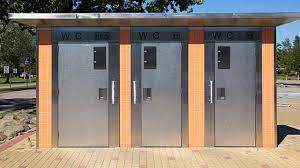
Ramgarh (Jharkhand), Three exclusive public toilets for transgender individuals have been opened in Jharkhand’s Ramgarh district in a bid to prevent discrimination and provide a safe space to members of the community, an official said on Saturday. The toilets were inaugurated at Ramgarh district collectorate park, Sadar hospital and bus stand on Friday, he said. “The transgender community has long faced social neglect and inconvenience, and the administration is committed to removing these barriers. The establishment of transgender toilets is an important step in this direction. It will ensure their comfortable presence in public places and prevent them from facing any kind of discomfort,” Ramgarh Deputy Commissioner Faiz Aq Ahmed Mumtaz said in a statement. The administration’s objective is to provide the transgender community with a dignified life, equal opportunities, social security, and self-reliance, he said. The DC directed all departmental officials concerned to ensure the effective implementation of the schemes being run in the interest of the transgender community and to work with sensitivity for the prompt resolution of their problems, the statement said. Members of the transgender community in Jharkhand have long been demanding separate toilets in public places. They had held a march in Ranchi last year to raise awareness about their rights and press for their demands, including employment opportunities, access to education, housing, separate toilets in public places and equal healthcare facilities. This report is auto-generated from PTI news service. ThePrint holds no responsibility for its content. Courtesy : The Print Note: This news is originally published on https:/theprint.com/bha and is used purely for non-profit/non-commercial purposes, especially human rights
In a first for the state, transgender woman elected in Chityala municipality

Hyderabad: For the first time in municipal elections in the state, a transgender woman has won a seat, with Nagilla Sudhakar elected from Ward 1 of Chityala municipality in Nalgonda district. The independent candidate defeated nominees of major political parties with a majority of over 100 votes. Sudhakar, alias Kaveri, secured 429 votes, while CPM’s Jitta Nagesh polled 327 votes. BRS candidate Rudravaram Yadaiah and BJP’s Rudravaram Linga Swamy secured 198 and 45 votes respectively. A resident of Shivanenigudem in Chityala municipality, Kaveri works as a labourer to earn her livelihood. “I will work for the development of the ward,” said the 45-year-old, adding that there are several problems in her ward that require immediate attention. “There is a dumping yard, because of which many residents in the ward are falling ill. I will ensure that it is relocated. Also, there are a few stretches without street lighting. I will also stand by the girl child by providing 10,016 at the time of their marriage,” she added. Kaveri also highlighted the monkey menace in her village. “Farmers and villagers are suffering because of the monkey menace. I will work towards finding a solution to address this problem as well,” she said, adding that she would stand by the villagers who supported her and ensured her victory. Kaveri studied at ZPHS, Chityala, but did not clear her class 10 examination. Chityala municipality has 12 wards. Of these, Congress candidates won nine wards, BRS won two wards, and the independent candidate, Sudhakar, won one seat. In Nalgonda district, there are six municipalities, including Miryalguda, Devarakonda and Chandur. Courtesy : TOI Note: This news is originally published on https:/timesofindia.com/bha and is used purely for non-profit/non-commercial purposes, especially human rights
Transgender lost life to save Rs 10 from snatchers

Bhubaneswar: Shocking details have emerged in the recent murder of a transgender person near Pipili in Puri district, with police revealing that the crime stemmed from an attempted snatching of a mere Rs 10 note. During interrogation, prime accused Krushna Kandi (25), who was arrested after being shot and injured in police firing on Wednesday evening, confessed that the motive was robbery. The victim, also 25, was stabbed to death after resisting three assailants, including Krushna. Police arrested Kandi’s associate Sanil Kandi (21) on Thursday, while efforts are underway to trace the third accused. Investigations revealed that the trio, hailing from Konark area, were returning from Uttara towards Pipili when they spotted the victim alone along the Bhubaneswar-Puri NH-316 in the evening on Feb 1. “On the pretext of interaction, the accused lured the victim to an isolated spot and attempted to snatch her purse. When she resisted bravely and tried to overpower them, one of them stabbed her,” said SP (Puri) Prateek Singh. Krushna reportedly admitted that the purse contained only a Rs 10 note, which they ultimately did not steal, police sources said. The case posed a major challenge for investigators as there were no eyewitnesses or CCTV footage nearby. “It was a blind case. IIC, Pipili police station, Soumyendu Tripathy and his team examined distant cameras, interrogated jailed criminals, analyzed intelligence inputs, and questioned the victim’s acquaintances before narrowing down on Krushna through our sources,” Singh said. On Wednesday evening, Krushna attempted to flee on a motorcycle. He allegedly opened fire at police during the chase, prompting controlled retaliatory firing in which he was injured. Police authorities confirmed his serious criminal background, with at least 13 cases of snatching, theft, and robbery registered against him across multiple police stations in Puri district, including Kumbharapada, Konark, Nimapara, Kakatpur, and Chandrabhaga, as well as Bhubaneswar’s Dhauli, Kharavel Nagar, Lingaraj, and Badagada areas. Courtesy : TOI Note: This news is originally published on https:/timesofindia.com/bha and is used purely for non-profit/non-commercial purposes, especially human rights
Transgenders eligible for Ayush card: Minister

Lucknow: Any transgender, who has a transgender card, is eligible for Ayush card, a cashless medical insurance worth Rs 5 lakh, social welfare minister Asim Arun said during the Question Hour on Thursday. The ex-IPS was replying to a supplementary raised by Jakhai MLA from Samajwadi Party Engineer Sachin Yadav, who earned the praise of Speaker Satish Mahana and the minister himself for raising such a sensitive issue. Arun claimed that this was probably the first in the past so many years that someone asked a question regarding the transgenders. Yadav said there are around 1.37 lakh transgender but they are not getting medical insurance and demanded that they should be covered with an Ayushman card. The minister said the transgenders are eligible for Ayushman card and added that until now only 1000 transgenders have got their transgender card made as per the Transgender Protection Act of the Union Government. More transgenders need to be sensitized and made aware about the transgender card, which the department is doing through a call centre which has two transgenders to address the problems of the community. The Speaker also praised the minister for giving a detailed and to the point reply to the supplementary. Courtesy : TOI Note: This news is originally published on https:/timesofindia.com/bha and is used purely for non-profit/non-commercial purposes, especially human rights
Transgender Equality: Court Decision on Transgender Rights in India

This report was published by the Centre for Law & Policy Research, Bengaluru, in December 2024. It presents an overview of the legal landscape of transgender rights in India by presenting case summaries of important judgments and their impact. In 2014, the Supreme Court of India in National Legal Services Authority v. Union of India (NALSA) ruled that transgender people have the right to self-determine their gender identity. This was protected under the constitutional guarantee of life, liberty and equality, and the freedom of expression given under Articles 21, 14, and 19 of the Indian Constitution. Following NALSA and the implementation of the Transgender Persons (Protection of Rights) Act, 2019, multiple cases have been presented to courts on issues of everyday challenges and rights violations. The purpose of this report is to provide access to such important judgements to multiple stakeholders advocating for and promoting transgender rights in India. This includes community members, activists, civil society groups, students and researchers, public officials and government, and other lawyers and judges. This 59-page document is divided into 3 sections: Introduction to the Legal Framework (Section 1); Key Definitions (Section 2); and Case Briefs on Transgender Rights (Section 3). Judgement summaries are further structured into 7 sub-sections: The Right to Self-Determination of Gender Identity; Right to Equal Opportunity in Public Employment; Legal Recognition of Change in Name & Gender; Right to Marriage; Family & Relationships; Criminal Law and Transgender Persons; Access to Education for Transgender Persons; and the Right to Social Security. The jurisprudence of transgender rights is largely based on NALSA in 2014, and other court judgments have extended the reach of fundamental rights as laid down in this case. This was followed by the enactment of Transgender Persons (Protection of Rights) Act, 2019 and the Transgender Persons (Protection of Rights) Rules, 2020. In NALSA, the Supreme Court expanded “sex” in Article 15(1) to include both gender and gender identity and prohibited discrimination on the grounds of gender identity and sexual orientation. The Court affirmed that every individual has a constitutional right to determine their gender identity as per Articles 14 and 15(1), and broadened the interpretation of Articles 19(1)(a) and 21 to include a person’s right to express their gender. Under Section 7 of the Transgender Persons Act, 2019, gender recognition is a two-step process: a trans person needs to apply for recognition as ‘transgender’, followed by medical documents that request a change of gender identity. As it mandates a two-step process, failing to acknowledge the Supreme Court’s NALSA ruling, this provision faced strong criticism from the transgender community and activists. The right to privacy was deemed to be constitutionally protected as per the Supreme Court in Retd. Justice K S Puttaswamy v. Union of India (2017). This was further extended in Navtej Johar v. Union of India (2016), where same-sex relations were decriminalised and Section 377 of the Indian Penal Code was held unconstitutional. In Mulla Faizal v. State of Gujarat (1999), the High Court of Gujarat distinguished between intersex and transgender persons and imposed a duty on authorities to facilitate the correction of name and gender in birth certificates. The case of Arunkumar & Others v. The Inspector General of Registration (2019) recognised that transgender individuals have the right to marry based on their self-identified gender, linking this right to Article 21 of the Constitution. However, the Supreme Court later, in Supriyo v. Union of India (2023), ruled that the right to marry is not a fundamental right for transgender persons, though it clarified that transgender people in heterosexual marriages must be acknowledged under current laws. Due to the binary understanding of gender within Indian penal laws, transgender individuals frequently face denial of legal protection. The Transgender Persons (Protection of Rights) Act, 2019, identifies specific offences and criminalises various forms of abuse – including physical, emotional, and sexual violence. Courts have ruled that laws addressing sexual violence and harassment must be applied inclusively and should not exclude transgender persons from their protection. In Ms. X v. State of Uttarakhand (2019), the court recognised the right to self-identify gender based on an individual’s inner identity or ‘psyche,’ even within criminal law. The judgment also affirmed that offences such as rape apply to transwomen. To address existing legal gaps, the Madras High Court in M. Srinivasan v. State upheld the right to self-identification and confirmed that sexual harassment laws extend to all individuals who identify as women. Section 3 of the Transgender Persons Act, 2019, prohibits discrimination against transgender individuals in educational settings, while Section 13 mandates that state-funded or recognised institutions provide inclusive education. However, despite the Supreme Court’s directive in NALSA to classify transgender persons as socially and educationally backward and grant them reservations, such provisions remain largely unimplemented. The Supreme Court in NALSA also instructed the central and state governments to develop social welfare programs aimed at improving the lives of transgender people. Under Section 8 of the Transgender Persons Act, 2019, the government is required to implement these welfare initiatives and ensure transgender persons can access them. Although some states have set up Transgender Welfare Boards, access to welfare schemes has been limited. Many states lack such programs entirely, and the inclusion of transgender individuals in pension schemes for vulnerable groups has often only been achieved through judicial intervention. Focus and Factoids by Prathima Appaji. PARI Library’s health archive project is part of an initiative supported by the Azim Premji University to develop a free-access repository of health-related reports relevant to rural India. Courtesy : PARI (People’s Archive of Rural India) Note: This news is originally published on https:/peoplesarchiveofruralindia.com/bha and is used purely for non-profit/non-commercial purposes, especially human rights