
Blood Donation Ban On Gays, Transgender Persons & Sex Workers Retained After Review : Centre Tells Supreme Court
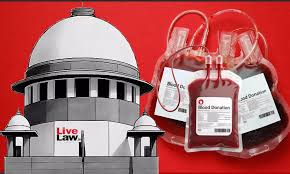
The Union Government informed the Supreme Court on Thursday that it has decided to retain the ban on blood donations by transgender persons, gay men, sex workers, after the experts revisited the earlier decision following a prodding by the Court. Additional Solicitor General of India Aishwarya Bhati informed the Court that the experts have reiterated that the ban was essential in the larger public interest. A bench comprising Chief Justice of India Surya Kant, Justice Joymalya Bagchi and Justice Vipula Pancholi was hearing a bunch of writ petitions which challenge the “Guidelines on Blood Donor Selection and Blood Donor Referral, 2017″issued by the National Blood Transfusion Council and the National Aids Control Organisation under the aegis of the Central Health Ministry. Clauses 12 and 51 of the said guidelines consider transgender persons, gay men and female sex workers as belonging to high-risk HIV/AIDS category and prohibit them from donating blood. Last year, the Court had asked the Centre to reconsider the ban. ASG Bhati stated today, “The experts have reconsidered, and there is a reconsidered opinion that, if this ban is diluted, it will be injurious to the recipients.” Senior Advocate Jayna Kothari, for the petitioners, argued that the reasoning of the committee has not been placed on record. She submitted that the decision was targeting a person merely on the grounds of sexuality and gender identity. CJI however expressed disinclination to interfere with the Centre’s decision. “Tell us one good reason that we should issue a direction. After all, there are millions and millions of poor people, who take free blood facilities. They cannot afford private hospitals. It is the poor strata of the people who are sustaining on this blood. Why this poor people should be…even if there is a one percent chance of any infection, why they should be affected?” Kothari replied that the one per cent chance of infection should not be for anybody. “The core issue is, once blood is donated by anybody, the blood donated has to be tested and then only used. In fact, after every blood donation is done, HIV testing is done. NAT testing is done,” Kothari said. Pointing out that donation and receiving of blood is voluntary, CJI said, “Whosoever wants your blood, and you are willing to donate, they will accept it.” Kothari replied, “Today, if a heterosexual married person wants to donate blood, that person is not asked a question when was your last unprotected sex. The risky behaviour is the unprotected sexual act. Not my identity. There can be a heterosexual person who may have had a risky act. Would that person’s blood not be risky?” Another counsel submitted that if NAT test is made mandatory, the risks can be addressed. CJI, terming it a “luxury litigation”, ultimately agreed to list the matter for hearing. There are 3 petitions pending before the Court, all filed by members of the LGBTQ+ community viz. Sharif D Rangnekar (author and former journalist), Thangjam Santa Singh (activist) and Harish Iyer (activist). In one of the cases (Thangjam Santa Singh), the Centre filed an affidavit in 2023 stating that there is substantial evidence to demonstrate that ‘transgender persons, men having sex with men and female sex workers are at risk for HIV, Hepatitis B or C infections’. It further claims that the determination of the population group that is to be precluded from being blood donors is prescribed by the NBTC (a body comprising medical and scientific experts) and is based on scientific evidence. The affidavit also avers that the issues raised fall within the ambit of the executive and are required to be considered from a public health perspective rather than an individual rights perspective. On the other hand, as per the petitioners, the 2017 guidelines infringe on the fundamental rights to equality, dignity, and life of members of the LGBTQ+ community as well as female sex workers. It is asserted that exclusion of the above class of persons, solely on the basis of their gender identities/ sexual orientation, is not only unreasonable but also unscientific. The petitioners aver that many countries, including the United States, United Kingdom and Canada have changed their rules to allow gay men to donate blood. The ban is based on outdated and biased views from the 1980s, following which medical technology has greatly improved, especially in blood screening, the petitioners state. In one of the petitions (Sharif D Rangnekar), a prayer has also been made for new guidelines that would allow gay men to donate blood, with some reasonable restrictions. It suggests public campaigns to inform society about risky behaviors and the updated guidelines. The petitioner also seeks changes in the syllabus of medical students in order to sensitize that gay men can donate blood. Courtesy : Live Law Note: This news is originally published on https:/livelaw.com/bha and is used purely for non-profit/non-commercial purposes, especially human rights
Census 2027 to collect data on transgender heads of Households bookmark_border text_fields
The Census will be conducted in two phases, with the houselisting stage recording the sex of the head of each household as male, female or transgender, the government told the Rajya Sabha. New Delhi: The upcoming Census 2027 will collect data on the sex of the head of households under three categories — male, female and transgender — the Rajya Sabha was informed on Wednesday. Minister of State for Home Affairs Nityanand Rai, in a written reply, said the Census will be conducted in two phases. The questions for the first phase, which covers the Houselisting and Housing Census, have already been notified During this phase, information related to housing conditions, household particulars including the name and sex of the head of the household, amenities available and assets possessed by the household will be collected. Rai said the sex of the head of the household will be recorded under three categories — male, female and transgender. He added that the questions for the second phase, known as Population Enumeration, where information about each individual will be collected, will be notified later. Rai said enumerators will carry out house-to-house visits across all enumeration areas to collect Census data and ensure that no one is excluded on any ground. He explained that the provision for self-enumeration will be offered as an additional facility for respondents to submit their information. However, enumerators will verify the self-enumerated data before final submission. The minister said the self-enumeration portal will include frequently asked questions, tool tips and validation checks to ensure the accuracy of the data provided by respondents. He further stated that several measures have been put in place to ensure data security while collecting information on mobile devices, during data transmission and at the server level. According to Rai, adequate training is being provided to all field officials involved in the Census, including enumerators and supervisors. Validation rules have been built into the mobile application to ensure data consistency and accuracy, while supervisors will monitor and verify the data collected by enumerators. The Union Cabinet has approved Rs 11,718 crore for conducting the Census of India 2027, which will also include caste enumeration for the first time. The exercise will be the 16th Census conducted since Independence and will be a fully digital process, offering citizens the option of self-enumeration. The decadal Census, originally scheduled for 2021, was postponed due to the COVID-19 pandemic. Courtesy : Madhyamam Note: This news is originally published on https:/madhyamam.com/bha and is used purely for non-profit/non-commercial purposes, especially human rights
India Moves To Broaden Legal Definition Of Transgender Persons. What Does It Mean?
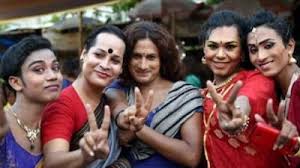
The amendment is also expected to spell out clearer criteria for identifying transgender persons, which the government says will help prevent misuse of the law’s provisions. The Union Cabinet on Tuesday approved a proposal to amend the Transgender Persons (Protection of Rights) Act, 2019, in a bid aimed at expanding the definition of transgender individuals in the country. As per reports, the proposed changes are intended to make the law more inclusive so that a broader range of individuals can access the rights, protections and welfare measures provided under the legislation. The amendment is also expected to spell out clearer criteria for identifying transgender persons, which the government says will help prevent misuse of the law’s provisions. Community leaders have consistently raised concerns regarding the implementation of the law, prompting ongoing discussions around its effectiveness. The Supreme Court has also voiced concerns regarding delays in implementing the law provisions. While the Cabinet has approved the proposal, detailed provisions of the amendment have not yet been made public. The Transgender Persons (Protection of Rights) Act, 2019, which came into force on January 10, 2020, provides legal recognition to transgender individuals, prohibits discrimination and mandates welfare measures for the community. The rules for implementing the law were notified in September 2020. Under the current law, a transgender person is defined as someone whose gender identity does not match the gender assigned at birth. Section 2 of the Act provides crucial definitions regarding who qualifies as a transgender person. The definition includes trans men and trans women, persons with intersex variations, gender queer individuals, hijra and others. The law applies regardless of whether a person has undergone sex reassignment surgery or hormone therapy. It also requires transgender persons to go through a district magistrate and district screening committee to get certified as a trans person. According to the 2011 census there are more than 4.80 lakh transgenders in the country. As per the reports, the proposed amendment aims to bring greater clarity to the definition and ensure that genuine beneficiaries receive the protections and benefits provided under the law. Curated By : Shobhit Gupta Courtesy : News18 Note: This news is originally published on https:/news18.com/bha and is used purely for non-profit/non-commercial purposes, especially human rights
Transgender Students Ke Liye Universities Mein 100% Fees Maaf

Government of Maharashtra ne transgender community ke students ke liye ek important decision liya hai. State ki public universities mein transgender students ki 100% academic fees maaf kar di gayi hai. Maharashtra ki sabhi public universities mein transgender students ko poori tarah free education milegi. Universities ko instruction diya gaya hai ki academic fees apne funds se cover karein. Government ka aim hai ki transgender students ko equal opportunity aur dignity ke saath education mile. Financial problems ki wajah se jo students padhai chhod dete hain, unko bhi higher education pursue karne ka mauka milega. Courtesy : Galli News Note: This news is originally published on https:/gallinews.com/bha and is used purely for non-profit/non-commercial purposes, especially human rights
Nod to changes to widen transgender definition

NEW DELHI: Cabinet Tuesday approved a proposal to amend the Transgender Persons (Protection of Rights) Act, 2019, seeking to expand the definition of transgender persons in what is being cited as an attempt to make the law more “inclusive” so that all bona fide persons receive benefits and protection. There has been debate over the implementation of the law, with community leaders raising concerns from time to time. Even Supreme Court has expressed concern over the tardy implementation of the law. While no official details of proposed changes were shared Tuesday, TOI has learnt that the bill proposes to bring clarity to the definition of transgender persons compared to the current provision. Officials said the bill proposes that the criteria for identifying transgenders would be spelt out more elaborately and ensure there is no misuse of provisions. The Transgender Persons (Protection of Rights) Act, 2019, which came into effect on Jan 10, 2020, lays down provisions to provide legal recognition, prohibit discrimination, and mandate welfare measures for transgender individuals. The rules to implement the law were notified on Sept 25, 2020. Sec 2 of the law deals with definitions and states that a “transgender person” includes trans-men/women, intersex persons, gender queer individuals, hijra and others, irrespective of surgery. “A ‘transgender person’ means a person whose gender does not match with the gender assigned at birth and includes trans-man or trans-woman (whether or not such person has undergone sex reassignment surgery or hormone therapy), person with intersex variations, genderqueer and persons having such socio-cultural identities as kinner, hijra, aravani and jogta,” the law states. Courtesy : TOI Note: This news is originally published on https:/timesofindia.com/bha and is used purely for non-profit/non-commercial purposes, especially human rights
‘Sickening’: Meghalaya CM condemns assault on Manipur woman, Assam transgender person in Delhi park

Meghalaya Chief Minister Conrad Sangma on March 9 strongly condemned an alleged racial assault on two people from the Northeast in New Delhi, describing the incident as “sickening” and urging authorities to take stringent action against the perpetrators. The alleged attack took place near the Saket District Court Complex in the Malviya Nagar area on Sunday evening, where a young woman from Manipur and a transgender person from Assam were reportedly assaulted by a group of men in a park, raising fresh concerns over the safety of Northeastern residents in the national capital. Reacting to the incident, Sangma said he was angered by the repeated attacks on people from the Northeast living in mainland India. “The physical attack on two of our people from Manipur and Assam near Saket Court, Delhi is sickening. Racial bullying should not be accepted as the new normal and we must act against it. Urge the authorities to take stringent action,” the chief minister wrote on social media. According to preliminary accounts, the victims were taking a walk in the park near the court complex when a group of youths allegedly began passing racially derogatory remarks at them. When the woman objected to the comments, the situation reportedly escalated into a confrontation. The victims alleged that the group then physically assaulted them, punching them and striking them with belts while hurling abusive slurs. One of the assailants allegedly used derogatory terms during the altercation. Sources also indicated that the victims had faced similar verbal harassment in the locality on earlier occasions. In a statement, the Delhi Police confirmed that a team responded to information about an alleged assault near the Saket court complex. According to the police, the woman from Manipur and her friend were walking in the park when a group of men passed remarks at them, leading to an argument. “When one of the girls objected to the comments, the situation escalated and she was reportedly assaulted by the accused,” police said. The injured woman was later taken to Safdarjung Hospital for medical examination and treatment. Authorities said that, according to preliminary reports, she is in stable condition and has suffered minor injuries. Police officials said they are in constant touch with the victims and assured that strict action would be taken against those responsible. The matter is currently under investigation. The incident comes just days after another case of racial abuse in the capital sparked widespread outrage. In that case, a Delhi resident, Harsh Singh, was booked for allegedly racially abusing three women from Arunachal Pradesh following a dispute over repair work at their rented apartment. The back-to-back incidents have renewed concerns about racial discrimination faced by people from Northeast India in metropolitan cities and prompted calls for stronger enforcement of laws against hate crimes and harassment. Courtesy : India Today NE Note: This news is originally published on https:/indiatodayne.com/bha and is used purely for non-profit/non-commercial purposes, especially human rights
Ernakulam district panchayat to train transgender persons in cosmetology

The initiatives focus on ensuring equitable access to basic needs such as employment and healthcare support, thereby creating sustainable livelihood opportunities for the community In an effort to make panchayats more inclusive and responsive to the needs of the transgender community, the Ernakulam district panchayat will implement projects to promote their welfare, dignity, and empowerment. The initiatives focus on ensuring equitable access to basic needs such as employment and healthcare support, thereby creating sustainable livelihood opportunities for the community. Discussions have already been held with members of the community. “One of their major concerns is finding a safe and secure workplace. The stigma they face from society, including in workplaces, needs to be addressed. We must ensure their holistic well-being so that they can lead a more dignified life,” said district panchayat president K.G. Radhakrishnan. As a pilot initiative, focus will be given to training individuals interested in starting their own entrepreneurial ventures. “A large section of the community have expressed interest in cosmetology. Training in cosmetology will be provided free of cost, while a subsidy will be provided to set up business ventures. Some are interested in setting up cafes. We will look at individual interests and formulate a programme,” he said. In the healthcare sector, the panchayat will go ahead with the ‘Marivillu’ programme, but starting this year, medicines will be offered through transgender clinics. Post-operative and hormonal medicines will be provided free of cost. The civic body is also planning to bring the members of the community under one umbrella. A challenge faced by the community is that a significant percentage of the them are living without disclosing their identities. “They are a highly scattered group. Most of them have arrived from different districts and have settled in Ernakulam. We can only include those residents belonging to our panchayats under our welfare schemes. We are considering how to address this,” he added Courtesy : The Hindu Note: This news is originally published on https:/thehindu.com/bha and is used purely for non-profit/non-commercial purposes, especially human rights
Trans “trusted sisters” in India bring healthcare to over 1,500 migrant kids
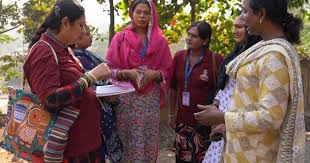
Twelve “Sakhee didis” were recruited for an innovative vaccination program. For two years in slum neighborhoods outside Mumbai in India, a group of trans women known as “Sakhee didis,” or trusted sisters, have been on a mission to vaccinate migrant children in the densely populated settlements. Twelve trans residents in the neighborhoods were recruited by two groups — NGO ZMQ and Gavi, the Vaccine Alliance — for the “Sakhee Project,” to educate and raise vaccination numbers among a population of mostly Muslim migrants from other Indian states. “People thought we had bad intentions,” recalled Tulsi Agarwal, one of the transgender women staffing the project. “Some even believed we would kidnap their children and turn them into eunuchs.” Trans women have conflicting reputations in India, as both modern-day outcasts and ancient bearers of blessings and good fortune for families and communities. Early days of the two-year pilot program were devoted to changing one estimation for the other. “We are always seen as beggars or troublemakers,” said Amrin Khan, another Sakhee didi. “We don’t get respectable jobs. This was a chance to earn with self-respect – but more than that, it was a chance to serve society.” Wadia Qureshi, another member of the group, said the Sakhee didis “were determined to make ourselves useful in a noble mission.” Program organizers recognized unique traits among trans women that would be helpful in the outreach effort. They were fluent in multiple languages and deeply embedded in informal neighborhood networks. The women often knew when a child was born or when a mother was pregnant before the formal health system did. And cultural skills — like storytelling, singing, and humor — could help turn intimidating public health messaging into “conversations that felt familiar rather than threatening,” organizers said. “Urban slums are crowded and complex,” said Hilmi Quraishi, founder of ZMQ. “Migrant families often fear authorities, especially if they lack documents. The program succeeded because it recognized strengths that already existed within the transgender community. We needed a bridge between the health system and the community.” “At first, we were chased away,” Amrin Khan said. “Later, people started inviting us in, offering us tea, and asking for advice. They would say, ‘Come in, sister. Sit down and talk.’” 1,500 children received life-saving vaccines over two years, with the Sakhee didis visiting approximately 40 households every day. Health workers reported they reached families they wouldn’t have otherwise. “They made our work much easier,” said Yasmeen Khan, an auxiliary nurse and midwife. “When we went with them, people opened up. They were excellent communicators and played a crucial role in overcoming vaccine hesitancy.” NGO ZMQ hasn’t said if a permanent program will follow the successful pilot, but the innovative outreach has changed the lives of migrant children and the Sakhee didis alike. The women said the work gave them a sense of legitimacy they hadn’t known before. “Earlier, people avoided us,” one worker said. “Now, when we talk about children’s health, they listen.” Subscribe to the LGBTQ Nation newsletter and be the first to know about the latest headlines shaping LGBTQ+ communities worldwide. Greg Owen writes about politics and culture for LGBTQ Nation. An award-winning writer, producer and journalist, he was recently recognized for Excellence in Online Journalism by NLGJA: the Association of LGBTQ Journalists for his coverage of the 2024 election. He’s written for Q Digital since 2015 and for LGBTQ Nation since 2022. Author Greg Owen Courtesy : LGBTQ Nation Note: This news is originally published on https:/lgbtqnation.com/bha and is used purely for non-profit/non-commercial purposes, especially human rights
A Group of Trans Women in India Helped Vaccinate Almost 1,500 Children
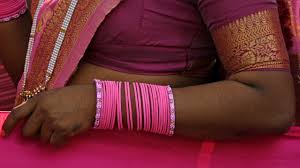
“People started inviting us in, offering us tea, and asking for advice,” one trans woman involved in the campaign said. A group of transgender women in India helped vaccinate nearly 1,500 children over the past two years as part of a non-governmental pilot program, organizers reported this week. The Sakhee Project, which launched in April 2023, sought to improve vaccination rates and health outcomes for migrant communities in the Indian state of Maharashtra. The program was operated by the nonprofit non-governmental organization ZMQ Development and funded by the international health partnership Gavi, per a post about the project on Gavi’s website published Thursday. Looking to combat vaccine skepticism and mistrust of officials among migrant residents — especially those who are undocumented — organizers enlisted trans women to bridge the communication gap. Members of the trans cohort were collectively dubbed “Sakhee didi” (a common Hindi phrase denoting a trusted sister-like friend), and were trained to go door-to-door providing vaccine information and accompanying health workers to perform immunization. “Migrant families often fear authorities, especially if they lack documents,” ZMQ founder Hilmi Quraishi explained, per Gavi. “We needed a bridge between the health system and the community.” Two years later, the Sakhee didis have filled that role, helping vaccinate almost 1,500 children in Maharashtra by reaching about 40 households per day, according to Gavi’s report. Across three cohorts of children, all had received at least one vaccination dose since 2023, and community members reportedly adhered to vaccination schedules more consistently. Despite early incidents of mistrust and abuse directed at the women, including fears that they would kidnap and injure children, community attitudes shifted over time, some of the workers recalled. “At first, we were chased away,” said, Amrin Khan, one of the women who acted as a Sakhee didi. “Later, people started inviting us in, offering us tea, and asking for advice. They would say, ‘Come in, sister. Sit down and talk.’” That’s a significant shift for trans people in India, who face heavy marginalization, stigmatization, and violence. As many as 80% of trans women in the region rely on sex work or begging to survive, Indian trans activist Abhina Aher told Open Democracy in 2023. The organizers and workers of the Sakhee Project hoped that the program would provide better work opportunities and a chance to push back against common anti-trans prejudice — and appear to have succeeded. “They [the Sakhee didis] made our work much easier,” nurse and midwife Yasmeen Khan told Gavi. “When we went with them, people opened up. They were excellent communicators and played a crucial role in overcoming vaccine hesitancy.” Unfortunately, it’s not clear what the future holds for the Sakhee didis or the life-saving initiative they made possible. Gavi’s report noted that the project, described as a two-year pilot program, “has since ended,” and did not provide information about any plans for its future. Them contacted ZMQ via its website for further details, but did not immediately receive a reply. Economic and social opportunities are slowly opening up for trans people in India, though discrimination and abuse are still common. In 2021, another nonprofit organization chose Maharashtra as the site for Kinnar Vidyalaya, a school providing free education specifically for trans students of all ages. The following year, the Indian Department of School Education and Literacy hired three trans teachers for government school positions for the first time in history. Here’s hoping the celebrated Sakhee didis can likewise start well-deserved careers in public health soon. By Samantha Riedel Courtesy : Them Note: This news is originally published on https:/them.com/bha and is used purely for non-profit/non-commercial purposes, especially human rights
Catholic Church in India reaches out to transgender community
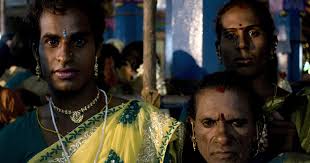
The Catholic Church in southern India has launched a new pastoral initiative for the transgender community. The archbishop of the Roman Catholic Archdiocese of Madras and Mylapore formally inaugurated a dedicated “Catholic Desk” for transgender persons during a parish visit to Kadarkarai Sagaya Madha Church in Ennore, a coastal district of Chennai, on February 26. The opening followed the blessing of newly completed parish facilities and is understood to be the first structured ministry of its kind within the archdiocese. Church officials indicated that the initiative is intended to offer practical assistance as well as spiritual accompaniment. Among the services envisaged are help with employment opportunities and access to professional counselling, which diocesan representatives described as part of a commitment to uphold human dignity while responding to acute social vulnerability. India’s transgender population is estimated at around half a million. Many belong to the Hijra community, officially recognised in several South Asian countries as neither exclusively male nor female, drawing on Hindu, Islamic and local traditions. Historically, they have occupied ritual roles at births and weddings. Previously, in 2017, clergy, Religious and lay leaders in Kerala established a support network under the aegis of Pro-Life Support, a Church-based social service movement aimed at addressing pastoral and social needs among transgender people in that state. The initiative followed public remarks by Pope Francis urging pastoral care for those who identify as LGBT, comments cited by clergy in India seeking to expand outreach. Kerala has since witnessed a series of practical measures involving Catholic institutions. Religious sisters from the Congregation of the Mother of Carmel made premises available for an educational project for transgender school dropouts after numerous landlords reportedly declined to rent space for such a venture. Caritas India, the Church’s charitable arm, has also announced programmes designed to counter discrimination and promote social inclusion. Activists in Kerala have acknowledged Church support for pilot educational schemes, arguing that religious institutions can exert influence at grass-roots level in shaping social attitudes. Such cooperation has not been without controversy in a country where questions of gender identity intersect with deeply rooted religious traditions and where Christian communities themselves constitute a minority. The Hijra identity predates Christianity’s arrival in India and is intertwined with Hindu mythology. Devotion to the goddess Bahuchara Mata and the composite deity Ardhanarishvara, a form of Shiva embodying both masculine and feminine aspects, remains significant within parts of the community. The Catholic Church teaches that every human person is created in the image and likeness of God, male and female, and possesses an inviolable dignity that no circumstance can erase. Magisterial teaching holds that sexual difference is not incidental but constitutive of the human person. For that reason, the Church has rejected theories that detach gender from biological sex or propose a self-defined identity independent of the body. In 2023 the Dicastery for the Doctrine of the Faith reiterated that so-called “gender ideology” obscures the reality of sexual complementarity and risks reducing identity to subjective construction. Although no magisterial document addresses the South Asian Hijra community specifically, the Church’s universal moral teaching applies. Cultural expressions of a “third gender”, including practices historically associated with ritual castration or religious symbolism drawn from pre-Christian traditions, would be judged incompatible with Christian tradition, which affirms the integrity of the sexed body as part of God’s design. The Church does, however, insist that all people are treated with respect and made in the image and likeness of God. Therefore, pastoral programmes which seek to mitigate the plight of the socially downtrodden and excluded, which much of India’s Hijra community are, can be seen as expressions of this teaching. Courtesy : The Catholic Herald Note: This news is originally published on https:/thecatholikherakd.com/bha and is used purely for non-profit/non-commercial purposes, especially human rights