
The dangerous logic of the Transgender Persons Amendment Bill 2026
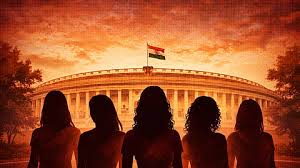
Considering these multitudes of historical contexts, the current Amendment Bill, if incorporated into an Act, will prove detrimental and disastrous to the quality of life, housing, healthcare, and employment of thousands of transgender people. In 2014, the Supreme Court of India ruled in favour of the transgender community in NALSA vs. Union of India, the landmark judgment which granted official recognition to all the citizens of the country who identified out of their assigned sex at birth, to lead dignified lives under the gender marker of their choice: transgender, female, or male. In retrospect, this was the most and only dignified recognition the community ever received in this country, because what followed later was no less than a nightmare. Soon after, without consulting the transgender community, Transgender Persons (Protection of Rights) Bill 2016 was introduced, which was met with nationwide protests. Then an amended version of the same Bill was presented and later passed as an Act in 2019. This, after further community interference, was followed by the Transgender Persons (Protection of Rights) Rules in 2020. As the rules were drafted in consultation with the community, they preserved the SC granted right to self-identify, which, after a decade, has now come under attack by the so-called “protective” Amendment Bill of 2026. The current set of amendments, while appearing “ambitious” to eradicate “unauthentic” or “fake transgenders,” is attempting to formalise categories that didn’t come into existence as a result of a systemic nomenclature. Rather, all these communities in their regions came into being as a result of the rejection of transgender individuals by their natal families and subsequent ostracisation from the rest of society. On the surface, it may look like the transgender community, once segregated under the Criminal Tribes Act of 1817 under the British Raj, especially the Hijras, Kwajasiras, and Kinnars, is being promised a restoration of their “glorious past.” But in reality, this Amendment Bill betrays them in its criminalisation clauses. The Bill, in vague language, penalises “coercion into sex change”, which, if found guilty, is to be met with life imprisonment and Rs 1.2 lakh fine. This clause can be easily misinterpreted and even weaponised — by natal family members who reject their wards’ gender identity and decision to transition or join a Hijra Gharana — against the very same members whom the Bill claims to protect. So even the Hijras are not guaranteed absolute immunity; rather, what awaits them would be life imprisonment in a country where corrective facilities still lack transgender cells. This Bill limits access to the “Transgender” marker on official documents, and to associated policies and social benefits to members of North-Indian socio-ethnic transgender communities like the Hijras and Kinnars. Alongside the self-proclaimed protection of socio-ethnic trans groups, the Bill also forces intersex individuals into the “Transgender” category, even those who do not wish to be identified as transgender or prefer to be known as a male or female. The inclusion of just two other regional communities, Aravanis and Jogta, is, at best, a performative failure. There is no provision for an exhaustive schedule for all the regional communities, such as Thirunangai, Thirunambi, Thirunar, etc., from Tamil Nadu, or the Nupi Maanbis of Manipur. There is also consideration for southern states like Keralam, where transgender individuals are at risk of a lexically induced social erasure as a result of this Bill, because identitarian labels are absent in their native language, Malayalam, making them rely on English equivalent labels to be seen as members of the society. This Bill can lead to a translational and linguistic catastrophe, as it rests state validation on the backs of select community labels, largely founded in Hindi/Sanskrit-majoritarianism. Moreover, for the transgender community in the Southern States of India, this is concerning on an additional note of the 2026 Delimitation, as it puts their stakes in state-gender representation nexus in the Rajya Sabha at a double-fold risk. So the power we have now to oppose the Bill might not be there after it is incorporated into the Act. There is also a lesser-known community awareness that sometimes former members of the Gharana system, after experiencing power struggles and casteism, often escape the violent, unequal structure just as they escaped their natal family violence, and they all exist in our country as non-hijra transpeople, which this bill refuses to shelter. Then there are transmen and non-binary citizens who don’t have a historically recognised, socio-cultural representation, yet they survive the same natal violence, which is well documented in “Apnon ka Bohot Lagta Hai: Our Own Hurt Us the Most,” as testimonials from an open court hearing held in 2023. The “think tanks” (if any were involved) could have deduced the amendment’s dangerous impact from the first 20 pages of this report. Furthermore, neither the members of the National Transgender Welfare Board nor their state-level committees were consulted before drafting the Bill, which is evident in its regressive stance. This Bill clearly directs towards a monopoly of religious, regional, and gender biases in legislative, policy-making, and political decisions — all of which are unconstitutional. Considering these multitudes of historical contexts, the current Amendment Bill, if incorporated into an Act, will prove detrimental and disastrous to the quality of life, housing, healthcare, and employment of thousands of transgender people. Transgender is an umbrella term; let’s not break its spine, and let decades of hard work, care, and resilience wash down the drain. Finally, following lazy American and British anti-trans scripts should be recognised, shamed, and retaliated against with awareness, pride, and freedom. In a country whose freedom was fought for, let the transgender people be free of colonial aftertaste, live as they choose to live, love, and be. Written by:Anasuith P Pridhvish Anasuith is a Sahitya Akademi-published Scholar of Language and Gender, and works as an Associate Education Consultant in New Delhi. She graduated from Ashoka University with a PG Diploma in Liberal Studies and an MA in English, and writes on transgender experience, the partition, and translation. Views expressed are the
Hyderabad: Activists condemn Transgender Persons Amendment Bill 2026
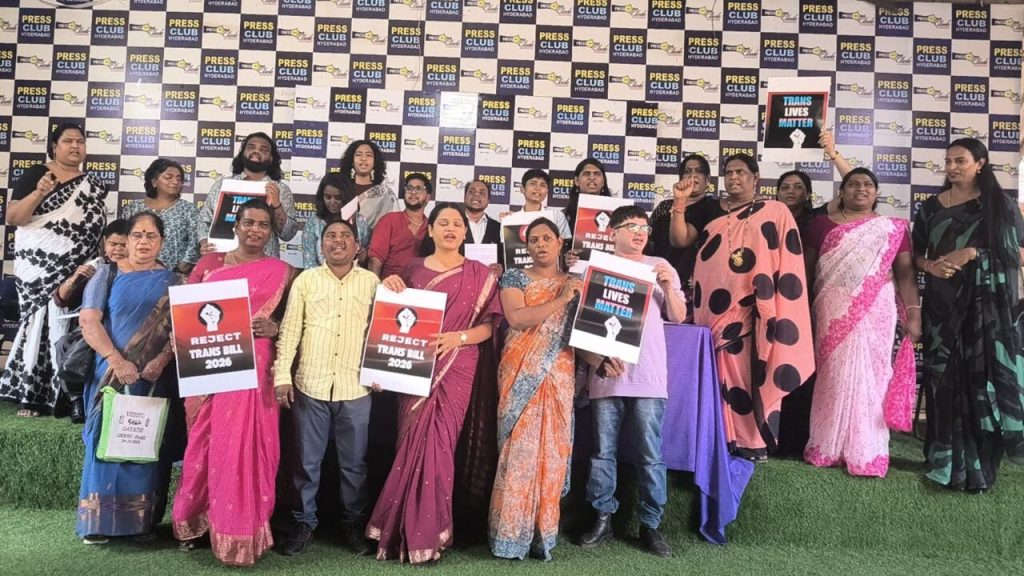
They also pointed out the “alarming” criminal provision in the bill under Section 18 that allows imprisonment of up to five years for “alluring” or “forcing” someone to become transgender. Hyderabad: Transgender, intersex, gender nonconforming, queer individuals, collectives, and allies in Hyderabad formally opposed and condemned the Transgender Persons (Protection of Rights) Amendment Bill, 2026, that was introduced in the Lok Sabha on March 13 by Union Minister for Social Justice and Empowerment Dr. Virendra Kumar. The Hyderabad community of activists called on lawmakers to withdraw the Transgender Persons (Protection of Rights) Amendment Bill, 2026 immediately and “without condition”. “Any future amendment must retain the definition of “transgender person” as established in the 2019 Act, uphold the right to self-identification as affirmed by NALSA (2014) vs Union of India, and K. S. Puttaswamy (Retd) and Anr. vs Union of India (2017) judgements, and be developed only through meaningful, democratic consultation with transgender communities across India,” they said. At a press confere in Hyderabad on Tuesday, MArch 17, the community said that the bill threatens to undo over a decade of hard-won legal protections. Stating that it is a step backwards for constitutional rights, transgender, intersex, gender nonconforming, and queer communities in Hyderabad unequivocally stated that it erases entire identities, mandates invasive medical procedures, criminalises community support networks, and creates a two-tier citizenship where legal existence depends on access to surgery. “It is not a reform. It is a reversal of the Supreme Court’s NALSA judgment, of the 2019 Act, and of decades of hard-won constitutional protections. The amendment proposes to replace self-identification with mandatory medical certification by a government-appointed District Medical Officer, with no defined criteria, no transparency, and no accountability. Medically, there is no biological marker that confirms or denies transgender identity,” said a statement from the activists. Community members and activists said that the current bill also introduces a provision under which a person undergoing gender-affirming surgery has to report it to the District Magistrate, which violates the constitutionally provided fundamental right of privacy. “Forcing individuals through physical examinations to “prove” their gender is not only scientifically baseless but also deeply traumatic and unconstitutional,” added the statement. They pointed out that the bill is “particularly” alarming because it erases entirely the identities of people, and restricts the definition of “transgender person” to a narrow set of socio-cultural identities and intersex variations. Activists added that the bill excludes trans men, trans women who are not part of socio-cultural communities, non-binary individuals, genderqueer people, and gender-diverse persons across India. At the press briefing, activists also said that trans men will be “rendered entirely invisible as they will have no socio-cultural framework recognised by the bill. “They face deep marginalisation already because they are assigned female at birth and carry the burden of presenting as a woman compulsorily and cannot safely come out in many contexts. This bill worsens each of those realities,” added their statement. The bill gives offers legal recognition only via medical intervention, which forces individuals toward surgeries they may not want, cannot access, or are medically unable to undergo, said the activists. ‘Criminalisation Is Not Protection’ The activists from Hyderabad also pointed out an alarming criminal provision in the Transgender Persons Amendment Bill 2026, under Section 18 that allows imprisonment of up to five years for “alluring” or “forcing” someone to become transgender. “There is no credible evidence that such conduct exists as a social pattern. What does exist and what this provision threatens is the vast community support network that transgender persons rely on: fundraisers, temporary housing, help escaping abusive households, access to therapy, and gender-affirming healthcare,” they stated. The statement said that providers of gender-affirming care, supportive parents, and community members who have historically protected and nurtured transgender individuals now face the risk of criminalisation. “This echoes the legacy of colonial-era laws such as the Criminal Tribes Act of 1871 and the Telangana Eunuchs Act of 1919 which are laws that treated gender-diverse communities as inherently devious and criminal,” it added. Yunus Lasania Courtesy : TSD Note: This news is originally published on https:/thesiasatdaily.com/bha and is used purely for non-profit/non-commercial purposes, especially human rights
Free bus ride for transgender persons as Delhi govt extends ‘Pink Card’ for community
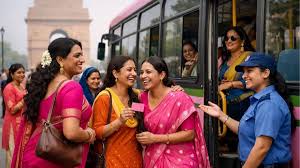
In a bid to enhance inclusiveness, the Delhi government on Monday announced that members of the transgender community living in the city will now be able to travel free of cost on all buses operated by the Delhi Transport Corporation (DTC) and the Transport Department’s cluster bus network. The decision was approved during a Cabinet meeting chaired by Chief Minister Rekha Gupta at the Delhi Secretariat on Monday. The Cabinet has cleared a proposal to include transgender passengers in the existing free bus travel scheme across all DTC and cluster bus routes. The facility will be implemented in the same manner as the free travel scheme currently available for women in Delhi’s buses, the CM says. Under the plan, eligible transgender residents of Delhi will be able to avail themselves of free travel in DTC and cluster buses. To qualify, beneficiaries must be residents of Delhi and possess a valid certificate of identity issued by the District Magistrate (DM) concerned. This certificate is issued under Sections 5 and 6 of the Transgender Persons (Protection of Rights) Act, 2019. Calling the decision an important step, the CM said the initiative aimed to make public transport more accessible, safe and respectful for the community. She notes that true inclusive governance is achieved when the government recognizes every community with dignity and ensures equal access to public services. “This initiative will help connect the transgender community more strongly with the mainstream and reduce the practical challenges they face in their daily lives,” she said. The Chief Minister expressed confidence that the initiative will make it easier for members of the transgender community to travel for employment, education, healthcare and other essential needs. At the same time, she added, the decision would also send a strong message of sensitivity and equality within society. The government will continue to promote policies and initiatives that strengthen social justice, equal opportunity and human dignity. BHow transgender persons will get the Pink CardB Under the scheme, members of the community will first need to obtain a transgender identity certificate from the District Magistrate. Once they receive this certificate, they can apply for the Pink Card at around 50 designated centres, including offices of District Magistrates, Sub-Divisional Magistrates (SDMs), and selected DTC centres. The card will be issued based on minimal documentation and will be linked to the beneficiary’s mobile number and Aadhaar. Aadhaar verification will be used to confirm the applicant’s age (above five years) and Delhi residency, ensuring eligibility and preventing duplication. After receiving the Pink Card, transgender individuals will be able to travel free of cost in DTC buses, similar to the facility available to women. The same smart card can also be used to pay fares while travelling on the Delhi Metro, RRTS and other public transport services. Courtesy : The Tribune Note: This news is originally published on https:/thetribune.com/bha and is used purely for non-profit/non-commercial purposes, especially human rights
Transgender communities across India demand withdrawal of Bill to redefine trans people
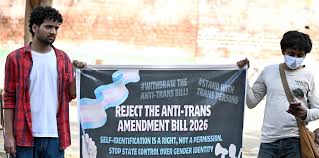
Add Your Heading Text HereThe Centre’s action led to protests and public meetings within the transgender community across cities such as New Delhi, Pune, Hyderabad and Kolkata, calling for protecting the right to self-perceived gender identity The Union government’s proposed legislation to withdraw transgender people’s right to “self-perceived gender identity” and redefine who a “transgender person” is, has led to student protests and public meetings within the transgender community across cities such as New Delhi, Pune, Hyderabad and Kolkata, calling for the government to withdraw the Bill and protect the right to self-perceived gender identity. This has come even as spontaneously formed coalitions of civil society groups, lawyers, doctors, activists, and other professionals in cities such as Guwahati, Chennai, Varanasi, Bengaluru, and several others are planning campaigns to write to MPs, organising awareness and support group meetings, and strategising over how to register their opposition to the proposed legislation. A public petition has also been initiated online, calling for the withdrawal of the Bill, gathering over 13,000 signatures as on Monday evening. Karnataka transgender coalition writes open letter to Prime Minister opposing Amendment Bill On Friday, Social Justice Minister Virendra Kumar introduced the Transgender Persons (Protection of Rights) Amendment Bill, 2026, proposing widespread amendments to the law enacted in 2019. At the Indian Women’s Press Corps in New Delhi, a similar coalition of people from the transgender community, lawyers, activists, and rights-based organisations came together for a press conference, calling the amendments “discriminatory and unjust”, arguing that the government was “snatching back” a right recognised in 2014, and that this is not “how a democracy functions”. In the 2014 NALSA judgement, the Supreme Court had laid down the law that the right to self-identification of gender fell under the ambit of personal liberty, a fundamental right guaranteed under Article 21 of the Constitution. ‘Trans rights being pushed back by a decade’: Community members oppose proposed transgender law changes Devansh, a transman who was on the panel for the coalition, said, “After a long fight, in 2014, the government gave us recognition. With that recognition, we moved ahead with our lives, took very important decisions, such as starting the process of gender-affirming surgery, and getting transgender cards made. We came out to the world that we are transgender. After 12 years and all these important decisions, you stop recognising us. Where are we supposed to go now?” Open letter to PM In Karnataka, people from the transgender community came together under the banner of the Karnataka State Gender and Sexuality Minorities Coalition for a press conference in Bengaluru. This coalition also issued an open letter to Prime Minister Narendra Modi on Monday, saying, “Passing this amendment will put in jeopardy the rights of thousands and millions of persons who are currently recognised as transgender.” They added that instead of expanding the rights of trans people, the proposed legislation “contracts it”. Grace Banu, a community leader based in Chennai, said a press conference was being held at the Chennai Press Club on Tuesday to register the community’s opposition to the proposed amendments, while community leaders in cities like Varanasi said similar strategies were being planned in their cities. Transgender activists in Guwahati also said they were currently holding discussions within the community on how to organise against this proposed legislation. Akkai Padmashali of the Karnataka coalition said, “We are also organising protests and public meetings in Bengaluru against these proposed amendments.” On Saturday, the Mumbai Queer Pride issued a statement opposing the proposed amendments, calling the shift in the government’s approach a “regressive step that undermines established constitutional protections and reverses the progress made toward inclusive citizenship”. “Reject Trans Bill 2026”, another coalition of civil society, human rights activists, lawyers, and other professionals that came up during the weekend, put out a collective statement condemning the Bill as well. Meanwhile, a Students’ Federation of India-led protest against the amendment Bill in New Delhi also submitted a memorandum to Mr. Virendra Kumar, seeking the Bill’s withdrawal. At the Delhi presser, Krishanu, a transwoman and queer activist, spoke of the Section on offences against transgender people that criminalised “compelling” children to “outwardly present a transgender identity”. She explained that such words give the impression that a transgender adult or child is not exercising consent while expressing their gender. “This then criminalises anyone who is helping them transition, or with identification, or expression,” she said. She added that the amendment Bill “misconstrues the ideas of what transgender and intersex bodies look like, by conflating them into one.” The panelists also spoke about how the amendments suggest they had to be part of gharanas and communities to be considered transgender, referring to the recognition of “socio-cultural identities as hijra, kinner, aravani, jogta, and eunuch” in the proposed definition. Ritu, a transwoman, said, “I don’t have to be part of a gharana or community to be trans. These structures were built because society had no other place for us.” Elaborating on this, Raghavi, a transwoman and a lawyer, said, “Essentially, you are saying that trans persons stay within that fold, and do not go beyond.” The panelists argued that gharanas have their own challenges, and that these communities are usually associated with transwomen, further invisiblising transmen. Fiza Sultana, a Muslim transwoman, who was among the audience, shared that a few transgender persons have started an organisation to address issues this amendment poses for Muslim and Dalit trans people. “A lot of the identities mentioned here are from Savarna Hindu cultures. Other socio-linguistic categories exist, too.” Ashna Butani,Abhinay Lakshman Courtesy : The Hindu Note: This news is originally published on https:/thehindu.com/bha and is used purely for non-profit/non-commercial purposes, especially human rights
‘Trans rights being pushed back by a decade’: Community members oppose proposed transgender law changes

Proposed amendments to the Transgender Persons (Protection of Rights) Act, 2019 could push transgender rights in India back by nearly a decade by diluting the principle of gender self-identification as recognised by the Supreme Court in the landmark National Legal Services Authority v. Union of India, activists have warned. The amendment, recently introduced in Parliament, proposes changes to how transgender identity is defined and recognised under the law. According to the proposal, recognition of transgender identity may require verification through official procedures, including possible medical scrutiny, before authorities issue a certificate of identity. Activists argue that this shift towards medical or administrative verification undermines the principle of self-determination laid down by the Supreme Court in the NALSA judgment. Jayanth, founder of Queer Nilayam, said several groups have begun coordinating responses to the proposed changes: “This feels like we are being pushed back by a decade. These people are already going through a lot of trauma while exploring their identity. When something like this comes up, the question many people are asking is: where will they go?” Students at the University of Hyderabad held a protest on March 14 condemning the proposed changes. They expressed concern that the creation of a government-appointed medical board to determine gender identity would amount to an invasion of privacy and could lead to increased policing of transgender bodies. Patruni Sastry, a Hyderabad-based activist who identifies as non-binary, said the proposal has created anxiety within the community. “We never ask a cisgender man or a cisgender woman to get a medical certification to prove who they are. Trans identity is not only physical. It is psychological and based on lived experiences and community acceptance. Sastry also raised concerns about the preparedness of the medical system to handle such verification processes. He asked, “How many trans-friendly clinics are there in India?” Activists have also raised concerns about the narrowing of the definition of transgender persons. Gayathri, a Hyderabad-based community member, said the proposed changes could make an already restrictive legal framework more exclusionary. Prachii Rathore, one of the first transgender doctors in the country, who served as the medical officer of Osmania General Hospital in Hyderabad, says such a process is neither scientifically sound nor ethically justified. “As a doctor, I can say that medically proving whether someone is transgender is not possible. Transgender persons are not patients and they are not suffering from a disease that can be diagnosed through tests,” she added. Siddharth Kumar Singh Courtesy : The Hindu Note: This news is originally published on https:/thehindu.com/bha and is used purely for non-profit/non-commercial purposes, especially human rights
Why has Transgender Persons Amendment Bill drawn widespread flak?

Activists, legal experts, and political parties argue the bill undermines self-identification, privacy, and the rights recognised under the 2019 Act and SC’s NALSA verdict The Union government’s move to introduce the Transgender Persons (Protection of Rights) Amendment Bill, 2026 in Parliament has come under fire from transgender rights groups, activists, and opposition parties. The bill, tabled in the Lok Sabha by Union Social Justice Minister Virendra Kumar, proposes significant changes to the existing law governing the rights and recognition of transgender persons in India. The controversy is primarily about the proposal to remove the provision recognising “self-perceived gender identity”, a principle that had been incorporated in the Transgender Persons (Protection of Rights) Act, 2019. Under the current law, transgender persons could identify their gender based on self-declaration while applying for a certificate from the district administration. The amendment bill seeks to omit that clause and introduce a more structured process for determining transgender status. Trans rights under threat According to reports, the amendment aims to introduce a narrower legal framework for identifying transgender persons and determining eligibility for official recognition. The bill proposes that certification would involve a medical board headed by a Chief Medical Officer, with the final decision subject to scrutiny by the district magistrate before identity documents are issued. The proposed changes have triggered strong reactions from sections of the transgender community and civil society organisations. Activists argue that removing the principle of self-identification marks a major shift away from the framework established by the Supreme Court more than a decade ago. In a joint statement issued by a group of transgender activists and community supporters, the amendment was described as a “We jointly demand the withdrawal of the amendment to the Transgender Act, 2019. The bill violates the Supreme Court’s judgement recognising the rights of transgender persons, undermines their fundamental rights and runs contrary to international human rights principles,” the activists said. Medical boards over self-identification The statement points to the landmark verdict delivered by the Supreme Court in the National Legal Services Authority vs Union of India case. The ruling recognised the right of individuals to identify their gender as male, female or third gender based on their self-perception. Activists say the new amendment departs from that principle by introducing a system of verification by medical boards and district authorities. “The amendment removes the right to self-determination and replaces it with compulsory state verification through medical boards and administrative scrutiny. This intrudes upon the privacy and dignity of transgender persons and places their identity under continuous state surveillance,” the statement said. Another area of concern raised by community organisations is the redefinition of the term “transgender person”. According to activists, the proposed changes narrow the definition and could exclude several identities that were previously recognized under the 2019 law. Privacy concerns spark outrage The earlier legislation explicitly acknowledged trans men, trans women, gender queer persons and other diverse gender identities within the scope of protection. Critics argue that the amended definition risks leaving many individuals outside the legal framework meant to safeguard their rights. The amendment has also drawn criticism for provisions related to gender affirming medical procedures. Activists say the bill includes clauses that require hospitals to inform district authorities about such procedures, raising concerns about medical confidentiality and privacy. Health decisions, activists argue, should remain confidential between patients and medical professionals rather than becoming part of administrative reporting systems. Political backlash over amendment The controversy has also drawn political responses. The CPI (M) has strongly opposed the amendment, describing it as a violation of constitutional guarantees and a rollback of rights already recognised by the judiciary. In a statement, the party’s Polit Bureau said the amendment fundamentally negates the principle of gender self-determination affirmed by the Supreme Court. “These amendments fundamentally negate the principle of self-determination of gender identity affirmed by the Supreme Court in the NALSA judgement. The bill substitutes self-perceived identity with certification by a medical board and scrutiny by district authorities, subjecting transgender persons to invasive bureaucratic and medical oversight,” the statement said. The party also criticised the narrowing of the definition of transgender persons under the proposed amendment. According to the CPI(M), the earlier law recognised a range of gender identities including trans men, trans women and gender queer persons. CPI(M) flags regressive approach “The amended definition drastically restricts recognition and effectively erases trans men, non-binary persons and gender fluid individuals from the ambit of legal protection,” the Polit Bureau said. The party further argued that the amendment represents a broader ideological attempt to impose rigid social categories. According to the statement, the bill reflects what the party described as a regressive approach to gender and social order. It also referred to the Union government’s position before the Supreme Court regarding restrictions on blood donation by transgender persons. The CPI(M) said that legislation affecting the rights of a marginalised community should not be introduced without consultations with the stakeholders concerned. Legal challenges likely ahead Legal experts say the controversy surrounding the amendment is likely to reopen debates about the constitutional principles governing gender identity. Many lawyers working on LGBTQ rights issues point out that the right to identity and dignity is closely linked to the right to privacy recognised by the Supreme Court. They argue that subjecting gender identity to medical and bureaucratic verification could raise constitutional questions if challenged in court For transgender activists, the debate is not merely about administrative procedures but about recognition and autonomy. Many in the community recall that the 2019 law itself had faced criticism for introducing bureaucratic processes in identity certification. The current amendment, critics say, risks strengthening those mechanisms instead of addressing long-standing concerns. As the bill moves through Parliament, the debate around it is expected to intensify. Civil society organisations, political parties and legal groups are already preparing responses ranging from public campaigns to possible court challenges. Rajeev Ramachandran Courtesy : The Federal Note: This news is originally published on https:/thefederal.com/bha and is used purely for non-profit/non-commercial purposes, especially
“Honestly, there was a lot of silence”: Dwyane Wade reflects on the moment daughter Zaya Wade came out as transgender

NBA Hall of Famer Dwyane Wade was present at The Dads premiere at South by Southwest. During a recent interview with media outlet The Hollywood Reporter over Zoom, the Miami Heat’s alum opened up on one of the most vulnerable days in his life. Wade reflected on the time when his daughter Zaya, with ex-wife Siohvaughn Funches, came out as transgender in 2020, placing the NBA star’s in the center of parenting and identity acceptance. Reportedly, Wade is the executive producer of the Netflix-based documentary The Dads. The subject of the documentary is deeply personal to the NBA star, as it deals with the struggles that come along with a trans child in the current times. Dwyane Wade is currently married to Hollywood star Gabrielle Union. After being together for over a decade, the couple share a daughter named Kaavia James. Dwyane Wade revisits the emotional moment daughter Zaya Wade came out as transgender During a recent Zoom interview with The Hollywood Reporter, Dwyane Wade revisited one of the toughest times in his life. The Miami Heat star revealed it wasn’t easy for the entire family when his daughter Zaya came forward as transgender back in 2020. He revealed that his job was to support his daughter and stand by her when she needed him the most. The NBA star said, “When it first became public, honestly, there was a lot of silence. A lot of guys didn’t know what to say. And I understand that. Sports culture hasn’t always had these conversations, so sometimes people just stay quiet because they’re afraid of saying the wrong thing. But for me it was never about getting approval. My job is to support my child.” He further elaborated, “She’s doing great. What’s been really beautiful about her starting college is that she gets to walk into a space where she doesn’t have to introduce herself through her story. For a long time our family’s journey has been very public. Now she can just meet people, make friends, and be herself.” According to Dwyane Wade, his biggest responsibility as a father was to stand by his daughter Zaya. Even his current wife, Gabrielle Union-Wade, is an advocate for trans people and their rights. Courtesy : TOI Note: This news is originally published on https:/timesofindia.com/bha and is used purely for non-profit/non-commercial purposes, especially human rights
Govt tables bill proposing more precise definition of transgender, drops ‘self-perceived gender identity’

NEW DELHI: In a major departure from the existing law, The Transgender Persons (Protection of Rights) Amendment Bill 2026 introduced in Lok Sabha on Friday proposed to omit the clause that allowed “self-perceived gender identity” to be the basis for self-determination and identification for approval for transgender certificate by the district magistrate. “The existing vague definition of the expression “transgender person” not only makes it impossible to identify the genuine oppressed persons to whom the benefits of the Act are intended to reach,” the statement of objects and reasons of the bill introduced by social justice and empowerment minister Virendra Kumar explained. It underlines that a transgender person “shall not include, nor shall ever have been so included, persons with different sexual orientations and self-perceived sexual identities”. “The protection and benefits that are provided under the Act are vast in nature, and therefore, care has to be taken that such identification cannot be extended on the basis of any acquirable characteristics or personal choice or claimed self-perceived identity of an individual,” it added. The govt has justified the proposed changes. “The purpose of the Act was to protect a specified class of persons socially and culturally known as transgender people who face societal discrimination of an extreme and oppressive nature,” says the statement of objects of the bill. “The purpose was and is not to protect each and every class of persons with various gender identities, self perceived sex, gender identities or gender fluidities,” it added. The bill also proposes to create specific offences with graded punishments that reflect the gravity of the harm, the irreversibility of the injury, and the particular vulnerability of child victims. A medical board headed by chief medical officer has been introduced in the bill, and if passed in the current form, the district magistrate will, going forward, issue a certificate of transgender identity, after examining the recommendation of the medical board cited as “authority” to be constituted by the central or state govts. As of now a person applies for the transgender certificate on the portal of the ministry and the application where the transgender person gives an affidavit of their self perceived identity is then taken up by the district magistrate for verification of documents and approval for certification. Since the 2019 law was enacted and implemented in 2020 after the rules came in September, just about 32448 certificates have been issued as per the latest data on the National Portal For Transgender Persons. The bill defines a trans person as the one “having such socio-cultural identities as ‘kinner’, ‘hijra’, ‘aravani’ and ‘jogta’, or eunuch, or a person with intersex variations or a person who, at birth, has a congenital variation in one or more sex characteristics as compared to male or female development:- primary sexual characteristics; external genitalia, chromosomal patterns, gonadal development endogenous hormone production or response.” “Also, any person or child who has been, by force, allurement, inducement, deceit or undue influence, either with or without consent, compelled to assume, adopt, or outwardly present a transgender identity, by mutilation, emasculation, castration, amputation, or any surgical, chemical, or hormonal procedure or otherwise will be included in the definition. The bill said that the current law also prohibits discrimination and abuse against transgender persons but its penal provision addresses only general wrongs and criminal offences and prescribes a maximum of two years’ imprisonment. The proposed amendments make room for stricter penalties and punishments. For instance imprisonment ranging from six months to two years have been prescribed for crimes ranging from compelling a transgender person to indulge in the act of forced or bonded labour, denial of the right of passage to a public place to forcing a trans person to leave home or village. Similar punishment is prescribed for cases involving cases of physical, sexual, verbal, emotional and economic abuse of a trans person. If a trans person is kidnaped and suffers mutilation, castration or any surgical, chemical, or hormonal procedure; or permanent or severe injury with the intent of compelling to compel the person to adopt or outwardly present a transgender identity against their will, the offence shall be punishable with 10 years to life imprisonment. In addition a fine not less than Rs 2 lakh will be levied. For the same crime involving a child the punishment will be life imprisonment and a fine of Rs 5 lakh. If someone by force or threat compels any person, whether or not such person is a transgender person, to dress, present, or conduct themselves outwardly as a transgender person against the will of such person and engage them in begging or forced labour, the punishment will be between 5 to 10 years. In case of a child the punishment can range between 10 to 14 years. Courtesy : TOI Note: This news is originally published on https:/timesofindia.com/bha and is used purely for non-profit/non-commercial purposes, especially human rights
Transgender board: NHRC seeks report

Patna: The National Human Rights Commission (NHRC) has taken cognisance of a complaint alleging systemic discrimination by the Bihar govt against the transgender community following the state’s failure to operationalise the Bihar State Transgender Welfare Board. Acting vice chairperson of the board Rajan Singh said, “Despite the board’s formation six months ago, the body remains non-functional and leaves the community without administrative representation.” According to the NHRC case file, “The complainant alleges that the Bihar government formed the Bihar State Transgender Welfare Board on Aug 8, 2025, but since then, members have not been given office space and their post has been declared ‘without salary’, leading to discrimination.” The file further notes that as a result of these conditions, “many transgender community complaints remain unregistered” and police protection and support during district-level public hearings are also not provided. “The NHRC informed the Bihar State Human Rights Commission regarding this issue,” Singh said. “Additionally, the Bihar govt and the principal secretary of the social welfare department were asked to give a report to the NHRC on the matter within six weeks,” he added. The transgender community in Bihar, which has an estimated population of over two lakh, remains largely unregistered. Singh accused the govt of forming the board prior to elections to secure the support of the vote bank. “The state govt is discriminating against us,” Singh said. “The social welfare department declared our positions unpaid. If we aren’t provided with a salary or an office, how are we expected to work? This is unconstitutional,” he added. Courtesy : TOI Note: This news is originally published on https:/timesofindia.com/bha and is used purely for non-profit/non-commercial purposes, especially human rights
Trans bill drops ‘self-perceived identity’ clause
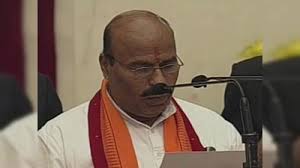
NEW DELHI: The Transgender Persons (Protection of Rights) Amendment Bill has proposed to omit the clause that allowed “self-perceived gender identity” to be the basis for determination and for obtaining a transgender certificate, reports Ambika Pandit. “The existing vague definition of the expression ‘transgender person’ makes it impossible to identify the genuine oppressed persons to whom the benefits of the Act are intended to reach,” the bill introduced by social justice and empowerment minister Virendra Kumar in Lok Sabha on Friday explained. ‘Aim of bill is to protect a specified class of persons’ It underlines that a trans person “shall not include, nor shall ever have been so included, persons with different sexual orientations and self-perceived sexual identities”. “The protection and benefits that are provided under the Act are vast in nature, and therefore, care has to be taken that such identification cannot be extended on the basis of any acquirable characteristics or personal choice or claimed self-perceived identity of an individual,” it added. “The purpose of the Act was to protect a specified class of persons socially and culturally known as transgender people who face societal discrimination of an extreme and oppressive nature,” says the statement of objects of the bill. “The purpose was and is not to protect each and every class of persons with various gender identities, selfperceived sex, gender identities or gender fluidities,” it added. The bill also proposes to create specific offences with graded punishments that reflect the gravity of the harm, the irreversibility of the injury, and the particular vulnerability of child victims. A medical board headed by chief medical officer has been introduced in the bill, and if passed in the current form, the district magistrate will, going forward, issue a certificate of transgender identity, after examining the recommendation of the medical board cited as “authority” to be constituted by the central or state govts. The bill defines a trans person as the one “having such socio-cultural identities as ‘kinner’, ‘hijra’, ‘aravani’ and ‘jogta’, or eunuch, or a person with intersex variations or a person who, at birth, has a congenital variation in one or more sex characteristics as compared to male or female development: primary sexual characteristics; external genitalia, chromosomal patterns, gonadal development endogenous hormone production or response.” The bill said that the current law also prohibits discrimination and abuse against transpersons but its penal provision address only general wrongs and criminal offences and prescribes a maximum of two years’ imprisonment. The proposed amendments make room for stricter penalties and punishments. “Also, any person or child who has been, by force, allurement, inducement, deceit or undue influence, either with or without consent, compelled to assume, adopt, or outwardly present a transgender identity, by mutilation, emasculation, castration, amputation, or any surgical, chemical, or hormonal procedure or otherwise will be included in the definition.” If a trans person is kidnaped and suffers mutilation, castration or any surgical, chemical, or hormonal procedure; or permanent or severe injury with the intent of compelling the person to adopt or outwardly present a trans person’s identity against their will, the offence shall be punishable with 10 years to life imprisonment. In addition, a fine not be less than Rs 2 lakh will be levied. For same crime involving a child the punishment will be life imprisonment and a fine of Rs 5 lakh. Courtesy : TOI Note: This news is originally published on https:/timesofindia.com/bha and is used purely for non-profit/non-commercial purposes, especially human rights