
Activists condemn Transgender Bill passage in Lok Sabha, says haste in Rajya Sabha ‘scary’
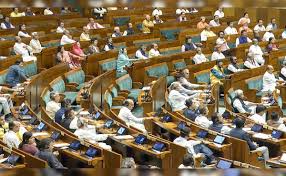
Transgender Bill Passed Amid Resistance By Opposition, Activists
Lok Sabha to take up Transgender Bill on March 24

On Sunday, several Opposition MPs and transgender rights activists called for the Bill to be withdrawn, saying the proposed changes could dilute their right NEW DELHI: Amid widespread protests and demands for the withdrawal of the proposed Transgender Persons (Protection of Rights) Amendment Bill, the Lok Sabha will take up the bill for consideration and passage on Tuesday. According to the list of business issued by the Lok Sabha secretariat, Union Minister Dr Virendra Kumar will move the Bill to amend the Transgender Persons (Protection of Rights) Act, 2019, for its passage. The proposed changes in the Bill have sparked protests across the country with Transgender rights activists and members of the trans community demanding its immediate withdrawal, terming it ‘discriminatory’. The Bill, which was introduced in the Lok Sabha by Union Minister of Social Justice and Empowerment Virendra Kumar on March 13, seeks to give a precise definition of the term ‘transgender’ and exclude ‘different sexual orientations and self-perceived sexual identities’ from the proposed law’s ambit. On Sunday, several Opposition MPs and transgender rights activists called for the Bill to be withdrawn, saying the proposed changes could dilute their rights. The members of the community say that the proposed Bill departs from principles laid down by the Supreme Court in the landmark judgement of National Legal Services Authority vs Union of India. The community members allege that the Bill proposes a restrictive redefinition of transgender persons and undermines the dignity, autonomy and constitutional rights of transgender, intersex, and genderqueer persons. Many also point out that the Bill’s requirement of medical scrutiny and mandatory disclosure of sensitive surgical information violates the fundamental right to privacy as granted by the Supreme Court in the Puttaswamy judgment (2017), which recognised privacy, including bodily autonomy and decisional freedom. Activists also point out that the Bill recommends changes to Section 18 of the Act by introducing an ambiguous framework, along with stricter punishments for several offences clearly overlapping with existing criminal laws, and adds to the confusion. These changes strengthen harmful stereotypes by linking transgender identity with crime and coercion, say the community members. The proposed changes also criminalise transgender individuals and their kin or allies by rigorous imprisonment of up to five years for ‘alluring’ or ‘forcing’ individuals to become transgender, despite a lack of credible evidence or documentation of such conduct in India, they said. ”The language used in the Bill is vague, broad and violates fundamental rights, and if passed, will lead to misuse and violence, affecting an already marginalised community and discouraging open expression of identity”, the community members said. Preetha Nair Courtesy : TNIE Note: This news is originally published on https:/thenewindianexpress.com/bha and is used purely for non-profit/non-commercial purposes, especially human rights
Woman who married herself in 2022 starts protest against transgender bill
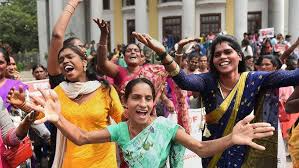
Vadodara: She shot to limelight four years ago when she redefined personal identity by becoming India’s first woman to embrace sologamy. Kshama Bindu has once again stepped into the public sphere and claimed that the proposed Transgender Persons (Protection of Rights) Amendment Bill 2026 will threaten her sologamy and discourage others from pursuing their freedom to choose their identity. Wearing her bridal saree, Kshama, who married herself in 2022, has taken to the streets in Delhi to protest against the bill, and she soon plans to organise a flash mob as well. “I chose to marry myself as I love my own identity. I am transmasculine, which means I identify myself more in a masculine way. I had even begun the process to remove my breasts and apply to change my gender from female to male on my Aadhaar card,” Kshama told TOI. “But this proposed bill has halted my plans. It forces transgender people to get govt approval for their identity. The bill erases centuries of India’s gender-diverse history. If the bill is passed, then I and many others like me won’t be able to assert their identity,” Kshama, 28, said. She recently wrote to the police department seeking permission for a hunger strike. “I have joined the protests against this bill. Why should we validate our gender identity before the govt? It is a violation of my right and dignity,” Kshama added. Kshama married herself in an elaborate ceremony in the presence of her friends in June 2022. Wearing a red bridal saree, she took pheras amid chanting of mantras and later danced to a few Bollywood numbers as well. “I am so much in love with myself and want to spend my whole life in my own company,” Kshama had said on her wedding day. Courtesy : TOI Note: This news is originally published on https:/timesofindia.com/bha and is used purely for non-profit/non-commercial purposes, especially human rights
Queer, trans collective to protest Centre’s amendment bill
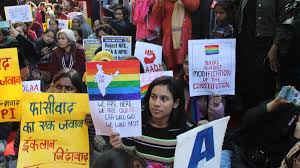
Panaji: The Goa Queer and Trans Collective will protest at Azad Maidan, Panaji, on March 22 against the Transgender Persons (Protection of Rights) Amendment Bill 2026 presented in the Lok Sabha. They called it a regressive law that bases itself on transmedicalism (the idea that gender identity must be validated through medical or biological criteria) and said it will fail to protect trans persons and exploit vulnerabilities. The collective said the legislation, if passed, will dismantle constitutional protections, criminalise realities, and subject transgender individuals to invasive control. It said the bill creates arbitrary classification within transgender persons without scientific basis, relying on vague standards such as “genuine oppressed persons” or “those in need of protection”. “It recognises only socio-cultural groups while excluding others, despite all transgender persons having the constitutional right to self-determination,” the collective said in a press note. “The bill shifts the foundation of gender recognition from self-perceived identity to state-controlled medical certification, placing transgender persons under invasive scrutiny by administrative and medical bodies,” it added. The bill narrows the definition of transgender to exclude transwomen and transmen, trans-masculine and trans-feminine persons, and erases genderqueer and non-binary identities and conflates intersex variations with gender identity, reflecting a lack of social understanding, the collective added. Courtesy : TOI Note: This news is originally published on https:/timesofindia.com/bha and is used purely for non-profit/non-commercial purposes, especially human rights
Amendments a serious setback for transgenders
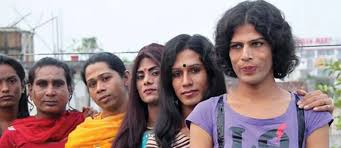
The new amendments proposed to the Transgender Persons (Protection of Rights) Act 2019, which came out of nowhere on March 12, are like a knife twisting into the heart of the trans community. The central claim for transgender rights has always been gender self-determination. The Supreme Court, in its seminal judgment in National Legal Services Authority v. Union of India (NALSA) in 2014, held that all persons have the fundamental right and autonomy to self-determine their gender identity as male, female, or transgender. It held that one’s gender would not be decided on the basis of their biological attributes or any gender-affirming surgery but based on self-determination. It also guaranteed equality to trans persons and held that any discrimination on the basis of gender identity would amount to discrimination on the basis of sex. With this, India became one of the pioneering countries in the world to have recognised the right to gender identity. The NALSA judgment was followed by the Transgender Persons (Protection of Rights) Act of 2019, which also recognised the right to self-determination of gender identity. Most importantly, the Act broadened the definition of transgender persons to mean: “A person whose gender does not match with the gender assigned to that person at birth and includes transman or transwoman (whether or not such person has undergone sex reassignment surgery or hormone therapy or laser therapy or such other therapy), person with intersex variations, genderqueer and person having such socio-cultural identities as kinner, hijra, aravani and jogta.” Recently, in 2025, the Supreme Court in the landmark Jane Kaushik case recognised that the Transgender Persons Act was not being implemented effectively, and set up an advisory committee to review its working and to recommend improvements. While our constitutional courts have been recognising and expanding the rights of transgender persons, the recent Bill attempts to rip out the very soul of the law. The proposed definition of ‘transgender’ persons is restrictive, exclusionary and offensive in its use of stigmatising words like ‘eunuch’. It also removes an entire class that self-identifies as transgender persons, transmen, transwomen or gender queer, and replaces it with a narrow definition based solely on a medical or biological model. The reasons for these amendments in the statement of objects and reasons state that “The legislative policy was and is intended to protect only those who face severe social exclusion due to biological reasons for no fault of their own and no choice of their own…The purpose was and is not to protect each and every class of persons with various gender identities, self-perceived sex/gender identities or gender fluidities…” With this statement, the proposed Bill nullifies more than a decade of settled jurisprudence of the constitutional right to self-determination of one’s gender identity. From being stripped naked before doctors and welfare boards to confirm that they are indeed transgender so that they can claim measly pensions, the transgender community moved the courts to recognise their right to self-determine their gender identity. This was held by the Supreme Court to be one of the most intimate and personal choices that every person is entitled to. When this is replaced by a law that seeks only to cover certain transgender persons from socio-cultural communities and excludes all others who identify themselves as trans or genderqueer, we are invisibilising an entire community and saying that they have no recognition under law. It is only with the legal recognition of their gender identity that many civil rights would be available to trans persons such as the right to claim a legal identity through a passport or Aadhaar, the right to access food through a ration card, a driver’s license, the right to education and reservation in public employment. Our laws cannot begin with a focus on misuse and fraud on the part of the beneficiaries and must enable people of all genders to access their legal rights equally. Over the last few years, around 30,000 persons have obtained transgender identity cards. What happens to them and their legally recognised gender identity? Can legal recognition once given be taken away? The heart of the law is the principle of self-determination of gender identity and the freedom to each person to be who they want to be and to be treated equally. This cannot be taken away by an amendment. Jayna Kothari The writer is Executive Director for Centre for Law and Policy Research. Courtesy : TOI Note: This news is originally published on https:/timesofindia.com/bha and is used purely for non-profit/non-commercial purposes, especially human rights
Over 44 student groups oppose changes to transgender rights Bill
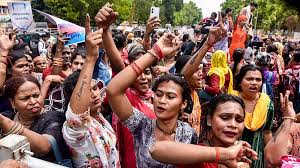
Over 44 student groups from law schools opposed the Transgender Rights Amendment Bill 2026, alleging it weakens self-identification rights and dilutes protections upheld by the Supreme Court. More than 44 student organisations from over 25 law schools across India on Friday condemned the proposed amendments to the Transgender Persons (Protection of Rights) Amendment Bill 2026, alleging that it undermines the dignity, autonomy and constitutional safeguards of transgender, intersex and genderqueer persons. The Bill, introduced in the Lok Sabha on March 13 by Union Social Justice and Empowerment Minister Virendra Kumar, seeks to provide a precise definition of “transgender” while excluding “different sexual orientations and self-perceived sexual identities” from its ambit. In a joint statement, student bodies including NALSAR Queer Collective, Feminist Alliance at NLSIU, Jamia Queer Collective, and groups from Government Law College, Mumbai, and Delhi University’s Faculty of Law, said the amendment “threatens self-identification, transition, and chosen family structures”. “This bill…effectively seeks to dilute the protections recognised in NALSA v. Union of India, which affirmed the right to self-perceived gender identity, dignity, and expression. We, the undersigned, are queer and allied student groups across Indian law schools. The proposed amendment threatens…the very existence of many trans persons, while stripping away already limited benefits,” the statement said. The groups further alleged that the proposed changes echo “the dark colonial legacy” of laws such as the Criminal Tribes Act and Eunuchs Act, which historically treated transgender communities as subjects of control. The Bill states that a transgender person “shall not include, nor shall ever have been so included, persons with different sexual orientations and self-perceived sexual identities”, asserting that the law is intended to protect a specific class facing “extreme and oppressive” discrimination, not all gender identities or fluidities. However, the student organisations argued that this position contradicts existing provisions. “This explicitly goes against Section 4(2) of the Act, which the Bill seeks to omit. This provision recognised the right to self perceived gender identity,” the statement said, questioning the government’s claim of a “vague definition” without substantiating enforcement issues. They also pointed to implementation gaps, noting that only 12 states and Union Territories have constituted transgender welfare boards, attributing shortcomings to “systemic failures in resources, infrastructure, and political will”. The proposed amendment has also drawn protests from transgender rights activists, the Student Federation of India, the Communist Party of India (Marxist), and Anish Gawande. The Bill introduces a revised definition that includes socio-cultural identities such as kinner, hijra, aravani and jogta, as well as intersex persons and individuals with congenital variations in sex characteristics. It also includes persons allegedly compelled to assume a transgender identity through coercive means. Student groups rejected what they described as a narrowing of the definition to limited cultural identities and physiological markers. “It conflates the distinct identities of intersex and transgender peoples and excludes all trans identities that do not fall into this narrow criteria,” the statement said. They further alleged that the amendment was introduced without adequate consultation with the community and fails to address longstanding demands on issues such as sexual violence, reproductive rights and marriage equality. “It is a deep irony that a statute claiming to protect the rights of transgender persons, is now proposed to penalise ‘coercing or alluring’ people to be transgender… This shows a deeply twisted view of transgender identity as a result of compulsion and coercion, rather than a representation of a person’s autonomy and agency,” the statement added. Courtesy : NAI Note: This news is originally published on https:/newsarenaindia.com/bha and is used purely for non-profit/non-commercial purposes, especially human rights
Delhi CM holds pre-budget meeting with transgender community

NEW DELHI: Delhi Chief Minister Rekha Gupta on Friday interacted with members of the transgender community and sought their suggestions for the upcoming annual budget to be tabled in the assembly next week. In an X post, Gupta said she held a meaningful dialogue with members of the third gender community at the Delhi Secretariat. They welcomed the Delhi government’s decision to issue them Pink smart cards for free bus rides, she said. “They also shared suggestions and expectations. These suggestions will be incorporated into the upcoming budget, moving towards building an inclusive and developed Delhi,” she said. The chief minister has been holding a series of meetings with various sections of the society, including working women, gig workers, labourers, farmers, teachers, students, medical professionals and others ahead of the budget presentation on March 24. PTI Courtesy : TOI Note: This news is originally published on https:/timesofindia.com/bha and is used purely for non-profit/non-commercial purposes, especially human rights
PUCL Calls 2026 Transgender Rights Amendment Bill Unconstitutional, Demands Immediate Withdrawal
The amendments proposed in the Transgender Persons (Protection of Rights) Amendment Bill, 2026 constitute a gross dilution of valuable rights provided under the Transgender Persons (Protection of Rights) Act, 2019 and shall result in exclusion of a large number of Transgender Persons from its ambit, denial of their constitutional and statutory rights and targeting their support system. The proposed amendments are unconstitutional and infringe upon the fundamental rights of Transgender Persons, while being violative of established international human rights standards and conventions, and judicial precedents. The Bill constitutes a blatant betrayal by the Indian government of Transgender citizens, which will only put them to further risk, social and legal exclusion and denial of their basic human rights; The Bill should be withdrawn forthwith! The Union Social Justice and Empowerment Minister, Dr. Virendra Kumar introduced the Transgender Persons (Protection of Rights) Amendment Bill, 2026 (“the Bill”) in Parliament on March 13th, 2026. The Bill was not released in the public domain for scrutiny and consultation. The Bill is regressive and nothing but a shocking attempt to take back the hard won rights of the transgender community. The aim of the proposed amendments is to destroy the framework set by the Supreme Court of India in its historic decision in NALSA v Union of India (2014) which recognised the right to self-identification of gender by transgender persons and set in place the legal recognition of the rights of the transgender community. Narrowing of the definition of transgender persons who are entitled to protection by the law The Bill fundamentally alters the scope of the Transgender Persons (Protection of Rights) Act, 2019 (“the Act”) by diluting the existing definition of a transgender person under Section 2 (k) of the Act and replacing it with a reductive definition of a transgender person. This tantamounts to changing the law altogether and excluding a large number of transgender citizens from the ambit of the law, which is a shocking development. The amendment at its heart seeks to take away the right of a transgender person to self-identification, which was recognised under the 2019 Act. This is made clear by the deletion of Section 4 (2) of the 2019 Act which read, ‘A person recognised as transgender under sub-section (1) shall have a right to self- perceived gender identity’. According to the new definition, only three groups are entitled to the protection of the law, namely 1) someone from the traditional socio-cultural trans groups like Kinnars, Jogtis, Hijras, etc. 2) intersex people 3) or a person who has been “by force, allurement, inducement, deceit, or undue influence” been subject to “mutilation, castration, amputation or emasculation” and forcibly made to present “a transgender identity” can be considered a transgender person under this new bill. A proviso has also been added to specifically exclude persons with different sexual orientations and self-perceived sexual identities. This amendment instead of expanding the rights of the transgender community dilutes it significantly. By way of this amendment, all the rights which transmen enjoyed will be taken away as transmen are no more considered transgender as far as the law is concerned. Moreover under the amendment, no person can exercise their right to identify as a transwoman either. The only option for a transgender person under the law is a traditional identity. Those who see their identity on a spectrum fall outside this conservative new definition proposed by the amendment. Thus the law expressly discriminates against trans men, trans women, genderqueer and non-binary persons, because of the narrow definition of transgender persons which the proposed law adopts. Discriminatory intent of the amendment The objects and reasonings of the Bill goes on to underline that the legislative policy has been formulated to only protect those who “face severe social exclusion due to biological reasons for no fault of their own and no choice of their own.” It then goes on to state that the purpose of the Act was not to “protect each and every class of persons with various gender identities, self-perceived sex/gender identities or gender fluidities.” This goes against the historic NALSA judgement which recognised the right of transgender persons to determine one’s own gender identity as integral to lead a life with dignity as recognised under Article 21 of the Constitution. It also emphasised that while discrimination on the ground of “sex” is prohibited under Articles 15 and 16 of the Constitution, sex here does not only refer to biological attributes but also one’s self-perceived gender. The Bill is premised on an entirely false assertion that the intent of the 2019 Act was not to protect all categories of transgender persons, self perceived sex/gender identities and gender fluidities, in as much as the 2019 Act categorically included all transgender persons, including self-perceived gender identities and did not make any distinction or exclusion on the basis of self-perceived gender or sexuality. This is also clear from the Statement of Object and Reasons of the Transgender Persons (Protection of Rights) Bill, 2019, which clearly acknowledged that it was being introduced in compliance of the directions of the Supreme Court of India in the NALSA judgment and further stated under clause 4 (c) that the 2019 Bill sought to “confer right upon transgender persons to be recognised as such, and a right to self-perceived gender identity”. Accordingly, the `Statement of Objects and Reasons’ of the 2026 amendment Bill by itself reveals the falsely-premised regressive and unconstitutional intent of the proposed law. The Bill discriminates upon a large category of transgender persons by denying them the right to be legally recognised by their gender identity. Till date only around 37000 people have been registered on their portal in the six years since the Act came into operation. There has been little intent displayed by the government to implement the Act. Instead of ensuring that the transgender persons are legally recognised and benefit from the provisions of the Act, the law is being diluted on the excuse of this very non-implementation and claiming that the object of
Transgender persons bill ‘draconian’, expect no better from govt: Derek O’Brien
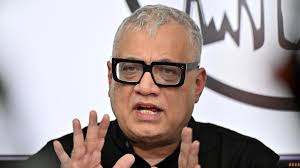
Trinamool Congress leader Derek O’Brien called the Transgender Persons Bill, 2026, “draconian,” criticizing the government’s legislative approach. Trans rights activists also oppose the bill, which defines “transgender” excluding self-perceived identity. They argue it harms their rights and dignity, urging the government to withdraw the legislation entirely. *AI-generated summary. Check context in original text. New Delhi, Mar 19 (PTI) Trinamool Congress leader in Rajya Sabha Derek O’Brien on Thursday criticised the Transgender Persons (Protection of Rights) Amendment Bill, 2026, calling it “draconian.” In a post on X, the TMC leader expressed his disappointment, stating that he expected “no better” from a government with a “dubious record.” “The Transgender Persons Bill, 2026, was sneakily introduced in Parliament, draconian. Expect no better from a government which has a dubious record of mocking Parliament… 20 years ago, 6 out of 10 bills would be sent to committees for scrutiny. Now, only 2 out of 10 bills scrutinised,” O’Brien’s post read. The bill, seeking to provide a precise definition of the term “transgender” and provide graded punishments that reflect the gravity of the harm inflicted upon such persons, was introduced in the Lok Sabha on Friday. It states that “such identification cannot be based on any acquirable characteristics, personal choice, or self-perceived identity of an individual.” Trans rights activists have said they do not want any provisions from the proposed Transgender Persons (Protection of Rights) Amendment Bill, 2026, to remain, urging the government to withdraw the legislation entirely. They argue that the proposed amendments could harm the rights, dignity and identity of transgender communities. PTI AO MPL MPL This report is auto-generated from PTI news service. ThePrint holds no responsibility for its content. Courtesy : The Print Note: This news is originally published on https:/timesofindia.com/bha and is used purely for non-profit/non-commercial purposes, especially human rights