
80% of Pakistan is gay: Karachi transgender activist Hina Baloch’s viral claim

Pakistani transgender activist Hina Baloch claimed in a viral video that “80% of Pakistanis are gay,” calling it an “open secret” hidden by social and religious pressures. How do cultural pressures affect LGBTQ+ visibility in Pakistan? What basis does Hina Baloch use for her 80% claim? How do cultural pressures affect LGBTQ+ visibility in Pakistan? Why do Indian trans activists oppose the 2026 bill? A viral video featuring Pakistani transgender activist Hina Baloch has triggered widespread debate after she claimed that “80% of Pakistan is gay and the remaining 20% are bisexual,” arguing that sexuality in the country is largely hidden due to social pressure, religion, and family honour. In an interview with Queer Global YouTube Channel, Baloch describes what she calls an “open secret” in Pakistani society. “I believe that more than half of Pakistan is quite gay actually. They don’t want to just say it out loud, but I guess 80% of Pakistan is gay and the remaining 20% are bisexuals, so I don’t think that anybody is straight in Pakistan in terms of their sexuality,” she says. She adds that people often deny or conceal their sexual orientation, citing cultural and religious factors. “They will deny it, they will bring religion into it, they will bring culture into it, but this is an open secret. Nobody’s straight in Pakistan,” Baloch says, while recounting her own perceptions growing up. Reflecting on her personal experiences, Baloch says her concerns were less about sexuality and more about gender expression. “What I was worried about was how to apply lipstick and not get lots of shit from the family for that. How do I get to dress feminine, wear jewellery and not get the beatings?” she says. Baloch also speaks about the structural challenges faced by the khawaja sira community in Pakistan, noting that many are pushed into limited and often exploitative livelihoods such as begging, dancing, or sex work. Rejecting these constraints, she became actively involved in organising for gender and minority rights. She went on to co-found Sindh Moorat March and participated in Pakistan’s Aurat March, positioning herself as a vocal advocate for transgender and minority rights. Baloch has previously said she faced violent retaliation after raising a Pride flag at a protest and survived kidnapping and abuse by law enforcement, experiences that ultimately forced her to leave Pakistan. She later secured a scholarship to SOAS, University of London, and sought refugee status in the United Kingdom. Written By: Akshat Trivedi Courtesy : India Today Note: This news is originally published on https:/indiatoday.com/bha and is used purely for non-profit/non-commercial purposes, especially human rights
Why Did the UNHRC Outrage Over India’s Transgender Amendment Bill? Expressing Opposition, It Warned of Far-Reaching Consequences

In India, the Transgender Persons (Protection of Rights) Amendment Bill, 2026, has received Presidential assent. This amendment bill had faced significant opposition within India. Now, the United Nations Human Rights Council (UNHRC) has also weighed in on the matter, expressing regret over the passage of the Transgender Amendment Bill. Geneva: The United Nations Human Rights Council (UNHRC) has issued a sharp reaction regarding India’s legislation concerning transgender persons. It has alleged that this law was passed in haste, without adequate consultation with stakeholders. The UNHRC further stated that this Indian law would have far-reaching implications for the right to privacy and poses a risk of further marginalizing transgender individuals. However, this is not the first instance in which the UNHRC has attempted to interfere in India’s internal affairs; the Council has previously adopted an aggressive stance toward India regarding the issue of Kashmir. What Did the UNHRC Say Regarding the Transgender Law? Writing on X (formerly Twitter), the UNHRC stated: “We regret that the Transgender Persons (Protection of Rights) Amendment Bill, 2026, was passed so rapidly without adequate stakeholder consultation. These amendments risk eroding the hard-won rights of transgender persons by replacing ‘self-identification’ with mandatory medical examination procedures. India has historically been a leader in upholding the rights of transgender and gender-diverse individuals. This Bill will have far-reaching implications for the right to privacy and poses a risk of further marginalizing transgender persons.” What Is the Transgender Amendment Bill? In India, the Transgender Persons (Protection of Rights) Amendment Bill, 2026, recently received Presidential assent. This amendment primarily seeks to narrow the definition of a transgender person, rendering it more “medically-based.” Under this framework, a certificate from a medical board has been made mandatory for obtaining an identity card. Now, to receive legal recognition as a transgender person, one must obtain a certificate from a Medical Superintendent or a Chief Medical Officer (CMO), following which the District Magistrate (DM) will issue the identity card. What is the United Nations Human Rights Council? The United Nations Human Rights Council is a principal inter-governmental body of the United Nations. Its primary objective is to promote and protect human rights worldwide, as well as to investigate human rights violations. The United Nations Human Rights Council was established in 2006. Its headquarters are located in Geneva, Switzerland. The United Nations Human Rights Council comprises 47 member states, which are elected by the General Assembly for a three-year term. Globally, the United Nations Human Rights Council works on issues such as freedom of expression, freedom of religion, women’s rights, and the rights of racial and ethnic minorities. Provision for Stricter Punishment for Violence Against Transgender Persons Furthermore, the punishment for sexual, physical, or economic abuse committed against transgender persons has been increased; the sentence can now range from 2 years up to 14 years of rigorous imprisonment. There is a provision for imprisonment ranging from 5 to 10 years for anyone who forces a transgender person into begging or bonded labor. The government states that the objective of this amendment is to ensure the safety and welfare of the transgender community. Reported by: Priyesh Mishra About the Author Priyesh Mishra, He currently serves as a Principal Digital Content Producer at Navbharat Times Online. He is associated with the ‘World’ section of Navbharat Times. He possesses 10 years of experience in digital journalism, during which he has worked in various roles involving both reporting and desk operations. Courtesy: Hindi News
‘Where Will I Go?’: Inside Delhi’s Trans Shelter Home As Care Networks Face Uncertainty
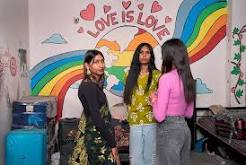
Denial of self-identification and narrowing definitions have left residents worried about identity recognition, access to schemes and the future of care systems. Summary of this article Shelter homes often face chronic underfunding and limited reach, with staff warning that existing facilities are far from sufficient. New provisions raise concerns that offering shelter or support could be legally challenged, while stricter identity requirements may restrict access to care networks. Despite fear and instability, community members continue to rely on each other for emotional and practical support, even as their futures grow uncertain. ‘Panchhi banoo udti phiroon mast gagan mein, Aaj main azad hoon duniya ke chaman mein.’ (Like a bird, I wish to soar merrily in the boundless sky; Today I am free in this garden of the world.) Sanam, who identifies as a trans woman, quoted this song to describe how she felt after India overturned a 19th-century ban on homosexuality. However, she feels differently now. On the day the Trans Amendment Bill was tabled in the Rajya Sabha, Sanam, 22, was in Delhi’s Kalkaji, overwhelmed by anxiety. Unable to collect her thoughts, she broke down and cried all the way to the Garima Greh where she lives. “Men were catcalling me even as I struggled to catch my breath. They misbehave with us all the time, now they’ll feel emboldened to do so,” Sanam said gazing blankly from the balcony, her expression settling into a faint smile. It has just been four days since she began hormone therapy. Now, with the President’s assent, she feels her existence hangs by a thread. It has been over a year since Sanam left her home, where she said she was constantly monitored, and began living in the shelter home. She says she feels familiarity there—accepted for who she is. After the new Act, she questioned, quietly: “Where will I go? I don’t know what to do.” Sanam lives with at least 25 other transpeople in Delhi’s Garima Greh, the only one enlisted on the government’s website in the national Capital. As per the 2011 Census, Delhi has 4,213 transgender persons, while India’s total stands at 4,87,803; a number the community members say is grossly underreported. As per an August 2025 Press Release, at present, the Department of Social Justice and Empowerment runs 18 such shelters across India, and approval has been granted to set up three more in 2025-26. A total of 429 people are currently residing in these shelters. “These facilities are simply not enough,” said Ankit*, a trans man who works as a project manager at the shelter home. He explained that the shelter accepts anyone who comes seeking help, and while they try their best to manage, finances are often strained. With lack of access to shelter, the homeless transpeople may never come out, or take extreme steps like suicide, he said. Kanta, the programme manager at the Garima Greh, which has been running since 2021, said they struggle with funding and sometimes go up to six months without support. The point of this scheme was to provide transpeople with a home, she said. “This is a government-run shelter home. We have not received a single penny from the government in this financial year,” she claimed. The new act has removed the right to gender self-identification recognised by the Supreme Court in the landmark National Legal Services Authority v. Union of India in 2014 and introducing medical certification for identity recognition. It has also changed the definition of a transgender person, only including intersex people and socio-cultural identities as kinner, hijra, aravani and jogta, or eunuch. With the changes, the community is faced with a range of unanswered questions about the funding of government run shelter homes, welfare schemes, the validity of the transgender identity cards which have already been issued, and access to the care community. “If the process of recognising identity becomes more restrictive, then access to these schemes will also become more uncertain,” Don Hasar, a Queer-Trans rights activist explained. It will affect how beneficiaries are identified, she said. She continued to note that ideally, shelter homes should not require a trans ID card for entry. People often arrive through informal networks, referred by someone they trust, even if they do not yet have a trans ID. Shelters do not turn them away; instead, they provide support and help them obtain the necessary documents. “Many of these shelters are run by community members,” she said. However, certain clauses in the new act raise concerns about how such support could be interpreted. “Even if somebody wants to help somebody who needs shelter home access, a case could be filed against them, saying that this is allurement. So how will organisations function now?” she questioned. In the new act, the government has introduced four new offences in addition to the existing ones, one of which carries a punishment of 10 to 14 years’ imprisonment, said Kanmani Ray, a trans woman and advocate based in Chennai. One provision addresses cases where a child is, by “force, threat, coercion, allurement, deception, inducement, undue influence or otherwise”, made to present as a transgender person and is then exploited for begging, solicitation, servitude, or any form of forced or bonded labour. Ray stated that there are already kidnapping and abduction provisions under the Bharatiya Nyaya Sanhita, which are regularly being invoked. Introducing a new set of offences was not needed. “Of course, as long as it is a criminal offence and it is not explicitly stated, the State has the burden to prove that they have a case. But let me make this clear, it is not about whether you did the offence or not. It is about the fact that the process is the punishment,” Ray said. At Delhi’s shelter home, hope has dimmed. Community members, some employed, some undergoing hormone therapy, some recovering from traumatic experiences at home, and others still finding their footing, are struggling to understand why the new law has redefined their identities. “I had so
Community members seek repealing of Transgender Bill, warn of protest

Hisar: Members of the transgender community have warned of a nationwide protest if the proposed Transgender Bill is not withdrawn, with a demonstration planned at Jantar Mantar in New Delhi on April 6. Speaking at the national convention of the Kinnar Samaj (transgender community) in Hisar on Wednesday, Chandni Kinnar said if their demands were not met, they would move the Supreme Court and might also launch a hunger strike at Ramlila Maidan. The convention, held at Agrasen Bhawan, saw participation from around 1,500 transgender representatives from across the country. Chandni Kinnar, a head figure of the community, was joined by Raj Haseena and Shobha Nehru during the media interaction. Chandni criticised the provision of mandatory medical examination in the proposed legislation, calling it “insulting and discriminatory”. “In a country where individuals are not required to produce medical proof of identity, imposing such a condition on the transgender community is unjust,” she said. Appealing to Prime Minister Namenda Mode, Chandni sought the withdrawal of the proposed bill. In an emotional address, she called for dignity and respect for the community, stressing that their identity should not be subject to medical validation. Community leaders at the event described the bill as a threat to their existence, arguing that it would disrupt long-standing social structures and traditions. They maintained that the community had historically regulated its own social systems and identity. Responding to media questions, Chandni said the community was not issuing threats but making a peaceful appeal for the bill’s repeal. She added that the transgender community sought recognition, respect and protection of its identity in return for its contributions to society. Caption of photo: Chandni Kinnar, along with Raj Haseena and Shobha Nehru, interacts with journalists in Hisar. Courtesy : TOI Note: This news is originally published on https:/timesofindia.com/bha and is used purely for non-profit/non-commercial purposes, especially human rights
Identity on trial: Why India’s new transgender law is facing backlash

‘Cause shade never made anybody less gay’ – Taylor Swift, You Need to Calm Down Last week, two contrasting developments related to the LGBTQ+ community made global headlines. One, in the German city of Munich, Dominik Krause was elected mayor, the first openly gay man to hold a constitutional office in the European country. Second, at the same time Krause was celebrating his victory with his partner and the public, in India, Parliament passed a legislation – The Transgender Persons (Protection of Rights) Amendment bill, 2026 – striking away the statute of self-determination. That translates to taking away the individual’s right to self identification, a Constitutional guarantee, and liberty over one’s own body. Cause shade never made anybody less gay (X) On Monday, March 30, President Droupadi Murmu assented to the bill, making the proposed legislation the law and bringing it into effect. Ironically, the ‘rights’ of the very community it claims to ‘protect’ have since risen in protest, taking to the streets to vociferously and legally push back against the proposed propositions challenging it. Not just that, the passage of the controversial bill itself created a massive uproar in both Houses of Parliament. In Lok Sabha, it was taken up March 24, stopping the discussion on the Finance bill midway with Union Parliamentary affairs minister Kiren Rijiju insisting the bill needed to be passed the very day. And it did, with a voice vote amidst the din in the House, opposition walking out and an exhaustive two-minute-long reply by the concerned minister for social justice and empowerment Virendra Kumar. — Drvirendrakum13 (@Drvirendrakum13) The story was no different the next day in the Upper House, the proposed legislation passed while the opposition demanded that it be sent to the select committee. Fauzia Khan in Parliament Speaking on bill, NCP(SP) MP Fauzia Khan said “Viksit Bharat slogan shouldn’t be about ‘selective’ Bharat.” Replying to which Kumar argued, every person’s emancipation and empowerment, asserting that the amendment will ensure that transgender persons continue to get legal recognition and protection. But, with a caveat, that a ‘magistrate’ and a ‘medical board’ would somehow determine if you are a trans person and qualify for rights, and that they would be protected. — DrFauziaKhanNCP (@DrFauziaKhanNCP) Anish Gwande, LGBTQ+ rights activist and national spokesperson of NCP(SP), also first openly gay person to hold such office for a major political party in India, speaking to TOI described the bill as “illegal, unconstitutional and illogical” adding “it is unfortunate that the bill was passed by both houses of Parliament without any substantive discussion within 24 hours.” He went on to question the timing of the bill, “It is bizarre to see governments focus on amendments to the trans bill, instead of war in West Asia, on LPG crisis in the country, on the depreciating Rupee.” The gender question For many the world exists in two colours – ‘black and white’, but it still leaves a population embracing the ‘greys’. The greys believe in facets of being agathokakological – the in-between areas, complexity, nuance, mixed feelings, or situations that aren’t purely one thing. A concept alien to the binaries. Similarly, what and how an individual feels about their ‘own’ body, nobody else can understand or tell but that particular individual. To understand this, it becomes essential to distinguish between sex and gender, terms often used interchangeably but conceptually distinct. Protest against Transgender Persons bill (PTI) Biological sex typically refers to physical attributes such as chromosomes, hormones, and reproductive anatomy, usually categorised as male or female. Gender, however, is understood in scholarly literature as a social and psychological construct that encompasses identity, roles, expressions, and lived experience. As philosopher Judith Butler argues, gender is not something one simply is, but something one does – a continuous process shaped by social norms and personal agency. Similarly, the World Health Organization defines gender as the characteristics of women, men, girls and boys that are socially constructed, including norms, behaviours, and roles associated with being a particular gender. This understanding moves beyond rigid binaries and acknowledges that gender exists along a spectrum. The American Psychological Association further recognises gender identity as a deeply felt, inherent sense of being male, female, a blend of both, or neither, an internal experience that may or may not align with the sex assigned at birth. In this context, the idea of the ‘greys’ is not merely poetic but empirically grounded. Contemporary gender studies consistently affirm that human identity resists strict categorisation. What appears as ambiguity to the binary lens is, in fact, a legitimate and lived reality for many. Thus, gender is not a fixed endpoint but an evolving narrative, one that is deeply personal, socially mediated, and often negotiated within structures that struggle to accommodate its fluidity. The Transgender persons (protection of rights) amendments Act 2026 What the Act entails The legislation introduces changes across four key areas: Definition of transgender persons Process of identity certification Offences and penalties Composition and functioning of institutional bodies The government’s Statement of Objects and Reasons argues that the earlier definition was “vague” and made it difficult to identify “genuine oppressed persons.” It further clarifies that protections should not extend to “self-perceived identity” or what it terms “acquirable characteristics.” 2019 Act vs 2026 Amendment This framing signals a shift in legislative intent, from recognising identity as self-determined to one that is externally verified. Key changes in the provisions A narrower definition The Act replaces the broader 2019 definition with a more restrictive one. It identifies transgender persons under two categories: Those belonging to specific socio-cultural groups, such as kinner, hijra, aravani and jogta, or individuals with congenital variations in sexual characteristics, including differences in chromosomes, genitalia, hormones or gonadal development. It also includes a category of persons who have allegedly been compelled, “by force, allurement, inducement, deceit or undue influence, either with or without consent”, to assume or present a transgender identity, reeking of the underlying premise of the Act. Notably, it excludes persons with “self-perceived gender identity” and
As TG bill becomes law, community uncertain about status of 32000 TG certificates issued on basis of ‘self-perceived identity’
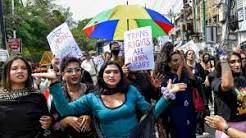
NEW DELHI: With the Transgender Person (Protection of Rights) Amendment Bill, 2026 becoming law with President of India Droupadi Murmu’s assent on Monday, all eyes are now on the way forward as the amendments do away with the provisions in the 2019 law that allowed “self-perceived gender identity” to be the basis for self-determination and identification for approval for transgender certificate by the district magistrate. The amended definition of “transgender persons” makes it clear that it will not include persons with “different sexual orientations and self-perceived sexual identities”. A medical board headed by the chief medical officer has been introduced. Going forward the district magistrate will issue a certificate of transgender identity, after examining the recommendation of the medical board cited as “authority” to be constituted by the central or state governments. Moreover, the DM will also have the option to seek assistance from medical experts. While the TG community members are exploring the legal route to challenge the enacted amendments in Court, they wonder what will be the fate of the over 32,000 TG certificates issued so far based on self-perceived identity and those pending approval. Member of the National Council for Transgender Persons Abhina Aher told TOI that the community was planning to take legal recourse as the Bill violates the landmark NALSA judgement of 2014 that affirmed the right to self-determination of transgender persons. A visit to the National Portal for Transgender Persons linked to the website of the ministry of social justice and empowerment shows that the total number of applications received stands at 37362. The portal puts the number of TG certificates issued so far at 32660, and of these, TG identity cards have been issued to 32630 persons. As many as 5833 applicants have not been found eligible, and 4794 applications were pending approval as of Tuesday. In this backdrop, youth like Akash (name changed) are a worried lot. A transman from Haryana’s Charkhi Dadri who is currently in Delhi for coaching as he aspires to sit for the civil services examination, Akash says he is fearful of what lies ahead. “ I got my TG certificate on March 18 but will this certificate stay valid? The amendments don’t even mention transman or transwoman in the definition and take away the right to self-perceived identification. So, what happens to me and others in the same situation? Who will stand up to secure our rights and protect us from exploitation?” Akash asked. The amended definition of “transgender person” lays down that it includes a person having such socio-cultural identities as kinner, hijra, aravani and jogta, or eunuch, or a person with intersex variations specified below or a person who, at birth, has a congenital variation in one or more of the following sex characteristics as compared to male or female development. –primary sexual characteristics –external genitalia –chromosomal patterns –gonadal development –endogenous hormone production or response, or such other medical conditions. The definition also includes “any person or child who has been, by force, allurement, inducement, deceit or undue influence, either with or without consent, compelled to assume, adopt, or outwardly present a transgender identity, by mutilation, emasculation, castration, amputation, or any surgical, chemical, or hormonal procedure or otherwise.” Courtesy : TOI Note: This news is originally published on https:/timesofindia.com/bha and is used purely for non-profit/non-commercial purposes, especially human rights
New Bill wants to make us invisible: Kol trans community on Transgender Day of Visibility
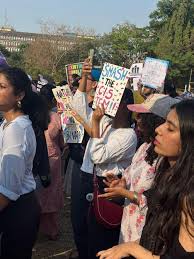
Kolkata: As the world celebrated Transgender Day of Visibility (TDV) on Tuesday, the community in Kolkata voiced their concern about the proposed Transgender Amendment Bill 2026. March 31 is observed as TDV worldwide to celebrate accomplishments by transgender people while raising awareness about the discrimination they face. The community anticipates that this bill would push them to invisibility. However, they plan to protest for their rights. The proposed amendment removes the recognition of self-identified gender, which the community argues is a principle affirmed by the SC in the National Legal Services Authority (NALSA) vs. Union of India. The bill introduces a screening committee that could enforce surgical gatekeeping and biomedical surveillance, which the community has strongly opposed. Members of the city’s transgender community and their allies gathered in front of Ranu Chhaya Mancha to voice their protest and demand withdrawal of the bill. Activists argue the legislation, which mandates a medical board’s approval for gender identity certification, fundamentally undermines the right to self-identification, upheld by the landmark NALSA judgment. Santosh Giri, a gender rights activist and transgender (TG) person, said the community is being forced back to the beginning of their struggle. “We will follow what was given to us before after so much hard work,” Giri said. At present, a person can get a TG certificate by applying to the DM. This certificate allows them to change their gender in official documents in addition to giving them access to govt welfare schemes. The new bill requires applications to be scrutinised by a screening or medical committee before approval by the DM. “We thought the BJP govt was sensitive to this community when it started Garima Greh, a shelter home for TGs. Now the amendment bill says a medical board will certify who is TG and who is not. One govt cannot have two opposite policies for the community,” said Ranjita Sinha, a TG and founder director of Association of Transgender and Hijra in Bengal. A panel discussion was held on the amendment bill by Gokhale Road Bandhan on Tuesday. “Our protest is against the systemic erasure of trans and non-binary identities,” said Souvik Ghosh, a gender rights activist. Anurag Maitreyi, an activist, called it an attempt to weaken their collective bargaining power and strength. Rights and mental health worker Debdutta Biswas said, “TG certificates gave us our identity according to the previous bill. According to the new definition, that identity doesn’t exist. Who will decide that — the govt? Self-gender identity is my right.” Lawyer and women’s rights activist Bharati Mutsuddi called the amendment insensitive. Courtesy : TOI Note: This news is originally published on https:/timesofindia.com/bha and is used purely for non-profit/non-commercial purposes, especially human rights
LGBTQIA+ community members protest against Transgender Act, term it regressive and demand withdrawal
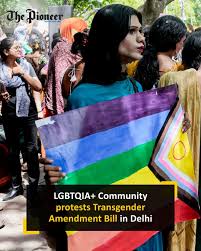
Pune: Members of the LGBTQIA+ community on Tuesday staged a protest march at the district collector’s office against the Transgender Persons (Protection of Rights) Amendment Act, which recently came into force after the Bill was passed by both Houses of Parliament and receiving Presidential assent on Monday. The protest coincided with International Transgender Visibility Day, observed globally on March 31. Activists and community members from across the city and state gathered with placards, alleging that the Act was passed sans consultation with stakeholders or members of the transgender community. Protesters raised strong objections to several provisions, claiming they violate privacy and roll back hard-earned rights. Disha Shaikh, a transwoman and spokesperson of the Vanchit Bahujan Aghadi (VBA), said, “Whatever we achieved through years of struggle has been lost with this Act. It feels like we have been pushed back 30 years.” She termed certain provisions “regressive” and alleged that the law criminalises aspects of identity in a manner reminiscent of colonial-era policies. Under the new Act, the provision for self-identification has been removed, making medical board approval mandatory before issuance of a gender identity certificate by the district magistrate. It also criminalises attempts to forcibly convert individuals into the transgender community. Manasvi Goilkar, a member of the community, said protests will be intensified across Maharashtra. “We have formed a state-level group to organise district-wise protests and submit our objections to authorities,” she said, adding that to fight their battle on legal front, a petition is also being prepared which will soon be filed in the court. “We are not seeking amendments — we want the Act withdrawn entirely.” Goilkar said that the Act completely ignores some categories of the transgender community. For instance, transmen and transwomen are not mentioned in the new Act, and the focus is mostly shifted to sociocultural groups like hijra, kinner and others. Shaikh alleged that safeguards recognised under the 2014 NALSA vs Union of India landmark SC judgment have been diluted. She questioned the alleged partiality against the transgender community by govt. “When schemes like Ladki Bahin or Mahila Samman Yojana were introduced, women were not asked to undergo medical tests. Why is the transgender community being subjected to this?” she asked, stating that self-declaration of gender should be allowed for them. Activists also expressed concern over the provision criminalising forced conversion, stating it could be misused. They fear it may lead to false allegations, including claims of child abduction — a narrative they say has surfaced in rural areas in the past. Dr Kanchan Pawar, a healthcare professional, who has been working with the transgender community for over 15 years, said the new Act raises several concerns. “The law appears discriminatory in many ways, particularly due to its narrow definitions and the lack of clarity on the process for certification,” she said. She also expressed concern over provisions requiring medical practitioners to report gender-affirming procedures. “This raises serious issues around doctor-patient confidentiality and privacy. Many in the medical fraternity are uncertain and anxious about the medico-legal implications of these amendments,” she added. Courtesy : TOI Note: This news is originally published on https:/timesofindia.com/bha and is used purely for non-profit/non-commercial purposes, especially human rights
Redefining Identity
India’s latest amendment to its transgender rights framework signals a decisive turn in how the state understands identity ~ not as something lived and asserted, but as something to be verified, certified, and, ultimately, controlled. India’s latest amendment to its transgender rights framework signals a decisive turn in how the state understands identity ~ not as something lived and asserted, but as something to be verified, certified, and, ultimately, controlled. This shift is striking because it departs from the constitutional trajectory set by the Supreme Court in NALSA v. Union of India, which affirmed self-identification as central to dignity and personal liberty. That judgment did not merely recognise a “third gender”; it located gender identity within the domain of individual autonomy, insulated from bureaucratic gatekeeping. The new amendment, by contrast, moves identity back into the hands of institutions ~ medical boards, district authorities, and definitional criteria tied to biology. The government’s argument is not without logic. Welfare systems require classification. Benefits must be targeted. In a country where resources are finite and vulnerabilities are layered, the state seeks clearer categories to ensure that those facing the harshest forms of marginalisation are not crowded out by broader or more fluid definitions. Administrative clarity, in this view, is a tool of social justice. But clarity, when imposed from above, often comes at the cost of exclusion. By narrowing the definition of who qualifies as a transgender, the amendment risks leaving out those whose identities do not conform to medicalised or traditional frameworks ~ particularly non-binary and gender-fluid individuals. More fundamentally, it transforms recognition from a right into a process. Identity becomes something one must prove, rather than something one possesses. This has consequences that extend beyond paperwork. In a society where transgender persons already face barriers in education, employment, and healthcare, the introduction of certification layers may deepen, rather than ease, access. A person denied recognition is not merely excluded from benefits; they are pushed further into invisibility, their existence rendered administratively uncertain. There is also a deeper constitutional tension at play. The logic of self-identification is rooted in privacy and dignity ~ principles that the Supreme Court has repeatedly expanded in recent years. Replacing that logic with medical verification raises an uncomfortable question: can the state both recognise a person’s identity and simultaneously subject it to institutional approval? The answer will shape not just transgender rights, but the broader relationship between the individual and the state. The amendment, then, is not a minor recalibration. It reflects a competing philosophy of governance, one that prioritises order over autonomy, and definitional precision over lived complexity. Whether this model delivers more effective welfare is an open question. What is clearer is that it redefines the terms on which recognition itself is granted. India now stands at a crossroads. It can either continue along a rights-based path that trusts individuals to define themselves, or it can move towards a system where identity is something the state confirms. The choice will determine not only how transgender citizens are seen, but how citizenship itself is understood. Courtesy : The Statesman Note: This news is originally published on https:/thestatesman.com/bha and is used purely for non-profit/non-commercial purposes, especially human rights
Manipur trans groups protest ‘regressive’ bill
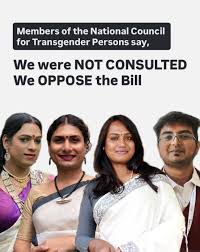
Imphal: Transgender rights groups in Manipur on Sunday staged a protest against the Transgender Persons (Protection of Rights) Amendment Bill 2026, terming it ‘regressive’ and contrary to the Supreme Court judgment which recognises self-identification of transgender individuals.Both Houses of parliament recently passed the bill. The protest was organised by the All Manipur Nupi Manbi Association (AMANA), Empowering Trans Ability (ETA), and the All Trans Men Association (ATMA) Manipur at the Mao Market in Imphal and Keishampat Leimajam Leikai in Imphal West. The transgender community gathered at the Mao Market in Imphal where they started the protest with a flash mob. Later, they staged a sit-in at Keishampat and burnt copies of the bill. Speaking to the media, AMANA secretary Santa Khurai said the bill undermines the landmark NALSA V/s Union of India ruling, which recognised the rights of transgender persons to self-identify their gender. “The bill is completely regressive and goes against the principle of self-identification. It attempts to pathologise transgender identity and impose restrictive definitions,” the activist said. The organisations alleged that the proposed law recognises only a limited set of identities such as Hijra, Kinnar and Jogappa, while ignoring diverse indigenous gender identities from the northeast. Santa cited identities such as Nupi Manbi and Nupa Manba in Manipur, along with similar culturally rooted identities in Mizoram, Arunachal Pradesh and Meghalaya, stating that the bill risks erasing these communities from legal recognition. “India is a diverse nation, yet this bill reflects a shallow outlook that fails to acknowledge identities beyond mainland constructs,” Santa said. “We did gender affirmative surgery before the bill came. We are going to continue doing gender affirmative surgery. This is our body. This is our identity. Whether the law recognised or not, we exist,” she added. Santa maintained the organisations are preparing to file a litigation in the Supreme Court along with partner organisations and build wider momentum to oppose the bill. Courtesy : TOI Note: This news is originally published on https:/timesofindia.com/bha and is used purely for non-profit/non-commercial purposes, especially human rights