
Delhi HC seeks Centre’s stand on petitions challenging amended transgender law

The Delhi High Court on Wednesday sought the Centre’s stand on two petitions challenging provisions of the Transgender Persons (Protection of Rights) Amendment Act, 2026, for taking away one’s right to a self-perceived gender identity. A bench of Chief Justice DK Upadhyaya and Justice Tejas Karia issued notice on petitions by Chandresh Jain and Lakshay Jain and asked the central government to file its reply within six weeks. The Transgender Persons (Protection of Rights) Amendment Bill, 2026, was passed by Parliament on March 25 and received President Droupadi Murmu’s assent on March 30. Petitioner Chandresh Jain said the Act “removes and dilutes” self-perceived gender identity and instead introduces a regime of State-controlled verification, certification and screening of gender identity, which violates rights to dignity, privacy and decisional autonomy under Article 21 of the Constitution. His petition further said that the amendment Act is manifestly arbitrary and disproportionate, and it infringes Article 19(1)(a) by restricting the expression of gender identity. Lakshya Jain’s petition said that the amendment altered the existing statutory framework by replacing self-perceived gender identity with a regime of medical and administrative verification, including scrutiny by a district magistrate (DM). His plea said that such a requirement was ex facie violative of the law laid down by the Supreme Court in National Legal Services Authority versus Union of India, which held that gender identity is a matter of self-identification and psychological identity must take precedence over biological attributes. Chandresh Jain’s plea emphasised that the apex court has already held that gender identity is an integral part of dignity, autonomy and personal liberty under Articles 14, 19(1)(a) and 21, and every individual has the right to a self-identified gender. The case would be next heard on July 22. Courtesy : The Pioneer Note: This news is originally published on https:/thepioneer.com/bha and is used purely for non-profit/non-commercial purposes, especially human rights
Why activists see the imprint of Hindutva in the new transgender law

The law foregrounds trans identities that lie broadly within Hindu society, and cuts off paths to recognition for a range of others. What is common between khwaja sira in Punjab and Kashmir, thirunar in Tamil Nadu and nupi maanbi in Manipur? These are some of India’s traditional trans communities whose legal standing is left uncertain under the new transgender law passed in March. The law in force earlier, the Transgender Persons (Protection of Rights) Act, 2019, contained a wide and inclusive definition of a transgender person. It began by stating that a transgender person was someone “whose gender does not match with the gender assigned at birth”. This included a “trans man or trans woman”, irrespective of whether or not they had undergone a medical procedure such as a sex reassignment surgery, someone “with intersex variations” and “genderqueer” individuals. Apart from these categories, the 2019 law also included individuals “having such socio-cultural identities as kinner, hijra, aravani and jogta”. Further, it accorded all transgender individuals “a right to self-perceived gender identity”. In contrast, the new law has a far more restrictive definition of a transgender person. It foregrounds the four socio-cultural identities of kinner, hijra, aravani and jogta, adding “eunuch” to the list. The other categories it includes are individuals who have “intersex variations”, “a congenital variation” in certain sexual characteristics, or have been “by force, allurement, inducement, deceit or undue influence” been put through one of several medical procedures. The 2026 law leaves out all other categories. Its statement of “objects and reasons” notes that the act’s aim is “not to protect each and every class of persons with various gender identities, self-perceived sex/gender identities or gender fluidities”. Activists are alarmed at this dramatic reduction of the scope of the definition of transgender individuals. They fear that the prominence given in the definition to the four specific socio-cultural categories, combined with the complete omission of self-determined identities, represents a grave threat to numerous other traditional transgender communities in the country, including the khwaja sira in Punjab and Kashmir, thirunar in Tamil Nadu and nupi maanbi in Manipur. These identities are Muslim, syncretic or unaffiliated with any particular religions – in contrast, the four specifically named socio-cultural groups are broadly located within Hindu society. Thus, activists argue that the new law is, in effect, an extension of the Bharatiya Janata Party and the wider Sangh Parivar’s Hindutva agenda. As a statement by the All India Students’ Association noted, the act was restricting the definition to communities that were “already culturally legible to the state”. It observed that the hijra, kinnar, aravani and jogta communities were “historically visible through ritual roles at births, weddings, and religious spaces” and so “may be tolerated within this framework”. The queer feminist academic Jennifer Loh made a similar argument in a 2022 book chapter, noting that the “Hindu right favours Hindu trans (feminine) identities above other less visible, non-homonormative trans identities and Muslim trans people”. Loh argued that this was because Hindu trans feminine identities such as hijras align with the “broader goals of promoting Hindu ideologies, through the reinforcement of existing gender and religious norms”. A statement by the All India Students’ Association noted that the hijra, kinnar, aravani and jogta communities were “historically visible through ritual roles at births, weddings, and religious spaces”. Photo: Sam Panthaky/AFP The writer and filmmaker Rayyan Monkey argued that even the traditional communities mentioned in the act were in a sense limited by it. “While the hijra and kinnar communities do want to sustain their place in the spiritual ecosystem of India, they also want to get into schools, colleges and jobs,” she said. Scroll spoke with experts and trans activists in Manipur, Nagaland, Tamil Nadu and Punjab to learn about the traditional identities that are at increased risk of exclusion under the new act. Thirunar, thirunangai, thirunambi in Tamil Nadu Activists from Tamil Nadu explained that the late chief minister, M Karunanidhi, had introduced the terms thirunar, thirunangai and thirunambi in the late 2000s, to refer to trans persons, trans women and trans men, respectively. They noted that the positive intent underlying the move was evident in the fact that the word “thiru” translates to “respected” in Tamil. Many activists prefer this term to others, like aravani and “third gender” that are also used in the state. Negha, a trans activist and actor, noted that the former term, used for trans women, is rooted in Hindu mythology. The traditional aravani community worships the Mahabharata character Aravan – the son of Arjuna, who marries Krishna in the form of a woman, Mohini, before going to war and dying. Not all trans women in Tamil Nadu participate in the rituals of the aravan community, Negha noted. “The term aravani is not an inclusive word,” she said. “Many trans women are concerned about being pushed to assume a Hindu identity. Not everybody believes in the Ramayana and Mahabharata.” In comparison, she said, the terms thirunar, thirunangai and thirunambi were rooted in the legacy of the state’s self-respect movement, which promoted social justice and gender equality, and challenged caste-based oppression. Karunanidhi “researched Tamil literature and then came up with the words thirunar and thirunangai,” Negha said. “It is an inclusive word which can be used by Hindus, Buddhists and Dalits regardless of caste and religions. This amendment will erase and invisibilise these words.” Activists and members of these and other communities are also anxious about the fact that the new act lays emphasis on medical procedures and clearance from authorities before a transgender individual is accorded recognition, such as with an identity certificate recognising them as transgender. Negha explained that these identities were not typically linked to gender reassignment surgeries or other medical procedures, but were based on individuals’ self-perception. Under the previous law, a transgender individual could obtain such a certificate by applying through an online portal to the district magistrate – the rules of the act only required that they furnish a self-attested affidavit, along with identity documents
Transgenders protest Amendment Bill in Aligarh

Agra: A large number of the transgender community members staged a protest against the Transgender Persons (Protection of Rights) Amendment Bill, 2026, in the Civil Lines police station area in Aligarh on Tuesday. They said the bill is a violation of fundamental rights, and an attack on their identity and dignity. Dressed in black, they later submitted a memorandum addressed to prime minister Narendra Modi through the local administration. The protesters objected to the provisions mandating medical examinations, stating that such requirements would create discomfort and impose severe mental and physical strain, particularly on elderly members of the community. Community representative Suraj said, “The proposed amendments are against our religious beliefs and traditions. Our identity cannot be determined through certification or medical examination,” he said, adding that the community has historically held a place of respect in society. Hina, another representative, added, “These provisions are humiliating and we will not submit to such procedures. The transgender community should not be clubbed with the broader LGBTQ grouping because of its distinct cultural and social identity,” she added. The protesters said that though the demonstration was peaceful, they will intensify the agitation if their demands are not met. Courtesy : TOI Note: This news is originally published on https:/timesofindia.com/bha and is used purely for non-profit/non-commercial purposes, especially human rights
‘People don’t see me as a trans candidate, but as a sister’: NTK fields Roshini S from Villivakkam in Tamil Nadu polls
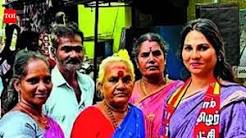
CHENNAI: “Reach for the skies, Villivakkam (vinnai thodum Villivakkam)”, is her campaign slogan. It could as well be her motto in life. Roshini S, 28, is the NTK candidate in the Chennai suburb of Villivakkam and the only transperson contesting the state assembly polls this year. “I was told the party was looking to field a transgender candidate, and I fit their requirements. Today, the people I meet as well as party cadres are convinced by the way I speak and connect with the public,” said Roshini, who joined NTK in Jan. Roshini, a social activist with an interest in environmental issues, is from Trichy. Asked how she ended up as the Villivakkam candidate, she said it was her party’s call. She had an interview with NTK supremo Seeman, where he asked her about her interests and what issues she would take up, after which he offered her the Villivakkam seat. Roshini has been a follower of Seeman for a decade. “We must ensure safety for our future generations, our land and our Tamil culture. I am trying to convey this to the people,” she said. “If I win this assembly election, the people of Villivakkam and I will make history by electing the first transwoman candidate.” Roshini begins her campaign at 9am and spends a couple of hours meeting people. But her main outreach is from 4.30pm till around 10pm, when she goes from door-to-door talking to people about her plans. She wants to identify school dropouts and set up tuition centres to help them, promote women’s entrepreneurial education, encourage forgotten Tamil cultural art forms, campaign against drug use, identify employment opportunities for youth and women, and take up environmental initiatives. Roshini says that she is seen as a sister by the public, rather than a transwoman. “I have barely seen two transgender persons in my constituency. I hope they will vote for me. But people here do not view me as a trans candidate, they see me as their sister,” she said. Roshini is contesting against Karthik Mohan of DMK, S R Vijayakumar of AIADMK, and Aadhav Arjuna of TVK. She is not the first transperson to contest assembly polls in TN. Courtesy : TOI Note: This news is originally published on https:/timesofindia.com/bha and is used purely for non-profit/non-commercial purposes, especially human rights
Transgender community protests: Jamshedpur transgender activists oppose new amendment law; Claim it undermines self-identification rights

Jamshedpur: The transgender community on Monday staged a protest outside deputy collector’s office as part of their ongoing opposition to the Transgender Persons (Protection of Rights) Amendment Act 2026. Claiming that the new Act has changed the definition of the transgenders, they claimed that the law has taken away their fundamental right to self-determination of the gender. “The Act grants state-appointed medical experts the power to determine whether a trans persons’ identity is legally valid. This is against the demands of the decades-long transgender movement in India,” said Amarjeet Singh, founder of the NGO Utthaan Community Based Organization (CBO) which works for the transgenders’ cause. Stating that the amended law violates the 2014 NALSA judgement of the Supreme Court, Singh said that making identity conditional is not a procedural change but exclusion in practice. Organisation member Arpit said that the hard-won rights of the transgenders people of the country have suffered a major reversal with the enactment of the new law. “This law is against the International Human Rights standards which provide for self-declared identity to form the basis for access to social security measures, benefits and entitlements,” Arpit said. He said that in the 2011 census, 4,87,803 individuals were recognised as third gender and so far, only 32,500 have identity cards which is essential for access to the govt welfare schemes. “The amended law will pose fresh obstacles in the identification of the third gender as none would like a medical examination for determining the trans gender,” said Priyanka. Courtesy : TOI Note: This news is originally published on https:/timesofindia.com/bha and is used purely for non-profit/non-commercial purposes, especially human rights
Undoing hard-won transgender rights
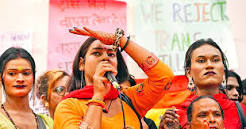
Chittajit Mitra on why the new transgender law is regressive On 13 March, the social justice and empowerment minister Virendra Kumar tabled the Transgender Persons (Protection of Rights) Amendment Bill, 2026 in the Lok Sabha. When I first heard this, I thought, in all my naïveté, they’re finally bringing in the changes the transgender community has been asking for. Provisions for horizontal reservations, for example, or just punishment for the different kinds of violence (against trans people) that had been clubbed together in the 2019 Act. But reality bit hard. The new Bill, instead of expanding the rights of the community, retracts almost all the rights they had won after fighting for decades. Even amid demands by the Opposition that the Bill be referred to a select committee for wider consultation, and a plea by lawyers and activists that the President withhold assent, the regressive provisions are now the new law. Why are these changes regressive? How do the amendments undermine or violate fundamental rights and dilute protections under Article 14 (equality before the law), Article 15 (non-discrimination), Article 19 (freedom of expression) and Article 21 (protection of life, personal liberty, bodily integrity)? First, the new law narrows the definition of ‘transgender person’. It delegitimises self-identification and empowers medical boards and district magistrates to grant recognition. In doing this, it goes against the Supreme Court’s landmark NALSA ruling (of 2014) that recognised the constitutional rights of transgender persons and established the principle of self-identification of gender identity. The system of graded punishments introduced in the new law, ostensibly to criminalise coercion/ deception/ allurement to make someone present themselves as transgender, uses overbroad language where even gender-affirming care can be interpreted as coercion. It ignores the community’s lived realities and potentially criminalises their support systems. I grew up in Uttar Pradesh listening to rumours about the transgender community: they are supposedly people with indeterminate genitals; they are involved in stealing and kidnapping children; they force people to castrate themselves… and so on. This kind of demonisation, which marginalised the community, now has the force of law behind it. In narrowing the definition of ‘transgender person’ to specific socio-cultural identities (kinnar, hijra, aravani, jogta) plus intersex variations, and in folding intersex persons into the transgender category — even though intersex variations are biological and distinct from gender identity — the new law disenfranchises individuals who don’t belong to these socio-cultural groups (what about trans groups like the Nupi Manbi from Manipur?) and non-binary, gender-diverse individuals. It attaches biological markers to ‘transgender-ness’ that contradict internationally accepted definitions of gender identity. As the European Institute for Gender Equality puts it, gender identity is ‘each person’s deeply felt internal and individual experience of gender, which may or may not correspond to the sex assigned at birth, including the personal sense of the body (which may involve, if freely chosen, modification of bodily appearance or function by medical, surgical or other means) and other expressions of gender, including dress, speech and mannerisms’. It reintroduces the formation of district-level medical boards to effectively certify transgender persons. This contentious provision has a history: it was initially proposed in 2016, flagged by activists as medical and bureaucratic gatekeeping and as a violation of the NALSA judgement (2014) and then withdrawn in the 2019 Act. The 2019 Act was far from ideal. Its disregard for the community’s right to dignity was conspicuous in the manner that violent crimes like rape and physical abuse were clubbed with milder offences against the community (like obstructing their use of public spaces) under a catch-all provision, carrying the same light punishment. Is it really, then, about ‘Protection of Rights’ — as the phrasing of the law may have you believe? When transgender members of the National Council for Trans Persons (NCTP) were called from different parts of the country for an urgent meeting with social justice minister Virendra Kumar, he thought it better to skip the interaction and sent bureaucrats instead. Resigning from the NCTP on 25 March (when the bill was passed by Rajya Sabha), Council members Kalki Subramaniam and Rituparna Neog shared what transpired during the deliberations. Asked about the unequal rape laws, for instance, the bureaucrats cited “biological differences” between trans women and cisgender women. This reveals the discriminatory mentality and the bio-essentialism — the belief that biological factors are the essence of who a person is — sitting at the core of the new law. Another treacherous amendment introduces severe punishment (10 years to life imprisonment) for attempts to ‘compel’ any person or child ‘to outwardly present a transgender identity’. The clause may appear harmless, even benevolent, but the overbroad definition of abuse can have a chilling effect on the support systems the community has relied on — NGOs, CBOs (community-based organisations), even traditional groups. Many trans individuals face natal violence and are forced to hide their true self at home. If they run away and seek refuge at any of these institutions, their families can easily file an ‘abduction or allurement’ case against those who gave them a safe space. This archaic understanding that parents or natal families can do no harm to the child has been proven wrong time and again, and yet we are blindly handing over the rights of transgender individuals to the family. Finally, the Indian queer community must understand that politics based on the disenfranchisement of any section of society will one day come round to haunt them as well. A small section of India’s LGBTQ+ has been desperately trying to seek validation from majoritarian forces; the new law should tell them where they stand. The malicious attempt to further marginalise and undercount us in the upcoming Census will not be tolerated. It is time to raise our voices as one. India travel guide Chittajit Mitra Chittajit Mitra (he/they) is a writer and translator based in Allahabad Courtesy : National Herald Note: This news is originally published on https:/nationalherald.com/bha and is used purely for non-profit/non-commercial purposes, especially human rights
Petition filed in SC challenging amended ‘transgender persons’ law
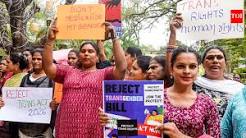
NEW DELHI: In less than a week since the controversial amendments involving definition of transgender persons, omission of “self-perceived identity” as the basis for approval for getting a TG certificate from a district magistrate and introduction of a medical board among other things were notified as law, a writ petition has been filed before the Supreme Court challenging the constitutional validity of the Transgender Persons (Protection of Rights) Amendment Act, 2026. The Bill to amend the 2019 law was passed by Lok Sabha on March 24 and Rajya Sabha on March 25 with a voice vote amid strong objections from the opposition that demanded that the bill be referred to a standing committee for wider consultations. It became law after President of India Droupadi Murmu gave her assent on March 30. The petition challenging the law has been filed by well known transgender rights activists Laxmi Narayan Tripathi and Zainab Patel. At its core, the petition raises a key concern asking whether the state can redefine identity in a way that takes away a person’s right to define themselves.Incidentally, Tripathi and Patel were lead petitioners in the landmark NALSA v. Union of India (2014) case, which recognised the rights of transgender persons under the Constitution. In their current petition the activists have argued that the 2026 amendment changes the foundation of how transgender identity is understood in law. “It moves away from self-identification and replaces it with a narrow, state-driven definition based on fixed categories and medical conditions. In doing so, it departs from what the Supreme Court had already affirmed in NALSA that gender identity is a matter of personal dignity and choice,” the activists highlight. One of the central concerns raised is the replacement of the earlier definition of a transgender person with a closed framework. The petition points out that many transgender persons who do not fall within these categories could be left without legal recognition. The petition challenges the removal of the explicit right to self-perceived gender identity, and flags provisions that blur the line between transgender identity and situations of coercion or trafficking. It raises concerns that existing rights, including identity documents issued under the earlier framework, may be put at risk. The challenge is based on violations of fundamental rights under Articles 14, 15, 19, and 21 of the Constitution, along with established principles in international human rights law. “This law takes us backwards. In NALSA, the Supreme Court affirmed that our identity comes from within, not from a checklist created by the State. Today, that core principle is being undone. As petitioners in that very case, we have returned to the Court because this amendment does not just change definitions, it changes lives. It risks pushing many transgender persons outside the protection of the law itself,” Tripathi and Patel said in a joint statement. “This is not a technical correction. It is a constitutional question about dignity, autonomy, and whether the State can decide who we are,” they said. Both Tripathi and Patel have also previously served as members when the National Council for Transgender Persons – a statutory body under the law. Tripathi is the founder of Astitva Trust and National Network for Transgender Persons and Patel, a ‘Diversity Equity and Inclusion’ strategist who is also the founder of Pride Business Network Foundation. Courtesy : TOI Note: This news is originally published on https:/timesofindia.com/bha and is used purely for non-profit/non-commercial purposes, especially human rights
NCTP representatives file plea in SC challenging Transgender Amendment Act

The plea raised certain constitutional question, as to whether the State, through legislation, can define who a person is by substituting biological or socio-medical classifications for a person’s lived and self-perceived identity. NEW DELHI: National Council for Transgender Persons (NCTP) Chairperson Laxmi Narayan Tripathi and member Zainab Patel have and filed a petition in the Supreme Court challenging the Constitutional validity of the Transgender Persons (Protection of Rights) Amendment Act, 2026 which introduced many changes to the legal framework governing the recognition, rights and protection of transgender persons. The amendment was passed by the Parliament recently, taking away the right to self-determination of gender, the plea claimed. The law had received presidential assent recently on March 31. The petition filed by Tripathi and Patel, is expected to come up for hearing within a week in the top court, a senior official from the Supreme Court registry told TNIE. “Keeping in view the sensitivity of the case, the plea will likely to come up for hearing in a week or so,” he said. It is to be noted that the controversial law amends the Transgender Persons (Protection of Rights) Act, 2019. It redefines who qualifies as a “transgender person,” while also strengthening penal provisions to address serious offences such as forced identity and bodily harm. The petition challenged the Amendment Act, as causing “irreparable constitutional injury” to the fundamental rights of transgender persons guaranteed under Articles 14, 15, 19 and 21 of the Constitution. The plea raised certain constitutional question, as to whether the State, through legislation, can define who a person is by substituting biological or socio-medical classifications for a person’s lived and self-perceived identity. “The amendments dismantle the principle of self-identification of gender recognised as a fundamental right by the Supreme Court in the landmark National Legal Services Authority (NALSA) v. Union of India judgment. The petitioners submit that the Court is now called upon to protect a right that it had previously declared to be intrinsic to dignity and personal autonomy under Article 21,” the plea stated. It further submitted that the Parliament has, by the stroke of a legislative pen, repealed the statutory right that this Court held to be a fundamental right under Article 21. “The impugned deletion does not even require elaborate constitutional analysis to expose its unconstitutionality: a provision that directly codifies a right declared fundamental by this Court cannot be omitted by ordinary legislation without violating Article 21 and the doctrine of non-retrogression of fundamental rights,” the plea says. After the new legislation was made, it was being severely criticised by pposition parties and LGBTQIA+ (Lesbian, Gay, Bisexual, Transgender, Queer, Intersex and Agender etc) communities. Those who opposed the legislation have argued that they were not consulted at all prior to the introduction of the Bill in parliament. Two members of the NCTP, Kalki Subramanium and Rituparna Neog, resigned from their posts the day the Rajya Sabha passed the Bill. Suchitra Kalyan Mohanty Courtesy : TNIE Note: This news is originally published on https:/thenewindianexpress.com/bha and is used purely for non-profit/non-commercial purposes, especially human rights
T launches skill prog for transgender persons

Hyderabad: In a push for social and economic inclusion, the Telangana govt on Saturday launched a dedicated skill development programme for transgender persons, aimed at promoting sustainable livelihoods and self-reliance. Inaugurating the initiative at the National Institute of Tourism and Hospitality Management (NITHM) in Gachibowli, welfare minister Adluri Laxman Kumar said the programme reflects the govt’s commitment to ensuring dignity and equal opportunities for the transgender community. He said the initiative builds on earlier steps towards inclusion, including engaging transgender persons in traffic management and as security personnel in the Metro. The new programme will focus on three sectors—car driving, hotel management and drone piloting—offering viable avenues for employment and entrepreneurship. Highlighting the growing scope of drone technology, the minister noted its applications in areas such as photography, agriculture and event management, creating new livelihood opportunities. He expressed confidence that trainees would be able to leverage these skills to build careers in emerging sectors. A total of 91 transgender persons will benefit from the programme, with the govt allocating ₹17.72 lakh for training and related support. He said the focus would not only be on skill development but also on facilitating employment opportunities. Reiterating the govt’s inclusive approach, he said transgender persons are being recognised as equal stakeholders in society. “True development is possible only through social justice and economic empowerment,” he added. Courtesy : TOI Note: This news is originally published on https:/timesofindia.com/bha and is used purely for non-profit/non-commercial purposes, especially human rights
UN Human Rights Office Says India’s Changed Transgender Law Risks Hard-Won Rights

The UN criticised the swift passage of the Transgender Persons (Protection of Rights) Amendment Act, 2026, saying mandatory medical verification undermines self-identification and marginalises transgender people. New Delhi: The United Nations Human Rights office on Thursday (April 2) denounced the swift passage of the Transgender Persons (Protection of Rights) Amendment Bill, 2026, saying it risks “setting back hard won rights” of the transgender people in India. “We regret the fast passage of Transgender Persons (Protection of Rights) Amendment Bill, 2026, without adequate stakeholder consultation. The amendments risk setting back hard-won rights of transgender people, replacing self-identification with mandatory medical verification processes,” the international body stated in a post on X. Noting that India has been a pioneer for rights of transgender and gender-diverse people, the UN said that the Bill “will have far-reaching impacts on right to privacy & risk marginalisation of transgender people”. The statement comes days after President Droupadi Murmu gave her assent to the Bill on March 30, amid widespread protests and condemnation from across the country. According to the law ministry’s gazette notification, the amended bill – now an Act – came into effect almost immediately. Earlier on March 31, Amnesty International condemned the president’s assent to the Bill saying it “denies transgender and gender diverse people the right to self-identify”. and “is a serious setback for human rights in India”. Aakar Patel, the organisation’s India head, said, “This regressive law dilutes safeguards and deepens state intrusion into the lives of transgender people.” Meanwhile, the Rajasthan high court, while hearing a separate matter on horizontal reservation for transgender persons in the state, also underscored that the right to self-identify one’s gender is a matter “of right”, cautioning that the Modi government’s Bill risks reducing it to a “contingent, state-mediated entitlement”. Lok Sabha as well as Rajya Sabha passed the Bill by voice vote after minimal discussion, dismissing opposition MPs who slammed the government’s haste and demanded the Bill be referred to a select committee. Opposition MPs had criticised the Bill for taking away the right to self-determination of identity, granted by the 2014 NALSA judgement and part of the 2019 Transgender Persons (Protection of Rights) Act. The 2026 Act seeks to redefine the term transgender as “a person having such socio-cultural identities as kinner, hijra, aravani and jogta or eunuch”, or a person with specific “intersex variations”, or “a person who, at birth, has a congenital variation” in sex characteristics as compared to male or female development in their “primary sexual characteristics, external genitalia, chromosomal patterns, gonadal development, endogenous hormone production or response or such other medical conditions”. It controversially mandates that a transgender person “shall not include, nor shall ever have been so included, persons with different sexual orientations and self-perceived sexual identities”. Courtesy : The Wire Note: This news is originally published on https:/thewire.com/bha and is used purely for non-profit/non-commercial purposes, especially human rights