
Supreme Court Pulls Up Delhi High Court, Says Justice Asha Menon Panel Can’t Decide Transgender Job Rights Cases

The Supreme Court of India ruled that the Justice Asha Menon Advisory Committee has no power to decide legal disputes on transgender recruitment. It granted relief to petitioners and said courts—not committees—must decide such rights-based issues. The Supreme Court of India has recently raised serious concerns over how the Delhi High Court handled a case related to the recruitment rights of transgender persons in public employment. While issuing notice in the matter, the apex court observed that the High Court made a prima facie mistake by disposing of the petitions and asking the petitioners to approach an advisory body instead of deciding the legal issues itself. The case revolves around the rights of transgender individuals seeking fair representation and opportunities in government jobs. The Supreme Court bench comprising Justice J. B. Pardiwala and Justice K. V. Viswanathan made it clear that the Advisory Committee headed by former Delhi High Court judge Justice Asha Menon does not have the power to decide legal disputes. The Court observed, “Prima facie, we are of the opinion that the High Court committed an error in disposing of the writ petition by directing the petitioner to approach the Advisory Committee as the Committee possesses no adjudicatory powers.” The Supreme Court clarified that the role of the Advisory Committee is limited. It is only meant to study issues and give policy recommendations to the government. It cannot decide individual legal cases or grant relief to petitioners. During the hearing, the Court also recalled that the petitioner had earlier approached the Supreme Court directly under Article 32 while the case was still pending before the High Court. Referring to that, the bench stated, “We must note at the outset that in 2023, the petitioner had also approached this Court under Article 32 of the Constitution during the pendency of the aforesaid writ petition before the High Court. The petitioner prayed for reliefs pertaining to the framing of an equal opportunity policy, the implementation of various provisions of the TPPR Act and TPPR Rules including various other reliefs in the specific facts of her case. While dealing with the said petition, this Court delivered the judgment titled Jane Kaushik v. Union of India, reported in 2026 (1) SCC 336, wherein several binding directions relating to the implementation of the TPPR Act and TPPR Rules, respectively were issued.” The Court further explained that the Advisory Committee is still working on several important issues related to transgender rights. These include creating an Equal Opportunity Policy, improving grievance redressal systems, ensuring inclusive healthcare, and addressing gaps in the law. Highlighting this, the Court said, “The Advisory Committee is currently in the process of working on the aspects broadly delineated in their remit including the formulation of a model equal opportunity policy in employment and education.” Importantly, the Supreme Court granted interim relief to the petitioner. It allowed the petitioner to apply for government job vacancies under the transgender category, even if the vacancy mentions a specific gender. This is in line with an earlier interim order passed in January 2023, ensuring that transgender candidates are not excluded from opportunities due to rigid gender classifications. The original petitions filed before the Delhi High Court had sought several directions to strengthen transgender rights in public employment. These included demands for separate vacancies, reservation in jobs including teaching posts in Delhi, age and qualification relaxations, and allowing changes in name and gender on official recruitment portals. While deciding the case earlier, the Delhi High Court had relied on important judgments like NALSA v. Union of India, which recognized transgender persons as the “third gender” and directed the government to treat them as socially and educationally backward classes. The High Court had also referred to the Supreme Court’s recent decision in Jane Kaushik v. Union of India, which highlighted gaps in implementing the Transgender Persons (Protection of Rights) Act, 2019 and its 2020 Rules. Based on this, the High Court felt that since the Supreme Court had already formed an Advisory Committee to deal with these issues, the petitioners should approach that body instead. However, the Supreme Court has now clarified that such committees cannot replace courts when it comes to deciding legal rights. The matter will now be heard further after notice has been issued. In a related development, the Advisory Committee led by Justice Asha Menon has reportedly recommended that the Union Government withdraw the proposed Transgender Persons (Protection of Rights) Amendment Bill, 2026, indicating ongoing concerns about the legal framework governing transgender rights in India. This case is likely to have significant implications for how transgender rights are enforced in public employment and how courts balance policy-making bodies with judicial authority in protecting fundamental rights. By Hardik Khandelwal Courtesy : Law Chakra Note: This news is originally published on https:/lawchakra.com/bha and is used purely for non-profit/non-commercial purposes, especially human rights
No State Can License a Life: National Transgender Day in India 2026

On April 15, 2014, the Supreme Court of India issued one of the most important judgments in the country’s modern human rights history: NALSA v. Union of India. In that decision, the Court recognized transgender people as a third gender and affirmed something profound and simple at the same time: gender identity is bound up with dignity, autonomy, and the freedom to live as oneself. The Court did not treat identity as a favor to be granted by the state. It treated it as part of personhood itself. Twelve years later, National Transgender Day arrives in a far darker political atmosphere. This year, the anniversary is not only a moment to honor a legal breakthrough. It is a moment to defend it. The Transgender Persons (Protection of Rights) Amendment Act, 2026 has triggered protests across India because it strikes at the heart of what made NALSA so historic: the principle that trans people have the right to self-identify. The amendment removes the 2019 law’s explicit protection for self-perceived gender identity, narrows who counts under the law, and pushes recognition back through medical and bureaucratic gatekeeping. That is why this day in 2026 cannot be marked with easy language about progress For years, even imperfect law carried the promise that India was moving, however unevenly, toward a society where trans people would not have to justify their existence before officials, doctors, or hostile institutions. The new law pulls in the opposite direction. It says, in effect, that the state knows your identity better than you do. It suggests that recognition must come after scrutiny. It replaces lived truth with paperwork, and autonomy with permission. That is not a technical change. It is a moral one. When a government takes away self-identification, it is not merely revising procedure. It is asserting control over the deepest parts of a person’s life. It is saying that your name, your body, your documents, your future, and even your social legibility can be filtered through state approval. For marginalized people, this kind of control is never abstract. It shapes access to healthcare, housing, education, work, mobility, family recognition, and safety. It determines who is seen as real and who is pushed into administrative shadow. The protests erupting across India have understood this clearly. Demonstrations have taken place in Delhi, Bengaluru, Mumbai, Pune, Lucknow, Madurai, and other cities, with participants warning that the law erases many trans people, criminalizes lived realities, and turns identity into something the state can police. In Delhi, hundreds gathered at Jantar Mantar demanding rollback. In Bengaluru, recent protests at Freedom Park again centered opposition to medical certification, privacy violations, and the exclusion of gender-diverse communities from recognition. The resistance has moved into the courts as well. Challenges to the 2026 law are now being heard in the Delhi and Kerala High Courts, with petitioners arguing that the amendment rolls back constitutional protections and replaces self-identification with a rigid, medically determined framework controlled by the state. That matters because this is not only a political dispute. It is also a constitutional one. NALSA did not frame gender identity as a discretionary matter. It located it within equality, liberty, dignity, and self-expression. This is the larger lesson of National Transgender Day in 2026: a society reveals itself by how badly it wants to regulate the people who do not fit its preferred order. Authoritarian politics always has a fascination with classification. It wants sharp borders, rigid categories, obedient paperwork, and bodies that can be sorted, watched, and disciplined. Trans freedom challenges that impulse at its root. It insists that human beings are not state property. It insists that dignity does not begin at the district magistrate’s desk. That is why solidarity today must be more than symbolic. It means defending self-identification not as a niche demand, but as a basic democratic principle. It means listening to trans communities when they say this law will deepen precarity. It means refusing the lie that bureaucratic control equals protection. And it means understanding that whenever the state claims the right to overrule a person’s own account of who they are, everyone’s freedom becomes smaller. National Transgender Day should still be a day of pride, memory, and gratitude. We remember the courage of those who fought for NALSA. We honor the trans people who forced India to confront truths it had long refused to see. But in 2026, this day is also a warning. Courtesy : Hindus for Human Right Note: This news is originally published on https:/hindusforhumanright.com/bha and is used purely for non-profit/non-commercial purposes, especially human rights
The anatomy of audacity: Why India’s trans community is bracing for legal redaction

From medical tribunals to the criminalisation of chosen families, trans activists reveal how India’s new legislation weaponizes the healthcare system to exhaust its trans population into invisibility The anatomy of audacity: Why India’s trans community is bracing for legal redaction The 2026 Amendment to the Transgender Persons (Protection of Rights) Act has effectively gutted the soul of trans dignity in India: the right to self-identification. This move stands in direct defiance of the landmark 2014 NALSA v. Union of India verdict, in which the Supreme Court of India ruled that the individual—and only the individual—is the sovereign authority over their own gender. Today, that sovereignty is being subdued by a state that treats legal history as something that can be undone with a single signature. The scale is staggering. While the 2011 Census officially recorded 4.87 lakh transgender individuals, the National AIDS Control Organisation and community advocates estimate the actual figure is closer to one crore. By replacing self-identification with a medical tribunal, the state is attempting to funnel millions of diverse lives through a single clinical needle—a bureaucratic bottleneck designed to exhaust a population into invisibility. For Priyadarshini, a 29-year-old non-binary femme lesbian brand manager, and gender and sexual rights activist in Kolkata, the speed of the legislation felt like a physical strike. “The bill came to the floor of the lower house—passed amidst opposition—and within a week it went to the upper house, and the President gave it an assent,” she recalls. Priyadarshini, who has spent years balancing a corporate career with front-line advocacy, sees the timing as a deliberate tactic of exhaustion. “By 11 o’clock at night, we start hearing things, and by the very next morning, there’s a gazetted copy. If our government really works so fast, why does our country have so many issues?” She says wearily, “It feels like they are moving under the cover of night to overwrite our humanity before we can even organise a response. How can the legislature go against what the Supreme Court has already said?” The intrusion of the cis gaze The ‘audacity’ at the heart of this crisis doesn’t belong to the protestors screaming in the streets— it belongs to the architects of this erasure. There is a grotesque irony in watching a room of cisgender politicians legislate the boundaries of trans existence. “Imagine a stranger, who has never lived a day in your skin, deciding if you are ‘real’ enough to exist in the eyes of the law. It is a profound violation to have your truth treated as a debatable topic by people who have no skin in the game,” counters Priyadarshini. This is the institutionalisation of the ‘cis gaze’—the state’s declaration that an internal truth is a mere suggestion, while a clinical observation is the absolute fact. When laws are built on the assumptions of those who have never navigated the vulnerabilities of gender nonconformity, the result is a framework of indifference. By reversing the burden of proof, the Act forces trans individuals to justify their existence to a committee of cisgender strangers, transforming a birthright into a medical permit. “It forces my trans siblings to stand before a medical board, to potentially strip, to be ‘assessed’ by people who have likely never read the NALSA judgment. We are being told to wait for a stranger’s verdict on our own identity. This amendment is fundamentally broken,” she insists. The clinical weapon: Assessment as assault The amendment introduces a mandatory ‘District Screening Committee’ and a medical verification process for anyone seeking a gender certificate. This isn’t just a new layer of red tape—it is a psychological siege. Adityuh, a 24-year-old trans-masculine psychology student and community support worker in Delhi, views the move as state-sponsored gaslighting. “Identity isn’t something you prove; it’s something you are,” they say. This clinical turn is particularly harrowing given the existing healthcare landscape. According to a report by the National Human Rights Commission, roughly 92 per cent of transgender people in India are deprived of the right to participate in any form of economic activity, due to institutional discrimination. For Adityuh, the hospital—a place that should theoretically be a sanctuary of healing—is being repurposed. “When I think of a hospital now, I don’t think of care. I think of trauma and doctors with God complexes who treat you like a fascinating specimen,” they recoil. Under the 2026 amendment, the clinic is transformed into an outpost of the police station—a site for reporting and verification. The white coat becomes a uniform of the state. “The state is saying, ‘We’ll let you live, provided you transition on our terms’. But who is ensuring that process isn’t a nightmare? Trans individuals are treated with blatant transphobia by the very staff supposed to ‘verify’ us,” Adityuh questions. A safety net in flames Beyond the individual struggle for a piece of identification, the Act threatens the informal support systems the community has spent decades weaving together. In India, where traditional family structures often reject queer children, the ‘chosen family’ or the Gharana system has been a literal life-saver. Rio, a 25-year-old trans-masculine non-binary corporate professional and community advocate in Delhi, points to the calculated vagueness of the amendment as a tool for systemic erasure. “The language here is a trap,” Rio elaborates. “By making self-identification illegal and requiring ‘medical proof’ for legal recognition, the bill endangers the safe homes, the NGOs, and even the families who choose to stand by us. If you aren’t legally recognised, anyone harbouring you could be accused of kidnapping or enticing a minor, even if you are an adult.” Rio, the primary earner for their family, faces a terrifying paradox. Even their supportive mother now lives in terror, “My mom told me, ‘Don’t leave me if you are thinking of doing that.’ The government criminalises her with the kind of vague language it brings into action. That fear is now a permanent resident in our home.” This ambiguity systematically abolishes the support systems that have historically buffered trans individuals from
Youth posing as transgender detained for stealing phone in Odisha’s Bhadrak

The accused allegedly stole a mobile phone from his pocket when he was asleep. The matter has raised concerns over safety at public places, especially during late hours. In a shocking incident, a youth was detained by police on Sunday in the Chandbali area of Odisha’s Bhadrak district for allegedly posing as a transgender and stealing a mobile phone from a youth while he was asleep at railway station. Theft at Railway Station According to the complaint, the incident occurred when the victim Bichitra Roul was resting at the station. The accused allegedly stole a mobile phone from his pocket when he was asleep. The matter has raised concerns over safety at public places, especially during late hours. “He stole my mobile phone for which I caught him and immediately informed my brother about it. I was sleeping at the station, when he (the accused) came and slept beside me. He took my bedsheet and went to sleep. When police officers informed us to keep our belongings safe, I woke up and when I searched my phone in my pocket, it was not there. When I asked him about the mobile, he tried to escape following which I caught him,” said victim Bichitra Roul. “He told me to give him money, accusing me of stealing the phone from his pocket,” said Manas Mohanty, youth posed as transgender. Disguise Used to Gain Trust Police sources said the accused is suspected of posing as a transgender person to gain people’s trust before carrying out such thefts. This aspect has shocked locals, as it indicates a calculated attempt to deceive victims. Following the complaint, police detained the accused and have launched an investigation. He is currently being interrogated to ascertain further details and any possible involvement in similar incidents. Bibhu Prasad Ray Courtesy : Odisha TV Note: This news is originally published on https:/odishatv.in/bha and is used purely for non-profit/non-commercial purposes, especially human rights
Supreme Court Lets Transwoman Apply for Delhi Government Teacher Recruitment, Seeks Response On Wider Plea

The Supreme Court of India has granted interim relief to a transgender applicant while agreeing to examine systemic gaps in public recruitment. In a significant step toward inclusive employment, the Supreme Court of India on April 10, 2026, permitted a transwoman, Jane Kaushik, to apply for teacher recruitment in Delhi government schools under the “transgender” category. A bench of Justices J.B. Pardiwala and K.V. Viswanathan issued notices to the Delhi government and the DSSSB after Kaushik revealed that the recruitment portal restricted applicants to “male” or “female” binaries. The Court has now agreed to examine her larger plea for a comprehensive recruitment policy and separate vacancies for transgender persons in public employment, ensuring their constitutional rights aren’t reduced to a “dead letter.” Breaking the Binary: A Fight for Representation The petitioner, Jane Kaushik a highly qualified educator with degrees in Political Science and Education approached the apex court highlighting the “grossly apathetic attitude” of state institutions. Despite the landmark 2014 NALSA judgment, the Delhi Subordinate Services Selection Board (DSSSB) portal continued to exclude non-binary identities. During the hearing, Justice Pardiwala noted that while Kaushik was registered as a transgender person, she was physically unable to submit applications for specific teaching posts. “You are absolutely right,” the bench remarked to Kaushik’s counsel, reviving a previous interim relief that allows her to apply for any vacancy of her choice, regardless of the gender mentioned in the advertisement. This legal battle follows years of systemic hurdles; Kaushik was previously forced to resign from a school in Uttar Pradesh and denied a role in Gujarat due to her gender identity. While the Supreme Court had established an advisory committee in October 2025 to draft an “Equal Opportunity Policy,” Kaushik argued that an advisory body lacks the adjudicatory power to protect individual fundamental rights. Her plea seeks more than just a job; it demands a dedicated recruitment framework, including age relaxations and specific vacancies, to prevent transgender candidates from “aging out” of the system while waiting for bureaucratic wheels to turn. The Logical Indian’s Perspective At The Logical Indian, we believe that true progress is measured not by the laws we write, but by the dignity we afford to our most marginalised citizens. It is disheartening that over a decade after the NALSA verdict, a qualified educator must still knock on the doors of the highest court just to fill out a job application. Employment is more than a livelihood; it is a tool for social integration and self-respect. We urge the Delhi government and the Union to move beyond “committees” and implement a recruitment policy that reflects the diverse reality of our society. A classroom led by a transgender teacher is not just a win for employment it is a lesson in empathy and coexistence for the next generation. Sandipta Ghosh Courtesy : TLI Note: This news is originally published on https:/thelogicalindian.com/bha and is used purely for non-profit/non-commercial purposes, especially human rights
Identity On Trial: Constitutional Debate On Transgender Rights In India

In recent weeks, a familiar yet unsettled question has returned to discussion: who has the authority to define identity? For transgender people, it is not merely a discussion, but one that shapes their access to education, employment, and ultimately, dignity. The marginalisation of transgender persons has been consistent, as society confines them to roles of entertainment and cultural bridges. Moreover, the recent amendments to the Transgender Persons (Protection of Rights) Act, 2019 have raised several questions regarding the dignity, opportunities, and welfare of the transgender community. Constitutional Foundation It was held in NALSA v. Union of India by the Supreme Court of India that every person has the right to self-identify their gender. This means that gender identity is based on the personal autonomy and dignity of an individual. The identification of one’s gender is independent of any medical or surgical intervention. Self-identification is thus recognised and protected as a part of fundamental rights. This principle flows from Article 14 of the Constitution, which guarantees equality before the law to all persons. The Court expanded its scope to include transgender persons, emphasising their entitlement to substantive equality. Further, Article 19(1)(a) has been interpreted to include the right to express one’s gender identity through behaviour, self-presentation, and appearance—recognising gender expression as constitutionally protected. Additionally, Article 21, as affirmed in Justice K.S. Puttaswamy v. Union of India, guarantees dignity, autonomy, and privacy. Gender identity, being central to personhood, falls within this protection. In Navtej Singh Johar v. Union of India, the Court reinforced that constitutional morality must prevail over social morality, strengthening identity-based rights. Taken together, the constitutional position is clear: self-identification is not merely a policy choice, but a right firmly grounded in dignity, equality, and autonomy under the Constitution. The Amendment and Its Implications The Supreme Court’s landmark judgment of 2014 in National Legal Services Authority (NALSA) v. Union of India transformed transgender rights in India by recognising gender identity as a constitutional right based on equality, dignity, and autonomy. It also directed the government to provide reservations—an aspect that still largely remains on paper—and to implement other welfare measures for the third gender. However, the recent amendment to the Transgender Persons (Protection of Rights) Act, 2019, which aims to maintain dignity and protect rights, is being opposed by the transgender community, as it is seen to undermine the right to self-identity—where a person could identify as transgender based on self-perceived identity. Under these changes, a medical process is involved in verifying identity before certification by the District Magistrate, as was the case earlier. This approach contradicts the Supreme Court’s NALSA judgment, which clearly held that no compulsory medical procedure is required for the self-identification of a transgender person. While the amendment recognises traditional identities such as Hijra and Kinner, it narrows the scope of individual self-identification, potentially excluding those identified outside these community-based categories. From a technical standpoint, the amendment introduces three key changes. Firstly, it dilutes the principle of self-identification, central to prior jurisprudence. Second, it mandates medical or administrative certification, reinforcing external scrutiny. Third, it adopts a restrictive definition, limiting inclusivity. Thus, the amendment sits at the intersection of state regulation and individual rights, raising important constitutional questions. Constitutional Tensions & Social Impact The recent amendment raises a critical constitutional issue within the broader framework—whether Parliament can impose conditions that dilute judicially recognised fundamental rights. In NALSA v. Union of India, the Supreme Court held that self-identification of gender is integral to Articles 14, 19, and 21. However, the amendment’s requirement of medical or administrative certification shifts this right from self-determination to state validation, creating a doctrinal conflict with established principles. While Parliament has the authority to legislate, such measures are generally assessed against the standard of reasonableness and proportionality. As noted in Justice K.S. Puttaswamy v. Union of India and Anuradha Bhasin v. Union of India, state action should be proportionate and balanced with individual rights. Thus, the amendment reflects an evolving balance between state regulation and individual rights, and may shape future constitutional interpretation. The authentication process under the medical board raises concerns regarding the dignity of transgender people, as they are required to undergo verification of their gender identity. From a humane perspective, this process may involve the examination of physical or medical characteristics by the medical board, which can amount to a violation of their dignity and fundamental rights. However, there is no such mandatory procedure for individuals identifying as male or female, whose gender identity is generally accepted without scrutiny. As held in the NALSA judgment, the Supreme Court categorically stated that self-identification of gender is a fundamental right, and that no medical or surgical requirement can be imposed as a precondition for legal recognition. Reform or Regression? The amendment raises a critical policy debate: can the State subject gender identity to institutional verification, overlooking the constitutional guarantees of dignity and autonomy? The State argues that mandatory gender verification by a medical board is necessary to prevent the misuse of benefits. However, this raises a pertinent question: why would a person, whose gender identity is already socially and legally recognised, choose to identify as transgender merely to access welfare benefits? Critics argue that such regulation comes at the cost of constitutional values. By requiring medical or administrative validation, the amendment shifts identity from a fundamental right towards a status approved by the State. This raises concerns of gatekeeping, where access to legal recognition becomes dependent on institutional criteria. There is also a broader concern regarding exclusion. The narrower definition of “transgender” may risk marginalising non-binary individuals, which appears inconsistent with the inclusive approach in NALSA v. Union of India and reinforced in Navtej Singh Johar v. Union of India. This debate ultimately revolves around a deeper constitutional question—whether the State’s interest in regulation justifies intrusion into aspects of personal identity. It is not merely a question of policy design, but of constitutional principle: whether identity is to be recognised by the State or regulated by it. A sound path, grounded in
Policing the Self: A Law That Subjects Transgender Identity to Certification and Surveillance

A democratic law on transgender rights would begin by trusting the person—recognising self-identification without bureaucratic mediation The 2026 amendment shifts transgender identity from a matter of self-determination to state certification, deepening bureaucratic control and surveillance. It conflicts with Supreme Court jurisprudence affirming dignity, privacy, and self-identification, particularly in NALSA and subsequent landmark rulings. By narrowing definitions and excluding “self-perceived sexual identities,” the law reflects an ideological push toward fixed, state-sanctioned identities. The Transgender Persons (Protection of Rights) Amendment Act, 2026, is being projected as a measure for protection and clarity. In substance, however, it does something more sinister: it recasts transgender existence as a matter to be policed, certified, monitored, and ideologically contained. It does not proceed from the premise that gender identity is a domain of personal autonomy protected by the Constitution. Rather, it proceeds from suspicion. It imagines the transgender person not as a rights-bearing citizen but as a problematic social figure requiring state management. In this sense, the Act is not merely flawed legislation. It is the legal expression of a deeper political morality—one that is profoundly consonant with the Hindutva project of enforcing a disciplined social order built around fixed identities, patriarchal family norms, and suspicion of all forms of embodied difference. On the one hand, this case brings forward certain issues regarding the position of the US on the international arena, namely whether the country can still play an influential role or if it is now experiencing the period when its decisions are doubted. – Anupam Sai The 2026 amendment must be read alongside the already discredited architecture of the 2019 Act. The original Act had been widely criticised for violating the very principles the Supreme Court had affirmed in National Legal Services Authority v. Union of India (NALSA), where the Court held that gender identity is rooted in self-identification and is inseparable from dignity, liberty, and equality. The amendment does not cure that foundational defect. If anything, it sharpens it. It tightens the state’s hold over identity and, in doing so, reveals the ideological discomfort that the present regime has with the transgender concept itself. What is especially alarming is the amendment’s move to remove the Act’s broader definition of “transgender person” and instead list categories of persons included, while explicitly stating that the law does not include, and never included, persons with “different sexual orientations and self-perceived sexual identities.” PRS Legislative Research notes this as one of the Act’s key changes. The same summary also notes that the Act makes a revised certificate mandatory after surgery and requires the medical institution to furnish information about such surgery to the District Magistrate. This is not mere drafting. It is an attempt to redraw the field of legitimate gender identity in a way that makes it narrower, more surveillable, and more governable. At the heart of the constitutional problem lies a very simple question: who owns identity? In a constitutional democracy, identity belongs to the person. In this Act, identity belongs to the state. The core vice of the amendment is that it remains fundamentally incompatible with the doctrine of self-identification laid down by the Supreme Court. In NALSA, the Court recognised the right of persons to determine their gender identity as male, female, or third gender, and treated that right as intrinsic to dignity and freedom. Later constitutional developments only strengthened this logic. In Puttaswamy, privacy was recognised as including decisional autonomy and bodily integrity; in Navtej Johar, the Court held that identity, orientation, dignity and intimacy cannot be subordinated to majoritarian morality. The Court also made clear that constitutional rights cannot depend on social approval, and that constitutional morality must prevail over popular or sectarian moral codes. The amendment stands against this entire constitutional trajectory. It does so first by preserving the logic that identity must be mediated by official certification, and second by deepening the state’s role in tracking bodily transition. Even before this amendment, the 2019 framework had been criticised for forcing transgender persons into a bureaucratic recognition regime under the District Magistrate. The draft rules had gone so far as to require a psychologist’s report and residency proof, until criticism forced some softening. PRS had pointed out that such requirements were incompatible with self-perceived identity and especially burdensome for a community often facing homelessness, ostracism and unstable residence. A member of Lesbian Gay Bisexual Transgender and Queer (LGBTQ) community wearing a t-shirt that reads “Yes, we exist India” as seen outside August Kranti Maidan, celebrating 16 years of the official pride march in Mumbai. The rainbow flag signifies joy but the march remains a protest at its core demanding the fundamental rights still denied to the LGBTQ community in India. – null The amendment intensifies the same logic by making revised certification mandatory after surgery and by requiring the medical institution to report the surgery to the District Magistrate. That move is constitutionally indefensible. It converts one of the most intimate dimensions of personhood into a matter of administrative reporting. It effectively deputises hospitals into a surveillance chain. It assumes that the state has a legitimate interest in being notified when a person’s body changes in ways relevant to their gender identity. That is not protection. That is biopolitical supervision. No comparable burden is imposed on cisgender citizens to establish or continually validate the coherence between their body, identity and state records. The transgender citizen alone is made to pass through documentary and institutional checkpoints. That asymmetry offends Article 14 not only because it is unequal, but because it is irrationally unequal. It burdens a vulnerable class precisely in the domain where the Constitution demands maximum protection. The amendment is equally vulnerable under Article 21. Gender identity is not an external administrative category like land ownership or vehicle registration. It is bound up with selfhood, bodily autonomy, dignity, privacy, and the right to live without humiliation. A law that allows the state to mediate or monitor this sphere invades the core zone of decisional autonomy that the Court has
Transgenders In Madhya Pradesh Seek Separate Public Toilets, Horizontal Reservation

The Madhya Pradesh Social Justice Department is drafting a transgender policy expected by year-end, focusing on documentation, infrastructure and welfare issues. Community members have demanded separate public toilets and horizontal reservation, citing barriers in identity documents and employment. Officials said consultations are underway with stakeholders, including the Transgender Board. Bhopal (Madhya Pradesh): The social justice department is drafting a comprehensive transgender policy, expected by the year-end, to address the systemic challenges faced by the community in Madhya Pradesh. Based on direct feedback from community members, the policy aims to streamline access to essential documents and improve public infrastructure to ensure a more dignified life for transgenders. Atal Bihari Institute of Policy Analysis is likely to be roped in by the department to prepare the policy. A senior officer of the social justice department told Free Press that a convention was held recently where members of the community expressed the need for separate public toilets, as they feel uncomfortable using existing facilities in public places such as markets. As they are often disowned by families, many do not have birth certificates. This leads to a multitude of problems. Moreover, they face significant hurdles in obtaining Aadhaar cards, particularly after undergoing sex reassignment surgery. Regarding reservation, the government currently includes them in the Other Backward Class (OBC) category. However, community members point out that many among them also belong to Scheduled Castes and Scheduled Tribes. In such a situation, they argue that OBC reservation is not justified and are demanding horizontal reservation instead of vertical. Social stigma also creates obstacles in securing accommodation and employment. The department has recorded 1025 transgenders in the state. Consultations on policy begin Principal Secretary, social justice department, Sonali Ponkshe Vayangankar told Free Press that the Madhya Pradesh government has constituted a Transgender Board, which held its meeting on March 30. Minister Narayan Singh Kushwah chaired the meeting, where various important issues were discussed. The Minister directed all departments to ensure speedy disposal of issues related to the community. A transgender policy will be drafted by consulting stakeholders by the year-end. Courtesy : TFPJ Note: This news is originally published on https:/thefreepressjournal.com/bha and is used purely for non-profit/non-commercial purposes, especially human rights
14 transgenders become beauticians in Ramgarh

Ramgarh: Fourteen members from the transgender community were handed certificates for completing beautician courses here on Friday. The certificates were handed over to them by Ramgarh deputy commissioner Faiz Aq Ahmed, local MLA Mamta Devi and deputy development commissioner Ashish Agarwal. “The transgender community members received beautician training at a centre in Bhurkunda from March 16 to April 2. This is for the first time that transgenders became trained beauticians,” Ahmed said. Courtesy : TOI Note: This news is originally published on https:/timesofindia.com/bha and is used purely for non-profit/non-commercial purposes, especially human rights
Clinical Psychology Society Flags Concerns Over Transgender Persons Amendment Bill, 2026
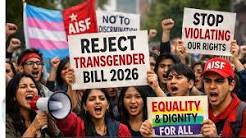
The Clinical Psychology Society of India has raised concerns over the Transgender Persons Amendment Act, 2026, criticising the removal of self-identification rights and mandatory medical certification. It said such provisions contradict legal and global norms and could harm mental health and access to care for transgender individuals. Mumbai: The Clinical Psychology Society of India (CPSI) has issued a formal position statement expressing concern over key provisions in the Transgender Persons (Protection of Rights) Amendment Bill, 2026, which received Presidential assent on 31 March 2026. The organisation stated that its intervention is guided by its ethical obligation to safeguard the wellbeing, dignity and access to care of vulnerable populations. Removal of Self-Identification Right Violates NALSA Judgment In its statement dated 7 April 2026, CPSI criticised the removal of the right to self-identification and what it described as the arbitrary introduction of recent amendments that redefine gender classification. The body argued that such provisions run contrary to the landmark NALSA v. Union of India (2014) judgment, which recognised the right to self-identify one’s gender as a fundamental aspect of dignity, autonomy and inclusion. The organisation further highlighted that the World Health Organization’s International Classification of Diseases (ICD-11), adopted in 2019 and widely followed in India, acknowledges gender identity as a natural variation in human experience rather than a mental disorder. CPSI noted that this global shift towards more affirming and rights-based approaches is reflected in contemporary clinical practice, where diverse gender identities and expressions are recognised and supported. Raising additional concerns, CPSI warned against processes mandating medical certification or review as prerequisites for recognising gender identity. It stated that such measures could function as gatekeeping mechanisms, potentially creating further barriers for individuals already navigating systemic inequities and minority stress. These barriers, the organisation cautioned, could adversely affect mental health outcomes, help-seeking behaviour and access to essential care services. Reaffirming its professional commitments, CPSI underscored the importance of ethical standards in mental healthcare, including the right to dignity, confidentiality, informed consent and access to the least restrictive care. It cited provisions under the Mental Healthcare Act, 2017 as foundational to its approach. The statement concluded with a call for policies that are trauma-informed, inclusive and aligned with both constitutional principles and international best practices, emphasising the need for legal and social systems that respect and respond to gender diversity. Courtesy : TFPJ Note: This news is originally published on https:/thefreepressjournal.com/bha and is used purely for non-profit/non-commercial purposes, especially human rights