
Petition in Supreme Court flags ‘erasure’ of trans men in new law
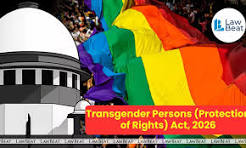
NEW DELHI: A petition in the Supreme Court challenging the Transgender Persons (Protection of Rights) Amendment Act, 2026 — likely to come before a CJI-led bench on April 27 — highlights the “complete legislative erasure of trans men and trans masculine identities and other gender-diverse identities from the definition of transgender person”. Steered by transgender rights activists Manveer Yadav and Vishwanath Maithil — who identify as transmen — the petition states the 2026 amendment law introduces sweeping changes to the 2019 law and is in “complete derogation of principles” laid by SC in its landmark 2014 ‘National Legal Services Authority v. Union of India’ case that recognised “transgender” as an umbrella term encompassing wide and diverse range of identities, including trans men and trans masculine identities, trans women, non-binary persons, genderqueer individuals, and socio-cultural groups including hijras, kinnars, aravanis, and jogtas, and held that the criterion for recognition must be the ‘Psychological Test’, not the ‘Biological Test.’ The two other petitioners are transgender rights activists and trans women Abhina Aher and Vinshi Shahi. The petitioners said the 2026 law replaces an identity-based, self-determination framework with a categorical list of externally verifiable biological markers and named trans-feminine socio-cultural communities, none of which encompasses trans men. Highlighting that the Trans Rights Act, 2019, before the amendments, defined “transgender person” to include trans men and trans women irrespective of medical intervention, persons with intersex variations, genderqueer persons, and named socio-cultural communities. Also, it guaranteed the right to self-perceived gender identity. “Together, this framework operationalised the constitutional mandate of NALSA. The 2026 amendment law systematically dismantles it,” they emphasised. The petition goes on to cite that the 2026 Amendment Act, firstly, replaces the open, identity-based definition of “transgender person” under the 2019 Act with a categorical and exhaustive list confined to: persons with named socio-cultural identities (kinner, hijra, aravani, jogta, & eunuch); persons with intersex variations defined through biological and chromosomal criteria; and persons forcibly compelled to assume a transgender identity through bodily modification.” Further, a proviso declares that the definition shall “not include, nor shall ever have been so included, persons with different sexual orientations and self-perceived sexual identities.” Besides this, the petitioners express concern as they highlight that “the right to self-perceived gender identity that is constitutionally protected, has been entirely omitted without any legitimate rationale”. “The combined effect of such an amendment is to strip trans men and trans masculine identities of all statutory recognition and protection,” they add. “Furthermore, every named socio-cultural community in the definition is, without exception, a trans-feminine community of persons assigned as male at birth. Trans men and trans masculine identities have no equivalent named community formation in India; their structural invisibility is itself a defining feature of their experience,” the petition states It is further highlighted that the “legislature’s privileging of community-visible, trans-feminine identities over self-perceived identities is not a neutral classification, it is a prejudice of visibility encoded in statute.” Raising various issues, the petitioners also draw attention to how the 2026 Amendment Act restructures the certificate regime under the Trans Rights Act 2019, “converting a facilitative, self-declaration-based process into one of administrative adjudication and compulsory State surveillance over gender transition”. “Under the 2026 Amendment Act, the district magistrate is now required to examine the recommendation of a medical board and, where considered “necessary or desirable,” to seek the assistance of other medical experts before issuing a certificate of identity. This directly reintroduces the Corbett Biological Test expressly rejected in the NALSA case and produces a chilling effect on gender expression,” the petitioners state. They further highlight a Parliamentary Standing Committee report that cautioned against precisely this kind of “medical gatekeeping” and seek the intervention of the top court to protect the rights of the community, and urge the SC to declare the right to self-perceived gender identity a fundamental right protected under the Constitution of India. “The medical institutions are mandated to furnish details of any person who has undergone gender-affirming surgery to the district magistrate and the designated authority, without consent, purpose limitation, or data protection safeguard. This violates the right to informational privacy, decisional autonomy, and bodily autonomy under Article 21; breaches doctor-patient confidentiality; conflicts with the Digital Personal Data Protection Act, 2023; and creates a state-controlled surveillance architecture over gender transition that is manifestly arbitrary and disproportionate under Article 14,” the petition states. “The protection that a change in gender shall not affect existing rights and entitlements under the Act has been omitted, removing a critical statutory safeguard and leaving transitioning persons without protection of their entitlements,” it further states. In this backdrop, the petitioners seek the intervention of the top court to protect the rights of the community and urge the SC to declare the right to self-perceived gender identity a fundamental right protected under the Constitution of India. Courtesy : TOI Note: This news is originally published on https:/timesofindia.com/bha and is used purely for non-profit/non-commercial purposes, especially human rights
Odisha Reconstitutes State Transgender Welfare Board to Strengthen Inclusive Governance
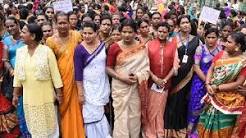
In a significant move towards inclusive development, the Government of Odisha has reconstituted the State Transgender Welfare Board, aiming to enhance welfare initiatives and ensure better coordination for the transgender community across the state. New Structure to Improve Governance The earlier board, constituted on May 15, 2025, with a three-year term, has been dissolved within a year and replaced with a newly structured body. Under the revised framework, the Chief Secretary of Odisha will now serve as the Chairman, marking a shift towards stronger administrative leadership. The Secretary of the Social Security and Empowerment of Persons with Disabilities Department has been appointed as Vice-Chairperson, while the Director of the department will act as the Member Secretary. Multi-Departmental Representation To ensure comprehensive policy implementation, the reconstituted board includes senior officials from key departments such as: Health and Family Welfare Women and Child Development Panchayati Raj and Drinking Water Housing and Urban Development Skill Development and Technical Education Higher Education School and Mass Education Additionally, the Director General of Police and senior administrative officials are part of the board, reinforcing inter-departmental collaboration. Community Representation Ensured The board places strong emphasis on representation from the transgender community. Notable members include Dipti Mohapatra, the state’s first third-gender doctorate recipient, and Soumya Das, a prominent rights activist. Representatives from organizations such as the Transgender Suraksha Trust in Bhubaneswar and the Chetana Organization in Balugaon have also been included, ensuring grassroots-level participation. District-Level Participation To strengthen regional representation, District Collectors from Balangir, Angul, and Khordha will serve as members on a rotational basis. Focus on Welfare and Inclusion The reconstituted board is expected to improve implementation of schemes related to: Education and skill development Healthcare access Social security Livelihood opportunities This initiative reflects the state’s commitment to promoting dignity, equality, and empowerment for transgender persons through inclusive governance. By Ananya Pattnaik Courtesy : Pragativadi Note: This news is originally published on https:/pragativadi.com/bha and is used purely for non-profit/non-commercial purposes, especially human rights
Transgender guru builds ₹85 lakh Shiva temple using ‘badhai’ earnings

Gorakhpur: A 75-year-old kinnar (transgender) guru, Prema, from the Padri Bazar area has constructeda grand Shiva temple by spending over ₹85 lakh — all sourced from traditional ‘badhai’ (ceremonial blessings) earnings. The temple is set to be consecrated on Apr 24, with preparations in full swing and the entire locality brimming with enthusiasm, guru Prema said. Residents have been visiting the site in large numbers, praising Prema’s unique initiative that blends faith with social welfare. Prema, who has been living in the area for nearly six decades, said her aim is to connect society with spiritual values. “When people worship, they move towards the path of righteousness. Those who follow the right path contribute to building a strong nation,” she said. Apart from temple construction, Prema has been actively involved in community service. She has funded road construction and supported the marriage of several underprivileged girls. Families she once helped nowinvite her to ceremonies, treating her with deep respect. Sustaining herself through agriculture, orchards and traditional ‘badhai’ collections during weddings and childbirth celebrations, Prema has consistently reinvested her income into social causes. Deeply rooted in the community, she continues to draw people seeking her blessings. “All religions deserve respect; ultimately, there is one supreme power,” she said, summing up her inclusive belief system. Courtesy : TOI Note: This news is originally published on https:/timesofindia.com/bha and is used purely for non-profit/non-commercial purposes, especially human rights
The Architecture of Erasure: A Constitutional Critique of the Transgender Persons (Protection of Rights) Amendment Bill, 2026

A critical legal analysis of the 2026 Amendment, its impact on identity rights, NALSA judgment, and constitutional violations. The passage of the Transgender Persons (Protection of Rights) Amendment Bill, 2026, by both Houses of Parliament on March 25, 2026, marks a watershed moment—not for progress, but for the systematic dismantling of a decade of hard-won legal recognition. Cleared by the Lok Sabha on March 24 and the Rajya Sabha the following day, the amendment represents a fundamental ideological retreat. By shifting from a “rights-based model” to a “pathological model”, the state has effectively legislated out of existence those it once claimed to protect. Deconstructing the Definition: From Psyche to Chromosomes The most egregious feature of the 2026 Bill is its attempt to “tighten” the definition of a transgender person. In National Legal Services Authority (NALSA) v. Union of India (2014 INSC 275), the Supreme Court unequivocally rejected the “Biological Test” in favour of the “Psychological Test”, stating:Immigration Law Advice “Gender identity… forms the core of one’s personal self, based on self-identification, not on surgical or medical procedure.”Legal Consultation Services The 2026 Bill effectively overrules this by deleting Section 4(2) of the 2019 Act, which guaranteed the right to self-perceived identity. By limiting the definition to specific congenital sex characteristics and socio-cultural groups (Kinner, Hijra, etc.), it excludes the following: Excluded Groups Under The Amendment Trans men and trans women who do not belong to traditional socio-cultural groups. Genderqueer and non-binary individuals who rely entirely on self-perception. Post-SRS individuals who have already transitioned but do not fit the “congenital variation” criteria. The Retrospective Trap The Bill’s proviso stating the category “shall not include, nor shall ever have been so included” persons with different sexual orientations or self-perceived identities is a legislative anomaly. It creates a “limbo population” of over 32,000 certificate holders whose legal identity is now retrospectively delegitimised. This violates the doctrine of legitimate expectation and the principle against retrospective withdrawal of vested rights.Consumer Court Information The Bill also runs afoul of the Doctrine of Non-Retrogression, as articulated in Navtej Singh Johar v. Union of India (2018). This doctrine mandates that the state cannot withdraw a right or a standard of protection once it has been recognised. By retrospectively delegitimising thousands of identities, the Bill is a textbook example of ‘Constitutional Retrogression’, effectively shifting from a progressive understanding of identity back to a regressive, colonial mindset. Key Constitutional Violations Doctrine of Legitimate Expectation Principle against retrospective withdrawal of vested rights Doctrine of Non-Retrogression Constitutional protection of identity and dignity The Medical Board: A Violation of Bodily Autonomy The Bill mandates a two-stage medical filter: a state-appointed medical board (headed by a CMO) followed by the district magistrate’s discretion. This is a direct affront to the right to privacy established in K.S. Puttaswamy v. Union of India (2017). Furthermore, in Jane Kaushik v. Union of India (2025 INSC 1248), the Court emphasised that gender identity is intrinsic to human dignity. By subjecting individuals to physical examination to “prove” their gender, the state treats the trans body as a “research subject” rather than a citizen. This creates a “chicken-and-egg” trap: one cannot access gender-affirming care without a certificate, but one cannot get a certificate without proving they have a “biological condition” that likely requires that very care.Immigration Law Advice Absence of Appellate Mechanism Critically, the bill is silent on an appellate mechanism. By granting the District Magistrate and the Medical Board the absolute power to decide a person’s identity without providing a specialised tribunal for appeal, the Bill violates the principles of natural justice (Audi Alteram Partem). An administrative power that is absolute and unreviewable is ‘prima facie’ arbitrary and ultra vires to the Constitution. Key Legal Concerns Violation of Right to Privacy Infringement of bodily autonomy and dignity Lack of appellate safeguards Arbitrary and unreviewable administrative power III. The Penal Paradox: Section 18 vs. Bharatiya Nyaya Sanhita (BNS) The bill introduces severe penalties (up to life imprisonment) for “coercing” or “alluring” individuals into a transgender identity. This narrative mimics the colonial Criminal Tribes Act, 1871, which presumed the community to be “habitual kidnappers”.Consumer Court Information However, a glaring “omissive discrimination” exists when compared to the BNS, 2023. Comparison: BNS vs Transgender Persons Act As argued by Jane Kaushik (2025), the state’s failure to provide equal protection under the law for trans-victims of sexual violence constitutes a violation of Article 14. The Bill’s focus on “criminalising” the community rather than protecting it from violence is a testament to its regressive intent.Legal Consultation Services Doctrine of Vagueness Concerns Furthermore, the use of terms like ‘allurement’, ‘inducement’, and ‘deception’ in the context of gender identity violates the Doctrine of Vagueness, established in Shreya Singhal v. Union of India (2015). In criminal law, a provision must be clear enough to give a citizen ‘fair notice’ of what is prohibited. Without a clear definition, these terms become tools for arbitrary policing and the targeted harassment of community support systems and NGOs. Key Issues in Penal Framework Omissive discrimination against trans persons Inadequate legal protection for sexual violence Vague and overbroad criminal provisions Risk of arbitrary enforcement and misuse Constitutional Infirmity: The Test of Manifest Arbitrariness The Bill fails the Doctrine of Manifest Arbitrariness as laid down in Shayara Bano v. Union of India (2017). There is no “intelligible differentia” in protecting only those with “biological conditions” while excluding those with “self-perceived identities”, as both face the same societal exclusion and violence.Immigration Law Advice The 2026 Bill remains silent on the most critical demand of the community: horizontal reservation. In NALSA and reaffirmed in Jane Kaushik, the courts directed the state to treat transgender persons as a “Socially and Educationally Backward Class” (SEBC). By narrowing the definition, the Bill ensures that even if reservations were granted, they would reach only a fraction of the community. This is a classic case of “romantic paternalism”—claiming to protect the “genuine” oppressed while using law as a tool for moral cleansing and surveillance. Global Comparison and Legal Position The Bill
Transforming Rights: Transgender Lives Against Legal Exclusion| Book Excerpt

This excerpt is from Transforming Lives, Edited by Jayna Kothari examines how transgender, non-binary, and intersex people are denied the fundamental human rights of love, marriage, family, and kinship through law and social prejudice Bell Hooks said, ‘Love is an action, a participatory emotion,’ but sadly, for transgender-queer folx, love remains a silenced feeling buried deep in the chambers of their hearts, for love as an action and in its momentum is thwarted by State and society. Love and family—in our collective imagination—like everything else, is seen through the lens of heteronormativity, biology and the gender binary, and any act of digression invites penalties. In a world where even rights are pathologised, transgender2 persons are restricted to discussions about their bodies, and rarely do the conversations transcend superficiality or attempt to understand transgender persons as bodies with emotions—capable of loving and being loved. The inherent desires to form intimate relationships, have children and establish families are systematically denied to transgender persons through various acts of commission and omission. The naturalisation of trans persons’ non-existence as equal citizens is ensured by laws and policies that treat transgender, non-binary and intersex persons as less than equal, and by denying them the rights readily available to those that form the perceived normative. As Taylor Flynn aptly highlights, ‘We live in a highly gendered society where sex distinctions have significant legal consequences, particularly within the realm of family—these distinctions affect issues including whom you can marry, whether you can inherit your spouse’s estate, or whether you provide an “appropriate” role model for your children. The emotion of love extends to the various relationships that we form throughout our lives and is subject to the State’s architecture of control; the relationships that citizens forge around blood, community, cast and class are defined and certified by the majoritarian morality and the State. The interference of the State in our personal lives—love, marriage kinship, family, property and inheritance—passes unnoticed till we go against and challenge the system approved by it—a system that is patriarchal, casteist, endogamous and heteronormative. The right to love becomes subversive when it does not align with the frameworks of caste, patriarchy and heteronormativity. As Arvind Narrain writes, ‘What links queer people to couples who love across caste and community lines is the fact that both are exercising their right to love at an enormous personal risk and in the process, disrupting existing lines of social authority.’ Love, marriage and family formation seem like ordinary tasks and rarely do cisgender-heteronormative people perceive them as a matter of rights—unless the exercise of those rights is obstructed and denied. However, for transgender and nonbinary persons, the right to love, marry, have children or make families is denied legitimacy or legal recognition altogether. Family in our society is defined in structural terms, with patrilineal underpinnings. The members of one’s family must be related to each other through marriage, blood or adoption… It is important to recognise that the chosen families and kinship networks of transgender persons are often functional in nature, and at times a blend of both structural and functional, but rarely do they align with the narrowly defined structural models legitimised by law. These familial bonds revolve around the core functions that a family performs, such as caring for each other and the sharing of resources. Marriage, being the foundation of the Indian family system, is reserved for unions that conform to a cisgender, binary, heterosexual framework. The law and language governing love, marriage, family and property continue to exclude transgender persons, reinforcing a patrilineal and cis-heteronormative structure. The denial of love, marriage, kinship and family extends and permeates further into the right to reproduce and/or have children, and lead a healthy sexual and reproductive life. Law, language and healthcare coalesce to ensure the exclusion of transgender persons. Protest against Transgender Persons Amendment Bill 2026 | The Love That Dares Not Speak Its Name The ideas of love, marriage and family—from recognition to regulation—have historically been subject to State and societal interference. As Saurabh Kirpal observes in his essay: If dignity and autonomy are the pillars of the constitution, there is possibly no greater manifestation of that autonomy than the right to choose a sexual partner. And nothing is a greater expression of that choice than marriage. It seems apparent that both the right to choose a partner and the right to marry are intensely personal choices over which the state and the community really ought to have no control… The decision of the Madurai Bench of the Madras High Court in Arunkumar v Inspector General of Registration is a milestone in the affirmation of marriages of transgender persons. The Court, in line with the NALSA, Puttaswamy and Navtej Singh Johar judgments, held that the word ‘bride’ in Section 5 of the Hindu Marriage Act, 1955 includes intersex and transgender persons who self-identify as woman. The judgment is significant as it gives legality to a marriage between a trans woman and a cisgender man, and further provides scope for interpreting the Hindu Marriage Act in light of the aforementioned judgments, so that it includes both trans and intersex persons. However, the scope of the judgment remains limited, as it can be read to validate only those marriages that are heterosexual in nature—such as between a trans person and a cis person, or between two trans persons (a trans woman and a trans man)—thereby continuing to exclude same-sex, non-binary and gender-nonconforming partnerships from its protective ambit. This was affirmed in Supriyo alias Supriya Chakraborty v Union of India. Who Owns Identity?: Himanshi, 20, lives at Garima Greh in Uttam Nagar, Delhi. She left her home in Agra at 18, when her family disapproved of her identity as a trans woman. She resumed her education after moving to Delhi. The most recent constitutional moment in the marriage equality struggle came in Supriyo. The judgment marked a watershed moment in form, but not in substance. Despite the progressive language employed—on love, dignity, autonomy and non-discrimination—the judgment ultimately
‘Horrific’: New transgender law sparks panic among parents, worries doctors
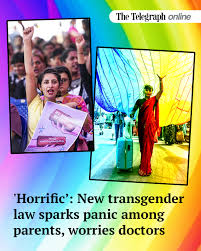
The government claims the Transgender Persons (Protection of Rights) Amendment Act, 2026 increases access to welfare and strengthens legal framework, critics argue it erases many trans identities, threatens their existence and rights Mahua Seth, founder of The Rainbow Room and member of Sweekar, a support group for parents of LGBTQIA+ individuals, says that she has been flooded with calls and messages from panic-stricken parents and members of the transgender community since early March. This is because the controversial Transgender Persons (Protection of Rights) Amendment Act, 2026 has introduced unclear definitions, medical gatekeeping, and criminalisation of key support networks for transgender people. These changes aim to impose stricter certification processes and limit previously protected self-identification rights, making the main argument a concern over reduced rights and increased barriers for the transgender community. The Act has drawn criticism from the LGBTQIA+ community, queer collectives, student groups and gender sensitisation groups. Opposition parties and even government panel members have spoken up against the Act. While the government claims the new law increases access to welfare and strengthens the legal framework, critics argue that it erases non-binary, gender-fluid, and other transgender identities, threatening their existence and rights. “These swooping changes are downright horrific, retrograde, and violate every fundamental human right,” Seth tells The Telegraph Online. This has caused deep anguish, casting a cloud of despair not only over transgender, non-binary, and queer individuals, but also their parents, chosen families, and friends. Uncertainty about Transgender ID card One of the major challenges introduced by the Act is the potential restriction on access to the Transgender ID card, which is crucial for legal identity and documentation. This certificate of identity is the official gender recognition of transgender individuals. It also provides them with access to government welfare schemes. Post-amendment, the process now mandates approval by a medical board. The district magistrate can seek assistance from medical experts in issuing ID cards. The move has instilled fear among parents, with Nilanjan Majumdar, father of a transmasculine person, worried about the validity of his child’s existing identity card. “It is like a bulldozer bulldozing the lives and dreams of lakhs of trans-queer children, including my own,” he says. “I do not know what this will mean for my child, who is currently living in a gender-neutral hostel while pursuing his master’s degree at one of the top colleges in India. Would he be thrown out of the hostel now? Would his Transgender ID card still be valid?” The data on the National Portal for Transgender Persons, Ministry of Social Justice and Empowerment, shows that more than 32,000 transgender (TG) ID cards have been issued under the 2019 Transgender Persons (Protection of Rights) Act as of early 2026, before the amendment took effect. The ambiguity over what fate awaits the existing identity documents is a cause of concern among activists and legal experts. “What we are missing is that the transgender identity and, by extension, the Transgender ID card, is not merely a document used to access ‘special benefits’, targeted welfare schemes or reservations,” Prithviraj Nath, founder director of Bridge India, a non-profit working on LGBTQ+ rights and inclusion,” says. “It is, in essence, an identity card and is crucial in establishing that a trans person is a valid citizen of the country.” Transgender is an umbrella term The amendment limits the definition of a transgender person to specific traditional socio-cultural groups such as Hijras, Jogtis and Kinnars, as well as intersex individuals and those who have undergone forced mutilation or castration. A primary survey conducted by Bridge India in 2023–24 across seven states in eastern and northeastern India, including Assam, Arunachal Pradesh, Manipur, Nagaland, Odisha, Jharkhand and West Bengal, had over 900 LGBTQIA+ respondents. Of these, 415 identified within the broader transgender umbrella. Only 30 identified as Hijra, one of the socio-cultural identities recognised under the Transgender Persons (Protection of Rights) Amendment Act, 2026. The remaining 385 respondents identified across a diverse range of gender identities, including trans men, trans women, genderfluid, non-binary, gender non-conforming and queer. The new Act risks denying these individuals legal recognition in their self-identified gender and may even exclude them from full citizenship rights. Parents flag mental health risks Majumdar, who is also a therapist, highlights the psychological distress of gender dysphoria. He raises concerns about the Act’s potential impact on the mental health of transgender individuals. He talks about the distress experienced by individuals who are forced to fit into the gender binary. “I am scared that this amendment will make them feel lost, suicidal or push them to self-harm and substance abuse. They may even feel forced to join the sociocultural identities mentioned to express their gender, which is as fundamental a right as the air we breathe in,” Majumdar says. Kaustubh Mukherjee, father of a transfeminine child, says he has always been concerned about his child’s future. “Like a bolt from the blue, this Transgender Persons (Protection of Rights) Amendment Act, 2026, turning into law, has pushed my child and many such boys and girls towards uncertainty,” Mukherjee says. “For people like us who think in terms of a binary understanding of gender, it is not possible to truly understand the pain these children feel. Because of the mismatch between mind and body, they are as if imprisoned for life,” he adds. Indrani Chakraborty, mother of another transgender child, is outraged. “As a parent, I understand the vulnerability of transgender individuals,” she says. “After a long struggle, the NALSA judgement came with great relief for transgender individuals, giving them their identity and a hope to live with dignity. And now it’s snatched away! The amendment is very dehumanising and against basic human rights. They are simple humans and deserve all the basic human rights. The amendment should have focused on education, livelihood, social stigma, health, and other serious issues they face.” Doctor flags ‘public health concern’ Retired Air Cmde Dr Sanjay Sharma, founding director and CEO of the nonprofit Association for Transgender Health in India, warns that the amendment
The Big Battle for transgender certificates—official apathy, confusion, red tape, bias
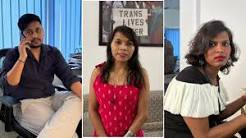
The cloud of confusion for India’s transgender community has been compounded by the 2026 amendment, which many say could make the tyranny of bureaucratic paperwork a Sisyphean endeavour. New Delhi: Twenty-nine-year-old Manveer still can’t forget his first visit to a government office in Delhi four years ago. An official looked at his application to change his gender from female to transgender in official documents. Then he looked at him and said: “Why do you need a transgender card? You look just fine to me.” It’s a familiar script for many transgender persons who approach District Magistrates’ offices. Routine submissions land on the desks of officials who seem unaware of the law, make insensitive remarks, and often ask applicants to explain the rules themselves. They frequently conflate Section 6 with Section 7 of the Transgender Persons (Protection of Rights) Act, 2019, or remain unclear about the distinction between self-declaration and post-transition certification. Now, that cloud of confusion and ignorance is compounded by the recently amended law, which many say could make the tyranny of bureaucratic paperwork a Sisyphean endeavour. The paperwork process that many in the transgender community undergo often turns into an encounter with open official apathy and ignorance, retraumatising many in their fragile emotional state. Without a transgender certificate, the ability to make name and gender corrections across Aadhaar, PAN, and voter ID cards remains restricted, limiting access to employment, housing, and trans-specific welfare schemes such as SMILE and Ayushman Bharat’s TG-plus health insurance card. “The exchanges feel like cross-examination. When we explain, officials simply nod along,” said Manveer. He has adjusted to using his ‘masculine look’ in everyday situations, whether buying medicines or finding work. It is only at the official level that he remains stuck in what he calls his “dead” identity. This struggle existed even when the earlier law was in place, granting the community the right to self-identify. Under Section 6 of the 2019 Act, applicants could obtain a certificate recognising them as transgender; under Section 7, they could have a binary gender—male or female—reflected in their documents. Now, the amended Act has done away with this right, replacing it with mandatory verification by a “medical board”, throwing the whole documentation process into further confusion. While many foresee a more restrictive system ahead, India’s transgender community has long found even the existing process stacked against it. Applications for transgender certificates are delayed, procedures vary across districts, and government offices become just another public space where ‘appearance’ gets judged or draws quizzical looks. At the centre of this system is the District Magistrate’s office, which is responsible for issuing transgender identity certificates. On paper, the process is simple: submit the application through the national portal and receive the certificate within 30 days. In practice, it rarely works that way. By late 2023, the National Portal for Transgender Persons received over 24,000 applications, but only around 15,800 certificates had been issued. Thousands remained pending well beyond the mandated timeline, with little clarity on the reasons for delay. Activists estimate that fewer than 5 per cent of India’s 4.87 lakh transgender population has been able to obtain these identity cards so far. A cycle of explanation, correction, refusal Securing a transgender certificate is only the first step in an unending battle for legal recognition. For Manveer, that process has stretched over years. He left his home in Najafgarh in 2014 and began working early, trying to move toward an identity that felt like his own. Over time, he managed to change his name and update his gender on his Aadhaar card. These were partial, hard-won victories. Getting a transgender certificate itself was a long process. He applied multiple times at different District Magistrate offices—first in Delhi, then in Dholpur, Rajasthan, after being told the process would be faster there. But that did not work out, as officials asked him to change his address to Rajasthan permanently. In the end, he received his TG card from the DM office in Noida in 2023, under Section 6 of the Act. Back in 2021, during an Aadhaar card camp organised by an NGO, he was able to select a binary gender. Yet two reminders of his past remain and continue to create practical difficulties. The document still carries an older photograph. On the back, it continues to read “D/O”—daughter of. “Whenever I try to rent an apartment, people notice it and ask why it says ‘daughter of’ here. I just tell them it’s a mistake,” he said. It doesn’t always work out smoothly. Sometimes, he finds himself in uncomfortable situations, such as staying in a women’s hostel despite identifying as male. In Sonipat, where he once worked, landlords would refuse accommodation. Even after updating parts of his Aadhaar, other documents—such as his PAN card and educational certificates—remain unchanged. “These mismatches keep causing problems with my job, my bank, and even getting my PF,” he said. “I spent money trying to fix my PAN card, but it didn’t work.” Manveer has worked a range of jobs over the years, from call centres to consultancy roles, hospital security, and even at Amazon. He also learned stenography and once cleared a government exam, but chose not to pursue it because he feared he wouldn’t be able to live authentically in that environment. Medical transition brought its own challenges. He started Hormone Replacement Therapy (HRT) in 2018, but had to stop due to financial constraints, resuming it two years later. The process required a Gender Identity Disorder (GID) letter from a psychiatrist and a prescription from an endocrinologist, which he found expensive. “Initially, I received injections every 15 days. But I stopped going to the doctor and started getting medication from a local chemist,” he said. “I already looked masculine, so it was easier, but I often had to say it was for the gym.” After undergoing a hysterectomy in June 2025, he applied for a Section 7 transgender ID card to update his gender and have it reflected across official documents. About six
Kerala transgender couple to legally identify as ‘parents’

Backed by their lawyer, Padma Lakshmi, they successfully lobbied for a certificate that honours their transition while documenting their daughter’s lineage. KOZHIKODE: In a significant victory that redraws the boundaries of family law in India, transgender couple Zahad and Ziya Paval have secured a gender-neutral birth certificate of their daughter Zabiya. The document, which replaces the traditional ‘Father’ and ‘Mother’ labels with the inclusive term ‘Parents’, marks the culmination of a determined three-year struggle against bureaucratic rigidity. The couple captured the nation’s attention in February 2023 when Zahad made history by becoming the first transgender man in India to conceive and give birth. However, the joy of parenthood was quickly met with a legal hurdle: the Kozhikode corporation insisted on recording Zahad as the ‘mother’ and Ziya as the ‘father’ officially. For the couple, accepting the labels meant denying their true selves. “Our fight was for our identity. We insisted from the beginning that our official documents must reflect who we truly are,” said Ziya. When the couple faced technical issues in the documentation process, they moved the High Court. There, they argued that forcing gendered roles onto their family structure infringed upon their fundamental rights. Backed by their lawyer, Padma Lakshmi, they successfully lobbied for a certificate that honours their transition while documenting their daughter’s lineage. On the court’s intervention, the couple expressed a profound sense of relief. “Replacing the gender-specific columns with ‘Parents’ is a huge recognition of our transition and our lives,” Ziya said. Beyond the courtroom, the couple has become digital pioneers, using social media to normalise their lives. From celebrating Vishu to teaching their daughter her first letters, they share their daily routine with thousands of followers to dismantle prejudice. “When we shared photos of the maternity shoot, we severe hate comments on social media. Now, the entire situation has changed and we are getting all positive comments. We express our lives through our videos… Be it celebrating festivals like Vishu and Onam or simply little moments like the baby learning letters while we sit together, every moment we create is from our real-life events,” Ziya said. The response to their videos has been increasingly supportive, with followers often commending the couple for their parenting skills and the evident warmth within their household. This transparency is credited with shifting public perspective on the capabilities and rights of transgender individuals to build traditional family structures. Lesly Joseph Courtesy : TNIE Note: This news is originally published on https:/thenewindianexpress.com/bha and is used purely for non-profit/non-commercial purposes, especially human rights
Activists urge Telangana to pass resolution against Transgender Amendment Act

They also called on Chief Minister Revanth Reddy to hold back from operationalising the 2026 Amendment Act and to continue implementing the Transgender Persons (Protection of Rights) Act, 2019. Synopsis: Over 200 activists have written to A Revanth Reddy, asking the state to pass a resolution against the Centre’s Transgender Persons (Protection of Rights) Amendment Act, 2026, and to hold back its implementation. They said the law replaces self-identified gender with medical certification, reversing a right recognised by the Supreme Court of India, and warned of loss of legal recognition, welfare access and protections. Over 200 transgender rights and social activists from across India have written to A Revanth Reddy, demanding that the Telangana legislature pass a resolution against the Transgender Persons (Protection of Rights) Amendment Act, 2026. They called the legislation a threat to the constitutional rights of lakhs of transgender and gender-diverse persons. The letter, sent on Wednesday, 15 April, marks two dates activists consider significant: Ambedkar Jayanti on 14 April and the anniversary of the NALSA judgment on 15 April 2014, which recognised the right to self-perceived gender identity as a fundamental right under Article 21. The signatories urged the Telangana government to hold back from operationalising the 2026 Amendment Act and to continue implementing the Transgender Persons (Protection of Rights) Act, 2019, along with the directions in the NALSA judgment. Earlier this week, the activists had conveyed their concerns in person to Meenakshi Natarajan, the All India Congress Committee Telangana in-charge. She told them she would take up the matter with the chief minister. They also called on the chief minister to instruct officials to process all 811 pending applications for transgender identity cards in the state. Of the 2,824 applicants who applied for certificates and ID cards in Telangana, 2,013 have received cards, leaving over 800 cases unresolved. Law undoes NALSA-backed right to self-identification The 2026 Amendment Act replaces self-perceived gender identity with a system of medical certification and administrative verification. Activists say this reverses a right the Supreme Court of India declared fundamental over a decade ago. “The 2026 Amendment Act poses a threat to the rights and protection of transgender persons, including loss of legal recognition, exclusion from welfare entitlements, denial of healthcare, loss of employment and livelihoods, and withdrawal of protections under criminal law,” the letter states. The signatories also raised concerns about what they said is a lack of consultation. They pointed out that the Union government passed the amendment within two weeks without seeking input from state governments, even though the changes cover entries on the state and concurrent legislative lists. “The state governments were not consulted, violating the principles of federalism and co-operative governance,” the letter said. Activists said the Amendment Act contains retrospective references that create uncertainty over the fate of 32,000 transgender certificates issued under the 2019 Act. They also noted that the constitutionality of the law is under challenge before the Supreme Court of India and multiple High Courts, including in Delhi, Karnataka and Kerala. The letter says Telangana must not implement the Amendment Act until courts resolve these constitutional questions. The signatories include all members of the Transgender Welfare Board constituted by the previous state government in 2022, including Vyjayanti Vasanta Mogli, Rachana Mudraboyina and Meera Sanghamitra. Lawyers, academics, feminist activists, and environmental and farmers’ rights campaigners also added their names. Sumit Jha Courtesy : SF Note: This news is originally published on https:/southfirst.com/bha and is used purely for non-profit/non-commercial purposes, especially human rights
Transgender representatives attend CM swearing-in

Patna: In a first for Bihar, the Raj Bhavan invited members of the transgender community to the swearing-in ceremony of the new chief minister, Samrat Choudhary. Rajan Singh of the state’s Transgender Board and Suraiya Nayak represented the community at the event, marking the first time the group was formally included in a cabinet induction at the governor’s residence. The community members characterised the invitation as a significant milestone for the community’s social recognition and involvement in official state proceedings. Singh, the acting vice-chairperson of the board, said that “Previously, we have never been invited to such things because our community did not have any representation at the state level. However, under former CM Nitish Kumar, this welfare board for transgenders was built, and now we have been made a part of such a ceremony.” He added that this invitation is just the first step. As Bihar for the first time has a BJP CM, who has thought about including the ‘lowest, most ignored strata of the society’ in the oath ceremony, Singh believes that the newly formed govt will work for increased inclusivity and representation of the trans community in Bihar. Courtesy : TOI Note: This news is originally published on https:/timesofindia.com/bha and is used purely for non-profit/non-commercial purposes, especially human rights