
From India to US, how gender self-identity battles State control
India’s amended transgender law and the US Supreme Court’s ruling on conversion therapy for minors signal a shift towards institutional scrutiny of gender identity Over the past one month, three developments across continents converged with unusual clarity. In India, a newly amended transgender law diluted a foundational principle laid down over a decade ago: the right to self-identify one’s gender. Almost in parallel, the Rajasthan High Court, on April 21, issued notices to the Centre on a public interest litigation (PIL) challenging certain provisions of the Transgender Persons (Protection of Rights) Amendment Act, 2026. Earlier, the same court had pushed for affirmative action for transgender persons. On the other hand, the United States Supreme Court opened the door to legal challenges against bans on conversion therapy for minors, foregrounding free speech arguments over blanket prohibitions. These developments together point to a global recalibration of how gender identity is being understood, validated and regulated. The shift is significant: from self-declared identity towards institutional scrutiny. At the heart of this churn lies the question: who defines gender, the individual or the State? The PIL in the Rajasthan High Court contends that the requirement of the chief medical and health officer (CMHO) examining a transgender to submit a report to the local magistrate to issue gender identity certificate exposes an individual’s gender identity. It also takes away the right to self-perceived gender identity. The 2014 NALSA (National Legal Services Authority) judgment was widely seen as a landmark affirmation of dignity and autonomy. It recognised the right of individuals to self-identify as male, female or transgender without requiring medical intervention or bureaucratic validation. It was, in essence, a rights-based framework rooted in personal liberty. The recent amendment law marks a departure from that philosophy. By introducing certification through state-appointed medical boards, it effectively reintroduces institutional gatekeeping into the process of identity recognition. The definition of “transgender” is also being narrowed, raising concerns about exclusion and standardisation. Critics argue that this amounts to re-medicalisation of identity. Supporters, however, point to the practical challenges of policy implementation. Welfare schemes, reservations and targeted benefits require definitional clarity. Without some form of verification, they argue, the system risks misuse or administrative paralysis. This tension is now playing out in courtrooms as well. The Rajasthan High Court’s intervention reflects it. While advocating for reservation and welfare measures for transgender persons, it has also questioned the viability of unrestricted self-identification under the amended framework. The message: the State is willing to extend benefits but on terms it seeks to define. The United States presents a different legal landscape but arrives at a similar crossroads. The US Supreme Court’s willingness to entertain challenges to bans on conversion therapy—particularly on grounds of free speech—signals a shift in how gender identity, especially among minors, is being framed. The debate here is not about certification but intervention. Should gender identity be affirmed unconditionally or can it be subject to exploration, counselling or even attempts at change? By allowing such challenges, the court has legitimised the argument that identity, particularly in younger individuals, may not be entirely beyond scrutiny. Overlay this with political developments, such as the push in some quarters to recognise only binary gender categories, and a pattern emerges. Across jurisdictions, there is a growing discomfort with the idea of gender as purely self-defined and infinitely fluid. This shift is not occurring in a vacuum. It is being driven by a mix of social change, policy dilemmas and political calculation. Over the past decade, gender identity has expanded far beyond the traditional male-female binary. Non-binary, gender-fluid and other identities have gained visibility and, in some cases, legal recognition. This expansion has been empowering for many, but it has also introduced complexities that legal and administrative systems are struggling to manage. Consider the design of reservation systems. If identity is entirely self-declared, how does the State ensure that benefits reach intended groups without misuse? Or take the question of minors. Should they be allowed to make irreversible decisions related to gender without oversight? In spaces like prisons, sports and public facilities, how should competing claims of identity, privacy and safety be balanced? So, what is being witnessed is a transition—from recognition to regulation. The first phase of gender rights was about visibility and legitimacy. It sought to correct historical injustices by acknowledging identities that had long been marginalised or erased. Courts and legislatures played a crucial role in this phase, often stepping ahead of public consensus. The current phase is about integration into systems—welfare, law enforcement, healthcare, education. And systems, by design, demand categories, definitions and verifiability. This is where friction arises. A framework built on fluidity encounters institutions built on fixed criteria. The result is a push towards standardisation. India’s move towards certification and the US debate over therapeutic interventions are both expressions of this broader shift. The central question, then, is whether this shift represents necessary governance or creeping control. Proponents of regulation argue that medical oversight and certification provide safeguards, ensuring that individuals, particularly minors, are protected from premature or coerced decisions. They also see it as essential for designing effective welfare policies. Critics, however, view the same mechanisms as barriers. Requiring individuals to “prove” their gender to a medical board risks humiliation, exclusion and bureaucratic delay. It also undermines the principle that identity is deeply personal and not subject to external validation. Is all of this reflection of a broader cultural moment? Gender, once seen as a fixed biological category, is now understood by many as a spectrum. This shift has been driven by activism, academic work and personal narratives. High-profile cases and growing visibility have brought these conversations into the mainstream. The debate is clearly far from settled. Courts will continue to interpret laws, governments will tweak policies and societies will negotiate new norms. What is clear, however, is that the era of uncomplicated affirmation is over. Gender identity is no longer just a question of recognition—it is becoming a site of negotiation between individual rights and institutional
Andhra MLA appoints transgender woman as personal assistant
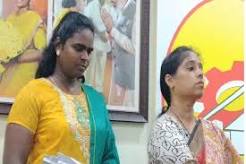
Amaravati (Andhra Pradesh) In the bustling streets of Guntur, where traffic signals often become silent witnesses to untold struggles, Varsha’s life once stood still, defined by survival, not dignity. Born with dreams but pushed to the margins of society, Varsha, a well-educated transgender woman, found herself with no choice but to beg for a living. Like many in her community, rejection followed her everywhere, from job interviews to everyday interactions. Society saw her identity before her ability, but destiny took a turn when she crossed paths with Galla Madhavi, the legislator from Gunturu West. The Gunturu West MLA said, “Many times I felt pained seeing transgender persons begging at traffic signals. I wanted to do something meaningful, not just offer sympathy. Recognising Varsha’s education and determination, I appointed her as a Personal Assistant in my office. A role that not only provides employment but restores dignity and self-worth. Varsha said, “She didn’t just give me money like others do. “She spoke to me, understood me, and gave me an opportunity. I will prove myself worthy of this trust” Varsha said Today, instead of standing at traffic signals, Varsha walks into an office at the Secretariat with pride, her identity no longer a barrier, but a symbol of resilience. Varsha’s journey is not just personal; it reflects the silent aspirations of thousands in the transgender community. Meanwhile, Kalpana, a doctor from Guntur, speaking to ANI, said,” Galla Madhavi, Guntur West MLA, appointed transgender Varsha as her PA. It is well appreciated by the community because transgender people are also normal human beings. They have all the rights of a human being. All transgender by birth born in equal ratios. As Versha grew up, at the age of 13-14 years, she recognised she was not developing a secondary sexual character of a male. Her mindset and heart were telling her that she is female. So, she told the entire story at home. Everybody, her friends and family, thought she was a boy, but later everybody come ot know she is a girl. The decision taken by the MLA, I, as a doctor and activist, appreciate taking transgender people into jobs.” From the harsh glare of traffic signals to the dignified corridors of governance, her story proves one powerful truth: Sometimes, all it takes is one person to see potential where others see difference. This is not just a story of employment, it’s a story of dignity, inclusion, and hope. A reminder that real change begins when society chooses empathy over indifference. Posted by Ashhar Alam Courtesy : Awaz The Voice Note: This news is originally published on https:/awazthevoice.com/bha and is used purely for non-profit/non-commercial purposes, especially human rights
Tamil Nadu: Surya Crowned ‘Miss Koovagam 2026’ At Vibrant Transgender Festival In Villupuram
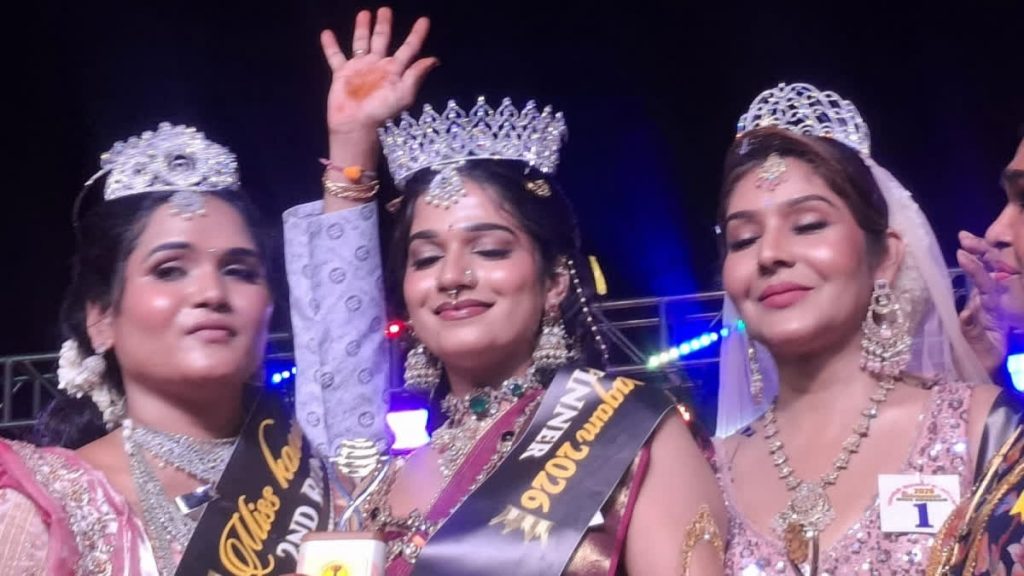
The Koovagam festival, held annually during the Tamil month of Chithirai, is a major cultural and spiritual gathering for the transgender community. Villupuram: At the annual beauty pageant, held as part of the famed Koovagam Festival at the Koothandavar Temple that celebrates transgender people, Surya Kutty from Coimbatore was crowned ‘Miss Koovagam 2026’ on Monday (April 27). The event, hosted at the Villupuram Municipality Grounds, drew participation from transgender individuals across India and abroad, reflecting the festival’s global significance. Nisha from Malaysia secured the second position, while Ananya from Puducherry finished third. The Koovagam festival, held annually during the Tamil month of Chithirai, is a major cultural and spiritual gathering for the transgender community. Thousands of participants from Tamil Nadu, Karnataka, Maharashtra and Andhra Pradesh, along with international attendees from Singapore and Hong Kong, took part in the festivities. A total of 25 contestants competed in the ‘Miss Koovagam’ pageant, which featured three rounds assessing confidence, talent, and stage presence. Surya’s standout performance in the ramp walk and her articulate responses, helped her clinch the coveted title. Earlier, in the ‘Miss Thirunangai 2026’ competition, participants from Chennai dominated the top three positions, with Omana winning first place, followed by Sai Sri and Sukhi. Addressing the gathering after the event, the winners highlighted the importance of family acceptance for transgender individuals and voiced concerns over the proposed Transgender Bill 2026. The event also honoured seven individuals with the ‘Young Achiever Transgender Award,’ presented by the South Indian Transgender Federation. Cultural performances and celebrity presence, including playback singer Velmurugan and actor Bala, added to the festive atmosphere, with financial incentives awarded to achievers from the community. The celebration once again underscored Koovagam’s status as a powerful platform for visibility, empowerment, and solidarity within the transgender community. Courtesy : ETV Bharat Note: This news is originally published on https:/etvbharat.com/bha and is used purely for non-profit/non-commercial purposes, especially human rights
Galla Madhavi Appoints Transgender PA Wins Praise from Lokesh
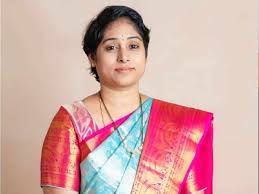
Guntur West MLA Galla Madhavi appoints a transgender personal assistant, earning appreciation from Minister Nara Lokesh, who calls it a strong step toward empowerment and inclusive governance. Galla Madhavi appoints transgender PA in Guntur West creating inclusive governance example Nara Lokesh praises Galla Madhavi decision on transgender empowerment and leadership Galla Madhavi transgender PA appointment highlights employment opportunities for marginalized communities A decision by Galla Madhavi, MLA from Guntur West, has sparked widespread appreciation across Andhra Pradesh, with many calling it a meaningful step toward inclusivity in public life. By appointing a transgender woman as her personal assistant, the MLA has set an example that is now being discussed well beyond her constituency. Minister Nara Lokesh publicly lauded the move, stating that true leadership lies in empowering marginalized communities. He highlighted that such decisions reflect a progressive mindset and help create real opportunities for those who are often left out of the mainstream workforce. The appointment came after a transgender woman, who had completed a BCom degree, approached the MLA’s office seeking employment. Recognizing her qualifications and need for a stable livelihood, Galla Madhavi decided to offer her the role without delay. The MLA later shared that witnessing the daily struggles faced by transgender individuals in public spaces deeply influenced her decision. She also indicated that the issue of employment for transgender communities would be raised with Chief Minister Nara Chandrababu Naidu, with a focus on bringing broader policy support for their welfare. The move is being seen not just as an individual act, but as a push toward institutional change. Observers note that this initiative could encourage others in leadership roles to take similar steps, reinforcing the idea that governance can directly contribute to social dignity and equal opportunity. Courtesy : The South India Times Note: This news is originally published on https:/thesouthindiatimes.com/bha and is used purely for non-profit/non-commercial purposes, especially human rights
“Blindness”: Court Asks Tamil Nadu To Roll Out Transgender Rehabilitation Plan
The court reiterated that transgender persons are protected under Articles 14, 15, 16 and 21, which guarantee equality and the right to live with dignity. Chennai:In a significant push for transgender welfare, the Madurai Bench of the Madras High Court has directed the Tamil Nadu government to design and implement a comprehensive rehabilitation scheme at the taluk (sub-district) level, focusing on dignity, inclusion and sustainable livelihoods. The direction came while hearing an anticipatory bail plea filed by a YouTuber accused of sharing a video linked to a transgender person’s self-immolation near a police station in Srivilliputhur. While granting relief in the case, the court widened its scope to address the broader challenges faced by the transgender community. Case Background The petitioner, YouTuber V Sarathkumar, was charged under Section 353 of the Bharatiya Nyaya Sanhita for allegedly circulating misleading content about the police through a video on the incident. He told the court that he had only reshared content already in circulation and deleted it after realising its impact. After reviewing the material, the court noted that the allegation was limited to retransmission and granted anticipatory bail. Court Flags Social Neglect The bench used the case to highlight the continuing marginalisation of transgender persons. Justice KK Ramakrishnan observed, “The tragedy is not in their birth, it is in the blindness of society which… has driven them into conditions of extreme marginalisation.” Stressing the need for equal treatment, the court added, “They are entitled to be accepted as equals… participants in the common destiny of this nation.” Calling out institutional inaction, the judge said, “This Court cannot be a mute witness to the indignities suffered by a vulnerable class… Judicial compassion must translate into enforceable rights.” Directions To The State The court pointed to gaps in the implementation of the Supreme Court’s 2014 NALSA judgment and issued a set of directions: Develop a comprehensive rehabilitation scheme at the taluk level Create self-employment and livelihood opportunities Ensure access to education, healthcare and welfare support Promote inclusion and dignity in public life The Chief Secretary has been asked to coordinate across departments and file a compliance report by July 26, 2026. Constitutional Basis The court reiterated that transgender persons are protected under Articles 14, 15, 16 and 21, which guarantee equality, non-discrimination and the right to live with dignity. It noted that failure to implement these rights continues to deepen inequality. The matter will be taken up again on August 3, 2026, to review the state’s progress. Courtesy : NDTV Note: This news is originally published on https:/ndtv.com/bha and is used purely for non-profit/non-commercial purposes, especially human rights
From Rights To Red Tape: India’s Transgender Law Amendment
The move narrows legal recognition and removes self-identification, leaving community members, shelter homes and healthcare providers in uncertainty New Delhi: “Only I knew what I felt, trapped in a body I did not recognise or feel at home in,” says Ayaan, a 24-year-old transman. In 2016, his parents took him to consult a doctor in Uttar Pradesh’s Muzaffarnagar, who tried to counsel his family of his need for support, hormone-replacement therapy (HRT), and eventually surgery. For the first time, Ayaan felt heard. His family did not take the advice; they said he was mentally ill. For years, his attempts to assert his identity were met with verbal, physical and mental violence. In December 2025, he left home with nothing but a bag and an address to a Garima Greh, a shelter home for trans persons, in Delhi. There, he found a community, is being counselled, and getting HRT at the All India Institute of Medical Sciences. He does not yet have a transgender identity card. Stories of familial violence and opposition to assertion of trans identity are commonplace, and leave young persons without shelter, support and a sense of security. But now, with the enactment of the Transgender Persons (Protection of Rights) Amendment Act, 2026, this assertion is further complicated. The Supreme Court in 2014 had recognised transgender persons as a ‘third gender’, affirming their fundamental rights under the Constitution. The judgment in a case between the government of India and the National Legal Services Authority (NALSA)—known popularly as the NALSA case—gave transgender people the right to “self-identification” as male, female or third-gender and held that they would be granted reservations in educational institutions as well as public employment. India was one of the few South Asian countries to have led an active struggle towards equal rights to transgender persons and communities. Nepal, for instance, has maintained self-identification since 2007, reaffirmed as recently as 2024. The 2026 amendment reverses this, making state and medical approval a prerequisite for legal identity—a shift critics describe as a legislative U-turn. “What we are moving towards is a very narrow understanding of transness, which is sort of rooted in biology and not what it was stated to be in the NALSA judgment,” says Raghavi Shukla, a transwoman and an advocate at the Supreme Court. The definitional problem The amendment removes from the definition trans-man, trans-woman and gender queer, retrospectively applying this exclusion by stating that the definition “shall not include, nor shall ever have been so included, persons with different sexual orientations and self-perceived sexual identities”. It includes specifically persons with socio-cultural identities as kinner, hijra, aravani and jogta, or eunuch, or a person with intersex variations, and persons/children who were, with or without consent, “compelled to assume…a transgender identity” by surgical, chemical or hormonal procedure. This last provision has created other fears and insecurities, as we explain below. Further, the new amendment makes legal recognition subject to a medical board’s recommendation, before an approval from the district magistrate, adding scrutiny and bureaucracy. Several members of the National Council of Transgender Persons resigned after the amendment was passed in March 2026, and parts of the country saw protests against it. The amendment is “clearly unconstitutional” and “a breach of rights that have been recognised by court and have been traced within the framework of the Constitution”, such as the right to privacy, dignity, autonomy and self-determination, Shukla added. Even before the amendment, it was not easy to get a transgender identity card—mandatory to access government welfare schemes. The 2011 Census estimates that India had about 490,000 transgender persons. Activists say this in itself is an underestimate. Yet, government data show that about 33,000 identity cards have been issued so far, which is 7% of the estimated population. “By dismantling the principle of self identification, the Act fundamentally clashes with the judicial precedents established over the last decade,” says Katyayani Vishnupriya, female of trans experience from intersex variation, and an advocate practising at the Chhattisgarh high court. IndiaSpend reached out to the social justice ministry for comment on the new amendment. We will update this story when we receive a response. Whose welfare is it anyway? “We are stuck in uncertainty,” says Rudrani Chhetri, director of a Garima Greh in Delhi. “Because of the way this law has been framed, we do not know what will be the government’s interpretation, and how we can interpret it according to the Constitution. “Maybe under our own interpretation we can continue some services, but it is possible that later it will be challenged,” she says. “Secondly, those who are already in the Garima Greh are very hassled and have already started leaving, gradually. They have realised that suddenly things are changing. We are trying to give them courage and tell them to stay put and keep up the work.” Chhetri questions the hurried enactment of the amendment, leaving all schemes including shelter homes in uncertainty. A 2018 study by the National Human Rights Commission found that 96% of transgender persons were denied jobs despite meeting eligibility criteria. Even today, only a small proportion are part of the formal workforce, with a large number pushed into informal sectors such as begging, sex work, and daily wage labour. Under the 2019 Act, the government had promised a framework of recognition and welfare, including the right to self-perceived gender identity, protection from discrimination, and access to schemes for healthcare, housing, education, and employment. Even those promises remained unrealised. Between 2021 and 2024, only about 11% of the allocated funds were spent, as IndiaSpend reported in April 2025. Government initiatives such as SMILE have attempted to address this gap through skilling and rehabilitation. Under this scheme, Garima Greh shelter homes were set up in 2020 to provide housing and support to transgender persons. However, there are only 18 Garima Grehs in the country reflecting the narrow reach of institutional support. With the new Act, residents and staff members at Garima Greh also find themselves in an information black hole. “The work
How Ramgarh Is Changing The Story Of Transgender Communities In Jharkhand
Ramgarh in Jharkhand is emerging as a model for transgender inclusion, offering jobs, healthcare, and basic facilities. Administrative initiatives such as identity cards, dedicated OPD, and employment opportunities are enabling dignity and independence, though gaps remain. At 24, Himanshi is pursuing an MBA through distance learning, and quietly redefining what it means to be seen. She counts herself among what she calls the “0.001 per cent” of people whose families have accepted and supported them as transgender. Today, however, her identity reaches far beyond that label. She is also a government employee, and she says so with unmistakable pride. Since January, Himanshi has been working as an office attendant at the Deputy Commissioner’s office in Ramgarh district, around 50 kilometres from Ranchi. For her, the role represents more than employment; it is recognition long denied to many like her. It wasn’t the same for 23-year-old Samira, also known as Bodra. A graduate, but her family did not accept her transgender identity. She was rejected both at home and in society. Yet today, she too is a government employee. As a ward in-charge at the Ramgarh Municipal Corporation, Samira lives in a relatively normal environment—one where her transgender identity does not invite discrimination. Then there is Alia, 28, whose childhood was marked by trauma. Also a graduate, she says her struggles began within the walls of her own home. At just 11, she was sexually abused by a cousin. By the time she reached Class 10, her family had thrown her out. Today, Alia serves as support staff at Ramgarh Sadar Hospital — another transgender woman who has carved a space for herself. All three come from West Singhbhum and East Singhbhum districts of Jharkhand, regions known to have a significant transgender population. Each carry their own story of pain and social stigma. Himanshi reflects on the contradictions. “My family never rejected my identity, but I have endured society’s rejection and hostility all my life. I realised early in school that I had feminine traits. As I began expressing myself openly, the bullying, both in school and outside, became severe. People called me names. I was scared to even tell my family or teachers why this was happening to me. I was inappropriately touched and sexually abused several times, both in school and in society.” For her, societal change must begin with children. Schools, she believes, must sensitise and educate students about transgender identities and teach them to treat transgender individuals with dignity. According to her, society’s mindset remains deeply toxic and urgently needs transformation. Samira has been away from her home for five years. Her mother was happy to hear about her job, but Samira cannot return home to share that happiness. transgender government jobs IndiaIn recent years, Ramgarh has emerged as a district making meaningful strides towards transgender inclusion. Photo: Asghar Khan She says, “I was tortured at home. My father passed away early, and my mother didn’t want me to leave, but my brother and relatives harassed me constantly because of my identity. I tried many times to live like a boy, but I couldn’t. Gradually, my family stopped talking to me altogether. I was rejected everywhere—at home and outside. No one tried to understand our emotions. It’s not like we choose to become this way. Why is it so hard for people to accept that we are also part of this society?” Alia’s experience echoes a similar pattern of violence and rejection. She recounts, “When I was 11, the first person who noticed my feminine traits—my cousin—was the one who abused me. He told me not to tell anyone. I didn’t even understand what had happened. At home, everyone blamed me. My mother supported me, but after she passed away, the pressure from society forced my father to ask me to leave. Ironically, when my father fell ill later, none of those relatives helped him. I did whatever I could. If my parents were alive today, they would have been proud of my job.” These three women were employed through outsourcing in government offices only a few months ago. Alongside their day jobs, they also run a café called Trans Café. In recent years, Ramgarh has emerged as a district making meaningful strides towards transgender inclusion. After Ranchi, it is the second district in Jharkhand to build transgender-friendly toilets, with four such facilities across the city. It may also be the first district in India to establish a dedicated OPD for transgender people at the Sadar Hospital. This progress was driven by the efforts of former Deputy Commissioner of Ramgarh, Faiz Aq Ahmed Mumtaz, who took a personal interest in understanding and addressing the community’s challenges. According to the three women, the facilities introduced in Ramgarh under his leadership are unmatched anywhere else in Jharkhand. They hope this “Ramgarh model” is replicated across the state. Mumtaz explains: “A group of transgender people came to me asking for identity cards. But their problems went far beyond that. Many had no ration cards or pension cards. There were no toilets for them, and doctors often refused to examine them. Our first step was to secure their identity cards and link them to government schemes. At Sadar Hospital, we started a dedicated OPD for transgender people every Saturday afternoon so doctors could examine them properly. We also built separate toilets so they would not face difficulties in public places.” transgender identity cards IndiaUtthaan, an organisation working on transgender rights, says that the transgender population in Jharkhand is close to 30,000, yet very few facilities exist for them. Photo: Asghar Khan He says the efforts to connect community with employment and help them start a café were meant to strengthen their independence so that they would not have to depend on begging, singing, or giving ceremonial blessings for survival. It was to help them enter regular workplaces, interact with people, and become part of everyday social life. Now, there is growing demand to replicate the Ramgarh model across Jharkhand. Utthaan,
Maharashtra: Bangladeshi transgender Ayan Khan arrested for kidnapping and sexual exploitation of a minor boy

Maharashtra Police arrested Bangladeshi transgender Ayan Khan in Mumbai for allegedly kidnapping a minor, forcing him into begging, and sexually abusing him. The case has also exposed illegal infiltration, property accumulation, and a suspected cross-border financial network linked to Bangladesh Vashi: On April 19, the Maharashtra Police arrested a 30-year-old Bangladeshi transgender individual, Ayan Khan, alias Guru Maa or Babu Hijra, from Vashi. Khan is accused of kidnapping a 17-year-old boy from Shivajinagar in Govandi, with the help of an accomplice identified as Safde alias Jara, and forcing him into begging while subjecting him to sexual abuse. The arrest was made by a joint team of local police and the Crime Branch following a complaint filed by the boy’s father. Khan had previously been arrested around six months ago for illegally residing in Mumbai. During the latest investigation, police found that despite being an illegal infiltrator, Khan had acquired properties in Mumbai worth several lakhs of rupees. The abducted minor was rescued and reunited with his family, who were shocked to find him dressed in women’s clothing. Initially hesitant and fearful, the boy reportedly claimed he wanted to live as a girl. However, he later disclosed the abuse and coercion he endured between 10 March and 1 April 2026. Khan has now been booked under the Protection of Children from Sexual Offences (POCSO) Act, along with relevant provisions of the Transgender Persons Act. He remains in police custody as investigations continue. Authorities are also probing a possible larger network that may have facilitated Khan’s illegal entry into India, his continued stay, and the transfer of funds to Bangladesh. According to reports, Khan, who presented as a transgender “guru,” operated under multiple aliases, including Guru Maa and Jyoti Maa, and lived in Rafiq Nagar Part 2 in Shivajinagar, Govandi. In the area, Khan reportedly had influence over more than 300 followers. Originally from Basatpur village in Bangladesh, Khan’s arrest has led to the detention of several other Bangladeshi nationals residing illegally in the city. Investigators have also uncovered a cross-border financial trail linking earnings from alleged illegal activities in India to investments in Bangladesh. Police sources indicate that Khan used money earned in India to fund real estate and commercial ventures in Bangladesh. Despite living illegally in India for over three decades, Khan reportedly owns a house and is involved in constructing a shopping mall in Bangladesh. “During the investigation, we found documents and photographs suggesting that the accused built a house in Bangladesh using money earned here. We also recovered images related to a bhoomipujan ceremony for a mall project,” a senior Mumbai Police official said. Courtesy : Organiser Note: This news is originally published on https:/organiser.com/bha and is used purely for non-profit/non-commercial purposes, especially human rights
FBI’s rare Cuba mission: Agents fly to Cuba to recover a child from transgender parent who wanted transition surgery for child

A US government aircraft made an unusual trip to Havana this week as part of a rare operation by the Federal Bureau of Investigation to recover a 10-year-old child from Utah in an international parental kidnapping case. According to reporting by The New York Times and federal court filings, agents believed the child had been taken abroad by a transgender parent and their partner, allegedly with the intention of pursuing gender transition surgery. Authorities have charged Rose Inessa-Ethington, 42, and Blue Inessa-Ethington, 32, both from Cache County, Utah, with international parental kidnapping and aiding and abetting. Court filings identify Rose as the child’s biological father who transitioned to female after the child’s birth. Rose shared custody of the child with the biological mother, identified in documents only as “LB.” The child, described in filings as a 10-year-old assigned male at birth who identifies as female, had been living between both parents prior to the incident. How FBI tracked the child’s journey from the US to Cuba According to an affidavit filed by an FBI special agent in Utah federal court, the two person allegedly misled the child’s mother by claiming they were taking the child on a camping trip to Calgary, Canada, on March 28, 2026. Investigators say the group never reached their destination. Instead, authorities believe they crossed into Canada from Washington State, flew from British Columbia to Mexico City, travelled onward to Merida, and then flew to Cuba on April 1 using U.S. passports. The child was scheduled to be returned to the mother on April 3 but was not, in violation of a custody agreement. A search of the suspects’ residence uncovered items that investigators say point to advance planning. These included approximately $10,000 in cash, handwritten “to-do” lists referencing tasks such as learning Spanish, emptying bank accounts, and arranging travel logistics, as well as notes related to gender-affirming medical care for children. Federal agents stated in court filings that there was no indication the pair intended to return to the United States with the child. Family members describe ongoing dispute Family members told investigators that disagreements over potential medical treatment for the child had been ongoing. Rose Inessa-Ethington’s brother, Steven Ethington, told The New York Times that his sister had strongly advocated for transition-related medical care for several years. Tess Davis, a lawyer representing the child’s biological mother, said the issue had been a point of contention during the parents’ divorce proceedings, adding that the mother feared she might not see the child again. Rare federal response draws attention Legal experts say the government’s response was highly unusual. While international parental kidnapping cases are often complex, the use of a Justice Department aircraft to retrieve a child from another country is rarely seen. “This is highly unusual,” said Jay Groob, president of a firm specialising in child recovery cases, noting that such deployments are not typical in custody disputes. The aircraft, a Boeing 757 operated by the U.S. Department of Justice, travelled directly from Virginia to Cuba. Cuban authorities assisted in locating the individuals, who were arrested on April 16. They were later transported back to the United States. On April 13, a Utah court granted the biological mother exclusive custody and ordered the immediate return of the child. Following coordination between U.S. and Cuban authorities, the child was located and returned safely to the mother. Cuba formally acceded to the Hague Convention on the Civil Aspects of International Child Abduction in 2018, though cooperation between countries can vary in practice. The case also comes amid broader political tensions and ongoing U.S. policy debates around gender-related care for minors. Case remains ongoing The two defendants remain in federal custody and face charges that could carry significant legal consequences if proven. Officials emphasised that the case remains an allegation at this stage. “Our priority in every parental kidnapping case is the safety and well-being of the child,” an FBI official said, adding that the operation reflected coordination between agencies to ensure the child’s safe return. As the case proceeds through the courts, it continues to draw attention for its legal, international, and political dimensions. Courtesy : TOI Note: This news is originally published on https:/timesofindia.com/bha and is used purely for non-profit/non-commercial purposes, especially human rights
THE UNION OF INDIA VS. MY UNDERWEAR

On the eve of International Trans Day of Visibility, March 30th 2026, the Indian Government formally Gazetted the amendments to the THE TRANSGENDER PERSONS (PROTECTION OF RIGHTS) ACT. The Indian transgender community has for ages been fighting for its rights. Since the British Raj, trans people have been labelled as criminals and condemned into poverty, homelessness, begging, and forced sex work. Only as recently as 2014 did the Supreme Court of India, with the National Legal Services Authority (NALSA) vs. the Union of India judgement, recognise transgender people as a separate third gender. In 2019, the Transgender Persons (Protection of Rights) Act adopted a broader and more inclusive recognition of trans people—explicitly including trans men, trans women (irrespective of medical transition), and genderqueer persons—by self identification. It upheld the “right to dignity,” a core value of the Indian constitution. But seven years later, the ruling nationalist government suddenly decided that they weren’t ‘protecting trans people enough.’ So they took it all away in under two weeks. On March 13, 2026, Union Minister Virendra Kumar introduced the Transgender Persons (Protection of Rights) Amendment Bill 2026 in the Lok Sabha (lower house of the Indian Parliament). Less than two weeks later, the bill cleared both houses of Parliament, despite drawing widespread criticism, and without consulting statutory bodies like the National Council for Transgender Persons. The Parliament passed it by voice vote because they didn’t even have the nerve to put it to a proper count—why would they when the entire opposition spoke against this draconian bill? Multiple members and activists resigned from their positions from the Council in retaliation. President Droupadi Murmu assented to the bill, thereby completing the rollback one day before the International Transgender Day of Visibility. THE NERVE ! So what exactly got passed? The official Gazette of India, No. 3 of 2026: The 2019 Act defined a transgender person as someone “whose gender does not match the gender assigned at birth, a broad, self-determined definition”. This amendment guts it. The new definition of “transgender person” under the amended clause (k) lists only: Persons with socio-cultural identities such as kinner, hijra, aravani, jogta, or eunuchs; persons with specific intersex variations or congenital differences in primary sexual characteristics, external genitalia, chromosomal patterns, gonadal development, or hormonal response; Any person who has been “by force, allurement, inducement, deceit or undue influence, either with or without consent, compelled to assume, adopt, or outwardly present a transgender identity.” It shall not include, nor shall ever have been so included, persons with different sexual orientations and self-perceived sexual identities. While the new definition includes intersex people who underwent forced genital mutilation as children, the government clearly rejects all self-identification, confusing sexual with gender identity, intersex people with transgender. This bill strips away the dignity of transgender individuals, characterising the individuals of the community either as (1) members of a religious caste and biological deviants, (2) unfortunate, and underprivileged by nature of being transgender, or (3) condemned sexual criminals. This separation of traditional communities from non-conforming criminals explains the broader character of the ruling government. In order to avail the government’s ‘protection’ under the new amendment, we trans people have to undergo pain, insult, exploitation, and dehumanization only to prove to the state that we fit their traditional and orthodox boxes. That we’re the ‘correct kind of transgender,’ that we’re pure and sanctioned, sanctioned by the casteist, misogynist, and transphobic traditions of orthodoxy. This is the expression of the growing Elite-Hindu Nationalism, which ties itself to all the identities that stand by, support, and bow down to the religious and cultural elite. The ‘Protection of Rights’ amendment is only for those trans people that choose to uphold traditions of deep-rooted misogyny, casteism, and cultural hegemony. As for the rest, it is an excuse for erasure. Using these identities as tokens, the government is illegalising everyone who chooses their reality. The state is after everyone who speaks their own voice. And they will check and ensure that we are the ‘correct kind’ themselves. Under the amended Section 6, a transgender identity card can now only be issued by the District Magistrate “after examining the recommendation of the authority and, if he considers either necessary or desirable, after taking the assistance of other medical experts.” Your surgery (if you get one), your hormones, your hairstyle – all of this, reported to and authorised by the government. Your body, logged in an official registry. This is not protection. This is surveillance. This is the government trying to invade our bodies. Imagine having to take off your clothes and presenting yourself in front of socially unconscious government-appointed doctors. They will judge you, sneer at you, perform all the ‘necessary examining’ that they want to, and then approve whether you are ‘considered’ transgender or not. Describing their personal experience, VJ writes: Let me be very clear about what this gazette means. I, a non-Hindu, disabled, queer, non-binary trans person, have been written out of existence. In the eyes of the Indian government, I do not exist. My identity has been legislated away. I am a trans-masculine student who, until now, hadn’t had to worry about what was in my fucking pants. Yes, there had been instances where I’d been stopped outside public bathrooms, looked up and down, told I was in the wrong place based on how I looked. But if I said “I am trans,” “I am a woman,” or “I am a boy,” no one could legally stop me. That liberty existed. That small, hard-won protection was real. It wasn’t perfect, but it was enough to breathe. I fought tooth and nail to pursue my Bachelor’s thesis on Architecture of Queer spaces, facing humiliation through every jury, in rooms where even my existence was up for debate. If educators couldn’t find it in themselves to respect my identity even when the law was on my side, what chance do any of us have now that it isn’t? What happens to my research, to all of us who