
Why is a medical examination of transgender people necessary? This has sparked controversy.

The new transgender law’s mandatory medical board examination for identification has sparked controversy. Experts say that a physical examination alone is not scientifically sufficient and could impact the identity of many people. New Delhi: The purpose of medical examinations for transgender people is not to question their identity, but to ensure safe and appropriate treatment. The process for identifying gender dysphoria often begins with a psychological evaluation to determine whether the person has experienced long-term gender incongruence. Other mental health issues are also examined, and the person’s consent is obtained for treatment. Before starting hormone therapy or surgery, doctors assess hormone levels, bone strength, heart risks, and fertility through a physical examination and lab tests. This medical monitoring helps reduce the risk of long-term hormone use complications, such as blood clots, liver damage, or osteoporosis. What are the regulations in other countries? In many countries, medical examinations are required to change gender in legal documents. Some sports organizations also conduct such tests to maintain fair competition. While critics say some rules are excessively strict, experts agree that these tests are intended to prioritize patient safety, informed decision-making, and long-term health. Why are there protests over transgender rights in India? The debate over transgender rights has once again intensified in India. Last month, Parliament passed the Transgender Persons (Protection of Rights) Amendment Bill 2026, which makes significant changes to the 2019 law. The new law makes it mandatory for a medical board to confirm a person’s transgender identity. Experts and rights activists have raised serious questions about this provision. Critics argue that a person’s gender identity cannot be determined solely based on a physical examination. Medical experts believe that gender identity is a complex issue, with psychological, social, and personal identities also playing a significant role. Determining this based solely on a physical examination cannot be considered scientifically accurate. What do experts say? Experts have also stated that the new law could exclude many trans men, trans women, and non-binary individuals. The definition of a transgender person in the law is primarily limited to social and cultural identities such as Hijra, Kinnar, and Aravani. This could pose difficulties for those who identify as transmen, transwomen, or non-binary. What does the government say? The government states that the purpose of this change is to clarify the identification process and prevent fraudulent claims. However, those protesting consider it an affront to personal freedom and dignity. Edited By: Km Jaya Courtesy: Hindi News
SC notice to UOI, states & UTs on pleas challenging Transgender Amendment Act 2026

The amendment was passed by the Parliament recently in March, taking away the right to self-determination of gender, the plea claimed. The law had received presidential assent on March 31. NEW DELHI: The Supreme Court on Monday issued notice to the Centre, all states and Union Territories on a batch of petitions challenging the Transgender Persons (Protection of Rights) Amendment Act, 2026, which allegedly violates the right to self-determination by mandating medical procedures for gender identity certification. A two-judge bench od the apex court, headed by the CJI Surya Kant and also comprising Justice Joymalya Bagchi has constituted a three-judge bench headed by the Chief Justice of India himself to examine the matter. The batch of writ petitions were filed in the top court, including that of noted transgender, Laxmi Narayan Tripathi, and others, challenging the Transgender Amendment Act 2026. Tripathi, the Chairperson of National Council for Transgender Persons (NCTP), and its member Zainab Patel have moved the Supreme Court and filed a petition challenging the Constitutional validity of the Transgender Persons (Protection of Rights) Amendment Act, 2026 which introduced many changes to the legal framework governing the recognition, rights and protection of transgender persons. The amendment was passed by the Parliament recently in March, taking away the right to self-determination of gender, the plea claimed. The law had received presidential assent on March 31. The petition challenged the Amendment Act, as causing “irreparable constitutional injury” to the fundamental rights of transgender persons guaranteed under Articles 14, 15, 19 and 21 of the Constitution. “Section 4(2) provided, in express terms, that a transgender person shall have a right to self-perceived gender identity. It was the direct statutory embodiment of the NALSA mandate. Parliament has simply deleted it. A legislature cannot repeal a provision that gives concrete form to a fundamental right recognised by this Hon’ble Court without violating Article 21. The unconstitutionality is in the act of deletion itself,” the plea stated. Criticizing the role of the state that it could not impose medical, psychiatric, or bureaucratic gatekeeping as a condition for the recognition of gender identity, the plea further added, this court held that informational privacy, including the right to control the disclosure of one’s own sensitive personal and medical information, is a fundamental right. The deletion of Section 7(3)’s protective Proviso strips certificate-holders of guarantees that their existing entitlements will not be disturbed. The drafting of Sections 18(e)-(h) stigmatises transgender presentation by making it the object of criminal offences rather than targeting coercion alone, the petition said. “The failure to enhance the maximum sentence for sexual and physical abuse of transgender persons under Sections 18(a)-(d), while introducing life imprisonment for trafficking offences, reflects an arbitrary legislative hierarchy that continues to undervalue the bodily integrity of transgender persons. The continued failure to implement the reservation directions issued in NALSA for transgender persons under Articles 15(4) and 16(4) compounds this constitutional default. No legitimate state objective can justify this cumulative regression from the constitutional standard set by this Hon’ble Court over a decade ago,” it added. The plea further submitted that the deepest constitutional wound inflicted by the Impugned Amendment Act is the substitution of the definition of “transgender person” in Section 2(k) of the Principal Act. The original definition, which identified a transgender person as “a person whose gender does not match with the gender assigned to that person at birth,” faithfully reflected what this Court held in NALSA: that gender identity is determined by the person herself/himself, not by biology, birth assignment, or state verification, the petition claimed. After the new legislation was made, it was being severely criticised by oposition parties and LGBTQIA+ (Lesbian, Gay, Bisexual, Transgender, Queer, Intersex and Agender etc) communities. Those who opposed the legislation have argued that they were not consulted at all prior to the introduction of the Bill in parliament. Two members of the NCTP, Kalki Subramanium and Rituparna Neog, resigned from their posts the day the Rajya Sabha passed the Bill. Suchitra Kalyan Mohanty Courtesy : TNIE Note: This news is originally published on https:/thenewindianexpress.com/bha and is used purely for non-profit/non-commercial purposes, especially human rights
SC issues notice on pleas against Transgender Amendment Act, declines interim stay
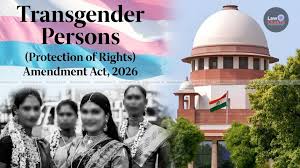
The Supreme Court of India on Monday issued notice to the Centre and all States on a batch of petitions challenging the constitutional validity of the Transgender (Protection of Rights) Amendment Act, 2026, but declined to grant any interim stay, noting that the law has not yet been notified. The Supreme Court of India on Monday issued notice to the Centre and all States on a batch of petitions challenging the constitutional validity of the Transgender (Protection of Rights) Amendment Act, 2026, but declined to grant any interim stay, noting that the law has not yet been notified. Refusing to put the amended law on hold at this stage, a Bench of Chief Justice Surya Kant and Justice Joymalya Bagchi directed that notice be issued to the States through their Advocates General and said the matter would be placed before a three-judge Bench to be constituted by the Chief Justice. The amendment, which received Presidential assent on March 31, introduces wide-ranging changes to the legal framework governing the recognition, rights, and protection of transgender persons. It revises the definition of a “transgender person” to make it more precise and strengthens penal provisions to deal with serious offences such as abduction of adults and children and the infliction of reversible or irreversible bodily harm through mutilation, emasculation, castration, hormone therapies or other similar interventions, or chemical alteration, including forced gender identity. During the hearing, senior advocate Abhishek Manu Singhvi, appearing for some of the petitioners, raised concerns over the removal of self-identification as a basis for recognising gender identity. He submitted that the amended law effectively bars individuals from asserting their gender identity without medical certification and could disrupt ongoing gender-affirming treatments. The Bench, however, expressed concern about possible misuse if self-identification alone were accepted, including the risk of individuals falsely claiming such status to avail reservations and other benefits. Singhvi responded that such apprehensions were unfounded and reiterated that the amendment runs contrary to the principles laid down by the Supreme Court in its April 15, 2014 judgment in National Legal Services Authority v. Union of India. “You cannot nullify the judgment. The basis can be removed. The NALSA judgment is nullified, and no attempt has been made to remove its basis,” Singhvi told the Bench. The Supreme Court, in its April 15, 2014 judgment, had issued a series of directions, including upholding the right of transgender persons to self-identify their gender. The ruling stated: “Transgender persons’ right to decide their self-identified gender is also upheld, and the Centre and State Governments are directed to grant legal recognition of their gender identity, such as male, female, or as third gender.” Questioning Singhvi’s submissions, Justice Bagchi observed, “When you say NALSA recognises self-identification as a matter of dignity, we can examine the amendment in the light of Article 21. This amendment changes the substratum of the law on which NALSA examined it. So, instead of self-determination, there is a medical evaluation.” “This amendment changes the substratum of the law under which NALSA was examined. Self-identification is replaced with medical evaluation,” the Bench added. Singhvi pressed for an interim stay of the amendment, pointing to its immediate impact on transgender persons undergoing treatment, but the Court was not inclined to intervene. It reiterated that the validity of the law would be examined in due course and refused to halt its operation at this stage. The amendment to the Transgender (Protection of Rights) Act, 2026 has also been challenged before the High Courts of Delhi, Kerala, and Karnataka. The amended law seeks to make the definition of a “transgender person” more precise, addressing concerns that the earlier definition under the 2019 Act was overly broad and created practical difficulties in identification and implementation. The revised framework aims to ensure that protections are targeted at individuals facing genuine social exclusion due to biological factors, rather than extending benefits based on self-perceived or acquired identities. The Act also introduces institutional and procedural reforms, including the designation of competent authorities for implementation and provisions for seeking expert inputs where required. It enables transgender persons to make consequential changes in official documents and restructures the National Council for Transgender Persons to ensure more effective representation from States and Union Territories through a region-based rotational mechanism. A key feature of the amendment is the strengthening of penal provisions. While the earlier law provided limited punishment for general offences, the amended provisions create specific offences with graded punishments, particularly addressing grave acts such as abduction, forced bodily harm (including mutilation or chemical alteration), and coercion into a transgender identity for exploitation. These provisions are designed to operate alongside existing criminal laws while recognising the unique vulnerability of victims. Parmod Kumar Courtesy : The Statesman Note: This news is originally published on https:/thestatesman.com/bha and is used purely for non-profit/non-commercial purposes, especially human rights
Lost in translation: When Kinnaur became ‘transgender’ in Himachal Class 6 textbook

The Hindi text is translated into English using some AI tool, which appears to have mistaken ‘Kinnaur’ for ‘Kinnar’ and changed it to ‘transgender’ The Himachal Pradesh Board of School Education has landed in an awkward situation due to the careless use of Artificial Intelligence (AI). In a Class 6 book, ‘Folk Culture of Himachal and Yoga’, district Kinnaur has been mentioned as ‘transgender’ in the English version. However, the Hindi version mentions the correct name. Apparently, the Hindi text was translated into English using some AI tool, which appears to have mistaken ‘Kinnaur’ for ‘Kinnar’ and changed it to ‘transgender’. The state government has introduced English as a medium of instruction in the government schools, and the Hindi version was translated into English. “It’s alright to use AI for translations but one should at least have seen the final text. AI is helpful but it can lead to embarrassing errors, as seen in this case,” said a teacher. Meanwhile, the education board has decided to issue a corrigendum stating that the word ‘transgender’ in the book should be read as ‘Kinnaur’. “We have noticed the error, and a corrigendum will be issued in a few days,” said Board secretary Vishal Sharma. The error will be corrected when the book is reprinted for the next academic session. Article_Author Subhash Rajta Courtesy : The Tribune Note: This news is originally published on https:/thetribune.com/bha and is used purely for non-profit/non-commercial purposes, especially human rights
Supreme Court to hear plea against Transgender Amendment Act on May 4
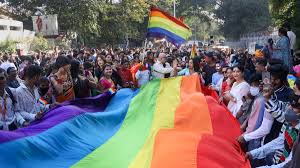
The petition argues that the Act amended the Transgender Persons (Protection of Rights) Act, 2019, in its structure, object, and affect, and thus violated the fundamental rights of transgender persons. New Delhi: The Supreme Court is scheduled to hear on Monday a plea challenging the constitutional validity of the Transgender Persons (Protection of Rights) Amendment Act, 2026 for replacing the individual’s own understanding of their gender or identity with a biological or socio-medical category of the State’s choosing. A bench of Chief Justice of India Surya Kant and Justice Joymalya Bagchi would take up on May 4, 2026 the petition filed by Laxmi Narayan Tripathi, the chairperson of National Council for Transgender Persons (NCTP), and its member Zainab Patel. The petition contended the Amendment Act amended the Transgender Persons (Protection of Rights) Act, 2019, in its structure, object, and affect, and thus violated the fundamental rights of transgender persons guaranteed under Articles 14, 15, 19, and 21 of the Constitution. The plea pointed out in National Legal Services Authority Vs Union of India, (2014), the Supreme Court, recognised for the first time that transgender persons have a fundamental right to be identified as a third gender, distinct from the male-female binary It highlighted that the court then directed that transgender persons would be treated as socially and educationally backward classes for the purposes of reservation under Articles 15 (4) and 16 (4), and called upon the State to take affirmative steps to address the marginalisation they face. Above all, NALSA judgment established that the right to self-identification of gender is a fundamental right under Article 21, not a privilege to be conferred by a certificate, not a status to be earned through surgery and not a conclusion to be reached by a medical board, the plea said. The 2019 Act preserved the core of what NALSA required. However, the Amendment Act arbitrarily removed the provision, which stated that a transgender person is someone whose gender does not match their birth assignment, and that they have the right to self-identify, the plea contended. “The deepest constitutional wound inflicted by the Amendment Act is the substitution of the definition of “transgender person” in Section 2(k) of the Principal Act,”‘ it stated. The plea emphasised in NALSA judgment, the Supreme Court explicitly and unequivocally repudiated the requirement of surgical intervention as a precondition for legal gender recognition. This court further held that each person’s self-identification of gender must be accepted as the foundation of their legal gender identity, without the State imposing medical, psychiatric, or bureaucratic gatekeeping. The right to determine one’s own gender, free from coerced bodily alteration, was held to flow directly from the right to privacy and dignity under Article 21, it pointed out. The plea contended a legislature cannot repeal a provision that gives concrete form to a fundamental right recognised by this court without violating Article 21. Ashish Tripathi Courtesy : DH Note: This news is originally published on https:/deccanherald.com/bha and is used purely for non-profit/non-commercial purposes, especially human rights
Sirsa becomes the first district in Haryana to have the transgender community as “special invitees” to ward committee meetings.

The transgender community living in the ward areas will now be invited as special invitees to all ward committee meetings. This information was provided by District Municipal Commissioner Virendra Sehrawat. Sirsa: Taking a significant step towards inclusive and participatory governance in Haryana, Sirsa district has become the first district in the state to have the transgender community as “special invitees” to ward committee meetings. This initiative aims to empower the voice of every segment of society by involving them in local administrative processes. The transgender community is happy with this decision and expresses their commitment to being able to express their views to the administration and the government. District Municipal Commissioner Virendra Sehrawat provided this information. Providing information on this, District Municipal Commissioner Virendra Sehrawat stated that the objective of this initiative is to ensure the participation of all segments in the work of ward committees and to ensure adequate representation of local issues in the administrative system. This decision has been taken with this in mind. The transgender community living in the ward areas will now be invited as special invitees to all ward committee meetings. This move will provide the transgender community with an opportunity to directly raise their issues and ensure participation in the decision-making process. Transgender community extremely happy with the decision District Municipal Commissioner Virendra Sehrawat stated that this initiative will not only empower the transgender community but will also make the decision-making process at the local level more inclusive, transparent, and effective. This initiative is being considered a commendable step towards social harmony and equal rights, and can serve as an inspiration for other districts. Expressing happiness over this, members of the transgender community have called it a good initiative and said that now they will also be able to raise their concerns and make their voices heard by the government and the administration. They said they will raise their voice for the eradication of drug abuse and will contribute to eliminating it from Sirsa district. Report – Vikram Bhatia, Sirsa, Edited By: Mangal Yadav @MangalyYadav Courtesy: Hindi News
Transgender Rights In India: Law Vs Ground Reality

India’s journey toward recognising transgender rights has been progressive in law but uneven in reality. While constitutional courts have affirmed dignity, equality, and the right to self-identification, the lived experience of transgender persons continues to be shaped by discrimination, exclusion, and social stigma. The introduction of the Transgender Persons (Protection of Rights) Amendment Bill, 2026 has further intensified the debate between legal protection and ground realities. The foundation of transgender rights in India was laid in the landmark judgment of NALSA v. Union of India (2014), where the Supreme Court recognised transgender persons as a third gender and upheld their right to self-identify their gender identity under Article 21 of the Constitution. This was followed by Navtej Singh Johar v. Union of India (2018), which strengthened the broader framework of dignity, autonomy, and equality for gender and sexual minorities. These judgments positioned India as a country with a progressive constitutional vision on gender identity. However, the legislative framework has often struggled to match this constitutional vision. The Transgender Persons (Protection of Rights) Act, 2019 was introduced to prohibit discrimination and provide welfare measures. Yet, it was widely criticised for diluting the principle of self-identification by requiring a bureaucratic certification process for legal recognition of gender identity. The newly proposed Transgender Persons (Protection of Rights) Amendment Bill, 2026 has further deepened this debate. The Bill introduces stricter procedures for gender recognition, including mandatory verification through district authorities and medical boards, shifting away from the self-identification principle established by the Supreme Court. Critics argue that this medicalisation of identity undermines personal autonomy and violates the spirit of constitutional dignity under Article 21. The Bill also expands regulatory oversight over gender identity certification processes, raising concerns about privacy and state control over deeply personal aspects of identity. While the government argues that these changes aim to prevent misuse of welfare schemes and ensure administrative clarity, activists fear that it may create additional barriers for an already marginalised community. On the ground, transgender persons continue to face harsh realities. Despite legal protections, discrimination in education, employment, healthcare, and housing remains widespread. Many are pushed into informal work due to lack of opportunities in the formal sector. Social exclusion, family rejection, and violence further intensify their vulnerability. Even access to welfare schemes is often blocked by bureaucratic hurdles and lack of awareness. A major concern is the gap between constitutional promises and practical implementation. While courts have recognised dignity and equality as fundamental rights, enforcement mechanisms remain weak. Police insensitivity, social stigma, and institutional bias continue to deny transgender persons equal citizenship in practice. The introduction of the 2026 Amendment Bill thus raises a critical question: Are we strengthening rights or regulating identity? True equality cannot be achieved through procedural recognition alone; it requires social acceptance, institutional sensitivity, and respect for individual autonomy. In conclusion, while India’s legal framework has made important strides in recognising transgender rights, the proposed 2026 Amendment highlights the ongoing tension between law and lived reality. The challenge ahead is not just to legislate rights, but to ensure that those rights are meaningful, accessible, and respected in everyday life. Only then can constitutional promises of dignity and equality truly become a lived reality for every individual, regardless of gender identity. Written by Diya sharma Law student, voice of change, and believer in justice beyond books Courtesy : Youth Ki Awaaz Note: This news is originally published on https:/youthkiawaaz.com/bha and is used purely for non-profit/non-commercial purposes, especially human rights
Meet Rithika Sri: Tamil Nadu’s first transgender cricket umpire breaking barriers

Indian cricket is slowly seeing new names and new roles, not just on the pitch but also in decision-making roles like umpiring. These changes may look small at first, but they carry meaning for many people who have long been outside the system. One such story coming from Tamil Nadu is now drawing attention for all the right reasons, where Rithika Sri has stepped into cricket umpiring and created a quiet milestone. Rithika Sri becomes a new name in Tamil Nadu cricket umpiring Rithika Sri, who comes from Salem, has become the first transgender umpire from Tamil Nadu. Her entry into this field is being seen as a notable moment in state cricket, especially in terms of inclusion. A key development that supported this change came from the Tamil Nadu Cricket Association. It introduced an “other” category in the gender section of its State Panel Umpire exams. This change made the application process more open for different candidates. Early life and background of Rithika Sri Rithika Sri was born as R. Muthuraj in Salem, Tamil Nadu. She later transitioned and identifies as a transwoman. She has completed a diploma in Mechanical Engineering. Before entering cricket, she worked at a call centre in Mohali. Her interest in cricket umpiring started while watching the Indian Premier League. What began as casual interest slowly turned into something she wanted to pursue seriously. How her umpiring journey started During the COVID period, she returned to her hometown. This was when she decided to focus on cricket umpiring. From 2021 onwards, she began officiating matches in Salem and Coimbatore. She continued building experience in local matches over time. In 2024, she completed her transition in Coimbatore. She was also involved in discussions that supported the inclusion of the “other” gender category in the TNCA umpire exam system. Difficult moments during her journey Rithika Sri has shared that her path was not easy. She faced difficult situations while trying to establish herself in cricket umpiring. She also recalled an incident in Coimbatore where she was denied entry into a cricket ground. Speaking to The Hindu, she shared her experience in her own words: “The first time in Coimbatore, I went to watch because they wanted me to get familiar with the new district, but I was denied entry, and there were hurtful comments. I went back home crying after an hour, but not before fighting back against them. People often accuse trans people of begging, but then, at the same time, they don’t allow us to pursue a dignified livelihood. Can’t a transperson become an umpire?” Despite such experiences, she continued her journey without stepping away from the sport. Support from cricket associations Along with challenges, she also received support from cricket authorities. The Coimbatore District Cricket Association helped ensure that she was not discriminated against at venues. Officials including R. Chandramouli and K. Mahalingam worked to manage the situation and support fair access. She also mentioned that matches were shifted from a venue that did not allow her entry. Courtesy : TOI Note: This news is originally published on https:/timesofindia.com/bha and is used purely for non-profit/non-commercial purposes, especially human rights
Is India’s new transgender law not grounded in scientific knowledge?

A mere physical examination is not enough to certify a person as transgender, according to experts Is India’s new transgender law not grounded in scientific knowledge? Parliament last month passed the Transgender Persons (Protection of Rights) Amendment Bill, 2026. The new legislation significantly amends the 2019 Act. According to the new law, an examination by the medical board is mandatory to confirm transgender identity. Is India’s new transgender law not grounded in scientific knowledge? It only recognises certain socio-cultural identities.Photo: Vikas Choudhary/CSE However, critics have pointed out that the new law leaves out many trans men, trans women and non-binary individuals, who do not fall into law’s definition of a ‘transgender person’ which only includes socio-cultural identities like hijra, kinner, aravani. Is India’s new transgender law not grounded in scientific knowledge? This, say critics, leaves out many trans men, trans women and non-binary individuals.Photo: Vikas Choudhary/CSE Experts have said that the new law is not based on scientific knowledge. Vikas Choudhary Courtesy : Down To Earth Note: This news is originally published on https:/downtoearth.com/bha and is used purely for non-profit/non-commercial purposes, especially human rights
Indian archdiocese launches pastoral care for transgender people
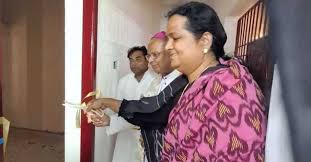
Move inspired by synodal call to ‘integrate marginalized communities, help them live a dignified life,’ priest says For years, Inba Ignatius, a Catholic transgender leader in the southern Indian city of Chennai, felt like a visitor in her own church — welcomed at the altar on special occasions but largely invisible in the daily life of the parish. Today, she feels the beginnings of a permanent home. Her sense of belonging is being fostered by a pioneering initiative of Madras-Mylapore archdiocese: a dedicated pastoral care desk for transgender persons. Launched on Feb. 26 by Archbishop George Antonysamy, the desk represents a structured, institutional effort to move beyond sporadic outreach toward a sustained ministry toward this marginalized group. For Father Leo Joseph, the priest who started the pastoral desk, the initiative is not merely a social project but a direct response to the universal call of the Catholic Church. “We have started this desk as an answer to a call from the recently held Synod of Synodality, which urges the Church to ‘integrate marginalized communities like transgender people and help them live a dignified life,’” he told UCA News. The desk’s mandate, however, draws a clear pastoral boundary. Joseph emphasized that the focus is on holistic care and social integration, clarifying that the ministry is intended to provide “only pastoral care and not sacramental care.” Ignatius, who runs a non-governmental organization for transgender rights and has collaborated with Joseph for years, sees the pastoral desk as a watershed moment. “It is a welcome initiative by the archdiocese,” she told UCA News. Transgenders in Chennai (formerly Madras) — the capital city of Tamil Nadu state, where the archdiocese is based — “need genuine pastoral care, and this pastoral desk can be a big help,” Ignatius noted. The archdiocese’s pastoral move unfolds against a backdrop of broader societal recognition in Tamil Nadu. The state government already maintains a special welfare board for transgender persons and has recently announced new schemes for their welfare and development. Furthermore, Tamil Nadu is home to the annual Koothandavar festival, a major Hindu religious and cultural event that prominently celebrates the transgender community — a testament to the deep cultural roots and visibility of transgender persons in the state’s social fabric. The Catholic archdiocese’s initiative brings together a small but dedicated team — two other priests and two nuns — with plans to expand by enlisting volunteers from religious congregations and the laity. The goal, Joseph explained, is to coordinate and amplify the scattered efforts already being undertaken by individuals and religious communities across the archdiocese. Currently, the team is drafting a formal mandate and action plan, which they hope to present to the Tamil Nadu Bishops Council (TNBC) for adoption. The vision is to eventually elevate the desk to an archdiocesan commission, creating a model that could be replicated in other dioceses across the southern state. The scale of the need is significant. Joseph estimates that around 10,000 transgender persons live in Chennai. Many face stark marginalization. “Most survive by begging near toll roads and indulging in commercial sex work,” he said. The desk’s immediate strategy focuses on economic empowerment as a way to dignity. Plans are already underway to provide training in employable skills such as tailoring and jewelry making, intending to secure stable jobs. For Joseph, this work is a continuation of a commitment that began nearly a decade ago, when he first started building relationships with the transgender community in 2015. Ignatius noted that small but significant steps toward inclusion have paved the path to this moment. Joseph, she recalled, has long facilitated interactions between transgender persons and seminarians, priests, and nuns, helping to break down misconceptions and foster understanding. “We were invited to be part of various events like Maundy Thursday celebrations and other church events and festivities,” she said. “Because of the exposure and opportunities we received, we feel now as part of the local Catholic parishes.” She hopes that the new pastoral desk will build on this foundation, moving from symbolic inclusion to structural integration. “I believe this pastoral desk can help us become more visible and integrate with the larger mainstream community, especially with the Catholic community in the archdiocese.” Publisher William J. Grimm M. M. Courtesy : UCA News Note: This news is originally published on https:/ucanews.com/bha and is used purely for non-profit/non-commercial purposes, especially human rights