
From counting to reaching: Enhancing transgender welfare in India
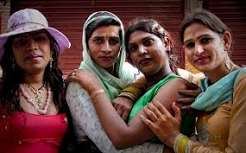
The 2011 Census gave those wishing to identify as transgender the option to choose “Other” as their gender category. In this post, Neethu Naik contends that as the country moves towards another census, the challenge is to count transgender persons more accurately, and to ensure that those counted can actually reach the institutions created for them. In 2011, India’s Census recorded 487,803 people under the category “Other”. It was the first national enumeration to provide an “Other” gender category alongside female and male. Yet, this number was never a dedicated count of transgender persons. The government has explicitly acknowledged that the category included people who wished to record their sex as “Other”, while some transgender persons may have identified themselves as female or male (Ministry of Social Justice and Empowerment, 2019). Fifteen years later, this raises questions that go beyond enumeration: What do we actually know about India’s transgender population? Has there been a systematic effort to understand its changing size, geographical distribution, socioeconomic conditions, and welfare needs since 2011? If the demographic profile has changed, can welfare architecture that was designed around a 15-year-old and methodologically limited benchmark adequately capture present needs? These questions are particularly pertinent as India moves towards another Census. Since 2011, the State has developed considerably more elaborate welfare architecture. The Transgender Persons (Protection of Rights) Act, 2019 and Rules of 2020 (Ministry of Social Justice and Empowerment, 2020) established a formal legal framework; the National Portal for Transgender Persons created an online certification mechanism; and the Support for Marginalized Individuals for Livelihood and Enterprise (SMILE) scheme brought together rehabilitation, healthcare, shelter, skill development, and economic linkages for transgender persons (Department of Social Justice and Empowerment, 2020). But how far has this architecture actually reached? From demographic visibility to administrative visibility The National Portal for Transgender Persons was introduced to provide a relatively accessible mechanism for obtaining a transgender certificate and identity card. Certification is significant because it is not merely an instrument of identity recognition; it has become an administrative gateway to several welfare interventions under SMILE and to the Ayushman Bharat TG Plus health package. The state-wise certification data provide an interesting picture of this emerging administrative geography. My compilation of the data available on the National Portal records 48,579 applications and 40,618 certificates issued across the states and Union Territories for which figures were available (Table 1). There is wide geographical variation, ranging from Maharashtra recording 6,924 applications and 5,817 certificates on the one hand, and Sikkim recording 42 applications and 39 certificates on the other hand. These figures are influenced by factors such as awareness, digital access, documentation, administrative support, and willingness to seek certification. Hence, these may not represent true differences in demographic prevalence. Table 1. State/UT-wise applications received, and transgender certificates issued through the National Portal for Transgender Persons, September 2026 State/UT Applications received Certificates issued Pending Maharashtra 6,924 5,817 240 Karnataka 6,038 5,316 186 Odisha 3,957 3,654 86 Andhra Pradesh 3,907 3,516 68 Telangana 3,370 2,800 381 West Bengal 2,813 2,279 177 Uttar Pradesh 2,749 2,055 279 Gujarat 2,540 2,280 32 Kerala 2,262 1,863 36 Delhi 2,065 1,527 161 Tamil Nadu 1,787 1,236 126 Madhya Pradesh 1,456 1,191 92 Chhattisgarh 1,294 1,179 32 Bihar 1,217 1,039 40 Haryana 1,045 771 70 Manipur 1,006 937 24 Rajasthan 942 731 64 Assam 686 508 39 Jharkhan 668 545 63 Punjab 507 370 27 Jammu & Kashmir 347 271 19 Puducherry 346 284 5 Uttarakhand 225 129 26 Tripura 197 164 15 Himachal Pradesh 117 69 5 Chandigarh 72 48 6 Sikkim 42 39 0 Meghalaya 0 0 0 Goa 0 0 0 Arunachal Pradesh 0 0 0 Nagaland 0 0 0 A & N Islands 0 0 0 Mizoram 0 0 0 Daman & Diu 0 0 0 Lakshadweep 0 0 0 Ladakh 0 0 0 Total 48,579 40,618 2,299 Source: Author’s compilation based on data displayed on the National Portal for Transgender Persons; accessed in September 2026. Nevertheless, the variation raises an important issue: the first step towards entering the welfare system – becoming administratively visible – is itself geographically uneven. This is significant because the legal framework is explicitly based on self-perceived gender identity. The 2020 Rules provide for certification through an affidavit and do not require medical or physical examination. The National Portal further states that neighbourhood verification to establish whether an applicant is transgender is unnecessary. The intention is therefore to reduce the burden of proving identity. Yet the individual must still negotiate a bureaucratic process involving applications, documents, and digital interfaces. The portal provides alternatives where certain documents are unavailable, but this does not eliminate the wider barriers of digital literacy, awareness, family support, and confidence in approaching State institutions. This creates a paradox; a system designed around self-identification can still be difficult to access for those who are socially least equipped to navigate the State. What lies beyond certification? Certification is important, but it is only the beginning of the welfare journey. SMILE is designed as an integrated intervention. Its transgender component includes medical facilities, counselling, education, skill development, livelihood and economic linkages, shelter, and rehabilitation. Healthcare illustrates the significance of this linkage. Ayushman Bharat TG Plus provides annual health coverage of up to Rs. 5 lakh per eligible beneficiary, and includes hormone therapy, gender-affirming procedures, sex-reassignment surgery, and post-operative care. However, the transgender certificate is a mandatory requirement for accessing the package. Thus, access is not a single event; it is a chain encompassing awareness, application, certification, eligibility, and service access. The livelihood component raises an even broader question. The government has introduced skill-development and entrepreneurship interventions under SMILE, including a programme intended to train 1,800 transgender persons through entrepreneurship development. But how many people move from training to sustained employment? How many obtain independent livelihoods? How many enter formal workplaces? These are arguably more meaningful indicators of social and economic inclusion than the number who have merely participated in a programme. Significantly, the Ministry invited an evaluation study in 2024 to
2 transgenders held for creating nuisance at Knp stn

Kanpur: The Railway Protection Force (RPF) on Sunday arrested two transgender persons at Kanpur Central railway station for allegedly misbehaving with passengers and engaging in unauthorised activities, officials said. The accused were identified as Tania and Khushhal. RPF in-charge SN Patidar said the two were found allegedly misbehaving with passengers near the foot overbridge stairs at the Delhi end of Platforms 6 and 7 during a routine patrol. Despite being warned, they allegedly continued their activities and failed to produce valid authorisation documents. They were subsequently arrested, he said. Cases were registered against them under Sections 145 and 147 of the Railways Act. Courtesy : TOI Note: This news is originally published on https:/timesofindia.com/bha and is used purely for non-profit/non-commercial purposes, especially human rights
Aadhaar authentication made mandatory for beneficiaries of central scheme for transgender persons
The notification, issued under the Aadhaar (Targeted Delivery of Financial and Other Subsidies, Benefits and Services) Act, 2016, lays down procedures for establishing the identity of applicants and verifying their eligibility for benefits The Union Ministry of Social Justice and Empowerment has notified rules making Aadhaar authentication a requirement for beneficiaries of a centrally sponsored scheme for transgender persons, while providing alternative identity documents for those who do not have an Aadhaar number. According to a notification, the requirement applies to individuals seeking benefits under the scheme administered by the Department of Social Justice and Empowerment. The notification, issued under the Aadhaar (Targeted Delivery of Financial and Other Subsidies, Benefits and Services) Act, 2016, lays down procedures for establishing the identity of applicants and verifying their eligibility for benefits. Under the rules, individuals who have been assigned an Aadhaar number must provide proof of Aadhaar authentication or possession of the number to receive benefits under the scheme. Those who have not yet been assigned an Aadhaar number will have to apply for enrolment and provide proof of enrolment, along with other prescribed documents, to establish their identity and eligibility. “For transgender beneficiaries aged 18 years and above who do not have an Aadhaar number, the notification provides for alternative documents, including a voter identity card issued by the Election Commission of India, a ration card, a caste certificate or an income certificate issued by a competent authority, a government-issued service identity card, a driving licence, a passport and educational certificates,” the notification said. Other documents specified in the notification include certificates issued by recognised institutions and authorities, as well as prescribed documents relating to foreign nationals, depending on their citizenship and immigration status. For beneficiaries below 18 years of age who have not been assigned Aadhaar numbers, the rules provide for alternative documents such as a birth certificate, a certificate issued by a recognised educational institution, a ration card and other prescribed identity documents. The notification also addresses cases in which transgender beneficiaries are unable to complete Aadhaar enrolment or authentication. The authorities implementing the scheme will be required to make arrangements to facilitate access to benefits in accordance with the prescribed procedure. The rules require the concerned authorities to publicise the Aadhaar-related requirements and ensure that eligible beneficiaries are informed about the documents they can submit. The notification is intended to establish a framework for identity verification and delivery of scheme benefits while providing for applicants who have not yet obtained Aadhaar. Article_Author Surya S Pillai Courtesy : The Tribune Note: This news is originally published on https:/thetribune.com/bha and is used purely for non-profit/non-commercial purposes, especially human rights
Trans teen accused of Hindu temple attack plot to receive gender-transition hormone shots in jail

The 19-year-old transgender teen accused of plotting a racist mass shooting at a Hindu temple near Chicago will reportedly continue receiving hormone injections for gender transition while in jail awaiting trial, after a judge ordered his detention without bail. Alexandros Paporakis, a transgender man from Palatine, Illinois, appeared in court on Wednesday, when the judge also addressed his medical treatment. Paporakis is being treated for attention-deficit/hyperactivity disorder (ADHD), depression and anxiety, in addition to receiving hormone injections, NBC Chicago reported. The ruling came days after Paporakis was arrested over an alleged plan to attack a Hindu temple in Aurora, a suburb of Chicago. Prosecutors say he told co-workers he “couldn’t wait to kill Indian people” and described himself as a white supremacist. ‘Couldn’t wait to kill Indians’ Paporakis, who worked as a cashier at Taco Bell, was arrested on Sunday after a co-worker alerted police to suspicious communications. The messages reportedly included an eight-page document outlining an alleged mass-shooting plan and photographs of a rifle, ammunition magazines and tactical equipment. Police said Paporakis drove to a large Hindu temple in Aurora at about 12.25 pm on Sunday, intending to open fire. Surveillance footage reportedly showed his car entering the parking lot before leaving a few minutes later.According to investigators, his rifle malfunctioned, preventing the alleged attack from proceeding as planned. Paporakis then returned to his home in Palatine, where he allegedly searched online for instructions on how to fix the jammed weapon and contacted a co-worker about his intention to carry out a mass shooting. The co-worker alerted police, who obtained a search warrant and arrested Paporakis before he could allegedly return to the temple. FBI Chicago acting special agent in charge Lucas Rothaar praised the informant, saying the public remained law enforcement’s “greatest asset” in disrupting acts of violence. “I want to praise and offer my personal, sincerest thanks to the individual who stepped forward,” Rothaar said at a news conference. A search of Paporakis’ home uncovered an AR-style rifle, a loaded magazine, hundreds of rounds of ammunition and tactical equipment, police said. Investigators also found an eight-page manifesto that allegedly expressed hatred towards Indians, Jews, Black people and other non-white communities, alongside white supremacist and Nazi imagery. Prosecutors said Paporakis had told co-workers he “couldn’t wait to kill Indian people”. In the manifesto, he allegedly described himself as “a sociopathic white supremacist Neo Nazi filled with hatred, fantasizing about mass murder nearly every day”. Temple boosts security after alleged plot The alleged plot has raised concern among Hindu Americans and Indian-origin communities. Democratic representative Raja Krishnamoorthi said he and his family were at the Aurora temple on Sunday, the same day authorities believe Paporakis intended to carry out the attack. “The threat of such violence shows how dangerous anti-Indian hatred and white supremacy have become,” Krishnamoorthi said, calling for threats to be taken seriously before anyone was killed. The temple said the safety of its devotees, employees and volunteers was its highest priority and announced additional security measures, including an increased armed-security presence. Paporakis faces felony charges of making a terrorist threat and unlawfully possessing a rifle with a barrel shorter than 16 inches. A judge ordered him held without bail on Wednesday and issued an order addressing his healthcare in custody, including hormone injections for gender transition. He is due back in court on October 30. Courtesy : TOI Note: This news is originally published on https:/timesofindia.com/bha and is used purely for non-profit/non-commercial purposes, especially human rights
Maha to build separate toilets for transgenders across all ST bus stands
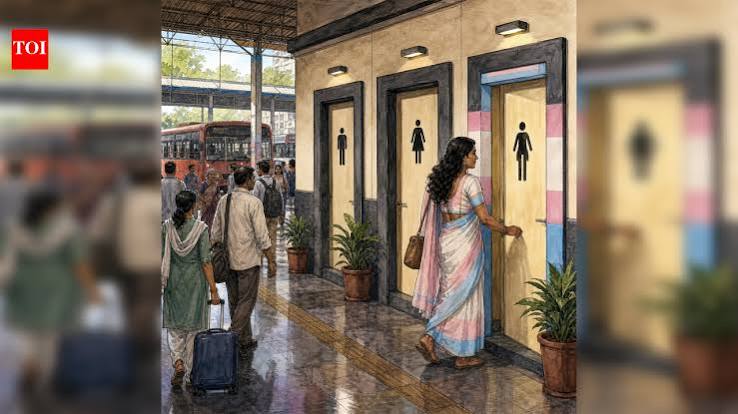
Nagpur: For a transgender person a toilet at a state transport bus stand, there was no toilet meant for them. The state govt has now sanctioned Rs 9.77 crore to build separate toilets for transgender persons at ST bus stands across Maharashtra. In a govt resolution (GR) issued on Wednesday, the transport department gave administrative approval for a combined estimate of Rs 9,76,63,195 covering 31 ST divisions. The GR says the absence of a separate toilet at bus stands forces transgender persons to face social and physical difficulties and causes them considerable distress. Vidarbha’s nine ST divisions together get about Rs 2.71 crore. Amravati has the largest share in the region at Rs 50.74 lakh, followed by Nagpur at Rs 48.40 lakh, Yavatmal at Rs 36 lakh, Buldhana at Rs 33.83 lakh and Bhandara at Rs 31.46 lakh. Chandrapur gets Rs 20.43 lakh, Akola Rs 19.48 lakh, Wardha Rs 16.94 lakh and Gadchiroli Rs 13.75 lakh. Across the state, Kolhapur division gets the highest allocation at Rs 55.20 lakh and Latur the lowest at Rs 9.60 lakh. The proposal came from the ST corporation’s vice-chairperson and managing director, after the minister of state for urban development, transport and social justice, among other portfolios, directed that the transport department give approval without delay. The cost will be met from the social justice department’s funds for setting up a welfare board for transgender persons and protecting their rights. The sanction comes with conditions. Layout and detailed plans must be approved by architects before work begins, a detailed estimate must be prepared, and the executive engineer concerned must give technical sanction. The GR does not say how many toilets will be built or at which bus stands, as the annexure lists only division-wise lump sums. Courtesy : TOI Note: This news is originally published on https:/timesofindia.com/bha and is used purely for non-profit/non-commercial purposes, especially human rights
Delhi govt to offer 1,300 pink e-autos to empower women, transgender persons
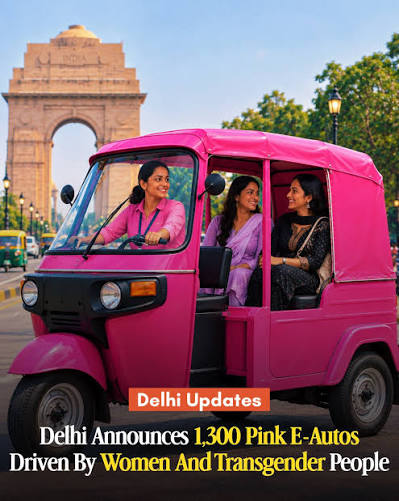
Delhi has opened the DURGA portal for women and transgender applicants to seek pink e-autos. The scheme aims to expand self-employment and make public transport more inclusive. The Delhi government on Monday launched a dedicated portal for the DURGA e-auto scheme, under which women and transgender persons will get an opportunity to own and drive electric autos and earn a livelihood. Chief Minister Rekha Gupta said 1,300 pink e-autos will be allotted in the first phase. She said 1,170 have been earmarked for women and 130 for transgender persons, with a district-wise cap of 90 e-autos for women and 10 for transgender persons in each revenue district. The scheme, called Driving, Upliftment and Rozgar for Women/Transgender E-Auto (DURGA), was recently launched by the government. Through the initiative, the government aims to create self-employment opportunities for the targeted groups and increase their participation in public transport, Gupta said. Under the eligibility criteria, women applicants must be between 20 and 40 years of age and residents of Delhi. They must hold a valid Light Motor Vehicle (LMV) driving licence and a Public Service Vehicle (PSV) badge. “The annual family income must not exceed Rs 5 lakh, and the prescribed condition relating to a maximum of three living children will also apply. Transgender applicants must also meet the specified age and Delhi residency requirements and hold a valid driving licence and PSV badge,” Gupta said in a statement. The application process will remain open for three months. Gupta said that if the number of eligible applications received in a district is higher than its prescribed quota when the portal closes, allotments will be made through an online lottery. The portal launch marks the start of applications for the DURGA e-auto scheme, under which 1,300 pink e-autos will be allotted in the first phase to eligible women and transgender applicants in Delhi. Courtesy : India Today Note: This news is originally published on https:/indiatoday.com/bha and is used purely for non-profit/non-commercial purposes, especially human rights
Kerala HC directs release of pending dues to transgender person who underwent sex reassignment surgery
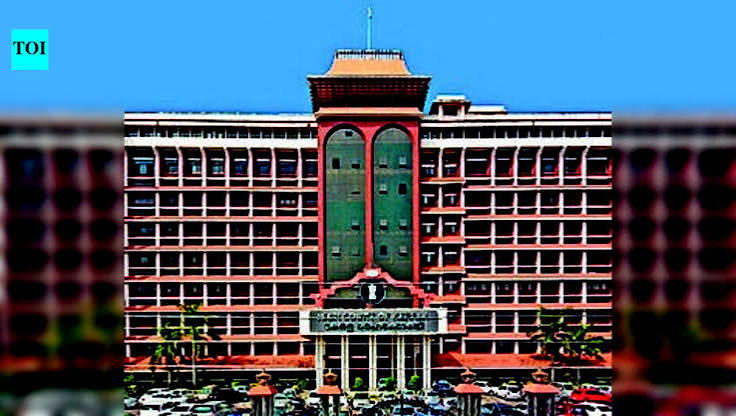
Kochi: The high court has directed the director of the directorate of social justice to disburse the pending financial assistance of Rs 21,000 to a transgender person who underwent sex reassignment surgery (SRS) within two months. A bench of Justice P V Kunhikrishnan issued the direction while disposing of a petition filed by a 27-year-old transgender person from Thiruvananthapuram seeking Rs 36,000 in post-operative treatment assistance under a govt order dated Nov 14, 2018, as supplemented by another order dated Aug 22, 2023, along with interest. According to the petitioner, Rs 15,000 had already been received, leaving an unpaid balance of Rs 21,000. The petitioner approached the court alleging that the authorities had failed to disburse the remaining amount despite an application dated Sept 1, 2025, and a representation dated Sept 11, 2026. During the hearing, the state govt submitted that officials were taking steps to disburse the amount and were awaiting sanction from the authority concerned. Recording the submission, the court directed the social justice director to disburse the eligible amount of Rs 21,000 within two months. Courtesy : TOI Note: This news is originally published on https:/timesofindia.com/bha and is used purely for non-profit/non-commercial purposes, especially human rights
Keep one post vacant for transgender applicant: HC to police dept
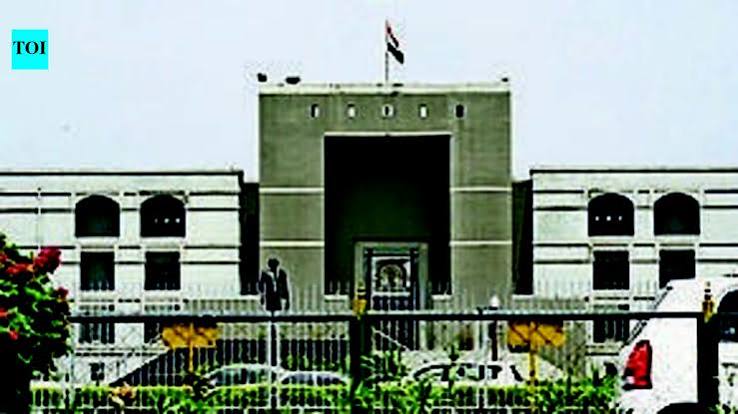
Ahmedabad: Gujarat High Court has directed Gujarat Police Recruitment Board to keep one unarmed police constable post vacant for a transgender candidate who has sought a separate category for the third gender in the recruitment process. The 35-year-old petitioner from Bhavnagar has obtained a Certificate of Identity issued by the district collector under Rule 5 of the Transgender Persons (Protection of Rights) Act, 2019. Her Aadhaar card identifies her as female. However, as the recruitment board had provided only two categories — male and female — she was advised to apply under the female category. She cleared the physical standard test and physical efficiency test but scored 94 marks in the written examination, against the cut-off of 98.5 marks for the SEBC female category. Subsequently, she represented to the authorities, seeking consideration under a separate third gender category. With no response forthcoming, she approached the HC seeking directions to consider her candidature accordingly. Her advocate, Hannan Qureshi, cited a Supreme Court judgment in a case filed by the National Legal Services Authority, which directed governments to recognise and create a third gender category. The state govt opposed the petition, arguing that the petitioner had voluntarily opted for the female category during recruitment and raised the grievance only after failing to secure the requisite cut-off marks. After the preliminary hearing, Justice Aniruddha Mayee said, “As per the direction passed by the Hon’ble Supreme Court, they are to be treated as ‘third gender’ for the purpose of safeguarding their rights under Part III of our Constitution and the laws made by the Parliament and the state legislature. The state govt have been directed to take steps to treat them as socially and educationally backward classes of citizens and extend all kinds of reservation in cases of admission in educational institutions and for public appointments.” HC further said, “Prima facie, it appears that in the present recruitment process, transgender have not been categorised as third gender and no special category or criteria for recruitment has been laid down for them. Considering the same, pending the present petition, the respondent no.2 (recruitment board) shall keep one post vacant in the recruitment process.” Further hearing has been scheduled for Jan 5, 2027. Courtesy : TOI Note: This news is originally published on https:/timesofindia.com/bha and is used purely for non-profit/non-commercial purposes, especially human rights
Delhi To Launch 1,300 Pink Electric Autos With Women, Transgender Drivers
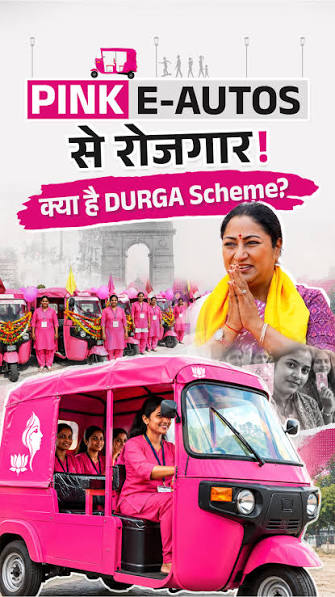
The scheme is also aimed at making the last-mile travel safer and more convenient for women, particularly those travelling to and from Metro stations early in the morning or late in the evening. Delhi To Launch 1,300 Pink Electric Autos With Women, Transgender DriversThe DURGA scheme was approved by the Delhi Cabinet headed by Chief Minister Rekha Gupta on September 23. Delhi residents could get the option of booking pink electric autos through ride-hailing apps, with the government planning to bring women and transgender drivers onto these platforms without onboarding or subscription charges. The Delhi government on Sunday said it would ask ride-hailing companies to waive these charges for drivers selected under its DURGA E-Auto Scheme, which provides for 1,300 electric autorickshaws. If the companies agree to list these vehicles on their platforms, commuters could book an auto through their phones instead of looking for one on the road or at an auto stand. A Safer Last-Mile Ride For Women? The scheme is also aimed at making the last-mile travel safer and more convenient for women, particularly those travelling to and from Metro stations early in the morning or late in the evening. The government wants to provide another transport option for passengers covering the last stretch of their journey, often between a Metro station and their homes or workplaces. The Transport Department has also sought dedicated parking and charging spaces from the Delhi Metro Rail Corporation (DMRC) and National Capital Region Transport Corporation (NCRTC) at Metro and Namo Bharat stations. The focus on safety comes days after the National Commission for Women issued guidelines for app-based transport services, recommending stricter driver verification and an option for women travelling alone to request a woman driver, where available. 1,300 Pink Autos, 130 Slots For Transgender Drivers The DURGA scheme was approved by the Delhi Cabinet headed by Chief Minister Rekha Gupta on September 23. Of the 1,300 vehicles planned in the first phase, 1,170 will be reserved for women and 130 for transgender persons, who will be able to own and drive the autos to earn a living. The vehicles will be allotted across Delhi’s 13 revenue districts, with each district having a maximum quota of 90 autos for women and 10 for transgender applicants. Transport Minister Dr Pankaj Kumar Singh said the scheme was intended to help women and transgender persons earn independently while increasing their participation in the transport sector. How Will The Autos Be Allotted? Applications will be processed through a dedicated online portal developed by the National Informatics Centre (NIC). District-level committees headed by District Magistrates will examine applications, with verification carried out every week. If eligible applicants outnumber the available slots in a district, allotments will be decided through an online lottery. Those selected will receive Letters of Intent, while registered owners will be issued identity cards, DURGA jackets and caps. Beneficiaries will also be eligible for purchase incentives under Delhi’s EV Policy 2026, which provides Rs 50,000 for eligible electric autos registered in the first year, subject to conditions. The government has not specified how much each beneficiary will ultimately pay for the vehicle. Delhi tried a similar push earlier. In 2022, 1,406 electric auto permits were reserved for women, but only 743 applied in the initial round, prompting another round of applications. The government also plans a two-phase study to assess the scheme’s impact on beneficiaries’ incomes and livelihoods. Courtesy : NDTV Note: This news is originally published on https:/ndtv.com/bha and is used purely for non-profit/non-commercial purposes, especially human rights
Nine transsexuals booked for robbing transgender person of ₹6.7L

Pune: A 30-year-old transsexual person filed a complaint on Friday with Kothrud police, stating that nine transgender people assaulted and threatened the person with religious conversion. The accused also robbed the complainant of Rs 6.7 lakh on Friday. Kothrud police have registered a case under the Maharashtra Freedom of Religion Act, the Transgender Persons (Protection of Rights) Act, 2019, and robbery against nine transgender people. According to the FIR, the complainant lives near a temple in Kothrud. At around 7pm on Sept 22, the nine suspects allegedly entered the complainant’s house and made derogatory remarks against the religion of the complainant. They threatened and asked the complainant to abandon their religion and convert to another religion. Kothrud police said the suspects assaulted the complainant with a belt and bamboo sticks. They also threatened to kill the complainant did not give them 50% of the money earned through begging. The suspects then allegedly robbed the complainant of Rs 6.7 lakh cash. Courtesy : TOI Note: This news is originally published on https:/timesofindia.com/bha and is used purely for non-profit/non-commercial purposes, especially human rights