
Transgender women wreak havoc on police in Kanpur, stripped naked and beaten, kicked in the chest; case filed after video goes viral

A video is rapidly going viral on social media, showing some transgender people assaulting a policeman. Based on the complaint of the victim, a case has been filed against the accused. A video of a policeman being assaulted in Kanpur, Uttar Pradesh, is rapidly going viral on social media. The video shows some transgender people assaulting a policeman. The incident caused a stir within the police department. Taking cognizance of the matter, the police have initiated action. Based on the complaint filed by the policeman, a case has been filed against the accused. The matter came to light through a viral video A video circulating on social media shows a dispute between a policeman and transgender people. As the situation escalated, scenes of transgender people assaulting the policeman have emerged. The video clearly shows transgender people arguing, then stripping naked and assaulting a police officer. Meanwhile, a transgender person is seen kicking the police officer in the chest. After the video went viral, the incident sparked widespread public discussion. However, the details of what sparked the dispute and the circumstances that led to the altercation will only be clear after a police investigation. Case Registered Based on a Report After the video surfaced, the police took the matter seriously and obtained a written complaint from the police officer involved. Based on this, a charge has been registered against the accused under relevant sections. The police are now taking further legal action in the matter, investigating the facts and circumstances surrounding the incident. ACP stated: Legal action underway Assistant Police Commissioner Ghatampur Krishnakant stated that cognizance has been taken of the video viral on social media. A case has been registered based on the written complaint submitted by the police officer concerned. Further legal action is underway in the matter as per the law. Report by Anurag Srivastava, correspondent from Kanpur Courtesy: Hindi News
Beaten and thrown out of home for being transgender at 21, she refused to give up on her dream of becoming a doctor; at 31, Dr Koyyala Ruth John Paul becomes one of India’s first Dalit transgender women to earn an MD
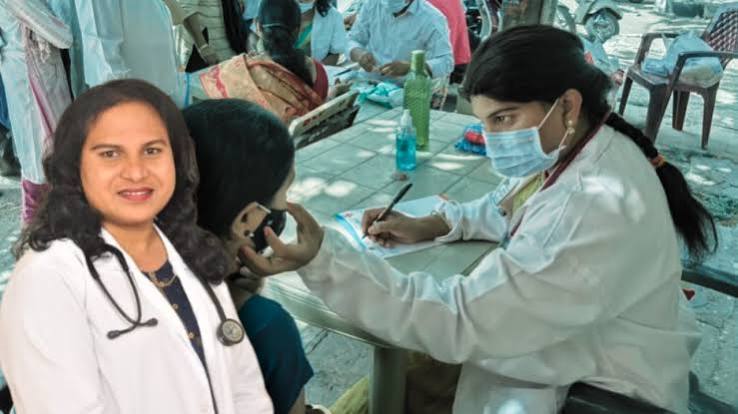
When Dr Koyyala Ruth John Paul came out to her family as a transgender woman, she says she was beaten and forced to leave home. She was in the third year of her medical course. At a time when she could have lost the chance to continue her education, she found support among members of the transgender community and kept studying. Today, the doctor from Khammam district in Telangana has completed her MD in Emergency Medicine. At 31, she is among the first Dalit transgender women in India to achieve this qualification, as reported by The Indian Express. But the degree has not ended her struggle. She is still seeking official recognition of her gender in records and wants to work in a government hospital. Forced to leave home, she found support in her community Dr Ruth is the youngest of three siblings and grew up in Khammam. Her father died of a cardiac arrest in 2006, after which her mother, a daily wage labourer, raised the three children. Books remained an important part of her life. She says she was inspired by the life and work of Dr BR Ambedkar, particularly his emphasis on dignity, education and the fight against caste discrimination. Ruth completed her Class 10 and Class 12 examinations with good results. She enrolled for medicine using the gender assigned to her at birth. However, during her third year of medical studies, she came out to her family. She said that her family struggled to accept her identity. “They beat me and threw me out of the house,” she said. She said she saw begging and sex work as the two options available to her at the time. She eventually connected with educated members of the transgender community, who helped her continue her studies. Hyderabad-based transgender activists Rachana Mudraboyina and Vyjayanthi Vasantha Mogli supported her during this period. She completed her MBBS in 2019 from a medical college in Hyderabad. Her relationship with her family has since improved. They are now reconciled and support her. A medical career, but repeated rejection In August 2023, she joined the Employees’ State Insurance Corporation (ESIC) Medical College and Hospital in Hyderabad for an MD in Emergency Medicine. After completing her MBBS, Ruth faced difficulties finding work. As per a 2022 TOI report, 15 hospitals in Hyderabad had turned her away after her graduation in 2018. The report also said that she and another transgender doctor, Prachi Rathore, were appointed as medical officers at the state-run Osmania General Hospital, becoming the first transgender duo to get government jobs in Telangana. “It is a huge day for me and my community. I really did not expect this because I was rejected ever since I graduated. They never told me outright, but the reason was apparent,” Ruth told TOI at the time. Her next challenge was securing a postgraduate medical seat. She appeared for and cleared NEET-PG three times between 2021 and 2023. Although the application form allowed her to register as an SC transgender woman, she said she was placed in the women’s category during counselling. She approached the Telangana High Court in 2021, seeking recognition as a Scheduled Caste transgender woman for admission purposes. In 2022, the National Medical Commission (NMC) wrote to her that she could not be included in the transgender category during counselling because there was no precedent for such an inclusion. The issue also came before the Telangana High Court in June 2023. As reported by The Times of India, the court questioned whether prejudice was preventing a transgender candidate from securing a postgraduate medical seat. It sought details of the marks of candidates admitted under the Scheduled Caste and Other Backward Classes categories. The court’s observations came amid a dispute over how Ruth should be considered during NEET-PG counselling. Her lawyers argued that transgender candidates should be recognised as a separate category in accordance with the Supreme Court’s directions. In August 2023, she joined the Employees’ State Insurance Corporation (ESIC) Medical College and Hospital in Hyderabad for an MD in Emergency Medicine. At the time, she had become the first transgender person to join a postgraduate medical programme in the state. She had wanted to specialise in obstetrics and gynaecology, but was allotted Emergency Medicine. The legal dispute over her recognition as a transgender candidate continued. According to the Indian Express report, the case is still pending before the Telangana High Court. In 2023, the court passed an interim order allowing her admission, but in the women’s category. She said she was thrilled when the MD examination results were announced on October 9. Why she chose medicine For Ruth, becoming a doctor was not only about completing a degree. She was also concerned about the difficulties transgender women faced in accessing healthcare. She says that she had seen transgender women in her neighbourhood living with HIV/AIDS who struggled to receive proper medical attention because of their identity. After facing difficulties finding work, she joined Mitr Transgender Clinic, a specialised healthcare network for the transgender community that was initially funded by USAID. The Hyderabad clinic shut down after funding cuts in 2025. It reopened in May that year as Sabrang Clinic in Narayanguda. She now works at ESIC Hospital in Hyderabad. Her older brother’s name, John Paul, is the surname she has chosen to use. According to her, he had wanted to become a doctor, but their mother could not afford to fund his education. Completing her MD has taken Ruth another step towards the career she wanted. But she says she still wants her gender to be correctly reflected in official records and hopes to work in a government hospital, where she can treat people who cannot afford private healthcare. Courtesy : TOI Note: This news is originally published on https:/timesofindia.com/bha and is used purely for non-profit/non-commercial purposes, especially human rights
Document change regime developed following NALSA ‘grossly discriminatory’ against ‘biological females’: PIL
The India chapter of the UK-based trust seeks to overrule the NALSA judgment that laid down that legal recognition of gender identity was part of the Constitutional right to dignity and freedom UK-based Women’s Declaration International has challenged parts of the Transgender Persons (Protection of Rights) Act, 2026 and also the operating procedures of UIDAI, which are meant to enable an update to the name and gender of persons on their Aadhaar cards. (Image used for representational purpose only) UK-based Women’s Declaration International has challenged parts of the Transgender Persons (Protection of Rights) Act, 2026 and also the operating procedures of UIDAI, which are meant to enable an update to the name and gender of persons on their Aadhaar cards. (Image used for representational purpose only) | Photo Credit: Getty Images A Public Interest Litigation (PIL) in the Supreme Court has argued that the regulatory regime developed in India on the back of the landmark 2014 National Legal Services Authority (NALSA) judgement that recognised transgender identity is “grossly discriminatory” against “biological females”. The PIL filed by the India chapter of UK-based Women’s Declaration International (WDI) argued that the document change regime also “dilutes” the rights, protections, and entitlements meant for “biological females,” and further impinges on the right to freedom of speech and expression by compelling all citizens to “express belief in gender identities”. A decade after NALSA, trans students still await inclusion on Indian campuses The trust, which describes itself as a “feminist, non-partisan, all-volunteer and all-female organisation advocating for the rights, dignity, safety, and freedom of women”, is seeking to overrule key portions of the NALSA judgement, specifically, the portion that ruled that legal recognition of gender identity constituted a part of the right to dignity and freedom guaranteed by the Constitution of India. In addition, the WDI has challenged parts of the Transgender Persons (Protection of Rights) Act, 2026, which provides the statutory framework for recognising gender identity and enables gender-diverse people to obtain gender certificates. The petitioners have also challenged the standard operating procedures of the UIDAI, which are meant to enable an update to the name and gender of persons on their Aadhaar cards. Government tables Bill to redefine ‘transgender person’, remove ‘self-perceived’ identity A Bench led by Chief Justice of India Surya Kant on Wednesday (October 28, 2026) issued notices to the Union Ministries of Social Justice and Empowerment, Law, and Health and Family Welfare on the PIL. The WDI has argued that while people have a right to “believe in gender identities and hold and express these internal experiences”, the regulatory regime that has developed in India through the years since the 2014 judgement has legally recognised gender identity by “overwriting the sex marker in official documents with the person’s professed internal experience”. It added that this change in “sex marker” has been allowed to propagate into other identity documents like Aadhaar, Voter ID, passports, and birth certificates, which has “come at the cost of women’s rights to equality, dignity and freedom”. Identity certificates for transgenders Transgender identity certificate will be treated as valid documentation for PAN: Centre to Supreme Court Change in transgender law cannot take away rights already given, Supreme Court tells Centre SIR: Why transgender persons fear exclusion from voter rolls In the petition, the WDI has cited instances of the State Election Commission in Kerala, in 2025, allowing two people the NGO identifies as “biological males self-identifying as female” to contest Panchayat elections on seats reserved for women; one “biological male” in Kerala being allowed to participate in the women’s category of Judo, a contact sport, and winning a State-level championship; one “biological male” in Tamil Nadu being appointed as a “female” nursing assistant at a government hospital; and one “biological male” being admitted to the National Cadet Corps Girls Division, “despite concerns regarding shared accommodation and intimate facilities”. WDI India’s petition echoes arguments on gender identity and its recognition in the West, particularly in the United States of America, and in the United Kingdom, where the first half of this decade has seen multiple court decisions ruling that women-only spaces are meant to be reserved for people based on their sex and not their gender identity, and that language like “man”, “woman”, and “sex” in statutory provisions is meant to protect the rights and entitlements available by virtue of “biological sex”. U.K. top court’s definition of woman further polarises debate on gender The WDI’s petition has cited the landmark U.K. Supreme Court ruling in For Women Scotland Ltd v. The Scottish Ministers (2025)and the U.S. Supreme Court’s 2026 decisions reserving women’s sports for “biological females” to make its case. Notably, while WDI India has argued that the same regulatory regime that has allowed “biological males” to change their identity documents based on their self-identification of gender and threatened spaces, protections, rights, and entitlements meant for “biological females”, has also stripped “biological females” of these spaces, protections, rights, and entitlements by allowing them to change their identity documents to “male”. What are the changes being proposed to Transgender Persons (Protection of Rights) Act, 2019 | Explained Further, this petition’s arguments before the Supreme Court come at a time when India is on its way to giving effect to the 106th Constitutional Amendment, which provides for reserving 33% of Lok Sabha and State Assemblies for women. This is also coming at the heels of the Union Government amending the Transgender Persons (Protection of Rights) Act earlier this year to redefine “transgender” persons based purely on physiological characteristics and removing a provision guaranteeing the right to “self-perceived gender identity”. And even as the 2026 amendments to the trans rights law remain under challenge before the Supreme Court, WDI India has argued that the “constitutional issues” it has raised in its petition are not fully resolved by the 2026 amendments. Abhinay Lakshman Courtesy : The Hindu Note: This news is originally published on https:/thehindu.com/bha and is used purely for non-profit/non-commercial purposes, especially human rights
Koyyala Ruth becomes India’s first Dalit transgender doctor; Dr. Ambedkar becomes an inspiration
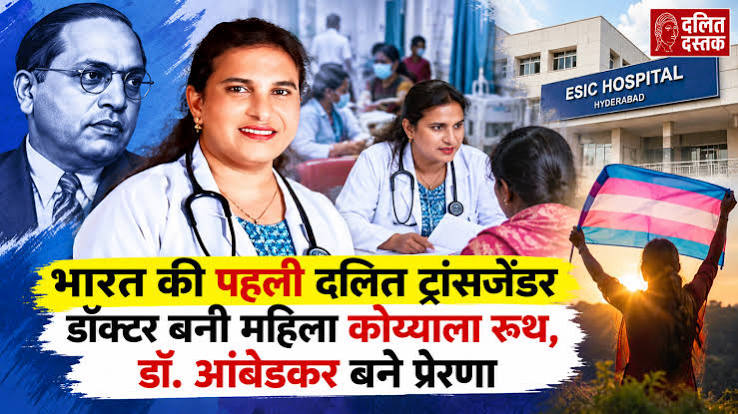
Ruth says that Dr. Ambedkar advocated for the dignity of every human being, not just men and women. As a Dalit transgender woman, Ruth was deeply inspired by Babasaheb Ambedkar’s struggle against caste discrimination and his zeal for education. On one hand, the dream of becoming a doctor, on the other, a long battle for her identity and dignity. But fighting this battle, 31-year-old Dr. Koyyala Ruth John Paul has made history. Ruth is one of the first Dalit transgender women in India to earn an MD degree in Emergency Medicine. She has since treated patients at the ESIC Hospital in Hyderabad. Now, her dream is to become a doctor and treat people in a government hospital. The story begins in Khammam, Telangana. Ruth, the daughter of a mother who became a daily wage laborer after her father died of a heart attack in 2006, would have lost her courage if any other child had been in Ruth’s place. But Ruth learned to fight, and in this fight, Babasaheb Dr. Ambedkar became her inspiration. Her mother raised her three children in extremely difficult circumstances. Despite these difficult circumstances, Ruth continued her studies, passed her 10th and 12th grade exams with good marks, and dreamed of becoming a doctor. In Nikhila Henry’s report published in the Indian Express, Ruth says that Dr. Bhimrao Ambedkar’s thoughts and struggle have had a profound influence on her life. She says that Dr. Ambedkar always advocated for basic human dignity. He spoke of respect for every human being, not just men or women. As a Dalit transgender woman, Ruth was deeply inspired by Babasaheb Ambedkar’s struggle against caste discrimination and his zeal for education. But the greatest of all challenges was accepting her gender identity. For Ruth, this struggle began from childhood. She enrolled in medical school with the female gender she was assigned at birth. However, in her third year of medical college, she revealed her transgender identity to her family. According to Ruth, her family couldn’t accept this truth. She was beaten and thrown out of the house. At that time, she faced extremely difficult circumstances for livelihood. She had the option of begging or sex work, paths often forced upon the transgender community. But Ruth didn’t give up. During this difficult time, she met Hyderabad-based transgender activists Rachana Mudraboyina and Vaijayanti Vasantha Mogli, who helped Ruth. They recognized her talent and gave her a chance to progress. Thanks to this support, she completed her MBBS from a medical college in Hyderabad in 2019. And as often happens, after Ruth’s success, her family has also accepted her. But the struggle continued. The path to further education after MBBS was not easy. Ruth appeared for and passed the NEET-PG exam three times between 2021 and 2023. While she was allowed to register as a SC transwoman in the application form, she was included in the female category during counseling. Ruth appealed to the Telangana High Court in 2021, demanding recognition as a transgender woman from a Scheduled Caste. In 2022, the National Medical Commission (NMC) wrote to her, stating that there was no precedent for including her under the transgender category in counseling. Therefore, her case was separate. The legal battle in this matter continues. Meanwhile, in 2023, the Telangana High Court issued an interim order allowing her admission to the medical program, but under the female category. Ruth argues that as a Dalit transgender woman, the Constitution entitles her to reservations under both the Scheduled Caste and transgender categories. However, the NMC places her among female candidates. Despite this, Ruth continued her studies and finally passed the MD exam on October 9th. However, Ruth’s exam was still pending. Even after completing her MBBS, Ruth faced difficulties finding a job as a doctor. For a while, she worked as a temporary doctor at the Mitra Transgender Clinic. However, she finally secured a position as a doctor at the ESIC Hospital in Hyderabad. Getting an MD degree is a major achievement for Dr. Ruth. But her dream doesn’t end there. She wants to work in a government hospital to provide better treatment not only to members of her community but also to those in need who cannot afford private hospitals. Ruth continues to pursue this dream. Dr. Ruth’s story isn’t just about earning a medical degree. It’s also about the struggle for caste-based discrimination, gender identity, education, and respect. A story that demonstrates that despite difficult circumstances and discrimination, when a great leader like Dr. Ambedkar is considered a role model, paths can be forged through education and determination. Dr. Pooja Rai Dr. Pooja Rai is a teacher by profession. She has a keen interest in women’s issues and humanitarian news. Her books, “Aadhi Aabadi Ka Dard” and “Sapno Ke Pankh” (Faces of Dreams), were very popular. Courtesy: Hindi News
In SC, biological women oppose equal rights for transgender women

NEW DELHI: Striking a discordant note among a clutch of petitions challenging the Transgender Amendment Act for denying right to gender self-determination, an all-women NGO Wednesday appealed to the Supreme Court not to confer trans-women, biological males identifying as females, the spectrum of constitutional rights guaranteed to biological women. ‘Women’s Declaration International India’ through senior advocate Amit Sibal told a bench of CJI Surya Kant and Justices Joymalya Bagchi and V Mohana that “self-professed or socio-cultural gender identity or certificate or document cannot change a person’s biological sex or enable a biological male to access the entire spectrum of rights, protections and entitlements created specifically for biological females.” Differentiating between sex and gender, the petitioner said, “Sex and gender identity are distinct; gender identity concerns a person’s deeply felt internal experience, while sex is the stable immutable biological category on which numerous constitutional and statutory protections for women are premised.” SC asked Centre to respond to the petition with a comprehensive affidavit that also dealt with the other petitions challenging the Transgender Persons (Protection of Rights) Amendment Act, 2026. SG Tushar Mehta said a comprehensive affidavit is being drafted but gave an indication of what would be govt’s stand in defence of the erasure of gender self-determination clause, which was replaced by medically determined gender. He asked: “Can a transwoman be permitted to compete in a sporting event for women? Should a policewoman conduct physical search of a person with male genitals but perceives himself to be a woman? If a biologically male criminal perceives himself to be a woman, should police be barred from arresting him after sunset?” Drawing the court’s attention to a recent incident in the US relating to a transgender inmate, who perceives himself to be a woman but impregnated two women inmates, Mehta said several aspects needed to be kept in mind while adjudicating the petitions. A male becoming a trans-woman will violate affirmative measures for women under the Constitution, equal opportunity to women in employment, women’s bodily privacy and personal security in sex-segregated spaces and criminal law safeguards, the petitioner said. Courtesy : TOI Note: This news is originally published on https:/timesofindia.com/bha and is used purely for non-profit/non-commercial purposes, especially human rights
SC Seeks Centre’s Response on PIL Over Transgender Law, Women’s Rights
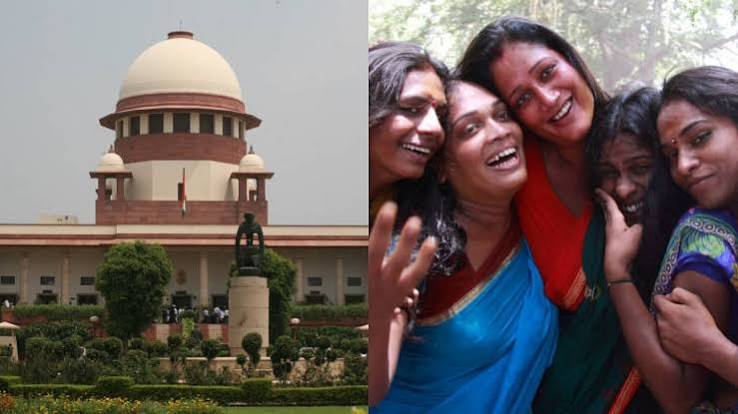
The Supreme Court on Wednesday sought the Centre’s response to a PIL by Women’s Declaration International India questioning the potential impact of the Transgender Persons (Protection of Rights) Amendment Act, 2026, on constitutional and statutory protections reserved for biological women. Women’s Declaration International India raises concerns over women’s reservations, prison accommodation, sports participation and legal safeguards under the amended transgender rights law. The Supreme Court on Wednesday sought the response of the Centre on a PIL filed by a women’s organisation, raising concerns over the potential impact of transgender rights legislation on constitutional and statutory protections and benefits reserved for biological women. A bench comprising Chief Justice of India Surya Kant and Justices Joymalya Bagchi and V Mohana issued notices to the Union Ministries of Social Justice and Empowerment, Law and Justice, and Health and Family Welfare on the PIL. The plea, filed by Women’s Declaration International India, raises questions relating to women’s reservations in local bodies, accommodation of transgender persons in prisons, participation in women’s sporting competitions, and safeguards available to women during arrest, searches and criminal investigations. The petition was tagged with the batch of cases challenging provisions of the Transgender Persons (Protection of Rights) Amendment Act, 2026, including changes concerning the recognition of transgender identity. Senior advocate Akhil Sibal, appearing for the petitioner organisation, said the plea raised a distinct perspective because it was brought by a women’s organisation and addressed the potential implications of the legislation for women’s rights. “Our concern is the impact on constitutional and statutory benefits exclusive to biological females. Those protections must remain and cannot be interfered with. Transgender persons must have equal rights and privileges, but the question is whether those rights can encroach upon protections reserved for biological women,” Sibal said. The bench noted the issues were already under consideration in a batch of petitions challenging the validity of provisions of the legislation. Justice Bagchi cautioned that filing other similar petitions could delay the proceedings, particularly as the existing batch was nearly ready for hearing. Sibal, however, maintained the petition was not a repetition of the pending challenges and raised a separate cause concerning women’s rights. The CJI said the petitioner might have a point but noted that the matter was already sub judice, adding the plea would introduce another perspective into the ongoing proceedings. Solicitor General Tushar Mehta, appearing for the Centre, said the government was preparing its response in the connected batch of cases and would address the concerns raised in the present petition as well. During the hearing, the solicitor general highlighted questions concerning gender identity and access to sex-specific facilities and protection. These included participation in women’s sporting events, accommodation in women’s prisons, access to women’s toilets, and statutory safeguards requiring women to be searched or have their statements recorded by women police officers in specified circumstances, the top law officer said. He also raised a hypothetical question concerning the application of restrictions on the arrest of women after sunset where a person accused of an offence identifies as a woman. He said the issue was not the right to identify as transgender, but the implications of the legal rights and protections attached to that identification. Sibal reiterated that the petitioner did not oppose the right to identify as transgender and said the right should be respected, with appropriate amenities provided. He also raised questions about whether transgender persons should have separate reservations or be eligible to claim seats reserved for women in panchayats. Courtesy : DC Note: This news is originally published on https:/deccanchronicle.com/bha and is used purely for non-profit/non-commercial purposes, especially human rights
Transgender protesters remove clothes, hurl abuses at police on busy Jhansi road; 5 held
JHANSI: More than half a dozen transgender persons staged a protest on a busy road near Jhansi’s Police Lines on Saturday evening, allegedly removing their clothes, using abusive language and raising slogans against the police. The protest lasted over an hour and disrupted traffic in the area. Five people were arrested and produced before a remand magistrate on Sunday. — jhansipolice (@jhansipolice) According to reports, the protest stemmed from a long-standing dispute between two groups of transgender persons over the allocation of areas where they work. Members of the two groups have clashed several times in the past. On Saturday evening, members of both groups gathered near the Police Lines and began protesting on the road amid heavy rush-hour traffic. The protesters were seen pulling down their clothes, running on the road, raising slogans against the police and using abusive language. They later blocked both sides of the road with police barricades, bringing traffic to a halt. They also clashed with commuters, while police personnel struggled to bring the situation under control. At the time of the protest, a high-level crime review meeting was underway at the Senior Superintendent of Police (SSP) office. After considerable efforts, the police brought the situation under control and arrested five people. SP City Preeti Singh said the arrested accused were Anshika alias Abhishek, a leader of one of the groups; her mother, Mamta; Russian Kinner; Pooja; and Balbir alias Babli. All five have been booked under Sections 151(2), 285, 296, 293, 121(1), 132, 221 and 223 of the Bharatiya Nyaya Sanhita (BNS). Courtesy : TOI Note: This news is originally published on https:/timesofindia.com/bha and is used purely for non-profit/non-commercial purposes, especially human rights
Transgender protesters remove clothes, hurl abuses at police on busy Jhansi road; 5 held
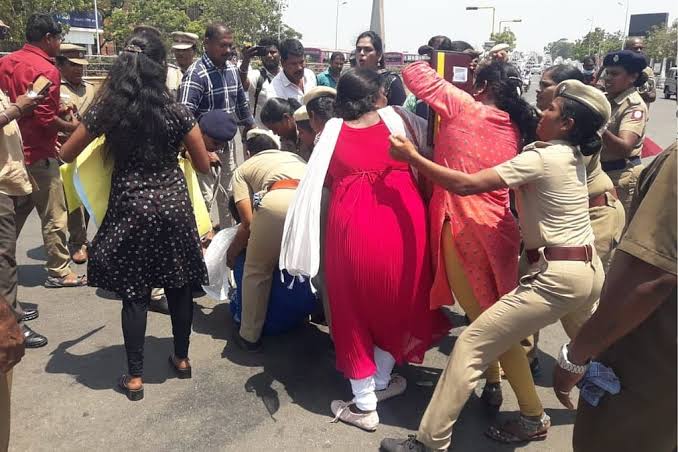
JHANSI: More than half a dozen transgender persons staged a protest on a busy road near Jhansi’s Police Lines on Saturday evening, allegedly removing their clothes, using abusive language and raising slogans against the police. The protest lasted over an hour and disrupted traffic in the area. Five people were arrested and produced before a remand magistrate on Sunday. — jhansipolice (@jhansipolice) According to reports, the protest stemmed from a long-standing dispute between two groups of transgender persons over the allocation of areas where they work. Members of the two groups have clashed several times in the past. On Saturday evening, members of both groups gathered near the Police Lines and began protesting on the road amid heavy rush-hour traffic. The protesters were seen pulling down their clothes, running on the road, raising slogans against the police and using abusive language. They later blocked both sides of the road with police barricades, bringing traffic to a halt. They also clashed with commuters, while police personnel struggled to bring the situation under control. At the time of the protest, a high-level crime review meeting was underway at the Senior Superintendent of Police (SSP) office. After considerable efforts, the police brought the situation under control and arrested five people. SP City Preeti Singh said the arrested accused were Anshika alias Abhishek, a leader of one of the groups; her mother, Mamta; Russian Kinner; Pooja; and Balbir alias Babli. All five have been booked under Sections 151(2), 285, 296, 293, 121(1), 132, 221 and 223 of the Bharatiya Nyaya Sanhita (BNS). Courtesy : TOI Note: This news is originally published on https:/timesofindia.com/bha and is used purely for non-profit/non-commercial purposes, especially human rights
SC asks Delhi govt to justify gender-wise teacher recruitment, inclusion of transgender candidates
New Delhi [India], The Supreme Court has sought an explanation from the Delhi government on the legal basis for the Delhi Subordinate Services Selection Board (DSSSB) issuing separate vacancy notifications for male and female teachers, and asked how transgender persons would be accommodated in public employment. A bench of Justices JB Pardiwala and K Vinod Chandran, by an order of October 16, framed six questions in petitions filed by Jane Kaushik and Praveen Singh, directing the government to file affidavits within 15 days. “The issue before us pertains to the non-inclusion of third gender in the notifications for vacancies issued by the respondent State,” the bench stated in the order. The apex court asked the government to identify the recruitment rules governing DSSSB notifications and clarify whether any constitutional provision, statute or service rule requires teaching vacancies to be advertised separately by gender. If no such requirement exists, the State must explain the rationale for the classification. The bench also asked whether the respondents propose to include transgender candidates in DSSSB vacancy notifications and, if so, how they intend to facilitate their inclusion in public employment. In Singh’s petition, concerning age relaxation for transgender candidates, the top court questioned why the Delhi High Court had not considered exercising its powers under Rule 12 of the Delhi High Court Establishment (Appointment and Conditions of Service) Rules, 1972, to grant relaxation in view of the “socio-economic discrimination” faced by the community. The apex court will hear the case on November 19. In April, the Supreme Court had observed that the advisory committee constituted to examine systemic issues concerning transgender rights did not have adjudicatory powers. It had also prima facie questioned the Delhi High Court’s decision to direct Kaushik to approach the committee instead of deciding her petition. Courtesy : India’s News.Net Note: This news is originally published on https:/timesofindia’snews.net/bha and is used purely for non-profit/non-commercial purposes, especially human rights
US top court nixes Trump admin’s bid to restrict medical care for transgender inmates

The US Supreme Court on Wednesday refused to let President Donald Trump’s administration immediately enforce restrictions on medical care for transgender inmates, leaving in place a lower-court order that allows treatments to continue while a legal challenge proceeds. The brief order did not explain the court’s reasoning. Conservative Justices Samuel Alito and Clarence Thomas dissented, saying they would have allowed the policy to take effect as the case moved through the lower courts. The policy followed an executive order by Trump, a Republican who has taken several steps to roll back transgender rights during his second term. It directs the Bureau of Prisons to revise its medical care rules so that federal funds are not spent “for the purpose of conforming an inmate’s appearance to that of the opposite sex.” Under the policy, prisons would halt gender-affirming surgeries, gradually withdraw hormone therapy and end social accommodations such as makeup and wigs. Mental health services would continue to be available. Transgender inmates challenged the restrictions in court. US District Judge Royce Lamberth ordered that their treatments continue. Lamberth, who was nominated by Republican President Ronald Reagan, noted that untreated gender dysphoria can cause severe side effects, including depression, anxiety and suicidal thoughts. The Trump administration appealed, arguing that the treatments raised security concerns and “could no longer be justified”. A divided appeals court panel declined to lift the block, prompting the administration to approach the Supreme Court. About 600 inmates were receiving hormone therapy in 2025, according to court records cited by the Bureau of Prisons. Lawyers for the inmates argued that withdrawing treatment would have significant effects on their bodies and mental health. They also said the government had not presented evidence of security problems linked to hormone therapy for transgender inmates during the 30 years it had been provided. The Supreme Court has previously allowed other Trump administration policies affecting transgender people to take effect while legal challenges continued. These include restrictions on military service and passport sex markers. The conservative-majority court has also upheld state laws banning certain medical treatments for transgender minors and restricting transgender athletes from participating in women’s sports. Courtesy : TOI Note: This news is originally published on https:/timesofindia.com/bha and is used purely for non-profit/non-commercial purposes, especially human rights