
KVs make one Sanskrit section mandatory in Classes 6 and 9 from 2026

The Kendriya Vidyalaya Sangathan has made a key change in its language policy for the 2026-27 academic session. All KV schools will now be required to maintain at least one Sanskrit section in Classes 6 and 9 under the third-language framework. Transgender students number rises in India CBSE 3 language rule: Kendriya Vidyalayas make Sanskrit section mandatory in Classes 6, 9 The Kendriya Vidyalaya Sangathan (Kendriya Vidyalaya Sangathan) has made it compulsory for all its schools to maintain at least one Sanskrit section in Classes 6 and 9. The decision will be implemented from the 2026-27 academic session under the third-language framework (R3), as outlined in an official circular issued on May 29. HOW THE LANGUAGE RULE WORKS According to the circular, the third language for students must be either Sanskrit or a regional or state language from the list of scheduled languages. This will be in addition to R1 (Hindi) and R2 (English). A senior official explained, “Students can opt for either Sanskrit or the regional language based on their preference. The requirement is only that there should be at least one Sanskrit section in every school to facilitate the children of transferable employees.” The KVS has also directed schools to complete the process of collecting language preferences from students and parents for the R3 framework. DATA, PORTALS AND CLASSROOM STRUCTURE Schools have been asked to upload student preferences for Sanskrit and regional languages separately on the Samagam portal. This data will be used to reassess staffing and section requirements at the school level. The circular further states, “Students opting for the same R3 language must be kept in same section for the smooth conduct of classes.” Section formation will depend on enrolment: Single section schools may split Sanskrit and regional language batches if at least 15 students opt in Two-section schools may have one Sanskrit and one regional-language section Three-section schools will decide distribution based on demand Every school must still ensure at least one Sanskrit section per class ALIGNING WITH NEP 2020 The move aligns with broader reforms under the National Education Policy (National Education Policy 2020) and the National Curriculum Framework for School Education 2023. The Central Board of Secondary Education (Central Board of Secondary Education) has also introduced parallel changes, making three languages compulsory for Class 9 students from July 1, including at least two Indian languages. Foreign languages can be chosen only as an additional option, and no board exam will be conducted for the third language at Class 10 level. Till dedicated textbooks are introduced, Class 9 students will continue using Class 8 R3 textbooks for the 2026-27 session. Courtesy : India Today Note: This news is originally published on https:/indiatoday.com/bha and is used purely for non-profit/non-commercial purposes, especially human rights
Kerala offers free KSRTC rides to women and transgender people
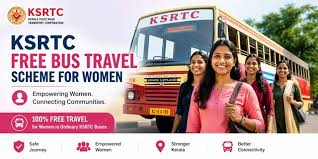
From June 15, women and transgender people in Kerala can hop on select KSRTC busses without paying a fare. This move, part of the Priyadarshini scheme and a big UDF election promise, is all about making public transport easier and more affordable for women and transgender people on select KSRTC busses. Seven KSRTC types covered and stickered The free rides cover seven types of busses, including Ordinary, City Ordinary, Limited Stop Ordinary, Fair-Stage Ordinary, Town-to-Town, Point-to-Point, and Gramavandi services. Launching in Thiruvananthapuram with Chief Minister V D Satheesan leading the way, eligible busses will have special stickers so you can spot them easily. The state government will cover any extra costs to keep the service running smoothly. Courtesy : NewsBytes Note: This news is originally published on https:/newsbytes.com/bha and is used purely for non-profit/non-commercial purposes, especially human rights
Cops detain Bangla transgender who gave the slip in Feb

Tushei Khan returned to Dhaka and re-entered India in May, believing that she would be able to avoid detection Police in DN Nagar have detained a Bangladeshi transgender national who allegedly underwent gender reassignment surgery in Thailand, adopted a new identity and entered India illegally. Tushei Khan had allegedly evaded detention during a February operation conducted by the Anti-Terrorism Cell (ATC) of Versova Police, officials said. Twenty-five Bangladeshi nationals, including 21 transgender persons, were detained during the crackdown and later deported. However, officers realised that one individual they had been tracking had escaped. What followed was a four-month search involving intelligence gathering, local verification and surveillance. According to the police, Khan travelled to Thailand several years ago, underwent gender reassignment surgery and subsequently assumed a new identity before entering India and settling in Mumbai. They said Tushei first arrived in Mumbai around six months ago after allegedly entering India through an agent. She allegedly lived in the city without valid immigration documents and remained undetected for several months. The breakthrough came after police received information about Bangladeshi nationals allegedly residing illegally in Andheri. During a coordinated operation on Saturday, four Bangladeshi nationals were detained. Three were held by Versova Police, while Khan was detained by DN Nagar Police. Police said Tushei had remained out of their reach since the February raids at multiple premises in the Yari Road area. The operation was significant not only because of the number of undocumented immigrants detected but also because officials uncovered suspected networks allegedly facilitating the illegal stay and movement of foreign nationals. “Tushei Khan had managed to evade detention during the February operation. Following sustained surveillance and verification, the accused was traced and detained. The deportation process has now been initiated and her Bangladeshi passport has been verified,” a police officer said. Officials claim that after escaping the February crackdown, Khan returned to Dhaka and re-entered India in May, believing she had avoided detection. Police have initiated coordination with central agencies and Bangladeshi authorities to complete deportation formalities. The police are also examining whether Tushei received assistance from local facilitators who may have helped arrange accommodation, mobile phone connections, financial access or identity-related documents during her stay in Mumbai. Officials said previous investigations involving undocumented foreign nationals had uncovered the use of forged Aadhaar cards, PAN cards and other documents allegedly used to blend into urban populations and evade detection. Anish.Patil Courtesy : Mumbai Mirror Note: This news is originally published on https:/mumbaimirror.com/bha and is used purely for non-profit/non-commercial purposes, especially human rights
Parliament passes Transgender Persons Amendment Bill, 2026 with Rajya Sabha approving it today

Parliament has passed the Transgender Persons (Protection of Rights) Amendment Bill, 2026, with the Rajya Sabha approving it today. The bill was passed by the Lok Sabha yesterday by a voice vote amid an Opposition-led walkout. The bill seeks to redefine the category of transgender, removes the provision of self-perceived gender identity and excludes several socio-cultural identities as well as transmasculine individuals from its ambit. It also further defines transgender persons within a biological framework, based on intersex variations and differences in sexual development. Replying to the discussion on the Bill in the Rajya Sabha, Social Justice and Empowerment Minister Dr Virendra Kumar said the government is compassionate towards the well-being of the transgender community. He said the Bill has provisions to empower the transgenders and give them dignity. The Minister said that the NDA government has taken several initiatives to bring transgender people to the mainstream and stop discrimination against them. Starting the discussion in the Upper House, Congress MP Renuka Chowdhury said this bill dilutes the privacy of an individual provided under the Constitution. Opposing the Bill, Ms Chowdhury said self-identification cannot be taken away through bureaucratic certification. Criticizing the government, she said that the proposed bill undermines the fundamental rights and dignity of transgender persons. Calling such a move wrong and illegal, she argued that forcing transgender persons to provide their identity through official certificates is against the spirit of equality and dignity guaranteed by the constitution. She also questioned the government’s approach for not properly consulting with the transgender community before bringing the Bill. She also referred to the Supreme Court’s landmark NALSA judgement of 2014, which recognized the right of transgender persons to self-identify their gender. Ms Chowdhury said the proposed Bill violates the principles laid down in that judgement and fails to respect an already established legal framework. DMK MP Tiruchi Shiva also opposed the Bill, saying that even if the Bill is passed in Parliament with a majority, it will be struck down by the Supreme Court. He further added that the Bill violates Articles 14, 15, 19 and 21 of the Constitution and it deprives the community of the right to freedom, dignity and self-determination. Supporting the Bill, BJP MP Medha Vishram Kulkarni said, ” This Bill ensures justice, dignity, protection from criminalisation and legal safeguards for transgender persons. She also thanked Prime Minister Narendra Modi for bringing this bill with certain amendments in order to ensure that the benefits reach the deserving people in a proper manner. She said there is a need for a law that brings justice to real transgender individuals and punishes fake ones. Mrs Kulkarni said the benefits should be extended to those who are transgender by birth. She said that the amendment to extend punishment will bring down the rate of crime and forced identities. TMC’s Saket Gokhale said that 31% of Transgender people in India have attempted suicide because of the discrimination that they are facing. He alleged that now the government is going to start discriminating against them as though social discrimination were not enough. He called it unacceptable. Mr Gokhale expressed concern that gender is going to be decided by the Chief Medical Officer and a District Magistrate, and the bill does not prescribe any qualifications for the Chief Medical Officer. Sanjay Singh of AAP said the Bill is a big let-down for the transgender community. He accused the government of not doing anything for the community. RJD’s Manoj Kr Jha said that prejudices against transgender people should stop, and they should be able to live with dignity. He added that self-determination of gender should not be taken away. CPI(M)’s John Brittas said it is a black-letter day and the Bill is taking India a century back. He pleaded with the government to either withdraw the Bill or refer it to a Select Committee. Jaya Bachchan of the Samajwadi Party also questioned the government over the legislation. She sought to know what the urgency was in bringing the Bill, without examining it with the depth and care that it deserved. Courtesy : News On Air Note: This news is originally published on https:/newsonair.com/bha and is used purely for non-profit/non-commercial purposes, especially human rights
‘Equality Is Not a Luxury’: Inside the Supreme Court Battle Over India’s Blood Donation Ban

A 2017 guideline permanently bars gay men, transgender persons and sex workers from donating blood in India. In March 2026, the Supreme Court signalled it would not intervene. We spoke to the petitioners, the lawyers and those living the exclusion. On March 13, 2026, Sharif Rangnekar attended a blood donation camp in his residential colony, organised by a young woman to address what everyone agreed was a real problem. India has an acute shortage of blood. Rangnekar, a petitioner in one of three Supreme Court cases seeking to lift the ban on blood donation by gay men, was glad the drive was happening. And then he felt something else entirely. “I was both happy, but I was also irked at that moment that I can’t participate,” he says. “Had I gone, no one would have stopped me. But when I raised this issue, that you’re doing a great thing, but unfortunately I can’t participate because I’m homosexual, some people expressed surprise. Some were unaware that there’s even a need for your blood to be tested before it is given to anyone.” What followed in that WhatsApp group was a microcosm of the larger national conversation: confusion, defensiveness, and one doctor who insisted the ban was simply a safeguard. “I said, safeguards are exactly what we’re asking for,” Rangnekar recalls. “This is not a safeguard. This is ensuring that we are banned, when there is technology in many parts of the world for safeguarding the interests of everyone.” India’s prohibition on blood donation by gay men, transgender persons and female sex workers is codified in Clauses 12 and 51 of the Guidelines for Blood Donor Selection and Blood Donor Referral, 2017, jointly issued by the National Blood Transfusion Council and NACO. Clause 12 classifies these groups as permanently “at risk.” Clause 51 mandates a lifetime deferral, no waiting period, no individual assessment, no path to eligibility. The logic dates to the AIDS epidemic of the late 1970s and early 1980s. Nearly five decades on, neither the science nor the testing technology is the same. The guidelines are. The legal challenge was brought as a PIL in 2021 by Thangjam Santa Singh, the Manipur-based transgender activist known as Santa Khurai, represented by senior advocate Jayna Kothari. Rangnekar and activist Harish Iyer subsequently filed related petitions. Together, the three cases challenge the blanket exclusion as a violation of Articles 14, 15 and 21 of the Constitution. In May 2025, the Supreme Court directed the government to constitute an expert committee to review the policy. By August, the committee reported that the 2017 guidelines were “firmly rooted in national and international research.” On 13 March 2026, the Centre told the court that diluting the ban “would be injurious to public interest.” The bench, led by Chief Justice Surya Kant, appeared largely persuaded. The hearing’s most consequential moment was not a ruling but an observation. Chief Justice Kant asked Kothari: “Tell us one good reason that we should issue a direction. After all, there are millions and millions of poor people who take free blood facilities. They cannot afford private hospitals. If there is even a one per cent chance of infection, why should they suffer?” Kothari’s response was direct: all donated blood is tested before use, including for HIV, and Nucleic Acid Testing exists precisely to close the gap the government invokes. She also flagged the central inconsistency: a gay man in a monogamous relationship cannot donate blood, while a heterosexual man engaging in unprotected sex with multiple partners faces no restriction at all. Advocate Rahul Sangwan, who has worked on the legal arguments in higher courts, puts the constitutional problem plainly: “The ban is not rationally connected to the objective of blood safety. It presumes that an entire class of people is unsafe, without any evidence tied to individual conduct. What this ban does is penalise people for their sexual orientation, which is intrinsically against the identity and dignity of an individual, as held in Navtej Singh Johar.” There was a second observation that provoked a sharper response. Reports from Live Law and Bar & Bench quoted the bench characterising the petition as a “luxury.” The framing drew immediate comparisons to 2013, when a previous bench described queer Indians as a “miniscule minority”, a formulation that preceded the recriminalisation of homosexuality under Section 377, and which the court itself repudiated in Navtej Singh Johar in 2018. Rangnekar was direct: “Is the shortage of blood an elite issue? The blood that we donate goes into a blood bank. After that, it doesn’t decide who it goes to based on caste or religion.” Sangwan was unequivocal: “Equality is not a luxury. Calling a petition that challenges identity-based exclusion a luxury petition trivialises the constitutional promise of equality.” The government’s case rests partly on the absence of Nucleic Acid Testing at most Indian blood banks, and a testing window of up to 33 days during which an infection may not be detectable. These are real limitations, but petitioners argue they indict the system, not the donors. “There is already contaminated blood in the system,” Harish Iyer, another petitioner at the Supreme Court, says. “There are cases of people getting contaminated blood; sometimes it’s not even checked. That is not because of anything other than the fact that we have not yet got a proper testing system in place. And knowing how governments work when systems don’t function properly, they would rather let people be ignorant and carry on with the bias.” A public health expert with fifteen years in HIV intervention programmes, trans, queer, and asked not to be named, offered a systemic critique: “When we look at trans people, trans women, hijra women especially, we look at them from the lens that they do sex work, they have STIs, they spread HIV. That gaze still continues in our programmes; it is evident from NACO’s guidelines, which mandate the permanent deferment of trans people on the basis of high-risk behaviour. We pick up one identity
Transgender rights: Heatwaves, identity laws deepen risks for trans Indians
The amended transgender law deepens the community’s climate vulnerability by making disaster relief harder to access The passage of the Transgender Persons (Protection of Rights) Amendment Act 2026 poses an existential threat to trans persons in a rapidly warming India. This amendment strikes at the heart of the right of trans persons to self-perceived gender identity. By removing the erstwhile Section 4(1) of the Transgender Persons (Protection of Rights) Act, 2019, the newly passed amendment questions the very existence of trans persons and places them at the mercy of medical boards for state authentication of their identities to obtain legal documentation. This constitutes a direct violation of the judgment delivered by the Supreme Court in the case of National Legal Services Authority v. Unionof India (NALSA), which held that any person can assert their gender identity solely based on their psychological or social experience without the need to undergo medical gender-affirmative surgery. The implications of obliterating the right to self-perceived gender identity are especially severe in a country increasingly beset by erratic climatic events. This is because access to disaster relief and rehabilitation measures is often dependent upon legal identification in India. It is well documented that during climate-induced flooding in Assam in the year 2020, persons from the trans community were among the worst-hit. Despite possessing the right to self-perceived identity at that time, they faced immense discrimination. Many struggled to access government relief measures, primarily due to a lack of legal documentation and social stigma associated with their identity. By curtailing the right to self-determination, the 2026 Amendment may further obstruct transgender persons from accessing shelter schemes such as Garima Grehs during climate disasters and in ordinary times alike. This becomes a Sisyphean endeavour, particularly when trans persons seek identity certificates required under the amended law. Consequently, it can be safely stated that the 2026 Amendment is both climate- and identification-blind. The vulnerability heightened by the 2026 Amendment is not confined to flood-related disasters alone but extends to broader climateinduced crises such as recurring heatwaves. In 2026, heatwaves are affecting states including Uttar Pradesh, Maharashtra, Tamil Nadu, and Bihar. Incidentally, led by Uttar Pradesh, these states also have a high population of trans communities. Heatwaves are particularly debilitating for the trans community because of their heightened social and economic precarity, especially in relation to accessing safe and climateresilient housing and consequent social affirmation. Pushed to the peripheries of the cities, trans communities who are estranged from their families are mostly compelled to reside in the most unsafe and disaster-prone areas. These are typically low-lying, peri-urban areas or slum settlements that also lack basic sustenance facilities. In this context, the 2026 Amendment appears particularly apathetic because minimal protection from heat, such as access to shelter schemes like Garima Greh (which provide food, medical assistance, and recreational facilities), is now contingent upon producing transgender identity certificates under the amended law. Left on policy’s margins Extreme heat exposure creates a multiplier effect on their vulnerability, making them more prone to heat-related illnesses. This is also mainly due to the lack of gender-neutral washrooms, which force trans communities to either confront violence and gender dysphoria daily or risk disease. Lacking adequate access to dignified housing settlements, these communities also face a severe shortage of WASH (Water, Sanitation, and Hygiene) infrastructure, which is particularly crucial during heat waves. This impacts their hydration and sanitation facilities, further undermining their ability to cope with extreme temperatures. Ironically, despite representative numbers and heightened vulnerabilities, trans communities are rarely accounted for as vulnerable populations in heat action or climate action plans, which are the primary policy-guiding documents for a city’s or state’s climate action. These plans, although not legally binding, still provide a visionary framework for climate action in India’s cities. With their health, existence, and identity at stake, it is high time that these persons and their lived experiences are adequately accounted for in the State’s urban planning instruments. Apart from this, every legislation in India must be audited from a climate-vulnerability lens to ascertain its impact on vulnerable communities. Legislation such as Transgender Persons (Protection of Rights) Amendment Act, 2026, thought of as climate-neutral, have unintended impacts and compound vulnerabilities of trans persons. Climate change is an undeniable reality, and as it intensifies, trans persons remain disproportionately vulnerable, confronting the looming threat from both climate disasters and systemic State neglect. Prathiksha Ullal (The writer is a senior resident fellow at the Vidhi Centre for Legal Policy) Disclaimer: The views expressed above are the author’s own. They do not necessarily reflect the views of DH. Courtesy : DH Note: This news is originally published on https:/deccanherald.com/bha and is used purely for non-profit/non-commercial purposes, especially human rights
Free bus travel in Kerala: ‘Priyadarshini Scheme’ to begin on June 15, women and transgender individuals to benefit

The Kerala government has decided to implement the ‘Priyadarshini Scheme’, under which women and transgender individuals will travel free on KSRTC ordinary buses. The government will compensate for the revenue loss. Read the full story The Kerala government on Wednesday approved the ‘Priyadarshini Scheme’, which will provide free travel to women on KSRTC ordinary buses from June 15. Chief Minister V.D. Satheesan made the announcement after the weekly cabinet meeting. He said there will be no eligibility criteria for the scheme, and there will be no age or income restrictions. Who will compensate? The government has decided to fully compensate KSRTC for the revenue loss caused by this initiative. It is estimated that this scheme will cost the state treasury approximately ₹800 crore annually, which will be transferred to KSRTC as compensation. “Currently, the state government will provide approximately ₹1,500 crore annually as financial assistance to the KSRTC,” Satheesan told the media shortly after the weekly cabinet meeting. “The additional burden arising from the free travel scheme will now be added to this assistance.” Review after six months The scheme will initially apply only to general service buses. The government plans to review it after six months. The KSRTC has been asked to increase revenue and strengthen its financial position during this period. Transgender persons will also benefit from the scheme, broadening its scope. This announcement is part of the government’s efforts to increase access to public transport and ensure mobility for women. The scheme is expected to become one of the new government’s major welfare initiatives, but its financial impact on the KSRTC and the state budget is likely to remain a major topic of discussion in the coming months. Responding to the discussion at a CPI-M party meeting, which analyzed the CPI-M’s crushing electoral defeat and suggested that a secret pact had been reached between the Congress and the BJP, which benefited both parties, Satishan said, “Was this the main point of discussion at their various party meetings? But from what we have read, the focus of the discussions at their meetings was that the main reason for their defeat was their leadership and their style of governance.” He also stated that no decision has yet been taken on the future course of action regarding the controversial PM-Shri project and the proposed high-speed rail project, which was discussed with Metroman. Published by: Asmita Tripathi Courtesy: Hindi News
Flawed changes

Under the 2019 Act, a transgender person could apply to the district magistrate for a certificate of identity on the basis of self-perceived gender identity. The 2026 amendment scraps that right There is a peculiar institutional reflex in Indian welfare legislation wherein when the State does not know what to do with a body, it hands it to a doctor. The doctor issues a certificate. The certificate becomes the body’s legal identity. And the person, somewhere in this chain of transactions, disappears. A person with a disability will recognise this sequence. The Rights of Persons with Disabilities Act, 2016, hailed as a transformative law, retained the same medical certification architecture it was supposed to supersede. Persons with disability, regardless of their experiences of impairment and exclusion, must obtain a Disability Certificate from a designated medical authority to access any of the Act’s protections. The Transgender Persons (Protection of Rights) Amendment Act, 2026 has now reproduced this architecture with even less ambiguity. Under the 2019 Act, a transgender person could apply to the district magistrate for a certificate of identity on the basis of self-perceived gender identity. The amendment scraps that right. Now the district magistrate will issue a certificate only after examining the recommendation of a designated medical board headed by a chief medical officer. The body must go to the doctor, once again, before the State will acknowledge it. This is not accidental bureaucratic design but rather ideological. The medical model of gender understands trans identity not as a variation in human experience but as a condition to be diagnosed, treated, and certified. The model produces a gatekeeping function wherein only those who conform to the clinical narrative of gender dysphoria gain access to legal recognition. The parallel with disability certification is not merely structural. It is philosophical. Both proceed from what disability studies scholars call the “medical model” — eligibility for legal protection depends on one’s body being assessed and classified by a medical professional. The disability rights movement has long argued for the “social model”, the understanding that disability is produced not by impairment but by the failure of society and institutions to accommodate human variation. Trans rights scholars have mounted an identical critique. Florence Ashley, writing in the Canadian Medical Association Journal, argues that the presumptive right to gender self-determination follows from the core medical ethics principle of autonomy. When the State erects medical barriers to this self-determination, it treats being transgender as pathology rather than diversity. Incidentally, the Supreme Court had said otherwise. In NALSA vs Union of India, the court asserted that gender identity belongs to the individual, and the State cannot condition its recognition on medical procedures. By interposing a medical board between a person and legal identity, it creates the conditions NALSA judgment was meant to dismantle. The Amendment’s definitional narrowing makes the medical logic explicit. The 2019 Act recognised trans men and trans women regardless of whether they had undergone any medical procedure. The Amendment removes this entirely. It confines recognition to historically accepted socio-cultural categories like hijra, kinner, aravani, jogta, and persons with medically recognised intersexed variations. Trans masculine persons disappear from the legal framework. Trans women who do not belong to these specific communities lose their footing. Genderqueer people, included in 2019, are struck out. The Amendment also adds a revealing category: persons “forced to assume a transgender identity” through mutilation or castration, effectively making victimhood the default frame for trans existence. The medical model, whether applied to disability or gender, does not function as protection. It functions as a rationing of recognition, of rights, of the State’s acknowledgement that a person legally exists. Parliament, which has congratulated itself on the 2016 RPwD Act, has enacted a transgender law that repeats that model’s foundational error. Shashank Pandey Courtesy : The Telegraph Note: This news is originally published on https:/thetelegraph.com/bha and is used purely for non-profit/non-commercial purposes, especially human rights
The minor daughter of a widowed mother was kidnapped and gang-raped, even a transgender woman sleeping alone was not spared; Two rape incidents in 24 hours shook Gopalganj, Bihar.

A case of gang rape of a minor girl who had left her home for the market has come to light in Gopalganj, Bihar. According to reports, two accused abducted the girl, gang-raped her, and then dumped her on the roadside before fleeing. The minor daughter of a widowed mother was kidnapped and gang-raped, even a transgender woman sleeping alone was not spared; Two rape incidents in 24 hours shook Gopalganj, Bihar. A case of gang rape of a minor girl who had left her home for the market has come to light in Gopalganj, Bihar. According to reports, two accused abducted the girl, gang-raped her, and then dumped her on the roadside before fleeing. Upon receiving information about the incident, local police immediately swung into action and arrived at the scene with their forces. The police wasted no time in admitting the gang rape victim, who was in extremely critical condition, to Gopalganj Sadar Hospital for treatment. She is receiving intensive treatment under the supervision of a special team of doctors. Following this horrific incident, the victim’s helpless and widowed mother mustered courage and filed a written complaint at the local police station. Based on the victim’s statement, the police have registered an FIR against the accused under relevant sections. The weeping mother pleaded with the police administration for justice and demanded the strictest punishment for the culprits. Gang-raped in a field, beaten, and dumped unconscious on the roadside The accused raped the girl in a deserted field. They then assaulted her and left her unconscious before fleeing. When she did not return home for a long time, her family began searching for her. They found her unconscious in the field. The victim’s condition is reported to be critical. The police have stated that all the accused will be arrested soon and action will be taken under the law. Advertisement A deaf and mute transgender woman was also raped. Another rape incident was reported in Gopalganj within just 24 hours. Late on Monday night, a transgender woman was sleeping in her cattle shed in the Vijaypur police station area. A young man approached her and forcibly raped her. Following the incident, the victim filed a complaint at the police station. Acting swiftly, the police arrested the accused, Vinod Ram, and are interrogating him. The victim has been sent to Sadar Hospital for a medical examination. Ankur Shrivastava Courtesy: Hindi News
HIV cases among gays in Karnataka rise from 166 to 412
The highest number of registered individuals was in the 26-35 age group, followed by those aged 18-25 years. BENGALURU: The number of HIV-positive cases among men who have sex with men (MSM) in Karnataka has increased from 166 in 2023-24 to 412 in 2025-26, according to data from the Karnataka State AIDS Prevention Society (KSAPS). The figures show a steady rise over the three years, with cases increasing to 362 in 2024-25 before reaching 412 in 2025-26. Data from KSAPS also shows that the number of MSM individuals registered under targeted Intervention Programmes (IP) increased from 44,581 in 2023-24 to 62,664 in 2024-25 and 66,606 in 2025-26. The highest number of registered individuals was in the 26-35 age group, followed by those aged 18-25 years. An IP for MSM refers to targeted public health initiatives aimed at preventing the spread of HIV and other STIs. “Among the MSM population, lack of awareness and misinformation about HIV and sexual health continue to be major concerns. Many individuals engage in sexual activity without knowing safe sex practices and the importance of regular HIV testing. With the increasing use of dating applications, people are able to connect easily. There is a need for sustained education and outreach to ensure that individuals have access to accurate information and preventive services,” said Padma Basavanthappa, Project Director, KSAPS. She added that the state records around 12,000 to 13,000 HIV-positive cases annually across all categories, including MSM. NGOs working with key populations, including MSM, transgender people, female sex workers, migrants and truckers, play a crucial role in HIV prevention efforts. “The NGOs are given a target of increasing their numbers by 25% each year,” Basavanthappa said. “The individuals are given condoms, they are guided on how to have safe sex, their health check-ups are done, and they are linked to social security schemes,” she stressed. Manohar Elavarthi, State Committee Member of the Movement for Gender and Sexual Pluralism, said HIV awareness initiatives need to adapt to changing patterns of communication among young people. “Instead of blaming youths, the government must find effective ways to reach them on the digital platforms that they use every day,” he said. Hanumantha Rayappa, deputy director of Integrated Counselling and Testing Centres (ICTC), said many people with HIV remain unaware of their infection due to the absence of early symptoms. He encouraged the use of the Break Free App and free HIV testing at ICTCs in Karnataka, with free Antiretroviral Therapy services at government hospitals. Gayathri M Kurup Courtesy : TNIE Note: This news is originally published on https:/thenewindianexpress.com/bha and is used purely for non-profit/non-commercial purposes, especially human rights