
Video Falsely Claims Indian Army Officer Thrashed In Thailand For Refusing To Pay For Escort Service

The video actually shows a 52-year-old Indian tourist, Raj Jasuja, who was allegedly beaten up in Pattaya following a dispute over payment for sexual services. A video showing several women assaulting a man in public is being widely shared on social media. The clip includes a screenshot of what appears to be a Times of India headline claiming that an Indian Army official, identified as Lt Gen Rajiv Kumar Sahni, was beaten up in Thailand after refusing to pay for an escort service. Was Indian Army Officer Lt Gen Rajiv Kumar Sahni Assaulted In Thailand? No, Video Viral Evidence A Google reverse image search using a keyframe from the viral video led us to a report published by ABP News on January 3, 2026. The report identified the man in the video as Raj Jasuja, a 52-year-old Indian tourist. According to the report, he was allegedly assaulted by a group of transgender women in Pattaya, Thailand, on December 27, 2025, following a dispute over payment after availing sexual services. We also found a report by The Indian Express carrying details of the same incident. The report, too, detailed that Raj Jasuja was allegedly assaulted in Pattaya after an argument related to payment for sexual services escalated into a physical altercation. The report further noted that the tourist suffered injuries to his face and the back of his head and was taken to a hospital after receiving first aid. Further investigation led us to a report by The Thaiger, which stated that the incident took place near Pattaya’s Walking Street. Citing an eyewitness identified as Phongphon, the report stated that an argument broke out between Raj Jasuja and a transgender woman over an alleged payment dispute. Was Indian Army Officer Lt Gen Rajiv Kumar Sahni Assaulted In Thailand? No, Video Viral With False Claim According to the eyewitness account, the transgender woman subsequently called several colleagues, after which the Indian tourist was allegedly attacked by a group. The report added that Raj Jasuja received medical treatment for his injuries and that police planned to record his statement as part of their investigation. We also searched for the Times of India headline visible in the viral post and found that it had been digitally altered. The original reports and footage identified the victim as Raj Jasuja, an Indian tourist. However, viral social media posts modified the headline and falsely portrayed the man as an Indian Army official, thereby creating a misleading narrative around the incident. Conclusion Our investigation found that the viral claim is false. The video does not show an Indian Army official being assaulted in Thailand. It actually depicts an incident involving 52-year-old Indian tourist Raj Jasuja, who was allegedly attacked following a dispute over payment for sexual services in Pattaya. Additionally, the headline attached to the viral post was manipulated to misrepresent the identity of the victim. Written By Mohammed Zakariya, Translated By Vasudha Beri, Edited By Kushel Madhusoodan Courtesy : News Cheker Note: This news is originally published on https:/newschecker.com/bha and is used purely for non-profit/non-commercial purposes, especially human rights
Diljit Dosanjh’s Aroma song leaves bitter aftertaste with use of transgender slur

Diljit Dosanjh has come under fire for using a transgender slur in his song Aroma. The row gained momentum at the start of Pride Month, with many questioning the message and implications of the lyric. Singer-actor Diljit Dosanjh is facing criticism over a lyric in his song Aroma. Listeners have accused the track of casually using the term ‘chakka’ – widely considered a slur for transgender and gender-nonconforming people, while framing it in contrast to an ideal of ‘real’ masculinity. The debate gained traction on June 1, the start of Pride Month, as social media users questioned the message conveyed by the line and argued that it reinforces harmful stereotypes about gender and masculinity. Aroma, a collaboration between Diljit, Raj Ranjodh and music producer Tru-Skool, was released on April 23. The verse at the centre of the controversy reads: “Oh mardaan di gall hundi yakkyaan di nai… Jurrataan di talk hundi chakkyaan di nai.” According to translations shared by listeners on social media, the lines roughly mean: “This is the talk of men, not weaklings. This is the talk of courage, not of chhakke (cowardice)’.” Users have said the lyric uses a term widely regarded as derogatory and appears to equate courage and masculinity while belittling gender-nonconforming identities. The backlash centres on the use of the word ‘chhakka’, which is often used as a slur against transgender people. Critics have said the lyric uses offensive language and also reinforces outdated ideas about masculinity by setting strength and courage against gender-nonconforming identities. Social media users said the verse appeared to demean and marginalise the queer community. A month after the song’s release, several listeners said they had been hearing the track without understanding the meaning of the lyrics. They said they only realised what the verse appeared to mean after translations began circulating online. Actor Manish Poonam was among those who criticised the song. In an Instagram Story, he wrote, “Courage and men don’t go along each other. Hoping this move would make you more of a man. Shame.” Another Instagram user wrote, “He is working in the entertainment industry, which is built, shaped and sustained by countless queer people. I am so confused, why did nobody question it before its release. Did no one stop to think about the message it sends. And I hope there is an explanation to this (sic).” Reacting to the video, an X user wrote , “Bruh Diljit Dosanjh straight up used a transphobic slur with no filter in his latest song I can’t do this anymore I thought he was a good person (sic).” Here are few comments posted on YouTube’s comments section: Another post said, “Amazing, like in a country where people are just fighting to get their mere share of equality, their huge figures like this use words casually without thinking about anyone’s sentiments. We are evolving day by day. Happy Pride Month.” The discussion around Aroma continued on social media as users highlighted the reach and influence of major artists. Diljit Dosanjh has not publicly addressed the controversy so far. The criticism over Aroma comes weeks after Diljit Dosanjh was drawn into a controversy surrounding his citizenship. A report by The Indian Express claimed that the singer-actor has been travelling on a US passport since 2022, sparking debate on social media. Courtesy : India Today Note: This news is originally published on https:/indiatoday.com/bha and is used purely for non-profit/non-commercial purposes, especially human rights
Firozabad News: Two criminals arrested for snatching a gold pendant from a transgender person

Tundla. Police from Nagla Singhi police station arrested two criminals during checking on Saturday evening on the dirt road leading from Bhekanpur Bajhera Road to Nagla Kale. Sonia, a transgender resident of Suryanagar, Tundla, was returning from Fatehabad, Agra, on a bike with a young man on May 28th when two bike-borne criminals snatched the gold pendant from her neck near Bajhera village. Following the victim’s complaint, police registered an FIR and were searching for the criminals. Station in-charge Parul Mishra stated that, based on a tip-off, the accused, Ramdhan and Sheelesh (residents of Nagla Kale, Nagla Singhi police station), were arrested. Police recovered the stolen gold pendant, the bike used in the crime, and white plastic beads from the accused. Both accused were sent to jail after being produced in court. Courtesy: Hindi News
Delhi Govt to issue Pink Saheli Smart Cards free of cost to women andtransgenders; how to get your card and which documents are required, explained

The Delhi government recently announced that the old paper Pink Tickets will be completely phased out by the end of July this year. New Delhi: There is great news for the women of Delhi. They will no longer need to stand in long queues or brave crowds to obtain their DTC bus ‘Pink Passes.’ The Delhi government is now transitioning from paper tickets to a ‘Pink Card’ system. Furthermore, starting in August, paper tickets will be completely discontinued. To ensure women do not face hardship when purchasing these Pink Cards, the Rekha Gupta-led Delhi government is set to organise special camps across most of the city’s neighbourhoods and streets. What is Pink Saheli Smart Card? The Pink Saheli Smart Card is a digital initiative launched by the Delhi government on March 2, 2026. With this card, you will no longer need to obtain paper-based pink tickets from the bus conductor repeatedly. The Pink Saheli Smart Card functions as a type of National Common Mobility Card (NCMC); you simply need to ‘tap’ it upon boarding the bus, and your free journey will be automatically registered digitally. Old Paper Tickets to be Discontinued from July If you are still relying on the old paper-based Pink Tickets for your commute, they will be discontinued from July. The Delhi government recently announced that the old paper Pink Tickets will be completely phased out by the end of July this year. Consequently, starting in August, only those possessing a Pink Saheli Smart Card will be eligible to travel for free on DTC buses. When and Where Will Special Camps Be Held? To spare women from having to stand in long queues at SDM offices or DTC depots amidst hot and humid weather, the government is organizing these special camps. Acting under the directives of Delhi Chief Minister Rekha Gupta, the government—in collaboration with Resident Welfare Associations (RWAs)—will set up these camps right within your own neighbourhoods. This initiative is set to launch on Sunday in Central Delhi’s Nabi Karim area and will gradually be expanded to cover all other parts of Delhi as well. Who Is Eligible, And What Are The Criteria? The Pink Digital Smart Card scheme is designed primarily for all women and transgender citizens residing in Delhi. Any woman or girl living in Delhi who is over the age of 12 can obtain her card under this scheme free of cost. This card will not only enable free bus travel but can also be topped up with funds to be used like a standard smart card on the Delhi Metro, Namo Bharat, and other public transport services. Which Documents Are Required For The Pass? To obtain the Pink Digital Smart Card, applicants must possess and produce an Aadhaar card with a Delhi address, an active mobile number, and two passport-sized photographs. Government officials present at the camps will verify these documents, and your Digital Pink Saheli Smart Card will be issued to you on the spot. Written by: Tahir Qureshi Edited by: Tahir Qureshi Courtesy : India.com Note: This news is originally published on https:/india.com/bha and is used purely for non-profit/non-commercial purposes, especially human rights
‘Playing a transgender was no less than a roller coaster ride’

Actor & talent coordinator Palash Dutta opens up about his experience playing a transgender character and more Actor Randeep Hooda is currently riding high on the success of Season 2 of Inspector Avinash, where he plays police officer Avinash Mishra in the crime thriller based on the real-life exploits of Uttar Pradesh’s ‘super-cop’ Avinash Mishra, an encounter specialist in the 1990s. Actor and talent coordinator Palash Dutta was part of the series, playing a transgender character, and opened up about his experience. “Playing a transgender character, Angoori, was no less than a roller coaster ride of emotions. I was playing the right-hand aide to Devi, played by the versatile and gifted actor Abhimanyu Singh, and just observing him transform into the character of a mafia transgender queen was a delight and a learning experience. We both struck a great chord during the shoot and gelled very well. There were also a couple of real transgenders on the sets who helped us get the nuances and performances right,” Palash said. “A very interesting thing happened on the sets… Since I was looking very pretty and beautiful as a transgender in the makeup and look, there were many actors and men on the outdoor shoot in Udaipur wooing me, flirting with me and trying to grab my attention!” Palash Dutta also revealed. Palash started his journey as a model and actor in 1995. Having worked in many TV commercials like Coca-Cola with Aamir Khan and Pepsi with Amitabh Bachchan, he has also been a talent coordinator. Courtesy : Metro India Note: This news is originally published on https:/metroindia.com/bha and is used purely for non-profit/non-commercial purposes, especially human rights
Punjab civic polls: Transgender influencer Komal Mahant scripts historic victory in Samana

Mahant secured the victory by a margin of 505 votes, emerging as one of the most talked-about winners in the civic polls In a result that has generated considerable buzz in Patiala’s Samana, transgender candidate Komal Mahant transformed her social media popularity into electoral success by winning the Municipal Council election from Ward No. 18 on a Shiromani Akali Dal (SAD) ticket. Mahant secured the victory by a margin of 505 votes, emerging as one of the most talked-about winners in the civic polls. Her campaign stood out for blending digital outreach with traditional grassroots politics, helping her connect with both young voters and residents at the neighbourhood level. Known for her strong presence on social media, Mahant and her team used Instagram, where she has over 64,000 followers, to amplify campaign messages focused on youth welfare, anti-drug awareness and civic development. However, supporters say it was her extensive door-to-door interaction with residents that ultimately converted online support into votes. Celebrations erupted in Ward 18 as the result was declared. Amid chants by supporters, an emotional Mahant thanked voters for placing their faith in her. “Namaskar and Sat Sri Akal to all the people of Samana. I pray for the happiness of every family. The love and support of the people of Ward 18 have brought me to this position. I will work honestly to live up to their expectations,” she said. Mahant’s election campaign revolved around a promise of visible change in the ward. She pledged to spend Rs 6 lakh annually from her personal resources on social welfare activities, launch campaigns against drug abuse among youth and improve damaged streets and open drains that residents have long complained about. Political observers described her victory as more than just an electoral upset. They said it reflected a growing willingness among voters to look beyond conventional political identities and support candidates who maintain direct engagement with the public and focus on local issues. Article_Author Kulwinder Sandhu Courtesy : The Tribune Note: This news is originally published on https:/thetribune.com/bha and is used purely for non-profit/non-commercial purposes, especially human rights
16 Transgenders In Telangana Appointed As ‘Eagle Team’ In HYDRAA

Hyderabad: In a novel initiative the Telangana government’s Hyderabad Disaster Response and Asset Protection Agency (HYDRAA) has provided employment opportunities to 16 transgenders. Eleven trans women and five trans men have joined HYDRAA, which has been in the news in recent times for removing encroachments on water bodies and government lands in and around Hyderabad. The new recruits said that employment at HYDRAA has brought a new light into their lives and the dignity bestowed by this job has instilled a deep sense of self-confidence within them. According to an official release on Friday, these 16 people are ready to perform their duties anywhere and at any time. They are actively participating in the removal of encroachments on lakes and drainage channels, and are at the forefront of protecting public parks and lands designated for community use in the state. Undeterred by the stature or influence of encroachers, they perform their duties fearlessly and play an integral role in safeguarding public assets in Telangana. They assert that the employment they secured at HYDRAA represents far more than just a means of livelihood; it signifies a newfound identity for their lives. They express that wearing the HYDRAA uniform is a matter of great honour for them and shared their immense joy at being designated the ‘HYDRA Eagle Team’ and being fully integrated into operational duties. The transgender team members played a pivotal role in successfully protecting 862 acres of government land in Ailapur, located in the Aminpur Mandal of Sangareddy district. Recently, they played an active role in saving the Edulakunta lake in Madhapur. They play a key role in tasks such as persuading the public, engaging with women to de-escalate tensions, and facilitating coordination between officials and the community. HYDRA officials say they have a natural ability to understand and empathise with people’s emotions and have been commended for consistently achieving excellent results in their fieldwork. Transgenders currently working with HYDRAA are now providing financial support to their families. They are earning a steady monthly income, and their standing within society has improved. Most importantly, their self-confidence has been bolstered by the realisation that “we, too, are capable of making a meaningful contribution through our work.” “We were begging for a livelihood. In the past, wherever we went, we were subjected to ridicule. If we asked for work, we were turned away. But now, when we step out in uniform to perform our duties, everyone speaks to us with respect,” said Tanshi Rai. “Given the opportunity, transgender individuals can excel in any field. Our duties at HYDRAA serve as a living testament to this fact. At HYDRAA, everyone—from the officials to every other staff member—extends their full cooperation to us. We are treated as equals in the performance of our duties,” said Gayatri. Courtesy : Ommcom News Note: This news is originally published on https:/ommcomnews.com/bha and is used purely for non-profit/non-commercial purposes, especially human rights
People of Purpose: Kalki Subramaniam’s Sahodari Foundation Drives Trans Rights Through Art and Activism

Kalki Subramaniam, founder of Sahodari Foundation, has spent over 16 years using art, literature, livelihood projects, and courtroom advocacy to build a life of dignity for India’s transgender community, one story at a time. When Kalki Subramaniam was a teenager in Tamil Nadu, she watched her friend Manju, a transwoman, get raped. She watched another transgender friend hide in fear after her own brother tried to throw kerosene on her and burn her alive. She watched others flee their homes for Mumbai and bigger cities, only to end up begging or doing sex work to survive. These were not distant news stories. These were her people. That fury did not break Kalki. It built her. Artist, writer, activist, and entrepreneur, Kalki Subramaniam is the founder of Sahodari Foundation, one of India’s most significant organisations working for transgender rights and dignity. She has been part of the movement that contributed to the landmark 2014 Supreme Court recognition of transgender rights. She has used theatre, poetry, visual art, and sustainable livelihood projects to fight for a community that has long been pushed to the margins. And she has done all of it while remaining, at her core, a storyteller. Knowing Who You Are Kalki traces her sense of self far back, to a childhood defined by curiosity and creativity. “I was different and pursuing creativity always right from my childhood,” she told The Logical Indian. “I was interested to explore colours, nature, the universal wonders and beyond. I was so sure of who I was and had this urgency to put myself creatively as an artist and a writer, that is where I found my identity.” That certainty was not something she had to build over time. It was simply there. And importantly, it held steady even when criticism came. She was never put down by it. She knew her purpose. This grounded sense of self would later become the foundation for everything she built. The Moment Awareness Became Anger Growing up in Tamil Nadu, the reality of what structural marginalisation looked like was not abstract for Kalki. It had faces and names. Manju’s rape as a teenager was the turning point that sharpened everything into focus. The horror of that moment, combined with witnessing how her transgender friends were treated by their own families and where they ended up, made something very clear to her. “Their destiny and how society treated them, bringing them to the bottom, made me angry,” she said. “Those flames gave me the awareness that I need to be the change.” Crucially, she says there was no single defining moment that made her choose public advocacy over private struggle. It was a string of moments. Each incident added weight to a resolve that had been forming since her teenage years. By the time she was ready to act, she already knew exactly what she was fighting for: dignity, respect, and the right to exist without fear. Building Sahodari: From Void to Voice In 2008, Kalki founded Sahodari Foundation. She describes the landscape she saw then with striking clarity. “There was a vast, silent void between the transgender community and the rest of society. We were visible only as caricatures or ‘problems,’ but we had no platform to tell our own stories.” She had seen what happened to trans women like her friend Seema, who was denied education, forced into sex work or begging, and faced brutal violence with no legal recourse whatsoever. Sahodari was built to close that gap, to move, as Kalki puts it, “from being spoken about to speaking for ourselves,” with a focus on dignity, economic independence, and the power of storytelling. The institutional barriers in those early years were severe. “The biggest barrier was the wall of dehumanization,” she told The Logical Indian. “Socially, we were outcasts; families discarded us, and movies mocked us. Institutionally, we didn’t exist in the eyes of the law.” When Manju was raped, the police refused to even take her complaint, because they viewed her existence itself as a deviation. “We had to fight just to prove that we were human beings worthy of protection.” Kalki was part of the movement that led to the 2014 Supreme Court ruling recognising transgender rights, including the right to self-identify. She calls it “a historic sunrise.” But she is also clear-eyed about what followed. Legal change, she says, is not always social change. While ID cards and some welfare schemes followed the ruling, the grassroots reality remained marked by violence. She is particularly critical of the Transgender Persons Protection Act, which she argues actually dilutes the 2014 victory. It mandates medical screenings and, significantly, offers lighter sentences to those who assault transgender persons compared to those who assault cisgender women. “The law changed,” she said, “but the heart of the system is still catching up.” Art as Resistance, Art as Healing What makes Kalki’s approach distinct is her insistence on art as a vehicle for both resistance and healing. Two of Sahodari’s most notable projects reflect this. The Red Wall Project documents stories of sexual violence, written by the survivors themselves. The testimonies are rendered in red. “When people see these red-stained testimonies, they can no longer look away,” Kalki explained. “For the survivor, painting or performing is a way to ‘sever the pain’ (Vali Aruthen). It turns a traumatic memory into a powerful piece of resistance.” Thoorikai, another Sahodari initiative, similarly uses performance and art as tools for both resistance and healing. Kalki’s broader philosophy across both projects is that “art bypasses the intellect and goes straight to the soul.” It reaches people in ways that policy papers and press releases cannot. Livelihood and Long-Term Change Kalki is equally practical about the fact that advocacy alone cannot feed people. She defines empowerment not as charity but as agency. “Empowerment is the transition from survival to thrivability,” she told The Logical Indian. A one-time donation, she says, is not empowerment. What matters is whether a person has control over their
Centre seeks transfer to SC petitions filed in HCs against Transgender Persons (Protection of Rights) Amendment Act, 2026
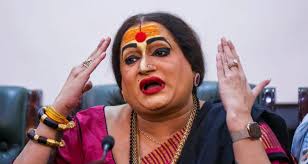
The SC had asked respondents to file replies after senior counsel AM Singhvi pointed out that the amendment took away transgender persons’ fundamental right to self-determination of gender “There are more than one High Court. There may be divergent views,” Solicitor General Tushar Mehta cautioned. File Photo The Centre on Wednesday sought transfer to the Supreme Court multiple petitions pending in various high courts challenging the Transgender Persons (Protection of Rights) Amendment Act, 2026 which introduced certain contentious changes in the legal framework governing the recognition, rights and protection of transgender persons. “We have filed transfer petitions to transfer the challenge to Transgender Amendment Act here in this court. Can the transfer petition be listed on Friday? If notice also goes, we can ask high courts to wait,” Solicitor General Tushar Mehta told a Bench of Chief Justice of India Surya Kant and Justice Joymalya Bagchi. “Sometimes, we can have an advantage of high courts’ views also,” the CJI said, noting that parallel proceedings before high courts could be beneficial to it. On May 4, the Supreme Court had issued notices to Centre, states and union territories on petitions challenging the validity of the Transgender Persons (Protection of Rights) Amendment Act, 2026. It had asked the respondents to file their replies after senior counsel AM Singhvi pointed out that the amendment took away transgender persons’ fundamental right to self-determination of gender. The petitioners contended that transgender persons receiving hormonal therapy would face problems due to the amendment. He, however, didn’t press for stay of the amendment as it had not been notified. Passed by Parliament in March this year during the Budget Session, the law amended the Transgender Persons (Protection of Rights) Act, 2019 and redefined who qualified as a “transgender person”. It also strengthened penal provisions to address serious offences such as forced identity and bodily harm. President Droupadi Murmu had given her assent to the ‘Transgender Persons (Protection of Rights) Amendment Act, 2026’ on March 30, 2026 Petitioners transgender persons Laxmi Narayan Tripathi, Zainab Patel and others – who have have challenged the validity of the amendment—alleged that it caused “irreparable constitutional injury” to the fundamental rights of transgender persons guaranteed under Articles 14 (right to equality), 15 (right to non-discrimination), 19 (right to freedom of speech and expression) and 21 (right to life and liberty) of the Constitution. Tripathi is the Acharya Mahamandaleshwar of the Kinnar Akhara, a Bharatanatyam dancer, author and social activist, Patel is the Director (Inclusion & Diversity) at KPMG India, and a Member of the National Council for Transgender Persons (Western Region). They wondered if the State, through legislation, could define who a person was by substituting biological or socio-medical classifications for a person’s lived and self-perceived identity. The PIL alleged that the amendment dismantled the principle of self-identification of gender recognised as a fundamental right by the Supreme Court in the landmark verdict in National Legal Services Authority (NALSA) versus Union of India (2014). Referring to the provision requiring the District Magistrate to issue a certificate of identity for a transgender person only after examining the recommendation of a medical board, the petitioners said it violated transgender persons’ right to privacy. “Parliament has, by the stroke of a legislative pen, repealed the statutory right that this Court held to be a fundamental right under Article 21. The impugned deletion does not even require elaborate constitutional analysis to expose its unconstitutionality: a provision that directly codifies a right declared fundamental by this Court cannot be omitted by ordinary legislation without violating Article 21 and the doctrine of non-retrogression of fundamental rights,” they submitted. The amendment has been criticised by LGBTQIA+ groups on the ground that they were not consulted before the introduction of the Bill. National Council of Transgender Persons (NCTP) members Kalki Subramanium and Rituparna Neog had resigned in protest. Former Delhi High Court judge Asha Menon who headed a committee set up by the Supreme Court to examine transgender rights has asked the Centre to withdraw the Bill. Article_Author Satya Prakash Courtesy : The Tribune Note: This news is originally published on https:/thetribune.com/bha and is used purely for non-profit/non-commercial purposes, especially human rights
Centre fears ‘divergence of views’ among High Courts on new transgender law; asks SC to transfer cases to itself
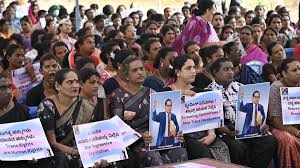
“We will see,” Chief Justice Kant said in response The Centre urged the Supreme Court on Wednesday (May 27, 2026) to transfer petitions challenging the constitutionality of the Transgender Persons (Protection of Rights) Amendment Act, 2026 from about four different High Courts to the apex court. Appearing before a Bench headed by Chief Justice of India Surya Kant, Solicitor General Tishar Mehta said the High Court are returning to work from summer recess in the first week of June. SC flags ‘risk’ of misuse in transgender self-identification debate The Supreme Court is already seized of several petitions challenging the 2026 Act, but it is is only partially working during June. Mr. Mehta, appearing for the Union government, said the High Courts may pre-empt the apex court by separately taking up the petitions before them and pass order. Mr. Mehta said the apex court should shift the cases pending in these High Courts to itself in order to avoid “divergent views” on the same Act. The top law officer urged the Chief Justice to list the Union government’s plea for transferring these petitions to itself on May 29. “We will see,” Chief Justice Kant said in response. The petitions in the apex court have criticised the controversial 2026 law of removing the right to self-identity. The 2026 Act requires a government-appointed medical board’s favourable recommendation for a District Magistrate to certify someone as a transgender person. NHRC asks Centre to review changes to trans law, ‘revisit’ community concerns on self-identification The petitioners, including activists like Laxminarayan Tripathi and others, said the Act disregarded transgender identity as an “authentic human identity, freely chosen”. They have argued that the requirement for a medical certification for gender recognition violated the rights of transgender persons and amounts to “medical gatekeeping” by the State. The government had countered that the intention of the Act was to ensure that deserving people from the community get benefits. He said forcible sex change was criminalised. The Transgender Persons Amendment Bill and the question of identity The petitioners highlighted that the Act had abruptly stopped ongoing sex-change therapies and treatment, leaving many in the community in dire straits. The petitions have argued that the 2026 amendments pull the carpet from under the 2014 NALSA judgment that declared that the right to self-identity was a fundamental right. It had held that identity was determined by the person, and not by biology, birth assignment or through State verification. Section 3 of the 2026 Act has omitted the right to self-perceived gender identity. The Hindu Bureau Courtesy : The Hindu Note: This news is originally published on https:/thehindu.com/bha and is used purely for non-profit/non-commercial purposes, especially human rights