
Tiruchy MGMGH to recruit transgender staff, forms eight-member panel to boost clinic infra
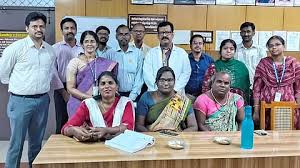
MGMGH Dean S Kumaravel convened a meeting on Friday with members of the transgender community and an eight-member expert committee constituted to study their needs. TIRUCHY: Days after trans persons raised concerns over inadequate facilities at the transgender person clinic in Mahatma Gandhi Memorial Government Hospital (MGMGH), the hospital has decided to appoint a member of the community to work at the clinic and ward, and also changed the OP services to Monday. The decision comes following a TNIE report on June 18 highlighting grievances raised by trans persons, including the lack of a separate toilet and inadequate infrastructure at the clinic. MGMGH Dean S Kumaravel convened a meeting on Friday with members of the community and an eight-member expert committee constituted to study their needs. He said, “A trans person willing to take up the responsibility would be employed at the clinic and ward to assist patients and help the administration better understand issues faced by the community.” The hospital has officially formed the committee to recommend measures for improving facilities and services for trans persons. The members are expected to visit the Government Rajaji Hospital in Madurai to study the facilities available before submitting its recommendations. In another measure, the trans persons clinic’s outpatient timings have also been revised. The clinic will now function on Mondays from 9 am to 11 am. Earlier the clinic functioned on Wednesdays. The dean said, “All experts will be available in the clinic to address health-related queries and concerns of the community.” During Friday’s meeting, trans persons reiterated concerns over the absence of dedicated toilets and other infrastructure gaps at the hospital. Participants said the interaction provided an opportunity to directly place their demands before the administration. “We explained the difficulties faced by trans persons visiting the clinic and requested better facilities. The dean and committee members listened to our concerns and assured us that steps would be taken,” said Oviya, a trans person activist who attended the meeting. Courtesy : TNIE Note: This news is originally published on https:/thenewindianexpress.com/bha and is used purely for non-profit/non-commercial purposes, especially human rights
Parliament passes Transgender Persons Amendment Bill, 2026 with Rajya Sabha approving it today

Parliament has passed the Transgender Persons (Protection of Rights) Amendment Bill, 2026, with the Rajya Sabha approving it today. The bill was passed by the Lok Sabha yesterday by a voice vote amid an Opposition-led walkout. The bill seeks to redefine the category of transgender, removes the provision of self-perceived gender identity and excludes several socio-cultural identities as well as transmasculine individuals from its ambit. It also further defines transgender persons within a biological framework, based on intersex variations and differences in sexual development. Replying to the discussion on the Bill in the Rajya Sabha, Social Justice and Empowerment Minister Dr Virendra Kumar said the government is compassionate towards the well-being of the transgender community. He said the Bill has provisions to empower the transgenders and give them dignity. The Minister said that the NDA government has taken several initiatives to bring transgender people to the mainstream and stop discrimination against them. Starting the discussion in the Upper House, Congress MP Renuka Chowdhury said this bill dilutes the privacy of an individual provided under the Constitution. Opposing the Bill, Ms Chowdhury said self-identification cannot be taken away through bureaucratic certification. Criticizing the government, she said that the proposed bill undermines the fundamental rights and dignity of transgender persons. Calling such a move wrong and illegal, she argued that forcing transgender persons to provide their identity through official certificates is against the spirit of equality and dignity guaranteed by the constitution. She also questioned the government’s approach for not properly consulting with the transgender community before bringing the Bill. She also referred to the Supreme Court’s landmark NALSA judgement of 2014, which recognized the right of transgender persons to self-identify their gender. Ms Chowdhury said the proposed Bill violates the principles laid down in that judgement and fails to respect an already established legal framework. DMK MP Tiruchi Shiva also opposed the Bill, saying that even if the Bill is passed in Parliament with a majority, it will be struck down by the Supreme Court. He further added that the Bill violates Articles 14, 15, 19 and 21 of the Constitution and it deprives the community of the right to freedom, dignity and self-determination. Supporting the Bill, BJP MP Medha Vishram Kulkarni said, ” This Bill ensures justice, dignity, protection from criminalisation and legal safeguards for transgender persons. She also thanked Prime Minister Narendra Modi for bringing this bill with certain amendments in order to ensure that the benefits reach the deserving people in a proper manner. She said there is a need for a law that brings justice to real transgender individuals and punishes fake ones. Mrs Kulkarni said the benefits should be extended to those who are transgender by birth. She said that the amendment to extend punishment will bring down the rate of crime and forced identities. TMC’s Saket Gokhale said that 31% of Transgender people in India have attempted suicide because of the discrimination that they are facing. He alleged that now the government is going to start discriminating against them as though social discrimination were not enough. He called it unacceptable. Mr Gokhale expressed concern that gender is going to be decided by the Chief Medical Officer and a District Magistrate, and the bill does not prescribe any qualifications for the Chief Medical Officer. Sanjay Singh of AAP said the Bill is a big let-down for the transgender community. He accused the government of not doing anything for the community. RJD’s Manoj Kr Jha said that prejudices against transgender people should stop, and they should be able to live with dignity. He added that self-determination of gender should not be taken away. CPI(M)’s John Brittas said it is a black-letter day and the Bill is taking India a century back. He pleaded with the government to either withdraw the Bill or refer it to a Select Committee. Jaya Bachchan of the Samajwadi Party also questioned the government over the legislation. She sought to know what the urgency was in bringing the Bill, without examining it with the depth and care that it deserved. Courtesy : Newsonair Note: This news is originally published on https:/newsonair.com/bha and is used purely for non-profit/non-commercial purposes, especially human rights
Father arrested for bid to kill girl over ‘transgender traits’

AURAIYA/KANPUR: Auraiya police on Wednesday arrested a man for attempting to kill his 14-year-old daughter after targeting her over her transgender characteristics. The accused allegedly beat the minor with a stick, threw her into the Patna canal and fled, police said. The girl, a resident of Kotwali Shivli area of Kanpur Dehat, survived because the canal’s water level was low, enabling her to drift towards the bank, where she was rescued by locals. She was taken to a nearby CHC, from where she was shifted to a hospital given her critical condition. According to police, the victim’s father took her on a scooter, claiming he would drop her at her aunt’s house in Bidhuna. On the way, between the villages of Baderahar and Bunchpur, he allegedly stopped the scooter, began abusing her with slurs related to her gender identity and assaulted her repeatedly. She told police he then dumped her into the canal and escaped. Bystanders who noticed the injured child and heard her cries informed the police. Inspector Lalitesh Narayan Tripathi, station house officer of Bela police station, and Santosh Kumar, in charge of the Purwa Sujan outpost, reached the spot and transported her to the CHC. “Since the girl had serious injuries, including trauma to her right eye and multiple injuries across her body, she was referred to a higher medical centre for advanced care,” said Dr Jitendra Kumar, posted at the CHC. Police said they conducted a raid soon after receiving the complaint and detained the father. During questioning, the accused allegedly admitted to beating the girl and throwing her into the canal, claiming he was angered by what he described as her transgender behaviour and alleging she was influencing her younger sister. Courtesy : TOI Note: This news is originally published on https:/timesofindia.com/bha and is used purely for non-profit/non-commercial purposes, especially human rights
Passed the police recruitment exam in 2018, won a legal battle for appointment, yet this transgender woman from Tamil Nadu still awaits uniform!

Aradhana, along with five Tirunangas, joined forces to raise their voices for their rights. In 2022, the court issued clear instructions that all five Tirunangas be given female-like privileges in all stages, including the physical efficiency test, and that the entire recruitment process be completed within eight weeks. Theni – Aradhana, a Tirunangas (transgender) woman in Theni district, Tamil Nadu, dreamed of getting a job in the police department, but even after eight years, her dream remains unfulfilled. Aradhana passed the Class II police recruitment exam in 2018, but has not been appointed. She fought a legal battle against the government and won a court decision, but her difficulties remain unresolved. Aradhana (33), a resident of Parastrode 6th Street in Theni, is currently serving in the Home Guard (Oorakkaval Padai). She had a passion for wearing a police uniform since childhood. She explains, “When I wanted to apply for the second-tier police recruitment exam in 2018, I was denied permission because there was no separate application system for transgender people at that time.” Aradhana didn’t give up. She approached the court and, following a court order, took the exam. She passed the written exam, but when it came to the Physical Efficiency Test, she wasn’t called. Following this, Aradhana filed another petition in the Madras High Court. Recognizing the gravity of the matter, the High Court delivered a historic verdict. The court stated that transgender people live in extremely disadvantaged conditions in society, and therefore, they should be given reservations in government jobs. Based on this court order, a position was reserved for Aradhana in the police department in 2018. Aradhana’s case was combined with those of other transgender people. A total of five transgender people joined forces to raise their voices for their rights. In 2022, the court issued clear instructions that all five Tirunanga candidates be given female-friendly privileges in all stages, including the physical efficiency test, and that the entire recruitment process be completed within eight weeks. While this court decision gave hope to Aradhana and her colleagues, the Tamil Nadu government filed an appeal against the decision in the High Court. This appeal is still pending. Aradhana says, “We fought a legal battle, we won the decision, but it was of no use. The government appealed against us, and since then we are back in the same waiting phase.” A few years ago, driven to despair, Aradhana filed a petition with the Teni Collector’s office. She stated, “If my dream of becoming a police officer is not fulfilled, revoke my citizenship and kill me through euthanasia.” Her action created a sensation in the area, but even then, her problem remained unresolved. Aradhana explained that her fascination with the police uniform inspired her to join the Home Guard in 2019. She now serves there, but her true dream remains unfulfilled. She says, “It’s very difficult for us Tirunangas to live a normal life in this society. Our identity itself becomes the biggest obstacle to our dreams. Should we not get police jobs just because of our gender?” Keeping her dream alive, Aradhana has appealed to the Tamil Nadu government, “Please withdraw the appeal filed against the court decision we won. Implement the court order. If this happens, the darkness in our lives will be lifted. May the Tamil Nadu government have mercy on us.” Pa. Ranjith’s Neelam Social Organization has also supported Aradhana and appealed to the Tamil Nadu government for support. Geetha Sunil Pillai Courtesy: Hindi News
The Supreme Court has taken a major step in the new transgender law, immediately halting proceedings in four high courts.

The Supreme Court has immediately stayed the hearing of petitions challenging the new Transgender Persons (Persons) Act 2026 in four different high courts. Following the central government’s demand, all these cases are now likely to be heard in a single court to avoid any contradictory decisions. New Delhi: The Supreme Court has issued a significant order regarding the constitutional validity of the Transgender Persons (Protection of Rights) Amendment Act, 2026. On Monday, June 15, the apex court immediately stayed proceedings in four different high courts challenging the law. The central government had requested the transfer of all pending petitions in this matter to the Supreme Court to avoid conflicting decisions from different courts on the same law. A bench comprising Chief Justice (CJI) Surya Kant and Justice V. Mohana issued notice on the central government’s transfer petition and stayed the ongoing hearings in the Rajasthan, Delhi, Karnataka, and Kerala high courts. Solicitor General Tushar Mehta, representing the Government of India, informed the court that the Supreme Court is already hearing the case. Furthermore, several other High Courts are also challenging the constitutional validity of the 2026 amendment. Accepting this request, the Chief Justice stated that it would be better if all the cases were heard by either a single High Court or the Supreme Court itself delivered its final verdict. The court believed this would avoid scattered and divergent judicial opinions. The next hearing in the case will take place in July, when the court resumes regular work after its partial working period. Earlier, on May 27, the Central Government had expressed concern that hearings in different courts could lead to contradictory judgments on the validity of the law. Mr. Mehta clarified that the Supreme Court should convene these cases to avoid divergent opinions on the same act. During Monday’s hearing, Chandresh Jain, a petitioner from the Delhi High Court, also appeared before the Supreme Court. They argued that their petition comprehensively challenges the new law and establishes why the amendments are constitutionally unsound. The bench stated that if the cases are transferred to the Supreme Court, the court would be happy to seek Mr. Jain’s assistance in this matter. The petitioners’ main argument is that the 2026 amendment undermines the landmark 2014 NALSA judgment, which recognized the right to self-determination as a fundamental right. According to the petitioners, Section 3 of the 2026 Act eliminates the right to self-perceived gender identity and leaves gender determination to biology or state verification. On the other hand, the central government maintains its position. The government maintains that the amendment does not prohibit voluntary gender-affirming treatments. Its primary purpose is only to regulate procedures performed under coercion or pressure. Solicitor General Tushar Mehta also requested the court to transfer the petitions to the Supreme Court before a three-judge bench. He pointed out that the current challenge is primarily based on the 2014 NALSA decision, delivered by a two-judge bench. It may be difficult for high courts to take a view contrary to that decision. Just last month, the Supreme Court refused to stay the implementation of the new law on an interim basis. The court then remarked that the constitutional questions raised by it require detailed and in-depth examination. At that time, the Chief Justice also expressed a serious concern. He stated that in a country with a population of 1.4 billion, there could be a threat from individuals who may pretend to be transgender simply to benefit from reservations in government jobs or other welfare schemes. The Chief Justice questioned whether such fraud would not deprive those who are truly entitled to these benefits due to their physical or biological conditions. Rajan Chaudhary Courtesy: Hindi News
Devika first trans gender to get Bismillah Khan Samman

Lucknow: In a story of grit and perseverance, transgender Kathak dancer and cultural activist Devika Devendra S Manglamukhi became first from the community to be selected for the prestigious Ustad Bismillah Khan Yuva Samman-2025, conferred by the Sangeet Natak Akademi, New Delhi. Currently a state executive member and adviser to the UP Transgender Welfare Board, Devika said the recognition marks a significant milestone not just in one’s artistic journey but also for the transgender community. Devika’s achievements include Rajkiye Meera Samman (2016) and the National Samrasta Samman (2025). Having performed across 22 states, the exponent finds Kathak inseparable from life and identity and said, “I dedicate this award to my guru, the transgender community and everyone who supported me in my lowest moments.” Hailing from Dholpur in Rajasthan, the journey to national recognition was marked by hardship, social exclusion and years of struggle and first brush with the dance form, was as a four years old watching a Kathak concert on Doordarshan, inspiring to participate in school competitions. At 14, Devika left home to live according to gender identity and “My mother wanted to hide me. I left with just Rs 20.” In 2001, Devika reached the shrine of Hazrat Nizamuddin in Delhi. “I was crying bitterly. I had nowhere to go and to survive, I began begging, till a woman from the Valmiki community gave me the job of cleaning toilets in exchange for food,” recalls SNA awardee. A turning point came when Kathak guru Kapila Raj Sharma noticed Devika practising mudras on a Delhi street and offered to guide. In 2004, Devika moved to Lucknow and began training under Sharma and performed formally for the first time at Sharad Mahotsav in Dholpur in 2005. Devika has completed all education through distance mode and was nominated to the UP Transgender Welfare Board for work done for the uplift of the transgender community. Courtesy : TOI Note: This news is originally published on https:/timesofindia.com/bha and is used purely for non-profit/non-commercial purposes, especially human rights
Garima Grih rolled out in Dhanbad for transgenders

Dhanbad: In a step towards ensuring dignity, safety and empowerment of the transgender community, a Garima Grih (shelter home) was inaugurated in Dhanbad on Tuesday. The shelter home is being operated by non-profit organisation Manthan Sanstha under the direction of DC Aditya Ranjan. The inauguration was carried out by district social welfare officer Sneh Kashyap, who said that every individual in society has the right to live with dignity and respect. She stated that the initiative would provide members of the transgender community with safe shelter, social security, counselling, skill development opportunities and support to connect with mainstream society. Addressing the gathering, speakers highlighted that the transgender community has long faced social discrimination and exclusion. In such circumstances, the Garima Grih will not only offer secure accommodation but also facilitate access to education, healthcare, legal aid, mental health counselling and vocational training. The initiative is expected to help community members become self-reliant and lead a dignified life while actively participating in society. During the programme, guests inspected the shelter home and reviewed the facilities being provided there. They appreciated the initiative and stressed that joint efforts by the govt and social organisations are essential for the protection of transgender rights and their holistic development. Representatives of Manthan Sanstha informed that several welfare and empowerment programmes would be conducted through the Garima Grih to create a safe and supportive environment for transgender persons. They added that the objective of the shelter home is to strengthen confidence among community members and provide opportunities for sustainable livelihood and social inclusion. Members of the transgender community who attended the programme welcomed the initiative and described it as a positive step towards bringing meaningful change to their lives. They expressed hope that the shelter home would help them gain social acceptance and access better opportunities in the future. Sharad Chandra Courtesy : TOI Note: This news is originally published on https:/timesofindia.com/bha and is used purely for non-profit/non-commercial purposes, especially human rights
Transgender pleas shifted to top court as HC proceedings face nationwide stay

Petitions question new medical verification rules and changes to self-identification provisions introduced under the 2026 legislation The Supreme Court on Monday stayed proceedings in high courts related to multiple petitions challenging the constitutional validity of the Transgender (Protection of Rights) Amendment Act, which they alleged grossly diluted transgender rights. A bench of Chief Justice Surya Kant and Justice V. Mohana, while staying the pending proceedings before the high courts of Delhi, Rajasthan, Karnataka and Kerala, transferred the cases to itself on a plea made by the Centre through solicitor-general Tushar Mehta. “Issue notice…. Further proceedings before the high courts…shall remain stayed,” the CJI said. The CJI indicated that either the top court may hear the batch of petitions or consolidate them and transfer them to one of the high courts for adjudication. Mehta requested the transfer of proceedings from high courts to avoid conflicting verdicts. He said the apex court, too, had on May 4 issued notice on a PIL challenging the amendments to the Act, hence, the matter should ideally be dealt with by it. The batch of petitions before the high courts and the Supreme Court had mainly challenged the amendments to the Act in 2026, which limited the definition of transgender individuals to hijra, kinner, aravani, jogta, eunuch, as well as those with congenital sex variations. The 2026 Act seeks to amend the original 2019 Act, which had permitted an individual to identify themselves as a “transgender” under the legal framework of “self-identification”. However, the 2026 amendment has made it mandatory for a person to be declared transgender through a medical board verification process. Courtesy : The Telegraph Note: This news is originally published on https:/thetelegraph.com/bha and is used purely for non-profit/non-commercial purposes, especially human rights
PU launches admission helpline for transgender students

Chandigarh: Panjab University (PU) has launched a dedicated admission helpline for transgender students for the academic session 2026-27 to assist applicants during the admission process. The initiative has been introduced through the Permanent anti-discrimination cell for transgender students (PADCTS), functioning under the centre for human rights and duties. According to Dr Upneet Kaur Mangat, coordinator of PADCTS, the helpline will provide guidance and support to transgender applicants regarding admissions and related procedures. Applicants can seek assistance through helpline numbers 8437807999, 8437220625 and 9815064997, or via email at transgendercell@pu.ac.in. The PADCTS office is located at the Emerging Areas Building, Centre for Human Rights & Duties, Panjab University, Sector 14. The university currently provides one additional seat in each course for transgender students, a provision approved by the PU Syndicate in 2023 and implemented from the 2024-25 academic session. The provision applies across teaching departments, regional centres, constituent colleges and affiliated colleges. Admission-related guidelines for transgender students are available in the PU Handbook of Information (HBI-2026) on the university admission portal. Courtesy : TOI Note: This news is originally published on https:/timesofindia.com/bha and is used purely for non-profit/non-commercial purposes, especially human rights
Free Travel For Women And Transgender Persons Begins In Kerala From June 15; Here’s The Full List Of Eligible
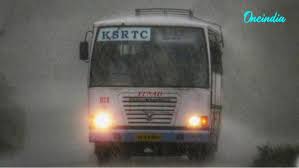
In a major welfare initiative aimed at improving women’s mobility and reducing travel expenses, the Kerala government will roll out free bus travel for women and transgender persons from June 15 under the Priyadarshini Scheme. Ahead of the launch, the Kerala State Road Transport Corporation (KSRTC) has released the list of bus categories where the concession will be available. The scheme, one of the key election promises of the ruling government, is expected to benefit lakhs of daily commuters across the state by making public transport more accessible and affordable. 15/06/2026, 02:00 Free Travel for Women and Transgender Persons Begins in Kerala From June 15; Here’s the Full List of Eligible KSRTC Services … What Is the Priyadarshini Scheme? The Priyadarshini Scheme provides free travel on select KSRTC bus services for women of all age groups and for transgender persons, regardless of their income or financial background. The initiative has been introduced to encourage greater participation of women in education, employment, and social activities by reducing the burden of transportation costs. The state government believes that easier access to public transport can play an important role in strengthening economic independence and social inclusion. The scheme will be formally inaugurated on June 15 in Thiruvananthapuram. Which KSRTC Buses Are Covered? According to the KSRTC notification, free travel will initially be available on seven categories of ordinary bus services operated by the corporation. These include: Ordinary City Ordinary Limited Stop Ordinary Fair-Stage Ordinary Town-to-Town Services Point-to-Point Services Gramavandi Services Officials said special stickers will be displayed on eligible buses to help passengers easily identify the services covered under the Priyadarshini Scheme. Who Can Avail the Free Travel Benefit? The Kerala government has clarified that the concession will be available to: Women of all age groups Transgender persons Commuters from all social and economic backgrounds Unlike some welfare schemes that are based on income criteria, the Priyadarshini Scheme will be universal in nature, ensuring that every eligible passenger can benefit without restrictions linked to earnings or financial status. Government to Bear the Cost Chief Minister V D Satheesan recently announced that the state government will fully compensate KSRTC for the financial burden created by the scheme. According to government estimates, the first phase of the initiative will cost around ₹60 crore every month, amounting to nearly ₹800 crore annually. This will be in addition to the approximately ₹1,500 crore that the state already provides each year to support KSRTC’s salary and pension obligations. The Chief Minister said the government is committed to ensuring that the welfare measure does not negatively impact the functioning of the state transport corporation. Only the First Phase of the Project The government has described the June 15 rollout as the first phase of a larger initiative. Over the next six months, KSRTC has been asked to focus on improving its revenue generation and operational efficiency. The state plans to introduce measures such as: Purchasing additional buses, Launching more services, Expanding connectivity in underserved regions, Improving the financial health of KSRTC. Officials said that once the corporation’s revenue improves, the government will examine the possibility of expanding the scope of the free travel scheme. Monthly Review and Future Expansion The state government has also announced that the implementation of the Priyadarshini Scheme will be reviewed every month. Authorities will monitor factors such as: Passenger usage patterns, Demand for ordinary bus services, Availability of KSRTC buses in regions like Malabar, Financial impact on the transport corporation. Part of the Government’s Welfare Guarantees Free bus travel for women was one of the flagship promises made during the assembly election campaign. The Priyadarshini Scheme forms part of a broader package of welfare initiatives announced by the government, which also includes: A monthly stipend of ₹1,000 for college-going girls, An increase in welfare pensions to ₹3,000, Health insurance coverage of up to ₹25 lakh per household, Interest-free loans of up to ₹5 lakh for young entrepreneurs. The launch of the scheme marks a significant step in Kerala’s efforts to make public transport more inclusive while supporting women and transgender commuters through direct financial relief. Courtesy : Oneindia Note: This news is originally published on https:/oneindia.com/bha and is used purely for non-profit/non-commercial purposes, especially human rights