
Transgender Rights Act 2026: ESG Risks and Corporate Compliance Challenges

India’s Transgender Persons (Protection of Rights) Amendment Act, 2026, has introduced new regulatory oversight for gender recognition. This shift may impact corporate Diversity, Equity, and Inclusion (DEI) policies, potentially affecting ESG ratings for Indian companies that rely on international capital and global talent standards. What Happened The government has enacted the Transgender Persons (Protection of Rights) Amendment Act, 2026. This legislation introduces stricter bureaucratic oversight regarding gender recognition, moving away from the previous self-identification framework. For investors and corporate India, this represents a notable shift in the legal landscape regarding social inclusivity and workplace rights. While this is primarily a policy matter, the financial implications are significant, particularly for publicly listed companies that have integrated Diversity, Equity, and Inclusion (DEI) initiatives into their operational and ESG (Environmental, Social, and Governance) frameworks. The ESG And Capital Flow Angle Global institutional investors—including Foreign Portfolio Investors (FPIs)—increasingly use ESG metrics to screen their investments. The ‘Social’ component of these scores often evaluates a company’s commitment to inclusive workplace practices, human rights, and non-discriminatory policies. When national legislation creates a mismatch with established global DEI standards, it can create friction for multinational corporations and large Indian exporters who adhere to global reporting standards. Investors often monitor these shifts to assess whether they might lead to downgrades in ESG risk ratings or impact a company’s reputation among international clients and stakeholders who demand strict adherence to inclusive policies. Corporate India’s Compliance Dilemma Many large-cap Indian firms, particularly in the IT, banking, and professional services sectors, have codified DEI policies that support self-identification and inclusive benefits. The 2026 Amendment Act creates a new regulatory layer that may conflict with these internal corporate policies. For companies, this creates a compliance risk. Management teams may now face the challenge of reconciling internal DEI mandates with new legal requirements. Investors will likely look for updates on how firms plan to navigate this regulatory change without compromising the inclusive culture that has become central to attracting and retaining high-value global talent. Talent Risk and Operational Continuity In a competitive hiring environment, talent retention is a critical driver of operational performance. Companies that have built strong brands around being an ’employer of choice’ often leverage their inclusive work environments to attract top-tier professionals. If the new legal framework forces companies to pivot away from established diversity practices, there is a risk of talent attrition or a potential decline in the company’s employer value proposition (EVP). Human capital efficiency is a primary driver of financial performance for many service-oriented businesses; thus, any disruption to workplace policies that directly affects employee engagement can be a material business concern. What Investors Should Track Next Investors may monitor upcoming annual reports and ESG disclosures to see how companies address these regulatory changes. Key monitorables include: any modifications to internal HR and diversity policies, official statements from management regarding compliance and inclusivity, and potential updates from credit rating agencies or ESG data providers that analyze India’s social governance metrics. Further, any guidance from industry bodies on reconciling internal DEI policies with the new Act will be crucial for understanding the operational impact. Author Vihaan Mehta Courtesy : Whalesbook Note: This news is originally published on https:/whateabook.com/bha and is used purely for non-profit/non-commercial purposes, especially human rights
57 years after Stonewall, why equality, inclusivity still a battle for India’s queer community
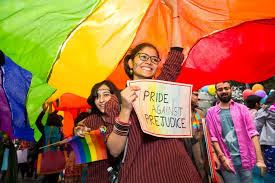
On June 28,1969, police raided New York’s Stonewall Inn, detaining many transgender persons and drag performers and subjecting others to humiliating searches and questions. The resistance that followed is known as the Stonewall Riots and June continues to be celebrated as Pride Month to commemorate the incident. For many in India, Pride is not a parade, but the hope of a life lived without discrimination and humiliation. At 1.20 a.m. on June 28, 1969, a Saturday, four police officers in plainclothes, accompanied by two uniformed patrolmen, walked up to the double doors of a small bar in New York’s Greenwich Village. “Police. We’re taking the place,” one of them announced. The bar was called the Stonewall Inn, a clandestine ‘gay’ bar. Patrons were lined up, their identity papers examined, and those whose appearance did not conform to what the police believed men and women should look like were singled out. Many transgender persons and drag performers were detained. Others were subjected to humiliating searches and questioning. Raids like these on places identified as queer hubs were routine back then. But that night was different. The people inside Stonewall Inn refused to quietly submit. The crowd outside swelled. Resistance replaced fear. The Stonewall Riots became the defining moment of the modern LGBTQIA+ rights movement. Fifty-seven years later in India, during Pride Month (celebrated in June to commemorate the 1969 riots), Stonewall feels less like history and more like a warning. A conversation beyond survival Imagine a 20-year-old transgender student growing up in Harda, Hapur or Hazaribagh. She has never attended a Pride parade. There is no queer community centre in her town. No support group she can walk into after college. No café where she can simply exist without being stared at. She worries less about rainbow flags than about whether her college will recognise her identity, whether a landlord will rent her a room, whether a hospital will treat her with dignity, and whether the law sees her as the person she knows herself to be. For years, it seemed that India was slowly moving in that direction. In National Legal Services Authority v. Union of India (2014), popularly known as the NALSA judgment, the Supreme Court recognised that gender identity lies at the heart of dignity, equality and personal autonomy and affirmed the principle of selfidentification. Four years later, in Navtej Singh Johar v. Union of India (2018), the Court decriminalised consensual same-sex relationships by reading down Section 377 of the Indian Penal Code (which had criminalised ‘carnal intercourse against the order of nature’), declaring that constitutional morality must prevail over social prejudice. More recently, in Supriyo @ Supriya Chakraborty v. Union of India (2023), while the Supreme Court declined to recognize marriage equality, it unequivocally acknowledged the dignity and equal citizenship of queer persons. Taken together, these decisions did not solve every problem, but they changed the direction of travel. They told queer Indians that the Constitution saw them not as criminals or outcasts, but as equal citizens. The conversation, slowly but surely, was beginning to move beyond survival. The questions were changing. Could queer couples marry? Could they adopt children? Would health insurance recognise their partners? Would workplaces guarantee equal opportunities? Could a partner make medical decisions during an emergency? Would families eventually choose acceptance over silence? These are the questions of people imagining a future. Fresh anxieties That is why the present moment has generated so much anxiety. The Transgender Persons (Protection of Rights) Amendment Act, 2026, which is presently under challenge before the Supreme Court, has reignited concerns among many transgender persons and rights advocates that the constitutional principle of self-identification recognised in NALSA could be substantially diluted. Whether those concerns ultimately withstand constitutional scrutiny will be for the Court to determine. But the very fact that the debate has returned to who gets to define a person’s identity has left many wondering whether hard-won gains are becoming fragile. History never repeats itself exactly. Yet it often asks remarkably similar questions. In 1969, people gathered outside the Stonewall Inn because they refused to accept that the State could decide who they were. In 2026, transgender Indians are once again asking who has the authority to define their identity. The context is different. The question remains hauntingly familiar. For queer Indians living in Delhi, Mumbai or Bengaluru, community spaces, support networks and affirming workplaces, while still limited, at least exist. But what does Pride mean to someone living in a small town? Where does that young student from Harda go? There are no community spaces like the Stonewall Inn. There may be no counsellor trained in gender identity, no local support group, no understanding within the family and no legal aid organisation nearby. Every decision, whether to come out, seek healthcare or simply exist openly, carries consequences that extend far beyond personal identity. It may determine whether someone can continue their education, keep a roof over their head or remain financially secure. Even today, queer persons in India continue to face barriers that extend well beyond legal recognition. Marriage equality remains unavailable. Adoption rights remain uncertain for same-sex couples. Many struggle to access affirming healthcare. Workplace discrimination persists. Police harassment and social stigma continue to be reported. For countless young people, the fear of rejection by their own families remains the greatest obstacle of all. Equality and inclusion This is precisely why the debate cannot stop at self-identification. The next chapter of LGBTQIA+ rights in India should be about enabling ordinary lives. The right to marry the person one loves. The right to build a family. Equal opportunities in education and employment. Access to healthcare without humiliation. Insurance, inheritance, pensions and legal recognition that treat queer families with the same dignity as everyone else. These are not extraordinary demands. They are the ordinary incidents of citizenship. Across the world, many democracies have already begun answering these questions. South Africa constitutionally prohibits discrimination on the basis of sexual orientation and has recognised same-sex marriage for nearly
Parliament Passes Transgender Persons (Protection of Rights) Amendment Bill, 2026 After Rajya Sabha Nod

Parliament Passes Transgender Persons (Protection of Rights) Amendment Bill, 2026 After Rajya Sabha Nod Parliament has passed the Transgender Persons (Protection of Rights) Amendment Bill, 2026, with the Rajya Sabha approving it yesterday. Earlier, the bill was passed by the Lok Sabha on tuesday by a voice vote amid an Opposition-led walkout. The bill seeks to redefine the category of transgender, removes the provision of self-perceived gender identity and excludes several socio-cultural identities as well as transmasculine individuals from its ambit. Replying to the discussion on the Bill in the Rajya Sabha, Social Justice and Empowerment Minister Dr Virendra Kumar said, the government is compassionate towards the well-being of the transgender community. He said, the Bill has provisions to empower the transgenders and give them dignity. The Minister said, NDA government has taken several initiatives to bring transgender people to the mainstream and stop discrimination against them. Courtesy : News ON AIR Note: This news is originally published on https:/newsonair.com/bha and is used purely for non-profit/non-commercial purposes, especially human rights
Clavicular’s controversial Paris visit takes stunning turn after viral kiss with Polish transgender model Adelaide Pali

Clavicular, whose real name is Braden Eric Peters, has built a huge following online by promoting “looksmaxxing,” a trend that focuses on improving physical appearance through extreme methods. The 20-year-old Kick streamer and TikTok creator is known for giving controversial advice, including facial bonesmashing and heavy steroid use. But during a recent livestream in Paris, the attention shifted away from his online image after several uncomfortable public interactions left him facing criticism instead of praise. According to The Times and the New York Post, his trip quickly became a talking point across social media and French media. Clavicular’s Paris livestream shows French women unmoved by his online fame During his livestream, Clavicular approached several women at cafés, restaurants and on the streets while trying to start conversations. In one widely shared clip, he introduced himself and hinted that people could search his name online. A woman simply asked if he was famous before politely ending the conversation by saying, “Have a good time in Paris. I hope you enjoy it.” That moment reflected much of his visit. Most of the people he approached either showed little interest or walked away. At one point, he admitted on stream, “I am dropping game, but it is not hitting.” French media also picked up the story. Instead of focusing on his online popularity, many reports praised the women for politely rejecting his advances. According to The Times, many locals simply did not know who he was, while others were not interested in engaging with him. Clavicular later admits he needs better conversation skills after Paris backlash As the criticism grew, Clavicular reacted with frustration. He called French people “impolite s***bags” in a post on X and described the situation as much bigger than he expected. Videos from the trip also showed people throwing drinks and water at him while he walked through the city. Later, however, his tone changed. He admitted that approaching women has never been his strength and wrote on X, “I say all the time my game with women is god awful, but at least I have the nerve to practice approaching.” He also added, “I need to become more interesting so I can carry convos better.” The Paris trip ended up exposing the gap between Clavicular’s online confidence and his real-life interactions. While he remains one of the biggest names in the looksmaxxing community, the livestream sparked fresh debate about influencer culture, internet fame and whether a large online following always translates into real-world recognition. Courtesy : TOI Note: This news is originally published on https:/timesofindia.com/bha and is used purely for non-profit/non-commercial purposes, especially human rights
Parliament passes Transgender Persons Amendment Bill, 2026 with Rajya Sabha approving it today

Parliament has passed the Transgender Persons (Protection of Rights) Amendment Bill, 2026, with the Rajya Sabha approving it today. The bill was passed by the Lok Sabha yesterday by a voice vote amid an Opposition-led walkout. The bill seeks to redefine the category of transgender, removes the provision of self-perceived gender identity and excludes several socio-cultural identities as well as transmasculine individuals from its ambit. It also further defines transgender persons within a biological framework, based on intersex variations and differences in sexual development. Replying to the discussion on the Bill in the Rajya Sabha, Social Justice and Empowerment Minister Dr Virendra Kumar said the government is compassionate towards the well-being of the transgender community. He said the Bill has provisions to empower the transgenders and give them dignity. The Minister said that the NDA government has taken several initiatives to bring transgender people to the mainstream and stop discrimination against them. Starting the discussion in the Upper House, Congress MP Renuka Chowdhury said this bill dilutes the privacy of an individual provided under the Constitution. Opposing the Bill, Ms Chowdhury said self-identification cannot be taken away through bureaucratic certification. Criticizing the government, she said that the proposed bill undermines the fundamental rights and dignity of transgender persons. Calling such a move wrong and illegal, she argued that forcing transgender persons to provide their identity through official certificates is against the spirit of equality and dignity guaranteed by the constitution. She also questioned the government’s approach for not properly consulting with the transgender community before bringing the Bill. She also referred to the Supreme Court’s landmark NALSA judgement of 2014, which recognized the right of transgender persons to self-identify their gender. Ms Chowdhury said the proposed Bill violates the principles laid down in that judgement and fails to respect an already established legal framework. DMK MP Tiruchi Shiva also opposed the Bill, saying that even if the Bill is passed in Parliament with a majority, it will be struck down by the Supreme Court. He further added that the Bill violates Articles 14, 15, 19 and 21 of the Constitution and it deprives the community of the right to freedom, dignity and self-determination. Supporting the Bill, BJP MP Medha Vishram Kulkarni said, ” This Bill ensures justice, dignity, protection from criminalisation and legal safeguards for transgender persons. She also thanked Prime Minister Narendra Modi for bringing this bill with certain amendments in order to ensure that the benefits reach the deserving people in a proper manner. She said there is a need for a law that brings justice to real transgender individuals and punishes fake ones. Mrs Kulkarni said the benefits should be extended to those who are transgender by birth. She said that the amendment to extend punishment will bring down the rate of crime and forced identities. TMC’s Saket Gokhale said that 31% of Transgender people in India have attempted suicide because of the discrimination that they are facing. He alleged that now the government is going to start discriminating against them as though social discrimination were not enough. He called it unacceptable. Mr Gokhale expressed concern that gender is going to be decided by the Chief Medical Officer and a District Magistrate, and the bill does not prescribe any qualifications for the Chief Medical Officer. Sanjay Singh of AAP said the Bill is a big let-down for the transgender community. He accused the government of not doing anything for the community. RJD’s Manoj Kr Jha said that prejudices against transgender people should stop, and they should be able to live with dignity. He added that self-determination of gender should not be taken away. CPI(M)’s John Brittas said it is a black-letter day and the Bill is taking India a century back. He pleaded with the government to either withdraw the Bill or refer it to a Select Committee. Jaya Bachchan of the Samajwadi Party also questioned the government over the legislation. She sought to know what the urgency was in bringing the Bill, without examining it with the depth and care that it deserved. Courtesy : News On Air Note: This news is originally published on https:/newsinair.com/bha and is used purely for non-profit/non-commercial purposes, especially human rights
Parliament passes Transgender Persons Amendment Bill, 2026 with Rajya Sabha approving it today
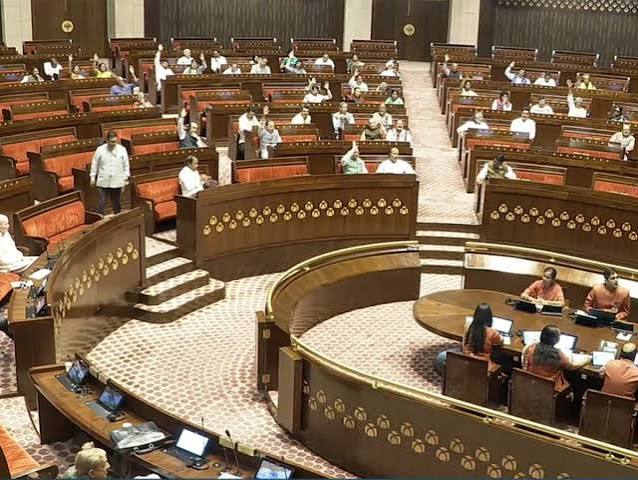
Parliament has passed the Transgender Persons (Protection of Rights) Amendment Bill, 2026, with the Rajya Sabha approving it today. The bill was passed by the Lok Sabha yesterday by a voice vote amid an Opposition-led walkout. The bill seeks to redefine the category of transgender, removes the provision of self-perceived gender identity and excludes several socio-cultural identities as well as transmasculine individuals from its ambit. It also further defines transgender persons within a biological framework, based on intersex variations and differences in sexual development. Replying to the discussion on the Bill in the Rajya Sabha, Social Justice and Empowerment Minister Dr Virendra Kumar said the government is compassionate towards the well-being of the transgender community. He said the Bill has provisions to empower the transgenders and give them dignity. The Minister said that the NDA government has taken several initiatives to bring transgender people to the mainstream and stop discrimination against them. Starting the discussion in the Upper House, Congress MP Renuka Chowdhury said this bill dilutes the privacy of an individual provided under the Constitution. Opposing the Bill, Ms Chowdhury said self-identification cannot be taken away through bureaucratic certification. Criticizing the government, she said that the proposed bill undermines the fundamental rights and dignity of transgender persons. Calling such a move wrong and illegal, she argued that forcing transgender persons to provide their identity through official certificates is against the spirit of equality and dignity guaranteed by the constitution. She also questioned the government’s approach for not properly consulting with the transgender community before bringing the Bill. She also referred to the Supreme Court’s landmark NALSA judgement of 2014, which recognized the right of transgender persons to self-identify their gender. Ms Chowdhury said the proposed Bill violates the principles laid down in that judgement and fails to respect an already established legal framework. DMK MP Tiruchi Shiva also opposed the Bill, saying that even if the Bill is passed in Parliament with a majority, it will be struck down by the Supreme Court. He further added that the Bill violates Articles 14, 15, 19 and 21 of the Constitution and it deprives the community of the right to freedom, dignity and self-determination. Supporting the Bill, BJP MP Medha Vishram Kulkarni said, ” This Bill ensures justice, dignity, protection from criminalisation and legal safeguards for transgender persons. She also thanked Prime Minister Narendra Modi for bringing this bill with certain amendments in order to ensure that the benefits reach the deserving people in a proper manner. She said there is a need for a law that brings justice to real transgender individuals and punishes fake ones. Mrs Kulkarni said the benefits should be extended to those who are transgender by birth. She said that the amendment to extend punishment will bring down the rate of crime and forced identities. TMC’s Saket Gokhale said that 31% of Transgender people in India have attempted suicide because of the discrimination that they are facing. He alleged that now the government is going to start discriminating against them as though social discrimination were not enough. He called it unacceptable. Mr Gokhale expressed concern that gender is going to be decided by the Chief Medical Officer and a District Magistrate, and the bill does not prescribe any qualifications for the Chief Medical Officer. Sanjay Singh of AAP said the Bill is a big let-down for the transgender community. He accused the government of not doing anything for the community. RJD’s Manoj Kr Jha said that prejudices against transgender people should stop, and they should be able to live with dignity. He added that self-determination of gender should not be taken away. CPI(M)’s John Brittas said it is a black-letter day and the Bill is taking India a century back. He pleaded with the government to either withdraw the Bill or refer it to a Select Committee. Jaya Bachchan of the Samajwadi Party also questioned the government over the legislation. She sought to know what the urgency was in bringing the Bill, without examining it with the depth and care that it deserved. Courtesy : News On Air Note: This news is originally published on https:/newsonair.com/bha and is used purely for non-profit/non-commercial purposes, especially human rights
How Karnataka can set a model for rest of India by protecting transgender rights

Karnataka has not enacted any state-specific rules under the 2019 Act. The 2026 amendment, however, gives the DKS government the perfect opportunity to do so. The Transgender Persons (Protection of Rights) Act, 2026, notified in March, marked a significant regression from the rights framework built through the Transgender Persons (Protection of Rights) Act, 2019, and affirmed by the Supreme Court in NALSA v Union of India. It narrowed the definition of ‘transgender person’ to four socio-cultural groups, intersexed persons, and persons ‘compelled’ to present as transgender. It omits the right to self-perceived gender identity, and makes a medical recommendation mandatory for transgender identity cards. Finally, it inserts a new set of criminal offences based on harmful stereotypes about the transgender community by criminalising causing hurt by mutilation, emasculation, castration, amputation, or any surgical, chemical, or hormonal procedure with the intent to compel such person to ‘present a transgender identity’. Against the backdrop, what can the Karnataka state government do? The 2019 Act empowers state governments to make rules to operationalise the Act. Such rules must remain within the bounds of the parent Act. However, they do carry wide latitude to prescribe procedures, fill any silences, and protect rights on the ground. Currently, Karnataka has not enacted any state-specific rules under the 2019 Act. The 2026 amendment gives the Karnataka government the perfect opportunity to do so. First, the 2026 amendment restricts the definition of the term ‘transgender’ to four socio-cultural groups: hijras, jogta, aravanis and kinners. While jogta is a socio-cultural group in Northern Karnataka, it does not represent all transgender groups in the state. Further, these four terms do not have fixed or stable meanings. As the 2019 Act is a welfare law, it must be interpreted broadly, and, thus, it can be argued that the definition seeks to capture transgender groups by their indigenous names. Consequently, the Karnataka government can, through a government order, clarify which socio-cultural groups prevalent in the state fall within the scope of the definition. For this, it must consult diverse transgender groups. Further, it can also issue a Karnataka State Transgender Card, a la Tamil Nadu, and link all welfare benefits to it. Second, the 2026 amendment makes it mandatory for the district magistrate to account for the recommendations of a medical authority before issuing a certificate of identity to a transgender person. The Karnataka government cannot override this, but it can limit the role of the medical authority by mandating that the authority will not carry out a physical examination. Instead, self-declaration, and a Third, while the 2026 amendment omits the right to self-perceived gender identity, it is still a fundamental right. Karnataka must continue to recognise and uphold it. Fourth, unlike the 2019 Act, medical institutions where transgender persons undergo gender affirming procedures are now mandated to share such information with the district magistrate. This raises concerns about privacy, since personal data is being shared without the person’s consent. Karnataka must put in place rules for the manner in which this data will be processed, aligned with the Supreme Court’s judgment, which recognised the fundamental right to privacy. Only data which is necessary for verification of an applicant’s identity and change of gender marker must be processed, and such data must be stored in a secure manner. The data must be stored in a secure manner. The data must be shared only with authorities who play a role in issuing the identity card. Finally, the issuing authority must destroy the data once its purpose has been served. Fifth, the 2026 amendment has a chilling effect on the provision of legitimate gender affirming healthcare, as healthcare professionals fear prosecution. This, despite the refusal and discontinuation of healthcare to transgender persons, constitutes discrimination. The Karnataka government must issue a clarification that the provision of legitimate gender-affirming is not an offence and must be continued. Finally, the newly-inserted offences enable natal families to file criminal complaints against those extending support to transgender persons, claiming they are carrying out conversions. Karnataka must issue guidelines to the police to ensure that they carry out a preliminary inquiry when such a complaint is filed. If such an inquiry reveals that the individual is an adult and has voluntarily sought assistance or gender affirming care, such a statement must be recorded, no FIR must be registered, and the matter must be closed. Namrata Mukherjee Palomi Chaturvedi Disclaimer: The views expressed above are the author’s own. They do not necessarily reflect the views of DH. Namrata Mukherjee is Specialist, Governance & Rights, Vidhi, and Palomi Chaturvedi is Research Fellow, Vidhi Centre for Legal Policy Courtesy : DH Note: This news is originally published on https:/deccanherald.com/bha and is used purely for non-profit/non-commercial purposes, especially human rights
Kerala HC dismisses PIL against free KSRTC bus travel for women, transgender persons
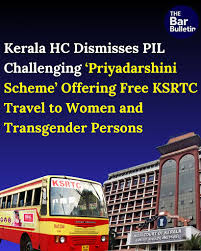
The Kerala High Court on Monday dismissed a Public Interest Litigation (PIL) challenging the state government’s newly-launched “Priyadarshini Scheme, which provides free travel to all women and transgender persons in ordinary KSRTC buses. A Division Bench comprising Chief Justice Soumen Sen and Justice Syam Kumar VM dismissed the PIL petition that sought to quash the Government Order (GO) which introduced the scheme. “There is nothing before us that Exhibit P1 G.O is contrary to the statutory norms or is perverse or illegal. Hence the litigation fails and it is dismissed,” the Court pronounced. The court rejected the argument that a few affluent beneficiaries could invalidate a welfare scheme targeted at broader socio-economic empowerment. The PIL petitioner, Muhammed Firdouz, challenged the scheme on the ground that it was arbitrary, discriminatory, and violative of Articles 14 and 15 of the Constitution of India. He claimed that there was no income criterion, residential qualification, or specifically identified disadvantage that was sought to be remedied by the scheme which would cost the public exchequer approximately Rs.2 crores per day or around Rs.800 crore per annum. “The Impugned GO itself acknowledges the financial impact by creating a ‘dedicated cash-transfer mechanism’ and directing the KSRTC CMD to develop non-fare revenue sources, which is an admission that the scheme imposes a significant, ongoing burden on a public institution already receiving Rs. 1,500 Crore per year in State support, now burdened with an additional Rs. 800 Crore without any demonstrated operational, social, or constitutional necessity,” the petition stated. The state government submitted that similar travel schemes are available in different parts of the country and contended that gender-based affirmative action has been affirmed by the Supreme Court. Courtesy : The Statesman Note: This news is originally published on https:/thestatesman.com/bha and is used purely for non-profit/non-commercial purposes, especially human rights
Transgender Bill: Hashtag resistance turns humour into protest
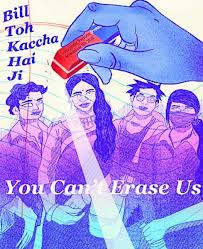
India’s trans community has used humour to critique the Transgender Persons (Protection of Rights) Amendment Bill. It has parodied famous songs and employed clever hashtags that have gained popularity on social media. The Indian Parliament succeeded in passing the Transgender Persons (Protection of Rights) Amendment Bill earlier this year, despite loud and unanimous protests from the very community that it claims to protect. This is the height of irony: a weapon masquerading as armour. India’s trans community have, however, refused to crawl back into the closet. They have been out on the streets, and in the digital public square, asserting their collective strength. Their resistance is both ferocious and tender, fuelled by joy and humour. The hashtag #BillTohKachchaHaiJi (and its differently spelt versions) which set social media on fire, is a riff on the song ‘Dil Toh Bachcha Hai Ji’ that noted lyricist and poet Gulzar wrote for Vishal Bhardwaj’s film Ishqiya (2010). Cleverly substituting ‘dil’ with ‘bill’ and ‘bachcha’ with ‘kachcha’, this hashtag calls out the half-baked quality of the legislation because it lacks inputs from the community it was meant to benefit. ‘Badtameez Bill’, the song that trans artist Anshumaan Sathe sang at the protest held at Mumbai’s Azad Maidan, is a parody of ‘Badtameez Dil’ written by Amitabh Bhattacharya for Ayan Mukerji’s film ‘Yeh Jawaani Hai Deewani’ (2013). By calling the bill ‘badtameez’, translated both as ‘ill-mannered’ and ‘uncultured’, it throws a moral challenge to a legal mandate. It questions the attempt to police gender identity and expression by demanding that trans people present themselves before a medical board and a district magistrate for certification. The hashtag and the parody draw on shared cultural knowledge to ridicule the powerful, who are far removed from the daily struggles faced by a community that lives on the margins of society. When protestors use language in such creative and subversive ways, they plug into a longer tradition of court jesters, stand-up comics, graffiti artists, and graphic novelists. The humour becomes a safe container to deliver their message effectively, and bypass political censorship. Garvit Garg and Shikha Rai from the School of Journalism and New Media Studies at the Indira Gandhi National Open University looked at 18 political parody songs to examine how they work through ‘frame-shifting’. In their study titled, ‘More than a laugh: examining the role of parody songs on Indian political discourse’, they show how these songs establish a cognitive frame through familiarity, then disrupt it by tweaking the lyrics to make listeners construct new meaning. Take the song, ‘Dil Toh Bachcha Hai Ji,’ for instance. Gulzar’s lyrics, set to music by Vishal Bhardwaj and sung by Rahat Fateh Ali Khan, are about a man whose heart remains childish and unruly even though his body has been growing older. #BillTohKachchaHaiJi, on the other hand, hints at various shades of meaning implied by the word ‘kachcha’. The legislation is raw, weak and unsustainable. It might have been received differently had it been shaped by the lived experiences of people from the trans community. ‘Badtameez Dil’, written by Amitabh Bhattacharya, is about a stubborn heart that refuses to be reined in by logic. It has been repurposed to offer legal critique. The original, set to music by Pritam, and sung by Benny Dayal, shifts from its playful register to an accusatory tone in its parody avatar. A law that does not care for What could be more strategic than using a song that is heard at weddings, on public transport, and in nightclubs? Emotional connect When protests ride on songs already buzzing inside people’s heads and dancing on their lips, they are able to strike an emotional connection that goes deeper than any press conference or white paper. This is what Garg and Rai call ‘affective leverage’: beloved melodies break through cognitive defences, so political commentary feels less like a sermon and more like an inside joke. The ones having the last laugh though are trans people themselves. They have been around forever, and will continue to exist far into the future, unlike law makers who occupy rickety seats that might seem like thrones but are actually cages that bind them with the fear of losing power. Chintan Girish Modi (The author is a journalist, educator and a literary critic. Courtesy : DH Note: This news is originally published on https:/deccanherald.com/bha and is used purely for non-profit/non-commercial purposes, especially human rights
Tiruchy MGMGH to recruit transgender staff, forms eight-member panel to boost clinic infra
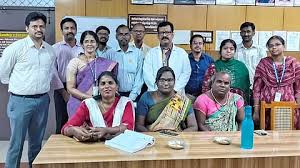
MGMGH Dean S Kumaravel convened a meeting on Friday with members of the transgender community and an eight-member expert committee constituted to study their needs. TIRUCHY: Days after trans persons raised concerns over inadequate facilities at the transgender person clinic in Mahatma Gandhi Memorial Government Hospital (MGMGH), the hospital has decided to appoint a member of the community to work at the clinic and ward, and also changed the OP services to Monday. The decision comes following a TNIE report on June 18 highlighting grievances raised by trans persons, including the lack of a separate toilet and inadequate infrastructure at the clinic. MGMGH Dean S Kumaravel convened a meeting on Friday with members of the community and an eight-member expert committee constituted to study their needs. He said, “A trans person willing to take up the responsibility would be employed at the clinic and ward to assist patients and help the administration better understand issues faced by the community.” The hospital has officially formed the committee to recommend measures for improving facilities and services for trans persons. The members are expected to visit the Government Rajaji Hospital in Madurai to study the facilities available before submitting its recommendations. In another measure, the trans persons clinic’s outpatient timings have also been revised. The clinic will now function on Mondays from 9 am to 11 am. Earlier the clinic functioned on Wednesdays. The dean said, “All experts will be available in the clinic to address health-related queries and concerns of the community.” During Friday’s meeting, trans persons reiterated concerns over the absence of dedicated toilets and other infrastructure gaps at the hospital. Participants said the interaction provided an opportunity to directly place their demands before the administration. “We explained the difficulties faced by trans persons visiting the clinic and requested better facilities. The dean and committee members listened to our concerns and assured us that steps would be taken,” said Oviya, a trans person activist who attended the meeting. Courtesy : TNIE Note: This news is originally published on https:/thenewindianexpress.com/bha and is used purely for non-profit/non-commercial purposes, especially human rights