
Rahul Gandhi says TMC graft & polarisation created way for BJP to enter West Bengal
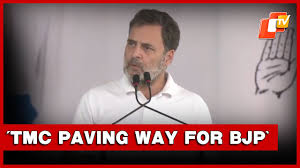
NEW DELHI: As elections in West Bengal enter the final lap, Congress neta Rahul Gandhi attacked his INDIA bloc partner, CM and Trinamool supremo Mamata Banerjee, alleging that polarisation and corruption have created a way for BJP to enter the state. “If Mamata ji had run a clean govt, and had she not polarised West Bengal, there would have been no way for BJP to make inroads into Bengal,” Rahul said on X, appealing to people to vote for Congress. “In this battle of ideologies, only Congress can defeat BJP,” he said. “BJP steals elections. SIR is their way to steal elections. There is a direct fight between Congress and BJP’s ideologies,” the leader of the opposition in Lok Sabha said in a video message. “BJP works against West Bengal’s culture, history, and Bengali language. BJP netas say ‘one nation, one language, one religion’. In this country there are many languages, religions, and ideologies. While we are trying to protect the Constitution, BJP is trying to destroy it,” he said. Courtesy : TOI Note: This news is originally published on https:/timesofindia.com/bha and is used purely for non-profit/non-commercial purposes, especially human rights
Rahul Gandhi says TMC graft & polarisation created way for BJP to enter West Bengal
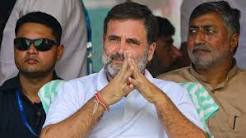
NEW DELHI: As elections in West Bengal enter the final lap, Congress neta Rahul Gandhi attacked his INDIA bloc partner, CM and Trinamool supremo Mamata Banerjee, alleging that polarisation and corruption have created a way for BJP to enter the state. “If Mamata ji had run a clean govt, and had she not polarised West Bengal, there would have been no way for BJP to make inroads into Bengal,” Rahul said on X, appealing to people to vote for Congress. “In this battle of ideologies, only Congress can defeat BJP,” he said. “BJP steals elections. SIR is their way to steal elections. There is a direct fight between Congress and BJP’s ideologies,” the leader of the opposition in Lok Sabha said in a video message. “BJP works against West Bengal’s culture, history, and Bengali language. BJP netas say ‘one nation, one language, one religion’. In this country there are many languages, religions, and ideologies. While we are trying to protect the Constitution, BJP is trying to destroy it,” he said. Courtesy : TOI Note: This news is originally published on https:/timesofindia.com/bha and is used purely for non-profit/non-commercial purposes, especially human rights
Bengal’s missing voters set Phase 1 tone
When the first vote is cast at 7 am today to decide who will be governing Bengal for the next five years, there will be an elephant in the polling booth: SIR, or the Special Intensive Revision of the voters’ roll. More than 3.6 crore voters across 152 constituencies will be exercising their franchise in the first phase of the 2026 state assembly poll; the rest of the 6.82 crore voters in the other 142 constituencies will follow them next Wednesday. But this election — more so in the seats going to vote today — will be as much about the disenfranchisement of 27 lakh voters who will not be able to vote despite having proof of voting rights. The Election Commission has found that these 27 lakh voters have some “logical discrepancy” or the other. This can mean anything, from misspelt names to surname mismatches (with parents) to monks serving in missions whose legal guardians are the heads of those missions. The 16 districts going to vote today have a voting strength that is 9.4% less than what it used to be before the SIR exercise (a significant portion, probably about half, are dead or “absent” or “shifted” voters). Nowhere is SIR’s shadow longer than in Murshidabad, which has lost 7.4 lakh voters, and Malda, which has lost 4.5 lakh. It is Murshidabad that encapsulates everything that has gone wrong with SIR, originally meant to weed out nonvoters, but which has disenfranchised people voting for years. More than 4.5 lakh of the 7.4 lakh total deletions in this district happened during the “judicial adjudication” phase (to determine “logical discrepancy”). The most drastic impact is in the Shamsherganj constituency, often described as ground zero of the crisis. Exactly 74,775 voters — representing a staggering 32% of the electorate — have been disenfranchised, sparking a legal and political battle that may rage even after the new assembly is formed. All this has taken some sheen off the electoral battles in bellwether constituencies and those involving political heavyweights. But the first phase does have these, too, in good measure: the political future of at least three such heavyweights — BJP’s Suvendu Adhikari and Dilip Ghosh and Congress’s Adhir Chowdhury — hinges on how voters vote today (though Adhikari has a second chance in the second phase, as he is contesting from Bhowanipore as well against CM Mamata Banerjee). Adhikari, who has spent the last few years shrugging off “defector” barbs, now faces a defector himself in his home seat, Nandigram. His challenger is Pabitra Kar, a former Adhikari acolyte with strong ties with Hindu organisations, who is credited with securing a 3,500-vote lead for Adhikari in the critical Boyal area in the 2021 election. CM Banerjee stationed herself there for several hours and alleged large-scale manipulation, photographs of which went viral (and still the subject of a court battle). Adhikari scraped through with a 1,956-vote margin. Kar, this time, may give his former mentor some sleepless nights till May 4, when votes will be counted. Over 280km away, Congress veteran Chowdhury is fighting his own battle for political survival in Behrampore. Chowdhury is a five-time MP but is now eyeing a path to political rehabilitation through the Bengal assembly after losing the last Lok Sabha poll. BJP won this seat in 2021, and the fight this time is likely to be intensely triangular, with Trinamool forming the third side (along with BJP and Congress). BJP veteran Ghosh faces a similar situation in his own home seat, Kharagpur Sadar, where he is returning after 10 years. It was his victory over former Congress cabinet minister Gyan Singh Sohanpal in 2016 that marked his ascendancy with the BJP’s state unit, but he was forced by his own party to forsake the region he knew so well in the 2024 Lok Sabha poll. Ghosh will be hoping that Kharagpur backs him a second time. Another political dynasty that is looking for succour is former Congress Union minister ABA Ghani Khan Choudhury’s family. The district is seeing Khan Choudhury’s niece, Mausam Benazir Noor, fighting to reclaim the family’s political legacy after switching back to Congress after a stint with Trinamool and a term in the Rajya Sabha. But this district, too, is likely to see a tripolar fight — and arithmetic can be slippery in such contests. Many of the 16 districts that go to the polls today — from Darjeeling in the Hills to East Midnapore on the Bay of Bengal’s shores — have been BJP strongholds, and the party would be betting on SIR deletions to keep it that way. Nine of these 16 districts — Cooch Behar, Alipurduar, Jalpaiguri, Darjeeling, Kalimpong, North Dinajpur, South Dinajpur, Malda and Bankura — gave BJP 38 (of a total 66), which ultimately helped it reach the 77-seat figure it had in the last assembly. But the voter anger and the consequent anti-BJP consolidation visible outside polling booths across districts may also have something to offer to Trinamool at the EVMs. How much that anger transforms into anti-BJP votes and the number of seats to which Trinamool can restrict BJP in these 16 districts can well shape the configuration of the next Bengal assembly. Hot seats Nandigram Adhikari, who has spent five years shrugging off defector barbs after switching from TMC, now faces a defector himself. Adhikari defeated CM Mamata Banerjee here in 2021 by 1,956 votes. His one-time confidant, Kar, is his TMC challenger. Identity politics continues to dominate the landscape, with demographics expected to play a critical role. The 2011 Census recorded Hindus at 65.8% and Muslims at 34% of the population here. But under SIR, 12,500 Muslim voters were removed. Sabar Institute says gross deletions in Nandigram stand at 14,462, with Muslim voters accounting for 95.5% of deletions. Key issues on the ground, say residents, is haphazard development symbolised by, among other things, a standing structure for a railway station but with no rail link to the area. Past Winners : 2011 (TMC), 2016
Poll violence in West Bengal: Crude bombs hurled in Murshidabad, several injured

MURSHIDABAD: Tension gripped Nowda in Murshidabad district during polling in the West Bengal assembly election after unidentified persons allegedly hurled a crude bomb, leaving several people injured, as reported by news agency PTI. According to initial reports, the explosion occurred amid voting activity, triggering panic among residents and voters in the area. The injured have reportedly been shifted to nearby medical facilities, though the exact number of casualties and their condition are yet to be officially confirmed. Security forces rushed to the spot soon after the incident and have begun combing operations to trace those behind the attack. Courtesy : TOI Note: This news is originally published on https:/timesofindia.com/bha and is used purely for non-profit/non-commercial purposes, especially human rights
Congress gets nod for Rahul Gandhi’s rallies in West Bengal
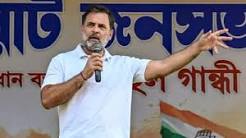
Kolkata: A day after police denied clearance for his planned April 23 appearances, Congress on Wednesday secured permission for Rahul Gandhi to hold three rallies in West Bengal on Saturday. The LoP in Lok Sabha will address rallies in Serampore, Metiaburuz and at Shaheed Minar in central Kolkata, in that order, said Congress member Amitabha Chakraborty. State Congress chief Subhankar Sarkar is contesting from Serampore. Rahul had earlier held three public meetings in Raiganj, Chanchal and Samsherganj on April 14, while his last Kolkata rally was in 2016. On Wednesday, Rahul also posted a video outlining Congress’s poll guarantees for Bengal: Rs 2,000 per month for women, health insurance up to Rs 10 lakh, free cancer treatment and dialysis at district hospitals, free education until graduation, filling of vacant govt posts within a year, and Rs 15,000 annually for farmers. Courtesy : TOI Note: This news is originally published on https:/timesofindia.com/bha and is used purely for non-profit/non-commercial purposes, especially human rights
Why Congress faces a ‘no-win’ situation in West Bengal
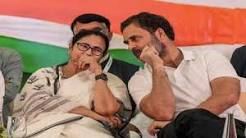
On May 2, 2021, Rahul Gandhi congratulated Mamata Banerjee and the people of West Bengal for “soundly defeating the BJP.” “I’m happy to congratulate Mamata ji and the people of West Bengal for soundly defeating the BJP,” he wrote on Twitter (now called X). — RahulGandhi (@RahulGandhi) However, the irony was hard to miss. While the BJP had indeed been kept out of power, it recorded its strongest-ever performance in the state — winning 77 seats, up from just three in 2016 — and firmly established itself as the principal challenger to the TMC. West Bengal assembly elections 2021 results Congress, by contrast, failed to open its account. Five years later, as Banerjee seeks a fourth consecutive term and the BJP eyes its maiden government in West Bengal, Congress finds itself out of the race and staring at a no-win situation: a Mamata victory could position her as a frontrunner for the joint opposition’s prime ministerial face in 2029, while a BJP triumph would add a major state to its kitty and further strengthen its momentum ahead of the general election. Which of the two outcomes would the grand old party “prefer?” Mamata Banerjee’s rise A former Congress leader, Banerjee founded the TMC in January 1998, and the party has since been part of governments at the Centre led by both the Congress and the BJP. Now an on-and-off ally of the Congress, she ended the Left Front’s 34-year rule in West Bengal in 2011 and secured two further terms, firmly establishing herself as one of India’s most formidable regional leaders. West Bengal CMs in last 50 years After a setback in the 2019 Lok Sabha polls, when the BJP won 18 of West Bengal’s 42 constituencies, Banerjee staged a strong comeback just two years later, leading the Trinamool to a third consecutive term. The optics of TMC’s victory, despite an aggressive BJP campaign led by Prime Minister Narendra Modi and Union home minister Amit Shah, combined with Banerjee’s move to challenge her former aide Suvendu Adhikari in his stronghold Nandigram — where she lost narrowly — burnished her credentials. Mamata Banerjee Quote A fourth term would all but put her firmly in contention to be the national opposition’s face in the 2029 contest. BJP’s emergence as principal challenger to TMC The BJP did not find immediate success in West Bengal after Modi became prime minister in May 2014, winning just two Lok Sabha seats that year and only three constituencies in the assembly polls two years later. That changed in 2019, when it won 303 Lok Sabha seats, including 18 from West Bengal. In 2021, though the BJP fell far short of its 200-seat target, it decisively recast the state’s politics as a two-horse race. BJP's seat surge in Bengal Nationally, too, despite no longer enjoying a majority of its own, the saffron party, with 240 Lok Sabha MPs—more than the combined opposition—remains on favourite to secure a fourth term, reinforcing the perception of sustained national dominance. Congress’ decline in West Bengal—and beyond In February, Congress unilaterally ended its alliance with the Left Front and announced it would go it alone in West Bengal. This, in a state where, despite its rich political history, the party has not had a chief minister since 1977, when its three-decade run in power came to an end. Congress' declining arc in Bengal Its dominance in the Lok Sabha from West Bengal has been far more limited. The last time Congress reached double digits in the state was in 1984, when it won 16 seats as part of its nationwide sweep of 414 seats. Since then, Congress has not secured a majority on its own at the Centre. In the previous three Lok Sabha elections, it failed to cross the 100-seat mark. It is currently in power in just three states—Karnataka, Telangana, and Himachal Pradesh. The removal of Adhir Ranjan Chowdhury, a staunch Mamata critic, by the Congress as its Bengal unit chief, was also seen by many as the party “capitulating” to the TMC supremo. Chowdhury had held the Baharampur Lok Sabha seat—where Muslims make up roughly half the electorate—since 1999. In the 2024 general elections, Banerjee nominated former cricketer Yusuf Pathan, a Gujarat native, who went on to unseat Chowdhury. Adhir Ranjan Chowdhury Congress’ Rahul dilemma: Can’t win with him, can’t do without him Congress contested the 2014, 2019, and 2024 general elections under Rahul Gandhi’s leadership, albeit without formally projecting him as its prime ministerial candidate. The 2019 defeat was chastening in both magnitude and context, coming under his direct leadership as party president and soon after he oversaw assembly victories in three Hindi heartland states in December 2018. Although he resigned as party chief in July 2019, Gandhi has continued to be the party’s most prominent face and principal decision-maker. Rahul Gandhi career Congress’ 2024 resurgence—along with that of the broader opposition—was widely credited to Gandhi’s two “Bharat Jodo” pan-India marches, which many believe contributed to a noticeable shift in public perception of him. With numners on Congress’ side, he was subsequently made leader of the opposition, the first since 2014. Rahul Gandhi career However, what followed was a series of electoral reverses in the state assembly elections. He subsequently alleged irregularities by the Election Commission, accusing it of bias towards the BJP and holding multiple press conferences on the issue, but the setbacks continued. According to political observers, what hurts Gandhi is that he has never held public office—even when his own party was in power from 2004 to 2014—along with the Congress’ poor electoral record under his leadership, his frequent foreign trips, and a tendency to raise issues that often fail to resonate with voters and persist with them despite their lack of traction on the ground—raising persistent questions about his effectiveness as a national challenger. Leadership question within INDIA bloc The INDIA bloc, formed in July 2023, brought together Congress and several regional parties opposed to the BJP under one umbrella. With the grand old
Rahul rallies in Kolkata, Serampore cancelled as police denies nod
KOLKATA: Police have denied permission for Rahul Gandhi’s rallies in Kolkata and Serampore, scheduled on April 23, Bengal Congress secretary Roahan Mitra said Tuesday. Congress planned three rallies for Gandhi. For the Kolkata rallies, permission had been sought for Ramlila Park or Park Circus ground, and Metiabruz. A separate permission was sought for holding a rally at Serampore stadium. “Police have not given us permission for a single rally while others are allowed to hold rallies,” Mitra said, adding that the rallies planned for April 23 have been cancelled. Asked for a response, Bengal mantri Shashi Panja said, “Caretaker govt in the state cannot answer for the cancellation of his visit, EC can answer that.” Courtesy : TOI Note: This news is originally published on https:/timesofindia.com/bha and is used purely for non-profit/non-commercial purposes, especially human rights
Rahul: TMC paving way for BJP through dictatorship raj
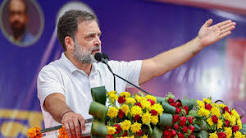
Kolkata/Malda/Behrampore: Rahul Gandhi on Tuesday accused Trinamool of ushering in a “dictatorship raj” in Bengal and paving the way for BJP, saying people in the state were “stuck” between an “anti-people” TMC and a “hate-spreading” BJP. Addressing a rally at Shamsherganj in Murshidabad, the Congress neta alleged governance failure under CM Mamata Banerjee. “There is complete dictatorship raj in Bengal. Teachers’ jobs are being sold, factories are closed and women are being tortured in Bengal. There is no accountability in the state,” he said. Rahul, who addressed three rallies across North Dinajpur, Malda and Murshidabad, reiterated his 2016 charge of “dictatorial” functioning, drawing parallels between Banerjee and PM Narendra Modi. “Five years back, the CM (Mamata Banerjee) had promised five lakh jobs. The reality is that 84 lakh youths have filed applications for unemployment allowance now,” he said. Blaming TMC for the dismal condition of industries in the state, Rahul said, “They have shut down factories and spread hatred. Unemployment is the highest in Bengal and the state has broken all records of corruption. 17 lakh investors were cheated in the Saradha scam and nobody got a penny from Rs 1,900 crore looted from people. Rose Valley has duped 31 lakh investors.” He alleged that industries in Bengal face a “double blow” — with Banerjee closing factories in the state while Modi was “destroying the broader industrial sector”. Rahul also came down heavily on BJP, saying, “BJP and RSS have deleted the names of lakhs of voters from the electoral roll. We will ensure that everyone’s name is included in the voter list again. They are stealing votes in the name of SIR.” Claiming Congress to be the only “challenger”, he said: “BJP knows that Trinamool cannot challenge them nationally. It is only Congress which can stop them.” Courtesy : TOI Note: This news is originally published on https:/timesofindia.com/bha and is used purely for non-profit/non-commercial purposes, especially human rights
Rahul: TMC paving way for BJP through dictatorship raj
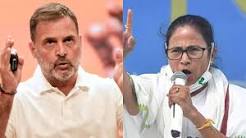
Kolkata/Malda/Behrampore: Rahul Gandhi on Tuesday accused Trinamool of ushering in a “dictatorship raj” in Bengal and paving the way for BJP, saying people in the state were “stuck” between an “anti-people” TMC and a “hate-spreading” BJP. Addressing a rally at Shamsherganj in Murshidabad, the Congress neta alleged governance failure under CM Mamata Banerjee. “There is complete dictatorship raj in Bengal. Teachers’ jobs are being sold, factories are closed and women are being tortured in Bengal. There is no accountability in the state,” he said. Rahul, who addressed three rallies across North Dinajpur, Malda and Murshidabad, reiterated his 2016 charge of “dictatorial” functioning, drawing parallels between Banerjee and PM Narendra Modi. “Five years back, the CM (Mamata Banerjee) had promised five lakh jobs. The reality is that 84 lakh youths have filed applications for unemployment allowance now,” he said. Blaming TMC for the dismal condition of industries in the state, Rahul said, “They have shut down factories and spread hatred. Unemployment is the highest in Bengal and the state has broken all records of corruption. 17 lakh investors were cheated in the Saradha scam and nobody got a penny from Rs 1,900 crore looted from people. Rose Valley has duped 31 lakh investors.” He alleged that industries in Bengal face a “double blow” — with Banerjee closing factories in the state while Modi was “destroying the broader industrial sector”. Rahul also came down heavily on BJP, saying, “BJP and RSS have deleted the names of lakhs of voters from the electoral roll. We will ensure that everyone’s name is included in the voter list again. They are stealing votes in the name of SIR.” Claiming Congress to be the only “challenger”, he said: “BJP knows that Trinamool cannot challenge them nationally. It is only Congress which can stop them.” Courtesy : TOI Note: This news is originally published on https:/timesofindia.com/bha and is used purely for non-profit/non-commercial purposes, especially human rights
‘Forced into death for wages’: Dalit sanitation worker dies cleaning drain without safety gear in Delhi
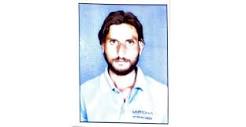
Rahul (32), a contractual sanitation worker from the Valmiki community, died on March 30 while manually desilting an 8–to 10-feet-deep drain in Tahirpur, Dilshad Garden, allegedly without any safety gear, supervision, or mechanised support. The incident, which occurred under the jurisdiction of the Public Works Department, has raised serious questions about illegal manual scavenging practices, caste-based labour exploitation, and institutional accountability. According to findings by a fact-finding team from Dalit Adivasi Shakti Adhikar Manch (DASAM), Rahul had gone to collect two months of unpaid wages on the morning of the incident but was allegedly coerced into cleaning the hazardous drain, with payment conditional on completing the task. Witnesses and family members claim that he was forced to enter the toxic environment without protective equipment, exposing him to lethal gases such as methane and hydrogen sulphide. Rahul and a co-worker began the work from 8 am and by 2 pm, he was found unresponsive inside the drain. Rescue operations reportedly took nearly two hours, and he was declared dead on arrival at Guru Teg Bahadur Hospital. His family was informed only hours later, around 5 pm by an unknown person, raising concerns about official delay and insensitivity. Police initially registered a case at Seemapuri Police Station but did not include key provisions of the Prohibition of Employment as Manual Scavengers and the Rehabilitation Act, and the SC/ST (Prevention of Atrocities) Act. These sections were reportedly added later following pressure from the family and civil society groups. Authorities have since invoked provisions under the Bharatiya Nyaya Sanhita, including Section 106 (causing death by negligence), but no arrests had been made at the time of reporting. Family members have alleged that Rahul’s death was not accidental but the result of toxic gas exposure and unsafe working conditions. They also raised suspicions of evidence tampering, noting that his body was found in clean clothes, contrary to standard conditions of sewer work. “We sent Rahul at 8 in the morning to collect his pending salary, but instead of paying him, the contractor told him to first clean the drain and only then he would get his two months’ wages”, Rahul’s sister said in conversation with DASAM. “We never imagined this would lead to his death. This tragedy happened because of toxic fumes, hazardous conditions, and the negligence of the contractor and the PWD”, she added. “It has been three days, and no one has come to us, not from the department, not any official, not even the contractor. We received his body on March 31”, she further said. “He was found dead in the drain around 2 p.m., and the police took nearly two hours to recover him and bring him to Guru Teg Bahadur Hospital, where he was declared dead. We were not informed by anyone, neither the contractor nor co-workers. Someone else told us around 5 pm and we were asked to rush to the hospital.” Rahul’s brother Vijay said, “When people clean drains, they usually wear only underwear, but Rahul was found in full clothes, and they were clean. He was forced into death for wages. We suspect the contractor tried to remove evidence,” said Vijay.” A sewer worker, Jayvir said, “Workers were given no safety equipment at all,” noting that Rahul earned just 350 rupees a day. “He was the youngest in our family, with five brothers and one sister, and he was unmarried. Some people even threatened us to remove the contractor’s name, but the best officer assured us that justice would be done. The police kept pushing for cremation, but we refused until we were given assurance of 30 lakh rupees compensation”, Vijay said. The case has drawn attention to the continued existence of manual scavenging despite its legal prohibition and repeated judicial interventions. In its 2023 ruling, the Supreme Court of India increased compensation for sewer deaths to 30 lakh rupees and reiterated the state’s obligation to eradicate the practice. Activists argue that Rahul’s death highlights a persistent gap between legal safeguards and their implementation. The fact-finding report by DASAM also points to a multilayered system of contractors and subcontractors, allowing state agencies to deflect responsibility. “While the work fell under the PWD, officials have reportedly distanced themselves by attributing operational control to private contractors, a practice critics say enables systemic evasion of accountability”, National Coordinator of the organisation, Mohsina Malik told Maktoob. She added, “We along with the family demanded compensation, accountability, and the immediate arrest of the contractor, but the authorities kept refusing. It was only after sustained pressure from the SDM, MLA Kuldeep, and organisations like DASAM that the administration began to respond and included the appropriate sections in the FIR.” Malik said, “So far compensation had been promised but not disbursed. No arrests had been made. The investigation remains ongoing.” The fact-finding team recommended immediate arrest of all responsible contractors and officials, along with the payment of ₹30 lakh compensation in line with guidelines laid down by the Supreme Court of India. It also called for interim financial relief and rehabilitation support for the family, strict enforcement of the Prohibition of Employment as Manual Scavengers and the Rehabilitation Act, and mandatory mechanisation of all sewer and drain cleaning work. The recommendations emphasised the need to eliminate informal subcontracting chains and clearly fix principal employer liability, while ensuring provision of safety gear, proper training, and supervision. Further, it urged formalisation of employment through written contracts, timely payment of wages, and access to social security and insurance for workers. The report also demanded criminal liability for officials permitting illegal manual scavenging, regular independent audits of sanitation work, and public disclosure of contractor details and working conditions. Additionally, it called for awareness campaigns on the prohibition of manual scavenging, training for police and municipal authorities, and community-level initiatives to promote safe sanitation practices. Rahul, the youngest of six siblings, earned between 300 and 400 rupees per day under precarious employment conditions. His family delayed his cremation until assurances of compensation were made. The last rites were