
Pushed out by Jyoti Basu, eclipsed by Mamata, crushed by BJP: Congress’ 50-year exile in West Bengal
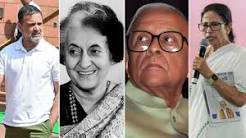
NEW DELHI: Nearly 50 years have passed since the Congress party’s Indira Gandhi era, when stalwart Siddhartha Shankar Ray helmed West Bengal as chief minister. His tenure ended in 1977, giving way to a sweeping communist surge led by veteran marxist Jyoti Basu, who would become the state’s longest-serving chief minister. The decades of Left dominance systematically eroded the Congress’s influence. The party of the iconic Bidhan Chandra Roy was pushed so far to the margins that it now struggles to project itself even as a credible third force. The Left’s long hegemony was eventually shattered by Mamata Banerjee. Her political ascent relegated the communist brigade to the sidelines, but in the most recent elections, it was the Bharatiya Janata Party (BJP) that emerged as the primary challenger to her Trinamool Congress (TMC) in last elections that took place in 2021. Amidst these seismic shifts, the Congress’s footprint remains a shadow of its former self as the next assembly polls approach. The decline is stark when compared to 1972, when the Congress secured a landslide victory with over 200 seats and nearly half the total vote share. However, following the rise of the CPM-led Left Front under Jyoti Basu, the party began a long retreat from the center of power. In the 1977 elections, the grand old party suffered a crushing defeat, eclipsed by the CPM wave. This collapse was fuelled in part by the backlash against Indira Gandhi’s Emergency, which also led to the Congress’s first-ever defeat in Centre, losing general election that same year. By 1977, the party had lost more than half the vote share it held in 1972. It never returned to a commanding position. While Congress remained a relevant opposition force for years, the turn of the millennium saw its political space seized by Mamata Banerjee. Having broken away to form the Trinamool Congress in 1998 under the “Jora Ghas Phul” symbol, Banerjee achieved power within 15 years, filling the vacuum left by the declining Left and a stagnating Congress. In many ways, the TMC managed to ascend to the top while more than a century older Congress languished. Even as national leadership transitioned from Indira to Rahul Gandhi, West Bengal’s electorate showed little interest in returning to the Congress fold. The 2021 elections marked a final turning point. The BJP surged to 77 seats, becoming the principal opposition. While the BJP could not unseat Mamata Banerjee, its rise dealt a devastating blow to the Congress, which failed to win a single seat, cementing its position as a distant third. Now, facing an uphill battle for relevance, the Congress is preparing to fight back. As the state gears up for elections across 294 seats, the party hopes to transition from a faded memory to a renewed political force in a state where the results will define the next chapter of Bengal. Courtesy : TOI Note: This news is originally published on https:/timesofindia.com/bha and is used purely for non-profit/non-commercial purposes, especially human rights
New Bill wants to make us invisible: Kol trans community on Transgender Day of Visibility
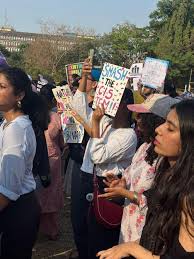
Kolkata: As the world celebrated Transgender Day of Visibility (TDV) on Tuesday, the community in Kolkata voiced their concern about the proposed Transgender Amendment Bill 2026. March 31 is observed as TDV worldwide to celebrate accomplishments by transgender people while raising awareness about the discrimination they face. The community anticipates that this bill would push them to invisibility. However, they plan to protest for their rights. The proposed amendment removes the recognition of self-identified gender, which the community argues is a principle affirmed by the SC in the National Legal Services Authority (NALSA) vs. Union of India. The bill introduces a screening committee that could enforce surgical gatekeeping and biomedical surveillance, which the community has strongly opposed. Members of the city’s transgender community and their allies gathered in front of Ranu Chhaya Mancha to voice their protest and demand withdrawal of the bill. Activists argue the legislation, which mandates a medical board’s approval for gender identity certification, fundamentally undermines the right to self-identification, upheld by the landmark NALSA judgment. Santosh Giri, a gender rights activist and transgender (TG) person, said the community is being forced back to the beginning of their struggle. “We will follow what was given to us before after so much hard work,” Giri said. At present, a person can get a TG certificate by applying to the DM. This certificate allows them to change their gender in official documents in addition to giving them access to govt welfare schemes. The new bill requires applications to be scrutinised by a screening or medical committee before approval by the DM. “We thought the BJP govt was sensitive to this community when it started Garima Greh, a shelter home for TGs. Now the amendment bill says a medical board will certify who is TG and who is not. One govt cannot have two opposite policies for the community,” said Ranjita Sinha, a TG and founder director of Association of Transgender and Hijra in Bengal. A panel discussion was held on the amendment bill by Gokhale Road Bandhan on Tuesday. “Our protest is against the systemic erasure of trans and non-binary identities,” said Souvik Ghosh, a gender rights activist. Anurag Maitreyi, an activist, called it an attempt to weaken their collective bargaining power and strength. Rights and mental health worker Debdutta Biswas said, “TG certificates gave us our identity according to the previous bill. According to the new definition, that identity doesn’t exist. Who will decide that — the govt? Self-gender identity is my right.” Lawyer and women’s rights activist Bharati Mutsuddi called the amendment insensitive. Courtesy : TOI Note: This news is originally published on https:/timesofindia.com/bha and is used purely for non-profit/non-commercial purposes, especially human rights
Eyeing Dalit votes, Mamata announces five new boards
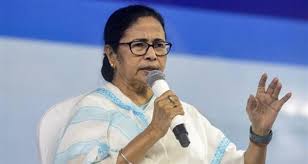
According to the announcement, the boards will be set up for the Munda, Kora, Dom, Kumbhakar, and Sadgop communities. The initiative aims to support their socio-economic development while preserving their distinct cultural identities. Chief Minister Mamata Banerjee on Friday announced the formation of five new Cultural and Development Boards for marginalised communities in the state, a move that comes just days before the expected announcement of the schedule for the West Bengal Legislative Assembly election 2026. According to the announcement, the boards will be set up for the Munda, Kora, Dom, Kumbhakar, and Sadgop communities. The initiative aims to support their socio-economic development while preserving their distinct cultural identities. Speaking on the occasion, Mamata congratulated members of these communities and highlighted their role in shaping Bengal’s heritage. She said that each of these groups is an integral part of the state’s cultural fabric and extended her best wishes to them. Sources at Nabanna, the state secretariat, said the boards will primarily work to preserve the languages, traditions, and cultural practices of the respective communities. In addition to cultural preservation, they will also focus on improving access to education, healthcare, and employment opportunities. The Chief Minister further assured that the traditional and customary rights of these communities would be protected. The government also plans to strengthen their economic base by creating new avenues for employment and ensuring improved public services in areas where members of these communities live. State government officials said that the initiative is part of a broader policy pursued by the state government since 2013, during which several development boards have been formed for backward and tribal communities. Emphasising the government’s guiding philosophy, Banerjee said the core principle of the “Ma-Mati-Manush” administration is to bring development to every section of society and ensure inclusive progress. Political observers, however, point out that the timing of the announcement — just ahead of the election schedule — suggests a parallel political objective. They believe the creation of these boards may help the ruling government send a message of grassroots development while also attempting to strengthen its support base among marginalised communities. Courtesy : NAI Note: This news is originally published on https:/newsarenaindia.com/bha and is used purely for non-profit/non-commercial purposes, especially human rights
Noor urges Rahul to boycott Bengal polls over ‘vote chori’
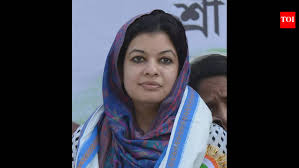
Malda: With 8.3 lakh Malda voters marked “under adjudication” in the electoral rolls published on Saturday, former MP Mausam Noor has written to Rahul Gandhi, urging him to boycott the assembly election if it is held on the basis of the current list. Noor said on Wednesday, “We informed Rahul Gandhi as well as our PCC leadership to boycott the election if it is held on the basis of this electoral roll. However, we were told that it is too early to take such a decision. Instead, we are launching a movement against this list starting March 5.” Blaming both TMC and BJP, Noor said they wanted to keep the Congress away from the fray. She alleged that minority communities were targeted. In Congress strongholds like Sujapur, Mothabari, Malatipur, and Harishchandrapur, the proportion of voters under adjudication was 53.6%, 40.6%, 40.9%, and 36.4% respectively. In Sujapur alone, 1.3 lakh out of 2.5 lakh voters were listed under adjudication. Noor, who rejoined Congress from the TMC in Jan, has provided a significant fillip to the party which failed to win a single seat in Malda in the 2021 assembly elections. However, in the 2024 Lok Sabha elections, Congress won from Malda South. This time, the party has decided to contest the state polls alone. “The voters, particularly Muslims, were victimised through no fault of their own. The state has a long secular tradition, but BJP and TMC are now engaging in divisive politics,” Noor added. MP Isha Khan Choudhury said, “If this list remains, there is no point in contesting. Our neta Rahul Gandhi has been highlighting the ‘vote-chori’ issue for a long time. This list in Bengal, published by the EC, is clear proof of this.” Courtesy : TOI Note: This news is originally published on https:/timesofindia.com/bha and is used purely for non-profit/non-commercial purposes, especially human rights
Not every insult to a member of the SC/ST community is an atrocity: Understand this important Calcutta High Court decision

The court also clarified that it is not enough for the accused to know the caste of the victim. A crime is committed when the insult is committed “on the ground or by reason of the person being a member of a Scheduled Caste or a Scheduled Tribe.” Kolkata—In a landmark judgment delivered on February 11, the Calcutta High Court clarified that every insult or threat directed at a member of a Scheduled Caste (SC) or Scheduled Tribe (ST) is not automatically considered a crime under Section 3(1)(r) of the Scheduled Castes and Scheduled Tribes (Prevention of Atrocities) Act, 1989. A single bench of Justice Chaitali Chatterjee (Das), while hearing a criminal revisional application in the case of Moumita Bhattacharya v. State of West Bengal, quashed the entire proceedings at the Amherst Street Police Station, including the charge sheet filed therein. The case relates to a professional dispute in the Sanskrit Department. The complainant, who belongs to the SC community and joined as an Assistant Professor on November 14, 2018, alleged that Moumita Bhattacharya, as Head of the Department, humiliated him on the basis of caste, mentally harassed him, and harmed his career. The allegations included not inviting the complainant to departmental meetings, withholding meeting resolutions, stopping undergraduate classes, preventing him from conducting examination/evaluation duties, conspiring with students, and using abusive language in online meetings. The complaint was filed on December 4, 2021. Following an investigation, a charge sheet was filed on April 10, 2022, and the Special Court took cognizance. Petitioner Moumita Bhattacharya filed a petition under Section 482 CrPC seeking quashing of the proceedings. Citing his qualifications, he stated that he holds a PhD in Sanskrit from Visva Bharati University, a post-doctoral fellowship, passed SLET, and has held editorial positions in various journals, and stated that the allegations are false, motivated by vengeance, and lack the essential elements of an offence under the SC/ST Act. The Court, citing several Supreme Court judgments (Sajan Skaria v. State of Kerala, Hitesh Verma v. State of Uttarakhand, Swaran Singh v. State, etc.), clarified the essential elements of Section 3(1)(r). The Court stated: “The basic elements of an offence under Section 3(1)(r) are as follows: The accused must not be a member of a Scheduled Caste or a Scheduled Tribe. The accused must intentionally insult or intimidate a member of a Scheduled Caste or a Scheduled Tribe. Such insult or intimidation must be with the intent to humiliate that person. And such insult or intimidation must occur in a public place or in public view.” The court further made an important observation: “Not every intentional insult or threat directed at a member of a Scheduled Caste or Tribe will constitute caste-based humiliation. This is only the case if the insult or threat is due to the prevalent practice of untouchability or to reinforce notions such as the historical superiority of upper castes over lower castes/untouchables, or the notions of purity and impurity.” The court also clarified that it is not enough for the accused to know the victim’s caste. The offense is made out when the insult is inflicted “on the ground or by reason of the person being a member of a Scheduled Caste or Tribe.” The complaint mentioned a specific incident where the complainant was referred to as “Adarsh Sir” in an online meeting. The court made a strong comment on this: “‘Adarsh’ means ideal, and ‘Sir’ is a respectful address. This court is at a loss to understand how calling someone ‘Adarsh Sir’ can be derogatory, even if done sarcastically. This cannot, in any case, constitute an offense under the SC/ST (POA) Act, 1989.” Applying the principles of State of Haryana vs. Bhajan Lal, the court held that even if the allegations in the FIR are accepted as completely true, they do not constitute an offense. The proceedings appear to be motivated by personal enmity and revenge. Therefore, it is appropriate to quash them under Section 482 CrPC. Geetha Sunil Pillai Courtesy: Hindi News
Kolkata academics win A K Ramanujan Prize for translating Dalit poet Kalyani Thakur Charal’s works into English
The Association for Asian Studies announced the winners of this year’s prizes, which recognise outstanding scholarship and contribution to the field, on February 11. KOLKATA: Two academicians, Sipra Mukherjee, professor of English at the West Bengal State University, and Mrinmoy Pramanick, professor of Comparative Literature, who recently joined Jawaharlal Nehru University (JNU) in Delhi from Bengal for the first time, won the prestigious A K Ramanujan Prize for translating Dalit poet Kalyani Thakur Charal’s Bengali poems into English. Charal’s works were published between the 1990s and 2020s and include her collections during this period. Mukherjee and Pramanick took two years to translate Charal’s Bengali poems into English. Charal, 60, hails from Bagula town in Nadia district of Bengal, where her father worked as a security guard in a nearby school and her mother was a housewife but literate. There is not much writing by Dalit women in Bengali available in English translation. With these English translations, Charal’s works on marginal lives will reach a wider audience. “One naturally feels happy to be recognised. The recognition brings more attention to a book that deserves to have a larger readership than what the vernacular Bangla can give,” Mukherjee told TNIE. The Association for Asian Studies announced the winners of this year’s prizes, which recognise outstanding scholarship and contribution to the field, on February 11. Winners will be given the award at a ceremony during the Association’s annual conference on March 13 in Vancouver. This year, South Asian writers Rishad Choudhury, Charu Gupta, and translators Mukherjee and Pramanick are the winners of the Bernard S Cohn Prize, Ananda Kentish Coomaraswamy Prize, and AK Ramanujan Prize for Translation, respectively. Subhendu Maiti Courtesy : TNIE Note: This news is originally published on https:/thenewindianexpress.com/bha and is used purely for non-profit/non-commercial purposes, especially human rights
Cal HC orders SFIO to investigate Rose Valley assets attached by ED
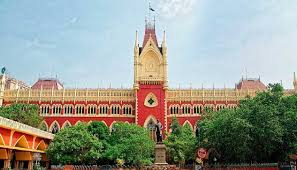
Kolkata: Calcutta High Court on Tuesday directed Centre to order the Serious Fraud Investigation Office (SFIO) to investigate Rose Valley assets worth Rs 1,171 crore attached by ED across the country, and submit a comprehensive report within a month. The division bench of justices Rajarshi Bharadwaj and Uday Kumar noted that Rose Valley-linked cases had been pending with Calcutta HC since 2016. “The attached assets constitute public money in every sense, held in trust for restitution to victims,” the bench stated. Earlier, after the bench had asked the SFIO to conduct an audit following allegations of bias against the asset disposal committee, the statutory body had raised objections before the HC stating “jurisdictional” trouble over conducting forensic audit of the committee, since it cannot be called an “office”. The division bench clarified, “No direction has been or is being issued to SFIO to conduct any audit or assessment of the receipt and payments of Asset Disposal Committee per se… Rather, the forensic audit mandate pertains squarely to the attached assets of the Rose Valley Group of Companies, which indisputably qualify as “companies” incorporated under the relevant company laws. These assets, valued between Rs 20,000 to 30,000 crore and presently under attachment by the ED, form the corpus central to the multi-crore chit fund scam that has defrauded thousands of innocent depositors.” Sebi, CBI, ED, ADC, Rose Valley representatives, and depositors, were directed to extend unconditional cooperation by furnishing all requisite documents, electronic data, physical access, and clarifications within seven days of SFIO’s requisition. Centre was directed to take a decision after perusing the report as to whether SFIO needed to proceed with forensic auditing. The order comes a day after the Supreme Court on Monday rejected the ED’s petition seeking a stay on HC’s forensic audit order. Courtesy : TOI Note: This news is originally published on https:/timesofindia.com/bha and is used purely for non-profit/non-commercial purposes, especially human rights
‘Mamata Banerjee threatened India’s Home Minister Amit Shah’: BJP’s big accusation
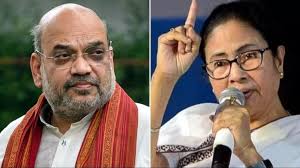
The BJP has accused West Bengal Chief Minister Mamata Banerjee of threatening Union Home Minister Amit Shah. The BJP said that if Mamata thinks she can stop the country’s Home Minister, then she is trying to stop India itself. New Delhi: The BJP has leveled very serious allegations against West Bengal Chief Minister and TMC chief Mamata Banerjee. The party claims that Mamata Banerjee openly used threatening language against Union Home Minister Amit Shah and said that if she wanted, Shah would not be able to step out of his hotel in Kolkata. The BJP alleges that this is not the first time this has happened. The TMC has displayed this kind of dictatorial behavior before. The party claims that democracy is under attack in Bengal and Mamata Banerjee has ruined it. ‘Mamata Banerjee threatened the Home Minister’ BJP MP from Puri, Odisha, and party’s national spokesperson Sambit Patra on Wednesday strongly criticized the West Bengal Chief Minister for allegedly using threatening language against Union Home Minister Amit Shah. Patra alleged that “the way Mamata Banerjee addressed Amit Shah with threatening words… Mamata Banerjee used such words of threat against the Home Minister of India, which are unthinkable.” ‘Said – If we wanted, we wouldn’t let him leave the hotel’ According to the BJP spokesperson, ‘Mamata Banerjee said that you are hiding in the hotel, if we don’t want you to, you cannot take a single step outside the hotel; and you are lucky that we allowed you to leave the hotel… If we wanted, we wouldn’t have let you leave the hotel.’ These are the words of Mamata Banerjee, the Chief Minister of West Bengal, a large state in the country, directed at her own country’s Home Minister, Amit Shah. In fact, on Tuesday, Amit Shah had targeted the TMC government over the issue of infiltrators during a press conference in Kolkata, after which Mamata retaliated against him at a public meeting. ‘TMC killed 300 BJP workers’ The BJP alleges that this is not the first time. Before the last elections, the convoy of BJP National President JP Nadda was also attacked by infiltrators. They have also alleged that TMC goons in West Bengal have killed around 300 BJP workers. Some were hanged, while others were brutally murdered. Meanwhile, 3,000 people who fled their homes are still unable to return. ‘Mamata Banerjee, you are threatening India’ The BJP says that this is the same Bengal about which it was once said, “What Bengal thinks today, India thinks tomorrow.” But Mamata Banerjee and the TMC have brought the state to this condition because of the infiltrators. They said, “Mamata Banerjee’s politics of appeasement has ruined Bengal. And the threat you are giving to the Home Minister, Mamata ji, is not just a threat to the Home Minister, it is a threat to every Indian. If you think that in Bengal you can challenge the country’s Home Minister, you can stop the Home Minister of India, you can prevent him from even stepping out on the road, then you are threatening India.” Written by: Anjan Kumar About the Author Anjan Kumar is an Assistant Editor at Navbharat Times Online. He has over 23 years of experience in electronic and digital media. He is interested in writing on topics related to politics, current affairs, judiciary, defense, foreign affairs, and business. Courtesy: Hindi News
Mayawati expresses concern over ‘anti-India and anti-Hindu incidents’ in Bangladesh
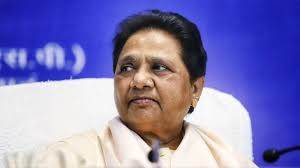
Referring to the recent killing of a Dalit youth in Bangladesh, the BSP chief said, “The public anger that has erupted on the streets across India over the brutal killing of a Dalit youth there is natural.” BSP president and former Uttar Pradesh chief minister Mayawati on Thursday expressed concern over “anti-India and anti-Hindu incidents” in Bangladesh and urged the Centre to take more effective steps. In a series of posts on her official X handle, Mayawati said, “In recent days, the manner in which anti-India and anti-Hindu incidents are taking place in Bangladesh makes it necessary for the central government to act with greater alertness and take more effective steps in line with people’s expectations.” She said it is well known that Hindu minorities in neighbouring Bangladesh are being subjected to communal violence and persecution. “The way Hindu minorities in Bangladesh are being harassed by targeting their life, property and religion has created a wave of concern not only in our country but also elsewhere,” she said. Referring to the recent killing of a Dalit youth in Bangladesh, the BSP chief said, “The public anger that has erupted on the streets across India over the brutal killing of a Dalit youth there is natural. The Government of India is expected to immediately take proper cognisance of this and play a more active role at every level, which appears to be the need of the hour.” Mayawati alleged that while atrocities, oppression and discrimination against Dalits and tribals had continued in India for centuries, the situation in Bangladesh is no less serious. “Although caste-based hatred, oppression and exploitation against Dalits and tribals continue in our country, the atrocities being committed in neighbouring Bangladesh are extremely painful and a matter of grave concern,” she said. She added that concerns in India over the condition of minorities in neighbouring countries remained constant. She expressed confidence that public support would be with the government on the issue and urged it to pay due attention. Courtesy : Money Control Note: This news is originally published on https:/moneycontrol.com/bha and is used purely for non-profit/non-commercial purposes, especially human rights
India’s First Transgender Football League Kicks Off in Kolkata, Empowering 200+ Players

Kolkata’s groundbreaking eight-day tournament unites 16 teams of over 200 transgender athletes, fostering inclusion through football amid historic rights advocacy. India’s first Transgender Football League launched in Kolkata on December 20, drawing 200+ players from 16 teams in an eight-day tournament celebrating inclusion, skill, and visibility amid growing calls for transgender rights in sports. India’s inaugural Transgender Football League launched on December 20, 2025, in Kolkata, featuring 16 teams and over 200 transgender players competing for the Transgender Cup. Organised by the West Bengal Transgender Persons Welfare Board in partnership with the All India Football Federation (AIFF), the eight-day tournament at Vivekananda Yuba Bharati Krirangan celebrates inclusion and visibility. Players expressed unprecedented empowerment, with officials hailing it as a milestone for transgender rights; no major incidents reported as matches progress smoothly into semifinals. A Vibrant Launch with Record Participation The tournament erupted into life with colourful opening ceremonies at Kolkata’s iconic Vivekananda Yuba Bharati Krirangan, a 120,000-capacity stadium usually reserved for international matches. Over 200 transgender athletes from across India-spanning ages 18 to 45-fielded 16 teams, including powerhouses like the Kolkata Trans Warriors, Chennai Rainbow Strikers, Mumbai Pride FC, and Delhi United Queens. Matches unfold daily from 9am to 5pm, blending high-energy football with cultural performances featuring folk dances and rainbow flags. Vital statistics underscore the event’s scale: more than 5,000 spectators attended the opener, with live streams on AIFF’s YouTube channel reaching 50,000 views in the first 24 hours. Player Divya Maligi, a 28-year-old striker from Bengaluru who once faced rejection from local clubs, beamed, “We’ve never felt more seen-football gives us a platform to dream beyond discrimination. For the first time, we’re not sidelined; we’re stars.” Tournament director Rajat Mitra, a former AIFF official, elaborated, “This is about skill, not stereotypes. These athletes train rigorously, often juggling day jobs as tailors or performers. They’re role models proving transgender talent thrives when given a chance.” West Bengal Sports Minister Aroop Biswas officiated the kick-off, stating, “This league aligns with our vision of sports for all, fostering unity in diversity.” Empowerment Through Grassroots Training Beyond the pitches, the league humanises its participants through dedicated support systems. Since 2023, the West Bengal Transgender Persons Welfare Board has run free training camps in Kolkata, partnering with local coaches to build skills in dribbling, tactics, and fitness. Many players, like Chennai’s captain Priya Singh, credit these sessions for transforming lives: “I was homeless two years ago; now I lead my team. This isn’t just a game-it’s survival and hope.” The event offers cash prizes totalling ₹5 lakh, plus scholarships for top scorers to pursue coaching certifications, ensuring long-term impact. Health and welfare tents provide free medical check-ups, counselling, and hormone therapy consultations, addressing common challenges like access to gender-affirming care. No injuries or disruptions marred the first four days, with semifinals slated for December 26, building anticipation for the December 28 final. From Legal Milestones to Historic First This league emerges from decades of advocacy amid systemic barriers. The landmark 2014 NALSA judgment by the Supreme Court recognised transgender persons as a “third gender” with equal rights, yet sports bodies often lagged, citing eligibility concerns. Kerala pioneered with a transgender cricket league in 2023, but football-a national obsession-lacked a national platform until now. The 2019 Transgender Persons (Protection of Rights) Act further mandated equal opportunities, spurring state initiatives. Grassroots efforts intensified post-pandemic, with transgender welfare boards in states like Maharashtra and Tamil Nadu hosting trials that fed into this tournament. Organisers scouted talent via social media drives on Instagram and WhatsApp groups, drawing participants from remote areas like Manipur and Odisha. Globally, it echoes events like the U.S. Trans Football League, but India’s version stands out for government backing, signalling policy shifts under the National Sports Policy 2024 emphasising inclusivity. Syed Muskan Shafiq Courtesy : TLI Note: This news is originally published on https:/thelogicalindian.com/bha and is used purely for non-profit/non-commercial purposes, especially human rights