
BJP Bengal win dissolves the old Bhadralok order. It kept Dalits and their issues out
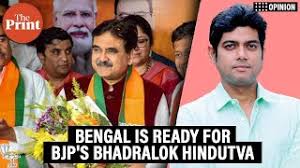
‘Bengal is caste-less’ is a hegemonic notion peddled by the Bhadralok. It swept the crucial question of Dalit struggle, first under the red carpet and then the blue. Among the results of five Assembly elections announced yesterday, Bengal’s will go down in history. May 4, 2026 shall be a red-letter day — not for the BJP, but for millions of Rajbanshi, Namo Shudra, Matua and several other Dalit communities across Bengal who had no say in the government and governance of the state since its independence, until now. It is often quoted that what Bengal thinks today, India thinks tomorrow, but not for Dalits. The paradox of intellectual and enlightened Bengal has been the constant invisibilisation of Dalits as a political constituency. “Bengalis have no understanding of caste,” said Kancha Ilaiah, in a conversation with journalist Chandrima Bhattacharya. Dalits account for 23.5 per cent of Bengal’s population — one of the highest among all states — and the state’s total Dalit population is second only to Uttar Pradesh. Yet the state has failed to produce a single Dalit leader since Independence. The reason is clear: the Bhadralok of Bengal do not reckon with caste, and decades of communist rule have further crystallised this phenomenon, which even the “Maa, Mati, Manush” clarion call failed to overcome in bringing Dalit issues to the fore. Dalits and their issues have been conspicuously absent from mainstream politics, and their concerns repurposed into a broader framework of class and left ideological pursuits, with the assumption that their struggles could be addressed without relinquishing Bhadralok (upper-caste) dominance. Dalit issues remained invisible in Bengal Politics and ideology run deep in Bengal: from local sports clubs to Durga Puja committees, the social sphere of Bengali society is organised around party politics, which further fragmented Dalit constituencies. However, this overarching party-based society did little to alleviate caste disparity. Dalits remained downtrodden; untouchability and caste-based violence were rife, and entry into temples was prohibited — the most recent example being the denial of Dalit entry into the 300-year-old Girdheshwar Temple in East Bardhaman district in 2025. Party politics invisiblised their struggle, while all efforts went into sustaining the hegemonic notion — peddled by the Bhadralok, who are primarily upper-caste and upper-class — that Bengal is “caste-less” and therefore better than other states. But this has been nothing more than sweeping the crucial question of caste, first under the red carpet and then the blue. Dalits in Bengal are dispersed across the state and comprise several sub-castes and communities. The Namo Shudra and Matua communities are spread across southern Bengal, especially in North 24 Parganas and Nadia. The Rajbanshis, another Dalit group, hold sway in north Bengal, especially in Jalpaiguri, Cooch Behar and Darjeeling. Other Scheduled Caste communities — Bagdi, Bauri, Mochi and Chamar — have a significant presence in Jangal Mahal, Midnapur and semi-urban constituencies across the state. Their aspirations are as diverse as their identities. Identity, among other things, remains one of the major struggles these communities face. The Matua and Namo Shudra communities trace their origins to undivided Bengal, and their primary concern to this day is citizenship and refugee status. The Rajbanshis of north Bengal have a long-standing demand for a separate state. Other Dalit communities are largely agrarian, with common concerns around education, employment and equality, issues that have largely gathered dust since Independence. Many reports, despite the much-proclaimed caste-less character of the state, suggest that segregation in classrooms and at drinking wells, as well as caste- and gender-based violence, are as ubiquitous as the urban legend of Bengal being a caste-less society. Dalits force their way into power in Bengal The BJP has not only given voice to these communities but also listened to their long-standing demands. Recognising the caste realities of a society as diverse as Bengal’s, and engaging with its communities’ demands, has been one of the key takeaways in this election campaign. The Namo Shudra and Matua communities have been promised fast-track citizenship through the previously enacted Citizenship Amendment Act, while the Rajbanshis have been promised a battalion named in their honour, in recognition of their historic resistance against Mughal suzerainty. But the most crucial factor was the consolidation of the diverse identities and aspirations of Dalit communities, which produced such a resounding and decisive result in this election. Urban and rural Dalits have different aspirations and are mired in contradictions of class identity. The interests of urban Dalits differ from those of rural constituencies, and with class hierarchy so deeply ingrained in Indian society, stitching these groups into a single cohesive bloc has been a difficult task, which the BJP had to overcome. This victory is not a one-off electoral manoeuvre by the BJP’s formidable machinery, but the result of ten years of continuous dialogue and outreach, which achieved what had seemed impossible a decade ago: the consolidation of the Dalit vote from a position of near-total invisibility in caste politics. It is also a testament to the Modi government’s consistent endeavour to secure dignity and parity for the community across every sphere of life, not only in admissions and recruitments. Charity began at home, with the BJP nurturing hordes of leaders from Dalit communities within its own cadre, successfully giving not just a platform but also a voice to the voiceless. The GYAN pillars upon which the foundation of a developed Bharat is to be built come at a great cost to the establishment that has worked tirelessly since Independence to fragment the very voices the Constitution and its makers resolved to protect. The BJP’s victory in West Bengal is symptomatic of the dissolution of the old order. This election stands in line with previous ones in substantiating the Modi government’s resolve to empower the most marginalised communities — politically, economically and socially. Aditi Narayani, (Edited by Prashant Dixit) Aditi Narayani is an associate professor at the Dr Ambedkar International Centre. She tweets @AditiNarayani. Views are personal. Courtesy : The Print
ECI, BJP played ‘nasty games’: Mamata says TMC was not defeated in Bengal, refuses to resign from CM post

Targeting the Chief Election Commissioner (CEC) Gyanesh Kumar, Mamata described him as the “villain of this election” and accused him of “looting” the democratic rights of the people. TMC supremo Mamata Banerjee on Tuesday slammed the Election Commission of India (ECI) and accused it of “looting” the democratic rights of the people, a day after the BJP registered a landslide victory in the West Bengal Assembly elections. Addressing a press conference, the outgoing CM claimed that her party had won the election morally and stated that she would not resign from her position. “I will not resign, I did not lose, I will not go to Raj Bhavan…The question doesn’t arise. No. Now, I also want to say that we didn’t lose the election. Officially, through the Election Commission, they can defeat us, but morally, we won the election,” the TMC leader said. Targeting the Chief Election Commissioner (CEC) Gyanesh Kumar, Mamata described him as the “villain of this election” and accused him of “looting” the EVMs and the democratic rights of the people. She also reiterated the allegation that the ECI worked for the BJP, facilitating their win in the crucial elections. “Two days before the election, they started arresting our people. They started raiding everywhere. They changed all IPS and IAS officers. They selected people from their party and BJP played the game directly with the Election Commission. It is a betting between the BJP and the Election Commission,” Mamata alleged. Speaking on the ECI’s Special Intensive Revision (SIR) of electoral rolls that reduced Bengal’s electorate by nearly 91 lakhs, Mamata said, “We fought against all machinery. PM and HM are also involved, direct interference… They played dirty, nasty and mischievous games. I have never seen this type of election in my life.” Mamata also repeated the allegation that she was attacked when she visited the counting centre where votes for the Bhabanipur Assembly constituency –which the TMC leader lost to BJP’s Suvendu Adhikari– were being counted on Monday. “I went inside for a few minutes. They kicked me in my belly, backside and manhandled and assaulted me. That time CCTV was off…” she said. She also alleged manipulation and foul play in the counting process. “After first round of counting, they started saying that BJP is getting 195-200. You didn’t wait for the final result. You didn’t even wait for 5-6 rounds. After that campaign with the press media, BJP went inside the polling station and they started beating the people, counting agents,” Mamata alleged. “When I came to know that all counting agents are withdrawn, I was leading by about 30,000 and about 5 rounds were left. We should have got more than 32,000,” she added. Mamata also alleged that BJP candidate Suvendu Adhikari brought around 200 goons from outside to beat up people. “Even women were not spared and they snatched away all forms. When I came to know, I went there. They stopped my car, but I took another route. When I entered, the CRPF told me that I was not allowed to go. I said that I am a candidate…Then I complained to the RO that counting should be stopped immediately until normalcy is restored. I saw the DEO. I know that he gave a message to someone 15 days ago that ‘counting mein khel hoga’…” she said. Mamata earlier said she would file formal complaints with the authorities concerned against the foul play at the Sakhawat Memorial Girls’ High School counting centre, where the votes for her constituency were counted. The race took a dramatic turn over consecutive rounds, with Mamata, who established a strong lead initially, being overturned by Adhikari, who took a lead of over 500 votes after the 16th round. Mamata also stated that several INDIA alliance leaders had reached out to her to express solidarity. “Sonia ji, Rahul Gandhi, Arvind Kejriwal, Uddhav Thackeray, Akhilesh Yadav, Tejashwi Yadav, Hemant Soren rang me up. All the allies of INDIA Alliance told me that they are totally and absolutely with me. I think our solidarity will be united and strong for the next days,” she said. She stressed that she would now work towards strengthening the opposition alliance. “My target is very clear. I will strengthen the INDIA team, just like a small person. I don’t have a chair now, so I am a commoner,” she said. Mamata also announced the formation of a 10-member fact-finding committee to visit areas “affected by post-poll violence” and assess the ground situation. The BJP registered a resounding victory in Bengal, winning 207 seats, well past the majority mark in the 294-member assembly and elbowing out the TMC government, which had been in power for three consecutive terms. Courtesy : TNIE Note: This news is originally published on https:/thenewindianexpress.com/bha and is used purely for non-profit/non-commercial purposes, especially human rights
West Bengal election results 2026: BJP surges past majority as TMC loses edge

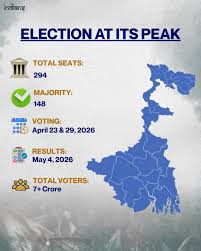
TMC supremo and Chief Minister Mamata Banerjee, who was initially trailing in her Bhabanipur turf, regained the lead over BJP’s Suvendu Adhikari by 898 votes after the third round of counting. With more than four hours into vote counting, the BJP-led NDA has crossed the majority mark of 148 seats in West Bengal, securing a lead in over 180 seats. The incumbent Trinamool Congress (TMC) was restricted to 109 seats, while the CPI(M) led in just one seat. TMC supremo and Chief Minister Mamata Banerjee, who was initially trailing in her Bhabanipur turf, regained the lead over BJP’s Suvendu Adhikari by 898 votes after the third round of counting. However, several TMC leaders, including ministers Udayan Guha and Sashi Panja, were trailing, initial trends showed. In Cooch Behar district’s Dinhata, minister Udayan Guha was trailing by 6,259 votes against BJP’s Ajay Ray after four of the 24 rounds of counting. In Kolkata’s Shyampukur, minister Sashi Panja was trailing BJP’s Purnima Chakraborty by 934 votes after two rounds of counting, with another 19 rounds left. Aam Janata Unnayan Party (AJUP) chief Humayun Kabir was leading in the Nowda seat in Murshidabad district over his nearest TMC rival after the first round of counting, according to the Election Commission. Kabir was leading by a margin of 2,890 votes over TMC’s Sahina Momtaz Khan after the first round of counting. The polls are seen as a crucial test for Chief Minister Mamata Banerjee and her TMC’s bid for a fourth consecutive term, amid a stiff challenge mounted by the BJP. The CPI(M)-led Left Front and the Congress are also hoping to improve their tally after successive electoral setbacks. Exit polls present a sharply divided picture, with some projecting a BJP edge while others forecast a comfortable return for the All India Trinamool Congress, underlining an uncertain and closely fought contest. West Bengal BJP president Samik Bhattacharya said he was confident of a landslide victory, as counting of votes for the assembly elections began on Monday morning. “People of the state have already rejected the Trinamool Congress government, and in a few hours, the overwhelming majority of the seats will confirm that in the fight between Mamata Banerjee and the people, people have rejected Mamata Banerjee,” Bhattacharya said outside a counting centre in Kolkata. The counting of votes for the state’s 293 Assembly constituencies began at 8 am, with postal ballots taken up first in keeping with Election Commission norms. Follow live updates on results and trends: Tamil Nadu Results, West Bengal Results, Kerala Resuts, Assam Results, Puducherry Results Courtesy : TNIE Note: This news is originally published on https:/thenewindianexpress.com/bha and is used purely for non-profit/non-commercial purposes, especially human rights
Her Last Stand

Mamata Banerjee is conducting, in her own phrase, ajibaner lorai—a fight for life, against her most formidable foe, the BJP. A Mamata loss will end her career, and a saffron victory will decide the shape of a Hindu Bengal The woman in white buying vegetables does not look like a chief minister. That, of course, is precisely the point. It is past nine on a warm April evening in Bhabanipur, the south Kolkata neighbourhood where Mamata Banerjee was born, and lives in a two-room house, and has now come to fight, for the third consecutive time, for her political birthright. The crowd surrounding her is not the choreographed kind. You can tell. The faces are too excited, too lit from within. The vegetable seller, a local woman of indeterminate middle age, grins at Mamata Banerjee like a teenager. In the allegorical theatre of Indian electoral politics, symbolism is the only currency that never inflates. A fruit seller presses a box of mangoes into Didi’s hands. She refuses, then relents and accepts one. One mango. The detail is so perfectly calibrated, so exquisitely Bengali in its domestic frugality that you have to remind yourself it is happening on a campaign trail, not in a kitchen. “This is the difference between her and Modi,” says Hiran Majumdar, who manages the constituency, with the serene confidence of a man who believes Bengal has already endorsed his argument. “Narendra Modi eats jhalmuri in a fully stuffed shop for a pre-arranged photo op. Didi buys vegetables from a roadside stall.” Mamata Banerjee is not merely campaigning here. She is claiming ground. Bhabanipur is also where Suvendu Adhikari—her former protégé, now her most implacable tormentor—held a rally the previous evening. He is the man who bested her in Nandigram in 2021, the wound she has never publicly acknowledged and cannot stop picking at. This time, he has come for her on her own street, in her own constituency, with the easy confidence of a man who believes he has both God and Amit Shah on his side. Nandigram is where Mamata’s political career was reborn, and Bhabanipur is where she was born and lives, even after becoming the CM. Suvendu looks every inch a man at war. Going by the warmth of the greeting he receives on stage—“Swagatha, swagatham, Suvenduda swagatham”—and the composition of the men on stage, there is a certain resonant quality about him. Bhabanipur is a small constituency with a big chunk of different faiths: Bengali Hindus, Muslims, Sikhs, Marwaris, and also migrants from Odisha, Jharkhand, and Bihar; the stage is representative of the place except for the absence of Muslims. Suvendu’s speech emphasises on one of the BJP’s main planks—protect women, end TMC rule, and bring Sanatan Dharma to Bengal. It is a no-holds-barred war in which Suvendu could maybe come close to winning. The crowd at Suvendu’s rally that night was worked up by a speaker named Mohan Patel, a tall, athletic, conspicuously bearded figure, who rolled up his sleeves and delivered his warning—“Hindus would become a persecuted minority at the mercy of Muslims.” The speech was entirely in Hindi, in a city that has composed its most important thoughts in Bengali for three centuries. The assembly roared, “Bharat Mata ki jai,” and “Jai Shri Ram” in response. Nobody seemed to notice his language. That same evening a Mamata rally was going on in a parallel street; it was disrupted by BJP volunteers turning the blaring loudspeakers in her direction. The CM left, calling her walk-out an act of resistance. Those two nights at Bhabanipur brought in the essential difference between TMC’s Bengal-ism and BJP’s idea of Bharat. This is the essential grammar of the 2026 Bengal Assembly elections: the BJP’s Shri Ram taking on the TMC’s Joi Bangla—pan-Indian Hindu nationalism versus exclusive Bengali cultural identity. Delhi’s idea of what India should be versus a three-term chief minister’s insistence that Bengal is not a province of India so much as a civilisation that has graciously agreed to share a border with it. Modi speaks at Bengal. Mamata speaks from it. The distinction is not rhetorical. It is everything. This is the difference between Mamata Banerjee and Modi. Narendra Modi eats jhalmuri in a fully stuffed shop for a pre-arranged photo op. Didi buys vegetables from a roadside stall. Hiran Majumdar, who manages the Bhabanipur constituency To understand Bengali politics, you must first understand the bohiragato—the outsider. Bengal’s relationship with the rest of India has always been marked by a proud, sometimes ferociously prickly sense of cultural distinction. This is, after all, the land of Tagore and Nazrul Islam, of Satyajit Ray and Subhas Chandra Bose, of a Renaissance that preceded Indian independence and in many ways made it imaginable. Bengalis believe, not without evidence, that they invented modern Indian intellectual life and a cuisine so precisely regional that the distinction between ilish and chital is not a food preference, but a declaration of who you are and where you come from. The consequence of this pride is a deep, instinctive suspicion of the outsider who arrives, however well-intentioned, to tell Bengal what Bengal should be. The Left understood this and draped its ideology in Bengali cultural attire for 34 years. Mamata Banerjee understood it even better and weaponised it into something more raw and personal. The BJP, relatively new to the state’s complicated emotional weather, has repeatedly underestimated it and paid the price. The TMC masterstroke in 2021 was not any single policy or personality. It was a slogan ‘Bangla Nijer Meyekei Chai’—Bengal Wants Its Own Daughter. The BJP campaign that year was led largely by leaders parachuted in from Delhi and Uttar Pradesh, whose sloganeering about Ram and borders landed in Bengal like a foreigner’s mispronunciation—technically legible, tonally catastrophic. The result was 213 seats for the TMC, 77 for the BJP: a rout so complete it prompted, by all accounts, a brutally honest internal post-mortem. The BJP is not an organisation that repeats its mistakes without attempting, at minimum,
Bengal Elections 2026: Why Political Parties are Averse to the Dalit Question
There is a broad consensus among the Bengali upper caste bhadraloks of the Left, Right and Centre that Dalit aspirations and autonomous Dalit politics should not re-emerge. Bengal’s dominant political and cultural discourse often disassociate themselves from Dalit history and anti-caste assertions. The hegemonic common sense prevalent in the state has been, Bengal is a “casteless society”. Such a narrative is rooted in denial of social recognition of Tapashilis, who are categorised as Scheduled Caste (SC) and their historically transformative anti-caste politics in undivided Bengal. Even the social justice icon Dr B R Ambedkar is not celebrated in the state beyond the few assertive independent Dalit groups while he is duly acknowledged with remarkable state honours in rest of the country. If selective amnesia had not engulfed the Bengali upper caste “bhadraloks” at large, it wouldn’t be tough to remember Ambedkar’s long association with Bengal. It was his All India Scheduled Castes Federation (AISCF), whose Bengal branch was headed by Jogendranath Mandal, a prominent leader from SC community in 20th century Bengal. The association of Mandal with Ambedkar grew so unwaveringly loyal that, in 1946, Ambedkar turned to Bengal to be elected to the Constituent Assembly of India. Mandal and six other Dalit MLAs of the Bengal legislative assembly secured the seat for him. Ambedkar later went on to be the chairman of Constitution Drafting Committee. The glorious role of Bengal and its autonomous Dalit leadership in sending the main architect of Indian Constitution to the Constituent Assembly is today grossly erased institutionally. The caste question and Ambedkarite politics too, despite its powerful legacy in Bengal, is relegated to the background through coercion and social misrecognition. Bengal has sixty constitutionally recognised scheduled caste communities, which is 23.51% of state’s total population according to the 2011 Census. Bengal comes second after Punjab among Indian States in size of Dalit population. And yet, the question of Dalit political aspirations and substantive caste representation doesn’t find any resonance in the Bengal assembly elections. At the same time, the Dalit factor is one of the driving factors in every Punjab assembly elections Interestingly, 19th and early 20th century’s popular historiography of Bengal was largely shaped by majoritarian Hindu upper caste supremacism camouflaged as nationalist movement and deeply influenced by ‘’practicing Hindu rituals and glorification of Hindu kings’’. Sumanta Banerjee in his book ‘Unravelling the Bengali Identity’ writes, how the Bengali upper caste hindu intellectuals of the 19th century tended to put emphasis on the Brahminical, Sanskrit oriented elements in that culture, while the same century had contemporaneously witnessed Dalits’ progressive assertions against upper caste Bengali bhadraloks’ caste supremacism. Dalit assertions in Bengal From early 19th century onwards, a host of Dalit social reformers started challenging the blatant casteism of Brahminical Bengali bhadraloks. In fact, the absence of Dalit sensibilities in Bengali nationalists’ anti colonial struggle had been looked at with suspicion by Dalit political leadership. Harichand Thakur (1812-1878), Benimadhab Halder (1858-1923), Panchanan Barma (1866-1935), Raicharan Sardar (1876-1942), Mahendranath Karan (1886-1928), Guruchand Thakur (1846-1937), Anukul Chandra Das Naskar (1894-1947), Basanta Kumar Das (1898-1984), Rajendranath Sarkar (1903-1979) are some of anti-caste stalwarts being pushed out of the mainstream by the Bengali upper caste historiographers. The hostility of Bengali upper caste bhadralok intellectuals towards the Dalit reformist movement against casteism is a well calculated move to sustain the former’s complete social and political dominance in post-colonial Bengal. The Hindu Mahasabha, Communists and Congress in undivided Bengal were deeply antagonistic towards autonomous Dalit politics. The political parties in post-colonial Bengal has also retained the narrative of Bengali exceptionalism entrenched in castelessness that depoliticised Dalit social and political aspirations in contemporary Bengal. It is a well concerted effort of the upper-caste political class of Bengal to sustain complete political dominance of Brahmins, Baidyas and Kayastha bhadraloks. The possibilities of Ambedkarite Dalit autonomous politics once launched by Jogendranath Mandal remains a perpetual threat to the Right, Left and Centrist political forces. Therefore, radical Dalit political consciousness observed in Maharashtra, Uttar Pradesh and some pockets of Southern India are consciously suppressed in the mainstream Bengali polity, society and academia. Bengal: A caste conscious society A Pratichi India Trust report of 2005 studied ‘’Cooked Mid-day Meal Programme in West Bengal – A study in Birbhum district’’ found out explosive caste bias among the Caste Hindu Savarna Parents and their children’s attitudes towards marginalised caste students and Dalit mid-day meal cooks. The study has shown how Dalit and Adivasi students benefited immensely from mid-day meal scheme but the upper-caste students disliked the scheme while their parents had reservations about Dalit cooks cooking the mid day meal. In fact. the practicing of endogamy is also high in West Bengal, with inter-caste marriages being very low in the state, a fact that doesn’t sit well with its progressive claims. A mere 9.5% of the marriages happening in the state are inter-caste. The social backwardness of Bengali Dalit communities due to upper-castes’ hegemony is so stark that the state has never thought of implementing Scheduled caste special component plan like other states such as Andhra Pradesh, Telangana, and Karnataka. It is only recently, that the the huge deletion of Dalit voters in Bengal through the Special Intensive Revision (SIR) exercise the of Election Commission of India (ECI) prompted the Bharatiya Janata Party (BJP) top leadership of prime minister Narendra Modi and home minister Amit Shah to pacify them with the promise of citizenship and restoring their names once they come to power in the state. The Trinamool Congress (TMC) has since last few years started the corporate style ‘Tapashilir Sanglap’(interaction with the Scheduled Castes) outreach campaign during election season, which is purely an electoral connect programme with Dalits. Even though the BJP is very careful this time in addressing the Scheduled Castes of Bengal, they are trying to broadly mobilise the Hindu vote bank cutting across the castes. The communal campaign around ‘ghuspaithiye’ (infiltrators) is very willfully advanced by the BJP to mobilise and appropriate Dalits so that independent Dalit political agency never grows in
TMC-BJP clash as Mamata Banerjee and Suvendu Adhikari rallies run parallel in Bhabanipur
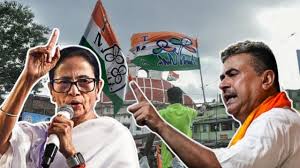
KOLKATA: Clashes broke out between supporters of the Trinamool Congress (TMC) and the Bharatiya Janata Party (BJP) in Kolkata’s Bhabanipur area on Saturday. Police and Rapid Action Force (RAF) personnel to intervene and separate the two groups. The incident occurred days before polling on 29 April, as campaigning for the second phase of the West Bengal assembly elections intensified. Chief minister Mamata Banerjee and leader of the opposition Suvendu Adhikari held election meetings in close proximity, adding to the political tension in the constituency. According to officials and eyewitness accounts, the situation escalated on Chakraberia Road after Banerjee abruptly ended her speech and left the stage. She later alleged that high-decibel loudspeakers from a nearby BJP rally disrupted her address, calling it “intentional disturbance”. Expressing frustration, Banerjee apologised to her supporters before leaving the venue. Shortly after, groups of TMC workers moved towards the BJP rally site, where they confronted BJP supporters. The exchange quickly turned heated, with both sides raising slogans of “Jai Bangla” and “Jai Shri Ram”, according to news agency ANI. Security forces, including RAF personnel, formed a human chain to prevent the confrontation from turning violent. Police said the situation was brought under control without any serious injuries reported. Suvendu Adhikari, who is contesting from Bhabanipur as well as Nandigram, reached his rally site after the incident. He criticised the TMC’s reaction, describing it as politically motivated. “This is goonda raj, jungle raj. We are trying to end it. Whatever TMC does will backfire. This time it will not be one-sided. Drive away the goons, save Bengal,” Adhikari said. He also referred to the TMC’s protest as a sign of “jungle raj”. The confrontation highlights the increasingly sharp rivalry between Banerjee and Adhikari, who was once a senior leader in the TMC before joining the BJP. Bhabanipur, which Banerjee has represented since 2011, is seen as a politically significant constituency for both parties. The BJP has described the seat as a key target in the 2026 state elections, while for Banerjee it remains central to her political standing in Kolkata, often referred to by her supporters as her “Kolkata throne”. A victory for Adhikari here would be seen as a major political breakthrough, following his 2021 win against Banerjee in Nandigram. The constituency is considered demographically diverse, with significant Bengali, Gujarati, Marwari and Sikh populations, making it a closely watched battleground. With polling due on 29 April, security has been tightened across Bhabanipur and adjoining areas. Officials said drone surveillance and paramilitary deployment have been increased to maintain order during the final phase of campaigning. According to the Election Commission of India, Phase I polling concluded earlier this week with a turnout of 91.78%. The remaining phases are scheduled to continue under heightened security arrangements, with counting set for 4 May. Courtesy : TOI Note: This news is originally published on https:/timesofindia.com/bha and is used purely for non-profit/non-commercial purposes, especially human rights
‘Not democracy, but TMC’s reign of thuggery’: Rahul Gandhi over killing of Congress worker
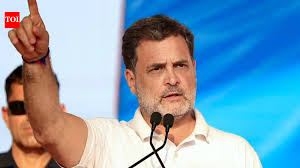
NEW DELHI: Rahul Gandhi on Sunday condemned the killing of a Congress worker Debdeep Chatterjee after the phase-1 polling was held in the state, blaming ‘TMC thugs’ for the incident. “The murder of Congress worker Debdeep Chatterjee by TMC-affiliated thugs after the elections is utterly reprehensible. My deepest condolences to his bereaved family,” said the Congress leader on X. Stepping up his attack on the ruling All India Trinamool Congress, he alleged that “thuggery” had replaced democracy in the state, accusing the party of intimidation and violence against political opponents even after voting. “In West Bengal today, it is not democracy that prevails, but TMC’s reign of thuggery. Intimidating, attacking, and silencing opposing voices after votes are cast—this has become TMC’s defining character. Congress’s politics has never been rooted in violence, nor will it ever be. We too have lost our workers, yet we have always chosen the path of non-violence and constitutionalism. This is our legacy, this is our resolve,” he added. Calling for punishment, the Leader of Opposition in Lok Sabha said, “The demand is clear—immediate arrest of all the guilty, the harshest punishment, and full security and compensation ensured for Debdeep’s family. We will not bow before this politics that stains India’s non-violent tradition. Justice will be done.” According to West Bengal Congress, Chatterjee was was known to be working closely with Asansol North Congress candidate Prasenjit Puitandi. The party claimmed that he was attacked and beaten by “miscreants linked to the TMC” in a post-poll incident in Asansol and later succumbed to his injuries. The state unit termed the killing a sign of “complete collapse of law and order” and flagged concerns over the safety of opposition workers. It claimed that no FIR had been registered at the time of reporting and demanded immediate arrests, a fair and time-bound probe, and adequate compensation and protection for the victim’s family. Courtesy : TOI Note: This news is originally published on https:/timesofindia.com/bha and is used purely for non-profit/non-commercial purposes, especially human rights
RaGa targets Didi, TMC hits back with ‘feeding dogs’ jibe
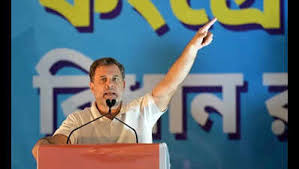
Kolkata: Congress’s Rahul Gandhi went after Trinamool while campaigning in Bengal on Saturday, asking why the ED had summoned him for 55 hours of questioning while CM Mamata Banerjee — in whose state numerous alleged scams had surfaced — had faced no such scrutiny. Trinamool hit back hard, calling Gandhi’s remarks “irresponsible” and pointedly noting that he had been “feeding his dog” while Trinamool seniors were being hounded by central agencies. “I am on bail. A case is lodged against me every 10-15 days. I was questioned by the ED for 55 hours. How many hours was Mamataji questioned? Have they snatched her home or disqualified her from the assembly?” Gandhi asked at rallies in Serampore, Shahid Minar and Metiaburuz. He alleged that Modi attacks Banerjee during campaigns but stays silent after elections — proof, he said, that “Congress is their real enemy, not Trinamool.” Gandhi cited the Saradha and Rose Valley alleged scams as evidence of Trinamool’s corruption and accused both Modi and Banerjee of prioritising power over jobs. “What Modi is doing in India, Mamataji is doing in Bengal. They promised five lakh jobs in 2021; in reality, 84 lakh youth registered for unemployment allowance,” he said. He also blamed Banerjee for “goonda raj,” coal smuggling and the conditions that allowed the RG Kar rape and murder to occur. Trinamool hit back immediately. Trinamool senior and state minister Shashi Panja called Gandhi’s remarks “irresponsible,” saying Trinamool seniors were receiving ED and CBI summons even during elections “while he was busy playing with his dog and feeding it biscuits.” She questioned Congress’s credibility as a BJP challenger, noting the party had lost Maharashtra, Haryana, Delhi and Bihar after the Lok Sabha elections. “Let the people of Bengal — and later India — decide who is truly capable of defeating the BJP,” she said. Courtesy : TOI Note: This news is originally published on https:/timesofindia.com/bha and is used purely for non-profit/non-commercial purposes, especially human rights
‘Why are there not 36, 38 or 40 cases against Mamata?’ Rahul says BJP’s real fight with Congress not TMC in Bengal
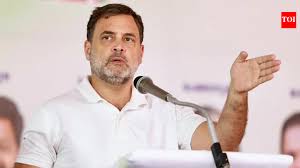
NEW DELHI: Congress leader Rahul Gandhi on Saturday intensified his attack on the Centre during the West Bengal assembly election campaign, questioning why chief minister Mamata Banerjee has not faced multiple criminal cases despite serious corruption charges linked to the Trinamool Congress (TMC). He asked why there are not ’36, 38 or 40 cases’ against the TMC chief even as he himself continues to face several legal proceedings. Addressing a public meeting at Sahid Minar Ground, Gandhi alleged that while the Prime Minister Narendra Modi’s government has pursued multiple cases against him, no similar investigative action has been taken against Mamata Banerjee. He claimed this was because the TMC supremo does not directly confront the BJP in the same way as the Congress does. “Today I have come here, I am out on bail. Narendra Modi took away my official residence. He took away my Lok Sabha membership. Why are there not 36, 38 or 40 cases against Mamata Banerjee? The entire Bengal knows that people of the Trinamool have indulged in corruption. The Saradha chit fund scam was done by people of the Trinamool. It ruined 17 lakh investors. There are unpaid dues of Rs 1,900 crore. The Rose Valley chit fund scam took money from lakhs of people. There is extortion in the form of ‘goonda tax’ collection. But Narendra Modi, RSS and BJP have not conducted any investigation against Mamata ji. They do not attack Mamata ji. Why? Because they know that the real fight is not with the Trinamool. The real fight is with the Congress party,” he said. Gandhi siad Mamata and PM Modi are “two sides of the same coin”, considering that none of them care about the aspirations of the common people. “The Prime Minister claims that he is a true nationalist. But he had done nothing for the poor people. He had done everything for the millionaires. Before the Left Front rule, Congress ruled West Bengal. At that time there were several industries in the state,” he said. The Congress leader added, “Mamata Banerjee, too, like PM Narendra Modi, does not care for employment generation for the youth. Both the Prime Minister and the West Bengal Chief Minister are bothered about themselves. What PM Narendra Modi is doing in India, that is exactly what Mamata Banerjee is doing in West Bengal.” The Lok Sabha’s Leader of Opposition further compared investigative scrutiny faced by him with what he described as the absence of ED or CBI action against the West Bengal CM. Stating that the Enforcement Directorate (ED) questioned him for 55 hours over five consecutive days, the Congress leader asked, “For how many hours was Mamata Banerjee interrogated?” Gandhi reiterated that no central probe agencies were acting against the TMC chief. In a separate poll rally at Serampore in Hooghly district for the second phase of West Bengal assembly elections, Gandhi said: “This is because she does not fight the BJP directly.” He also highlighted the legal cases pending against him and said he is required to travel frequently across states to attend court proceedings. Gandhi said, “My house was taken away, my Lok Sabha membership was taken away; there are 36 cases against me.” The Congress leader said that he has to travel to various states like Jharkhand, Maharashtra, Uttar Pradesh, Gujarat and Bihar every 10-15 days to fight the cases registered against him. “I want to ask how many cases have been registered against Mamata Banerjee by Narendra Modi?” he asked. Gandhi asserted that only the Congress takes on the BJP on ideological grounds, alleging that Prime Minister Narendra Modi targets him, party chief Mallikarjun Kharge and others consistently. Claiming that PM Modi criticises the TMC chief only during election periods, he said, “Let the Bengal elections end; Narendra Modi will not speak a word against Mamata Banerjee.” He further said that the BJP understands only the Congress can challenge its ideological framework, not the Trinamool Congress. Gandhi accused the TMC leadership of destroying industry and contributing to unemployment in West Bengal, alleging that jobs are distributed through political connections. “One has to have a relative in the TMC to get a job in Bengal, else he will not get any,” he said, accusing the chief minister of working for the interests of “goons” and party workers. Gandhi also alleged that major scams such as Saradha and Rose Valley occurred under the TMC regime, affecting lakhs of investors. He further alleged widespread coal smuggling, illegal mining and what he termed “goonda tax” collection in the state. He accused the TMC of similar behaviour towards opposition workers as the BJP allegedly does in other states. Gandhi also referred to the 2021 TMC poll promise of five lakh jobs, questioning its implementation, and cited unemployment-related concerns in the state. The remarks come amid heightened political exchanges between the Congress, BJP and TMC during the ongoing election campaign in West Bengal. The polling for Phase I of the assembly elections concluded at 6 pm on Thursday, with West Bengal recording a significantly higher voter turnout of 91.78 per cent, according to the Election Commission. The second phase of the polling will be held on April 29, with counting scheduled for May 4. Courtesy : TOI Note: This news is originally published on https:/timesofindia.com/bha and is used purely for non-profit/non-commercial purposes, especially human rights
Rahul, Kejriwal to campaign in Bengal today
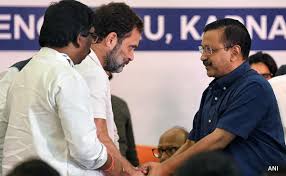
Kolkata: Congress MP and LoP in Lok Sabha Rahul Gandhi is set to campaign in Bengal on Saturday, while former Delhi CM Arvind Kejriwal will campaign for Trinammol candidates. Bihar deputy CM Tejashwi Yadav, who is already in Bengal, held a roadshow for TMC in Bhatpara on Friday. Rahul had campaigned for Congress candidates in north Bengal ahead of the Phase-1 polls, where he spoke against both TMC and BJP. Jharkhand CM Hemant Soren has also campaigned for TMC in Bengal. Kejriwal said a political backlash was emerging in Bengal against the SIR exercise, claiming that “Modiji’s SIR is turning against him” in the context of the high voter turnout. In a post on X, he wrote: “It’s coming to light that in Bengal, votes are being cast firmly against SIR.” A senior TMC neta said: “Former Maharashtra CM Uddhav Thackeray and SP chief Akhilesh Yadav have backed CM Banerjee in her fight not only against BJP but also against the combined might of central agencies and EC.” Courtesy : TOI Note: This news is originally published on https:/timesofindia.com/bha and is used purely for non-profit/non-commercial purposes, especially human rights