
UP: Dalit woman molested and attempted to strip, husband attacked with iron rod; case filed against nine people

Following the intervention of the Superintendent of Police, an FIR has been filed against nine people under the BNS and SC/ST Acts in the incident that occurred on the night of September 30th in Badi Bagh, Bhadohi. The victim accused the local police of initially inaction. Bhadohi (Uttar Pradesh): Police in Uttar Pradesh’s Bhadohi district have filed a case against nine people for allegedly molesting a 22-year-old Dalit woman, attempting to strip her, and severely assaulting her husband. Police announced this action on Monday. Additional Superintendent of Police Shubham Agarwal stated that the case was registered on Sunday following a complaint by the victim to Superintendent of Police Abhinav Tyagi. The incident occurred around 10 pm on September 30th, when five named and four unidentified individuals arrived to put up a banner at the couple’s rented house in the Badi Bagh area. Citing the complaint, the Additional Superintendent of Police stated that the accused showed the woman pornographic videos, behaved inappropriately with her, and asked her to accompany them at night. When the woman resisted, they hurled casteist slurs at her and assaulted her. They also allegedly attempted to drag her away after partially stripping her naked. The woman was rescued only after the landlord and nearby residents intervened upon hearing the commotion. It is alleged that later that night, while the woman was recounting her ordeal to her husband, the accused attacked him with an iron rod. The rod struck him near his left eye, leaving him seriously injured and unconscious. The woman also sustained injuries while trying to save her husband. The victim also leveled serious allegations against the local police’s initial role. She alleges that the police initially took no action in the case and instead filed a case of breach of peace against her husband on October 12th. Additional Superintendent of Police Shubham Agarwal clarified that a case has now been registered against the accused under relevant sections of the Indian Penal Code and the SC/ST Act. He added that Circle Officer Sumit Tripathi has been instructed to ensure prompt action in this case. Rajan Chaudhary Courtesy: Hindi News
Uttar Pradesh Assembly polls: Congress softens stance, may settle for 75- 80 seats
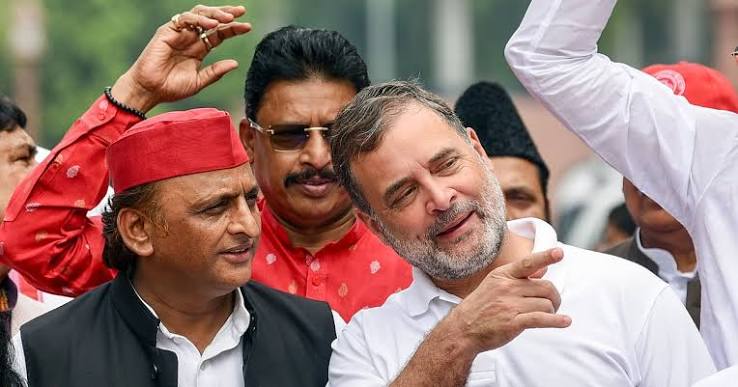
The constituencies each party will contest are expected to be decided in the first week of December, sources told TNIE. NEW DELHI/LUCKNOW: The Samajwadi Party and the Congress are likely to finalise their alliance and reach an agreement on seat sharing for the Uttar Pradesh Assembly polls within the next few days, leaders of both parties said on Monday after the first round of talks here. The parties are scheduled to meet again on Tuesday. Sources told TNIE that Congress MP Rahul Gandhi and SP chief Akhilesh Yadav had earlier reached a broad understanding under which the Congress may settle for 75 to 80 seats. The constituencies each party will contest are expected to be decided in the first week of December, sources said. Congress president Mallikarjun Kharge, Rahul, Wayanad MP Priyanka Gandhi Vadra and Akhilesh are expected to give the final shape to the agreement, they said. Monday’s meeting, which lasted only 20 minutes, was held at the residence of Congress Rajya Sabha MP Pramod Tiwari. Sources said Congress leaders have sought at least one seat in each district of UP, except for in the SP bastions of Etawah and Mainpuri. The Congress has staked claim to all seats in Amethi and Rae Bareli on the basis of its performance in the 2024 Lok Sabha polls. Akhilesh had earlier acknowledged at a media summit that Congress initially sought 181 seats. SP general secretary Ram Gopal Yadav, who heads the party’s talks’ panel, told reporters after the meeting that the two sides had “listened to each other’s views”. “We expect to finalise the alliance in the next two to three days,” he added. Preetha Nair, Namita Bajpai Courtesy : TNIE Note: This news is originally published on https:/thenewindianexpress.com/bha and is used purely for non-profit/non-commercial purposes, especially human rights
Kushinagar: Case filed against five people, including the village head, for Dalit harassment
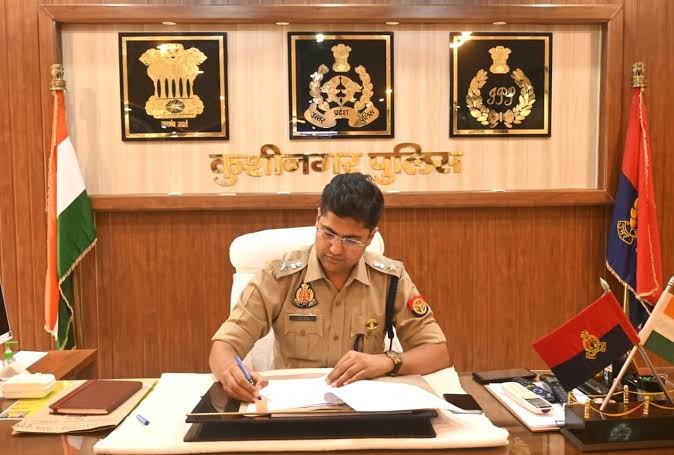
Ahirauli Bazaar. Based on a complaint from a resident of Khurhuriya village in the police station area, the police have registered an FIR against five people, including the village head, for assault, use of casteist slurs, and Dalit harassment. Village resident Arun Kumar stated in the complaint that he had submitted a petition to the Gram Sabha to investigate development work undertaken there. This angered the village head. It is alleged that on September 15th, at around 9 pm, during a Brahmabhoj in the village, village head Dharmendra Madheshiya, Pancham alias Aditya Patel, and three others abused him using casteist slurs and then strangled him with a handkerchief and assaulted him. People who arrived after hearing the noise intervened. Station House Officer Vinay Kumar Mishra stated that an FIR has been registered based on the complaint and an investigation is underway. Courtesy: Hindi News
UP Elections 2027: Congress will continue to attack religious politics, focusing especially on OBCs and Dalits
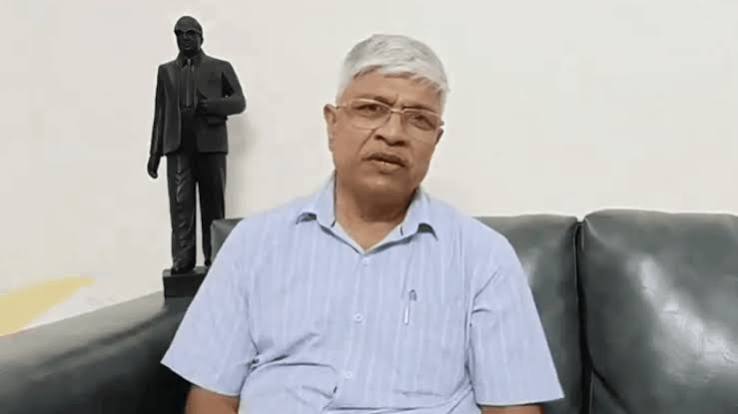
Preparing for the upcoming 2027 Uttar Pradesh Assembly elections, Congress is working on a strategy to corner the BJP government on issues of religious politics, Ayodhya-related controversies, caste oppression, and unemployment. As part of this, the party is organizing conferences and rallies across the state to unite Dalits, OBCs, and minorities and to spread the discussion of social justice to every village. Congress is working on a strategy to continuously corner the BJP on religious politics. The party will continuously raise the issue of the Ram Temple fund theft scandal in Ayodhya, incidents occurring at religious sites, and cases of caste oppression. These issues will be highlighted in every rally and conference to highlight the BJP’s failures. While the seat distribution for the 2027 Assembly elections is not yet finalized, Congress has intensified conferences and rallies across the state. Workers are being mobilized through programs in various districts, including Jhansi, Shahjahanpur, Agra, and Mathura. Under the leadership of district and city presidents, officials are also being briefed on election winning strategies. The issue of unemployment will be highlighted. The party’s strategy is to highlight the industrial situation and unemployment in each district at every event. The BJP government will be held responsible for the poor state of industries and the lack of employment opportunities. In addition, documents related to land purchases and sales in Ayodhya and harassment of local people at religious sites will also be presented at the conferences. The party will send delegations to investigate complaints of harassment based on religion and caste. The investigation report will be made public at rallies and conferences. Campaign to unite Dalits, OBCs, and minorities Congress is paying special attention to Dalits, OBCs, and minorities. To this end, national-level officials have been instructed to participate in statewide events. The Social Justice and Participation Conference held in Damodarpura, Mathura, on Sunday was part of this strategy. At the conference, state in-charge Rajendra Pal Gautam highlighted the mistakes of other parties, including the BSP, and described the Congress as a well-wisher of Dalits. He also detailed the efforts made during the Congress regime to advance the rights of Dalits. Dr. Anil Jaihind, National President of the Backward Classes Department, raised the issues of protecting the Constitution, caste census, reservation, and political participation in proportion to population. He said that Rahul Gandhi has made the fight for social justice and participation a national debate. Congress will take it to every village. Kunwar Singh Nishad, Chairman of the Media Department, called on the backward, Dalit, and deprived communities to remain united for their rights. He said that after Ayodhya, Mathura has given new energy to the politics of social justice. Published by: Bhupendra Singh Courtesy: Hindi News
Why did Akash Anand say this? Akhilesh Yadav and Ramgopal should apologize to Dalits.
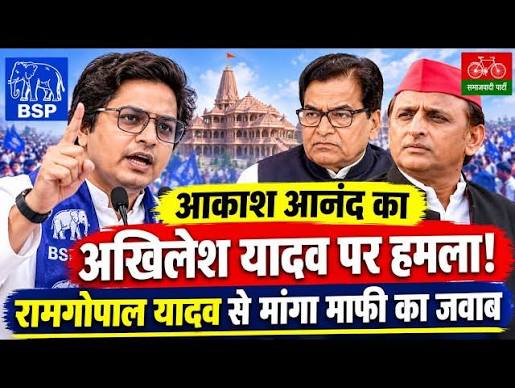
In Agra, BSP convenor Akash Anand fiercely targeted the SP, Congress, and BJP, demanding Akhilesh and Ramgopal apologize for insulting Dalits. He demanded accountability from the BJP government on education, health, and security, and declared Sarvesh Baghel as the candidate. Akash Anand’s attack on the SP’s Dalit Mahasammelan. Demands an apology from Akhilesh and Ramgopal to the Dalit community. Demands accountability from the BJP government on education, health, and security. Jagran correspondent, Agra. BSP national convenor Akash Anand lashed out at the BJP, SP, and Congress, who are trying to increase their share of the Dalit vote bank for the assembly elections. He criticized the SP’s Dalit Mahasammelan. He said that the entire set was decorated, a good script was written, the hero was ready, and the media was also invited, but the side actor, Prof. Ramgopal, called the people making noise in front of the stage fools. The tongue of one who has bad intentions sooner or later reveals its true nature. SP National President Akhilesh Yadav and Prof. Ramgopal should apologize to the Dalit community. Akash said that Congress took the votes of SC, ST, OBC, and Muslim communities but did nothing for them. He demanded an account of education, health, and security during the 10-year BJP government in the state. At a public meeting held at the Model School in Etmadpur on Sunday, announcing Sarvesh Baghel as the BSP candidate, he also listed the work done during the previous BSP government, from the Noida Expressway to Agra. BSP National Convenor Demands Answers from BJP Government BSP National Convenor Akash Anand arrived on stage at 2 pm and said, “We should not fall prey to the opposition’s tactics of ‘Sama, Daam, Dand, Bhed’. A whole procession will come to mislead you; some will come from Gujarat, some will come from the monastery, and some will leave Etawah and Saifai to come to Agra.” Attacking the BJP, he said, “Two showpiece Deputy Chief Ministers have been appointed, one a Brahmin and one from the backward class, but no one’s voice is heard.” Even in this, the Dalit community was not given a place; they know that the day the Dalit community gets hold of the pen, they will demand accountability. Demands Accountability on Education, Health, and Security Akash demanded accountability from the BJP on education, health, and security in the last 10 years, saying that over 25,000 schools have closed in the state, and over 140,000 teacher positions are vacant. What kind of system is this? The government didn’t recruit, resulting in a lack of teachers, and they closed schools citing a teacher shortage. He said, “They’re not running a government, they’re filming a serial. If you go to the police station to file an FIR, you don’t find any praise; instead, you find a camera. When the accused is caught, they make a video of him in front of the camera. Yet, Uttar Pradesh ranks number one in murder cases, with over 3,000 murders occurring every year. Women are unsafe; our sisters and daughters need security, not videos. The government spent seven thousand crore rupees of our tax money on publicity. Akash said, “The government spent seven thousand crore rupees of our tax money on false praise.” Whereas there is no money to fill over 1.3 million vacant posts in the state. Young people study all year, and before they reach the examination center, the papers are leaked. In 2014, the BJP had raised the slogan, “Enough of inflation, this time Modi government,” but now there is inflation on everything from gas cylinders to petrol. Inflation doesn’t come by asking religion, unemployment doesn’t harass by asking caste, and paper leaks don’t happen based on surnames. Political parties will divide based on caste and religion; in these parties’ offices, people’s identities are limited to data points on an Excel sheet. The BSP’s national convener said that opposition parties call the BSP the BJP’s B-party, but the SP gave a ticket to an industrialist instead of the PDA for the Rajya Sabha elections, even though his father is a BJP Rajya Sabha member. Prime Minister Narendra Modi has also said that Akhilesh is my friend and sometimes helps, so the SP and Congress are the BJP’s B-party. They will come to power by kicking the door open. Akash Anand said that National President Mayawati repeatedly says that if you want to be the master, you should take the master key to power into your own hands. We’ve been waiting for 70 years, but if we don’t get power this time, we’ll kick the door open and take power. BY AJAY DUBEY EDITED BY: ABHISHEK SAXENA Courtesy: Hindi News
Owaisi’s ‘Abdul dari nahi bicchayega’ comment is insult to Almighty: Azam
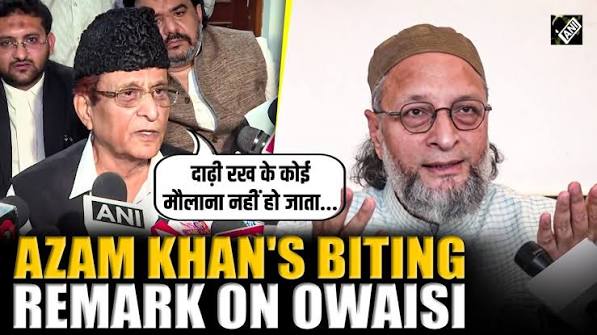
Lucknow: An audibly aggressive Azam Khan on Sunday took on firebrand Hyderabad MP Asaduddin Owaisi over his oft-repeated statement that ‘Abdul dari nahi bichhayega’ (Abdul will no longer lay the carpets), describing it as “blasphemous” as Abdul is one of the names of Almighty. Azam came down heavily on Owaisi for his attempts to polarise elections in UP on the basis of religion – a charge that is often made against Owaisi by his political rivals while comparing similarities with BJP. Owaisi’s All India Majlis-e-Ittehadul Muslimeen (AIMIM) has forged an alliance with Nagina MP Chandrashekar Azad-led Azad Samaj Party – Kanshi Ram (ASP-KR) to contest all 403 UP assembly seats in 2027 polls under the banner of Samajik Parivartan Morcha (SPM). Owaisi has often used the phrase ‘Abdul dari nahi bichhayega’ to denote that Muslims in UP were till now being used by political parties to set up pandals and make arrangements for political rallies and never given the due representation in govt once the political party wins elections. “In the divine court of the Almighty, he (Owaisi) should seek forgiveness. I seek forgiveness from Almighty before I repeat ‘Abdul dari nahi bichhayega’ else I will be liable to Kufra (blasphemy). I will turn into a Mulhid, a Mushrik if I dare to insult Abdul … All the curse will be on me and all the curses be on those who talk of Abdul laying the carpet because Abdul is one of the names of Almighty,” Azam said in his inimitable style responding to a question during an exclusive interview by veteran freelance journalist Ajit Anjum. The word Mulhid means atheist and Mushrik means one who associates partners with the divinity of the Almighty particularly in the context of the two words used by Azam Khan. During the course of his interview, Azam questioned the basis on which the newly formed front – the SPM – is set to contest all 403 UP assembly seats in UP. “They have just 4 MLAs in their own state (Telangana), yet they’re claiming 400 seats here (in UP polls),” a visibly irked Azam said. On being pointed out that Owaisi was always offering prayers for Azam Khan and his well-being while talking to the media during his Rampur visit, the SP veteran said: “Unki dua bahut achchi hai mere liye … lekin ye dua ke peechhe dawa kiski kar rahe the (I am pleased that he was all prayers for me. But whom was he helping with this),” Azam asked. Azam went on to question why, despite being so concerned about him being in jail, Owaisi, despite being a barrister, never appeared for him in any of his court cases till date. “I would have been pleased had he even volunteered to take up my case because I don’t have any lawyer of his competence,” Azam said. He went on to question the dynamics behind one of the Owaisi brothers openly asking govt to withdraw security forces for 15 minutes in Hyderabad and see the strength of the community he leads and his being subjected to the harshest of punishments for his statements against a bureaucrat. Azam did not spare Chandrashekhar Azad as well and said the Muslims of Nagina elected Chandrashekhar, and now he was stabbing them in the back. Courtesy : TOI Note: This news is originally published on https:/timesofindia.com/bha and is used purely for non-profit/non-commercial purposes, especially human rights
BSP on the Marginals, Dalit Community in Confusion
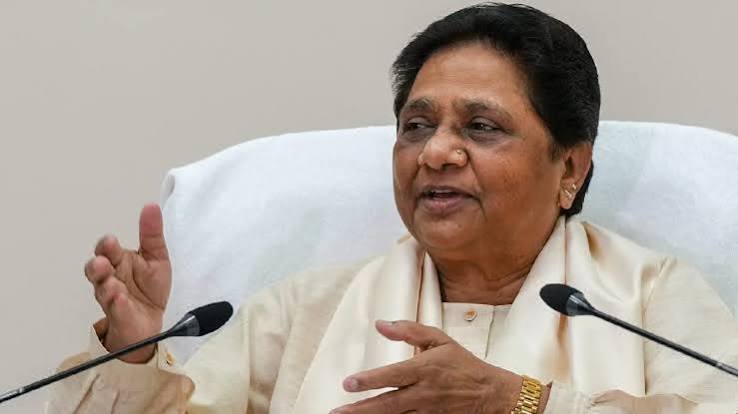
“Kanshi, your noble earnings, you awakened the sleeping community.” This slogan gave political voice to Dalit consciousness. But sometimes, more than the noise, someone’s silence is disturbing. This is the situation of the Dalit community regarding the BSP’s silence. “Kanshi, your noble earnings, you awakened the sleeping community.” This slogan gave political voice to Dalit consciousness. But sometimes, more than the noise, someone’s silence is disturbing. This is the situation of the Dalit community regarding the BSP’s silence. The party that fought for them under the leadership of Kanshi Ram, teaching them the lessons of existence and identity, is today silently witnessing its own decline. Today, BSP supporters may be thinking, “Mayawati, your leadership has sunk the BSP party.” The BSP and Dalit politics in Uttar Pradesh must be viewed in this light. The election atmosphere in Uttar Pradesh politics has once again heated up. Caste-based mobilization is once again gaining momentum. But this time the picture is a little different. Traditional voters of all parties are in a moral and political dilemma. The BJP is trying to appease its upper caste voters, angered by the UGC Act and neglect. The Samajwadi Party is striving to win back OBC and Muslim voters. The Congress is trying to regain lost ground. Some new players are also making their presence felt in the arena. Owaisi arrived as an electoral tourist, while Chandrashekhar, like a tourist guide, grabbed him and formed an electoral alliance. BSP’s Ideology: The creation of a ‘new’ and ‘just’ social order is the cornerstone of BSP’s ideology. The formation of BSP as a political force helped redefine concepts of social justice. BSP’s history begins with Kanshi Ram. Ultimately, on April 14, 1984, Kanshi Ram founded the Bahujan Samaj Party (BSP) to provide a strong political platform for Dalits and backward classes. This marked a historic turning point in the caste-based identity politics of Uttar Pradesh and India. Initially, most leftist and progressive forces ignored the BSP, claiming that it had no other goal than winning political power. In fact, Kanshi Ram deliberately pursued a clear social agenda rather than adopting a conventional economic program. The BSP united all Dalits and the underprivileged under the category of “Bahujan,” raising the Ambedkarite slogan of “We have to become the ruling class.” Who are the oppressed and the oppressors? The BSP advocated a single-point program: “Proportional representation for all groups in government, bureaucracy, and educational institutions.” The BSP defined Dalits as a “community of oppressed and humiliated masses” who could be liberated not merely through material benefits but by achieving “their own” political power. While poor Dalits were deprived of both social respect and political representation, poor Brahmins felt politically marginalized. It became clear that the “Bahujan” category itself suffered from internal contradictions. In particular, OBCs were facing a political crisis. A large section of the OBCs (Other Backward Classes), including Yadavs, Kurmis, and Lodhs, has gravitated toward the Samajwadi Party and the BJP. Today, these communities are at the forefront of violence and atrocities against Dalits. In rural areas, economic and social conflicts between land-owning OBC castes and landless Dalits have weakened the concept of “Bahujan unity.” The emerging OBC peasant class continued the culture of Shudra dominance and oppression, as they too sought to take advantage of the cheap labor force. In post-colonial India, Dalits were still left at the mercy of upper castes and land-owning peasant intermediate castes. Thus, Uttar Pradesh society witnessed a new “class of oppressors.” Furthermore, sub-caste divisions within Dalits (e.g., Jatav/Chamar versus non-Jatavs like Pasi, Valmiki, Dhobi, etc.) began to emerge, leading to fragmentation in Dalit politics. During this evolutionary phase of identity politics in Uttar Pradesh, the BSP lacks the political maturity to formulate a roadmap for long-term Dalit politics. Questions about Mayawati’s leadership: In terms of leadership style, Mayawati has emerged as the party’s sole and undisputed supreme leader after Kanshi Ram. Any decision within the party, be it ticket distribution, coalition formation, or ministerial appointments, is ultimately taken by Mayawati. Critics often criticize her style as “dictatorial” or “personality cult,” as she has not allowed any independent second-line leadership to develop within the party. However, from the Dalit community’s perspective, Mayawati’s centralized and rigid leadership symbolizes their pride and security. However, her silence for a decade has left Dalit voters confused. Dalits in the political psyche: Dalits vote for their caste for both symbolic and substantive reasons. This is certainly why Dalit voters are attracted to the BSP. But in the current electoral situation, if Mayawati fails to deliver any material benefits, they will stop supporting her. Chandrashekhar could directly benefit from this. This is where the question of identity arises, and therefore, it provides political parties and activists, including the BJP, SP, and Congress, with an opportunity to capitalize on the delicate and uncertain nature of identity politics. – Ravi Rameshchandra Courtesy: Hindi News
The Owaisi-Azad alliance: A Dalit-Muslim platform or a spoiler for opposition unity?
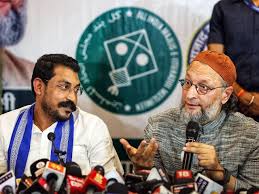
Asaduddin Owaisi and Chandrashekhar Azad have joined hands ahead of the 2027 Uttar Pradesh Assembly elections, projecting a Dalit-Muslim political alternative. But can this alliance translate social representation into electoral strength, or will it further complicate the opposition’s efforts to unseat the BJP? The announcement of the Samajik Parivartan Morcha—an alliance between Owaisi’s All India Majlis-e-Ittehadul Muslimeen (AIMIM) and Azad’s Azad Samaj Party (Kanshiram)—has added a volatile new dimension to UP politics. Unveiled in Lucknow on November 12, 2026, the front has named Azad as its chief ministerial candidate and declared its intention to contest all 403 Assembly seats. Positioning itself as a platform for the deprived and marginalised, the alliance has also invited the Samajwadi Party (SP) and the Congress to join forces to prevent the BJP from securing a third consecutive term. On paper, it is a compelling partnership: Owaisi brings a national profile and a consolidated base among sections of Muslim voters, while Azad has emerged as a prominent Dalit voice, particularly appealing to younger demographics. Yet, political alliances cannot be judged merely by the demographics their leaders represent. Their viability depends on organisational depth, local leadership, and the ability to convert social support into legislative seats. The central question is not whether Dalits and Muslims can unite politically, but whether this formation can build a meaningful alternative without fatally fragmenting the opposition vote. The Arithmetic of 403 Uttar Pradesh remains one of India’s most consequential electoral battlegrounds, where the margins of victory are often razor-thin. The 2022 Assembly results underscore this reality. The BJP won 255 seats with roughly 41.3% of the vote, taking the NDA tally to 273. The SP secured 111 seats with around 32.1%, bringing the broader opposition tally to 125. The BSP, once a dominant force, was reduced to a single seat. The arrival of a new formation targeting communities that traditionally vote for the opposition naturally raises concerns about vote distribution. While AIMIM and the Azad Samaj Party argue they are offering an independent choice, the reality of first-past-the-post electoral math is unforgiving. Where their candidates contest against the SP or Congress, the anti-BJP vote risks being fatally divided. The ‘Vote-Cutter’ Dilemma This brings us to the most contentious critique of the alliance: is it inadvertently acting as a ‘vote-cutter’? AIMIM has not built a significant statewide presence in UP; its influence remains concentrated in specific pockets. Owaisi’s high visibility does not automatically equate to a broad grassroots base. In constituencies with substantial Muslim electorates, tactical voting often dictates that voters back the candidate with the best chance of defeating the BJP. If an AIMIM candidate splits the vote against an SP nominee in such a seat, the beneficiary is almost always the BJP. A similar dynamic could play out between the Azad Samaj Party, the BSP, and the SP for the Dalit vote. While it is fair to criticise the alliance for potentially splitting the anti-BJP vote, labelling it a deliberately engineered “BJP B-team” requires evidence that currently does not exist. Furthermore, there is a democratic counterargument: voters from marginalised communities cannot be expected to remain permanently tethered to the electoral strategies of larger opposition parties. Smaller parties have a democratic right to carve out independent political space. Beyond Identity: The Need for a Common Programme The alliance’s most compelling proposition is the potential consolidation of Dalit and Muslim constituencies. Both communities have faced distinct but overlapping forms of marginalisation. However, the Bahujan Samaj Party’s history demonstrates how difficult it is to maintain a broad social coalition without sustained grassroots organisation and ideological clarity. For the Morcha to be a genuine social justice platform, it must offer more than identity-based mobilisation. It needs a common programme that addresses the diverse, everyday concerns of its constituents: unemployment, agricultural distress, education, healthcare, and social discrimination. Contesting all 403 seats is a monumental task requiring booth-level networks, financial resources, and robust candidate-selection mechanisms—not just high-decibel public rallies. The Organisational and Ideological Challenge Naming Chandrashekhar Azad as the CM face is a major political statement. His 2024 Lok Sabha victory from Nagina gave him a parliamentary mandate and proved his ability to win an independent base. However, translating a single constituency victory into a statewide consolidation is a different challenge entirely. For Owaisi, the partnership is an opportunity to expand AIMIM’s footprint in India’s most populous state. But the alliance raises immediate questions about political compatibility. Will AIMIM remain focused primarily on Muslim representation, or will it embrace a broader, secular social justice agenda? How will seat-sharing be negotiated? What happens when the radical constitutionalism of Azad clashes with the conservative religious politics often associated with Owaisi’s base? The alliance must establish transparent mechanisms to resolve such disputes. The BJP’s Silent Beneficiary The BJP’s strength in UP rests on its formidable organisational capacity, welfare outreach, and ability to build a broad social coalition. A divided opposition makes constituency-level contests vastly easier for the ruling party. Furthermore, this alliance hands the BJP ready-made messaging to paint the opposition as fractured and overly reliant on identity politics. While the BJP will undoubtedly benefit from this fragmentation, electoral consequences must be assessed through evidence, not assumption. The Morcha’s potential to help the BJP is a structural reality of vote-splitting, not necessarily proof of a secret understanding. The Missing Manifesto Beyond personalities and electoral calculations, voters deserve to know what the Samajik Parivartan Morcha actually proposes to do. What is the alliance’s concrete plan for job creation? How will it reform government schools and public healthcare? What specific measures will it propose to curb atrocities against Dalits and ensure communal harmony? Without a detailed, costed policy agenda, the alliance risks remaining a mere electoral arrangement built around the celebrity of its leaders. Empowerment Over Arithmetic The formation of the *Samajik Parivartan Morcha* opens a new chapter in UP politics. There is nothing undemocratic about smaller parties seeking independent space; established opposition parties cannot claim exclusive ownership of the votes of Muslims, Dalits, or any other community. But
‘Double engine now double zero’: Akhilesh says Dalits will oust BJP from UP
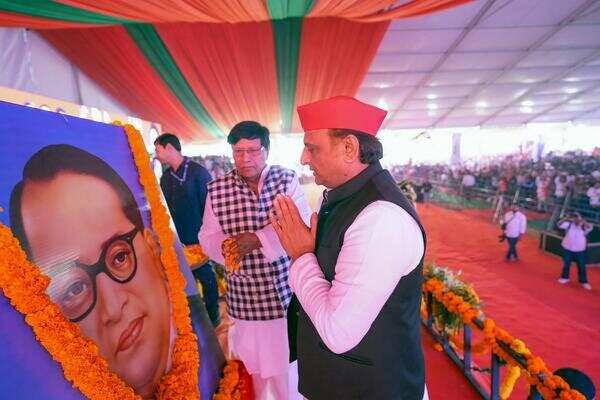
SP Chief Targets BJP Over Varanasi Poll Losses, Takes Swipe At Owaisi-Azad Front Agra: Samajwadi Party chief Akhilesh Yadav on Sunday said BJP’s much-publicised ‘double-engine’ model had turned into a ‘double zero’ and claimed that Dalits would oust the ruling party from Uttar Pradesh in the next assembly elections. Addressing a Dalit sammelan at GIC ground in Agra, the former chief minister cited BJP’s defeat in both Varanasi seats in the recent UP Legislative Council biennial elections and accused the party of failing Dalits on education, employment and social justice. “Those who once spoke of a double-engine govt have now been given a double zero by the voters of Varanasi this time,” Yadav said, referring to the results in which BJP won six seats and SP secured five, but the ruling party lost both Varanasi seats. Yadav also challenged Union home minister Amit Shah’s description of BJP’s position in UP as ‘Angad’s foot’, a reference to the Ramayana character whose foot could not be moved. He said the Agra gathering marked the beginning of a wider mobilisation of Dalits under SP’s PDA (Pichhde, Dalit, Alpsankhyak) campaign.“This Dalit sammelan marks the beginning of the PDA movement from Agra. Although this was organised as a Dalit conference for western UP, looking at the public support here, it feels as though this is turning into a Dalit conference for the entire country,” he said. “Those who claimed they were as immovable as Angad’s foot will find the ground slipping from beneath their feet after this Dalit conference. When there is no ground left, where will you plant Angad’s foot? This time, Dalits will overthrow BJP. The Dalit community is going to wipe out BJP once and for all,” Yadav added. Without naming AIMIM chief Asaduddin Owaisi or Azad Samaj Party (Kanshi Ram) president Chandrashekhar Azad, Yadav took a swipe at their newly formed political front, Samajik Parivartan Morcha, accusing its leaders of attempting to redefine PDA while suggesting that other political forces were controlling them. “I hear that even the newcomers have started giving definitions of PDA. They couldn’t understand PDA and started saying, ‘Palat Diye Akhilesh’. In Hindi, it doesn’t mean that,” he said. Calling them “political tourists”, Yadav added, “Their string is somewhere else, and the charkhi is somewhere else too. They will fly only as high as the slack they are given.” Turning to the condition of Dalits in UP, Yadav alleged that atrocities, discrimination and harassment had increased under BJP rule. “The maximum injustice in Uttar Pradesh has been inflicted on Dalits,” he claimed, adding that around 200 statues of BR Ambedkar had been vandalised across the state. He said PDA represented a broader struggle against injustice and discrimination, drawing a parallel with the Gen Z movement in Delhi. Yadav also accused BJP of facilitating question paper leaks and cancelling recruitment examinations, alleging that people linked to the ruling party were involved. “Those responsible for paper leaks have links with BJP. Examinations are being cancelled, and even an education minister had to be removed,” he said. He alleged that 26,000 schools had been shut in UP to deprive PDA communities of education and that the reduction in govt jobs had restricted employment opportunities for backward classes, Dalits and minorities. He also criticised BJP over rising prices and unemployment, claiming that essential commodities had become more expensive while jobs remained scarce. Highlighting projects undertaken during the previous SP administration, Yadav cited Agra Metro, high-speed expressways, the Agra-Noida expressway and Inner Ring Road, along with the 100 police emergency response service and 108 ambulance service. He also recalled the distribution of laptops to students, saying many families might still be using them. “This time, the lathi will lose and the laptop will win,” he said, contrasting SP’s emphasis on education and technology with what he described as BJP’s reliance on force. Yadav also claimed credit for establishing a power equipment factory in Aligarh and accused BJP of failing to build on development initiatives undertaken during his tenure. He said the PDA campaign would bring backward classes, Dalits and minorities together to challenge BJP in the next assembly elections. Courtesy : TOI Note: This news is originally published on https:/timesofindia.com/bha and is used purely for non-profit/non-commercial purposes, especially human rights
At Agra mega meet, Akhilesh hails ‘Damdar’ Dalits of PDA
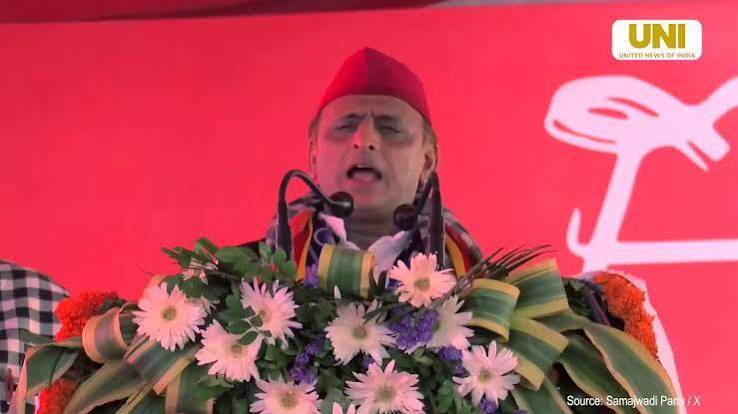
Lucknow: Adding a new shade to Samajwadi Party’s pitch for PDA, party president Akhilesh Yadav on Sunday described the ‘D’ part of the acronym as ‘Damdar (assertive) Dalit’ who have joined hands “to oust the BJP responsible for systematic targeting of community during the last 10 years”. Akhilesh was addressing a Dalit ‘Mahasammelan’, a mega conference in Agra on Sunday, when he described the turnout as nothing short of a national-level convention of the Dalit community. SP’s PDA pitch – comprising Pichhde (Backward classes), Dalits and Alpsankhyak (minorities) – has yielded electoral dividends in the 2024 Lok Sabha elections and the party plans to work on the idea more aggressively in the 2027 assembly polls in UP. Listing the way the BJP had targeted the Dalit community in ways more than one, the SP chief said around 200 statues of Dr Bhimrao Ambedkar had been vandalised during the decade-long tenure of the BJP govt and no action was taken against the accused. Akhilesh blamed the BJP govt for orchestrating paper leaks in recruitment exams to deny reservation opportunities to the community and others entitled to reservation provided by Ambedkar’s Constitution. “The closure of 26,000 govt primary schools has hit the PDA community the most,” he said. “This was a Dalit conference of western UP, but the turnout makes it appear like a national-level Dalit conference. The ‘D’ in PDA has now become ‘damdar Dalit’,” Akhilesh said. He credited party MP Ramji Lal Suman for the success of the event. Hitting out at the BJP for describing Agra as their ‘stronghold’, Akhilesh said the saffron party would soon lose their foothold in the region and beyond. “This time, the Dalit community will defeat the BJP,” he said and added that the 2027 polls would be a choice between laptop and lathi. “Lathi will lose and laptop will win the assembly polls,” Akhilesh said, suggesting that once voted in to oust BJP in the 2027 polls, the SP govt will resume free distribution of laptops to students. During its 2012-17 stint, the SP govt claims to have given away 15 lakh laptops. He questioned BJP’s criticism of his decision to visit Ram temple in Ayodhya, stating that it was the BJP govt that extended him the invitation. “The BJP is in panic mode because it has understood that the PDA community has learnt to win elections by the power of votes,” Akhilesh said. Questioning the claims of chief minister Yogi Adityanath that names of 1.27 crore Hindu voters have been deleted from electoral rolls, Akhilesh said how it was possible when the BJP was in govt and had handpicked the officials and administrative machinery. Akhilesh said the alert Dalit community got its names included in the voters list and the Muslims managed to save their names from being deleted. He cautioned PDA communities against further attempts to distort electoral rolls. “If we cannot save our vote, we will not be able to save our Constitution,” Akhilesh said. Courtesy : TOI Note: This news is originally published on https:/timesofindia.com/bha and is used purely for non-profit/non-commercial purposes, especially human rights