
‘BJP’s poster boy’: Punjab ex-minister Bharat Bhushan Ashu slams Union MoS Ravneet Singh Bittu Bittu over ‘enemy of state’ remark for Rahul Gandhi
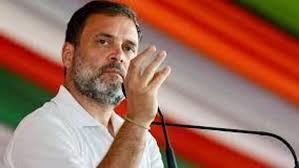
Ludhiana: Senior Congress member and former Punjab minister Bharat Bhushan Ashu launched a blistering verbal counter-attack on Wednesday against Union minister of state for railways Ravneet Singh Bittu, labelling his recent comments against Rahul Gandhi as “deeply irresponsible” and “unfortunate”. The friction follows Bittu’s controversial branding of the Lok Sabha’s leader of the opposition as “Desh ke Dushman” (enemy of the country), a statement that has ignited a firestorm within Punjab’s political circles. Ashu reminded Bittu, a three-time Member of Parliament, that his political foundations were built entirely on the support of the Gandhi family. Ashu noted that the Congress party had nurtured Bittu’s career, providing him with repeated opportunities and trust. “Just because you have become a poster boy of the BJP today does not mean you forget those who helped you rise in public life,” Ashu said, accusing Bittu of abusing his former mentors for “political convenience”. The Legacy Contradiction The former minister drew a sharp contrast between Bittu’s current rhetoric and the legacy of his grandfather, the late Punjab chief minister Beant Singh. “It is ironic that a person who claims to inherit Beant Singh’s legacy has abandoned the very principles his family stood for,” Ashu remarked. He pointed out that Beant Singh had sacrificed his life fighting the very “divisive forces” that the Congress alleges the BJP represents. Ashu argued that by switching sides for power and questioning the patriotism of others, Bittu has exposed a “lack of conviction.” ‘Sacrifice vs Rhetoric’ Ashu underscored the historical weight of the Gandhi family’s contributions to India, framing Bittu’s comments as a sign of political frustration rather than truth. Ashu reminded the Union Minister that both the Gandhi family and Beant Singh fought for the same cause — the unity and integrity of India. In a call for introspection, Ashu added: “Before pointing fingers at Rahul Gandhi, Bittu should remember that both Beant Singh and the Gandhi family laid down their lives for this country.” The Congress member concluded by stating that such reckless personal attacks serve only to lower the dignity of public life. Courtesy : TOI Note: This news is originally published on https:/timesofindia.com/bha and is used purely for non-profit/non-commercial purposes, especially human rights
Guru Ravidas for all, especially Dalits
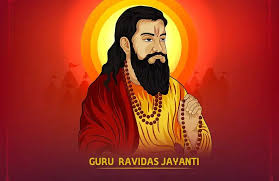
The visit of Prime Minister Narendra Modi to Dera Sach Khand Ballan un Punjab on February 1, 2026, to commemorate Ravidas Jayanti as well as the Padma Sri awarded to its patron saint Niranjan Das and all the attention has reinforced the contemporary relevance of Guru Ravidas, said Prof. Kumool Abbi. The unerring focus references the crystallisation of Dalit identity and the continuing patronage of various pilgrimage sites associated with Guru Ravidas. The most significant role in spreading the universal message of Guru Ravidas has been played by the Dera Sach Khand Ballan, in Punjab, which is a site of revitalised Dalit faith and continues to have a deep influence on Dalit lives across the globe. The building in Seer Govardhanpur in Benares has now become a very important pilgrimage site as well as a rallying point for the Dalits. Sri Guru Ravidas Janmasthan Mandir attracts visitors from across the world to commemorate his birth anniversary. A pilgrimage to the magnificent temple is consummate: it is where one goes for religious, political and social awakening. Guru Ravidas, a 15-16 Century bhakti poet, regarded as a contemporary of Kabir, is also said to have met Guru Nanak. Guru Ravidas firmly and steadfastly stood up for those on the marginalised sections of society and fought against Brahminical hegemony, dogma, ostentation, oppression, superstition and ritualism. He tried to reform the casteist and discriminatory practices dominant in that period. He was a voice of the oppressed and the subaltern. Born in a family of leather tanners, a profession he nobly practised and considered his Keerat (vocation), loftily continuing it all his life. His thoughts, poetry and life in practice, reflected his constant struggle to bring about social change by stirring the consciousness of the masses. He was consumed by the love of the divine. As he elucidates, “meri preet Gobind sio ji na ghatah, main mol mehngi lai jia satah (my love for the Lord of the universe does not decrease, I paid for it dearly in exchange for my soul)”. Forty-one shabdas of Ravidas bani have been included in the Guru Granth Sahib in the form of different ragas. Similarly, the Panchvani texts of the Dadupanthi tradition have incorporated some of Ravidas’ texts. His works contain the common thread of unflinching devotion to God who is projected in an abstract form as Nirguna (without attributes). It is believed Meera Bai, Queen Jhallan Bai of Chittorgarh and Raja Nagar Mel of Benares were his devotees. Guru Ravidas’ teachings and bani resonate across modern-day Punjab, Haryana, Rajasthan, Maharashtra, among others. He is regarded as the personification of Dalit identity and its subsequent assertion and expression. An icon of progressiveness and activism, Guru Ravidas visualised an ideal society of Begumpura, where no sorrow, discrimination, differences and oppression would exist. Courtesy : The Hindu Note: This news is originally published on https:/thehindu.com/bha and is used purely for non-profit/non-commercial purposes, especially human rights
PM Modi isn’t renaming Adampur Airport after Sant Ravidas without reason; it’s a major move in Dalit politics, here’s how.
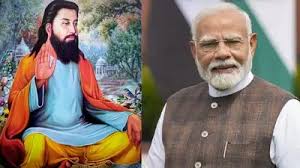
Prime Minister Narendra Modi is arriving in Punjab on Sunday on the occasion of the 649th birth anniversary of Sant Guru Ravidas. PM Modi will arrive at Adampur Airport at approximately 3:45 PM, where he will unveil the airport’s new name, ‘Shri Guru Ravidas Ji Airport, Adampur’. He will also inaugurate the terminal building at Halwara Airport in Ludhiana, Punjab. Adampur Airport’s name is changing Chandigarh: Prime Minister Narendra Modi is arriving in Punjab on Sunday. He will rename the Adampur airport after Sant Ravidas, who is revered especially among Dalits. He will also visit Dera Sachkhand Ballan, the headquarters of the Ravidassia community. This visit is part of his continued efforts to reach out to his followers, who are present in large numbers not only in Punjab but also in several other states. PM Modi’s decision to rename this airport as Shri Guru Ravidas Ji Airport comes on the occasion of the saint’s 649th birth anniversary, a demand that had been pending for a long time. By associating himself with this occasion and scheduling a visit to the Dera, PM Modi will send a strong message to the Dalit community. Focus on Sant Ravidas from Varanasi to Sagar The PM is emphasizing that he wants to nurture the community that is important for the BJP not only in terms of politics but also in terms of a broader cultural agenda. He has launched projects over the past few years for the development of the birthplace of the Bhakti movement poet-saint Ravidas. Born in Varanasi, he has also launched projects for building a memorial for him in Sagar, Madhya Pradesh, and has paid tributes at Ravidas temples. Meeting with Niranjan Das During his visit, Modi will participate in a public event and interact with the Dera’s spiritual head, Niranjan Das. Niranjan Das was also awarded the Padma Shri on the eve of this Republic Day. Punjab has the highest number of Dalits This Dera is located in Jalandhar, which is part of the Doaba region, where the Scheduled Caste population is higher than in the rest of the state. Dalits constitute approximately 32% of the population in Punjab, which is higher than in any other state, while in the Doaba region, this figure is around 42%. BJP’s focus on Punjab through Dalits Dalits in Punjab are divided into several sub-groups, with the Ravidasia community, which comprises 10-12% of the population, being a major sub-group, and Ravidas is a revered figure among the Scheduled Castes. Reaching out to members of marginalized castes has been a crucial part of the BJP’s Hindu unity agenda. This has helped the party’s growth. The Punjab Assembly elections are scheduled for early next year. Following the rapid rise of the Aam Aadmi Party (AAP) and the rift in relations between the BJP and the Akali Dal, four parties, including the Congress, are in the political race in the state. Curated by: Shashi Pandey Mishra About the Author Shashi Pandey Mishra is a Senior Journalist at Navbharat Times Online. She writes on politics, crime, health, and human interest stories. She also enjoys writing on issues related to women and children. She also writes ground reports and interesting stories. She has 18 years of experience in journalism. Courtesy: Hindi News
A Padma Shri & a visit by PM Modi: What’s behind BJP’s Dera Ballan outreach in Punjab
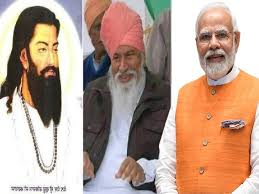
The visit is seen as a targeted strategy by the BJP to woo Dalit voters, particularly the Ravidasias and Ad-Dharmis, who often play a key role in close electoral battles in Punjab. Prime Minister Narendra Modi will visit Dera Sachkhand Ballan on February 1 for Guru Ravidas Jayanti. This is a strategic move by the BJP to attract Punjab’s significant Dalit voters, particularly the Ravidasias, ahead of next year’s Assembly polls. The visit aims to leverage identity recognition and secure support from this crucial demographic. *AI-generated summary. Check context in original text. Chandigarh: Prime Minister Narendra Modi is scheduled to visit Dera Sachkhand Ballan near Jalandhar on 1 February on the occasion of Guru Ravidas Jayanti, a move seen as part of the Bharatiya Janata Party’s (BJP) political outreach in the state to woo Dalit voters ahead of next year’s Assembly polls. The visit comes within days of the dera head, Niranjan Dass, being honoured with the Padma Shri. In December, the dera head, along with senior party leaders, met Modi and invited him for Gurpurab celebrations on 1 February. The dera head also requested the prime minister to centrally organise countrywide celebrations to mark the 650th birth anniversary of Guru Ravidas next year. With one year to go for the assembly polls in the state, experts see the prime minister’s visit as a more targeted strategy to reach out to specific caste communities that hold the key in closely contested electoral battles, particularly the Ravidasias and Ad-Dharmis, who constitute the largest subgroup among the Dalits in Punjab. “Ravidasias and other Dalit voters do not vote en bloc for a single party; they often shift depending on local issues, candidates and coalitions. The overt reaching out to the Ravidasia dera is strategically significant for the BJP,” says Dr Kanwalpreet Kaur of the department of political science, DAV College, Sector 10, Chandigarh. “The Ravidasias have been demanding recognition as an independent community, and the BJP intends to do just that—leverage identity recognition, aligning with the community’s demands for national visibility and respect for its spiritual leadership,” she added. ThePrint explains the significance of the prime minister’s visit to the central institution of the Ravidassia sect in the state. Also Read: BJP’s Ravidas Jayanti push to woo Dalits in poll-bound states — shobha yatras, sant sammelans BJP’s bid for a slice of the pie The BJP, once a junior partner of the Akali Dal, has been trying to build an independent electoral footprint in Punjab after the SAD-BJP alliance ended in 2020 over the contentious farm laws brought in by the BJP-led centre. The BJP’s strategy in the state has been successful enough for it to improve its vote share from 6.60 percent in the 2022 Vidhan Sabha elections to 18.56 percent in the 2024 parliamentary elections, cutting into the vote share of the AAP and the Congress. In the past year, the party has focused on increasing its foothold in rural areas dominated by Sikh peasantry. Dalits constitute almost 32 percent of Punjab’s population, the highest in the country. However, the Dalits are divided among Sikhs, Hindus and Christians, many of whom also follow deras. Deras, widespread on Punjab, are socio-religious centres of various sects and organisations. Unlike Sikh gurudwaras, where the Guru Granth Sahib is considered a living guru, derad are generally led by a living guru with a personal following. Dera Radha Soami Satsang Beas, Dera Sacha Sauda (headquartered in Sirsa) and Dera Sachkhand Ballan are the three most followed deras in Punjab, commanding a following running into several lakhs. Among the Dalits, the Ravidasias, Ramdasias and Ad-Dharmis are the major sub-groups, concentrated in the Doaba region districts of Jalandhar, Hoshiarpur, SBS Nagar and Phagwara. According to Dalit studies expert Ronki Ram of Panjab University in Chandigarh, the Ravidasias are the most prominent Dalit community in Punjab. “Out of the 39 SC castes in Punjab, the four major castes of Chamar (23.45 percent), Ad-dharmi (11.48 percent), Balmiki (9.78 percent) and Mazhabi (29.72 percent) constitute 74.44 percent of the total SC population,” he said. “Chamars are further divided into Ravidasias (leather workers) and Ramdasias (weavers). The Ravidasias are the most prominent for several reasons. They utilised the availability of reservation in education well, and are the most upwardly mobile. Many went abroad and constitute a large section of the NRIs from Doaba,” he added. As a result, Ronki Ram said, they have “become financially well-to-do”. “They have invested in Guru Ravidas deras and now have substantial social capital. They are also networked and, as a community, enjoy political clout,” he added. Guru Ravidas The Ravidasia identity is rooted in the teachings of Guru Ravidas, a 15th-century Bhakti saint and social reformer of the Chamar caste whose egalitarian message resonates with Dalit communities. “Ravidas was born into the Chamar caste, also known as Kutbandhla, one of the Scheduled Castes (SC) in Uttar Pradesh. Chamars are known by their profession of leather and tanning. They were oppressed and their touch and sight were considered polluting by the upper castes. Ravidas revolted against this inhuman system of untouchability. He adopted bhakti as a mode of expression for his revolt,” said Ronki Ram, quoting from his research paper. Guru Ravidas’s poetic hymns are also included in the holy text of the Guru Granth Sahib, considered a living Guru by Sikhs. “Ravidas holds a special place in the heart of Dalits, as he was one who unleashed a frontal attack on the traditional practice of caste-based social exclusion and oppression. Belonging to one of the lowest castes, his iconic figure continues to act as a catalyst in the emergence of a separate Dalit identity in Punjab,” said Ronki Ram. “Ravidas, as a spiritual figure who Omvedt (Gail Omvedt, an American sociologist) boldly called ‘the bhakti radical’, commands a massive following among his caste fellows, especially the Chamars in Punjab, who consider him their guru. They have built temples, gurdwaras, bhawans (memorial halls), educational institutions/ chairs, cultural organisations and hospitals in his name all over
Cook from Jalandhar castrated in Ludhiana transgender turf war.

Ludhiana: Police have launched a manhunt for a local transgender leader and nine associates following the abduction and forced castration of a 30-year-old cook, an attack allegedly sparked by a bitter territorial dispute. The victim, identified as Manpreet Singh of Jalandhar, was found abandoned and mutilated on a roadside on Tuesday, four days after he was reported missing. Police have claimed in their reports that Manpreet Singh worked as a cook for a transgender group led by Reshma Mahant. He vanished on the morning of Jan 24 after leaving for a walk in Ludhiana’s Khwaja Kothi Chowk area. An acquaintance of the victim, Vidhyarti Rao, has told investigators that the search for Manpreet Singh ended when an anonymous caller reported that he had been admitted to Ludhiana’s civil hospital in critical condition. “Manpreet told me that the accused and his aides abducted him, mutilated him, and dumped him on the roadside,” Rao stated in his complaint. The Investigation Police authorities believe the motive stems from a long-standing rivalry between Reshma Mahant’s group and a rival faction led by Rabina Mahant. The two groups have reportedly been at odds over “area distribution” — the informal division of neighbourhoods where transgender communities traditionally collect alms and perform at ceremonies. “We have registered a case based on the initial complaint, but the victim’s condition is critical,” said assistant sub-inspector Amarjeet Singh. “He has been referred to a hospital in Chandigarh for specialist care.” The Accused Police have registered a case against Rabina Mahant and nine others, identified as Suhana, Sona, Simmi, Kanika, Rehmat, Shiv Kumar, Dilawar, Hifazat, and Pooja. The suspects face charges under the Bharatiya Nyaya Sanhita (BNS), including sections 118 (1) & (2) (causing grievous hurt voluntarily by dangerous weapons) and 61 (2) (criminal conspiracy). Investigators are currently analysing mobile tower data and CCTV footage to track the suspects, who remain at large. A formal statement from the victim will be recorded once doctors declare him fit to speak. Courtesy : TOI Note: This news is originally published on https:/timesofindia.com/bha and is used purely for non-profit/non-commercial purposes, especially human rights
Don’t air internal issues in public: Congress warns Punjab leaders; no ‘group activity’ to be tolerated

NEW DELHI: The Congress on Thursday issued a stern warning to its Punjab leaders, asking them to stop airing internal differences in public or fuelling factionalism. The party asked them to instead work together to ensure Congress return to power in the upcoming 2027 assembly elections. The order came during a three-hour meeting convened by Congress president Mallikarjun Kharge at his residence in New Delhi, which was also attended by Rahul Gandhi, amid reports of infighting within the state unit, news agency PTI reported. Punjab goes to the polls in early 2027, and Congress is aiming to reclaim the state from the Aam Aadmi Party (AAP). Party leaders were asked to refrain from making statements against one another and were assured that there would be no immediate change in the state leadership. The high command, they were informed, would take decisions on candidate selection and campaign strategy in due course. AICC general secretary (organisation) KC Venugopal said Kharge and Gandhi reviewed the political situation in Punjab and heard the views of state leaders, describing the discussions as “very fruitful”. “The party has directed all leaders to refrain from making public statements on internal matters. Everyone may have their own views, but these should be raised only within party forums. Going to the media or spreading such issues on social media will not be tolerated,” Venugopal told reporters. He said the leadership had given a “very clear direction” and that all leaders present had unanimously agreed to it. On speculation about a leadership change in Punjab, Venugopal said there was “no question of it at present”. Addressing concerns raised by some leaders over representation of weaker sections, Venugopal said the Congress remained committed to ensuring adequate representation of Scheduled Castes, Scheduled Tribes, OBCs and economically weaker sections, including in Punjab. However, he stressed that such issues must be raised internally. “We have told the state leadership not to make statements in public. From tomorrow onwards, you will see the Congress united. We will fight the elections together and win Punjab,” he said. On reports of some leaders writing jointly to Rahul Gandhi seeking a separate discussion, Venugopal said individual requests were acceptable but “group activities” would not be tolerated. “If anyone wants to meet Rahul ji, they can write individually,” he said, adding that Kharge and Gandhi were planning a visit to Punjab soon. Courtesy : TOI Note: This news is originally published on https:/timesofindia.com/bha and is used purely for non-profit/non-commercial purposes, especially human rights
Punjab Congress in damage control mode after Channi’s Dalit representation demand
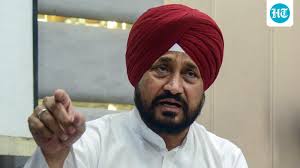
Days after Congress leader and former Punjab Chief Minister Charanjit Singh Channi called for greater Dalit representation in the party, which had brought the internal party discord into public view, the State unit on Tuesday (January 20, 2026) moved into damage control mode. Cracks appear in Punjab Congress over calls for Dalit representation in party by Channi Denying that there was any factionalism in the State Congress, Punjab Congress president Amarinder Singh Raja Warring said the Congress does not practice caste or communal politics, even as he asserted that there may are some minor differences among the leaders. Talking to media persons here during an informal interaction, he said, “Unlike the BJP, the Congress does not believe in polarising and dividing people in the name of caste or religion. Punjab in particular never believed in caste or sectarian divisions.” Responding to a question on factionalism in the Punjab Congress, he said, the party was completely united in the State. He added, “May be there are some minor differences among the leaders which are part of every organisation and even a family. But tell me where our leaders have worked on cross purposes against each other or against the party?” he quipped. He said even though there are 34 assembly seats reserved for the Scheduled Castes in Punjab, in case there are more deserving candidates from the SC community, they can still be accommodated. “If there are fifty deserving SC candidates, they will all get the tickets irrespective of the fact that only 34 are reserved for the SCs”, he said. To a question about the recent remarks made by Mr. Channi, the State president said he would not like to comment on that, pointing out that “Channi was made the Chief Minister after the removal of an upper caste Chief Minister Amarinder Singh and earlier he was made the Congress Legislature Party leader after the removal of an upper caste leader Sunil Jakhar.” “Channi was specially picked up to be the Chief Minister of Punjab in 2021 when no party MLA had supported him. Despite that, every leader and legislator welcomed the party’s decision,” he said. Recently, speaking during a meeting of the party’s SC wing, Mr. Channi stated, “In Punjab, if you accept that there is a 35-38% population of Dalits, which is there, then why are we not getting representation. Punjab Congress president is from upper caste, CLP leader is from upper caste, women wing of Punjab Congress from upper caste, Punjab Congress general secretary is from upper caste? Where do we go? Where will these people go?” said Mr. Channi, who is currently a Lok Sabha MP from Jalandhar. The Hindu Bureau Courtesy : The Hindu Note: This news is originally published on https:/thehindu.com/bha and is used purely for non-profit/non-commercial purposes, especially human rights
Punjab Congress embroiled in Jat Sikh vs. Dalit conflict, BJP sees an opportunity and offers Channi a deal
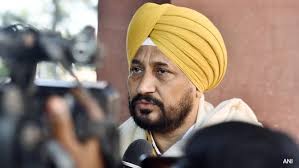
Former CM Channi is known as a prominent leader of the Dalit community in Punjab. The meeting was also attended by Rajendra Gautam, chairman of the Congress’s Scheduled Caste department. Currently, top positions in the Punjab Congress unit are held by Jat Sikh leaders. Internal strife has once again surfaced within the Punjab Congress. The matter is related to the Jat Sikh versus Dalit leadership dispute in the Punjab Congress. The issue escalated when a video of former Chief Minister Charanjit Singh Channi went viral. In the video, which went viral on social media, Channi can be heard demanding representation for Dalits in the party. The MP from Jalandhar also clarified that he did not speak about any particular caste or community and that he was a victim of malicious propaganda on social media. During his address at a meeting of the party’s Scheduled Caste (SC) wing on Saturday, Channi had said, “If you accept that the Dalit population in Punjab is 35 to 38 percent, which it actually is, then why are we not getting proper representation?” What Channi said about Dalits He further added, “The Punjab (Congress) president is from an upper caste, the leader of the legislative party is from an upper caste, the head of the Punjab Congress women’s wing is from an upper caste, the Punjab (Congress) general secretary is from an upper caste? So where do we go? Where will these people go?” Another video of him has also gone viral in which Channi is seen appealing to people not to record videos before he speaks. The Punjab Assembly elections are about two years away and are scheduled for 2027. Channi is known as a prominent leader of the Dalit community in Punjab. The meeting was also attended by Rajendra Gautam, chairman of the Congress’s Scheduled Caste department. However, the truth is that currently, top positions in the Punjab Congress unit are held by Jat Sikh leaders. The president of the Punjab Congress unit is Amarinder Singh Raja Warring and the Leader of the Opposition is Pratap Singh Bajwa. What did former CM Channi say about the controversy? Earlier, when Channi was asked about this, he said, “I didn’t say anything like that in the meeting.” He had called the whole matter propaganda, but now Channi’s speech in the meeting has revealed the truth behind the ongoing Jat Sikh versus Dalit leadership dispute in Punjab Congress. However, the Congress party has also become alert after this matter came to light. According to a party source, this issue is likely to be discussed in the meeting of state-level leaders called by the party high command on January 23. Congress in turmoil, BJP targets the party Amidst this development, BJP leader Kewal Singh Dhillon on Monday urged Channi to join the BJP, saying that he would get due respect in the party. Dhillon said in a post on X, “Channi ji, as a proud Punjabi, I believe that your stance on Dalit representation reflects leadership and secular values. In the Punjab unit of the BJP, you will get respect, dignity and a real opportunity to serve every community. Let’s work together for the future of Punjab.” Mohit Malhotra Courtesy: Hindi News
G Ram G ‘anti-dalit’, restore MGNREGA: Punjab assembly passes resolution
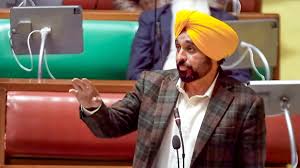
Chandigarh: Punjab vidhan sabha on Tuesday “unanimously” passed a resolution accusing the BJP-led Centre of taking away the livelihood of dalit labourers and poor families by “scrapping” MGNREGA and replacing it with the VB-G RAM G Act. Dubbing the new Act “anti-Dalit”, and a “deliberate and dangerous conspiracy” that has effectively taken away the right to survival of Dalit labourers across the country, the House demanded that it be immediately withdrawn, and MGNREGA restored to its original rights-based form. The resolution also took sharp aim at Shiromani Akali Dal, accusing the party of maintaining “silence” on the issue. “This silence is because they hope to re-establish their alliance with the BJP in 2027, even if the dalits have to pay the price for it. Keeping silent on the verdicts against dalits is also a crime,” it said. The resolution further alleged that the Centre moved beyond merely dismantling a “govt scheme” to effectively destroying the “right to survival” for the country’s dalit labourers. According to the resolution, the BJP’s decisions repeatedly prove a desire to marginalise them and reflect a sentiment that “BJP hates Dalits”. The resolution said, “Attacking MGNREGA is actually an attack on the dignity and existence of Dalits.” Through the resolution, the House noted that the “abolition” of the programme—which previously allowed labourers to stay in their villages, educate their children, and live with dignity—is a direct attack on the “dignity and existence” of the community. According to the text, the “scrapping” of the scheme “extinguished the kitchen stoves” of families. The resolution, moved by the rural development and panchayats minister Tarunpreet Singh Sond, said, “A govt that extinguishes the kitchen stoves of the dalit forfeits its moral right to seek votes from the community. This House clearly states that the policies of the BJP-led Centre are anti-Dalit.” It stated that the decision to “abolish MGNREGA” is not merely an administrative choice but a “declaration of thought from an anti-dalit perspective”. “MNREGA was the last means of survival for millions of dalits and poor dalit families in the country. It was the system that allowed dalit labourers to stay in their villages, earn their livelihood through hard work, send their children to school, and live with dignity,” the resolution said. “This House therefore recommends that the state govt demand from the BJP-led Centre govt to immediately withdraw the decision to scrap MNREGA, that MNREGA be fully restored to its original right-based form, and ensure guaranteed work and wages for Dalit labourers and poor Dalit families across the country,” it said. The resolution concluded by reaffirming that the Punjab vidhan sabha stands firmly with labourers and demands that the “abolition” of these rights be reversed to protect the “original right-based form” of the employment guarantee. ‘Extra burden on states’ Concerns were raised over the shift in financial responsibility from a fully centrally sponsored model to a 60:40 Centre-state sharing model under the new Act. It was pointed out that the change will impose an additional financial burden on states like Punjab that are already facing financial difficulties. Furthermore, if central budget limits are reached, the state must bear the entire responsibility for unemployment allowances and 100% of the costs for work provided beyond the federal allocation. A Congress MLAs alleged that there was an attempt to scrap the scheme, as the states will not be able to bear the exorbitant financial burden. The opposition party also offered support to the AAP govt to take its fight against the scheme to Delhi. Courtesy : TOI Note: This news is originally published on https:/timesofindia.com/bha and is used purely for non-profit/non-commercial purposes, especially human rights
MGNREGA dilution an attack on Dalits rural poor and federalism Bajwa
Chandigarh, Leader of the Opposition in Punjab Assembly Partap Singh Bajwa on Friday said, with the VB-G RAM G Bill, Centre will have “another tool” to discriminate against Opposition-ruled states by cutting funds arbitrarily. He criticised the BJP-led Union government over the Bill — aiming to replace the Mahatma Gandhi National Rural Employment Guarantee Act (MGNREGA) — calling the decision “ideologically driven”. Bajwa said the move was aimed at weakening the statutory right to work embedded in MGNREGA and dismantling one of the most important social security schemes in the country. He termed it an attack on the legacy of Mahatma Gandhi. The LoP opposed the proposal to change the funding structure with the new scheme — from 100 per cent central assistance to 60:40 cost-sharing between the Centre and the states — saying it would put an additional financial burden on the already-stressed states. “This will give the Centre another tool to discriminate against the Opposition-ruled states by cutting funds arbitrarily. It undermines cooperative federalism and threatens a crucial employment support system for rural India,” Bajwa said. Highlighting Punjab’s financial situation, the Congress leader said the Centre has repeatedly squeezed Opposition-ruled states by withholding the rural development fund and delaying GST compensation. Imposing extra financial responsibility would further weaken state finances, the LoP said. According to Bajwa, the policy shift would hit Dalits, landless labourers and marginalised rural workers the hardest. “This is not a reform but an attack on social justice,” he added. He said MGNREGA, enacted by the Congress-led UPA government under former prime minister Manmohan Singh, had gained global recognition for providing a rights-based framework to address rural unemployment. (This story has not been edited by THE WEEK and is auto-generated from PTI) Courtesy : The Week Note: This news is originally published on https:/theweek.com/bha and is used purely for non-profit/non-commercial purposes, especially human rights