
Tamil Nadu: Dalit outfit seeks aid, job for Kodaikanal murder victim’s wife
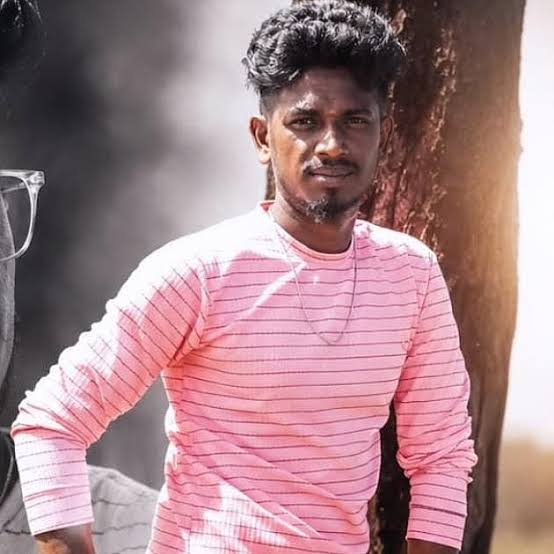
According to sources, V Ramar (28), a daily wager from Poombarai panchayat in Kodaikanal, was deployed at farmland in the hill region. DINDIGUL: Alleging delay in providing compensation to the family of a Scheduled Caste murder victim in Kodaikanal, a Dalit outfit sought a government job for the victim’s wife in accordance with her qualifications along with the immediate dispersion of the compensation. According to sources, V Ramar (28), a daily wager from Poombarai panchayat in Kodaikanal, was deployed at farmland in the hill region. On July 30, a group of members from the dominant community allegedly hacked him to death. An FIR was registered at the Kodaikanal police station on July 31. Speaking to TNIE, Dalit Liberation Front (DLM) state president C Karuppiah said that under the Scheduled Castes and the Scheduled Tribes (Prevention of Atrocities) Amendment Rules, 2016, `6 lakh should be provided as compensation after the postmortem, while the remaining `6 lakh should be given after the chargesheet is filed in court. “Ramar’s postmortem was conducted on July 31, but the first instalment has not been given. Apart from this, the victim’s wife was offered a job within a week. But she was given a cook’s job at an Adi Dravidar Welfare School in Kodaikanal. The eligibility for a cook is no formal education, whereas she has completed Class XII. She could have been given a clerk or assistant position in the district administration,” he said. An official from the Adi Dravidar Welfare Department, Dindigul, said the job vacancy was within the purview of the department, and the cook’s post was offered as the victim’s wife had sought immediate employment for survival. “Based on the approval of the collector, the appointment was sanctioned. Other government job vacancies come under the Tamil Nadu Public Service Commission (TNPSC), and it takes time for the victim’s family to get such a job,” the official said. Regarding the compensation, the official said there are five legal heirs. “The `6 lakh compensation will be settled in two instalments. `1.88 lakh will be given on Tuesday and the remaining amount within a week. Since one part comes from the state government and the other from the Union government, the process is being carried out accordingly,” the official said. Courtesy : TNIE Note: This news is originally published on https:/thenewindianexpress.com/bha and is used purely for non-profit/non-commercial purposes, especially human rights
Why are you not suspending him? Kerala HC pulls up State over inaction against cop in Dalit student suicide case
The Court asked whether higher-ranking police officials were attempting to protect their colleague from disciplinary action. The Kerala High Court on Monday questioned the State over its failure to suspend Deputy Superintendent of Police (DSP) Sudheer Kallan despite a finding of serious procedural lapses in the arrest of an accused in the case concerning the suicide of Dalit dental student Nithin Raj. Justice A Badharudeen said police’s negligent approach had initially led to the release of the prime accused Dr M Kodanda Ram, a Kannur Dental College professor. “Why are you not suspending him? The report states that there are serious procedural lapses coupled with a careless and negligent approach in the investigation by the police personnel who arrested him. The preparation of the arrest-related documents resulted in the release of the accused. Even after finding all this, he has not been suspended?” Justice Badharudeen orally asked. The Court was hearing the plea fled by victim’s parents, who have been seeking clarity on the investigation and circumstance surrounding the arrest of Dr. Ram. Nithin Raj, a dental college student in Kerala, died by suicide on April 10 after jumping from a building near the college. Before his demise, Raj is alleged to have faced caste-based harassment from the faculty at the dental college. The police registered a case for abetment of suicide and offences under the Scheduled Caste and Scheduled Tribes (Prevention of Atrocities) Act, 1989 (SC/ST Act) and arrested the prime accused, Dr. Ram. However, his initial arrest had been declared illegal by a trial court after the police failed to furnish mandatory grounds of arrest to the accused. He was subsequently re-arrested by the Crime Branch. Today, Special government pleader Rasheed C Nooranad told the Court that following a preliminary enquiry by Superintendent of Police of Wayanad, the State Police Chief has recommended disciplinary proceedings against DSP Kallan. However, he added that the disciplinary proceedings would be initiated only after the completion of a proposed enquiry by a panel of officers. Justice Badharudeen questioned the need for another enquiry when an oral enquiry has already found serious lapses in the arrest. The Court further asked whether higher-ranking police officials were attempting to protect the DSP. The judge made it clear that the government should take necessary action rather than wait for the Court to direct every step. “I don’t have an opinion that the government is not bonafide. The remedies available to the accused let him avail those, you (government) do your job. The job of police is to arrest. Court’s job is to take decision when such action is challenged,” Justice Badharudeen remarked. The Court in its order today, recorded that the officer had committed serious lapses but no immediate action was being taken by the State and instead a panel of competent enquiry officers is slated to be appointed. It directed the State Police Chief to consider the enquiry report and pass necessary orders while also directing that the proposed panel be constituted within one week. The matter will be heard next on August 17. Praisy Thomas Courtesy : Bar and Bench Note: This news is originally published on https:/barandbench.com/bha and is used purely for non-profit/non-commercial purposes, especially human rights
Protests escalate after the acquittal of 40 accused in the Dangawas massacre, with the Dalit community taking to the streets.
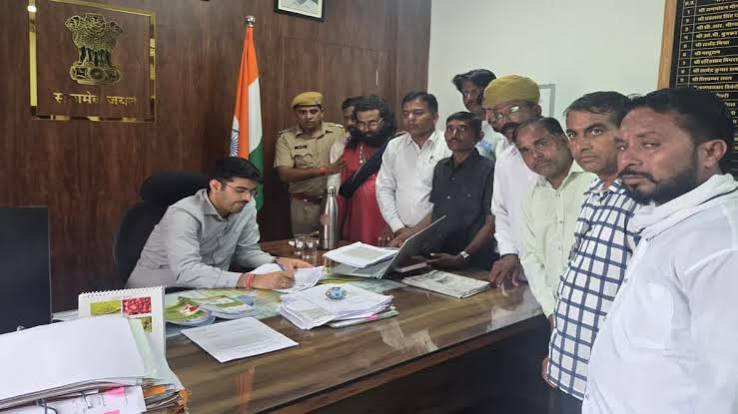
Representatives of the community questioned who committed these murders if all the accused are innocent. Kuchaman City: Activists of the Bhim Army-Azad Samaj and the Meghwal Samaj in Didwana submitted a memorandum to the President, Governor, Chief Minister, and Chief Justice of the Rajasthan High Court through the District Collector in protest of the Special SC/ST Act Court, Merta, granting the benefit of doubt to all 40 accused in the highly controversial Dangawas massacre case in Didwana-Kuchaman district. The memorandum stated that all 40 accused were acquitted after nearly 11 years of trial in the Dangawas case. Community representatives questioned that if six people were murdered in this case, and all the accused are innocent, who committed these murders? The verdict has created a sense of insecurity and distrust in law and order among the victim families and the Dalit community. Read: Politics heats up again after the acquittal of the accused in the Dangavas massacre; former minister Bhupesh Baghel meets with the victim’s family Demand for High Court Appeal: The memorandum demanded the Rajasthan government appeal the verdict in the Dangavas case in the Rajasthan High Court. It also demanded effective steps to enhance the security of the victim families and ensure justice for them. The memorandum also questioned the presiding officer’s decision during the hearing, stating that the verdict was unjust to the victims. Community representatives demanded an impartial review of the entire case. Allegations of Most of the 18 Demands Not Fulfilled: Bhim Army District Secretary Rajuram Chand Basni stated that after the Dangavas incident, an agreement was reached with the government on 18 demands. According to him, many of the demands, except for a CBI investigation, remain unfulfilled. The memorandum demanded the fulfillment of all these demands so that the victim families and society can reassure that the law is equal for all. Chand Basni stated that the verdict in the Dangavas massacre has deeply shocked the victim families and society. The acquittal of all accused in the murder case of six people raises serious questions. He said that the government should strongly appeal this decision in the High Court and provide security to the families of the victims. He added that society’s struggle will continue until justice is achieved. Six deaths: Advocate Manjit Gandhi said that six people died in this long-drawn-out case, and now all the accused have been acquitted, giving them the benefit of the doubt. Therefore, the government should conduct a legal review of the decision and appeal to the High Court. Courtesy: Hindi News
Punjab Election 2027: BJP prepares to break into the Dalit vote bank. Will the Punjab situation change in 2027?

The BJP has now grasped the power of Dalit voters and the caste equations in Punjab. In the last Punjab elections, a simple Dalit candidate from the Aam Aadmi Party defeated the veteran former Congress Chief Minister Charanjit Singh Channi. The BJP now sees Dalit voters as game-changers. Punjab has the highest percentage of Scheduled Caste (SC/Dalit) population in any state in India. Dalits constitute approximately 32% to 33% of Punjab’s population. The Jat Sikh population is approximately 19% to 21%. Urban non-Dalit Hindus constitute approximately 18% to 20%. Other Backward Classes constitute approximately 20% to 31%. With the approach of the 2027 Punjab Assembly Elections, the political landscape in the state is beginning to unfold. The BJP, which has long relied on Punjab’s urban Hindu vote and as a stooge of the Akali Dal, is now fully prepared to take the lead. For decades, the BJP, confined to a minor coalition partner in Punjab, is preparing for a major political shift. The party has set its sights on the Dalit vote bank, the state’s largest social force. Following the success of the Haryana model of non-Jat and backward-Dalit alliances, the BJP is also constructing a maze of non-Jat Sikh and Dalit-Hindu alliances in Punjab. Its direct aim is to directly target the support base of the Congress and the Aam Aadmi Party. Dalits constitute approximately 32% to 33% of Punjab’s population. Jat Sikhs constitute approximately 19% to 21%. Urban non-Dalit Hindus constitute approximately 18% to 20%. Other Backward Classes constitute approximately 20% to 31%. However, Punjab’s Dalit community is not a unified whole; rather, it is primarily divided into two or three major religious and social factions: Sikhs and Hindus of the Ravidassia group, influenced by Dera Sachkhand Ballan. They constitute approximately 13% of the population and reside in the Doaba region of Jalandhar and Hoshiarpur. Second, the Mazhabi Sikhs, primarily affiliated with the Sikh religion, constitute approximately 10% of the population. They reside in the Malwa and Majha regions. Third, the Bhangi Hindu Sikhs constitute approximately 3.5% of the population and reside in urban and rural areas across Punjab. The BJP is now eyeing these voters. Will this BJP move be successful? Punjab’s 117 assembly seats are divided into three major regions. The BJP is seeking its counterweight in these regional and social dynamics. The Malwa region, which has 69 seats, will be the BJP’s target this time. Malwa, traditionally a stronghold of the Shiromani Akali Dal and the Congress, has completely shifted to the Aam Aadmi Party in 2022. There has been a long-standing tension between Jat Sikh farmers and Mazabi Sikh laborers over land and resources. What are the preparations for this time in Malwa, Doab, and Majha? Doab, which has 23 seats, is primarily a Congress-held area. It is considered the “Dalit capital” of Punjab, with a Dalit population of over 40%. This region has been a traditional stronghold of the Congress and Bahujan Samaj Party, where the Ravidassia and Ad-Dharma communities play a decisive role. Majha, meanwhile, has 25 seats. The last election saw a direct contest between the Congress and the Aam Aadmi Party, with the latter winning. This region encompassing Amritsar, Gurdaspur, and Tarn Taran is considered the center of sectarian Sikh politics, with the Congress, AAP, and the Akali Dal competing here. Will Dalit votes be divided along Haryana lines? In Haryana, the BJP consistently won elections by uniting Jats versus non-Jats and non-Jat Dalits. The BJP is pursuing a similar strategy in Punjab. For decades, the Chief Minister’s post in Punjab has been held by the Jat Sikh community, with the exception of Charanjit Singh Channi. The BJP is attempting to convey the message to non-Jat Sikh, Dalit, and Hindu voters that they have not received their due share in the state’s political leadership. The BJP is also working to bridge the social divide within Punjab’s Dalits between the religious Sikh and Ravidassia-Valmiki communities. The BJP’s primary goal is to attract sub-groups that received less representation in power during the Akali Dal and Congress regimes through organizational and welfare schemes. The BJP’s ‘Chakravyuh’ to encircle the Congress and AAP The BJP has prepared a three-pronged siege for Punjab 2027. First, deras like Dera Sachkhand Ballan and Dera Radha Soami Satsang Beas have a strong influence on Punjab’s Dalit vote bank. Through the central government, the BJP has prioritized direct contact with dera leaders and connectivity projects like the Kartarpur Corridor and the beautification of Guru Ravidas Maharaj sites. Second, the Congress made a major move by appointing Charanjit Singh Channi as the first Dalit Chief Minister in 2021. The BJP is now questioning why the Congress did not continue this experiment after Channi, which could have dented the Congress’s Dalit base. Third, the central government’s welfare schemes will be used to counter AAP’s freebies. The Aam Aadmi Party won in 2022 with significant support from Dalits and the poor. The BJP is now attempting to counter AAP’s freebies by capitalizing on the PM Awas Yojana, free rations, and schemes for Dalit entrepreneurs directly in villages, thus neutralizing the impact of AAP’s free electricity and water. Overall, the road ahead for the BJP in Punjab is not easy. The resentment against the BJP in rural areas, particularly among Jat Sikh farmers, stemming from the protests against the three agricultural laws remains a major challenge. Furthermore, the BJP lacks a strong local grassroots cadre like other parties in rural Punjab and the Malwa region. Furthermore, if the BJP focuses solely on the Hindu and Dalit equation, it risks facing a blanket opposition from the Sikh sectarian vote. Reported by: Ravi Shankar Singh Courtesy: Hindi News
‘Use of force against peaceful protesters wrong’: Rahul Gandhi condemns police action on Jharkhand students

NEW DELHI: Leader of opposition in Lok Sabha Rahul Gandhi on Monday condemned the alleged use of force by the police against the protesting students in Jharkhand, saying that violence against a peaceful protest is wrong. During a press conference, Rahul said, “We condemn any violence against peacefully protesting students. It does not matter where it is happening. We condemn it, we are against it, we do not recommend it, and we do not support it.” “As long as the protest remains peaceful, attacking that protest with violence is wrong,” he added. Earlier, in a social media post on X, the Congress leader said that students have a right to peaceful protest, and only dialogue can yield solutions. “Students have a right to peaceful protest, and only dialogue can yield solutions. The Jharkhand government must continue to hear these students out and resolve their issues immediately,” the leader of opposition (Lok Sabha) posted on X. This came as the BJP has repeatedly criticised Rahul over his “silence” on the students’ protest in Jharkhand, which is ruled by the Jharkhand Mukti Morcha (JMM), an ally of Congress in the INDIA bloc. The protest has been led by aspirants seeking greater transparency, accountability and fairness in the recruitment process. The students marched towards the assembly premises despite heightened security arrangements in the area as their protest over alleged irregularities in recruitment examinations continued. Police carried out a lathi charge, fired tear gas and deployed water cannons after the protesters moved closer to the Assembly. The march escalated after protesters managed to break through several barricades put up by security personnel and continued towards the Vidhan Sabha. Water cannons were used after the protesting students breached multiple barricades. The students have maintained that their agitation will continue until their demands regarding the recruitment examinations are addressed and concrete action is taken against those responsible for irregularities. Meanwhile, in a major development in the investigation, the state police’s Criminal Investigation Department (CID) on Monday arrested Jharkhand Public Service Commission’s (JPSC) former Chairman L Khiangte. Courtesy : TOI Note: This news is originally published on https:/timesofindia.com/bha and is used purely for non-profit/non-commercial purposes, especially human rights
Adivasi-Dalit convention seeks justice for Jogi, Muthanga violence victims

Adivasi-Dalit convention and Declaration of Rights held at Sulthan Bathery in Wayanad on Sunday. Bommi Amma of Cheeral, the oldest surviving participant in the Muthanga struggle, inaugurated the gathering Bommi Amma, the oldest surviving participant in the Muthanga agitation, inaugurating the Adivasi-Dalit gathering at Sulthan Bathery in Wayanad on August 9. Bommi Amma, the oldest surviving participant in the Muthanga agitation, inaugurating the Adivasi-Dalit gathering at Sulthan Bathery in Wayanad on August 9. | Photo Credit: Special Arrangement As part of intensifying protests demanding a comprehensive inquiry into the death of Yogi (Jogi), who was reportedly killed in police firing during the 2003 Muthanga land agitation and the alleged human rights violations in connection with the stir, an Adivasi-Dalit convention and Declaration of Rights were held at Sulthan Bathery in Wayanad on Sunday (August 9) on the occasion of the International Day of the World’s Indigenous Peoples. The gathering was inaugurated by Bommi Amma of Cheeral, the oldest surviving participant in the Muthanga struggle. Several people who participated in the land stir shared their experiences at the meeting, organised by the Adivasi Gothra Mahasabha (AGMS) and the Ambedkarite Democratic Front (ADF). In the evening, a cultural procession was taken out through the town under the leadership of the Adi Shakti Summer School, followed by a public meeting at the Municipal Town Hall. It was inaugurated by ADF State working chairperson K. Ambujakshan. AGMS general secretary P.G. Janardhanan made the Declaration of Rights. The resolution demanded a fair investigation into Jogi’s death, implementation of the direction issued by the National Human Rights Commission calling for a comprehensive inquiry into the human rights violations during the Muthanga agitation and adequate compensation for all those affected by the violence. Sivan Yogi, son of Jogi, and others attended. The Muthanga land agitation has returned to the limelight after the Kalpetta Principal Sessions Court, on July 31, acquitted all the accused who stood trial, including social activist M. Geethanandan, in the case relating to the murder of police constable K.V. Vinod. However, the court convicted Geethanandan and three others on other charges related to the case and sentenced each to five years of rigorous imprisonment. The Hindu Bureau Courtesy : The Hindu Note: This news is originally published on https:/thehindu.com/bha and is used purely for non-profit/non-commercial purposes, especially human rights
15-year-old girl missing in Umri Begamganj: Case registered based on father’s complaint
A case of kidnapping of a 15-year-old Dalit girl has come to light in the Umri Begamganj police station area. Based on the girl’s father’s complaint, police have registered a case against Vishram Chauhan, son of Shyamu Chauhan, a resident of Umri, and have begun an investigation. Family members stated that after the girl went missing, they searched for her extensively, but no trace of her was found. Following this, the father submitted a written complaint to the police, demanding action. Station House Officer Pawan Mishra informed that a case has been registered in this matter. Police are searching for the girl based on the location of the accused’s mobile phone. He also stated that the girl will be recovered soon and the accused will be arrested. Ravi Prakash Mishra | Belsar (Gonda), Gonda Courtesy: Hindi News
Yavatmal Murder Case | Dalit woman elected Sarpanch on a general seat, then murdered her husband out of enmity: Bombay High Court upholds life imprisonment for 10 convicts!
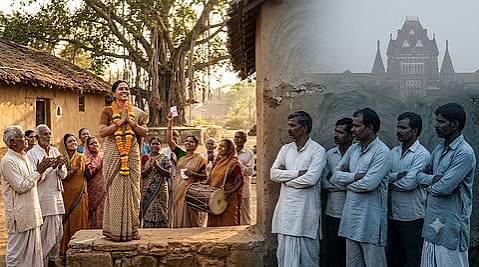
The division bench stated in its 179-page judgment that a comprehensive consideration of the oral evidence, medical and forensic evidence, and other proven facts establishes beyond reasonable doubt that the accused assembled unlawfully and, with a common objective, committed the murder of Mahesh Gawande out of political enmity. Yavatmal – The Nagpur bench of the Bombay High Court has delivered a major verdict in the highly publicized 2018 Sarpanch-husband murder case in Parwa village, Yavatmal district. The division bench of Justice Urmila Joshi-Phalke and Justice Nivedita Mehta dismissed the appeals of the ten convicts, upholding the life imprisonment sentences awarded by the Special (Prevention of Atrocities) Court in Yavatmal. The verdict was delivered on August 4. The murder of a woman’s husband in broad daylight by multiple assailants in a village political battle, and the subsequent eight-year legal battle, has reached a crucial juncture with this High Court decision. What is the whole matter? Nalini Gawande, a resident of Parwa village in Yavatmal district, was elected as a Gram Panchayat member in April 2015. In January 2016, after a no-confidence motion was passed against the then Sarpanch, Rama Chimurkar. The post of Sarpanch was reserved for the general category, and Nalini, who belonged to the Dalit Buddhist community, became Sarpanch, a move opposed by a faction in the village. Munna Thakur, a prominent among the accused, openly objected to this election, and since then, a continuous conflict has erupted between the two factions. In December 2017, the accused abused Nalini’s husband, Mahesh Gawande, on the basis of caste, while in January 2018, a dispute erupted again over the distribution of hand pumps in the village. On January 27, 2018, accused Munna Thakur directly threatened over the phone that “her husband would be killed.” The very next day, on January 28, the accused attacked Nalini’s home, vandalized household items, and also assaulted Prafull Shabarkar. Fed up with this constant harassment, Nalini Gawande and her family moved to Yavatmal city. Murder in broad daylight On March 27, 2018, at around 1 p.m., Nalini returned to Parwa village with her husband Mahesh, son Mayur, and nephew Samyak to carry out repairs. At around 1 p.m., Mahesh Gawande left the house to have a snack with Sheikh Imran and Sheikh Israel, the repairmen. Mahesh was talking to Prashant Shabarkar, Nitin Lokhande, Raju Kawale, and Prakash Bhagat, who were playing cards near the Anganwadi, when the accused, armed with deadly weapons, formed an unlawful assembly and attacked Mahesh Gawande. Hearing the noise, son Mayur and nephew Samyak rushed to inform Nalini of the incident. Nalini then rushed to the scene and witnessed the accused attacking her husband with weapons. She screamed for help, which drew a crowd, and the accused fled the scene. Police arrived at the scene, and Mahesh was rushed to the Yavatmal District Hospital, where he had already died by the time they arrived. Nalini filed a police complaint that evening. According to the post-mortem report, a total of seventeen wounds were found on Mahesh Gawande’s body, including stab wounds near the left eye, on the cheek, on the jaw, on the forehead, on the chest, and on the abdomen, and a slit wound was also found. Medical officials concluded that these wounds were caused by sharp and sharp weapons, such as a knife, chopper, sword, and sickle, and determined the cause of death to be multiple stabbings and slashing of the throat. What the Investigation Revealed During the investigation, police recovered swords, sickles, and other weapons from the accused. The chain of custody of these weapons was established by the police through various panchnamas. Samples of soil collected from the crime scene and the nails of the body matched, which was confirmed by forensic examination and strengthened the eyewitness testimony. A total of eighteen witnesses were examined during the investigation, including Nalini Gawande, her son Mayur, and key eyewitnesses Sharda Narayane and Prashant Shabkar. Following the completion of the investigation, the police filed a charge sheet, and the trial was held in the Special (Prevention of Atrocities) Court of Additional Sessions Judge-2 in Yavatmal under Special Case No. 18/2018. On January 20, 2020, the Sessions Court convicted the accused under sections 302 (murder), 149 (unlawful assembly, offence committed with common intention), 120-B (conspiracy), 143, 147, 148, and 201 of the Indian Penal Code and sentenced them to life imprisonment. The accused appealed to the High Court. Ten convicts—Sunil Deotale, Hanuman Pendor, Shubham Tekam, Raj Thakur, Munna Thakur, Vinod Chapriya, Sumit alias Pandya alias Sumedh Meshram, Praveen Bhagat, Bhimrao Awathare, and Swapnil Kumbhekar—filed five separate criminal appeals against the Sessions Court’s decision. Defense lawyers argued that there were inconsistencies in the eyewitnesses’ statements, that their testimony was unreliable because they were relatives of the complainant, and that the guilt of the accused had not been proven beyond a reasonable doubt. However, the High Court rejected these arguments. The court noted that eyewitness Nalini Gawande, a woman from a rural background, could not be expected to provide an accurate and photographic account of an incident that unfolded over a few minutes when multiple attackers were attacking with deadly weapons. Citing the Supreme Court’s decision in State of Punjab vs. Hakam Singh, the division bench clarified that minor inconsistencies are not appropriate when evaluating the testimony of rural witnesses. The bench also elaborated on the thirteen principles of evidence evaluation laid down in the Supreme Court’s decision in Balu Sudam Khalde v. State of Maharashtra (2023). The court stated that the testimonies of Nalini Gawande, Mayur Gawande, Sharda Narayane, and Prashant Shabkar were corroborative, consistent, and reliable, and that minor discrepancies, despite their existence, did not affect the fundamental facts of the case. The judgment noted that the post of Sarpanch was held by the general category, and Nalini belonged to the Scheduled Castes. The accused party opposed her election as Sarpanch. This background was seen as the origin of the political rivalry that arose in the case. The court’s observations on unlawful
Huge rally in Nanded against Scheduled Caste sub-classification
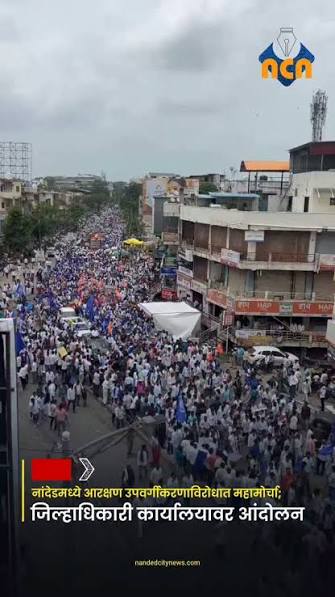
Chhatrapati Sambhajinagar: A massive rally opposing the alleged move to sub-classify the Scheduled Caste (SC) category was held in Nanded on Sunday, with Dalit activists accusing state govt of trying to divide the community and warning of intensified protests if the proposal goes ahead. The rally, attended by several Dalit and social leaders, culminated in a public meeting where speakers expressed strong opposition to reservation sub-categorisation and called for unity among SC communities. Republican Sena functionary Anandraj Ambedkar alleged that govt was creating social divisions under the pretext of implementing a Supreme Court ruling. “We are not fighting against any elements of the society, but govt. To achieve the success, we have to remain united,” Ambedkar said. He further accused chief minister Devendra Fadnavis of misleading people on the issue of reservation sub-categorisation. Former minister Chandrakant Handore said the move would create divisions within the Dalit community and warned of stronger resistance if govt failed to reconsider its stand. Courtesy : TOI Note: This news is originally published on https:/timesofindia.com/bha and is used purely for non-profit/non-commercial purposes, especially human rights
Factionalism mars Punjab Congress campaign as clashes erupt across State

A senior Congress leader, speaking on condition of anonymity, said the ‘Harr booth mazboot’ campaign by Bhupesh Baghel had failed to strengthen the party’s booth-level organisation. CHANDIGARH: Open factionalism, slogan shouting, clashes and poster wars marked the Punjab Congress’s 10-day Harr booth mazboot campaign, which ended on Saturday after party in-charge and AICC General Secretary Bhupesh Baghel toured 18 districts to assess preparations for the 2027 Assembly elections. The campaign ended in Ludhiana, the parliamentary constituency of Punjab Congress president Amarinder Singh Raja Warring. The incidents during the tour highlighted continuing differences within the state unit, with “go back” slogans and protests reported at several programmes. Ludhiana emerged as a major centre of discord as Baghel’s tour ended with a programme at Khanna. Supporters of former Cabinet minister Bharat Bhushan Ashu raised slogans, prompting Warring to accuse them of being backed by the RSS. The unrest was also reported in Malerkotla, where rival factions allegedly clashed on stage. The dispute turned physical, forcing police to intervene and use batons to separate the groups. At Khanna, a section of Congress workers raised slogans in support of former Chief Minister Charanjit Singh Channi. When attempts were made to stop the slogan-shouting, the group reportedly walked out of the meeting. Similar protests and disagreements were reported during party programmes in Patiala, Sangrur, Ferozepur, Bathinda, Muktsar and Mansa, highlighting the factionalism within the state unit. Harr booth mazboot campaign ended in Ludhiana, the parliamentary constituency of Punjab Congress president Amarinder Singh Raja Warring. Punjab Congress rift resurfaces as ex-CM Channi skips Rahul Gandhi’s Parliament speech A senior Congress leader, speaking on condition of anonymity, said the campaign had failed to strengthen the party’s booth-level organisation. “Repeated clashes during party meetings have sent a negative message to voters. It gives the impression that Congress leaders are more focused on internal power struggles than public issues,” he said, adding that leaders with personal differences should approach the high command and resolve them instead of creating scenes at party programmes. Throughout his 10-day tour, Baghel repeatedly warned that there would be zero tolerance for indiscipline. He said those who disrupted party programmes would be identified and action would be taken against them. Baghel also said the party’s external enemies were visible and identified, while those working within the organisation as “sleeper cells” and “internal saboteurs” needed to be exposed and removed. The Punjab Congress has been facing factionalism despite repeated efforts by its leadership to strengthen organisational unity ahead of the 2027 elections. The differences came to the fore after the Congress leadership on July 1 retained Warring as Punjab Congress president and appointed former Chief Minister Charanjit Singh Channi as chairman of its campaign committee. A section of leaders led by Channi opposed Warring’s continuation as state unit chief and sought his removal. Harpreet Bajwa Courtesy : TNIE Note: This news is originally published on https:/thenewindianexpress.com/bha and is used purely for non-profit/non-commercial purposes, especially human rights