
Once again a Dalit became the target: For Rs 6000, the goons tied him to a tree and beat him, blood came out of ears, nose and mouth, he died a painful death
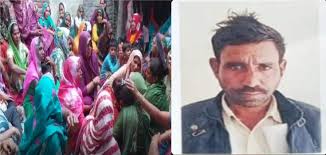
Rampur (Ravi Shankar): In Kundeshwari of Kotwali Tanda area of Rampur in UP, a Dalit laborer was tied to a tree and beaten so badly that he died during treatment over a transaction of Rs 6000. The incident took place on 16 April and the laborer died on 23 April during treatment. On the information of the brother of the victim laborer, the police had registered an FIR of assault due to money transaction. Which has been converted into sections after the death of the laborer. At the same time, the police have arrested two people in this case. Gave a painful death for Rs 6000 Kundeshwari village resident laborer Prempal had borrowed only Rs 6000 from someone, due to the dispute of this, some goons reached Prempal’s house and forcibly made him sit on a motorcycle and took him with them. They took him to the jungle and beat him brutally. Then they threw him in the jungle and left. On receiving the information, the family members admitted him to the hospital for treatment. Where due to his critical condition, he was referred to the higher center Delhi Safdarjung. Where he died on Wednesday. ‘He died the same way he killed our father’ The deceased laborer’s daughter Tanu told that our father has died. He had gone to work. When the gun was fired first, our father got scared and came back home. So he came to call him. My father did not die of fear, he came to call him on the 16th and my father was not going. Later my father said that you go, I am coming on my motorcycle. Then they made him park the motorcycle and forcibly made him sit with them and took him away. The deceased’s daughter further told that two people had taken father away, two people were present at the spot itself. Those people had killed father by hanging him on a tree. Papa was thrown in the bushes on the road. My father was bleeding from his ears, nose and mouth. We want justice and he should be hanged as soon as possible. He should die the way he killed our father. Police statement Regarding this case, Additional Superintendent of Police Atul Kumar Srivastava said that on 16.4.2025, a person named Jagdish informed that his brother Prempal was taken by Imran and his nephew on a motorcycle to drive a tractor. On the way, Prempal was beaten up for Rs 6000. He suffered serious injuries. On the basis of the information, a case was immediately registered at Tanda police station and the victim was sent to the hospital for treatment. From where he was referred to Safdarjung Delhi for further treatment. Prempal died during treatment. Courtesy: Hindi News
Uttar Pradesh: Four arrested for running over Dalit woman for objecting to rash driving

Bulandshahr: The Uttar Pradesh police have arrested four men for allegedly running their SUV over a group of Dalits, who objected to their rash driving in Bulandshahr. A woman, Sheela Devi, was killed and four others were injured in the incident, which took place this week, The Indian Express reported on Friday. According to the FIR, the Dalit family was resting outside their home when a group of men from the Thakur community drove past them. “There was no electricity that night and we had laid out charpai right outside the house. It’s not as if they were in the middle of the road,” Bhupendra Kumar, Sheela Devi’s son, was quoted as saying by TIE. Kumar recalled that he, his mother and three relatives were sitting outside their home when a car allegedly rushed past them very close. He said that he had asked the driver to drive slower. “The car barely missed our feet and a few of our animals that were on the road,” he added. The car stopped and two men who were in the vehicle allegedly made casteist remarks at Kumar and then left from the spot. According to the FIR, six armed men returned in an SUV and ran over the people gathered in the area. “They drove at full-speed; the car stopped after running over my mother and then it reversed in high-speed over her again,” alleged Bhupendra. While Sheela Devi died on the spot, Bhupendra and his relatives were relatively unharmed and were treated in the district hospital, added the report. Police have arrested Priyanshu Thakur, Atul Thakur, Manav Thakur, Krishna Thakur, and the car’s driver. Three suspects — Tapesh Thakur, Varun Singh and Ashu — remain absconding. Courtesy : Vartha Bharati Note: This news was originally published on https://varthabharati.com/30 and has been used purely for non-profit/non-commercial purposes, especially human rights.
When the Dalit groom sat on the mare, people pelted stones and beat him, there was a lot of uproar even when the baraatis wore slippers.

MP News: In the rural areas of Tikamgarh district of Bundelkhand, neither the thinking nor the perspective of the people has changed, due to which a Dalit groom had to become its victim and was humiliated in front of hundreds of relatives by pelting stones and beating him. Madhya Pradesh News: A strange case has come to light in Tikamgarh district of Madhya Pradesh. Here some people were so upset with the Dalit groom sitting on the mare and the baraatis passing through a locality wearing slippers that they pelted stones at the baraati. 4 people have been injured in this incident. A report has also been lodged in the police station. The entire case is of Badagaon Dhasan police station area. First abused and then pelted stones This incident is of village Mokhra under Badagaon Dhasan police station of the district. It was Jitendra Ahirwar’s wedding and before the wedding procession, there was a ritual of taking Vinayaki (Rach) around the village. For this, he rode a mare. The ritual was being performed sitting on the mare with the band playing. As soon as the Rach came out of a locality, Bhan Kunwar Raja Parmar first stopped the groom and abused him and then stopped the groom and said how dare you sit on a mare in front of us. You people of low caste have become so arrogant and with the help of Surya Pal and Drigpal sitting at home, stones were pelted at the groom. Narrating his ordeal, the groom said, “Today was my wedding and the wedding procession had to go to Sagar. Before that, a procession was being taken out in the village. When we were passing through a locality on a mare, people pelted stones at us. Four people were injured in this. These bullies said, get down from the mare and go on foot, how dare you pass through our door on a mare. They also said that you should not pass through our door wearing slippers. On the complaint of this incident, the police have registered a case under various sections.” Along with the groom, his relatives were also insulted by pelting stones at them. These bullies disturbed the happiness of Jitendra’s marriage and he was insulted publicly. Regarding which, the groom and his relatives have complained about this incident in the Baragaon police station. This incident in Tikamgarh district has brought the rights of equality to the dock. Courtesy : Written by: Suryaprakash Goswami, Edited by: Ambu Sharma, NDTV Note: This news was originally published on https://ndtv.com/30 and has been used purely for non-profit/non-commercial purposes, especially human rights.
UP: Nine houses of Dalits burnt down in a village in Pratapgarh district
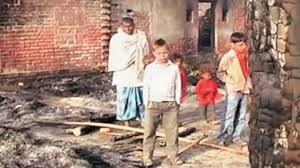
Pratapgarh, Nine houses were burnt to ashes in a fire that broke out in a Dalit locality in a village in Pratapgarh district of Uttar Pradesh on Friday evening. Officials gave this information. Antu police station in-charge Anant Pal Singh said, “The cause of the fire is not known. However, with the help of the fire department and villagers, we were able to control the fire after a lot of effort.” He said, “The houses of Rakesh Saroj, Ravindra Saroj, Sanjay Saroj, Govind Saroj, Motilal Saroj, Pradeep Saroj, Dharmdev Saroj, Radheshyam Saroj and Ram Samjhu were completely burnt in the fire.” According to officials, apart from household items, many goats also died in the fire. Deputy District Magistrate Nancy Singh said, “I have directed the revenue officer to make a thorough assessment of the damage and directed the local ration dealer to immediately provide food and essential supplies to the affected families.” Courtesy : IBC24 Note: This news was originally published on https://ibc24.com/30 and has been used purely for non-profit/non-commercial purposes, especially human rights.
Rioter tag, Muslim migrant workers from Bengal ‘thrashed’ in Odisha and Uttar Pradesh

‘Forced returns’ have sparked fear among migrant workers from Murshidabad and Malda, many of whom were now worried about their survival The fallout of the Samserganj riots reached BJP-ruled Odisha and Uttar Pradesh on Monday when around 70 migrant labourers of the minority community from Murshidabad and Malda were allegedly assaulted and sent home when they reached those states to resume work. Some 50 workers from Murshidabad had left for Keonjhar, Odisha, on Sunday, after their Eid break. They had to return home late Monday night in the same bus arranged by a labour contractor after being attacked allegedly by Hindutva activists who accused them of attacking a particular community in riot-hit Murshidabad. Similarly, 24 migrant workers from Sujapur in Malda, who had been working in a garments factory in Jamalpur in Uttar Pradesh, were also allegedly beaten up and forced back. The violence, which erupted over protests against the amended waqf law, had spread in pockets of Murshidabad, leaving three dead and damaging homes and property. The “forced returns” have sparked fear among migrant workers from Murshidabad and Malda, many of whom were now worried about their survival. On Monday, a Special Investigating Team (SIT) formed by the Bengal government arrested 12 migrant labourers from Jharsuguda in Odisha for their alleged role in the Murshidabad riots. However, these migrant workers who were attacked and forced to return home, claimed they were not involved in violence but were paying the price of perception. Momin Miyan, a labour contractor from Suti, who had arranged the Odisha-bound trip, said: “We just came home for a small break which coincided with the anti-waqf Act protests. We didn’t take part in it.” Momin, who has been recruiting labourers for 12 years, said he had arranged a bus for workers to Keonjhar as usual. “Around 5.30am on Monday, a group of youths with Bajrang Dal flags stopped our bus at Jashipur More in Mayurbhanj. We were dragged out and beaten up…. They accused us of attacking their community. They warned us that the bus would be set on fire if we didn’t leave,” said Momin. One of the 24 migrant workers from Sujapur in Malda who had been working in Jamalpur, Uttar Pradesh, for seven years, said a group of youths with saffron flags in their hands attacked them when they were working. “They accused us of attacking a community and asked us to leave, saying we would not be allowed to work there. Some of us were beaten up severely,” he said. Monirul Khan of Sujapur, who returned from UP, said when they went to the police, they were detained and were released “only after paying a bribe of ₹30,000”. “We have been working in UP for seven years. There was no problem earlier. But the scenario changed after the Murshidabad violence. Now it has become a question of our survival since we are not feeling secure to return there,” he said. When the Sujapur workers were detained at Jamalpur Kotwali police station, Fatema Khatun, wife of migrant worker Shariful Khan, lodged a complaint with the Kaliachak police in Malda. The issue was taken up by the Migrant Workers’ Unity Forum. Its general secretary, Asif Farooq, wrote to Union home minister Amit Shah, urging him to ensure the safety and rights of migrant workers across states. Jangipur SDO Ekam J. Singh professed ignorance. “If I get any complaint, I will report it to the state government,” he said. The CPM said that TMC MP Abu Taher’s comment about the role of migrant workers in the riots was also to blame. “Abu Taher’s comment was amplified by BJP leader Tarunjyoti Tewari on social media. Within hours, attacks were unleashed in Odisha and UP. The Centre has also abrogated its responsibility to protect migrant workers…,” said CPM state secretary Md Salim and added that his party units in the two states were alerted to help Bengal workers. Samirul Islam, chairman of West Bengal Migrant Workers’ Welfare Board and TMC’s Rajya Sabha MP, blamed the BJP. “Such attacks on migrant workers are not new in BJP-ruled states. Wherever they find Bengali-speaking Muslim migrant workers, they always find an issue to torture them,” he said. Samik Bhattacharya, the BJP Rajya Sabha MP, argued that such incidents were the result of suspicion after states like Tamil Nadu found many Bengali-speaking people with fake Indian documents, who are Bangladeshi infiltrators. He pointed out that Tamil Nadu was not a BJP-ruled state. “Tamil Nadu government, which is not run by the BJP, was the first to conduct a combing operation and discovered many such migrant workers with fake identities. After that, they stopped allowing Bengali migrant workers to work in their state. The allegations that came from other states are likely to be the result of such suspicion,” said Bhattacharya. Courtesy : Alamgir Hossain, The Telegraph Note: This news was originally published on https://thetelegraph.com/bha and is used purely for non-profit/non-commercial purposes, especially human rights.
Bansa Community Library: Empowering Dalit and Backward Class Children with Free Education in UP Village

From a village struggling with illiteracy to a hub of learning New Delhi. Bansa village, situated about 60 kilometers from Hardoi district in Uttar Pradesh, is setting a new example in education. Where children from Dalit and backward communities once felt compelled to leave their village for better studies, they are now learning for free in their own community at the Bansa Community Library—reading, growing, and shaping their dreams. Bansa has a population of around 11,000, with a majority belonging to Scheduled Castes. Due to a lack of education and resources, children here often remained disconnected from learning. But in 2018, when Jatin Lalit dreamed of opening a library in his village, the tide began to turn. The village temple committee supported this social initiative by providing space near the temple premises. With crowdfunding efforts from Jatin and outside well-wishers, the library’s foundation was laid in December 2020. Gradually, this effort evolved into what is now known as the Bansa Community Library. After completing his schooling, Jatin moved to Delhi to study law. During his time there, he got involved with a community library project that completely changed his perspective. He saw how a space—free from the barriers of caste, religion, or gender—could bring people together purely for learning. Jatin realized that his village needed something similar. When he returned to Bansa during the COVID-19 pandemic, he decided to bring books to the children of his community. Beyond Just Books Today, the Bansa Community Library has around 2,600 registered children, with 100 to 120 visiting daily—all without any fees. But the library is not limited to just books. It also offers: A Pathway for Dalit and Backward Communities Most residents of Bansa come from economically and socially marginalized backgrounds. Many children could not afford to study outside the village—lacking both funds and resources. The Bansa Community Library has emerged as an opportunity for these children, who were long deprived of their right to education. In a conversation with The Mooknayak, Jatin, the library’s founder, said, “Our village was once dominated by illicit liquor. There was no awareness about education. But now, children are reading books, discussions about studies are happening in the village, and this change is far greater than we ever hoped for.” Launching a Pop-Up Library for Women To increase women’s participation, the library initiated a new program. A survey revealed that girls aged 14 to 16 were unable to visit the library, primarily due to lack of permission from their families or restrictions after marriage. Niharika, the library’s director, told The Mooknayak that they addressed this issue by starting a “Pop-Up Library.” Under this initiative, the team sets up a temporary library at different locations in the village every week. Along with books, the pop-up includes storytelling sessions and open-mic activities. “Now, women are engaging on their own—from 14-year-old girls to 60-year-old women,” Niharika explained. “They’re getting access to books and a platform to interact with each other. This initiative is boosting their confidence.” Challenges Were Many, But Determination Was Stronger For Jatin and his team, starting the library was not easy. Limited resources, indifference from some villagers, and lack of experience posed hurdles. Yet, they persisted. Slowly, trust grew, and today, the library has become a community-driven movement. What began as a small effort has now turned into a symbol of change—proving that when education is made accessible, entire communities can rise. Courtesy : Ankit Pachauri, The Mooknayak
Bansa Community Library: Empowering Dalit and Backward Class Children with Free Education in UP Village
From a village struggling with illiteracy to a hub of learning New Delhi. Bansa village, situated about 60 kilometers from Hardoi district in Uttar Pradesh, is setting a new example in education. Where children from Dalit and backward communities once felt compelled to leave their village for better studies, they are now learning for free in their own community at the Bansa Community Library—reading, growing, and shaping their dreams. Bansa has a population of around 11,000, with a majority belonging to Scheduled Castes. Due to a lack of education and resources, children here often remained disconnected from learning. But in 2018, when Jatin Lalit dreamed of opening a library in his village, the tide began to turn. The village temple committee supported this social initiative by providing space near the temple premises. With crowdfunding efforts from Jatin and outside well-wishers, the library’s foundation was laid in December 2020. Gradually, this effort evolved into what is now known as the Bansa Community Library. After completing his schooling, Jatin moved to Delhi to study law. During his time there, he got involved with a community library project that completely changed his perspective. He saw how a space—free from the barriers of caste, religion, or gender—could bring people together purely for learning. Jatin realized that his village needed something similar. When he returned to Bansa during the COVID-19 pandemic, he decided to bring books to the children of his community. Beyond Just Books Today, the Bansa Community Library has around 2,600 registered children, with 100 to 120 visiting daily—all without any fees. But the library is not limited to just books. It also offers: A Pathway for Dalit and Backward Communities Most residents of Bansa come from economically and socially marginalized backgrounds. Many children could not afford to study outside the village—lacking both funds and resources. The Bansa Community Library has emerged as an opportunity for these children, who were long deprived of their right to education. In a conversation with The Mooknayak, Jatin, the library’s founder, said, “Our village was once dominated by illicit liquor. There was no awareness about education. But now, children are reading books, discussions about studies are happening in the village, and this change is far greater than we ever hoped for.” Launching a Pop-Up Library for Women To increase women’s participation, the library initiated a new program. A survey revealed that girls aged 14 to 16 were unable to visit the library, primarily due to lack of permission from their families or restrictions after marriage. Niharika, the library’s director, told The Mooknayak that they addressed this issue by starting a “Pop-Up Library.” Under this initiative, the team sets up a temporary library at different locations in the village every week. Along with books, the pop-up includes storytelling sessions and open-mic activities. “Now, women are engaging on their own—from 14-year-old girls to 60-year-old women,” Niharika explained. “They’re getting access to books and a platform to interact with each other. This initiative is boosting their confidence.” Challenges Were Many, But Determination Was Stronger For Jatin and his team, starting the library was not easy. Limited resources, indifference from some villagers, and lack of experience posed hurdles. Yet, they persisted. Slowly, trust grew, and today, the library has become a community-driven movement. What began as a small effort has now turned into a symbol of change—proving that when education is made accessible, entire communities can rise. Courtesy : Ankit Pachauri, The Mooknayak
UP: Dalit girl raped in Sultanpur after barging into her house, victim’s mother threatened with death
The police took the accused into custody and is questioning him at the police station. The victim is being medically examined. Lucknow: A case of rape of a 15-year-old girl has come to light in Sultanpur, Uttar Pradesh. The accused barged into the girl’s house in broad daylight and raped her when he found her alone. On the complaint of the victim’s father, the police took the accused into custody from the spot. The police have registered a case under serious sections including the POCSO Act and started action. A person from the Dalit community living in a village in Dostpur police station area lodged a complaint at the police station and said that for about a month, a young man from the Vaishya community of the same village started talking to his daughter on the phone. He was trying to have an illegal relationship with my daughter. On getting the information, he was explained, but he did not agree. On Tuesday afternoon, when my daughter was alone at home, the accused youth secretly entered the house. He had an illegal relationship with my daughter. At the same time, my wife reached there. Then the accused started abusing her using casteist words and ran away. It is alleged that he also threatened to kill the victim’s mother. At the same time, the girl’s father also arrived and informed the police. The police reached the spot and took the accused into custody and is questioning him at the police station. In this regard, CO Kadipur Vinay Gautam said that a case has been registered on the complaint of the girl’s father. The victim is being medically examined. After further action, the accused will be sent to jail. Courtesy : Hindi News
16-year-old Dalit girl kidnapped from Etah, gang-raped for months in Noida, SSP gave this assurance
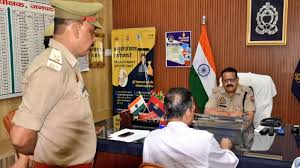
Etah Dalit Girl Kidnapping Gangrape Case: A case of kidnapping and gang-rape of a minor Dalit girl has come to light from Etah. Two boys kidnapped the girl. Took her to Noida and gang-raped her for months. Now after the disclosure in this case, police action has started. Etah: A shocking case has come to light from Etah in Uttar Pradesh. Two people kidnapped a 16-year-old Dalit girl here. They kept the girl hostage in a small rented room in Noida near Delhi. The accused allegedly sexually abused the Dalit teenager for months. They also regularly made videos of the girl. According to the complainant, casteist remarks were constantly made on her during the abuse. Attempts were made to break her mentally. The incident with the minor girl started from Etah on 24 December 2024. She was first lured by a man to Noida. He also had another accomplice there. Both the accused are around 20 years old. It is alleged that both of them regularly abused the girl with casteist slurs. Both of them threatened the girl that if she made any noise, they would upload the video on social media accounts. Left in the village on April 19 The accused finally left the victim girl on April 19. They took her in their car. They left the girl in a village in Etah. From there, she somehow managed to contact the local villagers. Her father lodged a police complaint in this case on Tuesday. On the complaint of the father, an FIR was registered under sections 70(2) (gang rape), 115 (voluntarily causing hurt), 352 (intentional insult), 351(3) (criminal intimidation) of the IPC as well as POCSO and SC/ST Act. The girl’s father is a daily wage labourer. He pleaded for justice in this case. An audio clip has also surfaced online in this case, in which a person can be heard allegedly abusing the girl. In the viral audio clip, he can be heard saying that we will put acid on you. SSP assured Etah SSP Shyam Narayan Singh said in the case of kidnapping and gang rape of the girl that prima facie we have found that the girl knew one of the accused. The same accused took the girl to Noida. There the matter of the incident with her has come to light. The girl has been sent for medical examination on Tuesday. She is in shock, but is stable. He expressed confidence that the accused will be arrested soon. Further investigation is going on in the case. Courtesy : Reported by Sudeep Lavania | Curated by Rahul Parashar, Hindi News
Tamil Nadu: Row over DMK-led civic body naming public toilets in reverence to dalit leader Kakkan and CN Annadurai
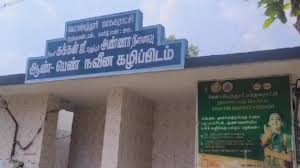
Kakkan served as the Home Minister in the K. Kamaraj-led Congress government. In his later years, he lived a life without wealth, struggling for day-to-day needs It is yet another proof of how the DMK’s Dravidian Model Government respects deceased leaders who are still remembered for their role in state politics. Following public and social media outrage, the DMK government has painted over the names with black paint. Kakkan, a prominent Dalit leader (18 June 1908 – 23 December 1981), was known for his simplicity and honesty throughout his political career. He served as the Home Minister in the K. Kamaraj-led Congress government. In his later years, he lived a life without wealth, struggling for day-to-day needs. He received treatment at government hospitals. He reportedly owned only one or two dhotis and shirts even when he was a minister. On June 18, 2019, the 109th birth anniversary of the late P. Kakkan, one of the state’s formidable leaders and an Indian freedom fighter, was observed. His family’s poverty can be understood from the following two incidents: “Sometime around 1978, M.G. Ramachandran (MGR) saw a woman among the morning crowd, got out of his car, approached her and enquired about her husband. He invited her to eat and said a car would take her home. She was former Congress minister Kakkan’s wife. Kakkan had been unable to pay the Rs 170 rent and faced eviction from his government accommodation. Requesting a day’s time, his wife had approached MGR, who settled all rental dues from his personal funds. The next day, a government order announced free housing for Kakkan and granted a monthly stipend of Rs 500. MGR ensured that this continued for his family even after his death.” Kakkan, who came close to becoming the first Dalit Chief Minister of Tamil Nadu, was fondly remembered as Kakkanji. He was a member of the Constituent Assembly, MP, President of the Tamil Nadu Congress Committee, and held many ministerial positions in Congress governments between 1957 and 1967. In his post-political years, he lived in a small, rented flat provided by the government. He never sought personal help from anyone, considering it beneath his dignity and self-respect. Once, when MGR, who was then Chief Minister, was visiting an acquaintance in the VIP ward, he was informed that Kakkan was being treated in the general ward without a bed, lying on the floor. On hearing this, MGR rushed to Kakkan’s ward and offered him a free government service. Kakkan was such a tall figure in Tamil Nadu’s political history. C.N. Annadurai, one of the founders of the DMK, was well-educated and had oratorical skills and literary talent. Both the DMK and AIADMK have named buildings, roads, colonies, and towns after him, besides installing statues at road junctions across the state. But the Stalin administration has shown its respect to them in an unfitting manner—by naming community toilets after them. This sparked off controversy. The public, politicians, and others joined together to voice their strongest condemnation of the way these two leaders were commemorated. The toilet, located in the Silver Jubilee area of Kurichi in Ward 85 under the Coimbatore Corporation’s South Zone, had the names “Thyagi Kakkan G” and “Perarignar Annadurai” painted in Tamil on its exterior, along with the text “Coimbatore Corporation, South Zone, Ward No. 95, Male – Female Toilet.” The naming drew condemnation from functionaries of the AIADMK and BJP, who called it disrespectful to the memory of two leaders widely regarded for their integrity, modesty, and simplicity. DMK leaders also condemned the act, seemingly to save face. Leaders of both the DMK and AIADMK criticised the Corporation’s decision, stating that such a gesture was inappropriate and hurtful to the legacy of the leaders. They demanded the names be removed and urged the civic body to clarify how the decision was approved. Former BJP State President K. Annamalai, in a post on his X handle, condemned the naming, calling it a degrading act and urging immediate action against those responsible. Annamalai said, “The names of former Tamil Nadu Chief Minister Annadurai and the honest leader Kakkan, who served in Perunthalaivar Kamaraj’s cabinet, have been used for naming a public toilet by the Coimbatore Corporation. I strongly condemn this demeaning act of the Coimbatore Corporation that insults two humble leaders. Chief Minister @mkstalin, who adorns his father’s name on bus stands and government buildings with public taxpayers’ money, has allowed the names of leaders far greater than him to be placed on a toilet—with what other intention but to humiliate them? I urge Chief Minister @mkstalin to immediately remove the names of these leaders from the toilet and take strict action against those responsible.” Following the criticism, Coimbatore Corporation Commissioner M. Sivaguru Prabakaran immediately ordered on April 22 that the names be painted over and initiated an inquiry into how the naming was authorised. The Corporation Commissioner, Sivaguru Prabakaran, told the media, “The names were written 15 years ago. Now we have repainted the building as part of renovation. We have not written the names of Kakkan and Annadurai. The Corporation has not officially named any toilet. No such resolution was passed. I will investigate how these names appeared there.” Critics suggest, “Why can’t the Corporation name retail liquor-selling TASMAC outlets after Karunanidhi? That would be fitting for the man who lifted prohibition and paved the way for liquor sales despite Rajaji’s objections.” Courtesy : TS Venkatesan, Organiser Note: This news was originally published on https://organiser.com/bha and is used purely for non-profit/non-commercial purposes, especially human rights.