
Bihar East Champaran: Massive fire in Dalit colony of Raxaul, dozens of houses destroyed

East Champaran: Dozens of houses were burnt to ashes in a massive fire in a Dalit colony in Raxaul of the district. It is being told that the fire spread so fast amid strong winds that many houses were engulfed in it in no time. Local people immediately informed the fire department about the fire. Two fire brigade vehicles reached the spot and after a lot of effort, the fire was controlled. As soon as the information about the incident was received, Raxaul police and SSB personnel also reached the spot and helped the local people in extinguishing the fire. Property worth lakhs of rupees is estimated to have been lost in this fire incident. Local resident Chandrika Malik said that preparations for weddings were going on in many houses in the colony. Clothes, jewelry and other items bought for the wedding also fell prey to the fire. He told that everyone was busy preparing for the wedding, when suddenly the fire destroyed everything. Circle Officer Shekhar Raj said that as soon as the information about the fire was received, a light employee was sent to the spot. The damage is being assessed. After which the process of providing assistance to the affected families has also been started. At present, the cause of the fire has not been ascertained. After the incident, there is an atmosphere of chaos and despair in the colony. Courtesy: Hindi News
Mayawati furious over atrocities on Dalits and disrespect of idols in UP, know what she said
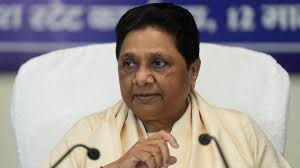
UP News: BSP Chief Mayawati also demanded that the state government take concrete and effective steps to control crime, so that the weaker sections of the society can get assurance of security. BSP Chief Mayawati furious over atrocities on Dalits and disrespect of idols in UP ANN Mayawati furious over atrocities on Dalits and disrespect of idols in UP, know what she said Lucknow News: Bahujan Samaj Party (BSP) National President and former Chief Minister Mayawati has once again raised questions on the state government regarding the atrocities on Dalits in Uttar Pradesh. On Saturday, she issued a statement in two parts on social media and termed the incidents of atrocities on Dalit community in various districts of the state, attacks on marriage processions and insult to the statues of Baba Saheb Dr. Bhimrao Ambedkar and Lord Buddha as ‘extremely worrying’. Mayawati wrote that these incidents are going to break the society and the government should take strict action against the culprits. She also demanded that the state government take concrete and effective steps to control crime, so that the weaker sections of the society can get assurance of security. In her second tweet, the BSP chief said that when there is tension on the borders of the country and internal security is being challenged by terrorist incidents, at such a time the state government should take strict action against the elements spreading casteist and communal tension within the society. She said that people with anti-social and criminal tendencies are trying to spread hatred and violence in the society, which needs to be stopped. It is worth noting that in recent times, incidents of attack on people of Dalit community, vandalism of their religious symbols and statues have come to light from many districts of Uttar Pradesh. Somewhere the processions of Dalit grooms were stopped, somewhere the statues of Baba Saheb Ambedkar were broken. There is anger in the Bahujan Samaj regarding these incidents and political parties are constantly demanding action from the government. Mayawati has surrounded the Yogi government on many occasions regarding such incidents and alleged that attacks on Dalits, backward and minorities have increased under BJP rule. Now it has to be seen what action the state government takes on this issue after this statement of Mayawati. At present, this statement of hers is very much discussed on social media and people associated with Bahujan Samaj are seeing it as a voice of their rights. Courtesy : Balram Pandey | Edited By: Ankul Kaushik , Hindi News
Mayawati furious over atrocities on Dalits and disrespect of idols in UP, know what she said
Madhya Pradesh: Dalit man stoned for riding a mare in his wedding procession

The incident is from a village in Tikamgarh district of Madhya Pradesh, where a person from the Dalit community had come out on a mare in the village on his wedding day. It is alleged that a woman from the village stopped him and abused him. After this, she along with two other persons started throwing stones at the groom. New Delhi: On Friday (April 26), in Mokhra village of Tikamgarh district of Madhya Pradesh, a person from the Dalit community was stoned when he was coming out on a mare in his wedding procession. According to the Indian Express report, the matter has gained momentum after the video of the incident surfaced. It is said that Jitendra Ahirwar, who was injured in the incident, was to get married in Sagar district. Before the wedding procession, he had come out on a mare as part of the traditional ‘Rach’ program in the village. It is alleged that a woman from the village- Bhan Kunwar Raja Parmar stopped them and using casteist abuses, questioned how a person from a ‘lower caste’ could pass through their locality on a mare. After this, she, along with two other persons- Suryapal and Drigpal, started throwing stones at the groom. Four people have been injured in this attack. Jitendra said, ‘It was my wedding day, a happy occasion for us. We were passing through a locality, when they stopped us, threw stones and asked us to get down from the mare and walk barefoot. They insulted us and even said that do not go near our houses wearing slippers.’ Jitendra and his family have lodged a complaint in Badgaon Dhasan police station, on the basis of which an FIR has been registered against Bhan Kunwar Raja Parmar, Suryapal and Drigpal under assault and caste discrimination. Badgaon Dhasan police station in-charge Narendra Verma told the newspaper, ‘The female accused has been taken into custody and the search for the other two accused is on.’ Courtesy : The Wire Note: This news is originally published on https://thewire.com and is used purely for non-profit/non-commercial purposes, especially human rights.
Elderly Dalit woman run over several times by upper caste men; FIR lodged
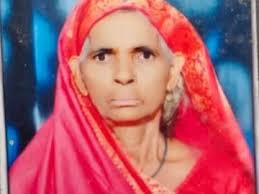
Five other Dalits were seriously injured and rushed to the district hospital. A 62-year-old Dalit woman was killed and five others were seriously injured after they were allegedly run over multiple times by a group of upper-caste Hindu men in Uttar Pradesh’s Bulandshahr. The attack happened on April 21 after a confrontation over rash driving. Eyewitnesses and police said that the attackers used casteist slurs before the assault. The incident took place in Sunehra village. Sheela Devi was sitting outside her house when a Mahindra Thar SUV came speeding towards her. MS Creative School A villager named Bhupendra shouted at the driver to slow down. In response, the men in the SUV, identified as Tapesh Singh and his son Priyanshu Singh, got out and abused the locals using caste-based slurs. According to the police complaint, the father and son left the area but returned about 10 minutes later with four armed men. Without warning, they drove the SUV directly into the group of people sitting outside their homes. They reversed and ran over the victims several times. Sheela Devi died on the spot. Five others from the Dalit community were seriously injured and rushed to the district hospital. City superintendent of police, Shanker Prasad, confirmed that an FIR has been filed against six men: Tapesh Kumar, Priyanshu Singh, Varun Kumar, Atul Singh, Krishna Singh, and Manav Kumar. They have been charged under sections of the BNS for murder, attempt to murder, criminal intimidation, rioting, and the SC/ST Act. A special police team has been formed to catch the accused, who are currently on the run. Courtesy : TSD Note: This news is originally published on https://thesiasatdaily.com and is used purely for non-profit/non-commercial purposes, especially human rights.
Muslims, Dalits not disposed to crime, says survey report

This finding marks a departure from perceptions prevalent in other regions of the country and highlights the unique stance of the state’s law enforcement on issues of crime and community relations In a revealing survey conducted among police respondents in Punjab, a significant majority has expressed the firm belief that neither Muslims nor Dalits are naturally predisposed to criminal behaviour. As per the “Status of Policing in India Report’ (SPIR)”, done by the Common Cause and Lokniti-CSDC organisation, this finding marks a departure from perceptions prevalent in other regions of the country and highlights the unique stance of the state’s law enforcement on issues of crime and community relations. According to the survey data, an overwhelming percentage of police officers in Punjab (over 80%) contend that Muslims, Dalits and Adivasis do not have inherent tendencies towards crime. This belief was notably stronger among Punjab’s police compared to respondents from other states, indicating a profound suspicion of the stereotype that links specific communities to criminality. The survey also highlighted law enforcement’s approach to public safety issues. The Punjab Police reported the highest proportion of arrests related to loitering and public nuisance, accounting for 60% of the total arrests, significantly outpacing the other states surveyed. This reflects a proactive stance on maintaining public order, despite the low association perceived between crime and these communities. When it comes to justifying the controversial practice of torture, police respondents from Punjab displayed a relatively low tolerance. Only 15% reported a high propensity to justify such actions, while a considerable 30% indicated a low propensity and another 30% showed a very low propensity. Furthermore, Punjab has been identified as one of the states with the least justification for mob violence, especially concerning allegations of cow slaughter. A robust 62% of the respondents stated that mob violence was not at all justified, aligning with similar findings from states like Kerala and West Bengal, which also exhibited low levels of justification for such behaviour. The survey not only sheds light on the perceptions of crime among law-enforcement officials in Punjab but also reinforces the significance of community relations in upholding justice and security in the region. The findings suggest a move towards a more equitable perspective on crime with respect to community background, which could potentially influence future policing strategies and community outreach programmes. The Status of Policing in India Report (SPIR) 2025 was released on March 26 at the India International Centre by a distinguished panel of experts, including Justice S Muralidhar, former Chief Justice of the Odisha High Court, Vrinda Grover, lawyer and activist, Dr Amar Jesani, public health expert and the Editor of the Indian Journal of Medical Ethics, and Prakash Singh, IPS (retd) and a former DGP of UP, Assam and BSF. The Punjab angle of the report studied by The Tribune talks about the response of the Punjab Police respondents. Sixth in the series, the SPIR 2025 on “Police Torture and (Un)Accountability” is the only report of its kind in India to focus on police high-handedness and custodial violence at police stations across the country. 80 pc Punjab cops hold this view An overwhelming percentage of police officers in Punjab (over 80%) contend that Muslims, Dalits and Adivasis do not have inherent tendencies towards crime. This belief was notably stronger among Punjab’s police compared to respondents from other states, indicating a profound suspicion of the stereotype that links specific communities to criminality Courtesy :Jupinderjit Singh, The Tribune Note: This news is originally published on https://thetribune.com and is used purely for non-profit/non-commercial purposes, especially human rights.
Why Dalit conversion to Buddhism hasn’t taken off, and how it still can
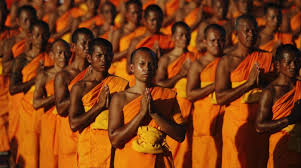
Conversion is framed as a betrayal of the nation, and Dalits who convert are labelled as traitors, tools of foreign influence, or anti-Hindu. Buddhism conversion event Consider the story of Sunita, a Dalit woman from Hathras, Uttar Pradesh. In 2020, she and her family, along with others, converted to Buddhism after facing caste-based violence from dominant-caste neighbours. They stopped being invited to village functions, lost access to the community well, and were told to stay out of the village temple permanently. “We thought we were freeing ourselves,” she said. “Instead, we became invisible.” Sunita’s experience reflects the silent resistance that confronts many who dare to leave the Hindu fold. A mass conversion event in the presence of Aam Aadmi Party leader Rajendra Pal Gautam in October 2022 snowballed into political controversy over the 22 vows, which included: “I shall have no faith in Brahma, Vishnu, and Maheshwara, nor shall I worship them. I shall have no faith in Rama and Krishna, who are believed to be the incarnation of God, nor shall I worship them.” Religious conversion is a personal struggle for freedom, and freedom comes at a cost. “I was born a Hindu, but I will not die a Hindu,” Dr BR Ambedkar once famously said. And he did not renege on his words. On 14 October 1956, Ambedkar, architect of the Indian Constitution and champion of Dalit rights, stood before a crowd of over 5 lakh Dalits in Nagpur and renounced Hinduism. In its place, he embraced Buddhism, not merely as a spiritual choice, but as a political declaration of freedom. The moment was electric. It felt like the beginning of a revolution that would unshackle millions from the age-old chains of caste. Yet, over seventy years later, the wave never became a flood. According to the 2011 Census, Buddhists account for just 0.7 per cent of India’s population. Of those, nearly 90 per cent are Ambedkarite Dalits, mostly concentrated in Maharashtra. So, why did a movement expected to liberate tens of millions stall? The answers lie in a complex web of politics, economics, culture, and identity. These can be boiled down to eight points. Leadership vacuum after Ambedkar Ambedkar’s death just weeks after his historic conversion was a blow to the fledgling movement. Without his moral and intellectual leadership, the conversion wave lost direction. Dalit politics splintered, focusing more on electoral gains and caste assertion within Hinduism than on religious transformation. While the Bahujan Samaj Party did raise Dalit consciousness, it did not champion Buddhism with the same fervour. Dalit Panther started off strong but soon died out, and the Republican Party of India is also fragmented into groups. Worse, no national leader of Ambedkar’s stature has emerged to carry forward the flame of Navayana Buddhism — his reinterpretation of Buddhism as a socially engaged, rational path for the oppressed. Economic insecurity and fear of boycott Dalits remain economically vulnerable. According to the National Sample Survey Office (NSSO), Dalits have significantly lower land ownership, literacy rates, and access to capital. For many, especially in rural India, dominant caste networks control jobs, credit, and basic survival. Conversion often means social boycott, job loss, or worse—violence. There are tons of stories about Dalits being assaulted just for being assertive—for riding a horse, keeping a “Jai Bhim” ringtone, keeping a moustache etc. If there’s no violence, there’s an all-around social boycott, against which even the authorities are powerless. It’s a high-stakes gamble for people who have little to begin with. Hinduism’s absorptive power Hinduism is remarkably adept at absorbing dissent. Over the decades, it has co-opted Buddha as an avatar of Vishnu, repositioned Ambedkar as a national hero (often stripped of his anti-caste radicalism), and incorporated Dalit deities into its pantheon. Most foot soldiers of the BJP are from marginalised communities, while the Baniya–Brahmin caste groups play the role of office bearers. Tell me — how many Brahmins demolished Babri with their own hands? How many Brahmins were directly responsible for the killings in the 2002 riots? It was all carried out by foot soldiers like Babu Bajrangi, mostly from OBC backgrounds. I have a personal anecdote to share here. My nephew heads the Shiv Sena (Shinde faction) office in Goregaon West, a suburb of Mumbai. He comes from a not-so-well-off neo-Buddhist background, but is a supporter of the Hindutva agenda. He’s been to this year’s Maha Kumbh, campaigned for the party during the 2024 state elections, and also took out a bike rally during the inauguration of the Ram Mandir at Ayodhya, supporting his larger Hindu brethren. He’s clearly doing it for political clout and to rise up the ranks. But probably the rest of the cadre see him as a workhorse, or someone they can bank on to get the Dalit votes. This leaves him in a precarious position of being “neither here, nor there” when it comes to an openly Hindu nationalist party like the Shiv Sena. And he’s not the only one. I’ve been to Dalit homes that have a big garlanded picture of Ambedkar in the living room, and Hindu gods in the kitchen. This dilution has further taken away the essence of Ambedkar’s progressive Buddhism as an answer to years of oppression. Meanwhile, reformist Hindu sects like Arya Samaj and Ramakrishna Mission offer a supposedly caste-neutral version of the religion that keeps people within the Hindu cultural fold. This co-option blunts the revolutionary edge of conversion. Lack of Buddhist infrastructure Unlike Hinduism, Buddhism in India lacks a robust ecosystem of temples, rituals, clergy, and educational institutions. Outside of Maharashtra, it’s often invisible. Dalit converts find themselves without spiritual guidance or cultural support. An example of this is the ongoing Mahabodhi temple protests, where the temple management is exclusively in Brahmin hands. Many countries with large Buddhist populations, like China, Japan, and Vietnam, have built temples in Bodh Gaya, but there’s little political support from them because their understanding of Buddhism is different from ours. Buddhism in India is more of socio-political religion, while
Omar Abdullah has met terrorists, Digvijay Singh’s brother’s statement intensifies politics, said- Rahul Gandhi should take my resignation

MP Politics: There is anger across the country after the Pahalgam terrorist attack. Meanwhile, a senior Congress leader claimed that Omar Abdullah is also involved in this terrorist attack. Former CM and Rajya Sabha MP Digvijay Singh’s brother Laxman Singh even said that if Rahul Gandhi wants, he can take my resignation. Laxman Singh made serious allegations against Omar Abdullah Congress leader said that the CM is in cahoots with terrorists Congress considered Laxman Singh’s statement as indiscipline Bhopal: Former Madhya Pradesh CM Digvijay Singh’s brother Laxman Singh is considered a ‘loudmouth’ leader. But his frank words often make a lot of headlines, so people also start liking him. Another statement of his is in discussion these days. Senior leader Laxman Singh has launched a scathing attack on his party over the Pahalgam terror attack. He has also made serious allegations against Jammu and Kashmir CM Omar Abdullah. This time the Congress party has distanced itself from the statement of former MP Laxman Singh, who gave a statement against the party guidelines. Opposition to his statement has started within the party itself. The party has considered Laxman Singh’s statement as indiscipline. Also, there is talk of taking action against Laxman Singh for indiscipline in the next two days. Gave statement against the party Let us tell you that a candle march was taken out to pay tribute to the dead in the Pahalgam terror attack in Jammu and Kashmir. A meeting was also organized. Addressing this tribute meeting, Laxman Singh, who was hurt by the attack, targeted the CM of Jammu and Kashmir. He also raised questions on Congress leader Rahul Gandhi. He said about Rahul Gandhi that he should give statements on such issues after thinking carefully. He also talked about withdrawing support from the Omar Abdullah government. Laxman Singh has called Omar Abdullah a supporter of terrorists. Rahul Gandhi also targeted Along with Rahul Gandhi, Laxman Singh also targeted Robert Vadra on his statement. Robert Vadra had said that Muslims are not allowed to offer namaz on the road, so terrorists have attacked. On this statement, he said that how long will we bear this childishness, dissolve the government of Kashmir. Taking a dig at Rahul, he said that he is the leader of the opposition, he should speak thoughtfully. Such incidents happen due to their naivety. If Rahul Gandhi wants, he can resign Lakshman Singh has warned the Congress party. He said that if the party wants to expel me, expel me now. I don’t care. If Rahul Gandhi wants, he can resign because for me the country and the countrymen come first. Let us tell you that Laxman Singh has lost the 2023 assembly elections from Chachauda in Guna district to Priyanka Meena of BJP. He has been an MLA from here earlier. This statement was in discussion In December 2023, one of his statements came into discussion. Then he had given a statement about Congress leader Rahul Gandhi that Rahul Gandhi is not a big leader, he is only an MP. Then he told the media that you people should not highlight Rahul Gandhi so much and neither should we. He is just an MP and is like our other MPs. No one becomes a big leader by birth, one becomes by deeds. Do not consider Rahul Gandhi to be such a big leader, I do not believe so. About the author Sanjay Chaturvedi I work for Madhya Pradesh-Chhattisgarh in Navbharat Times Digital. I have joined Navbharat Times from Asianet News Network in journalism. After starting work from Indore city, now Bhopal is my workplace. Courtesy : Edited by Sanjay Chaturvedi | Reported by Deepak Kumar Rai, Hindi News
Ostracized and Deprived: 70 Dalit Families in Haryana Village Pay Heavy Price for Not Supporting Upper Caste Candidate in 2024 Assembly Elections
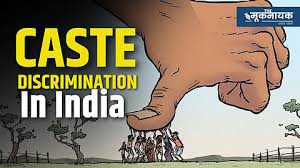
For four months, the 70 Valmiki families have lived in inhumane conditions. Children, the elderly, and women bear the brunt of this boycott. With livelihoods snatched away, many families face economic ruin. The eviction notices have compounded their woes. Ostracized and Deprived: 70 Dalit Families in Haryana Village Pay Heavy Price for Not Supporting Upper Caste Candidate in 2024 Assembly Elections Hisar- In Madanhedi village of Haryana’s Hisar district, under Hansi tehsil, the barber refuses to cut hair, the milkman won’t deliver milk, the water supplier denies water, the grocer withholds essentials, and the flour mill owner refuses to grind wheat. This is not a fictional tale but the grim reality for 70 Dalit families of the Valmiki community, who have been enduring a brutal social boycott for the past four months in this Jat-dominated village. With around 1,500 Jat households dwarfing the 70-80 Valmiki homes, the “crime” of these families was exercising their democratic right during the September 2024 Haryana Assembly elections by voting for a candidate of their choice, rather than the one backed by the Jat community. Stripped of access to basic necessities like milk, groceries, water, and even employment, these families are forced to travel 6-7 kilometers to nearby towns like Hansi, Maham, or Saman to meet their daily needs. This is a story of caste-based discrimination, the tyranny of khap panchayats, and the relentless pressure tactics aimed at forcing these families to abandon their legal fight. Dalit rights activist and lawyer Rajat Kalsan told The Mooknayak, “The conflict stems from the Haryana Assembly elections in September 2024, when Jessi Pethwal was contesting from Narnaund. Background of the issue The roots of this conflict trace back to the Haryana Assembly elections in September 2024. Madanhedi falls under the Narnaund constituency, where Jaswinder, alias Jessi Pethwal, was a candidate. Having married a Jat girl from the village, Jessi was considered the “son-in-law” of Madanhedi, and the Jat community pressured everyone to vote for him. However, Ravindra, son of Rishiraj, a young man from the Valmiki community, defied this dictate, declaring he would vote for a candidate of his choice. Infuriated by his refusal, Mohan son of Omprakash, Ajit alias Ajay son of Ajmer, Sajjan, Rambhagat alias Kuku son of Omprakash, and Ajmer’s wife Santosh attacked Ravindra with sticks, clubs, and an axe. Ravindra filed a case at Bass police station, registered as FIR No. 275/24, under sections 115(2), 238(C), 3(5) of the Indian Penal Code and Section 3 of the Scheduled Castes and Scheduled Tribes (Prevention of Atrocities) Act. The case is currently under trial in the court of Shri G.D. Mittal in Hisar, with witness testimonies scheduled for the next hearing. The filing of the FIR sparked outrage among the Jat community. About 20 days later, in January 2025, a khap panchayat was convened at the village’s new chaupal. Attended by Sarpanch representative Pradeep Poonia, Mohan son of Omprakash, Sajjan son of Chhaju, Sajjan son of Uday, Mandeep Mor son of Deshraj, Narendra alias Bulli son of Dhupa, Ankit son of Anand, and other Jat community members, the panchayat issued a decree. Mohan, Pradeep Poonia, and Sandeep Mor announced that if the Valmiki community did not withdraw Ravindra’s case, they would face a social boycott. The entire Jat community united to enforce this, cutting off the 70 Valmiki families’ access to basic services. Local shopkeepers stopped selling groceries. Sunil, who runs a grocery store at the bus stand, refused to sell to Ravindra, Naveen son of Chanda, and Sagar son of Kuldeep, among others. Sunil’s wife cited the boycott as the reason, an exchange recorded and submitted to the police as evidence. Ajmer, a milkman from neighboring Singhwa village who supplied milk to the Valmiki locality, stopped deliveries at the behest of the named accused. Jitendra, the village’s water camper supplier, also ceased providing water to the Dalit families. Haribishan, who operates a flour mill, refused to grind wheat for Ajay son of Madanlal and other Valmiki community members. The village barber and doctor shut their services to these families. As a result, the families must travel to distant towns like Hansi, Maham, or Saman for daily necessities, with water—a basic need—requiring a 6-7 kilometer trip to Saman village. After four months of living in fear and under pressure, the Valmiki community found the courage to speak out.On April 23, 2025, FIR No. 73 was lodged at Bass police station under Section 3(1)(zc) of the Scheduled Castes and Scheduled Tribes (Prevention of Atrocities) Act, 1989, which criminalizes social boycotts. The boycott’s impact extends beyond basic services to livelihoods. Balwan Poonia refused painting work to Narendra, Abhimanyu, and Pawan. Surendra and Bhup Singh, sons of Hoshiar Singh, sacked Mahipal son of Jagdish from masonry work. For these families, the boycott has become not just a social ostracism but an economic crisis. To intensify pressure, the named accused allegedly coerced some Valmiki community members into signing or thumb-printing blank papers under threats. Narendra alias Bulli used these to draft a fake compromise document to force the withdrawal of the FIR. Yet, the Dalit families stood firm, refusing to back down, which only tightened the boycott’s grip. As the case approached the evidence stage in court, the Jat community and panchayat escalated their tactics. The Valmiki families were served notices for “encroaching” on panchayat land, ordering them to vacate their homes. Rajat Kalsan notes that these families have lived in these homes for over 100 years. Jat and other community members also reside on panchayat land with electricity, water, and paved roads, yet only the Dalit families were targeted with eviction notices to coerce them into withdrawing the case. After four months of living in fear and under pressure, the Valmiki community found the courage to speak out. On April 11, 2025, Hawa Singh son of Shishuram, Jaipal son of Jaikumar, Jagbir son of Tekram, Dharmbir son of Shobharam, Seva son of Hargyan, Ravindra son of Rishiraj, Atma son of Umed, Jagdish son of Tekram, and Madan son
UP: Dalit woman crushed to death in Bulandshahr, five injured after SUV attack by upper-caste Hindu men
A 62-year-old Dalit woman, Sheela Devi, was crushed to death and five others seriously injured after a group of upper-caste Hindu men allegedly ran them over multiple times with an SUV in a targeted attack late Monday night in Uttar Pradesh’s Bulandshahr. The attack followed a confrontation over rash driving and was preceded by casteist slurs, according to eyewitnesses and police reports. The incident took place in Sunehra village of Bulandshahr district, where Sheela Devi was sitting outside her home when a Mahindra Thar SUV approached at high speed. A local man, Bhupendra, reportedly shouted at the driver, “Brother, drive slowly,” prompting the occupants — identified as Tapesh Singh and his son Priyanshu Singh — to exit the vehicle and hurl caste-based abuses at the residents. According to the complaint filed with the police, the father-son duo left the scene only to return about 10 minutes later with four more men — all armed. Without warning, the group allegedly drove the SUV directly into the people gathered outside their homes, then reversed and ran over them again multiple times. “The vehicle was driven forward and backward several times with the intention of killing them,” stated the complainant. Sheela Devi died on the spot. Five others, including both men and women from the same Dalit neighborhood, were rushed to the district hospital in Bulandshahr with serious injuries. The brutal nature of the assault — captured in disturbing videos circulating widely on social media — has sparked outrage across the region. The videos show the SUV mowing down people as bystanders scream, followed by the assailants fleeing the scene. Bulandshahr City Superintendent of Police Shanker Prasad confirmed, “We have registered an FIR against six men — Tapesh Kumar, his son Priyanshu, and their associates Varun Kumar, Atul Singh, Krishna Singh, and Manav Kumar — under BNS sections 103 (murder), 109 (attempt to murder), 351 (criminal intimidation), 191 (rioting), and relevant sections of the SC/ST Act. A dedicated team has been constituted to apprehend the accused, who are currently absconding.” Courtesy : Maktoob Media Note: This news was originally published on https://maktoobmedia.com/30 and has been used purely for non-profit/non-commercial purposes, especially human rights.