
Used and forgotten: The untold stories of Dalits of 2002 Gujarat riots
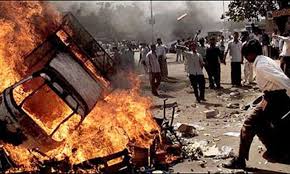
Sejal ben’s day starts at 5 am with usual household chores. She then leaves for work. For the last 20 years, Sejal ben has worked as a manual scavenger around the villages in Ahmedabad district to earn a livelihood and raise her daughter. Forty-one-year-old Sejal is the wife of Dulat Parmar, one of the accused in 2002 Gulberg Society riots case. Her world fell apart in June 2016 when the Metropolitan Court in Ahmedabad found Parmar and 23 others guilty of murdering 69 Muslims including former Congress MP Ehsan Jafri in Gulberg Society, an uppermiddle class gated society in Naroda area of the city. Amongst the accused were VHP leader Jaideep Patel, former BJP corporator Vallabhbhai Patel, Bajrang Dal leader Rajubhai Patel, along with 19 others out of whom 6 belong to Patel community and the other 16 were Dalit men. The plight of Dalit families “When he got jailed in 2016, I had hope that the leaders will help us. After all, my husband was told he is an important member of the Hindu movement. But years passed and he remained in jail. I had to raise my daughter alone with no financial support from anyone. Manual scavenging fetched me around Rs 100 a day as people usually pay less to women. The VHP leaders wouldn’t even meet me. The only person who was accessible was Hitesh bhai (former BJP corporator). He kept assuring me that leaders have not forgotten him (Dulat) and his ‘sacrifice’,” Sejal ben tells The Federal. In December 2019, the Gujarat High Court acquitted 10 accused of Gulberg Society massacre case on ground of lack of evidence while upholding life sentence of 16 Dalit men on grounds that they were ‘positively identified’ by the victims. In April 2025, the Supreme Court upheld the High Court’s verdict. Amongst those acquitted were Jaideep Patel, Valabh bhai Patel, Raju bhai Patel and six other Patel men who had been out on bail. “It was the darkest day of my life. I lost all hope. For years, I have battled financial crisis, social boycott and threats in the hope that one day it will all be fine when Dulat comes home to us. But I feel lost now. They (public prosecutor) told me thecase is closed and nothing can be done,” shares Sejal as she breaks down. “We used to live in Sardarpura area (in East Ahmedabad). We did not have much but we were happy. Shalu, our daughter, was around four years old. I was pregnant with my second child. Dulat used to work in a chemical factory in the city. Money was enough for us sustain. But then he began to attend meetings. Leaders would come and call him and tell him how he had a responsibility as a Hindu to stand up against Muslims,” she says. “At first I told him not to go. But he was promised house and land that Muslims would vacate. And then one day in February 2002, he left saying he is going to attend a meeting and did not come back for a week. When he came back home finally, he had changed… in fact everything had changed. He was arrested in August 2002 and we had to shift out of Sardarpura. We couldn’t live there anymore. Incidents of violence followed many months after the riots. Muslims and Dalits would kill each other for revenge. I left the day I was threatened with rape. The next week, I had a miscarriage,” she adds. Sejal now lives in Vejalpur area of western Ahmedabad where around 60 other Dalit families live in a slum flanked by affluent societies. But the 60 huts of the slum have no access to water, sanitation, electricity or any other civic facility. In fact, the homes have been destroyed by local authorities as illegal encroachment several times already and they face a constant threat of eviction. “In the years, I have lived in many slums across Ahmedabad but have never been accepted by the other residents. Everyone called us murderers and wished my husband was given death sentence. Finally, in 2023, I shifted here in this slum where there are two more families like us whose men are accused of rioting,” tells Sejal. There are many women who face the same fate as Sejal and bear the brunt of being the family of men accused or convicted of rioting and killing people. In 2011, a special fast-track court in Mehsana had sentenced 31 people found guilty of killing and burning 39 Muslims to death and raping and murder of three women. All 31 were awarded life sentence, a fine of Rs 20,000 each. Six months of rigorous imprisonment were added for the accused that couldn’t pay the fine. This was the first verdict in the 2002 Gujarat riots cases. All accused were charged with murder, attempt to murder, arson, rioting and criminal conspiracy. By 2021, all accused belonging to Patel community including a local BJP leader were acquitted except for three men who belonged to Valmiki, a sub community amongst the Dalits. The then additional sessions judge, LG Chudasma, while acquitting the 28 men held that the prosecution case was based on “mere suspicion without any evidence on record”. “There were two parts of the case – one was murder of 39 Muslims, including seven children and the other was rape and murder of three Muslims women. In total 112 witnesses gave their testimony against the accused and identified them. Each witness told their own story of what they endured on the day and singled out the accused who killed their family members. But not one testimony was granted in the first case stating that it was merely the suspicion of the victims who cannot be certain that they saw the same men (accused). Ironically, testimonies of the same victims were admitted in the second case where accused were three dalit men,” says advocate Sohail Tirmizi who represented the victims. “We are not happy with the
‘Drove SUV back & forth many times’: 1 dead, 5 injured as driver ‘willfully’ runs over Dalits in Bulandshahr

MEERUT: A 62-year-old Dalit woman died and five others sustained injuries after a group of upper-caste men allegedly ran over them with an SUV following a dispute over rash driving in UP’s Bulandshahr, police said on Tuesday. Videos of the incident circulated widely on social media, showing the SUV mowing down people and the attackers fleeing the scene. An FIR has been filed and officers are searching for the men, the police said Investigating officers said Sheela Devi was sitting outside her home when the SUV — a Mahindra Thar — arrived at high speed on Monday night. A villager, Bhupendra, shouted, “Brother, drive slowly,” prompting Tapesh Singh and Priyanshu Singh from Sunehra village to get out of the vehicle and allegedly hurl casteist slurs. They argued with the residents before leaving. About 10 minutes later, six armed men returned in the SUV and deliberately ran over the people standing outside. “The vehicle was driven forward and backward several times with the intention of killing them,” the complainant alleged. Sheela Devi died on the spot, and five others were taken to the district hospital in Bulandshahr for treatment. Bulandshahr (city) SP Shanker Prasad said, “We have registered an FIR against six men — Tapesh Kumar, his son Priyanshu, and their associates Varun Kumar, Atul Singh, Krishna Singh, and Manav Kumar — under BNS sections 103 (murder), 109 (attempt to murder), 351 (criminal intimidation), 191 (rioting), and relevant sections of the SC/ST Act. We have constituted a team to apprehend the accused, who are absconding,” he said. Courtesy : TOI Note: This news was originally published on https://timesofindia.com/bha and is used purely for non-profit/non-commercial purposes, especially human rights.
Akhilesh has anti-Dalit mindset, pushed to margins by UP voters: Asim Arun
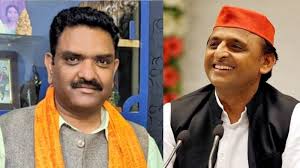
Lucknow: Social welfare minister Asim Arun on Tuesday attacked Samajwadi Party Chief Akhilesh Yadav for an anti-Dalit mindset, describing him as a “symbol of divisive politics”. The former IPS officer claimed that when SP was in power in UP, officers from SC/ST communities were routinely sidelined for postings. “During the SP regime, officers from Scheduled Castes and Scheduled Tribes were denied postings at police stations and tehsils in violation of rules. Under the Yogi Adityanath govt, postings are now made on merit. Those who are incompetent face action, while hardworking officers receive training and resources,” he said. Arun went on to allege that during Yadav’s tenure as CM, the latter went to great lengths to humiliate Dalits, and it was this very mindset that led to his political downfall. Referring to recent statements of Yadav as part of a calculated political strategy, the minister said that most SP leaders were instructed to create social divide. However, people of UP are now alert against such politics and have pushed Yadav and his party to the margins, he said. Quoting CM Yogi, he added: “Batoge to katoge, ek rahoge, to safe rahoge.” He accused SP of showing sudden concern for Dalits only after it lost power in the state, recalling how Yadav renamed districts and institutions named after Dalit icons like Bhim Nagar, Mahamaya Nagar, Jyotiba Phule, Sant Ravidas, and Mahamaya Nagar were changed under his regime. “Is this respect? No, this is an insult to social consciousness,” he said. Highlighting the achievements of the current dispensation with regard to the welfare of SCs and STs, Arun said there was record progress in scholarship distribution. Scholarships worth over Rs 4,000 crore were distributed this year, benefiting 56 lakh students. In contrast, the SP govt covered only 34 lakh students, and even then, scholarship scams were rampant,” he said. Speaking at the inauguration of the Kanpur Metro project, Arun dismissed SP’s claims that it initiated the project. Courtesy : TOI Note: This news was originally published on https://timesofindia.com/bha and is used purely for non-profit/non-commercial purposes, especially human rights.
Awakening in colours: This is Madhubani artist Malvika Raj who conveys the messages of Buddha-Phule-Ambedkar to the world!

Malvika’s paintings are not just pictures, they are a silent but powerful resistance against caste discrimination prevalent in the society. She has not only given a new social perspective to the Madhubani style, but has also turned it into a document of Bahujan history and self-respect. New Delhi. “In childhood, when school children do not share tiffin with you just because you are a Dalit, that pain stays with you for life,” – these are the words of Malvika Raj, who hails from Samastipur in Bihar and is living in Patna and carving her identity through Madhubani painting. Malvika, who is writing a new chapter in the world of art with her skills, is not only an artist, but is also a strong voice against casteism. In a conversation with ‘The Mooknayak’, she told that she showed the way to make colours and brushes a weapon against social injustice. Malvika is not just an artist, she is one of those voices who are keeping alive the struggle, history and self-respect of Bahujan heroes through art. She has made Madhubani art a symbol of social justice. Today she has made more than 200 paintings, which bring the thoughts and life of great men like Gautam Buddha, Mahatma Phule, Savitri Bai Phule, and Constitution maker Baba Saheb Dr. Bhimrao Ambedkar in colours. A journey from struggle to colours Malvika Raj’s father Ramchandra Ram has retired from the rank of DSP in Bihar Police. She says, “My father’s struggle, his honesty and his support have been my biggest strength. It is because of him that I have reached here today.” Malvika is the second child among four siblings. This family of three sisters and one brother did not give up the path of education and self-respect even in the midst of caste discrimination. Talking about the discrimination she faced while studying in a Hindi medium government school in Patna, she said, “When I was a child, children used to insult my community, not share their tiffin with me, and used to say ‘you don’t look like SC/ST’, I didn’t understand much at that time, but as I grew up, all this used to break me from within, but I made it my strength.” Worked in a private company After completing her fashion designing studies from Chandigarh, she worked in a designing company in Delhi, but due to health problems, she had to leave the job and return to Patna. This is where her art journey began. In 2011, she took up Madhubani painting, but her outlook was traditional. It was different from stories. Madhubani art has often depicted Krishna, Mahabharata, Ramayana, Shivpuran etc. Why are there no paintings of Buddha on the land of Gautam Buddha? When Malvika started to study Madhubani paintings in depth, she was shocked to know that in Bihar, which is considered the land of Buddha, no Madhubani painting of Gautam Buddha can be seen. “If the stories of Ramayana can survive in Madhubani paintings, then why not the legacy of great men like Buddha, Phule and Ambedkar?” — this question gave direction to her art. Malvika had decided then that she would make such paintings, which are not only beautiful, but also give a social message. Each of her works brings alive the identity, struggle and thoughts of the Bahujans. Resistance and identity through art Malvika’s paintings are not just pictures, they are a silent but powerful resistance against the caste discrimination prevalent in the society. She has not only given a new social perspective to the Madhubani style, but has also transformed it into a document of Bahujan history and self-respect. Her paintings are now on display across the country and her art is being collected by many universities and people associated with social movements. Her art reflects the compassion of Buddha, the social conscience of Phule, the torch of education of Savitribai and the Constitution of Ambedkar. Discrimination is still alive Malvika says that caste discrimination still exists in states like Bihar. “When people know my caste, their behavior changes. Some of my friends distanced themselves from me just after knowing my caste.” She also told that many people, looking at her dress and mannerisms, say, “You don’t look like SC/ST,” which is a kind of taunt. The question is, how do those people want to see the people of backward, exploited, deprived society? An artist creating a new legacy Malvika’s journey is proof that no matter how many social barriers there are, if a person has determination and self-confidence, he can change history. She has brought Madhubani painting to a new level, where art is not just decoration, but has become a medium of social justice. Her story is not just an inspiration, it is a living picture of the Bahujan society that is trying to make its mark even amidst discrimination, neglect and struggle every day. What is Madhubani painting? Madhubani painting, also known as ‘Mithila painting’, is a traditional folk painting style of the Mithila region of Bihar. This art has been created by women since ancient times on the walls of the house, courtyard, and on special occasions such as marriages, festivals. The mythological belief of its beginning is that the tradition of this painting started when King Janak ordered to decorate the city at the time of his daughter Sita’s wedding. This painting is mainly done with natural colors and fingers, wooden pen, or cloth bundle. In this, trees, plants, gods and goddesses, animals, birds, marriage, myths and folklore are depicted in a symbolic style. When the walls of houses collapsed after an earthquake on the Nepal-Bihar border around 1947, these paintings were discovered and this traditional art was brought to the world. After this, in the 1960s, the women of Madhubani were taught to paint on paper, due to which this folk art reached the global level. Today it is not only a cultural heritage but has also become a medium of socio-cultural movements. Courtesy : Ankit Pachauri, Hindi
Hatred towards language is unfair, good governance is only that which is according to the constitution: Mayawati
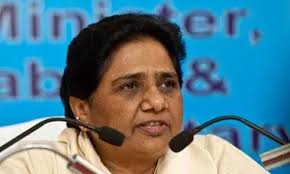
Mayawati said that the government must pay attention to how the children studying in government schools, especially those from the exploited and neglected poor, Dalits, tribals and backward classes, can progress in IT and skilled fields without acquiring knowledge of English. Lucknow. Bahujan Samaj Party (BSP) national president Mayawati has given her reaction on the language controversy going on these days. She said that hatred towards language is unfair. BSP chief Mayawati wrote on the social media platform ‘X’ on Saturday that in the meeting held in Delhi, a deep review was done on the preparation and strengthening of the formation of BSP organization in Maharashtra, Gujarat in the west and Karnataka, Tamil Nadu and Kerala in South India and increasing the mass base of the party, and a resolution was taken to further increase the work of the party as per the guidelines with full body, mind and money. She further wrote that due to census and re-allocation of Lok Sabha seats on its basis, new education policy and imposition of language etc., it is natural for the public and national interest to be affected by the dispute between these states and the center for political interests. Good governance is that which takes the whole country along according to the Constitution. Mayawati said that the government must take care of how the children studying in government schools, especially those of the exploited and neglected poor, Dalits, tribals and backward classes, can move forward in IT and skilled sectors without acquiring knowledge of English. Hatred towards language is unfair. Earlier, she wrote in her post that it is known that like other parties, the SP is also creating an atmosphere of tension and violence by putting forward especially Dalit people of the party, and the phase of highly controversial statements, allegations and counter-allegations and programs etc., which seem to be their politics of extremely narrow selfishness. She further wrote that SP can also go to any extent here for the sake of the selfishness of Dalit votes. Therefore, along with Dalits, other backward classes and Muslim community should also avoid falling prey to the political tactics of this party by not getting influenced by them. Instead of commenting on the history of others, it would be appropriate if the opportunistic Dalits associated with such parties tell them about the goodness and struggle of the saints, gurus and great men of their society, due to which these people have become worthy of something. Courtesy : Hindi News
UP: Two including father arrested in case of trafficking of 14-year-old Dalit girl in Kaushambi

The minor girl was sold for Rs 3 lakh and was held captive and raped by the buyer. Kaushambi, UP: The police on Tuesday arrested two persons in connection with the trafficking of a 14-year-old Dalit girl in Kokhraaj area of Kaushambi. The arrested accused include the girl’s father Ashok and Sandeep Tyagi, a resident of Panipat in Haryana. Ashok is accused of selling his daughter for Rs 3 lakh, while Tyagi is accused of buying and raping her. The Kokhraaj police station received information on Thursday that a minor girl was sold for Rs 3 lakh and was being held captive and raped by the buyer, Superintendent of Police Brijesh Kumar Srivastava said. A case was registered against the girl’s father Ashok, mother and buyer Sandeep Tyagi under sections of the Indian Penal Code, including rape, causing hurt and human trafficking, as well as the POCSO Act and the Scheduled Castes and Scheduled Tribes (Prevention of Atrocities) Act. Based on the information, the police arrested both the accused. However, while being taken to Manjanpur district court, the police jeep went out of control and overturned near Selarha Purva village on Sirathu-Manjanpur road at around 4:30 pm, injuring five people. The injured include the two accused, driver Hemant, constable Suraj Kumar and home guard Mahendra Pratap. Circle Officer Manjanpur Shivank Singh said that all the injured have been admitted to Kaushambi District Hospital, where they are undergoing treatment. The matter is under investigation. Courtesy : Hindi News
UP: Dalit woman raped at gunpoint in front of son in Mainpuri, case registered
Alleged rape of Dalit woman in Mainpuri, taken to a secluded place on the pretext of loan and committed the crime. Mainpuri: A 40-year-old Dalit woman was allegedly raped at gunpoint in front of her four-year-old son in Uttar Pradesh’s Mainpuri district. The accused, who belongs to another caste, took advantage of the woman’s family’s financial crunch to lure her for a loan of Rs 20,000 and sexually abused her when she went with him to collect the loan, police said on Tuesday. According to the victim’s complaint lodged on Monday, the incident took place on April 17. While returning home after getting her son’s haircut, she met the accused near a bridge. The accused offered a loan and convinced her to take a ride on his motorcycle. Trusting him, she sat on the motorcycle with her son. However, the accused took her to a secluded place, where he raped her and threatened to shoot her child if she resisted. Station House Officer (SHO) Anuj Kumar said an FIR was registered against the accused, who hails from the same village, under the rape section of the Indian Justice Code (BNS) and provisions of the SC/ST Act. The victim has undergone a medical examination and police are searching for the accused, who runs a construction material shop in the village and knew the victim and her husband. “The accused will be arrested soon and the investigation is on,” Kumar said. The victim initially kept quiet out of fear. But repeated phone calls from the accused prompted her to muster courage and narrate the incident to her husband, who took her to the police station and lodged a complaint. “This man raped my wife. I want strict action against him so that he does not commit such a crime again,” the victim’s husband said. Courtesy : Hindi News
Rajasthan: 2 died while cleaning sewer in Alwar; Ajaak said – Do not send cleaners into septic tank

Every year many sanitation workers are dying untimely and painfully, ruining their families. The families of the deceased do not even get compensation or jobs on time. Alwar- A tragic incident in Khedli town of Alwar district of Rajasthan on Saturday, April 19, spread sensation in the entire area. Two people, Lacchi Ram (50 years) and Hemraj alias Akash, died of suffocation due to poisonous gas and getting trapped in the swamp while cleaning the sewer tank in a paper mill near Navkar Vatika. This incident has raised serious questions about the working style of the municipality and the safety of the sanitation workers. According to local newspapers, workers were sent down without any safety equipment to clean the sewerage line and chamber in Khedli town. Lacchi Ram, son of Mangtu, and Hemraj alias Akash, son of Sagar Valmiki, came in contact with poisonous gas during cleaning work and got trapped in the swamp, resulting in their death. After this incident, the local administration and municipality officials are silent, only saying that the matter is being investigated. AJAK i.e. Dr. Ambedkar Anusuchit Jati Adhikari Karmchari Association (AJAK) organization has taken a tough stand on this incident. The organization’s president Shriram Chordia has written a letter to the officials, including the Chief Minister of Rajasthan, demanding immediate action in this matter. The letter states that this incident is not only painful, but it also reflects the administration’s apathy towards sanitation workers. The organization said that similar incidents have happened in Rajasthan before, where employees have died while cleaning sewer lines and tanks. Despite this, the state government has not taken any concrete steps in this direction, which is a matter of concern for the cleaning community. The letter cites Section 7 of the Prohibition of Employment as Manual Scavengers and their Rehabilitation Act, 2013, which clearly states that no person, local authority, or agency shall employ any person for “hazardous cleaning” of sewer lines or septic tanks. Violation of this provision is punishable under Section 9 with imprisonment of up to two years, fine of up to two lakh rupees, or both for the first offence, and imprisonment of up to five years, fine of up to five lakh rupees, or both for subsequent offences. However, despite the implementation of this law, it is common for local bodies in Rajasthan to send workers to clean sewers and septic tanks without safety equipment. This leads to untimely and painful deaths of several sanitation workers every year, ruining their families. The families of the deceased do not even get timely compensation or jobs. The cleaners who go down the sewer are not provided any safety equipment due to which there is always a danger of their death. Ajaak has put forward some demands in the matter of cleaning of sewerage tank in Kherli, which include: During cleaning, the families of the deceased should be provided immediate rehabilitation and financial assistance of Rs. 1 crore should be provided to each family. One member of the dependents of the deceased families should be given a government job. To prevent recurrence of such incidents in future, technical security should be provided at the level of the state government and Municipal Corporation, Council, Municipal Corporation and Municipalities. FIR should be registered against the guilty contractor and the guilty and negligent officers of the concerned supervision who carry out the sewerage cleaning work and strict action should be taken. In future, the Prohibition of Employment of Workers Lifting Dirt Manually and Their Rehabilitation Act 2013 should be effectively implemented and the cleaners should not be sent down into sewer lines/septic tanks/manholes etc. in all the bodies. The Kherli incident is not an isolated case. Safai Karamcharis are constantly risking their lives while cleaning sewers in urban areas of Rajasthan due to lack of safety equipment and mechanised cleaning systems. Such frequent deaths are not only devastating families but also highlighting the failure of the administration. Courtesy : Geetha Sunil Pillai, Hindi News
Amethi: Tension in village after Dalit labourer’s murder, murder case registered against four

Murder committed by attacking with sharp weapon, family members suspect old enmity; police registered case against two named and two unidentified persons. Amethi (Uttar Pradesh) – Tension prevailed in Kalyanpur village of Amethi district of Uttar Pradesh on Tuesday when the body of a 32-year-old Dalit labourer Shivam Kumar was found injured by a sharp weapon. According to police, Shivam Kumar’s body was found near a poultry farm located on the border of Kalyanpur village in Jamo police station area on Monday evening. Police have registered a case against two local youths of the village—Vikas Yadav and Man Singh—along with two unidentified persons on the charge of murder. In the initial investigation of the police, the reason for the murder is being told to be related to some old personal dispute, possibly a love affair. After the incident, heavy police force was deployed in the area on Tuesday to prevent any untoward incident. Inspector in-charge of Jamo police station Vinod Kumar Singh said, “There was already a dispute going on between Shivam Kumar and the accused. The accused are being questioned.” According to the police, on Monday evening they received information that a person was lying injured near a poultry farm outside the village. The police team reached the spot and the injured was taken to the hospital, where doctors declared him dead. Initial investigation revealed that Shivam had left home for the poultry farm on Monday afternoon. When he did not return till late evening, the family started looking for him. After this, the villagers found him lying in the field soaked in blood. Shivam Kumar used to support his family by doing daily wage labour and he got married only last year. The deceased’s father Chhotelal lodged a complaint at the police station and alleged that the attackers attacked with a sharp weapon. Police have also recovered a bottle of liquor from the spot. Investigation into the case is ongoing. Courtesy : Hindi News
‘Victims deserve justice’: Rahul Gandhi speaks with Amit Shah, CM Abdullah; receives update on Pahalgam attack

NEW DELHI: Leader of opposition in Lok Sabha on Wednesday spoke to Union home minister Amit Shah and took stock of the situation after the terror attack in Jammu and Kashmir’s Pahalgam, killing at least 28 tourists. In a social media post on X, the Congress leader said that he has also spoken to chief minister Omar Abdullah and J&K pradesh Congress committee president Tariq Karra over the attack and advocated justice and support for the victims. Follow live updates “Spoke with HM Amit Shah, J&K CM Omar Abdullah, and J&K PCC president Tariq Karra about the horrific Pahalgam terror attack. Received an update on the situation. The families of victims deserve justice and our fullest support,” Rahul said. — RahulGandhi (@RahulGandhi) The Congress on Tuesday had asked the government to take accountability for the terror attack in Jammu and Kashmir instead of making “hollow claims” on the situation being normal in the Union Territory, and demanded that an all-party meeting be called to take political parties into confidence. The opposition party denounced the terror attack as a blot on humanity and said it should not go “unanswered effectively.” Meanwhile, Prime Minister Narendra Modi landed in Delhi after cutting short his two-day trip to Saudi Arabia. The gruesome terror attack in Pahalgam is one of the biggest terror attacks after the abrogation of Article 370 in 2019. Survivors said the terrorists, believed to be foreigners numbering around six and dressed in Army fatigues, identified their victims by faith, asking them to tell their names and recite Islamic verses before spraying bullets on them from close range. Gunmen struck around 1:30 p.m. in Baisaran meadow — about 7 km from Pahalgam and reachable either by foot or by horses — as scores of tourists were enjoying a regular afternoon, surrounded by snow-capped peaks and pine forests. Pahalgam’s meadow is a top sightseeing spot that draws hundreds of visitors daily. Heavy security presence, including checkpoints and armed patrols, provided a sense of security. Courtesy : TOI Note: This news was originally published on https://timesofindia.com/bha and is used purely for non-profit/non-commercial purposes, especially human rights.