
Tamil Nadu: This Dalit comedian spoke out against NEET, now the same Rajmohan is in charge of the education department!
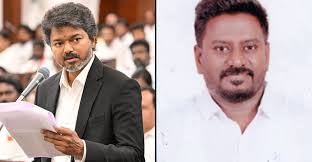
Put Chutney Rajmohan is Tamil Nadu’s School Education Minister These days, a name is being discussed in Tamil Nadu politics, one who neither comes from a traditional political family nor rose to power directly through film stardom. This name is Rajmohan Arumugam, known throughout Tamil Nadu as “Put Chutney Rajmohan.” Today, he is the Minister of School Education in the Tamil Nadu government, but his journey is quite interesting and inspiring. Rajmohan began his career in a television speaking competition, then became a household name on YouTube for his sharp satire and straightforward discussion of social issues. He acted in Tamil films, directed web series, served as a mentor on stand-up comedy platforms, and finally became an MLA by winning the 2026 Tamil Nadu Assembly elections from the Egmore constituency on a Tamil Nadu Vettiri Kazhagam (TVK) ticket. His victory wasn’t solely due to his popularity, but also to the video he made years ago, “Who Killed Anitha?” This video sparked a debate across Tamil Nadu on the education system, the NEET exam, and government negligence, echoes of which still resonate today. Now that he has become the Deputy Education Minister himself, the public expects him to implement the issues he raised on YouTube at the government level. Let’s explore in detail who Rajmohan Arumugam is, his early life, what the Put Chutney channel is, why the Anitha video became so influential, his work in films and web series, and how he ultimately won the 2026 election and made his way to the position of Deputy Education Minister. Rajamohan Arumugam was born and raised in Chennai. His father’s name is RP Arumugam. Chennai has a long-standing tradition of “Pattimandram,” where televised debate competitions are held during festivals. This tradition also influenced Rajmohan, who developed an interest in public speaking from a young age. As he grew older, he developed a keen interest in media and communication alongside his formal education. In 2010, he earned a Diploma in Business Management from IIT Chennai, and then a Bachelor’s degree in Journalism and Mass Communication from Madurai Kamaraj University in 2018. This means he combines technical experience from a prestigious institution with formal media education. This combination later helped him become a prolific content creator. His rise to public recognition began with Star Vijay’s reality show “Tamil Pechu Engal Moochu,” a speaking and oratory competition. The show tested his command of the Tamil language, his reasoning, and his persuasive skills, and Rajmohan won its second season between 2008 and 2009. This victory established him as a brilliant speaker throughout Tamil Nadu. He then began regularly participating in traditional Pattimandram programs, especially those televised during religious festivals. This period served as a training ground for Rajmohan, where he learned the art of public speaking, debating, and convincing audiences. ‘Put Chutney’ changed the course of his life, laying the foundation for his political journey. The real breakthrough came when Rajmohan joined the YouTube channel ‘Put Chutney’. Put Chutney is a Tamil-language YouTube channel known for its political satire and social commentary. Rajmohan became the channel’s director and primary face, and under his leadership, Put Chutney became one of Tamil Nadu’s most-viewed digital platforms. The channel’s hallmark was its discussion of political and social issues in a way that made the common man understand them in a humorous way, yet at the same time maintained a sharp edge. Rajmohan’s style was remarkably fearless. He spoke openly on issues that people would typically either remain silent or dismiss lightly. His historic video which changed everything came on this channel. It was 2017, and there was an atmosphere of outrage in Tamil Nadu over the NEET exam. NEET, a national-level entrance exam made mandatory for admission to medical colleges, was facing strong opposition in Tamil Nadu because it was harming students from rural and government schools. Meanwhile, Anitha, a medical aspirant, committed suicide in protest against NEET. This sent shockwaves through the state. Rajmohan made a video about this incident, titled “Who Killed Anitha?” This video wasn’t just a video; it was a question. In it, Rajmohan targeted political power, highlighted the growing inequalities in the education system, and asked society to what extent we were collectively responsible for this girl’s death. The video quickly spread like wildfire. Millions of people watched and shared it, reigniting the debate over NEET. At that point, Rajmohan was no longer just a YouTuber; he emerged as a voice that directly questioned the powers that be. This video laid the foundation for his political journey. After this incident, Rajmohan’s influence grew. In 2018, he created content on sensitive issues like the Cauvery water dispute and spoke directly about the political turmoil between Tamil Nadu and Karnataka. That same year, Telugu actor Vijay Deverakonda also appeared on his channel for a promotional video promoting the political film “NOTA.” Rajmohan launched another YouTube channel, “Tamil Vanakkam,” specifically targeted at college students, presenting discussions on social issues in a simple manner. When the COVID-19 pandemic struck and schools and colleges were closed, Rajmohan launched a new channel focused solely on students whose studies had been affected. This reflects his vision and sensitivity, as he didn’t stop at just making videos but instead adapted to every need. Alongside his digital journey, Rajmohan also entered the Tamil film industry. He appeared in several notable films in supporting roles, including “Thaana Serndha Koottam,” “Velaiilla Pattadhari 2,” also known as VIP 2, “Natpe Thunai,” “Ispade Rajavum Idhayaraniyum,” and “Nenjamundu Neramaiyundu Odu Raja.” While these weren’t major roles, they strengthened his screen presence and established him in the film industry. In 2023, he directed the film “Baba Black Sheep,” a project he had been developing for a long time. This marked his directorial debut. In 2022, he starred in the web series “Fall,” and also made his presence felt in the OTT space. He also appeared as a judge and mentor on the Amazon Prime Video show “Comicstaan Semma Comedy Pa.” The show was the Tamil version of the
Humanity Shamed in Kanpur: Dalit Teen Stripped, Beaten, Forced to Lick Spit on Shoes
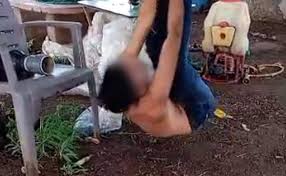
An incident that shames humanity in Kanpur, Uttar Pradesh, involved bullies brutally punishing a thirsty Dalit teen for touching water, even breaking his father’s ribs when he tried to intervene. Lucknow: A horrific and shameful incident has come to light in Kanpur district of Uttar Pradesh. Four men, allegedly from the upper caste, stripped and brutally beat a 16-year-old Dalit teen after a dispute over touching a bucket of water. The attackers’ brutality didn’t stop there; they not only broke the boy’s arm but also forced him to lick spit on their shoes. This inhumane incident in Kanpur came to light on Sunday, just a day after another video went viral on social media. In this viral video, a young man from the backward caste in Chandauli district was seen being forced to lick spit at gunpoint. According to a Telegraph India report, the Kanpur incident occurred on May 2nd in Jhakra Sambharpur village. Speaking to reporters on Sunday, the victim’s father said that while trying to intervene, the attackers also attacked him and broke his ribs. The victim’s father, a farmer by profession, narrated his ordeal, saying that someone had informed him that his son was tied up by some people. When he ran to the scene to rescue him, the accused also beat him severely. He said that he was released only after other villagers intervened. The victim, a teenager, said that he was working in the fields and was very thirsty. When he noticed a bucket full of water near a public hand pump in front of Sanjay Rajput’s house. According to the boy, as soon as he went there and took a mug of water, Sanjay, his brother Deepak, and their friends Sagar Kumar and Patiya Kumar came running. The accused immediately snatched the mug from his hand, stripped him naked, and brutally beat him for about half an hour. The teenager further stated that when his father came to his rescue, he was also kicked and punched. Both father and son repeatedly apologized, but the attackers refused to stop beating them. Sanjay then spat on his shoes and forced the teenager to lick it. They also forced the boy to drink water from his shoes. Following this brutal attack, the injured father and son were hospitalized for three days. The boy stated that only two days ago, he mustered the courage to contact the police. Manoj Kumar Singh, Assistant Police Commissioner of Panki area in Kanpur district, described the entire incident as a “scuffle between some people.” He informed that a case has been registered against four people under the SC/ST (Prevention of Atrocities) Act and the matter is being thoroughly investigated before further action is taken. According to National Crime Records Bureau (NCRB) data, Uttar Pradesh tops the country in cases of atrocities against Dalits. According to these data, 15,130 such cases were registered in the state in 2023 and 14,642 in 2024. On the other hand, in a viral video purportedly from the Chandauli incident, a young man in his twenties can be clearly seen pointing a pistol at a man. The accused spits on the ground and threatens the victim to lick it. Chandauli Superintendent of Police Akash Patel confirmed that the incident occurred approximately nine or ten months ago in Bhagatpur village. Briefing reporters on Saturday, he stated that a case of assault has been registered against Anshu Singh at the Jamalpur police station. He has been summoned and asked to apologize, and legal action is being taken against him. Although only one attacker is visible in the video, voices coming from behind indicate the presence of at least two more accomplices. One of these individuals was likely recording the video. The victim from Chandauli claims that the attackers are real estate agents and well-known criminals. He alleged that all three of them are residents of his village, Bhagatpur, and that they attacked him simply for fun. The video was posted online to spread terror in the area. He also stated in his complaint that the police detained only Anshu on Saturday, and he was released on bail from the police station shortly afterward. Rajan Chaudhary Courtesy: Hindi News
Dalit teen brutally beaten by caste Hindu men for touching water at public handpump in Kanpur

Four upper-caste Hindu men allegedly assaulted and humiliated a 16-year-old Dalit boy in Kanpur after he touched a bucket of water at a public handpump, with the teenager alleging that the accused fractured his arm and forced him to lick spit from their shoes. The incident was reported from Jhakhra-Sambharpur village under the Sachendi Police Station area in Kanpur on May 2, when the 16-year-old Dalit boy, son of a farm labourer, allegedly faced assault after touching a bucket kept near a public handpump while attempting to drink water after working in agricultural fields. The bucket reportedly belonged to upper-caste villagers. According to The Telegraph, the boy said, “When I walked over and took a mugful of water, Sanjay Rajput, his brother Deepak, and their associates Sagar Kumar and Patiya Kumar came running and snatched the mug off my hands.” He alleged that the accused abused him with casteist slurs and accused him of polluting the water source because he was a Dalit. He said he was beaten for nearly half an hour. “They kicked and punched my father too when he came to rescue me. We kept apologising, but they wouldn’t stop beating us. Then Sanjay spit on his shoes and forced me to lick it. They also poured water into my shoes and made me drink it,” he said. The assault allegedly left him with a fractured arm. When the boy’s father attempted to intervene, he was also allegedly assaulted and suffered injuries, including a fractured rib. The accused also allegedly sprinkled Ganga water around the handpump area to “purify” the place after he touched the bucket. The family initially hesitated to approach the authorities due to fear and pressure within the village. Villagers later gathered at the spot after hearing the commotion and cries during the assault, following which the accused allegedly fled. The alleged atrocity came to wider public attention on Sunday, a day after a video purportedly showing a backward-caste youth being forced to lick spit at gunpoint in Chandauli district began circulating on social media. Police later registered an FIR under the Scheduled Castes and Scheduled Tribes (Prevention of Atrocities) Act along with other charges. Sanjay Rajput was taken into custody, while efforts were underway to arrest the remaining accused. Manoj Kumar Singh, assistant commissioner of police for the Panki area of Kanpur district, described the incident as a “fight between some people”. Police Commissionerate Kanpur Nagar, in a statement posted on X, said, “On 02 May 2026, a dispute arose between two parties in the village of Jhakra under the jurisdiction of Sachendi Police Station over the issue of dumping garbage and using the toilet in the field, which later escalated into a physical altercation.” “During the investigation, the allegations mentioned in the FIR regarding forcing him to lick spit and making him drink water from a shoe have not been confirmed. The case has essentially been found to be a mutual dispute and physical altercation between the two parties,” the statement further said. Police said the boy sustained injuries and underwent a medical examination, following which a case was registered under relevant sections and the SC/ST Act. Action is being taken against the remaining accused, and the investigation is being conducted by Assistant Police Commissioner of Panki Manoj Kumar Singh. Reacting to the incident, the Uttar Pradesh Congress Committee alleged that “casteist thugs thriving under the patronage of those in power” had brutally assaulted the Dalit father and son. The party further alleged that the incident reflected the spread of “Manuvaad” under the rule of the BJP and RSS, calling the assault “a direct attack on Babasaheb’s Constitution, equality and humanity.” Avinash Pande, General Secretary of the Indian National Congress, said the incident was “deeply shocking” and raised “serious questions about the core spirit of our democracy and Constitution.” Pande said that if humiliation, violence and oppression continued in the name of caste even today, it reflected the persistence of caste-based discrimination in society. He demanded an impartial investigation, strict action against the accused, and protection and justice for the affected family. “The Constitution grants dignity and equal rights to all — no form of caste-based oppression can be tolerated,” he said. Vinay Ratan Singh, National President of the Bhim Army Bharat Ekta Mission, said the attack was “a shameful assault on humanity” and evidence that “even today, Dalit society is not considered equal human beings.” Singh demanded the immediate arrest of all the accused, invocation of stringent provisions under the SC/ST (Prevention of Atrocities) Act, and compensation, security, and medical treatment for the victim’s family. The incident has also drawn attention to the wider pattern of caste-based violence in Uttar Pradesh. According to the National Crime Records Bureau data, the state recorded the highest number of atrocities against Dalits, with 15,130 cases registered in 2023 and 14,642 in 2024. Courtesy : Maktoob Media Note: This news is originally published on https:/maktoobmedia.com/bha and is used purely for non-profit/non-commercial purposes, especially human rights
PHOTO ESSAY: A symbolic marriage ritual and beauty pageant brings India’s trans community together
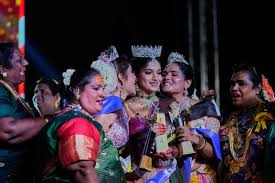
KOOVAGAM, India (AP) — Under stage lights, hundreds of transgender women adjusted their sarees, tucked flowers into their hair, and waited to be called onstage. One by one, they waved to cheering crowds and struck poses at one of India’s largest gatherings for the transgender community. Held each year in Koovagam village in southern India’s Tamil Nadu, the annual Koovagam festival brings faith and beauty together. By day, transgender women gather at a temple to honor a Hindu deity through rituals rooted in mythology and grief. By night, they celebrate glamour, identity, and joy as they take part in a vibrant beauty pageant. The festival centers on the Hindu legend of Aravan, a warrior from the Hindu epic Mahabharata who agreed to sacrifice himself before battle but wished to marry first. According to the story, the Hindu god Krishna transformed into a female form to wed Aravan. Many transgender women in India see the tale as a rare sacred recognition of gender fluidity, and each year reenact the marriage during the festival. The celebration, which drew hundreds of transgender women last month, has become both a sacred pilgrimage and a powerful expression of identity in a country where many transgender people still face discrimination, violence and exclusion. It also unfolded under a cloud of anxiety for the transgender community. Many attendees arrived amid growing concern over a controversial national bill that activists warn could erode hard-won rights for India’s transgender community by requiring medical-board approval for legal gender recognition. For many participants, the festival was deeply spiritual. Shanshi, who goes by just one name, has been attending the festival for five years and described Aravan as “God for all transgender people.” “When we gather here, it is for one reason — to worship Lord Aravan by getting married to him,” she said, after a Hindu priest tied a sacred thread around her neck, symbolically marrying her to the deity. Others spoke of violence and hardship beyond the festival grounds. Nazariya Kutty, 28, said she was forced out of her family home as a teenager and later survived domestic abuse and sexual assault in a marriage she hoped would bring stability. She rebuilt her life through delivery jobs before reopening her travel business. Now back at Koovagam with friends, she said the rituals give her strength. “I am waiting to be the bride of Lord Aravan,” Kutty said. “I have faith he will restore whatever I have lost.” Amid the festival’s spiritual fervor, the atmosphere remained celebratory. The village of Koovagam also transformed into a vibrant beauty pageant, where glamour and community took center stage. Backstage at this year’s beauty pageant, contestants in shimmering sarees shared mirrors and makeup brushes before stepping onto the stage as music echoed through the village. For 24-year-old Surya Kutty, winning the Miss Koovagam crown marked a personal turning point after years of returning to the festival with close friends. “This win has given me the confidence to participate in national and international events,” she said. Beyond the pageantry and rituals, many attendees described the gathering as a rare space of belonging for a community that continues to face barriers to jobs, housing and healthcare across India. Surya said the festival creates a rare sense of belonging. “Here we meet other transgender people and feel loved and cared by everyone,” she said. “These are special days meant exclusively for us.” By MAHESH KUMAR and SHEIKH SAALIQ — Associated Press Courtesy : WRAL News Note: This news is originally published on https:/wralnews.com/bha and is used purely for non-profit/non-commercial purposes, especially human rights
UDF returns to power after 10 years; thousands gather for swearing-in in Thiruvananthapuram
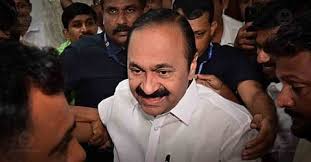
Congress president Mallikarjuna Kharge and senior party leaders Rahul Gandhi and Priyanka Gandhi Vadra were scheduled to attend the swearing-in ceremony. THIRUVANANTHAPURAM: The Kerala capital turned into a sea of white on Monday as thousands of UDF workers and supporters from across the state gathered for the oath-taking ceremony of the Congress-led government, which returned to power after a decade-long Left rule with a thumping victory in the Assembly polls. The pavilion set up at the Central Stadium for the swearing-in ceremony was packed with UDF workers and supporters wearing white khadi shirts and mundu, waving flags of alliance partners and raising slogans in support of the coalition. The crowd, including children, braved the humid weather to attend the event. Many others who could not enter the venue gathered around the stadium in large numbers. Many people told reporters that they had waited 10 years to see their alliance return to power and said it would be a great government. “When a UDF government comes back to power after 10 years, it will energise every Congress worker,” they said and shouted — “team UDF and UDF zindabad”. Supporters also danced to the beats of drums played inside and outside the pavilion, celebrating the alliance’s return to power. From 8 am onwards, party leaders, MLA-elects and MPs arrived at the venue one after another. Congress president Mallikarjuna Kharge and senior party leaders Rahul Gandhi and Priyanka Gandhi Vadra were scheduled to attend the swearing-in ceremony. Tight security arrangements were put in place across the state capital ahead of the high-profile event. Special traffic arrangements were also made in view of the large number of VIPs and UDF supporters arriving in the city. Traffic and parking regulations remained in effect from 7 am to 4 pm. The Assembly elections to the 140-member House were held on April 9, and the results were declared on May 4. The Congress-led UDF won 102 seats, while the LDF secured 35 seats and the BJP won three. The MLAs are scheduled to take oath on May 21, followed by the election of the Assembly Speaker on May 22. The Governor’s policy address is scheduled for May 29, and the state budget is likely to be presented by June 5. Courtesy : TNIE Note: This news is originally published on https:/thenewindianexpress.com/bha and is used purely for non-profit/non-commercial purposes, especially human rights
V D Satheesan takes oath as Kerala Chief Minister with 20-member Cabinet as UDF returns to power after a decade

Congress-led alliance assumes power in Kerala after sweeping Assembly poll victory over the LDF; Rahul Gandhi, Kharge and top leaders attend swearing-in ceremony. A decade after being pushed to the opposition benches, the Congress-led United Democratic Front (UDF) stormed back to power in Kerala on Monday, with VD Satheesan taking oath as the state’s 13th Chief Minister at a high-voltage ceremony in Thiruvananthapuram. In a packed Central Stadium drenched in Congress flags, drumbeats and chants of “UDF zindabad”, Governor Rajendra Vishwanath Arlekar administered the oath of office and secrecy to Satheesan and his 20-member Cabinet, formally ending the CPI(M)-led LDF’s 10-year rule in the state. Thousands of UDF workers and supporters from across Kerala flooded the capital city from early morning, turning the venue and surrounding roads into a sea of white khadi shirts and mundu. As Satheesan rose to take oath in the name of God, the crowd erupted in celebration, marking what many Congress workers described as the party’s biggest political comeback in years. The 61-year-old Paravur MLA, credited with rebuilding the Congress organisation and scripting the UDF’s emphatic electoral victory, assumes office after leading the alliance to a stunning 102-seat triumph in the 140-member Assembly. The LDF was reduced to 35 seats, while the BJP won three. The swearing-in ceremony doubled as a show of strength for the Congress nationally, with party president Mallikarjun Kharge, Rahul Gandhi and Priyanka Gandhi Vadra occupying the front row. Karnataka Chief Minister Siddaramaiah, Telangana Chief Minister A. Revanth Reddy, Himachal Pradesh Chief Minister Sukhvinder Singh Sukhu and Karnataka Deputy Chief Minister D.K. Shivakumar were among the senior Congress leaders who attended the event. Former Chief Minister Pinarayi Vijayan, now set to become the Leader of Opposition, was also present along with Left leaders and BJP representatives, including state president Rajeev Chandrasekhar. Satheesan’s ministry signals both continuity and generational transition. Fourteen of the 21 ministers, including the Chief Minister himself, are first-timers in executive office, a rare reshaping of Kerala’s political establishment. Senior Congress leader Ramesh Chennithala, who was widely seen as a contender for the chief ministership, took oath as the third member of the Cabinet and is expected to handle the powerful Home portfolio. K. Muraleedharan, A.P. Anil Kumar and KPCC president Sunny Joseph are among the senior Congress faces in the ministry. The IUML, the second-largest constituent in the UDF, secured five Cabinet berths with P.K. Kunhalikutty emerging as the coalition’s second most powerful figure politically. RSP leader Shibu Baby John, Kerala Congress (Joseph) leader Mons Joseph, Kerala Congress (Jacob) leader Anoop Jacob and CMP leader C.P. John also joined the ministry. The Cabinet includes two women ministers , Bindhu Krishna and K.A. Thulasi, while Scheduled Caste representation has increased to two with Thulasi and A.P. Anil Kumar becoming ministers. Among the new-generation faces in the ministry are P.C. Vishnunadh, Roji M. John, T. Siddique, M. Liju and O.J. Janeesh from the Congress, besides IUML leaders N. Shamsudheen, K.M. Shaji, P.K. Basheer and V.E. Abdul Gafoor. The mood outside the stadium resembled a festival. Supporters danced to percussion performances, waved giant party flags and burst into slogans as ministers took oath one after another. Security was tightened across the capital with heavy police deployment and traffic restrictions in place throughout the day. For the Congress in Kerala, the day marked more than just a change of government. It signalled the return of the UDF after two consecutive defeats, the rise of Satheesan from Opposition leader to Chief Minister, and the beginning of what the party hopes will be a long-awaited political reset in the state. Courtesy : TNIE Note: This news is originally published on https:/thenewindianexpress.com/bha and is used purely for non-profit/non-commercial purposes, especially human rights
Robert Vadra withdraws from Delhi HC plea challenging trial court order in Haryana land deal case
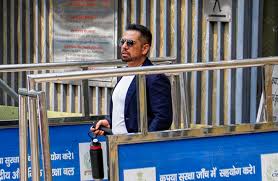
The counsel for Vadra said he would make “appropriate submissions” before the trial court at an “appropriate stage.” Businessman and spouse of Congress leader Priyanka Gandhi, Robert Vadra, on Monday withdrew in the Delhi High Court his petition challenging a trial court order summoning him for questioning in a money laundering case linked to a land deal in Haryana. The probe against Vadra is linked to the land deal at Manesar-Shikohpur (now Sector 83) in Gurugram district. “Learned counsel for the petitioner, at the very outset, submits that as per his instructions, the petitioner is not interested in pursuing the present petition and they seek to withdraw the same unconditionally,” Justice Manoj Jain recorded in the order. The counsel for Vadra said he would make “appropriate submissions” before the trial court at an “appropriate stage.” All rights and contentions of the parties are kept open and the petition is disposed of, Justice Jain said. Last week, the Enforcement Directorate (ED) had opposed the petition, contending that it was based on a false legal submission. The agency made the claim while countering the submission by Vadra’s lawyer, senior Advocate Abhishek Singhvi, who argued that ED lacked the jurisdiction to probe the case as the offences filed against the petitioner under the Indian Penal Code and the Prevention of Corruption Act were not “scheduled offences” under the Prevention of Money Laundering Act at the relevant time. Singhvi argued that the land deal admittedly happened between 2008 and 2012, and the offences forming the basis of the ED case were only included in the schedule in 2013 and 2018. However, the ED’s lawyer said the petitioner’s contention was incorrect and was a “complete false statement on law.” On April 15, 2026, the trial court took cognisance of offences in the charge sheet filed by ED in July 2025 and asked Vadra and others to appear before it on May 16. This was the first time that any probe agency filed a charge sheet against the 57-year-old Vadra in a criminal case. In April 2025, the ED had questioned him for three consecutive days. In the cognisance order, Special Judge Sushant Changotra had said that the chargesheet and a prima facie broader scrutiny of the documents, disclosed sufficient material to proceed further against Vadra and eight other accused persons. “Accordingly, I take cognisance of the offences under Section 3 (money laundering) read with Section 70 (offences committed by companies) of the Prevention of Money Laundering Act, punishable under Section 4 of the Act,” the judge had said. The land deal pertaining to the case was done in February 2008 by a company named Skylight Hospitality Pvt Ltd, where Vadra was a director earlier. Under the deal, the company purchased a 3.5-acre plot in Shikohpur from Onkareshwar Properties for Rs 7.5 crore. At the time, Haryana was ruled by the Congress government led by Bhupinder Singh Hooda. Four years later, in September 2012, the company sold the land to realty major DLF for Rs 58 crore. The deal got embroiled in controversy in October 2012 after IAS officer Ashok Khemka, then posted as director general of land consolidation and land records-cum-inspector-general of registration, cancelled the mutation after categorising the transaction as violative of the state consolidation act and some related procedures. Vadra has been denying any wrongdoing, calling the case a “political vendetta” against him and his family, including former Congress president Sonia Gandhi and Leader of Opposition in Lok Sabha, Rahul Gandhi. Besides Vadra, summonses were also issued to Kewal Singh Virk, Sky Light Hospitality Pvt Ltd (now Skylight Hospitality LLP), Sky Light Realty Private Limited, Real Earth Estates Private Limited (now Real Earth Estates LLP), Blue Breeze Trading Private Limited (now Blue Breeze Trading LLP) and others. Courtesy : TNIE Note: This news is originally published on https:/thenewindianexpress.com/bha and is used purely for non-profit/non-commercial purposes, especially human rights
Dalit land encroached by powerful people: Victim seeks justice at Samadhan Diwas in Manikpur
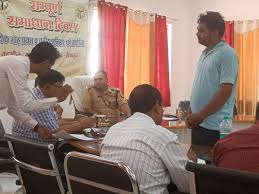
During the Samadhan Diwas held in Manikpur, Chitrakoot, a case came to light in which a Scheduled Caste man alleged illegal occupation of his agricultural land. The victim appealed to the Sub-District Magistrate for justice. A resident of Jawahar Nagar in Manikpur town stated in his complaint that his agricultural land is located in village Itro, Tehsil Manikpur. This land is registered as Khata number 105 and measures approximately 12.5 Biswas. According to the victim, this land falls under the Scheduled Caste category. The victim alleges that some villagers have forcibly occupied his entire land. The encroachers have established their occupation by placing stones and building a boundary wall. They are also attempting to establish permanent occupation by planting trees. The victim stated that despite repeated protests and complaints, no action has been taken. This has caused him financial and mental distress. On Samadhan Diwas, he demanded that the administration measure and demarcate the land, remove the encroachment, and take action against the culprits. Pankaj Tiwari | Manikpur, Chitrakoot Courtesy: Hindi News
Dalit rickshaw puller brutally beaten in Barabanki: Attacked with iron rods and bamboo sticks by goons; case filed under SC/ST Act

A case of a Dalit rickshaw puller being beaten with iron rods and bamboo sticks due to an old rivalry has come to light in the Subeha police station area of Barabanki. Police have registered a case under various sections, including the SC/ST Act, and have begun an investigation. Barabanki, Uttar Pradesh: A case of a Dalit rickshaw puller being brutally beaten due to an old rivalry has come to light in the village of Pure Amrit Majra Shukulpur, under the Subeha police station area of Barabanki district. The incident caused a stir in the area. On the complaint of the victim, police have registered a case under the SC/ST Act and other serious sections and have begun an investigation. Allegations of assault with iron rods and bamboo sticks According to the victim, Mangali, son of Haripal, a resident of Pure Amrit Majra Shukulpur, he was driving his rickshaw on May 15, 2026, at around 1:30 p.m. Meanwhile, Akhilesh, Guddu, and another unidentified man from the same village arrived in a four-wheeler. The victim alleges that the accused began abusing him over an old rivalry. When he resisted, they attacked him with an iron rod and bamboo, seriously injuring him. After the assault, the accused threatened to kill him and fled the scene. The injured youth was treated at the Community Health Center (CHC). The family immediately rushed Mangali, who was injured in the incident, to the Community Health Center (CHC), Haidergarh, where he was treated. The victim suffered multiple serious injuries. Following the incident, the family is filled with panic and anger. Police filed a case under the SC/ST Act. Following the incident, the victim went to the Subeha police station and filed a complaint against the accused. Taking the matter seriously, the police have filed a case under the SC/ST Act and other sections. In-charge Inspector Bechu Singh Yadav stated that the injured youth has been medically examined and further legal action is being taken in the case. Tension in the village, police investigating The incident has created a tense atmosphere in the village. Police are investigating the matter and searching for the accused. Local residents have demanded strict action against the culprits to prevent such incidents in the future. KAMRAN ALVI Report – Mansoof Ahmed COURTESY: HINDI NEWS
Thirumaavalavan: The centre of Tamil Nadu’s power game
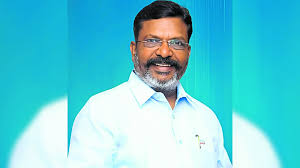
The 63-year-old suddenly became the hinge between two futures: helping Vijay complete his rise to power, or accepting an extraordinary proposal from the DMK and the AIADMK to become the state’s first Dalit Chief Minister. Chennai: On May 8 and 9, Tamil Nadu politics began revolving around a Dalit man who did not hold enough MLAs to form or topple a government, or even dominate the Assembly numerically. Yet every major party waited for VCK president Tholkappiyan Thirumaavalavan. The 63-year-old suddenly became the hinge between two futures: helping TVK president C Joseph Vijay complete his rise to power, or accepting an extraordinary proposal from the DMK and the AIADMK to become the state’s first Dalit chief minister. Thirumaavalavan was neither reluctant nor confident about the latter proposal. He knew the move might have carried the tacit blessings of the BJP — his ideological adversary for nearly two decades. Yet, the DMK and the AIADMK continued to court him in a last-ditch effort. While the DMK agreed to the idea of a Dalit CM, AIADMK general secretary Edappadi K Palaniswami initially opposed it. The original plan behind the DMK-AIADMK alignment was to let Palaniswami head a coalition government with smaller allies on both sides, backed by external support from the DMK On May 8 evening, when his decision was expected, Thirumaavalavan went incommunicado. He was later spotted at then-outgoing CM M K Stalin’s residence, and kept most visitors away, deepening speculation around his next move. The next day, TVK’s Aadhav Arjuna landed at Thirumaavalavan’s office and received the letters of support from the VCK’s two MLAs, effectively bringing down the curtains on one of the most dramatic coalition moments in TN’s politics. VCK sources insisted that the delay was not because Thirumaavalavan was interested in the CM’s post, but because he wanted to consult senior office-bearers and district-level functionaries. Political journey Born in Anganur in the Ariyalur district, Thirumaavalavan worked in the Tamil Nadu Forensic Sciences Department in Coimbatore, Chennai, and Madurai before coming into contact with Malaichamy, founder of the Dalit Panthers Iyakkam. After Malaichamy died in 1989, Thirumaavalavan assumed leadership of the movement and began working in villages across southern Tamil Nadu, where caste oppression often remained invisible. The organisation entered electoral politics in 1999 at the insistence of Congress veteran G K Moopanar, who attempted to build a Third Front against both the DMK and the AIADMK. The experiment failed electorally, but it marked Thirumaavalavan’s transition from an activist to a full-time politician. Over the next two decades, he emerged as one of Tamil Nadu’s most recognisable Dalit voices, particularly for his confrontational politics against caste violence and, later, his uncompromising opposition to the BJP and its Hindutva ideology. His politics increasingly fused Ambedkarite, Marxist, and Periyarist frameworks, while consciously bringing Muslims into a broader subaltern political coalition against majoritarian nationalism. Ironically, Thirumaavalavan first entered the Assembly from the Mangalore constituency in the Cuddalore district while aligned with a DMK-BJP alliance. He later described that phase as a political “misadventure” and resigned his seat in 2004. Since then, he has never aligned with the BJP. He also adopted a firm stand against the PMK — a Vanniyar-based party — after caste violence targeting Dalits intensified in northern Tamil Nadu. In 2011, he declared that he would never again be part of any alliance that included the PMK. Ideology vs survival? Both the DMK and the AIADMK continued courting him over the years because the VCK wielded influence across parts of northern and central Tamil Nadu, especially among Dalit youths. A three-time Lok Sabha member from Chidambaram, Thirumaavalavan became electorally useful to larger alliances while also remaining ideologically inconvenient to them. Feeling that the VCK had little independent future if it remained permanently tied to the Dravidian majors, he experimented with a Third Front in 2016 under actor Vijayakanth alongside the Left parties. The alliance collapsed electorally, and Thirumaavalavan himself lost narrowly. Since then, he has returned as a trusted DMK ally. But during the DMK’s 2021-2026 tenure, he faced increasing criticism from Dalit activists and younger cadres for his perceived silence on caste atrocities and for not holding the Stalin government sufficiently accountable. As the VCK’s seat share diminished over successive elections, many supporters urged him to walk out of the DMK alliance altogether. Yet the BJP’s presence within the AIADMK-led front closed that route. At the same time, Thirumaavalavan struggled to prevent a visible drift of Dalit youth toward Vijay and the TVK. In what many saw as an attempt to reassert independent strength, he briefly announced his candidature from Kattumannarkoil before withdrawing it after reported unhappiness within the DMK. Ultimately, the VCK won only two seats this time. Yet in a fractured Assembly, those two seats suddenly became decisive. Part of Thirumaavalavan’s long-term political project has been to expand the VCK beyond a purely Dalit party by drawing in Muslims and even sections of non-Dalit backward communities — particularly Vanniyars. It has produced partial electoral success but also internal anxieties over ideological compromise and political dilution. With just two MLAs, the VCK is now well-positioned to achieve one of its founding principles — seeking a share in power and being part of a government. And Thirumaavalavan seems to be moving towards accepting this historic opportunity and seeing his men enjoying power. Courtesy : DH Note: This news is originally published on https:/deccanherald.com/bha and is used purely for non-profit/non-commercial purposes, especially human rights