
Dalit Family Allegedly Barred from Public Well in Gujarat’s Surendranagar, Case Filed Under Atrocities Act

A case of alleged caste-based discrimination has surfaced from Metasar village in Patdi taluka of Gujarat’s Surendranagar district, where a Scheduled Caste family has reportedly been socially boycotted and denied access to water from a public well. The incident came to light after a video related to the alleged discrimination circulated in the area, prompting police action and triggering a wider debate on untouchability and caste-based exclusion in rural India. FIR Registered Under SC/ST Atrocities Act Following a complaint, police registered a case under the Scheduled Castes and Scheduled Tribes (Prevention of Atrocities) Act, 1989 against several individuals accused of stopping the family from using the village well and allegedly using caste-based abuse. Those named in the complaint include Kukabhai, Dharmshibhai, Mansukhbhai, Pratapbhai, Somabhai, and two women. Police have begun investigation and initiated legal proceedings. Authorities have also assigned a Deputy Superintendent of Police (DySP)-level officer to probe the matter, considering the seriousness of allegations involving social boycott and denial of access to a public water source. What the Complaint Says According to the complaint filed by Dilipbhai Bhikhabhai Rathod, a resident originally from Metasar who now lives in Rajkot, his family had returned to the village when the incident occurred. During their visit, a woman from the family reportedly went to fetch water from a public well but was stopped by some villagers. The accused allegedly prevented her from drawing water, used casteist slurs, and misbehaved with her. Police said an FIR was registered after preliminary verification of the complaint and available evidence. Police Say Investigation Underway Deputy Superintendent of Police Parth Parmar said that statements and evidence have been collected so far and further investigation is in progress. “All necessary evidence has been collected and further investigation is underway. Steps are being taken to detain the accused and proceed with legal action,” he said, adding that efforts are being made to ensure such incidents do not recur. Allegations of Continued Discrimination in Rural Areas The incident has also drawn reactions from social and religious voices. Buddhist monk Bhante Pathik claimed that caste discrimination remains prevalent in parts of Surendranagar district and continues to affect Scheduled Caste communities. He alleged that in some villages, social restrictions still exist on everyday practices such as grooming styles, mobility, and access to public resources. He further said that discrimination has contributed to religious conversions, claiming that over 380 people in the district have embraced Buddhism in the past decade under his guidance. Courtesy : TOP Note: This news is originally published on https:/theobserverpost.com/bha and is used purely for non-profit/non-commercial purposes, especially human rights
“We Are Pundits, You Are a Rat”: Dalit Youth Alleges Caste Abuse, Threats in Delhi’s Mehrauli

A serious case of alleged caste-based abuse and police negligence has emerged from the Mehrauli area of Delhi, where a Dalit youth, Vipin Kumar Duggal, has accused an unidentified man of publicly hurling casteist slurs and attempting to assault him. The victim claims that despite providing video evidence and details of the accused’s vehicle, the Delhi Police has not registered an FIR even several days after the incident. According to the complaint, the incident took place on May 10, 2026, around 5:35 pm, when Vipin Kumar was returning home on his motorcycle from Duggal Market. He said the altercation began near the residence of former mayor Satbir Singh after a dispute involving rash driving. “We are Pundits, You Are a Rat”: Casteist Slurs Alleged The victim alleges that the man riding a black Hero Splendor motorcycle (registration number DL3SFP1057) became aggressive after a minor road argument and began abusing him using caste-based remarks. Vipin Kumar claimed the accused pushed him and shouted derogatory slurs, saying, “I know you… we are Pundits, you are a rat… yes I am telling you,” as per the complaint. When the victim started recording the incident on his mobile phone, the accused allegedly threatened him, claiming to be an army personnel and saying that the police could not take action against him. Complaint Filed, But FIR Not Registered, Says Victim The victim immediately contacted the police helpline number 112 and later reached Mehrauli police station, where he submitted a written complaint (DD No. 145A). He alleged that instead of immediate action, the accused also arrived at the police station with associates and tried to pressure him, even misbehaving on the premises before leaving. Despite submitting vehicle details and the accused’s mobile number, the victim claims that no FIR has been registered so far. He further alleged that the investigating officer, Sub-Inspector Naveen Kumar, has not responded properly and avoided taking action even after repeated follow-ups. Repeated Police Visits and Escalation to Authorities Frustrated by what he described as police inaction, Vipin Kumar sent emails on May 12 to the DCP (South), ACP (Mehrauli), and SHO concerned, seeking immediate intervention. He also filed a complaint with the National Commission for Scheduled Castes (NCSC), alleging violation of the SC/ST (Prevention of Atrocities) Act. The victim further claimed that when he revisited the police station, the SHO denied knowledge of the case, even though several days had passed since the complaint was filed. Courtesy : TOP Note: This news is originally published on https:/theobserverpost.com/bha and is used purely for non-profit/non-commercial purposes, especially human rights
Kanpur: Dalit teenager given horrific punishment for touching a bucket of water, made to lick spit on shoes.
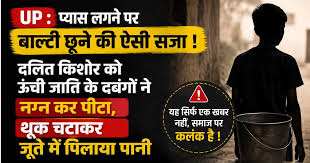
In Sachendi, Kanpur, a thirsty Scheduled Caste teenager touched a bucket of water belonging to a youth of a higher caste. A young man, along with his brother and two friends, brutally assaulted the teenager. Kanpur: A shocking incident has come to light from Kanpur, Uttar Pradesh. In Sachendi, a young man, along with his brother and two friends, brutally assaulted the teenager. According to reports, a Dalit teenager was made to lick spit on his shoes, then forced to drink water from the same shoes. Furthermore, he was stripped naked and severely beaten. The teenager suffered a fractured hand. When people intervened, he was released. Based on the complaint filed by the victim’s father, the police have registered a case against the four accused under various sections of the SC/ST Act and have begun investigating the matter. Learn about the case According to villagers, the teenager was working in the fields on the night of May 2nd. He felt thirsty. One of the accused approached the government water tank in front of Sanjay’s house, where a bucket and a jug were kept. The teenager began drinking water from it. Here’s the allegation The allegation is that accused Sanjay, his brother Deepak, and friends Sagar and Patia began hurling casteist abuses at him. They then stripped him and made him stand in the ‘murga’ position. They beat him with sticks and kicked him, resulting in a broken arm. The accused didn’t stop there. They made the teenager lick spit from their shoes and drink water from the same shoes. Seeing this, a crowd of villagers gathered. They intervened and calmed the situation. The accused fled the scene. Investigation underway The victim’s father has filed a case against the four men. Sachendi Inspector Dinanath said that a case has been filed against the four men. The matter is being investigated and further action will be taken. Curated by: Vishal Choubey About the Author Vishal Choubey works for Navbharat Times Online. Vishal covers politics, crime, governance, and other issues in Uttar Pradesh and Uttarakhand. He has four years of experience in journalism. He joined Navbharat Times Online in April 2025. Courtesy: Hindi News
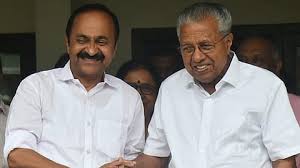
Southern CMs Vijay, Revanth, Sidda likely to join Satheesan’s swearing-in in show of opposition unity

The presence of these leaders is being viewed as politically significant, particularly in the context of the growing coordination among non-BJP parties in the southern region and the Congress party’s efforts to strengthen its influence across the South. The swearing-in ceremony of Keralam Chief Minister-designate V. D. Satheesan on Monday is set to acquire a wider political dimension with the expected participation of chief ministers from neighbouring southern states, reflecting both regional solidarity and the evolving political equations in South India after the recent Assembly elections. Chief ministers from Tamil Nadu, Karnataka and Telangana have been invited to attend the oath-taking ceremony scheduled to be held at the Central Stadium in Thiruvananthapuram. The presence of these leaders is being viewed as politically significant, particularly in the context of the growing coordination among non-BJP parties in the southern region and the Congress party’s efforts to strengthen its influence across the South. The invitation extended to Tamil Nadu Chief Minister C. Joseph Vijay has attracted considerable attention. Vijay, who recently assumed office after the Tamil Nadu Assembly election, shares a politically important equation with the Congress leadership, which had supported his government formation efforts in the state. His expected participation in the Keralam ceremony is being seen as a continuation of the emerging political engagement between regional parties and the Congress in southern India. Karnataka Chief Minister Siddaramaiah and Telangana Chief Minister A. Revanth Reddy are also expected to attend the event, lending support to the new United Democratic Front government in Keralam. Both Karnataka and Telangana are currently governed by the Congress, and their participation is likely to reinforce the party’s attempts to project a united southern political front. Senior Congress leaders, including Rahul Gandhi and Priyanka Gandhi Vadra, are also expected to be present at the ceremony, adding to the national political visibility of the event. Political observers believe the swearing-in ceremony could become more than a routine constitutional event, as it is likely to serve as a platform for opposition leaders from the South to signal greater cooperation on national and regional issues. The participation of chief ministers from neighbouring states also underlines Keralam’s continuing importance in the broader opposition landscape ahead of future political alignments at the national level. Preparations for the ceremony are underway in Thiruvananthapuram, where thousands of party workers, supporters and leaders from across the country are expected to gather for the formal inauguration of the new government. Security arrangements have been intensified in the state capital in anticipation of the arrival of senior political leaders and large public participation. Satheesan, who led the UDF to a decisive electoral victory in Kerala, is expected to take oath along with members of his cabinet at the ceremony. The event is likely to mark the beginning of a politically significant phase for the Congress-led alliance in Kerala, while also highlighting the party’s broader attempts to consolidate its presence across southern India through coordination with regional allies and friendly state governments. Courtesy : TNIE Note: This news is originally published on https:/thenewindianexpress.com/bha and is used purely for non-profit/non-commercial purposes, especially human rights
Kharge only leader fit to replace Siddaramaiah if CM change needed: Rayareddy
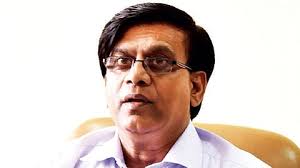
CM’s economic advisor Basavaraja Rayareddy says Siddaramaiah will complete term, calls for cabinet reshuffle by May 30 and targets PM Modi over fuel prices and economy. KOPPAL: If there is a need to change Chief Minister Siddaramaiah, then AICC president Mallikarjun Kharge is the only one qualified to replace him, said the CM’s economic advisor, Basavaraja Rayareddy. “Chief Minister Siddaramaiah will meet (LoP in Lok Sabha) Rahul Gandhi soon and the cabinet reshuffle or expansion in the state can be done by May 30. I believe that Siddaramaiah will continue as CM till the end of the current term. It is not right to change the CM repeatedly. If the cabinet is re-formed, effective governance can be given to people during the remaining two years. We can correct our shortcomings and come to power in 2028 as well,” Rayareddy said at a press conference on Saturday. “We will face the upcoming elections under the leadership of Chief Minister Siddaramaiah and KPCC President D K Shivakumar. Mallikarjun Kharge, who has the same administrative experience as Siddaramaiah, should become the CM.” Asked if he has sought a ministerial berth, Rayareddy said, “I have not asked for anything I promise.” “Prime Minister Narendra Modi has increased the prices of petrol and diesel using the pretext of West Asia war. The country’s rupee has depreciated and the Modi administration has completely failed. He should resign. An economist should become the PM,” he said. Basavaraja Rayareddy Courtesy : TNIE Note: This news is originally published on https:/thenewindianexpress.com/bha and is used purely for non-profit/non-commercial purposes, especially human rights
Thiruvananthapuram gears up for swearing-in of Congress govt
The cabinet will later hold its first meeting and submit its recommendation to the governor for convening the assembly. THIRUVANANTHAPURAM: Preparations are in full swing at the Central Stadium in Thiruvananthapuram for the swearing-in ceremony of the UDF government scheduled for Monday morning. A massive stage with seating capacity for around 10,000 people is being set up at the venue. It is expected that nearly one lakh people might attend the ceremony. To enable the public to watch the oath-taking ceremony live from 10am on Monday, video walls are being installed around the stadium premises. In addition to that, LED screens will also be set up at various parts of the city, including Nishagandhi Auditorium premises. Entry for the public will be regulated through passes. Following the ceremony, the ministers will proceed to Raj Bhavan for a reception hosted by the governor. The cabinet will later hold its first meeting and submit its recommendation to the governor for convening the assembly. Senior Congress leaders, including Mallikarjun Kharge, Rahul Gandhi and Priyanka Gandhi are expected to attend the event. Chief ministers from neighbouring states have also been invited. The schedule announced for the new government includes the cabinet swearing-in on Monday, oath-taking of MLAs on May 21, speaker election on May 22, governor’s policy address on May 29 and presentation of the state budget on June 5. Courtesy : TNIE Note: This news is originally published on https:/thenewindianexpress.com/bha and is used purely for non-profit/non-commercial purposes, especially human rights
Kerala High Court Upholds Reproductive Autonomy of Transgender Man by Allowing Egg Cryopreservation
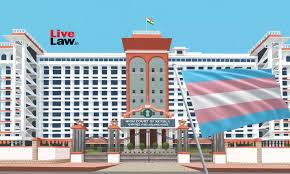
In a significant development concerning transgender rights and reproductive autonomy in India, the Kerala High Court recently permitted a transgender man to cryopreserve his eggs by allowing him to approach an Assisted Reproductive Technology (ART) bank of his choice. The order was passed in the case titled Hari Devageeth v. Union of India by Justice Sobha Annamma Eapen on May 15, 2026. The Court directed that the ART bank concerned should take steps to retrieve the petitioner’s oocytes and cryopreserve them for future reproductive use. The decision came in a writ petition filed by a transgender man who challenged the refusal of a private hospital to permit egg cryopreservation on the ground that transgender persons fall outside the statutory framework established under the Assisted Reproductive Technology (Regulation) Act, 2021. The case raised important constitutional and legal questions concerning the reproductive rights of transgender persons, the scope of healthcare protections under Article 21 of the Constitution, and the interpretation of statutory provisions regulating assisted reproductive technologies in India. While granting relief to the petitioner, the High Court also left open the constitutional challenge to Section 21(g) of the ART Act, which restricts ART services to women between the ages of 21 and 50 years and men between 21 and 55 years. The petitioner before the Court was a person assigned female at birth who identified as a man. According to the pleadings, the petitioner had undergone breast removal surgery as part of gender affirmation procedures but had not yet undergone complete sex reassignment surgery, including hysterectomy or removal of ovaries. Before proceeding further with gender-affirming procedures, the petitioner sought to preserve his reproductive potential by cryopreserving his eggs. However, KIMS Hospital allegedly refused permission for the procedure, citing restrictions under the ART Act and the absence of a legal framework expressly recognising transgender persons within assisted reproductive services. This refusal prompted the petitioner to approach the High Court seeking constitutional protection of reproductive choice and healthcare access. The litigation quickly evolved into a broader debate regarding the rights of transgender persons to parenthood, reproductive healthcare, and equal treatment under Indian law. It also highlighted gaps within existing legislation governing ART services, surrogacy, and adoption, all of which largely continue to operate on binary gender assumptions. The matter attracted significant attention because it brought into focus the intersection between gender identity, medical autonomy, constitutional dignity, and reproductive justice. Senior Advocate Anand Grover appeared on behalf of the petitioner and argued that denial of cryopreservation violated the petitioner’s fundamental rights. The Union Government opposed the plea, contending that existing statutory frameworks consciously excluded transgender persons from availing such services. Although the High Court’s detailed judgment is awaited, the operative order permitting cryopreservation has already emerged as an important judicial intervention in the evolving jurisprudence surrounding transgender rights in India. Arguments of the Parties: The petitioner argued that the refusal to permit egg cryopreservation amounted to a direct infringement of his constitutional right to reproductive autonomy and healthcare. It was submitted that although the petitioner identified as a man, he had been assigned female at birth and retained reproductive organs capable of producing oocytes. Therefore, prior to undergoing further gender-affirming surgical procedures, he wished to preserve his eggs for possible future reproduction. The petitioner clarified that he had not undergone complete sex reassignment surgery and had only undergone breast removal surgery. Since the uterus and ovaries remained intact, it was argued that the petitioner retained the biological capacity to reproduce. Counsel submitted that transgender men are capable of experiencing pregnancy and reproduction, and therefore, denying them access to fertility preservation services solely because of gender identity would be discriminatory and unconstitutional. A central argument advanced by the petitioner was that reproductive choice forms an essential component of personal liberty protected under Article 21 of the Constitution. The plea asserted that the right to make decisions regarding reproduction, parenthood, and fertility preservation is inseparably connected with bodily autonomy, dignity, and privacy. The petitioner contended that denial of cryopreservation effectively deprived him of the possibility of biological parenthood in the future. Once gender-affirming procedures such as hysterectomy or removal of ovaries are performed, the ability to retrieve oocytes would permanently cease. Therefore, refusal to permit cryopreservation would cause irreversible harm to the petitioner’s reproductive future. The petitioner also relied upon the protections available under the Transgender Persons (Protection of Rights) Act, 2019 and the accompanying Rules of 2020. It was argued that the statutory framework expressly prohibits discrimination against transgender persons in matters relating to healthcare access. Consequently, exclusion from ART services merely because the petitioner was a transgender man amounted to unlawful discrimination prohibited by statute and constitutional principles of equality. Another important submission made on behalf of the petitioner was that the ART Act did not contain any explicit prohibition against cryopreservation of eggs by transgender persons. According to the petitioner, while the legislation regulates eligibility for assisted reproductive procedures, it does not impose an absolute bar on fertility preservation. Therefore, the authorities could not rely upon legislative silence to deny healthcare access. Senior Advocate Anand Grover argued that reproductive rights must be interpreted in a gender-inclusive manner consistent with constitutional morality and the recognition of transgender identity affirmed by the Supreme Court of India in landmark transgender rights jurisprudence. It was submitted that constitutional protections cannot be denied merely because statutory frameworks have failed to evolve alongside contemporary understandings of gender identity and reproductive health. The Union Government opposed the plea and defended the existing legislative framework governing assisted reproductive technology and surrogacy in India. The Centre argued that the ART Act specifically permits assisted reproductive procedures only for a “commissioning couple” or a single woman. Under the statutory definition, a commissioning couple refers strictly to a legally married man and woman. According to the Government, transgender persons and single men were intentionally excluded from the categories of persons eligible to avail ART services. Since cryopreservation of oocytes forms part of ART services regulated under the statute, the petitioner could not claim
Dalit man beaten, threatened with bulldozer attack: Violent men assaulted in connection with missing teenager’s case
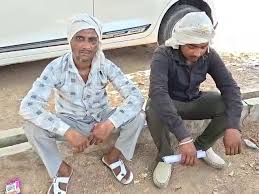
In Mahoba, a Dalit man was brutally beaten and threatened with a bulldozer attack on his home in connection with a missing teenager’s case. It is alleged that the victim’s family did not receive justice from the police; instead, they were assaulted and evidence destroyed. This incident occurred in Salarpur village, under the Srinagar police station area of Mahoba district. The victim, Devidin Ahirwar, and his nephew, Satish, are wandering from door to door seeking justice. It is alleged that on May 10, some village bullies forcibly dragged Devidin from his home. The bullies’ son had disappeared from the house, taking jewelry and two lakh rupees with him. They suspected the Dalit family of the crime, as Devidin’s 14-year-old son was a friend of the missing boy. It is alleged that the bullies held Devidin hostage in a house on the farm and beat him with kicks and punches. The victim was insulted with casteist slurs. An illegal pistol was pointed at their chest and they threatened to kill the entire family and demolish their home if the boy and money were not returned within eight days. When the victim’s elderly father and nephew Satish tried to intervene, the men did not spare them and assaulted them as well. The role of the police in this case is also under question. It is alleged that when the victim arrived at the Srinagar police station on the orders of the Superintendent of Police, the area in-charge abused and assaulted him, and forcibly deleted the video of the assault, which was on his mobile phone, as evidence. The victim’s family is now pleading for justice at the Superintendent of Police’s office. The video of the assault is also going viral on social media. The victim’s family maintains that they are completely innocent and now live in fear, demanding justice. Meanwhile, Srinagar police station in-charge Jaichandra stated that the police had gone to Devidin’s house to investigate the disappearance of one of the victims’ sons. During this time, an argument broke out between the two parties, which later escalated into a dispute. Necessary action has been taken at the police station level, and an investigation into the entire incident is ongoing. Irfan Khan Pathan | Mahoba Courtesy: Hindi News
Dalit family blocked from drawing water from government hand pump: Violent individuals also blocked the road, police investigating

A case has come to light in the Hargaon police station area of Sitapur district where a Dalit family was prevented from drawing water from a government hand pump. In Pandit Purva, a hamlet of Sarawa Gram Panchayat, members of another community are accused of preventing the Dalit family from drawing water and blocking the path to the hand pump. Villager Ramkumar stated in a police application that some influential members of the village prevented him from drawing water from the hand pump. They had placed logs and blocked the path to the hand pump. According to Ramkumar, the influential individuals also threatened to prevent any Hindu from drawing water. The victim, Ramkumar, has appealed to the police for justice in this matter. Basant Kumar, in-charge of the Ramnagar outpost in Hargaon, stated that he was unaware of the incident. He assured them that he would immediately investigate the matter and take necessary action. Vinay Kumar Singh | Hargaon, Sitapur Courtesy: Hindi News
Unless caste-based insults are in “public view,” the SC/ST Act will not apply: Why is the Bahujan community agitated by this Supreme Court decision?

Is caste-based abuse in a private home no longer a crime? The CPI(M) raises serious questions New Delhi – In a judgment on May 11, the Supreme Court held that if caste-based abuse or insult occurs within a private residence and is not in “public view,” no offense is made out under Sections 3(1)(r) and 3(1)(s) of the Scheduled Castes and Scheduled Tribes (Prevention of Atrocities) Act, 1989. A division bench of Justice N.V. Anjaria and Justice Prashant Kumar Mishra overturned the Delhi High Court order in Gunjan @ Girija Kumari v. State of Delhi (NCT) and quashed the FIR and charge sheet filed against the accused. The dispute arose from a family property dispute in the Kirti Nagar police station area of Delhi. The complainant and the accused are relatives. On January 28, 2021, the complainant, who belongs to the Scheduled Caste, alleged that the accused, Girija Kumari, addressed him with derogatory casteist slurs such as “Chuda,” “Chamar,” and “Harijan,” and that the other accused issued threats. FIR number 42/2021 was registered at the Kirti Nagar police station. The trial court framed charges under sections of the SC/ST Act, and the Delhi High Court upheld that decision, leading to the Supreme Court. Supreme Court’s Argument: “Public View” Essential Condition The Supreme Court clarified that offenses under Sections 3(1)(r) and 3(1)(s) of the SC/ST Act are made out only when the insult or casteist slur is uttered “in any place within public view.” The Court noted that the incident took place in a residential house in Ramesh Nagar, New Delhi, and the FIR did not state that any independent member of the public was present at the time or that the incident occurred in public view. Both points 5(b) and 6(e) of the FIR mentioned the same residential address. The court, citing its earlier judgments—Swaran Singh v. State (2008), Hitesh Verma v. State of Uttarakhand (2020), and Karuppudayar v. State (2025), held that “public view” means that the incident occurred in a place where the public could see or hear it. An incident occurring within a boundary wall, where the public had no access, did not satisfy this condition. The court also dismissed charges under Sections 506 (criminal intimidation) and 34 (common intention) of the Indian Penal Code, stating that the contents of the complaint did not establish either “intent to alarm” or “common criminal intent.” According to legal experts, this judgment reaffirms two key principles: first, the necessity of the “public view” condition under sections of the SC/ST Act; And second, the requirement that all legal elements must be clearly stated in the FIR and accompanying charge sheet before prosecution can begin. However, actual incidents of caste-based humiliation committed in public places are still fully punishable. This Supreme Court decision has caused deep unease among Dalit and Bahujan organizations. They argue that caste-based oppression often occurs within the confines of homes, where there are no outside witnesses. Therefore, making the “public view” requirement mandatory practically closes the doors to justice for victims. Social justice advocates argue that caste-based humiliation occurring within the confines of a home is no less painful. Ambedkarite activist Ravi Parmar says, “If tomorrow some Manuwadi forcibly kidnaps a Dalit person, takes him to his private home, and insults him with caste-based slurs, it will not be considered a crime under the SC/ST Act. It’s amazing. As long as the collegium system exists, attacks on the rights of Dalits and tribals are certain to continue.” Bahujan thinker Ravi Ratna says, “The atrocities in Khairlanji happened in public. The victim and her daughter were raped, paraded naked, brutally abused, and killed. The victim’s son and another youth were killed in broad daylight. But the court ruled that the murders were committed out of revenge and were not caste-related, so no SC/ST Act was applied.” Anti-caste activist Dr. Rehna Ravindran says, “Read it this way: If the murder happened in a private home, there’s no fault. If the rape happened in a private home, there’s no fault. If the husband beats his wife in a private home, there’s no fault. So, do you understand the absurdity behind these statements? Prejudiced casteists will go to any lengths to weaken the legal protections afforded to Scheduled Castes and Scheduled Tribes.” This isn’t the first time a Supreme Court decision on the SC/ST Act has sparked political and social opposition. In 2018, the court’s weakening of arrest provisions under the same Act sparked nationwide protests, a Bharat Bandh, and the deaths of several protesters, after which Parliament intervened to restore the original provisions through amendments. The CPI(M) had also called the decision “retrograde” and demanded an immediate review petition from the central government. The 2026 judgment is now being viewed by critics as part of a continuing judicial trend of diluting the Act’s safeguards. CPI(M) Politburo Expresses Deep Concern Over Judgment The Politburo of the Communist Party of India (Marxist) has expressed deep concern over the judgment delivered by the two-judge bench of the Supreme Court. The party said that in the case of Girija Kumari and others v. State of Delhi, the Supreme Court adopted a narrow approach based solely on legal technicalities and ordered the quashing of the FIR and chargesheet, which is extremely unfortunate. The Politburo said that this judgment is worrying for several reasons: firstly, it comes at a time when incidents of atrocities against SC and ST communities are rapidly increasing in most parts of the country, and secondly, this judgment is the latest in a long series of Supreme Court judgments that adversely impact the rights of these communities. The party feared that if this decision was not reversed, incidents of abusive treatment of SC/ST persons in homes, offices, schools, colleges, and other places would increase, as perpetrators would assume that the law could do nothing against them. The CPI(M) demanded the immediate intervention of the central government and an appeal to the Supreme Court to reconsider this decision. Communist Party of India General