
Bail Condition for Dalit and Tribal Accused to Clean Police Stations: Supreme Court Says Our Comments Are Not Against Any Judge

The Supreme Court has clarified that its previous comments should not be construed as an adverse comment against any High Court judge or judicial officer, in a case involving Odisha courts directing Dalit and Tribal accused to clean police stations as a bail condition. A division bench of Chief Justice Surya Kant and Justice Joymalya Bagchi stated that if interpreted in this way, it could demoralize judicial officers. The court made this comment while hearing a compliance report filed by the Registrar General of the Odisha High Court. The Supreme Court took up this matter suo motu after reports emerged that Odisha courts had imposed conditions such as cleaning police stations for two months while granting bail to Dalit and Tribal accused. According to reports, these orders were issued in cases related to anti-mining protests in Odisha. Eight such orders were passed between May 2025 and January 2026, seven of which were passed by courts in Rayagada district and one by the High Court. In the eight cases, six accused were from the Dalit community and two from the Adivasi community. On May 4, the Supreme Court expressed strong displeasure over these bail conditions. Calling them “obnoxious,” the court stated that they reflected caste bias in the state judiciary. The court stated that such derogatory and derogatory conditions, instead of advancing the ends of justice, attack the dignity of the accused and amount to a pre-judgment of guilt, which is completely unacceptable under the law. Declaring these bail conditions “void and illegal,” the Supreme Court directed all courts in Odisha to immediately revoke such orders. It also directed courts not to re-impose any similar conditions. The Supreme Court also directed that courts outside Odisha should not impose such “caste-based and oppressive” bail conditions in the future. The court stated that such conditions could create social tension. To this end, the Supreme Court directed that a copy of its order be sent to all High Courts to inform every judicial officer that such bail conditions should not be imposed under any circumstances. Praveen Mishra Courtesy: Hindi News
Orissa HC seeks Utkal University’s response on Ombudsman appointment PIL
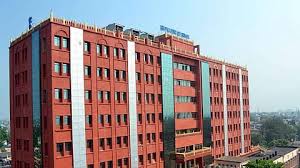
The petitioner highlighted the university’s alleged non-compliance with statutory requirements. CUTTACK: The Orissa High Court has sought response from the registrar of Utkal University on a PIL seeking appointment of an Ombudsman at the institution, as mandated under the UGC regulations on student grievance redressal. The petition was filed by advocate and Bhubaneswar-based human rights activist Prabir Kumar Das. The matter came up for hearing on Wednesday. Appearing in person, Das presented his submissions, highlighting the university’s alleged non-compliance with statutory requirements. The two-judge bench comprising Chief Justice Harish Tandon and Justice MS Raman issued notice to the registrar of Utkal University, seeking a response within two weeks in this connection. As per the petition, the UGC (Redressal of Grievances of Students) Regulations, 2021, mandates the constitution of a Students Grievances Redressal Committee (SGRC) under Regulation 5 to address student complaints, and appointment of Ombudsman under Regulation 6 to hear appeals against SGRC decisions. The petition pointed out that though the UGC in a letter dated April 12, 2021 had directed universities to appoint an Ombudsman within 30 days of notification, Utkal University had allegedly failed to comply. Courtesy : TNIE Note: This news is originally published on https:/thenewindianexpress.com/bha and is used purely for non-profit/non-commercial purposes, especially human rights
SC nixes Odisha’s ‘odious’ bail conditions to Adivasi, Dalit accused to clean police stations
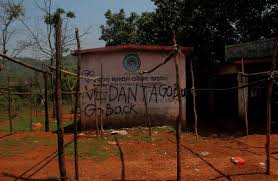
Such “abhorrent” bail conditions, issued by both HC and trial courts, reflect the “regressive mindset”, caste-based biases of Odisha judiciary, says SC; sends warning against such bail conditions to all HCs When the Odisha judiciary set “odious” bail conditions, like cleaning police stations for two months, for members of Adivasi and Dalit communities, it suggested that judges had a “regressive mindset” and caste-based biases, the Supreme Court said on Monday (May 4, 2026). “Assuming that such conditions were imposed inadvertently or without any premeditated bias, the nature of the condition is so abhorrent, degrading, and unknown to law that it carries the potential to cast a serious aspersion, suggesting that the Odisha Judiciary is afflicted by a caste-based bias,” a Bench of Chief Justice of India Surya Kant and Justice Joymalya Bagchi observed in a seven-page order. Odisha mining project protest: Congress seeks independent probe; alleges PESA, FRA violations Indigenous protesters The subjects of these bail conditions are a group of indigenous people facing criminal charges after their three-year-old protest against the acquisition of their land for a Vedanta Group bauxite mining project in Rayagada and Kalahandi districts allegedly turned violent. Around 40 protesters were arrested and cases registered against them. Some of them were subsequently allowed bail by various courts in the State. However, a range of bail conditions, some of which the top court found extremely humiliating, were thrust upon the accused in return for exercising their fundamental right to personal liberty. New railway line proposed to connect ‘controversial’ bauxite hills in Odisha ‘Obnoxious, unpalatable’ Chief Justice Kant, who had taken suo motu cognisance of the orders imposing “obnoxious” and “unprecedented” bail conditions, said they had brought a bad name to the judicial institution itself. The Bench noted that, between May 2025 and January 2026, six such bail orders were issued by a local trial court, all imposing similar conditions. The court said it was both unfortunate and disheartening to see that the State High Court and the trial courts were on the same plane, both passing “unpalatable” bail conditions. ‘Underlying caste bias’ “Such conditions reflect the underlying, albeit unarticulated, bias of the Odisha State judiciary premised on the perception that the accused individuals belonged to the marginalised Adivasi community,” the Supreme Court observed. The court said the promise of a casteless society was one of the greatest gifts the people of India gave themselves through the Constitution. The judiciary, in its role as the sentinel on the qui vive, had to stand guard on the Constitutional guarantees and protect the most vulnerable in the society, the Supreme Court observed. The court noted that every Constitutional doctrine or philosophy in a diverse country like India stood up for substantive equality, the individual dignity of all people, and an end to caste barriers. Mining push meets tribal resistance Directive sent to all HCs “We declare such conditions and any other similarly worded condition imposed by the State judiciary as null and void. Let the petitioners approach the High Court to forthwith delete such conditions and not substitute it with any other analogous condition,” the court ordered, clarifying that the accused persons would continue on bail. The court directed that all State judiciaries should refrain from imposing conditions that carry caste implications, which could lead to social discord. “Thus, let this order be made available to all judicial officers across the country, not to impose such conditions,” the Bench said. It also directed the Supreme Court registry to circulate the order to all High Courts across the country. “Each High Court shall ensure that a copy of this order is sent to each judicial officer in its jurisdiction, accompanied by a communication that such conditions shall not be imposed while granting bail,” it said. The court directed the Registrar General of the Orissa High Court to file a compliance report in four weeks. Krishnadas Rajagopal Courtesy : The Hindu Note: This news is originally published on https:/thehindu.com/bha and is used purely for non-profit/non-commercial purposes, especially human rights
Dalit protesters ordered to sweep police stations as bail condition in Odisha

In a pattern activists are calling casteist, at least eight protesters from Rayagada district have been directed by courts to clean police premises as a condition of release For nearly two months after he walked out of jail, 26-year-old Kumeswar Naik had to travel 20 kilometres every morning to sweep and mop the Kashipur Police Station – the very station where he had once been detained. Naik, a Dalit grocery store owner from Kantamal village in Odisha’s Rayagada district, had spent five months in jail for protesting against a bauxite mining project by Vedanta Ltd in the Tijimali hills. When the Orissa High Court granted him bail in May 2025, it came with a condition that he was to clean the police station premises every morning between 6 am and 9 am. “Walking to the police station knowing we would have to do this insulting job, I told my heart that the cause is bigger than this mere order,” Naik told Article 14, which investigated the matter. “However, I do want to point out that the judiciary itself gave this casteist order, which makes me wonder where we stand.” His case, it turns out, is not an isolated one. Pattern of orders According to Article 14‘s investigation, at least eight such bail orders were issued between May 2025 and January 2026. One was by Justice SK Panigrahi of the Orissa High Court and seven by two judges of the Rayagada district court. Of the eight protesters who received bail under such conditions, six are Dalits and two are Adivasis. Five of the eight orders were enforced. Civil society organisations and lawyers have described the conditions as casteist, arguing they effectively compel individuals to perform labour that is historically imposed on oppressed caste communities. Such conditions exceed judicial authority because they are unrelated to the legitimate purpose of bail and instead replicate historically stigmatised caste roles. Sharanya Nair, an activist supporting the anti-mining movement, told Article 14, “The bail condition reeks of the caste prejudices of the High Court and Rayagada sessions court judges against Dalit and Adivasi communities.” “I am absolutely sure that an upper caste leader arrested in this or any similar case would never have been served this kind of bail condition,” she added. In July 2025, over 86 citizens, lawyers and activists wrote to the Supreme Court asking it to take up the matter suo motu and recall the bail conditions, describing them as “not free from the prejudice against the weaker sections of our society.” The court did not intervene, according to Nair. Mining dispute The protests stem from a bauxite mining contract awarded to Vedanta Ltd by the then Biju Janata Dal (BJD) government in 2023. The project, spread over roughly 1,560 hectare in the Tijimali hills – nearly half of which is forest land – will require the displacement of two villages and over 140 families who farm the land or herd cattle in the region. Under Indian laws, including the Forest Rights Act and the Panchayati Raj Extension Act (PESA), mining in scheduled areas requires the free, prior and informed consent of gram sabhas. Villagers allege that not only was this process bypassed, but that consent records were forged, with the names of minors, deceased persons and non-residents appearing in the documents. “Consent was forged or obtained under pressure, with gram sabha meetings conducted in the presence of police or without meaningful participation from the community,” Umakant Naik, a 24-year-old Dalit farmer and activist who was arrested in 2023, told Article 14. Criminalisation of dissent Since 2023, at least 50 people have been arrested in connection with the protests, according to Nair and lawyer Mangal Murti Beuria, who represents several of the accused. The first information reports (FIR) invoke serious sections, including rioting, criminal intimidation and attempt to murder. “The Adivasis traditionally carry axes and bows for hunting and ceremonial purposes,” he told Article 14. “This is used against them by company representatives and police, who claim that villagers tried to attack them. None of it is true, but that’s how they build a criminal case to make an example of them.” The arrests have not spared women either. Naring Dei Majhi, a tribal woman in her early 50s, was the first woman arrested for participating in the protests. Her family alleges she was detained at the Rayagada district hospital, where she had gone to care for her daughter-in-law who had just given birth. She is currently facing seven criminal cases and was released in February 2026, with the same bail condition. “I will not stop fighting,” Majhi said quietly. In one family, six of seven members are facing criminal charges related to the protests. Villagers told Article 14 that the arrests have created a climate of fear, and that many have stopped travelling outside their villages for fear of detention. For Kumeswar Naik’s wife Tulanti, who was pregnant when her husband was jailed, those months were defined by anxiety and loneliness. “But we are not giving up,” she told Article 14. Courtesy : TSD Note: This news is originally published on https:/thesiasatdaily.com/bha and is used purely for non-profit/non-commercial purposes, especially human rights
Odisha Reconstitutes State Transgender Welfare Board to Strengthen Inclusive Governance
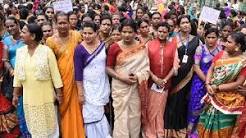
In a significant move towards inclusive development, the Government of Odisha has reconstituted the State Transgender Welfare Board, aiming to enhance welfare initiatives and ensure better coordination for the transgender community across the state. New Structure to Improve Governance The earlier board, constituted on May 15, 2025, with a three-year term, has been dissolved within a year and replaced with a newly structured body. Under the revised framework, the Chief Secretary of Odisha will now serve as the Chairman, marking a shift towards stronger administrative leadership. The Secretary of the Social Security and Empowerment of Persons with Disabilities Department has been appointed as Vice-Chairperson, while the Director of the department will act as the Member Secretary. Multi-Departmental Representation To ensure comprehensive policy implementation, the reconstituted board includes senior officials from key departments such as: Health and Family Welfare Women and Child Development Panchayati Raj and Drinking Water Housing and Urban Development Skill Development and Technical Education Higher Education School and Mass Education Additionally, the Director General of Police and senior administrative officials are part of the board, reinforcing inter-departmental collaboration. Community Representation Ensured The board places strong emphasis on representation from the transgender community. Notable members include Dipti Mohapatra, the state’s first third-gender doctorate recipient, and Soumya Das, a prominent rights activist. Representatives from organizations such as the Transgender Suraksha Trust in Bhubaneswar and the Chetana Organization in Balugaon have also been included, ensuring grassroots-level participation. District-Level Participation To strengthen regional representation, District Collectors from Balangir, Angul, and Khordha will serve as members on a rotational basis. Focus on Welfare and Inclusion The reconstituted board is expected to improve implementation of schemes related to: Education and skill development Healthcare access Social security Livelihood opportunities This initiative reflects the state’s commitment to promoting dignity, equality, and empowerment for transgender persons through inclusive governance. By Ananya Pattnaik Courtesy : Pragativadi Note: This news is originally published on https:/pragativadi.com/bha and is used purely for non-profit/non-commercial purposes, especially human rights
Youth posing as transgender detained for stealing phone in Odisha’s Bhadrak

The accused allegedly stole a mobile phone from his pocket when he was asleep. The matter has raised concerns over safety at public places, especially during late hours. In a shocking incident, a youth was detained by police on Sunday in the Chandbali area of Odisha’s Bhadrak district for allegedly posing as a transgender and stealing a mobile phone from a youth while he was asleep at railway station. Theft at Railway Station According to the complaint, the incident occurred when the victim Bichitra Roul was resting at the station. The accused allegedly stole a mobile phone from his pocket when he was asleep. The matter has raised concerns over safety at public places, especially during late hours. “He stole my mobile phone for which I caught him and immediately informed my brother about it. I was sleeping at the station, when he (the accused) came and slept beside me. He took my bedsheet and went to sleep. When police officers informed us to keep our belongings safe, I woke up and when I searched my phone in my pocket, it was not there. When I asked him about the mobile, he tried to escape following which I caught him,” said victim Bichitra Roul. “He told me to give him money, accusing me of stealing the phone from his pocket,” said Manas Mohanty, youth posed as transgender. Disguise Used to Gain Trust Police sources said the accused is suspected of posing as a transgender person to gain people’s trust before carrying out such thefts. This aspect has shocked locals, as it indicates a calculated attempt to deceive victims. Following the complaint, police detained the accused and have launched an investigation. He is currently being interrogated to ascertain further details and any possible involvement in similar incidents. Bibhu Prasad Ray Courtesy : Odisha TV Note: This news is originally published on https:/odishatv.in/bha and is used purely for non-profit/non-commercial purposes, especially human rights
Cow dung slurry poured over Dalit man for ‘preparing’ beef in Odisha

A clip captured a police officer observing the incident without intervening. Kalahandi: Self-proclaimed cow vigilantes in Odisha’s Kalahandi district humiliated a Dalit man by parading him with a garland of shoes and pouring cow dung slurry on him for allegedly preparing beef. A video of the incident surfaced on Thursday, April 9, from Bhawanipatna town, where the cow vigilantes were seen publicly humiliating the man. Videos circulating online showed the unidentified victim sitting on the ground with a garland made of shoes around his neck and a large amount of meat placed in front of him that he allegedly prepared. As the villagers took his videos, a person approached the victim and placed a steel bowl over his head, drawing laughter from the crowd. Another person sprinkled white dust on his face when a resident carrying a bucket of cow dung slurry poured it over the victim. The clip also captured a police officer observing the incident without intervening. The Odisha Police did not immediately respond to a request for comment. Odisha Indian National Congress leader Amiya Pandav shared the video on social media, accusing Hindutva group Bajrang Dal of attacking the Dalit man. Courtesy : The Siasat Daily Note: This news is originally published on https:/thesiasatdaily.com/bha and is used purely for non-profit/non-commercial purposes, especially human rights
Stop State Repression: Citizens Urge Odisha CM to Halt Violence Against Adivasis and Dalits in Sijimali Region

To Sri Mohan Majhi, The Chief Minister of Odisha Bhubaneswar, Odisha Subject: Urgent Appeal to Take Immediate Steps To Curb State Violence on Adivasis and Dalits of Raygada and Kalahandi Dear Sir, As concerned citizens, we express our collective condemnation of the brutal violence unleashed on the villagers of Kantamal in Kashipur block of Raygada district from late night to the wee hours this morning. Both the police and senior district officials were present. We are deeply concerned that in a democracy, Adivasis and Dalits opposed to the mining operations of Vedanta Limited and its contract company Maithri, have been subject to ceaseless violence and arbitrary arrests since mid-2023. Now, to begin construction work, the violence has escalated targeting the leaders of Ma Mati Mali Surakhya Mancha, the people’s local forum. It is to be noted that people have adopted all democratic means to protect their land, livelihood, water and air while also holding on to their cultural heritage and the abode of Tij Raja their scared deity. This entire area is protected under the Fifth Schedule Area of the Indian Constitution. In order to reject the proposed mining project, Ma Mati Mali Surakhya Mancha has appealed to all authorities from the local administration to the state government and from the concerned union ministers to the President of India. They have asserted their objections against mining in testimonies in the public hearings of the Odisha Pollution Control Board. In the same way, as per the FRA provisions, villagers organised Gram Sabhas in which they have clearly and unanimously rejected the mining project and the required forest clearance to protect their lives, livelihood and cultural identity. However, in this Scheduled Area, the state administration has resorted to repression to push through Vedanta Limited’s mining project. As a result, hundreds of criminal cases have been foisted on the people and almost a hundred of them have undergone incarceration and many still continue to languish in jail. Repression on the people has escalated sharply in the last few months. We urge your attention to a few incidents: On the night of March 10, after a local village conflict, hundreds of police descended on Talaampadar village in the middle of the night and picked up 21 adivasis, including 10 women. They raided houses and damaged people’s houses and belongings. Among the women, there is a nineteen-year old who is pregnant and some with small children at home. They are now languishing in District Jail of Bhawanipatna of Kalahandi district. On 25 March, Lingaraj Azad and Suresh Sangram of Samajwadi Jan Parishad were arrested and are today in Raygada Jail. The actions of the police and administration instead of being in accordance with the law clearly seems to be aiding the company. On February 26, 27 and 28, around 200 police and paramilitary forces caused much terror and intimidation under the cover of executing arrest warrants issued by the SDM Rayagada and JMFC Kashipur on the walls of some members of “Ma Mati Mali Surakhya Mancha”. Sagabari, Bantej, Bondel, Kantamal and Talaampadar are witnessing a massive presence of armed police and vehicles, drones flying on the area, and police on the lookout for leaders. Drones are followed by 18 to 25 vehicles and marches of armed police through the area along with private persons. Adivasi peasants and wage workers are losing out on earnings and cultivation work. They can no longer go out to the forest and river for nature’s call or other daily chores because of the surveillance done by drones flying overhead as it violates their privacy. People are now carrying water to their houses to do the daily chores. They can neither buy medicines nor go to shops to buy essentials from sheer intimidation. On 3rd April, the police and administration announced prohibitory orders from loud speakers. People were prohibited from assembling in more than four within 100 meters of the approach road being constructed to the mining area. As construction work began with a massive presence of police force, villagers stood ground and refused them entry from April 4 to 6. After three days of peaceful disobedience of prohibitory orders, the police resorted to violence by entering Kantamal village at midnight of April 7. They fired tear gas shells. They killed a cow. People came rushing out; many were injured by police lathis. Two women have sustained head injuries. People are unable to seek medical assistance. Sir, as local Adivasi and Dalit communities continue to live under a climate of terror and constant fear, we urge you to take the following steps without delay: Revoke the prohibitory orders issued by the Rayagada SDM under Section 163 of the BNSS. Revoke the proposed mining lease in Sijimali and ensure the protection of the jal, jangal and jameen of the Adivasis of the region. Ensure that the proposed approach road to the mining area is stopped immediately. Withdraw the entire police force in the area and immediately stop all drone surveillance. Withdraw all criminal cases foisted on villagers who are opposed to bauxite mining. Ensure the immediate release of all those in prison. Implement properly the PESA and FRA in Fifth Schedule areas. We urge you, in your capacity as Chief Minister and Chairperson of the Tribal Advisory Council, to intervene urgently and ensure that all necessary steps are taken to protect and uphold the constitutional and democratic rights of the people of this region. Thanking you, On behalf of Concerned Citizens Forum, Odisha Ananta Lokmukti Sangathan, Jharsuguda Asutosh Parida, Poet, Bhubaneswar Archana Rath, Analyst Akankshya Mahapatra, Writer and Researcher Balabhadra Mallick, Chasi Mali Surakhya Samiti, Kandhamal Bibhrant Biswajit, Mulnivasi Student & Youth Front (MSYF) Bichitra, TUCI Biswapriya Kanungo, Advocate British Kumar, Khandualamali Sthai Surakhya Samiti, Kalahandi Damodar Behera, Dalit Adhikar Andolan, Kalahandi Dandapani Mohanty, Political Activist Deba Prasad Rai, Lohia Academy Debaranjan, Gantantrik Adhikar Surakhya Sangatha, Bhubaneswar Debati Behera, AICCTU Dr Bijay Bohidar, Retd Professor, Bhubaneswar Dr Birendra Nayak, Retd Professor, Bhubaneswar Dr Biswajit, Gandhi Peace Foundation, Odisha Dr Randall
TN: Disabled Dalit man, Odisha migrant worker killed in caste attack; accused linked to previous caste violence
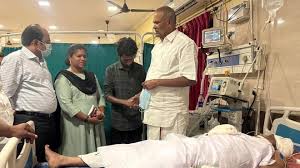
Speaker of Tamil Nadu Legislative Assembly M. Appavu comforts the family of the injured at Tirunelveli Medical College Hospital on March 3, 2026 A horrific incident of alleged caste violence has been reported from Nanguneri in Tirunelveli district, Tamil Nadu, where a disabled Dalit man and a migrant worker from Odisha were killed in a brutal attack in Perumpaththu village. It has also emerged that two of the accused had previously been charged in another caste attack a few years ago, though their identities were withheld then under the Juvenile Justice (Care and Protection of Children) Act. According to reports, on March 2, seven men armed with sickles carried out an indiscriminate attack in Perumpaththu village, near Nanguneri. The assault left two people dead, a disabled Dalit man and a migrant labourer from Odisha, while six others, including members of an Other Backward Class (OBC) community, sustained injuries. Police have arrested seven accused, identified as Kannan (21), Vasantha Kumar (21), Anthony Michel (18), Uchimahali alias Mittai (20), Raja alias Esakkiraja (19), Subbaia alias Subash (19), and Kalyani (19). While police initially did not confirm the motive behind the attack, reports now indicate that the assault was allegedly planned by a group of young men from dominant intermediate castes to intimidate and silence Dalit youth in the area. One of the accused is reportedly the nephew of R. S. Sudalaikannu, the Dravida Munnetra Kazhagam (DMK) union secretary of Nanguneri. However, Sudalaikannu has stated that he has had no contact with his nephew for the past five years. The region had only recently begun recovering from another caste-related attack. In August 2023, seven teenage boys from the Maravar (Most Backward Class) community allegedly attacked a Dalit student, Chinnadurai, with sickles inside his home in Nanguneri town. Chinnadurai survived the assault but was grievously injured, while his 13-year-old sister, who rushed to help him, was also wounded. The attackers were reportedly angered by Chinnadurai’s academic success, and he had allegedly faced caste-based harassment for several years before the assault. Following the 2023 attack and the public outrage that followed, the Tamil Nadu government appointed a one-person commission headed by retired Justice K. Chandru. After its investigation, the commission recommended banning the wearing of coloured threads and other caste markers in schools. Meanwhile, residents of Perumpaththu village from both Backward Class (BC) and Dalit communities staged protests after the latest attack. On Wednesday afternoon, the family of Odisha migrant worker D. Trinath Kata received his body and cremated it at the Tirunelveli Corporation crematorium, while also seeking financial assistance from the Tamil Nadu and Odisha governments. Meanwhile, the family of John Mark, the Scheduled Caste victim, refused to receive his body, demanding the arrest of all those involved and strict action against the culprits. The Tirunelveli District Police on Wednesday said that all the accused involved in the March 2 murder incident at Perumpathu village near Nanguneri have been secured, arrested, and remanded to judicial custody following an investigation by the Nanguneri Police Station. In a statement, police said they had also noticed several individuals posting provocative and divisive content on social media related to the incident, using abusive and inflammatory language that could disturb public peace and law and order. Authorities said legal action has been initiated against those spreading such objectionable content online. Cases have already been registered at the Vijayanarayanam Police Station and Nanguneri Police Station, and efforts are underway to identify and arrest those responsible for the posts. Prassanna Kumar, Superintendent of Police, Tirunelveli district, warned that strict legal action would be taken against anyone spreading provocative, divisive, or violence-inciting content on social media. Police also urged the public to avoid sharing misleading or inflammatory messages online and to act responsibly in the interest of communal harmony and public peace. Courtesy : Maktoob Media Note: This news is originally published on https:/timesofindia.com/bha and is used purely for non-profit/non-commercial purposes, especially human rights
OPSC adds 3rd gender category to OCSE application
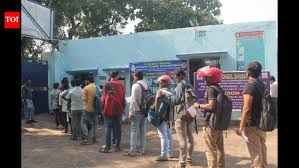
Bhubaneswar: Odisha Public Service Commission (OPSC) added a third gender or transgender category in the online application form for the Odisha Civil Services Examination (OCSE)-2025. The commission also extended the deadline for registration and fee payment to Feb 27 up to 5 pm. Candidates who complete registration will be able to submit their final online application by March 7. In a notice issued on Feb 19, OPSC said the required change was made in the gender selection column. It also clarified that applicants choosing the third gender or transgender option must upload an identity certificate or card issued by the competent authority. They must also provide supporting documents for any name change after obtaining third gender or transgender status. The move followed recent directions from the Odisha Human Rights Commission (OHRC), which urged the state govt to introduce a third gender or transgender option in recruitment application forms and to extend the OCSE application timeline. The OHRC’s intervention came after a petition filed by a transgender person from Cuttack, who alleged that the absence of a third gender category in the OCSE form effectively blocked transgender candidates from applying. The petitioner argued that this exclusion amounted to discrimination and violated constitutional guarantees of equality and non-discrimination. On Jan 22, after hearing the matter, the OHRC recommended that the state ensure 1% reservation for transgender candidates in recruitment examinations, including OCSE. It also advised the general administration and social security departments to take steps to include the third gender or transgender option across govt recruitment forms. The commission further recommended that all recruiting agencies and boards, including OPSC, be instructed to implement the change. Additionally, the OHRC asked the govt to extend the application deadline by at least 15 days to allow affected candidates adequate time to apply. Courtesy : TOI Note: This news is originally published on https:/timesofindia.com/bha and is used purely for non-profit/non-commercial purposes, especially human rights