
A 65-year-old Dalit woman was left running around for eight months, and the Orissa High Court sharply reprimanded the police for claiming a “lost file.”
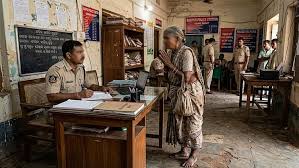
The Orissa High Court took a strong stance on the eight-month delay in filing an FIR against an elderly Dalit woman who was defrauded of ₹2.10 lakh in a land deal, completely rejecting the police’s excuse of “lost file.” New Delhi: A 65-year-old Dalit woman, who was defrauded of ₹2.10 lakh in a land deal, had to approach the Orissa High Court for justice. Despite a magistrate’s clear instructions, the police did not file an FIR in the fraud case for more than eight months. The High Court has issued a stern remark, criticizing the police for this significant delay. The court clarified that arguments such as “lost file” or “unavailability of court orders” can no longer be routine excuses to undermine the judicial process. In her June 12 order, Justice Savitri Ratho expressed deep concern over the local police’s attitude towards court orders. While hearing the case, he stated that it is possible for files to go missing, but unfortunately, this is not an isolated incident. The judge explained that he has encountered numerous cases where local police do not comply with the orders of the family court or magistrate. Despite repeated reminders and extensions, police officers remain unmoved. The timeline for this case is astonishing. The magistrate had clearly ordered the registration of an FIR in the case on August 6, 2025. However, the case was registered at the Ranpur police station eight months later, on April 24. The court noted that in such cases, the police often make the same common excuse: that the court order or warrant was lost, or that the officer concerned had recently joined duty. The court found this explanation completely unacceptable. The court argued that every police station maintains separate registers to record orders and letters received from various courts and officials, making the claim of a missing file meaningless. In light of these negligences, the Orissa High Court has urged the state’s Director General of Police (DGP) to issue necessary guidelines to his officers to ensure respect for judicial orders and their prompt implementation. The root of this entire dispute stems from a fraud that occurred in May 2025. The 65-year-old petitioner, belonging to the Scheduled Caste community, was duped into selling her land by the accused. Under the pretense of registering a sale deed with the sub-registrar, the accused extorted a hefty sum of ₹2.10 lakh from the elderly woman. However, they never executed the sale deed nor returned her money despite repeated requests. Fighting for her rights, the victim first approached the lower court, which took the matter seriously, registered an FIR, and ordered an investigation. When the police refused to listen to her complaint and took no action, she was forced to seek recourse to the High Court through advocate Umakant Sahu. On the other hand, representing the state government, Additional Standing Counsel Saroj Kumar Rout informed the court that an FIR has now been registered in the matter and Sub-Inspector Hasina Pradhan is investigating it. Despite this, the Orissa High Court continued to strongly criticize the eight-month delay in complying with the magistrate’s order and the irresponsible explanation given by the police. Rajan Chaudhary Courtesy: Hindi News
Sundargarh: Tribal and Dalit Contractors’ Association president attacked, two arrested

The president of the Tribal and Dalit Contractors’ Transport Association, Dilip Kumura, was allegedly subjected to a life-threatening attack in Odisha’s Sundargarh district. Sundargarh: The president of the Tribal and Dalit Contractors’ Transport Association, Dilip Kumura, was allegedly subjected to a life-threatening attack in Odisha’s Sundargarh district. Police have arrested two persons in connection with the incident and launched an investigation into the case. The arrested accused have been identified as Shiva Ghasi and Rukesh Khadia, both residents of Tileimal area in neighbouring Jharsuguda district. Police have booked them under various serious sections of the law and produced them before a local court. Two other individuals, identified as Biswa Majhi and Prakash Das, were initially detained for questioning but were later released after interrogation. Dilip Kumura alleges assault, death threats during return from Darlipali According to the complaint lodged by Kumura, he was returning to his residence in Sundargarh from the office of the association at Darlipali on June 11. The association is engaged in the transportation of fly ash from the NTPC Darlipali project. While on his way home, Kumura reportedly stopped by the roadside to attend a phone call. During that time, three youths — identified as Suraj Patel, Biswa Majhi and Prakash Das — allegedly arrived in a car and picked up a quarrel with him. The complaint alleges that Prakash Das took out an iron rod from the vehicle and attacked Kumura, striking him on the leg and causing serious injuries. It further states that Biswa Majhi and Suraj Patel allegedly brandished firearms and threatened to kill him. Hearing the commotion, some labourers passing through the area rushed to the spot, rescued the injured association leader and shifted him to a nearby hospital for treatment. Later that night, Kumura lodged an FIR at Bhasma police station, following which police detained Biswa Majhi and Prakash Das for questioning. During the course of the investigation, police reportedly found evidence suggesting the involvement of Shiva Ghasi and Rukesh Khadia in the assault and subsequently arrested them. By Chinmayee Dash Courtesy : Sambad English Note: This news is originally published on https:/sambadenglish.com/bha and is used purely for non-profit/non-commercial purposes, especially human rights
Dalit youth dies by suicide in collectorate
Kendrapada: A 26-year-old dalit man allegedly died by suicide inside the Kendrapada collectorate on Friday purportedly after facing sustained harassment by officials over permission to sell his land to members of another caste. The deceased has been identified as Srichandan Mallick of Raitundi village under Nikirei police station. He hanged himself from the iron railings of the office of the collector at 1 pm on Friday with a towel when there were few people as office was closed due to the morning shift. The family members and Dalit activists alleged that he ended his life after facing severe mental harassment by the officials. The deceased had been running from pillar to post since the last six months to get permission from the revenue office to sell his land to other caste persons as it is mandatory under Section 22 of the Orissa Land Reforms (OLR) Act, 1960. A SC person cannot sell or transfer land to an upper caste or general category person without the written prior permission of a revenue officer. Dalit activist and former chairperson of zilla parishad, Gita Sethi alleged that Srichandan Mallick, a dalit, was forced to end his life, driven by frustration over the long delay by the revenue officer to grant him permission to transfer his property. After knowing about the incident, police rushed to the spot and seized the body and sent it to the district headquarters hospital at Kendrapada for autopsy. No suicide note was recovered. An investigation is underway to find out what prompted him to kill himself, said IIC of Kendrapada police station Suvendu Sahoo. The district administration has launched an investigation. “We will take action if any official is found guilty of wrongdoing and harassing the dalit youth,” said collector (Kendrapada) Raghuram R. Iyer. Courtesy : TOI Note: This news is originally published on https:/timesofindia.com/bha and is used purely for non-profit/non-commercial purposes, especially human rights
BJD questions Odisha govt’s grievance redressal mechanism as Dalit youth dies by suicide
Biju Janata Dal (BJD), the main Opposition party in Odisha, has targeted the BJP government over the alleged suicide of a Dalit youth at the Collector’s office in Kendrapara. BJD MLAs Ganeswar Behera and Dhruba Sahoo alleged that the youth, identified as Srichandan Das, died by suicide at the Collector’s office as the officials concerned did to take any steps for redressal of his grievances. Das, a resident of Raytunidi village under Derabish block in Kendrapara, was found hanging at the Collector’s office on Friday. Preliminary investigation suggests that Das died by suicide by hanging himself from the railing of the staircase with the help of a cotton towel. Sources claimed that Das was under severe mental pressure over some issues related to his landed properties. He had reportedly approached the Sub-Collector’s office several times for resolution of the issues. “The Dalit youth was forced to take the extreme step as the officials did not take any step for redressal of his grievances. The incident has exposed how the BJP government, which claims to be a people’s government, has turned a blind eye to the problems of ordinary citizens. The incident raises serious questions about the administrative and security arrangements at the Collector’s office,” said Behera. Sahoo, meanwhile, raised questions over the grievance redressal mechanism of the state government. “The BJP government claims that it has resolved 96 per cent of the grievances through its grievance redressal mechanism. However, the suicide of the Dalit youth has exposed the reality,” he said. The Opposition party has sought a compensation of Rs 10 lakh to the deceased’s family and a thorough probe into the incident. “The BJD will launch an agitation if the state government does not take immediate steps to conduct a high-level probe into the incident and initiate stringent action against the culprits,” Sahoo added By Priya Ranjan Swain Courtesy : Sambad English Note: This news is originally published on https:/sambadenglish.com/bha and is used purely for non-profit/non-commercial purposes, especially human rights
Kendrapara youth’s skeleton found stuffed in sack nine days after murder

Acting on the complaint, police launched an investigation and arrested one Pratap Mahakuda of Mahadeipatana for his alleged involvement in kidnap and murder of the dalit youth. KENDRAPARA: Skeleton of a missing dalit youth was found stuffed in a sack near Petapada village under Aul police limits here on Friday. Police said 23-year-old Gouranga Sethi of Mahadeipatana village went missing on May 27. After two days, his father Arun Sethi filed a complaint in Aul police station alleging that Gouranga was abducted and killed by six persons. Acting on the complaint, police launched an investigation and arrested one Pratap Mahakuda of Mahadeipatana for his alleged involvement in kidnap and murder of the dalit youth. During interrogation, the accused reportedly admitted that he along with five others killed Gouranga and dumped his body in the bushes near Petapada village after packing it in a sack. Based on the information, police scouted the area and recovered the youth’s skeleton. A shoe was also found near the skeleton. Police said the flesh of the missing youth was completely consumed by jackals, dogs and other animals. His family members identified the skeleton through the clothes and shoe. Kendrapara SP Siddharth Kataria said preliminary investigation revealed that the victim had damaged the glasses of four-wheelers of some villagers last month. Angered by the act, the vehicle owners hatched a plan to kill Gouranga. On May 27, six persons brutally assaulted the youth with iron rods and bamboo sticks, leading to his death. The skeletal remains will be sent to the FMT laboratory of SCB Medical College and Hospital in Cuttack for autopsy. Officials will also collect DNA samples of the deceased’s family members to ascertain the identity of the skeleton, said Kataria. Police have registered a case under sections 103 and 238 of the BNS. Five other accused involved in the crime have fled the village. A team has been formed to trace and nab them. Further investigation is underway, the SP added. Courtesy : TNIE Note: This news is originally published on https:/thenewindianexpress.com/bha and is used purely for non-profit/non-commercial purposes, especially human rights
Unable to sell land, dalit man ends life in Kendrapara collector’s office
26-yr-old Srichandan was trying to get permission to sell land to buyers from general category KENDRAPARA: A 26-year-old dalit man reportedly hanged himself in the Kendrapara collector’s office on Friday after being unable to sell his land to buyers from the general category. The deceased was identified as Srichandan Mallick of Raitundi village under Nikirei police limits. Police sources said Srichandan hanged himself from the iron railings of the collector’s office with a towel at around 1 pm. Due to morning office, a handful of people were present at the collectorate when the youth took the extreme step. Family members alleged that Srichandan was facing mental harassment at the hands of revenue officials. Since the last six months, the youth had been reportedly running from pillar to post to get permission from the revenue office to sell his land to buyers from the general category. Under section 22 of the Orissa Land Reforms (OLR) Act, 1960, a Scheduled Caste (SC) person cannot sell or transfer land to a general category person without prior written permission from a revenue officer. Dalit activist and former Zilla Parishad chairperson Gita Sethi claimed Srichandan was forced to end his life due to frustration over inordinate delay by revenue officers to grant him permission to transfer his property. Kendrapara IIC Suvendu Sahoo said after receiving information, police rushed to the spot and sent the deceased’s body to the district headquarters hospital for autopsy. “No suicide note was found at the spot. An investigation is underway to find out what prompted the youth to take the extreme step,” he said. Kendrapara collector Raghuram R Iyer said, “The district administration has launched an investigation into the tragic incident. We will take strict action against any official found guilty of wrongdoing and harassing the youth.” Sources said it is being alleged that cases related to land records are moving at a snail’s pace in the offices of the collector, sub-collector and revenue officers in Kendrapara. (Assistance for those having suicidal thoughts is available on helpline 104 or Tele MANAS 14416) Courtesy : TNIE Note: This news is originally published on https:/thenewindianexpress.com/bha and is used purely for non-profit/non-commercial purposes, especially human rights
Orissa HC dismisses BJP leader’s petition challenging Jaleswar MLA’s election
The court ruled that appointing a panchayat samiti chairman as an election agent did not violate any statutory provision or materially affect the poll outcome. CUTTACK: The Orissa High Court has dismissed the election petition filed by BJP leader Brajamohan Pradhan challenging the election of BJD MLA Aswini Kumar Patra from the Jaleswar Assembly constituency in the 2024 elections. Pradhan had lost the election by a narrow margin of 319 votes. In his petition, Pradhan alleged that Patra had illegally appointed Manas Jena, chairman of Jaleswar panchayat samiti, as his election and counting agent during the polls. He stated that Election Commission guidelines prohibit persons holding such public offices from functioning as election, polling or counting agents. He contended that despite the alleged restriction, the returning officer accepted Jena’s appointment, thereby vitiating the election process. Rejecting the contention, the High Court observed that neither the Constitution nor the Representation of the People Act, 1951 imposed any statutory disqualification on Manas Jena from acting as an election or counting agent. Justice Sashikanta Mishra held that the objection raised by the petitioner was based only on executive instructions contained in the Handbook for Candidates, which do not possess statutory force. He observed that no such evidence or material particulars had been placed on record by the petitioner. “In absence of any statutory prohibition and further in absence of any pleading or proof of material effect on the election result, the contention advanced cannot be accepted,” Justice Mishra ruled and dismissed the petition as devoid of merit. Courtesy : TNIE Note: This news is originally published on https:/thenewindianexpress.com/bha and is used purely for non-profit/non-commercial purposes, especially human rights
Dalit Woman Assaulted, Denied Drinking Water In Odisha Village
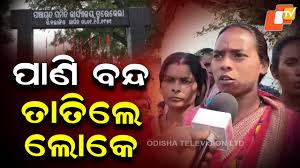
Puri: In a shocking incident, a Dalit woman was allegedly denied access to drinking water and assaulted by some villagers in Kanas area of Odisha’s Puri district.Odisha Culture Blog Showing signs of caste-based discrimination, the incident reportedly took place at Karmala village under the jurisdiction of Gadisagoda police station in the district. It was alleged that the woman had gone to a local matha to fetch drinking water but she was prevented from doing so by some villagers. They claimed that the place would become impure if she entered. The villagers allegedly shut the gate of the matha and prevented her from entering to collect water. When the woman protested, she was reportedly abused with certain remarks about her caste and physically assaulted. The incident triggered widespread outrage after a video appeared on social media. Following the incident, the woman reportedly lodged a complaint at the Gadishagoda police station. She has also approached the State Commission for Women seeking justice. The family members of the woman alleged that they are being warned by some villagers not to continue living in the village. Courtesy : Odisha Bytes Note: This news is originally published on https:/odishabytes.com/bha and is used purely for non-profit/non-commercial purposes, especially human rights
TM Mega Report | Will the system learn from Jeetu Munda’s story? RBI promises the banking system will be sensitive to the needs of the underprivileged!

Official response comes after Rajya Sabha MP Sasmit Patra’s meeting with the RBI Governor | Right to Food Campaign’s fact-finding report also raises serious questions New Delhi – The action taken by Jeetu Munda, a poor tribal elder from Diyanali village in Odisha’s Keonjhar district, on April 27th shocked the entire nation. He dug up the grave of his deceased sister, Kalra Munda, packed her bones in a jute sack, and walked barefoot for 2-3 kilometers in the scorching afternoon to reach the Odisha Gramin Bank, Malliposhi branch, to provide proof of her death to bank employees and withdraw ₹19,600 from her account. This money was deposited by selling his two bullocks. This heartbreaking incident has even shocked the Reserve Bank of India (RBI). Rajya Sabha MP and Biju Janata Dal spokesperson Sasmit Patra recently met with the RBI Governor in Mumbai to formally raise the issue and submitted a detailed report on May 7. In response, the RBI wrote in a letter on May 15, stating that the “tragic incident” involving Jeetu Munda has been taken seriously and that suggestions for improving the banking system are being “actively considered.” Signed by Sonali Sen Gupta on behalf of the RBI, the letter stated that “appropriate measures will be taken” to provide better banking services to underprivileged and vulnerable citizens. “For us, a full meal is like a guest, hunger is like a member of the family.” The story of Jeetu Munda and his sister Kalra Munda is not just an incident; it is a story of the failure of the government system. The Right to Food Campaign’s fact-finding team visited Dianali village on May 8, and the facts revealed are shocking. Kalra Munda was a widow and lived with her brother, Jeetu. They had no agricultural land or a permanent livelihood. Both survived on daily wages and sometimes begging. In Jeetu Munda’s words, “Filling the stomach is like having a guest, while hunger has become a member of the family.” In such circumstances, the ₹19,600 deposited in Kalra’s bank account was their only support. In October-November 2025, when Kalra’s health began to deteriorate, Jeetu repeatedly went to the bank. Each time, he was turned away, saying that he was not an account holder and could not withdraw the money. The bank suggested that Kalra come and withdraw the money herself, but by then, Kalra was bedridden and unable to get up on her own. Jeetu tried to arrange a small vehicle to take her to the bank, but no one agreed. On April 27, Jeetu Munda took what is perhaps the most difficult step a person can take. He dug up his sister’s grave, placed her bones in a jute sack, and carried them over his shoulders, barefoot, to the bank in the hot afternoon. According to documentary evidence collected by the Right to Food Campaign’s fact-finding team, Kalra Munda was entitled to two major social security schemes: The Antyodaya Anna Yojana (AAY), which falls under the National Food Security Act (NFSA). According to her ration card, her last ration distribution was on December 2, 2025, when she received a quota of 105 kilograms of rice for the months of January, February, and March 2026. Widow pension at the rate of ₹1,000 per month under the State Social Security Scheme. According to her pension passbook, she received her last monthly pension on January 17, 2026. Furthermore, Kalra and Jitu lived in a house that was allotted to Kalra Munda under the Rural Housing Scheme in 2021-22. In contrast, Jitu Munda had neither a ration card nor an old-age pension before the incident, although he was eligible for both. Therefore, the brother and sister relied almost entirely on Kalra’s ration quota and pension for their livelihood. Since these resources were never enough to feed them, they were sometimes forced to beg. Sister’s death certificate was not issued even after three months, but it was issued within 48 hours of the incident. As per the rules, the standard procedure for issuing a death certificate should be completed within seven days. After a person’s death, the ASHA worker follows the following process: The ASHA worker meets the family of the deceased and collects the Aadhaar card of the deceased and the Aadhaar card of the guardian/family member. These documents are submitted to the Sub-Center. The Sub-Center verifies the documents and then forwards them to the Primary Health Center (PHC)/Community Health Center (CHC). The Primary Health Center (PHC) or Community Health Center (CHC) issues the death certificate. Kalra Munda passed away on January 26th. Everyone in the village knew about her death—the ASHA worker, the Anganwadi worker, and the Panchayat representative. Yet, for more than three months, the death certificate remained unissued. The ASHA worker submitted the documents to the sub-center, but the ANM wouldn’t process them. Every time Jitu went to the bank, he was told to bring proof of death. Then, on April 27th, Jitu Munda took the most difficult step any human being can take. He dug up his sister’s grave, placed her bones in a jute sack, and, carrying them on his shoulders, walked barefoot to the bank in the hot afternoon. He sat on the veranda for nearly two hours. When a crowd began to gather, the bank employees closed the gate. When the police arrived, they told Jeetu, “Take the bones back and walk back to the village.” The policemen left in their car, and Jeetu Munda once again walked barefoot, in the sweltering heat, carrying his sister’s bones on his shoulders. As soon as the matter reached the media, the entire machinery swung into action. On April 29th, a death certificate was issued, which could have been issued three months earlier. That same day, Jeetu’s bank account was opened, and the money from his sister’s account was transferred to it. On April 30th, he was enrolled for a ₹1,000 monthly old-age pension, and the April pension was issued that day. He also received a ration card.
Family members carried the body 15 km on bicycles to the police station seeking justice; tribal family protests in Odisha!
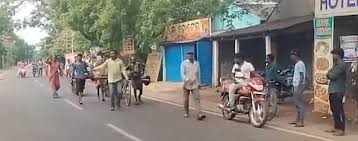
The family, demanding justice, said they were forced to carry the body to the police station so that their voices would be heard. On May 11th, a long-standing land dispute between two neighboring families in Haripur village, under the Khaira police station area of Balasore district, escalated into a violent dispute. A fight broke out during construction work, leading to members of one family attacking the other with shovels, spades, hammers, and sharp weapons. 39-year-old Kamala Sethi died on the spot, while her sister-in-law, Shakuntala Sethi, was seriously injured and admitted to SCB Medical College Hospital in Cuttack. The family alleges that the dispute has been ongoing for the past five years and they have complained to the police and the village head several times, but no action has been taken. Alleging delays in the arrest of the main accused despite the murder, the family brought the body home on Monday night and then carried it on bicycles, traveling approximately 12-15 kilometers to the Khaira police station on Tuesday. They staged a sit-in protest outside the police station, blocking the road, demanding the immediate arrest of the accused, compensation, and a resolution to the land dispute. Traffic was disrupted during the protest, and villagers also showed their support. The family alleges that three days have passed since the incident, yet the police have still not arrested the main accused. Angry family members carried Kamala Sethi’s body on bicycles and marched 15 kilometers to the Khaira police station. Senior officials, including Balasore Superintendent of Police Pratyush Diwakar, arrived at the scene. Police registered a case. One accused has been arrested, while two others are absconding and a search is underway. The police offered the family an ambulance, but the family continued their protest. The Superintendent of Police assured them that the remaining accused would be arrested soon, that an investigation was underway, and that action would be taken if any negligence was found on the part of the police. This incident has sparked widespread debate about police inaction, the resolution of pending disputes, and the law and order situation in rural areas. People expressed outrage after the video went viral on social media. The Tribal Army posted a clip of the incident, writing, “A tribal family in Balasore, Odisha, had to carry the body of a woman on bicycles for 15 kilometers to the police station to protest police inaction in a murder case allegedly related to a land dispute. This incident in Balasore district raises serious questions about law and order and police accountability. Will we now have to take a dead body out on the streets to get justice?” The family, demanding justice, said they were forced to carry the body to the police station to ensure their voices were heard. The administration has also assured a legal resolution to the land dispute. This case raises questions about police reforms and the rural justice system in the state. Geetha Sunil Pillai Courtesy: Hindi News