
Dalit violence cases face bias wall as conviction rate remains low under SC/ST Act
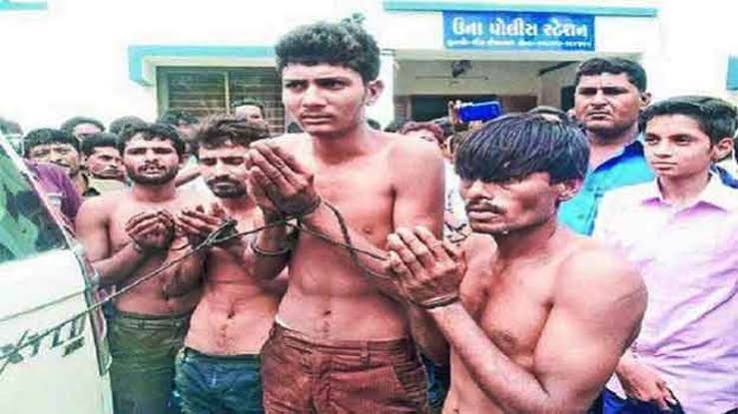
Odisha records a 10.8 per cent conviction rate for SC cases, while one Puri family says its trial is yet to begin eight years after the alleged attack Ashok Sethi, 48, and his family have been assaulted, ostracised and forced out of their native village in Odisha because of their Dalit identity. The family’s ordeal points to a deeper malaise that subjects members of the Scheduled Caste community to social and institutional discrimination, resulting in delayed justice and low conviction rates in caste-based violence. The conviction rate in cases registered under the SC/ST (Prevention of Atrocities) Act hovers at 34 per cent, much below the overall conviction rate of 53 per cent in criminal cases. Sethi, who hails from Nuagaon village under the Satapada gram panchayat in Puri district, said the majority of the 150 families residing there belonged to general and OBC categories. Sethi’s family used to wash villagers’ clothes and got around 10kg of paddy per year from each family as part of a barter system prevalent in the village. In 2000, Sethi’s family demanded payment in cash instead of kind, which the villagers refused. A penalty was imposed on the family, and they were ostracised. “I got married in 2000. The villagers did not allow us to put up a marquee in the village for the wedding because we did not agree to work under the barter system. They said it was below their dignity to walk under the canopy as we are Dalits. My sister’s marriage could not be held in the village in 2007,” Sethi, who now lives in Kathuaredi village under Brahmagiri block, around 26km away, told The Telegraph. In 2017, some villagers cut down trees from a plot of land belonging to Sethi’s family. The situation worsened in July next year when the villagers attacked the family, took away their cows and belongings, injured female members and destroyed their house. The family had no option but to move out. They stayed at a cyclone shelter near Chhotapur village, about 20km from Nuagaon, before shifting to Kathuaredi. On Sethi’s complaint, an FIR was registered at Brahmagiri police station under the SC/ST Act for caste-based violence. Sethi said the FIR did not mention Section 307 of the IPC (attempt to murder), although the family had specified it in their written complaint. “The discrimination was not limited to the villagers. We faced institutional bias from the police. The seven accused were arrested and granted bail within 10 days. Most importantly, the trial has not started even though eight years have passed,” Sethi said. “We have not visited our village since 2018. The villagers have taken over our land. We are living on rent at Kathuaredi,” he said. Baghambar Patnaik, a human rights activist, has filed a case with the Odisha Human Rights Commission seeking a direction to the police to expedite adjudication of the case and rehabilitation of the victims. A public interest litigation was filed in Orissa High Court, which in 2020 directed the rehabilitation of the family in Nuagaon village. Patnaik said the state government would have to recover the family’s land from the villagers and build a house for them before they could return. “They are unable to go back because the government machinery is not taking any steps to recover the land and construct a house. It shows that the government is not sincere about delivering justice to the victims,” Patnaik said. Rashmita Samantaray, the sarpanch of the Satapada panchayat, declined to comment on the issue. “I do not know much about this case,” she said. Last month, Congress Rajya Sabha member Chandrakant Damodar Handore sought information about the number of cases pending investigation under the SC/ST Act and the conviction rate. In a written reply on July 22, minister of state for social justice Ramdas Athawale furnished data, which showed that the national conviction rate stood at a mere 33.9 per cent for SCs in 2024. In Odisha, the conviction rate was 10.8 per cent. “The responsibility of maintaining law and order, investigation, protection of life and property of the citizens, including crime against members of SC and ST communities, rest with the respective state governments,” Athawale had said. CM on Ravidas, Phule Haryana chief minister Nayab Singh Saini on Sunday said Guru Ravidas envisioned a society with no place for any form of discrimination, fear or injustice while Dr B.R. Ambedkar considered education the most powerful tool for social transformation. Saini spoke about how Jyotiba Phule and Savitribai Phule challenged social orthodoxies, opened the doors of education for all, and made historic contributions, especially towards women’s education. Ambedkar regarded education as the most powerful instrument of social transformation and fought for the rights of deprived sections and equal opportunities, he said. Basant Kumar Mohanty Courtesy : The Telegraph Note: This news is originally published on https:/thetelegraph.com/bha and is used purely for non-profit/non-commercial purposes, especially human rights
Dalit Women Attacked, Denied Entry At Odisha Temple; NCSC Summons Collector, SP
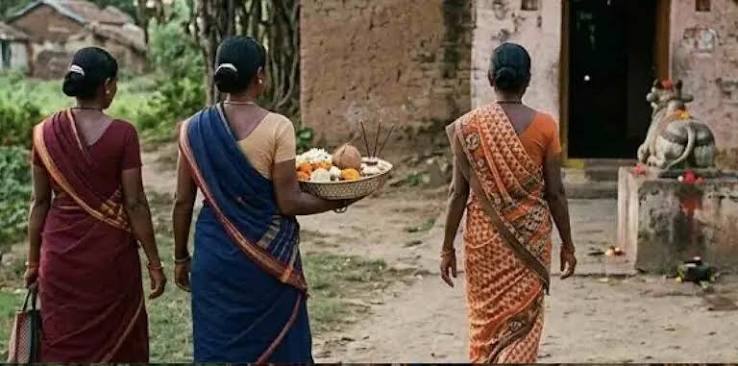
Bhubaneswar: The National Commission for Scheduled Castes has initiated suo motu proceedings into an alleged incident in which a group of Dalit women were barred from entering a Shiva temple in Odisha’s Jagatsinghpur district.Andhra Pradesh news The statutory body intervened following media reports detailing the August 10 altercation at Atimati village under Erasama police limits when a group of women from the Dalit community had visited a local Shiva temple to perform traditional rituals and offer holy water on the auspicious occasion of Shravan Somvar. Discover soft, comfortable and stylish shoes for you. Loose‑cut, skin‑friendly fabrics, perfect for daily wear, gatherings and casual shoes. The Commission has issued summons to the Jagatsinghpur district collector and the SP, directing them to submit a detailed action-taken report within three days. The required documentation must detail the exact number of arrests made, the date and number of any chargesheet filed, compensation provided to the victims, and other steps taken in the matter. The collector and SP have been asked to appear either in person or through authorised representatives. The Commission has indicated that failure to respond within the stipulated period could lead it to exercise the powers of a civil court conferred upon it. According to reports, several villagers carrying sticks allegedly blocked the entrance and prevented the women from entering the temple. The victims alleged that they were subjected to abusive and casteist remarks and threatened with violence if they did not vacate the area. When the women stood their ground, the villagers reportedly threw their bhog offerings to the ground. During the confrontation, one of the accused is alleged to have attacked one of the women with a knife, causing serious injuries. Following the assault, the women were forced to leave without offering prayers and subsequently lodged a complaint against eight individuals at the local police station. Following which, police registered cases under relevant provisions of the Bharatiya Nyaya Sanhita and the Scheduled Castes and Scheduled Tribes (Prevention of Atrocities) Act. Erasama police station IIC Parthsarthi Beura confirmed that police had received the NCSC notice and were taking steps to comply. He added that one accused had been arrested, and further investigation was under way. To ease tensions and uphold constitutional rights of access to public places of worship, police later facilitated the Dalit women in completing their darshan at the temple in the presence of officials. Additional police personnel were deployed in the village to maintain order, with authorities stating that the situation remained under control. Courtesy : Odisha Bytes Note: This news is originally published on https:/odishabytes.com/bha and is used purely for non-profit/non-commercial purposes, especially human rights
Odisha among top states in trans rehabilitation, lags in beggar rehabilitation
Bhubaneswar: Odisha has emerged as one of the better-performing states in the Centre’s rehabilitation programme for transgender persons, with 81 beneficiaries rehabilitated through Garima Grehs, even as its rehabilitation of people engaged in begging remains relatively modest compared with several other states. According to a Lok Sabha reply by Union minister of state for social justice and empowerment, B L Verma, as many as 1,041 transgender persons have been rehabilitated through Garima Grehs across 17 states/UTs under the Comprehensive Rehabilitation for Welfare of Transgender Persons component of the Centre’s Support for Marginalised Individuals for Livelihood and Enterprise (SMILE) scheme over the last three years. Odisha’s 81 beneficiaries account for nearly 8% of the national total. Garima Greh provides shelter to transgender persons with amenities like food, medical care, yoga, meditation and recreational facilities. Besides, it provides support for the capacity-building/skill development and counselling to transgender persons. At the state level, Odisha has the fourth-highest number of transgender persons rehabilitated under the programme. Maharashtra tops the list with 211 beneficiaries, followed by Chhattisgarh with 100 and West Bengal with 82. The Centre has established 23 Garima Grehs in 17 states/UTs, including one in Odisha, to provide shelter and rehabilitation support to transgender persons. The parliamentary reply also said Transgender Welfare Boards and Transgender Protection Cells have been established in Odisha, placing the state among those with institutional mechanisms for extending welfare support and protecting the rights of transgender persons. The picture, however, is different when it comes to rehabilitation of people engaged in begging. Since the beggary component of the SMILE scheme was launched on Oct 23, 2023, 10,446 persons have been rescued and rehabilitated across the country. In Odisha, Puri recorded the highest number of rehabilitated persons at 111, followed by Bhubaneswar with 103 and Cuttack with 74. The Centre has also released funds for implementing the rehabilitation programme at six locations in Odisha. Cuttack received Rs 36.75 lakh, while Puri and Bhubaneswar received Rs 33.35 lakh each. Berhampur, Koraput and Angul were allocated Rs 14.61 lakh each, taking the total to around Rs 1.47 crore. The scheme seeks to address begging through a rehabilitation-oriented approach rather than merely removing people from public spaces, with a focus on skill development, livelihood support and social reintegration. For transgender rehabilitation, Odisha received Rs 31.41 lakh in 2025-26, compared with Rs 26.59 lakh in 2024-25. Officials in the state govt said that under the SMILE sub-scheme for people engaged in begging, while drives are on to identify more persons, existing beneficiaries are being provided skill development and livelihood opportunities through a convergence approach with various central and state govt programmes. Eligible beneficiaries have been provided skill training based on local demand and aptitude in trades such as carpentry, tailoring, cooking, gardening, security services, sanitation work and e-rickshaw driving, besides other vocational activities, the officials said. According to state-level data, 784 persons engaged in begging have been identified since Octo 2023, of whom, 288 have been rescued and rehabilitated. Of these, 78 have been provided wage-based employment opportunities, while self-employment support has been extended to another 100, officials said. Courtesy : TOI Note: This news is originally published on https:/timesofindia.com/bha and is used purely for non-profit/non-commercial purposes, especially human rights
Dalit Women Allegedly Attacked for Entering Shiva Temple in Odisha, One Arrested
Tension was reported in Atimati village under Erasama police limits in Odisha after a group of Dalit women were allegedly stopped and assaulted when they tried to enter a Shiva temple to offer prayers during Shravan. The women alleged that some villagers prevented them from entering the temple, hurled casteist and abusive remarks at them, and threatened them with physical violence if they did not leave the premises. According to police, the incident took place on Monday when the women visited the local Shiva temple. Some villagers allegedly carrying sticks and lathis stopped them from entering, leading to an argument between the two groups. Dalit Woman Allegedly Attacked With Knife The situation reportedly escalated after the women refused to leave the temple premises. The villagers allegedly snatched their puja offerings and threw them on the ground. During the confrontation, one of the accused, identified as 40-year-old Satya Rout, allegedly attacked a 55-year-old Dalit woman with a knife, leaving her seriously injured. He is also accused of kicking and physically assaulting her. The injured woman later approached the Erasama police station and filed a complaint against eight people. Based on her complaint, police registered a case against all eight accused persons. Police Arrest One Person Erasama IIC Parthsarthi Beura confirmed that a case had been registered and said Rout had been arrested in connection with the alleged assault. He was subsequently produced before a court. Police are investigating the role of the other accused named in the complaint. “The involvement of the other accused persons would be verified during the investigation and appropriate action would be taken if they are found guilty,” Beura said. He added that the situation in the village was currently under control, but police personnel had been deployed to prevent any further escalation. “The situation is now normal, but police are maintaining strict vigil in the village to prevent any untoward incident,” he said. Courtesy : TOP Note: This news is originally published on https:/theobserverpost.com/bha and is used purely for non-profit/non-commercial purposes, especially human rights
PubDalit man locked in room for 3 days in Odisha, beaten with stick and denied food

A Dalit man in Odisha’s Ganjam district alleged he was locked in a room, beaten with a stick and denied food and water for nearly three days after refusing to join illegal activities. He filed a complaint against the accused and sought help from others. A Dalit man in Odisha’s Ganjam district was repeatedly thrashed and beaten with sticks, confined in a locked room for nearly three days and deprived of food and water after he was pressured by some men to participate in illegal activities. A video of the incident surfaced on Sunday shows a man repeatedly beating the youth with a stick inside a locked room. Despite the Dalit man pleading with his attacker to stop, the assault continues as others are seen present in the room. India Today TV could not verify the authenticity of the video. According to the man’s complaint, he was illegally confined for nearly three days and subjected to physical torture. He alleged that he was pressured to engage in unlawful activities and was targeted after refusing to comply. The video shows four individuals inside the room, with one of them repeatedly striking the pleading Dalit man with a stick. There was no immediate response from the police on the Dalit man’s allegations. 5 Railway cops assault deputy superintendent over train halt dispute; suspended Along with the viral video, the Dalit man submitted a written complaint to the police over the incident. In the complaint, the man claimed his life was under threat and said he had approached multiple authorities seeking protection and action. He said that he had submitted representations to President Droupadi Murmu, Prime Minister Narendra Modi, the National Human Rights Commission, the Odisha Director General of Police and the Ganjam district administration, urging them to intervene in the matter. Ajay Nath Edited By: Prateek Chakraborty Courtesy : India Today Note: This news is originally published on https:/indiatoday.com/bha and is used purely for non-profit/non-commercial purposes, especially human rights
Viral video from Ganjam sparks outrage; Dalit youth alleges 3 days of illegal confinement and brutal assault
A disturbing video purportedly showing a youth being brutally assaulted inside a locked room has gone viral from Odisha’s Ganjam district, once again raising concerns over alleged vigilante-style violence. A disturbing video purportedly showing a youth being brutally assaulted inside a locked room has gone viral from Odisha’s Ganjam district, once again raising concerns over alleged vigilante-style violence. The incident is reported to have taken place under the jurisdiction of Berhampur Sadar Police Station. As per the allegations, the victim is a Dalit youth from the Sadar police station area. He was allegedly confined illegally in a locked room for nearly three days, during which he was physically assaulted and subjected to severe torture. The viral video allegedly shows the youth being mercilessly beaten inside the room. Four individuals can reportedly be seen in the footage, while one of them is seen assaulting the victim. The authenticity of the video, however, has not yet been independently verified. Along with the video, a written complaint naming the alleged attackers has also surfaced on social media. In the letter, the youth claimed that his life was under threat and stated that he had submitted written petitions to the President of India, the Prime Minister, the National Human Rights Commission (NHRC), the Director General of Police (DGP), and the Ganjam district administration, seeking immediate intervention. In the complaint, the youth alleged that he was pressured to participate in illegal activities. He claimed that after refusing to comply, he was beaten, unlawfully confined for nearly three days, and deprived of food and water during the period of his alleged captivity. The allegations contained in the viral complaint and video have triggered widespread concern, with many demanding a thorough investigation into the incident. As of now, there has been no official confirmation from the police regarding the authenticity of the video or the allegations made in the complaint. Further investigation in connection with the viral video and allegations is awaited. Author Vikash Sharma Courtesy : Odisha TV Note: This news is originally published on https:/odishatv.com/bha and is used purely for non-profit/non-commercial purposes, especially human rights
The compulsion of labor: Why are the lives of tribal girls being ruined in Tamil Nadu, 1,500 kilometers away from a small village in Odisha?

The Tamil Nadu gas leak incident: A heartbreaking story of poverty, desperate migration, and the tragic deaths of 12 daughters from a small tribal village in Odisha. New Delhi: The tragic deaths at a seafood processing unit in Tiruvallur, Tamil Nadu, have exposed the pain of a highly vulnerable tribal community in Odisha’s Keonjhar district. This tragedy reflects the desperate migration that has devastated these villages of their youth, especially women. 56-year-old Bisuni Juang is illiterate. But sitting outside his mud hut, he carefully examines a pile of government documents. He tries to understand how his 16-year-old daughter, Jamini, died in Tamil Nadu, nearly 1,500 kilometers away. Since the gas leak at a factory in Tiruvallur district on June 21st, 15 people have lost their lives. Of these, 12 deceased were from Odisha’s Keonjhar district, all women. Two of the deceased, including Bisuni’s daughter, Jamini, were residents of Rangamatia village. Geographical Context Of the 68 people hospitalized, 65 are women. The five who are in critical condition and battling for life on ventilators all hail from Rangamatia. Rangamatia is a small tribal village with a population of just over 200. At least 10 women and 8 men from this village were working in the same seafood unit. This gas leak has made this small village the victim of one of the biggest incidents ever. Maps Bisuni says that some block officials came to his house and handed over Jamini’s body, simply stating that she died due to ‘gas’. The distraught father says he doesn’t know what this means; his daughter was only 16 years old and still had a full life ahead of her. Jamini, who studied until Grade 5, was the third of Bisuni’s four daughters. Her two elder sisters, aged 21 and 19, are married, while the youngest is just 14. Jamini left for Tamil Nadu about seven months ago, becoming the first member of the family to leave Keonjhar. Usually, they only visit their married daughters’ homes in nearby villages. The family has had no contact with Jamini since her departure. Until last year, the village didn’t even have mobile network; now, it has BSNL service, but Bisuni doesn’t have the money to buy a phone. The Juang community is part of a Particularly Vulnerable Tribal Group (PVTG), and Bisuni has long struggled with extreme poverty. Her only assets include two goats and a mud house divided into two parts. Due to the lack of their own cultivable land, the tribal people of the village clear parts of the forest to grow crops and depend entirely on forest produce. Tourist Attractions According to the 2011 census, Rangamatia had 38 households and a total population of 158. Located in hilly terrain and poorly maintained roads, this village lacks drinking water or electricity. A small spring in the nearby forest is the only source of water for quenching thirst. The village has only one Anganwadi (Anganwadi) and a primary-level school. Girls like Jamini typically don’t study beyond grade 5. The nearest high school is 10 kilometers away, and reaching it is nearly impossible due to lack of money and transportation. While government records state a motorable road 1 km away, it is located on the other side of a hill. The nearest hospital is located 40 km away in the town of Harichandanpur. Unable to even reach nearby markets for employment, young people like Jamini are forced to migrate to support their families. Bisuni doesn’t even know the wages her daughter was promised there. Girls and women who go out to work are mostly unmarried. It’s usually the men of the household who go out to work after marriage. The Odisha government initially announced a compensation of ₹4 lakh for the families of the deceased, which was later increased to ₹10 lakh. However, Bisuni claims that they have so far received only ₹3,000 from the Panchayat for the funeral. Native Gumani Juang, the second victim of Rangamatia, was 15 years old according to her Aadhaar card, but her parents claim she is 19. She had gone to Tamil Nadu in November last year with a group of laborers, including her 20-year-old elder brother, Parsu. Parsu was employed at a unit in Andhra Pradesh. Gumani’s 53-year-old father, Bira Juang, was against sending her so far. But Gumani was not ready for marriage and, lured by the promise of a better life and money, insisted on going. Bira says that he last spoke to his daughter on the phone just a few hours before the gas leak. She happily told him that she had saved some money and would return home soon. Upon receiving news of the gas leak and Gumani’s critical condition, the family hired a car and set out. They had just reached Bhubaneswar when Parsu called to inform them that it was difficult to reach Gumani’s place of work. Disappointed, they returned, and later their worst fears were proven true. Bira, who owns a two-room house built under the Rural Housing Scheme and a few goats, no longer wants to let his son Parsu go out to work. He says he cannot afford to lose his last remaining child. Natural Disasters Bira Juang also makes serious allegations against an organized network that lures tribal youth like his daughter. He names Shrikant Juang from his own village, who posed as a supervisor of a unit in Tamil Nadu and convinced them to go there. Keonjhar District Labor Officer Akash Bisoi has informed that the accused, Shrikant, is currently absconding and strict legal action will be taken against him. The Keonjhar District Labor Office does not have official figures on the number of tribal laborers migrating from these interior areas, but hundreds are unofficially acknowledged to be working outside. Following the deaths in Tamil Nadu, the Odisha Labor Department ensured the return of 58 migrant laborers, most of whom were from Keonjhar district. Keonjhar District Collector Vishal Singh said the administration is conducting a thorough investigation to determine whether
Dalit cook of anganwadi alleges discrimination

Rourkela: An anganwadi centre at Dewanpali village in Bargarh district’s Jharbandh block was reopened on Thursday, a day after some villagers locked it over the appointment of a dalit woman cook (pachika). The cook, Padmini Jagat, complained on Wednesday that some villagers are campaigning against accepting her cooked food, eggs and chaatua as she is a dalit. “After discussing with the villagers, the issue has been sorted out today and the anganwadi centre has been opened,” said Sushma Patel, CDPO, Jharbandh block. Among those present were IIC, Jharband police station, Sanjay Parida; tehsildar, Jharbandh, Alekha Ghuta; and welfare extension officer, Jharbandh, Sunil Bhoi. Padmini has been working at the anganwadi centre since two months. She alleged that parents were asked not to send their children to the anganwadi centre and she was also pressurised to resign from the post of cook. Her father, Abadhuta Jagat, alleged that he was pressurised to tell his daughter to quit. Courtesy : TOI Note: This news is originally published on https:/timesofindia.com/bha and is used purely for non-profit/non-commercial purposes, especially human rights
Dalit anganwadi worker alleges caste boycott over meals in Odisha village

The kitchen helper claimed villagers urged beneficiaries to reject food prepared by her and pressured her to resign, forcing officials to intervene after the centre was locked. BARGARH : A dalit woman appointed as kitchen helper at an anganwadi centre in Jharbandh block has accused a section of villagers of persuading beneficiaries to boycott the food prepared by her because of her caste and pressurising her to quit the job. The woman, 23-year-old Padmini Jagat, was appointed as a kitchen helper at the anganwadi centre in Dewanpali village around two months ago. She alleged that since her joining, some villagers have been asking parents not to send their children to the centre and discouraging beneficiaries from consuming meals, eggs and chhatua prepared by her as she belongs to the Scheduled Caste community. Padmini further alleged that the villagers have organised two meetings to pressurise her father Abhadut Jagat into asking her to resign from the post. The controversy escalated on Wednesday when a group of villagers allegedly locked the anganwadi centre, disrupting its functioning. The closure deprived children, pregnant women and lactating mothers of supplementary nutrition and other services provided through the centre. Padmini said she was among three candidates who had applied for the post and appointed through due process. “Soon after my appointment, some villagers tried to force my father to ask me to withdraw. However, I joined the centre and continued working. After the schools reopened recently, they again tried to intimidate us following which my father asked them to give a written letter stating that they were unwilling to send their children to the anganwadi centre because I belong to the dalit community.” Recalling the village meetings, Abhadut said, “Villagers repeatedly pressurised me and said they would seek appointment of someone else after Padmini resigned. ‘Do you want us to eat food cooked by a Ganda? How can we send our children there?’ they questioned.” Jharbandh CDPO Susama Patel said the newly-appointed helper had not informed her about such an incident. “After learning about it, I visited Dewanpali along with the local tehsildar on Thursday and held discussions with the villagers. They assured us of their cooperation following which the anganwadi centre was unlocked.” The CDPO said she will make a follow-up visit to the village to ensure that such incidents are not repeated. Courtesy : TNIE Note: This news is originally published on https:/thenewindianexpress.com/bha and is used purely for non-profit/non-commercial purposes, especially human rights
Odisha: Mob lynches Dalit man, family accuses police of assault

The police, who arrested two persons in connection with the lynching, rejected the allegation that Nayak was assaulted after the force rescued him. Bhubaneswar: A Dalit man was allegedly beaten to death by a mob, suspecting him of being involved in a theft case in Odisha’s Khurda district, police said on Tuesday, June 30. The family members of the deceased also accused the police of assaulting Tofan Nayak (32) after rescuing him from the mob attack and taking the injured man home instead of a hospital. The police, who arrested two persons in connection with the lynching, rejected the allegation that Nayak was assaulted after the force rescued him. The incident took place at Khanat village under Banpur police station area at about 4 pm on Sunday, June 28, where the villagers allegedly tied Nayak to an electric pole and physically assaulted him by several people. He was rescued by the police at about 6 pm and handed over to his family two hours later. The family took him to a hospital. Nayak died on Monday, June 29, during treatment at Capital Hospital in Bhubaneswar. Earlier, he was admitted to Banpur Community Health Centre (CHC). The cause of death will be ascertained after post-mortem examination, the police said. Also ReadRapido driver beaten to death over Rs 8k, family left devastated Police reject allegations, CCTV footage to be examined Meanwhile, based on a preliminary investigation, the Odisha Police headquarters rejected the allegation of custodial violence by Banapur Police. “The allegation is not supported by the available materials at this stage. The Zimmanama (handing over) executed by the parents, their statement before the CHC Banapur doctor, photographs of Tofan with family members at the time of release, and available CCTV footage of the police station are being examined,” the police said in a statement. Banapaur Police Station inspector in-charge Jayprakash Parida said, “One can verify the CCTV footage of Nayak being brought to the police station. He was made to sit outside the police station and never taken to the lock-up. There was no assault on him in police custody. He was healthy when being handed over to the family, though intoxicated.” Two accused arrested The police have meanwhile arrested Pabitra Rout (51) and Sarat Kumar Swain (60), both residents of Khanat village under Banapur police station. Khurda Superintendent of Police Parmar Smit Parshottamdas said a detailed investigation into the incident is underway, and further action will be taken after the postmortem report is received. The police have registered a case of murder under the Bharatiya Nyaya Sanhita (BNS) and Scheduled Caste Scheduled Tribe (Prevention of Atrocities) Act based on the complaint lodged by Nayak’s wife, Sasmita. She alleged that her husband was beaten up by people at Khanta village as well as by the personnel at the police station. Bhikari Nayak, the father of the deceased, held the police responsible for the death of his son. “The police rescued him from the village where my son was being beaten up. It was the duty of the police to refer him to a hospital instead of forcing us to take my injured son home,” he said. Nayak’s mother Sachala demanded a high-level inquiry and strict action against both police personnel and villagers involved in the assault. The incident came in less than two weeks after a mob attack on two NGO workers, including a woman in Rayagada district. This is also the second mob lynching incident in Khurda district where a GRP constable was beaten to death at Balianta on the outskirts of Bhubaneswar on May 7. Courtesy : TSD Note: This news is originally published on https:/thesiasatdaily.com/bha and is used purely for non-profit/non-commercial purposes, especially human rights