
Evening news wrap: Ajit Pawar laid to rest, govt assures time-bound probe into plane crash, and more
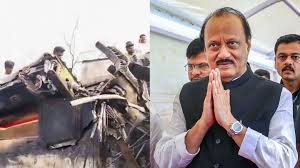
Ajit Pawar laid to rest: Maharashtra Deputy Chief Minister Ajit Pawar was cremated with full state honours in Baramati as the civil aviation ministry assured a time-bound probe into the Learjet 45 plane crash that killed him and four others. SC halts new UGC rules: The Supreme Court stayed the UGC’s new higher education regulations amid nationwide protests and issued notices to the Centre and the commission on petitions challenging the rules. Economic Survey projects 7.4% growth: The Economic Survey 2025–26 projected India’s GDP growth at 7.4% for FY26 and said inflation was at historic lows despite global economic uncertainties. Tharoor meets Congress leadership: Congress leader Shashi Tharoor met Rahul Gandhi and Mallikarjun Kharge, dismissing speculation of differences and saying he was on the same page with the party leadership. Minor sexually assaulted in Delhi: A six-year-old girl was allegedly sexually assaulted in northeast Delhi’s Bhajanpura, with two minor accused held, one absconding, and locals staging a protest demanding justice. Here are five news from the day: Ajit Pawar laid to rest, govt assures time-bound probe into plane crash Ajit Pawar was given full state honours as his body was taken to the Vidya Pratishthan ground for the funeral, while supporters assembled outside Ahilyabai Holkar Government Medical College to bid him a final farewell. The ministry of civil aviation (MoCA) issued a statement on the probe into the plane crash at Baramati airport that killed Maharashtra deputy chief minister Ajit Pawar and four others on Wednesday. The ministry said the probe into the Learjet 45 aircraft crash is progressing expeditiously. Read full story SC stays new UGC rules amid uproar The Supreme Court put on hold the UGC’s new regulations for higher education institutions, which were framed to promote equality, following widespread protests over the rules’ contentious definition of discrimination. A bench comprising Chief Justice Surya Kant and Justice Joymalya Bagchi issued notices to the Centre and the UGC on petitions challenging the regulation. Read full story Tharoor meets Rahul, Kharge, says ‘we are all on same page’ Congress leader Shashi Tharoor met party president Mallikarjun Kharge and Leader of Opposition Rahul Gandhi amid speculation about differences between him and the party leadership. After meeting Rahul Gandhi and Kharge, Tharoor asserted that “all is good” and that he was on the “same page” with the Congress leadership. Read full story 6-year-old girl sexually assaulted in Delhi; 2 boys held, one absconding A six-year-old girl was sexually assaulted, allegedly by three boys, aged between nine and 16 years, in northeast Delhi’s Bhajanpura. A case was registered under Pocso Act and two of the boys were apprehended. The survivor’s family and neighbours are said to have blocked a road on Monday in protest against the incident that had taken place in the evening of Jan 18. Read full story GDP growth pegged at 7.4%, inflation at historic lows, says Economic Survey 2025-26 India is likely to remain the fastest-growing major economy, with real GDP growth estimated at 7.4% in FY26 despite global headwinds such as geopolitical tensions, fragmented trade and financial vulnerabilities, according to the Economic Survey 2025–26. Presented in Parliament by Union finance minister Nirmala Sitharaman, the survey said India’s macroeconomic foundations had improved on the back of strong domestic demand, prudent fiscal consolidation and a healthier financial sector, while stressing the need for strategic resilience amid rapid changes in the global economic order. Follow live updates Courtesy : TOI Note: This news is originally published on https:/timesofindia.com/bha and is used purely for non-profit/non-commercial purposes, especially human rights
‘A leader of the people’: PM Modi, CM Fadnavis, LoP Rahul Gandhi condole Maharashtra Deputy CM Ajit Pawar’s death
NEW DELHI: Prime Minister Narendra Modi expressed his condolences after Maharashtra deputy CM Ajit Pawar died in a plane crash on Wednesday in Pune district’s Baramati during landing. He said, “Shri Ajit Pawar Ji was a leader of the people, having a strong grassroots level connect. He was widely respected as a hardworking personality at the forefront of serving the people of Maharashtra. His understanding of administrative matters and passion for empowering the poor and downtrodden were also noteworthy. His untimely demise is very shocking and saddening. Condolences to his family and countless admirers. Om Shanti.” — narendramodi (@narendramodi) Prime minister also condoled the deaths of others who were on board along with Pawar. — narendramodi (@narendramodi) President Droupadi Murmu also gave her condolences. She said, “The news of the deaths of several people, including Maharashtra’s Deputy Chief Minister, Shri Ajit Pawar, in an aeroplane crash in Baramati, Maharashtra, is utterly heartbreaking. The untimely demise of Shri Ajit Pawar is an irreplaceable loss. He will always be remembered for his special contribution to Maharashtra’s development, particularly in the cooperative sector.” — rashtrapatibhvn (@rashtrapatibhvn) Maharashtra chief minister Devendra Fadnavis condoled the death of his deputy in a press conference. “This morning, a very tragic incident occurred. In extremely unforeseen circumstances, the news of the unfortunate demise of our state’s deputy chief minister, Ajit Pawar, in an aircraft accident reached everyone, spreading a wave of grief across Maharashtra. For Maharashtra, today is an extremely difficult day,” he said. Further talking about his friendship with Pawar, he added, “Such leadership takes many years to develop, and at a time when he was making very significant contributions to the state’s development, his passing is both unbelievable and shocking. Personally, I have lost a strong and generous friend. This is also an enormous loss for his family.” Leader of opposition Rahul Gandhi also condoled the deaths saying, “The news of the demise of Maharashtra’s Deputy Chief Minister Shri Ajit Pawar Ji and his fellow travellers in an aeroplane accident today is extremely heart-rending. In this hour of grief, I stand with the people of Maharashtra. I extend my condolences to the entire Pawar family and their dear ones in this time of sorrow. Defence minister Rajnath Singh expressed his “pain” on X saying, “Deeply shocked and pained to learn about the untimely demise of Maharashtra’s Deputy Chief Minister, Shri Ajit Pawar.” “Throughout his long public life, he remained committed to the development and prosperity of Maharashtra. He was known for his compassion for the people and his unwavering dedication to public service. I extend my heartfelt condolences to his family, well-wishers, and admirers,” he added. — rajnathsingh (@rajnathsingh) Union minister Nitin Gadkari, expressing condolences said, “The news of the untimely demise of Maharashtra’s Deputy Chief Minister Shri Ajit Pawar ji is extremely shocking, unfortunate, and heartbreaking. My heartfelt tribute to him. Over the past many years, while working together in the state legislature, I have shared a very close bond with Ajit dada. His administrative acumen, developmental vision, and ability to connect with people have ensured that Ajit dada’s place in Maharashtra’s politics remains unshakable. The premature passing of this people’s leader, who harboured aspirations for Maharashtra’s development, is a loss that cannot be compensated—not just for Maharashtra, but for the entire nation. At this sorrowful moment, my condolences are with the entire Pawar family. May God grant peace to the departed soul. Om Shanti.” Congress MP Priyanka Gandhi Vadra also shared her condolences saying, “I extend my condolences to the entire Pawar family and his supporters. I have spoken to Ajit Pawar’s wife and Supriya ji (Supriya Sule).” Commerce minister Piyush Goyal said, “We all are mournful today. He was a close friend and a tall leader in Maharashtra.” Union Minister of Civil Aviation, Ram Mohan Naidu Kinjarapu said, “Deeply saddened by the tragic passing of Shri Ajit Pawar in the plane crash in Baramati earlier today. My sincere condolences to his family, loved ones and all those affected by this loss. May his contributions to public life be remembered, and may the bereaved find strength in this difficult time.” Messages of condolence from across the country Many political leaders from various parts of country expressed their shock and offered condolences after the Maharashtra deputy CM’s demise. Congress president Mallikarjun Kharge also mourned the loss. “The news of the tragic demise of Shri Ajit Pawar, in a plane crash, is deeply shocking and profoundly distressing. It is an untimely loss of a leader who had a long and promising political career ahead,” he said. West Bengal chief minister also expressed her shock on social media, sharing her statement. “Deeply shocked and stunned by the suddden demise of Ajit Pawar! The Deputy Chief Minister of Maharashtra and his co-passengers have died in a disastrous plane crash at Baramati today morning, and I am feeling a deep sense of loss. My condolences to his family including his uncle Sharad Pawar ji, and late Ajitji’s all friends and followers. The incident needs proper investigation.” BSP chief Mayawati said, “The death today of Shri Ajit Pawar ji, Deputy Chief Minister of Maharashtra and one of the stalwart leaders of Maharashtra politics, in an aeroplane crash in Baramati is most heartbreaking. My deepest condolences to his family and the members of his party. May nature grant them all the strength to bear this sorrow.” Andhra Pradesh CM, NDA ally N Chandrababu Naidu also issued a statement on social media. He said, “Shocked and deeply saddened by the sudden passing of Maharashtra Deputy Chief Minister Shri Ajit Pawar ji in a plane crash this morning. I extend my heartfelt condolences to his family, friends, and followers. Om Shanthi.” “The tragic plane crash in Baramati, Maharashtra, which claimed the lives of Maharashtra’s Deputy Chief Minister Shri Ajit Pawar ji and other members, is extremely heartbreaking and soul-wrenching. My humble tribute to them. My condolences are with the bereaved families. I pray to Lord Shri Ram that he grants eternal peace
How the 16-year-long Namantar Andolan led by Dalit communities created a new aesthetic in literature

The campaign, which began in 1978, sought to rename Marathwada University in recognition of Dr BR Ambedkar’s contribution to social welfare. This statement was in response to the historic Namantar Andolan, a 16-year struggle waged by Dalits to rename Marathwada University in recognition of Dr BR Ambedkar, not as an act of charity to Dalits, but as a right, challenging the dominant cultural and moral order and asserting normative self-esteem. Started in 1978, it finally culminated in 1994 with Namvistaar, naming the university D Babasaheb Ambedkar Marathwada University (BAMU), portraying the “moral incapacity” of the social order, reflected in the state, to accept the dignity of Dalits, exposing the fault lines that run deep due to the psychic prevalence of conscious/unconscious caste-feudalism. This movement is marked by several notable events – the Long March, inspired by the Chinese Long March; the famous Jail Bharo Andolan; a unique show of Dalit-Muslim solidarity; and the creation of the novel “Dalit Public.” The movement spread across Delhi, Haryana, Bihar, Madhya Pradesh, Andhra Pradesh, Tamil Nadu, and Maharashtra. Dalit literature, which asserted the aesthetic equality of being Dalit, breaking free from the traditional, graded, hierarchical, phallocentric caste system, played a crucial role in this movement, not just contributing to the literary writings, but also acting as a conscience-building tool. From ‘reform’ to ‘radical’ This provided a further impetus to Dalit literature, in which Dalit writers crafted a new language of protest based on anger, using that which challenged the Brahmanical hegemony in the space of literature, i.e., through a defiant public spectacle, and the crafting of an antithetical, vernacular Ambedkarite counter-public that countered the Brahmanical public sphere by bypassing mainstream media, non-state actors, and academic gatekeeping. The ballads of Shahid Vilas Ghogare, songs sung by Vitthal Umap and Shambhaji Bhagat, the poetry of Aai by Jyoti Lanjewar, and an intellectual platform like Asmita Darsha, edited by Gangadhar Pantawane, along with numerous poems and writings in the regional languages, documented this historic struggle as a “public spectacle” of anguish. Thus, Dalit literature can be seen here employing the politics of montage – dialectical montage, symbolic montage, and parataxic syntax. Dialectical syntax may be seen in Shahir Vilas Ghogare’s lines, where he presents a contradiction: urban Dalits, who boast of staying in cities – Pune and Mumbai – saying “Jai Bhim”, yet live like the worthless. This can also be connected to the deployment of symbolic montage, where Dr Ambedkar aimed to break the shackles of caste-class-feudalism in villages and encourage Dalits to migrate to cities for their socio-economic and political emancipation. But the verses also point to the Dalits still facing atrocities based on caste, where they have to hide their caste even in the urban areas. Throughout the song, there is an episode of Pochiram Kamble, who was well-off materially but was killed for supporting the movement and saying the words “Jai Bheem.” Thus, Ghogare puts forth a deeper understanding of the machinations of caste in urban-rural areas, whose assault continues in both tangible and intangible realms, helping in understanding the opposition and hatred to Dr Ambedkar’s name for renaming the Marathwada University. The performance of this ballad was a chaotic juxtaposition of the deployment of heterogeneous elements – vernacular language, use of abuse in the composition, and the imagery that demonstrated the undignified living of Dalits in urban areas, the continuation of caste atrocities on Dalits in rural areas, and the denial of material rights to the Dalits, despite being legal citizens, in the independent republic of caste, demonstrating a “caste world” permeated by the banality of caste-evil. The Dalit feminist standpoint “I have seen you At the front of the Long March The end of your sari is tucked tightly at the waist Shouting, “Change the name” Taking the blow of the police stick on your upraised hands Going to jail with head held high…” The above lines have been excerpted from the poem Aai by poet Jyoti Lanjewar, who foregrounds the participation of women in the Namantar Andolan, especially by portraying the image of the “labouring mother” in the famous long march of 1979. Women were not mere passive agents but active participants fighting the brutality of the state and society from the forefront. Her other collections, such as Disha and Ajuna Vadal Uthale Nahi, are agencies that evoke images of Dalit women, where these visuals correct the anomalies in history, foreground her-story, and create a political resonance. The writings of Urmila Pawar, especially Aydaan, document the impact the movement had on her as she navigated the complexities of being a Dalit woman, making and unmaking her identity. Women like Jamnabai Appa Gaikwad, Sangeeta Deepak Pradhan, and Rukhmini Sakharam Satpute, who participated in this movement actively, represent the her-stories – portrayal of a distinct Dalit-feminist standpoint, where Dalit women, in the words of Uma Chakravarti, face “multiple patriarchies.” Later, due to the breathing space provided by the experiences of this movement, during as well as after the movement, there was a flood of writings by Dalit women, putting forth their saga, stories, and struggles in works like Jina Amucha by Babytai Kamble, Majhya Jalmachi Chittarkatha by Shantabai Kamble, Antahsphot by Kumudtai Pawade, and many more. Thus, the Namantar Aandolan brought about a metamorphosis in Dalit literature, which rejected liberalism as orthodox piety, employed strong yet raw language, and served as the agency of historical documentation – the martyrs, such as Pochiram Kamble, Gautam Waghmare, Vilas Dhone, Janardhan Mavde, and others, were documented. In the words of George Lukacs, literature captures the totality of this struggle – the power structure and the forces and their agencies that exercise power, looking beyond subjectivity and going beyond individualistic accounts to provide a collective narrative of the struggle as a whole. Nikhil Sanjay-Rekha Adsule Courtesy : Scroll Note: This news is originally published on https:/scroll.in/bha and is used purely for non-profit/non-commercial purposes, especially human rights
Dalit winner MIM BMC group leader

Mumbai: Vijay Ubale, a dalit who won from ward 140 in Govandi in the BMC polls, is AIMIM’s group leader in the civic body, said former MLA and party leader Waris Pathan. “The appointment is aligned with the party’s attempt to empower weaker sections,” he said. tnn Courtesy : TOI Note: This news is originally published on https:/timesofindia.com/bha and is used purely for non-profit/non-commercial purposes, especially human rights
Indelible ink row: Rahul Gandhi accuses EC of ‘gaslighting’ voters – What does it mean?
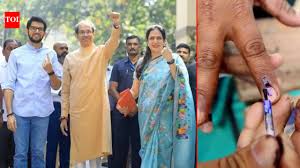
Congress leader Rahul Gandhi on Friday weighed in on the controversy surrounding the alleged fading of indelible ink used during Maharashtra’s civic body elections, using a Gen Z term to accuse the Election Commission of undermining public trust. Amid mounting complaints from voters and opposition parties that the ink applied to mark fingers during Thursday’s polls was fading unusually fast, Rahul described the situation as “gaslighting” by the Election Commission and termed “vote chori” an anti-national act. Sharing a media report on X that said “opposition, voters cry foul over fading ink markers”, Gandhi wrote, “Election commission gaslighting citizens is how trust has collapsed in our democracy. Vote Chori is an anti-national act.” The controversy erupted after multiple videos surfaced on social media showing voters claiming that the ink marks on their fingers had faded within hours of voting, raising concerns about the integrity of the electoral process and the possibility of repeat voting. What is gaslighting? Rahul’s use of the term ‘gaslighting’ — commonly associated with Gen Z and millennial discourse — drew attention online. ‘Gaslighting’ refers to a form of manipulation where people are led to doubt their own memory, perception or understanding of reality. It often involves repeatedly denying clear facts, twisting information, or blaming others’ reactions, eventually causing them to question their own judgment. Victims are gradually led to question their actions, memories, understanding and even their sanity. It typically occurs in situations where there is a power imbalance between the individuals involved. Gaslighting often begins with small, seemingly harmless lies but can escalate over time, with the manipulator convincing the victim that they remember events incorrectly, lack sound judgment, or cannot be trusted to assess situations accurately.Examples: “I never said that. You’re imagining things.” “That didn’t happen the way you remember it.” “You’re overreacting — it’s not a big deal.” “You’re too sensitive. Anyone else would be fine with this.” “You always get confused about details.” By invoking the term, Rahul appeared to suggest that voters’ concerns were being dismissed or minimised despite visible evidence, further eroding confidence in democratic institutions. The Election Commission has maintained that it will take corrective steps based on the probe’s findings, even as the opposition continues to press for accountability over the ink controversy. Courtesy : TOI Note: This news is originally published on https:/timesofindia.com/bha and is used purely for non-profit/non-commercial purposes, especially human rights
Maharashtra civic polls: Rahul Gandhi accuses EC of ‘gaslighting citizens’; BJP takes ‘khandani chor’ jibe
NEW DELHI: Congress leader Rahul Gandhi on Friday accused the Election Commission of “gaslighting citizens” after claims surfaced that marker pens were used to ink voters’ fingers during Maharashtra civic polls, including the Brihanmumbai Municipal Corporation (BMC) election. “Election commission gaslighting citizens is how trust has collapsed in our democracy. Vote Chori is an anti-national act,” Rahul Gandhi said in a post on X. The issue triggered a political row after opposition parties alleged the ink could be wiped off easily, raising concerns about the integrity of the polling process. State Election Commissioner Dinesh Waghmare rejected the allegations, saying marker pens have been used for local self-government elections in the state since 2011 and that the ink is indelible. The BJP slammed Rahul’s attack on poll body and asked if he ‘accepting defeat’ before the counting of votes ends. “Bahana brigade back! Accepting defeat before counting ends? Rahul Back to doing what he does best. Discredit , distort & disinform. Khandani chor now regurgitating claims of Thackerays. By the way what came out of allegations Rahul made on Bihar elections vote chori?” BJP national spokesperson Shehzad Poonawalla said in a post on X. The BMC election, held after an eight-year gap, recorded a voter turnout of 52.94%, according to figures released by the SEC on Friday. Polling concluded on Thursday. The election for India’s richest municipal corporation was marked by allegations from the Shiv Sena (UBT)-MNS alliance, which were later denied by the SEC. The previous BMC polls were held in 2017, and the term of the last elected mayor, Kishori Pednekar, ended in March 2022. The new election is expected to pave the way for Mumbai to get a mayor after nearly four years. According to the SEC, 54,76,043 voters cast their ballots out of 1,03,44,315 registered voters. The turnout included 29,23,433 men, 25,52,359 women, and 251 transgender voters across 277 wards. In absolute numbers, about 3.7 lakh more men voted than women. Maharashtra deputy chief minister Devendra Fadnavis dismissed the controversy, alleging the opposition was preparing excuses for an expected defeat. “The Election Commission has used marker pens several times in the past. I feel some people are preparing to blame something for the result tomorrow,” he said. Courtesy : TOI Note: This news is originally published on https:/timesofindia.com/bha and is used purely for non-profit/non-commercial purposes, especially human rights
Why the 16-year campaign to rename Marathwada University after BR Ambedkar still matters
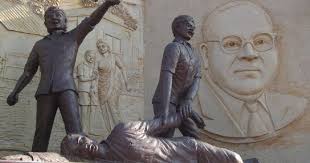
The annual commemoration of the struggle on January 14 enables Dalits to gain a political education from their lives, rather than relying on theoretical models. Why the 16-year campaign to rename Marathwada University after BR Ambedkar still matters The Namantar Shahid Smarak in Aurangabad. | JAIBHIM5, CC BY-SA 4.0 via Wikimedia Commons Standing on the Indora Bridge in Nagpur, one can catch a glimpse of the Namantar Shahid Smarak – a memorial to 27 Dalit activists who were killed during the 16-year Namantar Andolan that started in 1978 to have Marathwada University renamed after BR Ambedkar Not surprisingly, some members of the upper castes and land-owning feudal classes in Maharashtra’s Marathwada region opposed this demand for a gesture that would pay tribute to the architect of India’s Constitution for leading the struggle for equality and his efforts to democratise education. Among them was Shiv Sena head Bal Thackrey. “Gharat nahi peeth ani magtay vidyapeeth,” he sneered. You don’t have a loaf of bread to eat, but you want a university. Significant markers of the movement included the Long March in 1979, which set out from Nagpur for Aurangabad, 470 km away; the Jail Bharo Andolan to court arrest between 1978 and 1994; and several attacks on protestors by feudal-caste groups that opposed the name change. This movement also helped shape the course of a Dalit literature. The struggle ended with a compromise on January 14, 1994, to rechristen the institution as Dr Babasaheb Ambedkar Marathwada University. To remember the sacrifices made by the Dalit protestors and to advance the effort to create an egalitarian society based on the principles of humanity, the struggle is commemorated across Maharashtra with key events in Aurangabad (now Chhatrapati Sambhajinagar) and Nagpur on that date each year. The annual event offers hope and opportunities for Dalit politics by connecting with the idea of “true politics” that gives a voice to those who are marginalised, making them active participants instead of mere subjects who must conform to the dictates of the state and society. This true politics supports the discourse of natural rights, equality and intellectual freedom, empowering Dalits to express dissent. Commemorations such as this one enable Dalits to gain a political education from their lives, rather than relying solely on theoretical models. During the 16-year struggle, the opposition to the Namantar Andolan brought into the open the deep-rooted feudal and caste nexus that had permeated society and politics in Marathwada and Maharashtra in general. It also laid bare the “politics of humiliation” being practised by these groups, undermining the demand by Dalits for dignity and respect. The Andolan was a response to these Brahmanical power structures. It was a “rejection of rejection”, as political scientist Gopal Guru has described the process. The government and dominant groups have established a “mnemonic hegemony”, or the power to shape how history is told and which is sidelined. The Namantar Aandolan challenged the power of feudal caste groups to dictate history by asserting its own “mnemonic sovereignty”. The justified demand to rename the university to Dr Ambedkar University reflected a fairer version of history that had been sidelined by the feudal upper-caste groups. Dalit students began using the name “Dr Babasaheb Ambedkar University” in their official correspondence even before their demand was granted. They started their own journals and media platforms to communicate their version of events, avoiding mainstream media platforms that were biased in favour of the elite. The Andolan employed creative methods of storytelling – for instance, using protest songs that shared its struggles and documented the violence perpetrated by both state and non-state actors. The Andolan’s Long March of 1979 made the fight against caste injustice visible. The movement revived the memories and spirit of the Dalit Panther, a militant organisation founded in 1972, inspired by the Black Panther movement in the US. The Andolan, which began as the Namantar Andolan, culminated not with a name change but a name extension – a namvistaar. It revealed the state’s apathy towards Dalit claims for dignity, as well as the state’s tendency to protect the feudal caste-class nexus. But there were crucial victories. The Andolan had encouraged solidarity between various Dalit sub-castes. For instance, Pochiram Kamble, who is commemorated in the Nagpur memorial, belonged to the Mang community in a struggle where Mahars (the sub-caste to which Ambedkar belonged) were in the majority. Also commemorated on the memorial is Abdul Sattar, marking the shared history of hardship and oppression between Muslims and Dalits. As a young person wondering whether Viksit Bharat has a place for Dalits or if the community is being used as pawns in Hindutva’s battle against minorities, January 14 is an opportunity to look back on a crucial campaign and try to understand the crucial lessons that Marathwada’s Namantran Andolan offers to navigate a course for Dalit true politics as it embraces the future. Nikhil Sanjay-Rekha Adsule is a senior research scholar at IIT-Delhi. His X handle is @beingkhilji. Nikhil Sanjay-Rekha Adsule Courtesy : Siasat Note: This news is originally published on https:/thesiasatdaily.in/bha and is used purely for non-profit/non-commercial purposes, especially human rights
Defence objects to allowing new material at evidence stage in defamation case against Rahul Gandhi
Pune: The defence lawyer, Milind Pawar, on Tuesday filed a written objection before a special MP/MLA court in the city against the court allowing new material to be introduced at the evidence stage, without it forming part of the original record, in an ongoing defamation case against Congress leader Rahul Gandhi. Satyaki Savarkar, the grandnephew of the Hindutva ideologue Vinayak Damodar Savarkar, has filed the case regarding the Congress leader’s alleged defamatory speech against the Hindutva icon, in London in March 2023. The court has concluded the recording of Satyaki’s chief examination, and the case is at the stage of cross examination by the defence lawyer. The case has been posted for next hearing on Feb 6. Satyaki had earlier submitted a CD, containing the alleged defamatory speech, along with a 65B (verification) certificate under the Indian Evidence Act, but it could not be played in court due to some unknown technical reasons. At a subsequent hearing, Satyaki presented a couple of pen drives along with a verification certificate and the court allowed them to be played. The defence lawyer then orally objected to this but the court overruled the objection on the basis that Satyaki had made an oral request. On Tuesday, the defence submitted a written objection before commencing with the cross examination of Satyaki. It stated that overruling the objection was “illegal, procedurally irregular, and contrary to the mandatory provisions of the Indian Evidence Act, 1872, and the Code of Criminal Procedure, 1973, because electronic evidence cannot be admitted, exhibited, or played without following the due procedure prescribed by law.” The defence objection stated, among other things, that the Supreme Court has consistently held that the complainant cannot be permitted to introduce new facts, documents, or electronic material at the stage of chief examination which were neither pleaded in the complaint nor disclosed earlier, as such a course would impermissibly expand the scope of the complaint, amount to filling up lacunae in the prosecution case, and cause serious prejudice to the defence. Following the filing of the written objection, and upon the request made by advocate Pawar, the court adjourned the matter for further cross examination. Courtesy : TOI Note: This news is originally published on https:/timesofindia.com/bha and is used purely for non-profit/non-commercial purposes, especially human rights
Navi Mumbai civic polls: Transgender community urges people to vote
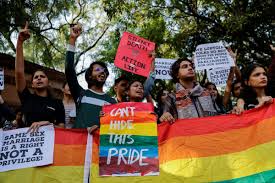
Thane, Members of the transgender community have joined the campaign to appeal to the people in Navi Mumbai to vote in the municipal corporation elections scheduled on January 15, officials said on Sunday. On Saturday, some members of transgender community distributed voter awareness brochures of the Navi Mumbai civic body’s election department, interacted with people at different places in the Vashi area, and appealed to the public to actively participate in the electoral process, they said. “We are going to vote, you should vote too,” they said in their message to the people, the officials The initiative is part of the extensive SWEEP (Systematic Voters’ Education and Electoral Participation) campaign aimed at ensuring 100 per cent voter turnout in the upcoming Navi Mumbai Municipal Corporation elections, the civic body said in a release. While voter awareness campaigns are already being conducted in schools and colleges, through women’s groups, NGOs and senior citizens’ organisations, the participation of the transgender community reflects an inclusive culture of Navi Mumbai, where every voice matters and every citizen has a role to play, it said. PTI COR GK This report is auto-generated from PTI news service. ThePrint holds no responsibility for its content. Courtesy : The Print Note: This news is originally published on https:/theprint.com/bha and is used purely for non-profit/non-commercial purposes, especially human rights
BMC polls in Mumbai: Shiv Sena (UBT) chief Uddhav Thackeray announces support for Independent Dinesh Jadhav against Kirti Somaiya’s son in Mulund ward
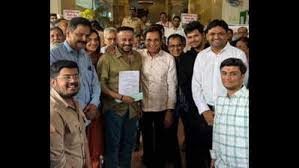
Mumbai: Two days after BJP politician Kirit Somaiya expressed confidence that his son Neil would win the BMC polls a second time as there was no candidate from the main opposition parties against him from Mulund’s Ward No. 107, Shiv Sena (UBT) president Uddhav Thackeray on Sunday declared independent nominee Dinesh Jadhav as the party’s official candidate. Calling Jadhav a hard-core Sainik, Sena (UBT) MP Sanjay Raut said he had filed his nomination as independent as a back-up. “During seat-sharing talks, our ally NCP (SP) had demanded Ward No. 107, saying they have good candidates. Reluctantly, we gave the seat to them…We all decided to stand behind the NCP (SP) candidate, but the ‘unopposed elected scam’ happened in Ward No. 107 too.” The nomination form of NCP (SP) candidate Bharat Vanani was rejected and he was disqualified. “Kirit Somaiya started dancing ‘unopposed, unopposed’ and saying ‘no one is contesting against my son’. But that’s not the case. Our hard-core Shiv Sainik, Dinesh Jadhav, had filled his nomination Ward No. 107. His nomination is valid. Uddhav Thackeray has issued a letter stating that Jadhav is the official Shiv Sena (UBT)-supported candidate from Ward No. 107,” Raut said. “Neil cannot be elected unopposed, he will have to fight with us. “Jadhav was not able to get the Shiv Sena (UBT)’s ‘flaming torch’ symbol. His symbol is a television set,” Raut added. Earlier in the day, Kirit said in a post on X: “It’s official. Election Commission final list of candidates for BMC ward 107 Mulund. Neil Kirit Somaiya – BJP. No candidates of Uddhav Thackeray UBT, Raj Thackeray MNS, Rahul Gandhi Congress, Sharad Pawar NCP.” In 2017, Neil had contested the BMC election from the adjacent Ward No. 108 and won. Courtesy : TOI Note: This news is originally published on https:/timesofindia.com/bha and is used purely for non-profit/non-commercial purposes, especially human rights