
LGBTQIA+ community members protest against Transgender Act, term it regressive and demand withdrawal
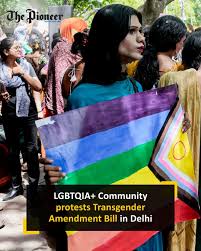
Pune: Members of the LGBTQIA+ community on Tuesday staged a protest march at the district collector’s office against the Transgender Persons (Protection of Rights) Amendment Act, which recently came into force after the Bill was passed by both Houses of Parliament and receiving Presidential assent on Monday. The protest coincided with International Transgender Visibility Day, observed globally on March 31. Activists and community members from across the city and state gathered with placards, alleging that the Act was passed sans consultation with stakeholders or members of the transgender community. Protesters raised strong objections to several provisions, claiming they violate privacy and roll back hard-earned rights. Disha Shaikh, a transwoman and spokesperson of the Vanchit Bahujan Aghadi (VBA), said, “Whatever we achieved through years of struggle has been lost with this Act. It feels like we have been pushed back 30 years.” She termed certain provisions “regressive” and alleged that the law criminalises aspects of identity in a manner reminiscent of colonial-era policies. Under the new Act, the provision for self-identification has been removed, making medical board approval mandatory before issuance of a gender identity certificate by the district magistrate. It also criminalises attempts to forcibly convert individuals into the transgender community. Manasvi Goilkar, a member of the community, said protests will be intensified across Maharashtra. “We have formed a state-level group to organise district-wise protests and submit our objections to authorities,” she said, adding that to fight their battle on legal front, a petition is also being prepared which will soon be filed in the court. “We are not seeking amendments — we want the Act withdrawn entirely.” Goilkar said that the Act completely ignores some categories of the transgender community. For instance, transmen and transwomen are not mentioned in the new Act, and the focus is mostly shifted to sociocultural groups like hijra, kinner and others. Shaikh alleged that safeguards recognised under the 2014 NALSA vs Union of India landmark SC judgment have been diluted. She questioned the alleged partiality against the transgender community by govt. “When schemes like Ladki Bahin or Mahila Samman Yojana were introduced, women were not asked to undergo medical tests. Why is the transgender community being subjected to this?” she asked, stating that self-declaration of gender should be allowed for them. Activists also expressed concern over the provision criminalising forced conversion, stating it could be misused. They fear it may lead to false allegations, including claims of child abduction — a narrative they say has surfaced in rural areas in the past. Dr Kanchan Pawar, a healthcare professional, who has been working with the transgender community for over 15 years, said the new Act raises several concerns. “The law appears discriminatory in many ways, particularly due to its narrow definitions and the lack of clarity on the process for certification,” she said. She also expressed concern over provisions requiring medical practitioners to report gender-affirming procedures. “This raises serious issues around doctor-patient confidentiality and privacy. Many in the medical fraternity are uncertain and anxious about the medico-legal implications of these amendments,” she added. Courtesy : TOI Note: This news is originally published on https:/timesofindia.com/bha and is used purely for non-profit/non-commercial purposes, especially human rights
Atrocities on Dalits still continue in rural India: Athawale
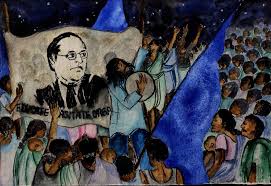
Pune: Union minister Ramdas Athawale on Sunday said atrocities against Dalits remain a concern in rural parts of the country, urging state govts and political leaders to take concrete steps to address the issue. Speaking at a press conference in Pune, Athawale noted that next year will mark 100 years of the historic movement led by Dr Babasaheb Ambedkar in Mahad, Raigad, which fought for Dalits’ right to access water from a public tank. “Next year marks the centenary of the movement against untouchability. While a lot has changed over the past century and there has been progress, Dalits still face atrocities in rural areas. It is important for state govts, political parties and local NGOs to work together to ensure such incidents do not occur,” he said. Athawale added that he and his party are working at the national level to address the issue. “We are striving to bring Dalits and other communities, including Savarnas, OBCs, Marathas and minorities, together. This was Dr Babasaheb Ambedkar’s vision, and we are moving in that direction,” he said. Commenting on the upcoming assembly elections in four states, Athawale said his party would not contest in West Bengal and would instead support the BJP. “In Kerala, we will contest 10–12 seats; in Tamil Nadu, 20–25 seats; and in Assam, 15–20 seats. Wherever we contest, it will be on our party symbol. In constituencies where we do not field candidates, we will support the BJP,” Athawale said. Courtesy : TOI Note: This news is originally published on https:/timesofindia.com/bha and is used purely for non-profit/non-commercial purposes, especially human rights
Basic principles of law appears to have not been followed in Baramati plane crash probe: Rahul Gandhi
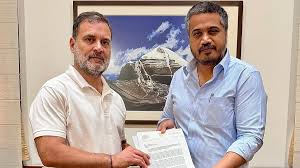
Pune: The leader of opposition in Lok Sabha, Rahul Gandhi, on Thursday alleged that basic principles of law had not been followed in the investigation into the Baramati plane crash that claimed the life of former Maharashtra deputy chief minister Ajit Pawar and said no FIR had been registered despite the seriousness of the case. Rahul shared a photo of him with NCP (SP) MLA Rohit Pawar on his ‘X’ handle after their meeting in Delhi and demanded a transparent investigation into the crash. “The incident warrants a fair, transparent and impartial investigation,” Rahul posted on X. Rohit, Ajit Pawar’s nephew, appealed to Rahul during their meeting in the national capital to raise the issue of his uncle’s death in the plane crash in the ongoing session of Parliament. The NCP (SP) MLA thanked Rahul for his support while interacting with reporters later, and criticised the central and Maharashtragovts for not registering an FIR in connection with the Jan 28 plane crash in which Ajit Pawar was killed with four others. “It has been nearly one-and-a-half months since the plane crash, but still no FIR has been registered. The proposal of the state govt to the CBI should have been accepted and the central agency should have started the investigation of the case. The issue should have been discussed in the ongoing Parliament session. It is quite shocking that ‘some people’ are busy only in protecting VSR Venture and its owner,” Rohit said. Apart from Rahul, Rohit met some members of the INDIA bloc, including Congress president Mallikarjun Kharge, DMK MP Kanimozhi and former Delhi chief minister Arvind Kejriwal, in the past few days in Delhi. He urged all of them to raise the issue of the Baramati plane crash in Parliament. Courtesy : TOI Note: This news is originally published on https:/timesofindia.com/bha and is used purely for non-profit/non-commercial purposes, especially human rights
Nashik court disposes of defamation case against Rahul Gandhi

Nashik: The court of additional chief judicial magistrate Rupali Narwadiya has disposed of the defamation case filed against leader of opposition in Lok Sabha Rahul Gandhi. The case was initiated by Devendra Bhutada, president of the Nashik-based Nirbhaya Foundation, who alleged that Gandhi made defamatory remarks about Hindutva ideologue and freedom fighter VD Savarkar during ‘Bharat Jodo Yatra’ rallies held in Hingoli and Akole on June 15 and 16, 2022. Bhutada approached the court shortly after learning of the comments. Following the complaint, a case was registered under sections 499 (defamation) and 504 (intentional insult) of IPC, and the court issued summons to Gandhi in Sept 2024. Last July, the additional chief judicial magistrate granted Gandhi bail, allowing him to attend hearings virtually, during which he pleaded not guilty. Defence lawyer Gajendra Sanap said the court had ordered an inquiry under Section 202 of the CrPC, and after police submitted their investigation report, the complainant sought to withdraw the case. Mohan Pingale, representing Bhutada, said the withdrawal application was filed because Bhutada’s daughter had recently moved abroad, making it difficult for him to attend frequent hearings. He said the four-year-old case had led to summons and warrants against Gandhi, requiring him to secure bail and participate in virtual proceedings. Pingale said the Supreme Court mandated priority handling of cases involving MPs and MLAs. “In view of the circumstances, we applied to withdraw the case, and the court accepted the request, thereby disposing of the matter,” he said. Courtesy : TOI Note: This news is originally published on https:/timesofindia.com/bha and is used purely for non-profit/non-commercial purposes, especially human rights
Transgender Students Ke Liye Universities Mein 100% Fees Maaf

Government of Maharashtra ne transgender community ke students ke liye ek important decision liya hai. State ki public universities mein transgender students ki 100% academic fees maaf kar di gayi hai. Maharashtra ki sabhi public universities mein transgender students ko poori tarah free education milegi. Universities ko instruction diya gaya hai ki academic fees apne funds se cover karein. Government ka aim hai ki transgender students ko equal opportunity aur dignity ke saath education mile. Financial problems ki wajah se jo students padhai chhod dete hain, unko bhi higher education pursue karne ka mauka milega. Courtesy : Galli News Note: This news is originally published on https:/gallinews.com/bha and is used purely for non-profit/non-commercial purposes, especially human rights
Rahul Gandhi appears before Bhiwandi court in defamation case

BHIWANDI: Leader of Opposition in the Lok Sabha Rahul Gandhi appeared before a court here on Saturday in connection with a criminal defamation case stemming from remarks made during the 2014 Lok Sabha election campaign.Sources said Gandhi’s personal appearance was largely procedural and necessitated by the recent demise of his former surety, Shivraj Patil Chakurkar, who had stood guarantee for his bail. With the earlier surety holder passing away last month, fresh surety formalities were required to be completed before the court. The case dates back to a public rally in Sonale village in Bhiwandi taluka during the 2014 Lok Sabha elections, where Gandhi allegedly stated that the Rashtriya Swayamsevak Sangh (RSS) was responsible for the assassination of Mahatma Gandhi. Following the speech, RSS office-bearer Rajesh Kunte filed a private complaint under Section 500 of the Indian Penal Code, accusing Gandhi of defaming the organisation. Advocate Narayan Iyer, representing Gandhi, said the appearance was mandated due to the submission of a new surety. “Gandhi was required to be present as a new surety has been furnished following the demise of his earlier surety. The hearing was primarily procedural,” Iyer told TOI. On Gandhi’s behalf, Maharashtra Congress president Harshwardhan Sapkal was presented as the new surety before the court.Iyer said that after Sapkal’s surety was submitted, Gandhi signed the bond. Iyer added that the matter has reached an advanced stage. “The chief examination and cross-examination of the complainant, Rajesh Kunte, have been concluded. The trial is progressing,” he said. In view of Gandhi’s visit, Thane Police had deployed additional personnel around the court premises to manage crowds and ensure law and order. Courtesy : TOI Note: This news is originally published on https:/timesofindia.com/bha and is used purely for non-profit/non-commercial purposes, especially human rights
3 transgender people booked for extortion in Nashik

Nashik: The Bhadrakali police registered a case against three transgender people on charges of extortion after a complaint alleged that a 28-year-old transgender woman was assaulted in the Bhadrakali area on Feb 10 to force her to pay Rs 20,000. Based on the complaint, the police registered a case against the three for offences punishable under relevant sections of the BNS for extortion, intentional insult and criminal intimidation. The complainant stated in her complaint that she sought alms from people for her livelihood. She alleged that on Feb 10, when she was near Kathada in the Bhadrakali area around 10am, three other transgender persons met her and told her that she should pay them Rs 20,000 as a cut from her monthly earnings. The complainant said that when she refused to pay up, she was kicked and punched by the three. She also alleged that the suspects threatened to kill her if she did not convert to a particular faith. The Bhadrakali police said the case is being investigated, though no one has been arrested so far. Courtesy : TOI Note: This news is originally published on https:/timesofindia.com/bha and is used purely for non-profit/non-commercial purposes, especially human rights
Gadchiroli: How did the dream of ‘justice at the doorstep’ for tribals become entangled in files? The system woke up after the Supreme Court’s strictness.
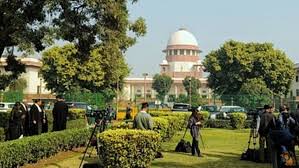
After the Supreme Court’s reprimand, the appointment was made in 7 days; the Aheri court remained empty for months without a judge, leaving hundreds of prisoners distressed. New Delhi/Gadchiroli: A vivid example of how the Aheri court, which was established with the vision of providing justice to tribals in the remote areas of Maoist-affected Gadchiroli, is being hampered by delays in the appointment of judges and administrative lethargy, was recently seen in the Supreme Court. The case involves Surendra Gadling, a co-accused in the Bhima-Koregaon case. On January 21, when his lawyer informed the Supreme Court that the trial in a case related to arson charges from 2016 had not yet begun due to the irregular attendance of the judge and the permanent public prosecutor in the court, it raised many questions about the system. What is the whole matter? Surendra Gadling is accused of conspiring to burn 76 vehicles carrying iron ore from the Surjagarh mines on December 25, 2016. His lawyer argued in court that his discharge petition had been pending in the single-judge District and Additional Sessions Court in Aheri since 2022. The reason was that there was neither a judge nor a permanent prosecutor there at the time. Following this information, the Supreme Court issued strict instructions to the Registrar General of the Bombay High Court, directing them to ensure “the regular posting of a competent judge within seven days.” This strictness of the Supreme Court had an immediate effect, and after the hearing, the vacant post was filled. A judge was appointed there just two days later. The seat remained vacant for 22 days in January. Although officials claim that the process for appointing a judge was already underway and that it takes time given the sensitivity of the post, the reality is that the court remained without a judge for 22 days, from the 1st to the 22nd of January. Court records indicate that this was not the first time the Aheri Court had been vacant while awaiting a judge. Work stalled for three months in 2025 The Aheri Court, which was inaugurated in July 2023 by then Supreme Court Justice Bhushan R. Gavai with the promise of providing “close-to-home justice” to 725 villages in Maoist-affected and tribal-dominated talukas, remained in a disturbing state in 2025. According to records, the court remained without a judge for nearly three months in 2025. During this period, trials, bail hearings, and regular judicial work effectively came to a standstill. When a judge finally assumed charge on July 22, 2025, he found that over 200 undertrial cases were pending. This is mentioned in a court order dated October 6, 2025, which stated, “Upon assuming charge on July 22, 2025, it was found that over 200 cases and several bail applications were pending, which were disposed of on a priority basis.” Lawyers and Prisoners Faced Increased Difficulties During the three-month vacancy, trial proceedings could not proceed. Accused persons were not brought from jail for hearings. Lawyers were forced to travel more than 120 kilometers to Gadchiroli, where a judge was given additional charge of the Aheri Court. The situation became so dire that undertrial prisoners wrote letters from jail to the Gadchiroli Court and the Bombay High Court, requesting the transfer of their cases, as proceedings had come to a complete halt. Accused yearn for bail The judge’s absence had the worst impact on those in jail. During this period, the in-charge court could only hear urgent bail applications or petitions for extensions for filing charge sheets. In one case, an accused arrested in 2020 sought bail, alleging that despite charges being framed in 2023 on the Supreme Court’s directive, no witnesses had been examined until July 2025. In another case, an accused remained in jail for over a year simply because he could not provide a surety of ₹30,000. He was released only after the appointment of a judge in August 2025. The Bar Association also raised its voice Aheri Bar Association President Rajendra Prasad Menganwar told the Indian Express that the primary purpose of establishing a court in Aheri was to prevent litigants and lawyers from having to travel up to 200 kilometers for hearings. He said, “In 2025, when no appointments were made for three months, we had to go to the Gadchiroli Court for important hearings. We then met with the administrative officials of the Nagpur Bench of the Bombay High Court and requested that the vacancy be filled, which, thankfully, was done immediately.” Delay due to sensitive cases? Court officials attributed the delay to the court’s handling of many important cases related to the UAPA and alleged Maoist activities. Therefore, judicial appointments require very careful scrutiny and consideration, which is a major reason for the delay. A Long Journey to Justice The establishment of the Aheri Court was the result of a demand dating back to 2008 to ensure that litigants, accused, and victims would not have to travel long distances through poor roads and irregular transportation in Maoist-affected forest areas. They often had to stay overnight for hearings. With this in mind, a Magistrate Court was inaugurated in 2015, and a Sessions Court in July 2023. At the inauguration, Justice Gavai stated that this court would help provide justice to 725 villages in the Aheri, Mulchera, Sironcha, Bhamragad, and Etapalli talukas. He said, “Justice has come to the doorsteps of the tribals of Gadchiroli.” It remains to be seen whether, after the Supreme Court’s intervention, this system will continue to function smoothly in the future. Rajan Chaudhary Courtesy : Hindi News
Liquor shops around Dalit bastis are not a coincidence. It’s trauma seeking an outlet
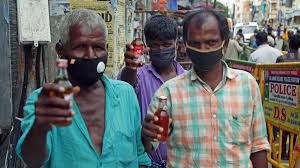
Markets follow vulnerability and the state taxes the bottle, while condemning the drinker. I’m not an F-up,” she always says. But little did Apurva know, it takes more than having a stable job to shake that label. She started smoking weed while studying at IIT-Kanpur. It quickly spiralled into owning a bong, grinders, rolling paper, and knowing how to score in every city—this 420 fascination became a lifestyle. Having no father figure and an emotionally absent mom, this neo-Buddhist Dalit girl slowly turned into a self-proclaimed “girl who likes to smoke up”. A one-dimensional personality. Across societies, substance abuse has long followed the fault lines of oppression. Native American communities in the United States struggle with alcoholism rooted in dispossession and cultural erasure. African Americans face higher rates of drug criminalisation and addiction shaped by slavery, segregation and systemic racism. These patterns are now widely understood as outcomes of historical trauma, not individual weakness. India, however, remains reluctant to apply the same lens to caste. When Dalits drink, smoke, or spiral into addiction, the dominant explanation is moral failure. Rarely do we ask what centuries of humiliation, violence and exclusion do to the human psyche and body over generations. Data already tells us what public discourse refuses to admit. National surveys consistently show that alcohol and tobacco use are higher among Scheduled Castes than among upper-caste groups. The National Family Health Survey (NFHS-5) records a higher prevalence of alcohol consumption among Scheduled Caste and Scheduled Tribe men compared to forward castes, a pattern mirrored in tobacco use among both men and women. Maharashtra, often projected as a progressive state, is no exception. Studies by Oxfam and state public health departments show disproportionate substance dependence in Dalit-dominated rural belts and urban slums, particularly among men engaged in informal, hazardous labour. Yet numbers alone do not explain why these patterns persist across generations. To understand this, one must confront inter-generational trauma—a concept still treated with suspicion in India, as if acknowledging psychological inheritance weakens personal responsibility. Trauma does not vanish with time; it embeds itself. When a community lives for centuries under graded inequality, is denied dignity, pushed into stigmatised labour, subjected to routine violence, and told repeatedly that they are less than human, the stress response becomes chronic. Cortisol levels remain elevated. Anxiety becomes an inherited behaviour. Silence becomes survival. Substance use, then, is not indulgence; it is regulation. In Maharashtra, the geography of addiction often overlaps with the geography of caste. Sugarcane cutters, sanitation workers, tannery labourers, construction hands, many from Dalit communities, operate in physically brutal environments with little job security and no mental health support. Alcohol becomes a painkiller, antidepressant, and social glue. Country liquor shops cluster around labour camps and Dalit bastis not by coincidence, but because markets follow vulnerability. The state taxes the bottle, while condemning the drinker. Moralising language, invisible struggle What makes caste trauma distinct from other forms of deprivation is its inescapability. Poverty can change; caste sticks. A Dalit child may grow up watching a parent humiliated at work, addressed by caste name, or denied basic respect. These experiences shape self-perception long before adulthood. Research in social neuroscience increasingly shows that chronic social stress alters neural pathways related to impulse control and reward. Addiction, in this sense, is not merely learned behaviour; it is embodied memory. Mental healthcare systems in India are neither equipped nor inclined to recognise this. Public de-addiction programmes focus on abstinence without addressing the cause. Counselling frameworks imported from Western psychology speak of “individual triggers”, while ignoring structural violence. For a Dalit man in a Maharashtra village, therapy that refuses to name caste is not neutral; it is erasure. As one Dalit rights activist from Marathwada puts it, “You cannot heal a wound while pretending the knife does not exist.” Women in Dalit communities carry a different, quieter burden. NFHS data shows lower alcohol consumption among Dalit women compared to men, but significantly higher tobacco use than upper-caste women. Chewing tobacco becomes a socially permissible coping mechanism in lives defined by unpaid labour, domestic violence, and economic precarity. Yet policy discourse rarely recognises this as addiction at all. Dalit women’s suffering is normalised to the point of invisibility. The moralising language around addiction also does real damage. When substance use is framed as a lack of willpower, the solution offered is punishment or shame. Families internalise blame. Communities fragment. Meanwhile, the structural conditions remain untouched. Contrast this with how addiction among urban, upper-caste youth is discussed—as stress, burnout, or existential crisis. Same substance. Different sympathy. There is also an uncomfortable political economy at work. The Indian state profits enormously from alcohol revenue, much of it extracted from marginalised communities. In Maharashtra, excise duty constitutes a significant portion of state income, even as alcoholism devastates Dalit households. Welfare schemes address the symptoms ie. hospitalisation, malnutrition, domestic violence, but never the root. It is easier to police bodies than to dismantle caste. Not a personal vice Breaking this cycle requires a shift from moral judgement to public health and social justice. Trauma-informed policy must recognise caste as a determinant of mental health. De-addiction programmes need to be community-based, culturally grounded, and explicitly caste-aware. Mental health workers must be trained to understand how humiliation, exclusion and inherited stigma shape behaviour. Employment, dignity, and psychological safety are as essential to recovery as sobriety. Most importantly, India must abandon the convenient fiction that caste no longer matters. Addiction in Dalit communities is not a personal collapse; it is a social indictment. It reflects what happens when a civilisation normalises inequality for centuries and then feigns surprise at its consequences. Until caste oppression is addressed as a lived, embodied trauma and not a historical footnote, the bottle will remain both refuge and ruin. Apurva has attended vipassana meditation course twice, even helping as a server. But addiction is hard to shake off when it becomes a personality trait and an escape mechanism. India likes to speak of addiction as a personal vice because that
12 Bangladeshi Transgender Nationals Living Illegally Detained in Mumbai, Deportation Process Initiated

The Anti-Terrorism Cell (ATC) of Versova Police has detained 12 Bangladeshi transgender nationals who were found to be . The Anti-Terrorism Cell (ATC) of Versova Police has detained 12 Bangladeshi transgender nationals who were found to be residing illegally in India. The action was carried out on February 4 and 5, 2026, at multiple locations in Andheri West and Malvani, According to police officials, the first operation was conducted in the early hours of February 4 at around 3:30 am at the premises of Shakrullah Shah Baba Dargah on JP Road, Versova. During routine bandobast duty, police personnel noticed nine transgender individuals conversing in the Bangladeshi dialect. On questioning, all of them admitted to being Bangladeshi nationals and revealed that they had entered India illegally without any valid documents or permission. The second operation took place on February 5 at around 1:30 pm in the Old Madha area of Andheri West, including Hanuman Mandir Lane and a nearby residential complex. Three more Bangladeshi transgender nationals were detained from the spot. During investigation, Bangladeshi mobile numbers, birth certificates and other digital evidence were recovered from their possession, confirming their nationality. Police investigations further revealed that all the detained individuals were using mobile applications to remain in contact with associates in Bangladesh. Action has been initiated against them under the Foreigners Act, and the process to deport them from India has begun. Regional Registration Office (FRRO), and the concerned Deputy Commissioner of Police. The entire operation was carried out under the leadership of Senior Police Inspector Dipshikha Bhagyashree Avhad Ware, under the guidance of the Additional Commissioner of Police and the Deputy Commissioner of Police, Zone-09. Police officials stated that such strict action against foreign nationals residing illegally in India will continue in the future. By vishal.singh Courtesy : Lokmat Times Note: This news is originally published on https:/lokmattimes.com/bha and is used purely for non-profit/non-commercial purposes, especially human rights