
The Constitution’s emancipatory promises on caste remain elusive
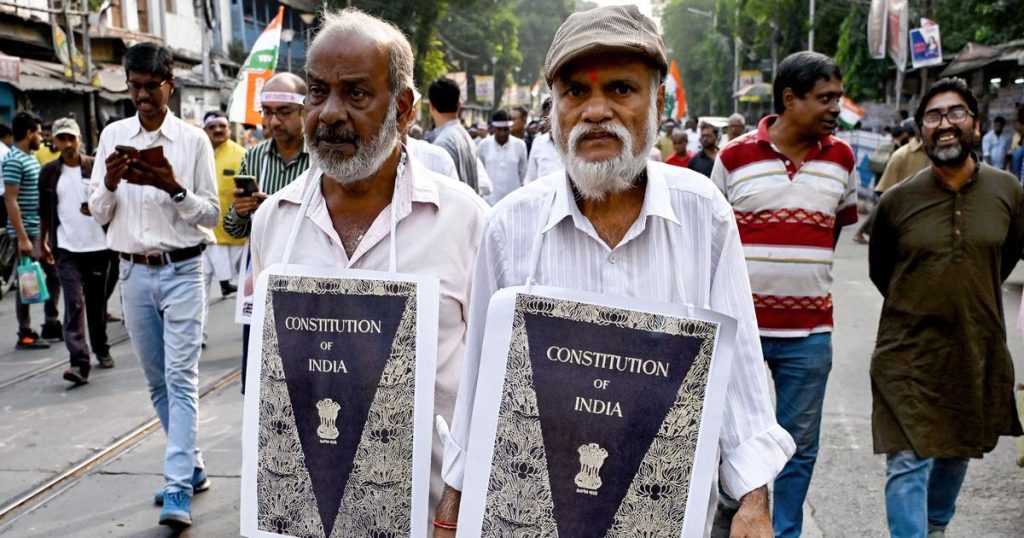
Constructively criticising the Constitution is imperative at a time when its survival is threatened by the Hindutva project. For a series of 11 short treatises by leading scholars on the ideas of free India’s Constitution, we thought it fitting to invite India’s highly regarded scholar Anand Teltumbde – also one who recently served time as a prisoner of conscience – to write the closing book in the series. In this chain of books (that I am editing with Neera Chandoke for Speaking Tiger), we have looked at how the Constitution was imagined, debated and written; its understanding of secularism, socialism and democracy; and its foundational pledges of justice, liberty, equality, fraternity, federalism and the scientific temper. We requested Teltumbde to reflect on what the Constitution has meant for India’s most dispossessed peoples, and how much it has contributed to helping access their rights to a life of dignity and hope. His conclusions are sobering, scathing and unsparing. Teltumbde sees an immense gap between the vision laid out in the Preamble and the realities of India’s present. “Liberty is under attack. Economic inequality is worse now than it was even under colonial rule. Fraternity has been shredded by rising communal hatred and growing caste consciousness under the revivalist Hindutva movement. Justice – social, economic, and political – remains elusive. The very foundation of our democracy feels dangerously fragile”. Teltumbde argues that we should not be constrained from constructively critiquing the Constitution because at this moment its very survival is gravely threatened by the Hindutva project of dismantling and rewriting the constitution to establish a Hindu Rashtra. With BR Ambedkar, he is convinced that a Hindu Rashtra would be the greatest calamity for India. Unlike the critique of the Constitution of the reactionary far-right, he affirms the emancipatory promise of the Preamble – liberty, equality, fraternity, and justice. Yet, he sees these as values the Constitution pledged but has failed to deliver. “Yes”, he says boldly, “the Constitution is flawed…but dismantling it without first building a genuinely democratic and pro-people alternative would be to destroy the last remaining legal and moral structure within which the struggle for justice can still be waged”. The gravest betrayals of the Constitution are arguably of Dalits His treatise focuses specifically on Dalits, who have for millennia been oppressed by structures of caste, and barred from education and dignified work. But they apply more generally to all oppressed and marginalised communities who constitute the Indian republic. Teltumbde observes that on the one hand, perhaps Dalits feel the greatest emotional connection among all Indians to the Constitution. This is because its writing was led by Dr Babasaheb Ambedkar who they venerate for leading the struggles for their liberation from the centuries-old bondages of caste. Yet, he believes that the Constitution has failed resoundingly in fulfilling its emancipatory promise for Dalits, arguably more than for any other community. It has contributed to the rise of a small Dalit middle-class. But this small class shares with the large mass of Dalits only “a history but not a present”. The overwhelming majority of Dalits continue to endure the caste stigma and oppression that has been their fate for millennia, living in “a vast, submerged reality of suffering and despair”. Dalits, he points out, form a quarter of India’s population, if we include Dalit Christians and Dalit Muslims. Their population, exceeding 320 million, would make them the third-largest “nation” in the world, larger than the combined population of 150 of the least populous countries on the planet. However, their wide dispersal across the country has meant that – like Muslims – they rarely form a numerical majority. Teltumbde rejects the premise of some Hindutva intellectuals that the British rule created caste. But, he avers that colonial rule fundamentally transformed caste. Before the British, caste was a dynamic, localised system. The British began counting and documenting caste. This, quoting Arjun Appadurai, didn’t just describe caste – it produced it as a rigid, bureaucratised, institutionalised hierarchy, solidifying boundaries that were previously contextual and fluid. This colonial approach, Teltumbde states, continues to reverberate in India’s social and political life. He also observes that paradoxically, colonial rule also opened some emancipatory pathways for Dalits outside the rigid caste structures of Hindu kingdoms. They found non-caste employment for the first time in the military and railways, and were able to access education and stable employment. Babasaheb himself was the son of a British military soldier. Teltumbde importantly reminds us that until Mohandas Gandhi, the Indian National Congress – dominated as it was by English-educated elites, landlords, and emerging capitalists – tended to steer clear of calling for reforms in caste, untouchability and the status of women. It later made space for moderate reforms such as widow remarriage, child marriage, and even the abolition of untouchability, but never the annihilation of caste. It was Gandhi who brought fighting untouchability into the core of the Congress agenda from 1916 onward. Particularly impactful was his movement for Dalit temple entry. The limitation of Gandhi’s approach was that while he and the Congress looked at untouchability as a moral question and a social sin to be atoned for by caste Hindus, they did not frame it as a systemic injustice that required political solutions. This conflicted with Ambedkar’s demands for separate electorates. Gandhi went on a fast unto death against separate electorates because he feared this would break Hindu unity and also encourage the Muslim League to make a similar demand. The compromise in the Poona Pact of 1932 was for reserved seats for Dalits within the general electorate rather than separate electorates. Ambedkar was dissatisfied with this because he was convinced that Dalits formed a separate community from caste Hindus like the Muslims, and therefore only separate electorates would protect their political and social interests. Gandhi followed this with a temple entry movement which incensed the conservative Hindu, but this still was not a movement for political empowerment of the Dalits. The Constitution abolished untouchability but not caste Teltumbde
Thackeray brothers need Marathi vote consolidation, sizable Muslim and Dalit votes to win BMC polls
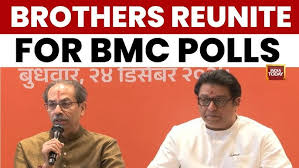
In the BMC polls scheduled on January 15 of next year, Congress has refused to be part of the Thackeray brother alliance, over differences in decent space and number of seats. MUMBAI: If Uddhav Thackeray and Raj Thackeray eye to win the Asia’s largest civic body (Brihanmumbai Municipal Corporation) polls, the leaders have to repeat Shiv Sena (UBT)’s 2024 Lok Sabha performance. It will help them to win as many as 113 seats out of 227 in the BMC polls. However, Shiv Sena (UBT) had won the three seats out of six Lok Sabha seats while it lost one seat, by 34 votes in Mumbai. Congress’s vote base — Muslim and Dalit — and Sharad Pawar’s supporters from the western Maharashtra region who stay in Mumbai, helped to secure several seats. MVA was successful in restricting the BJP and Deputy Chief Minister Eknath Shinde’s Shiv Sena to one seat each only in the financial capital. In the BMC polls scheduled on January 15 of next year, Congress has refused to be part of the Thackeray brother alliance, over differences in decent space and number of seats. Also, Raj Thackeray’s stand against North India is considered problematic for Congress’s North Indian voters. However, the silver lining for Uddhav Thackeray is, Raj Thackeray-led MNS has a seven per cent vote share in Mumbai, which will help them both to fill the gap caused by Shinde-led Shiv Sena and Congress, but that is not enough at all, as there is still a gap of six per cent. Thackerays has to go an extra mile by addressing as many rallies as possible, galvanising the ground network and utilising funds. Only then ther is a possiblity, that they will be able to swing the verdict in their favour. Despite Thackeray’s alliance, the BJP is unfazed and is comfortable on the ground as it has 27 per cent vote share in Mumbai, and even DCM Eknath Shinde will pull in at least five per cent vote share. Most likely, the BJP and Shiv Sena will march towards a historic win in this closely contested BMC election. Shinde led Shiv Sena has won the six state assembly seats in Mumbai, while BJP had won 15, and DCM Ajit Pawar led NCP has won one seat; therefore, arithmetically, BJP and Shiv Sena are unperturbed. The split in Maha Vikas Aghadi has boosted the confidence of the BJP and its Gujarati, Marwari and North Indian vote bank in Mumbai remains unaffected. However, the opposition are getting divided into multiple forces. Meanwhile, if Muslim and Dalit votes get divided among the Thackerays, Congress, NCP SP, Samajwadi Party, MIM, then it will be difficult to repeat the Lok Sabha’s template again in BMC polls. Sudhir Suryawanshi Courtesy : TNIE Note: This news is originally published on https:/thenewindianexpress.com/bha and is used purely for non-profit/non-commercial purposes, especially human rights
BMC Elections 2026: Congress Expands Base With VBA Tie-Up, Aims To Consolidate Dalit & Minority Votes
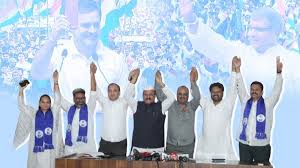
Congress and the Prakash Ambedkar-led Vanchit Bahujan Aghadi (VBA) have formed a surprising alliance for the Mumbai BMC elections, ending 25 years of rivalry. Congress will contest 150 seats, VBA 62, and Rashtriya Samaj Paksha 9-12. The alliance aims to consolidate Dalit, minority, and north Indian votes, posing a challenge to Sena-MNS and BJP ahead of 2029 polls. Mumbai: Burying political animosity of the past 25 years, Congress on Sunday sprung a surprise by joining hands with the Prakash Ambedkar-led Vanchit Bahujan Aghadi (VBA) for BMC elections. Under the arrangement, Congress will contest 150 seats, while VBA will field candidates in 62 wards, leaving 9-12 seats for Rashtriya Samaj Paksha led by Mahadeo Jankar. The alliance was announced by Maharashtra Pradesh Congress Committee (MPCC) president Harshwardhan Sapkal, along with VBA state vice-president Dhairyavardhan Pundkar. Mumbai Congress chief Varsha Gaikwad was absent, reportedly due to her engagement in a screening committee meeting to finalise candidates. The coming together of the Congress and the Vanchit Bahujan Aghadi (VBA) has once again proved that anything and everything is possible when it comes to politics. If we look back into recent electoral history, we will remember that not once but twice the VBA gnawed into the Congress vote base. During the 2014 Lok Sabha and state Assembly elections, the VBA in alliance with the All India Majlis-e-Ittehadul Muslimeen (AIMIM), contributed to the defeat of Congress’ several candidates. In the 2019 elections again, it significantly dented the Congress-NCP alliance’s chances of returning to power on its own. According to Congress leaders, the VBA ensured the defeat of at least 25 candidates from the Congress and the NCP. The party attracted a substantial share of Dalit votes, which traditionally belonged to the grand old party. The VBA is said to have polled 41 lakh votes in the 2024 Lok Sabha elections and 24 lakh votes in the Assembly elections held the same year. Its candidates finished second in 10 constituencies and third in several others. In the 2024 Assembly elections, the VBA impacted nearly 20 seats where the Maha Vikas Aghadi (MVA) lost to the Mahayuti by margins of less than 10,000 votes. Similarly, in the Lok Sabha elections held last year, the MVA lost a few seats due to the presence of VBA candidates in constituencies such as Akola, Buldhana, Hatkanangle and Mumbai North West. The emerging understanding between the Congress and the VBA is being seen as a precursor to a possible alliance ahead of the 2029 elections, according to a party leader. “The Congress cannot remain dependent on the Shiv Sena (UBT), especially as it may continue its alliance with the Raj Thackeray-led MNS, which is against our ideology,” the leader said. The Congress is also keen on expanding its base in Vidarbha, a region that has traditionally been a party bastion. Even in the recent municipal council elections, the party secured its maximum number of seats from Vidarbha. With upcoming elections to municipal corporations and Zilla Parishads, the alliance with the VBA could prove advantageous, the leader added. On the other hand, a Congress-VBA alliance is likely to pose challenges for the Sena (UBT)-MNS combine as it could attract a large share of Dalit votes along with support from north Indian voters and minorities. “North Indians and minorities do not vote for the MNS and this could significantly affect the Thackeray brothers,” the leader said. For the BJP and the Shinde Sena, the alliance may create problems in a few constituencies. However, by denting the Thackeray vote bank, it could also indirectly benefit the Mahayuti. The BJP primarily relies on Gujarati and north Indian voters and requires substantial support from Marathi voters across communities. For the Shinde Sena, the Congress-VBA candidates could come to its aid – provided they draw votes away from the Thackeray faction. Ravikiran Deshmukh Courtesy : TFPJ Note: This news is originally published on https:/thefreepressjournal.com/bha and is used purely for non-profit/non-commercial purposes, especially human rights
Maharashtra: Police File Case Against Latur Cafe Owner Over Rape Of Minor Dalit girl
Police in Latur have registered a case against a cafe owner after a minor Dalit girl was allegedly raped by an 18-year-old man at the premises on December 4. The accused and two cafe operators were arrested under multiple laws, including POCSO and SC/ST Act. The cafe owner was booked for failing to report the crime and allowing illegal private seating used for the assault. Latur: Police have registered a case against the owner of a cafe premises in Maharashtra’s Latur district where a minor girl was allegedly raped earlier this month, officials said. About The Incident The incident occurred at the cafe on December 4. The minor girl, who belongs to the Dalit community, was allegedly kidnapped and raped by an 18-year-old man at the establishment, they said. Police traced the girl within hours of registering the complaint. The main accused and two persons who operated the cafe were subsequently arrested and booked under various sections of the Bharatiya Nyaya Sanhita, the Protection of Children from Sexual Offences (POCSO) Act, and the SC/ST (Prevention of Atrocities Act), an official said on Tuesday. The police on Tuesday also booked the owner of the premises, where the cafe was being operated, under section 21 (punishment for failure to report or record a case) of the POCSO Act. The cafe owner had illegally created a secluded compartment near the kitchen area by charging extra money, offering private seating arrangements. Despite being aware of this unauthorised setup and its misuse, the premises owner allegedly ignored it and allowed the cafe owner to continue with the arrangement, the official said. He also failed to report the matter to the police or other authorities concerned and is accused of deliberately suppressing information, the official added. (Except for the headline, this article has not been edited by TFPJ’s editorial team and is auto-generated from an agency feed.) Courtesy : TFPJ Note: This news is originally published on https:/thefreepressjournal.com/bha and is used purely for non-profit/non-commercial purposes, especially human rights
Nanded Police Arrest Five in Caste-Related Killing of Dalit Man, Including Partner’s Family

After her partner Saksham Tate was murdered, Aanchal Mamidwar applied vermilion on her forehead and turmeric to his body to symbolise their ‘immortal’ union. New Delhi: After a 20-year-old man hailing from a Dalit community was threatened and killed allegedly by the relatives of his partner on caste grounds in Nanded, Maharashtra, police have arrested five people in connection with the case, including the woman’s parents and her two brothers, per media reports. Police in Nanded’s Itwara invoked provisions of the Bharatiya Nyaya Sanhita pertaining to murder, rioting and criminal conspiracy in addition to sections of the Scheduled Castes and Scheduled Tribes (Prevention of Atrocities) Act and the Arms Act against the accused, the Indian Express reported. After Saksham Tate was killed on November 27, his partner, 21-year-old Aanchal Mamidwar, accused her family of opposing their relationship and planned marriage because they were from different castes. At Tate’s funeral the next day, Aanchal applied vermilion on her forehead and turmeric to his body to symbolise their ‘immortal’ union. She also reportedly called for her accused relatives to be hanged. “We were in love for the past three years but my father opposed our relationship over caste differences. My family often threatened to kill Saksham,” IE quoted Aanchal as saying. Further, she mentioned that she would henceforth stay at Tate’s home. Speaking to PTI, a police officer alleged that Aanchal’s brother Himesh Mamidwar shot Tate in the ribs and hit him with a tile on his head which led to his death. The authorities subsequently arrested Himesh, his brother Sahil Mamidwar and their father Gajanan Mamidwar, the officer said. Mamidwar’s mother Jayashri, another accused in the case, is also in custody, BBC Marathi cited the police as saying. “My father and my brother have killed my Saksham … However, they have lost by killing him, while Saksham has won by dying. Because our love is still alive,” the broadcaster quoted Aanchal as saying. According to IE, the accused told the police that they did not want Aanchal to marry Tate because of his involvement in criminal cases. PTI reported that Tate and Himesh were both history‑sheeters and had been close friends in the past. Aanchal also told mediapersons that she was coerced by her family into filing false complaints of rape and harassment against Tate before she turned 18 but that she withdrew the case when she became an adult. The Wire Staff Courtesy : The Wire Note: This news is originally published on https:/lhewire.com/bha and is used purely for non-profit/non-commercial purposes, especially human rights
How ‘Jai Bhim’ Was Born at a 1938 Marathwada Parishad
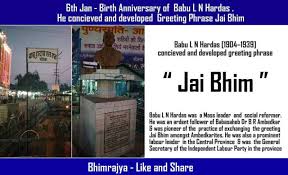
The slogan emerged at the Makranpur Parishad as a unifying Dalit greeting in Ambedkar’s presence. Jai Bhim: These two words have come to symbolise the awakening and empowerment of the Dalit community in independent India, but not many people know how they originated. The phrase was first used at the Makranpur Parishad, a conference held in Makranpur hamlet in Kannad teshil of today’s Chhatrapati Sambhajinagar district in Maharashtra. It also captures the great respect that Dr Bhimrao Ramji Ambedkar is held in. On December 6, 1956, Ambedkar, the primary drafter of the Indian Constitution, passed away. On December 30, 1938, the first Makranpur Parishad was established by Bhausaheb More, the first president of the Scheduled Castes Federation of Marathwada. According to Bhausaheb’s son, Assistant Commissioner of Police Pravin More, Dr Ambedkar spoke at the conference and urged the populace to oppose the princely state of Hyderabad, which at the time ruled over a large portion of central Maharashtra. “When Bhausaheb stood up to speak, he said every community has its own deity, and they greet each other using the name of that deity. Dr Ambedkar showed us the path of progress, and he is like God to us. So henceforth, we should say ‘Jai Bhim’ while meeting each other. The people responded enthusiastically. A resolution accepting ‘Jai Bhim’ as the community’s slogan was also passed,” More told PTI. “My father came in contact with Dr Babasaheb Ambedkar in his early years. Bhausaheb was aware of the atrocities the Nizam state committed on Dalits. He told Ambedkar about these atrocities, including the pressure to convert. Dr Ambedkar was strongly against these atrocities, and he decided to attend the 1938 conference,” he said. Ambedkar was permitted to travel through Hyderabad state but was prohibited from making remarks there due to his opposition to the princely states. Hyderabad and British India were separated by the Shivna River. According to ACP More, Makranpur was selected as the inaugural conference’s location since it was located in British territory, but on the banks of Shivna. The brick stage where Dr Ambedkar spoke at the conference is still in place. In order to sustain Ambedkar’s ideas, the conference is held annually on December 30. This tradition was maintained even in 1972, when Maharashtra went through one of the worst droughts in its history. “My grandmother pledged her jewellery for the conference expenses. People from Khandesh, Vidarbha and Marathwada attended it. Despite a ban imposed by the Nizam’s police, Ambedkar’s followers crossed the river to attend the event,” said ACP More. “This is the 87th year of Makranpur Parishad. We have deliberately retained the venue as it helps spread Ambedkar’s thought in rural areas,” he added. Curated by: Snehal Srivastava Courtesy : Outlook India Note: This news is originally published on https:/outlookindia.com/bha and is used purely for non-profit/non-commercial purposes, especially human rights
Defamation case: Pune court seeks Rahul Gandhi’s response to plea for US video sharing platform to provide original link of speech

Pune: A special MP/MLA court in Pune on Friday directed Rahul Gandhi’s lawyer to file a written response by Dec 11 on a plea seeking its directions to a US-based social media and video sharing platform and an Indian newspaper to furnish the original video link and a news report of the Congress MP’s speech in London in March 2023. The plea was filed by Vinayak Damodar Savarkar’s grandnephew Satyaki Savarkar, in an ongoing defamation case against Rahul Gandhi over the latter’s alleged defamatory remarks against the Hindutva ideologue. The plea mentions that the video link was published on March 5, 2023, on Gandhi’s official channel hosted by the video sharing platform. Similarly, a related news report was published by the Indian newspaper, it stated. The case is at the stage of the complainant (Satyaki) leading his evidence as part of examination in chief before the court. The complainant had earlier submitted a CD along with a 65B (verification) certificate under the Indian Evidence Act. However, it could not be played in court because of some unknown/technical reasons. His plea to play another CD was rejected by the court after Gandhi’s lawyer, Milind Pawar, raised objections on the grounds that it was not accompanied by a 65B certificate. On Friday, Satyaki’s lawyer, Sangram Kolhatkar, filed the plea regarding directions to the US video sharing platform and the newspaper stating, among other things, “The complainant submits that unless the original source is summoned, the accused (Rahul Gandhi) will secure an unfair advantage arising out of the loss of evidence, which was fully in the custody of the court, thereby gravely prejudicing the complainant and defeating the administration of justice.” The plea stated that the court needs to direct the video sharing platform to submit the video evidence along with details like the “upload date and time; URL and unique video ID; hash value/digital signature; server logs relevant to authenticity and integrity, any copies, backups, or archived version of the said video”. In a related development, Judicial Magistrate First Class Amol Shinde, presiding over the special court, allowed an application by Satyaki’s lawyer seeking an adjournment for a limited period. The adjournment sought was to enable the complainant make proper technical arrangements and reconstruction so that a CD of the speech, which could not be played earlier in court because of some unknown reasons, can be played and recorded correctly. “Also, to secure time to trace another CD from the record or be substituted so that the same can be relied upon in chief examination,” the plea stated. Pawar told TOI, “We have recorded our strong objection to the adjournment sought by the complainant today (Friday) as we feel the same was yet another delaying tactic by the complainant. We will file our written response, as sought by the court, on the other plea regarding directions to the US video sharing platform and the newspaper.” Courtesy : TOI Note: This news is originally published on https:/limesofindia.com/bha and is used purely for non-profit/non-commercial purposes, especially human rights
Hatred against Love in Annihilate Caste
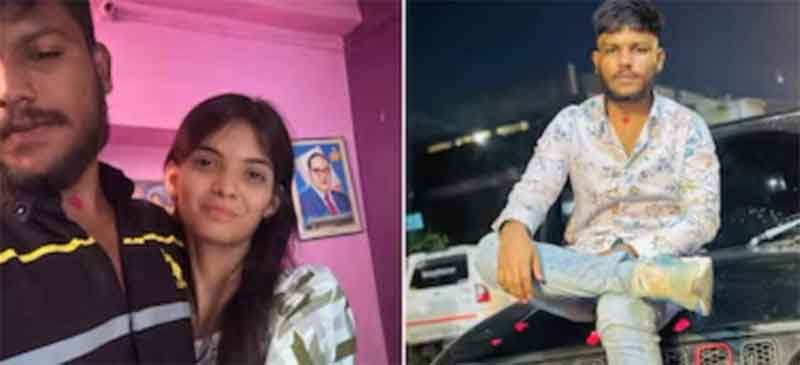
The murder of Saksham Tete, a Dalit, described as ‘jaibhim wallah’ by the family of his girl friend Anchal Mamidwar in Nanded should not surprise any one as the bitter and brutal fact is that we are a highly caste conscious society and any one venturing beyond his or her caste line must be prepared for the repercussion that Saksham faced. So, there is not one single caste or region or identity to be blamed for it. Fact of the matter is we all are proud of our ‘castes’ and any one cross the ‘redline’ actually become unwanted and unaccepted. Baba Saheb Ambedkar had spoken about annihilation of caste but that would mean annihilation of the primitive brahmanical values where ‘jaatis’ have become the sole ‘identity’ and there is no other way to appreciate a person’s achievements except when he or she belong to your jaatis. Every jaati i.e. caste, has an inherent supremacist attitude towards other and that is why Dr Ambedkar explained it as ‘graded inequality’. He does not stop with mere this term. It is important to move further and understand the psychology of the caste supermacism. Dr Ambedkar says, it is asecnding order of reverence and discending order of contempt. Saksham Tete was a Buddhist youth who fell in love with Anchal Mamidwar. In Maharashtra, a Buddhist in Dalit community is predominantly Mahar while Anchal belonged to an SBC or simply special backward Community. The particular jaati of Anchal, it seems was from Padmashali community, whose occupation actually is weaving. According to Anchal, her family was against Saksham because he was ‘jaibhimwallah’. She also said that Saksham was ready to ‘convert’ to ‘Hinduism’. The worst part of this story is that Saksham and Anchal’s relations were well known in the family and they pretended to have accepted their relationship but that was a strategy of the family to get closer to him and one final day they murdered Saksham. The things did not end there, Anchal showed her defiance and married to the corpse of Saksham, put a ‘sindoor’ and demanded that per parents and brothers be hanged to death. Anchal’s act are a defiance but definitely in the height of emotion who has lost her love. Her life is bigger and she must ensure that Saksham get justice but it is also for the elders to ensure that she is empowered economically and get a chance to live her life as per her choice. She has left her parental family now and staying at Saksham’s house and that would be a challenge. Many young girls have done that but the socio cultural economic crisis they face is tremendous. It is a fact that self arranged marriages or so called inter caste or inter religious marriages are not accepted by the Indian society. Whatever the self proclaimed progressive suggests but the bitter fact is inter faith couples face problems not only with the outside acceptence but also among themsleves due to cultural clashes. In the last two decade, Indian middle classes have grown into believing the ‘power’ of ‘traditional values’ and greatness of their caste resulting in unuacceptability of person outside their domain of jaatis. The so called inter caste, inter religious marriages are impossible now. It will only be posssible if we become a society of individuals where none is bothered about who you marry, what you eat and where you dine but that thing is now difficult. Your food habits, your sexuality and jaatis are important aspect today being flaunted everywhere. The gap is increasing. Friendship grows when you learn to appreciate others but we are fast becoming homesick and caste supermacist with strong love and hatred against other. In such cases, our minds dont work rationally and totally function as per the prejudices injected into our minds since childhood. Our political process today has shown that there is no unity among people in terms of their identities and each one of us want to keep a separate identity to make personal gains. So whether the community get something or not, in the name of it, some will gain and they will continue to speak up against individuals who cross the red line. That is the reason why very few speak against such violence. Political parties have rarely spoken against it as it threaten their identity politics. They will only use it when such incidents actually help them in their political games. Unfortunately, not every incident become political to be raised by the political parties. Also important is that annihilation of caste as envisaged by Baba Saheb Ambedkar has been rejected by majority of the Dalit Bahujan communities part of the brahmanical system. The unity among these communities merely politics of their space and nothing beyond. This fact must be kept in minds that communities are not interested to speak about any reforms. They want their share in power and elsewhere. Except that, there is no interest in reforms or looking from with in. The anti caste violence or patriarchical impositon is not just work of the brahmins or Savaranas but OBC community too come out as biggest gate keepers of brahmanical patriarchy. The cases of violence against Dalits from Maharashtra, Telangana, Tamilnadu, Uttar Pradesh, Bihar etc is concern that political unity is possible but jaatis dont want to cross their ‘identity’ line which they consider as ‘sacrocant’ and any crossing of that line is a challenge to caste patriarchy. What should individuals do. Well, young boys and girls should understand very well that the administrative or political set up can not protect them if they cross their line. Sadly, it is a dark reality in our part of the world. They become isolated. The individuals too depend on community and therefore think well before entering into any alliance. You must be prepared to leave your community and migrate to cities. You dont know who will turn out to be your dushman, enemy. It will increase as long as there will glorification of
Defamation case: Pune court directs Rahul Gandhi’s lawyer not to comment on unchallenged summons
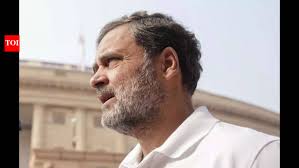
Pune: A magisterial court in the city on Tuesday directed Rahul Gandhi’s lawyer not to comment on unchallenged summons in an ongoing hearing of a defamation case filed by Satyaki Savarkar, the grandnephew of Swatantryaveer Vinayak Damodar Savarkar, against the Congress MP. The case relates to Gandhi’s alleged defamatory remarks against Savarkar during a speech in London. Satyaki filed an application before the court, raising an exception to a couple of paragraphs in a plea filed by Gandhi’s counsel on an earlier occasion. He submitted that the paragraphs were “serious in nature and mudslinging on the conduct of the complainant” and “cast some doubt on the functioning of the impartial judiciary system”. In his order on Tuesday, Judicial magistrate first class Amol Shriram Shinde noted, “The accused has raised some doubts on the functioning of the Court in para Nos. 11 and 13 of Exh. 117. Accused stated in para No. 11 that, complainant managed to secure the order of issuance of summons against the accused… In para No.13 accused further stated that, complainant succeeded in obtaining the summoning order through over reach rather than through lawful proof.” He said, “This court finds that if accused has any grievances against the issuance of summons order then he should challenge it before the appropriate court. But, he cannot make any comment on the order which he did not challenge. Either he has to accept the order or he has to challenge the order before the appropriate court.” In another order, the court also rejected an application filed by Gandhi’s counsel, Milind Pawar, seeking prevention of any further adjournments. The complainant intends to lead further evidence in the matter. “He must be given an opportunity to lead his evidence. A fair trial should be there. Therefore, this court finds that a short adjournment can be granted to the complainant,” the court said while posting the matter for next hearing on Dec 5. Courtesy : TOI Note: This news is originally published on https:/limesofindia.com/bha and is used purely for non-profit/non-commercial purposes, especially human rights
Honor killing in a Hindu-Buddhist love story: Father and brothers killed lover, girl marries corpse!
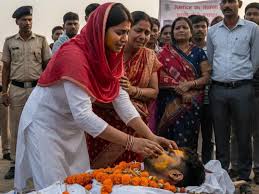
Anchal has now decided to live with Saksham’s family and has promised to spend her life with his mother. She has demanded the hanging of her father and brothers. Nanded – A tragic story of inter-caste love has emerged in Nanded district, Maharashtra, where a young woman, Anchal Mamidwar, symbolically “married” her 20-year-old lover, Saksham Tate, after killing him. This incident exposes the harsh reality of caste discrimination, where a Hindu family opposed her relationship with a young man from the Buddhist community and brutally murdered him. Anchal has demanded the hanging of her father and brothers. According to police investigations, Anchal and Saksham had been in a love relationship for the past three years. They met through Anchal’s brothers, and Anchal frequently visited Saksham’s home. But trouble began when Aanchal’s family learned of their love. Aanchal’s family belongs to the Hindu community, while Saksham belonged to the Dalit-Buddhist community. The family opposed the relationship, apparently due to caste differences, and repeatedly threatened to kill Saksham. On Thursday evening, Saksham was standing with his friends in the Junaganj area when Aanchal’s brother, Himesh Mamidwar, shot him. The bullet grazed Saksham’s ribs. Himesh then struck Saksham on the head with a tile, killing him instantly. Aanchal’s father, Gajanan Mamidwar (45), brother Sahil Mamidwar (25), and three others were also involved in the incident. On Friday evening, preparations for Saksham’s funeral were underway when Aanchal arrived. Deeply grief-stricken, Aanchal performed symbolic marriage rituals with Saksham’s body. She applied turmeric, kumkum (vermilion) to the body, and applied vermillion to her forehead, declaring herself a widow. Anchal said, “Our love has become immortal. This proves that love has no caste.” She claimed that they were about to get married soon, but a family conspiracy took everything away. Anchal has now decided to live with Saksham’s family and promised to spend her life with his mother. Videos of Anchal have gone viral on social media, where she is seen crying and saying, “My father and brothers killed Saksham. I want justice. They should be hanged.” Anchal alleged that the family had been plotting Saksham’s murder for weeks. 6 arrested for murder, SC/ST (Prevention of Atrocities) Act, and Arms Act Police arrested all six accused immediately after the incident, including Anchal’s father Gajanan, brothers Himesh and Sahil, three other adults, and a minor. The minor has been sent to a juvenile correction home. A case has been registered under sections of the Indian Penal Code (IPC), the SC/ST (Prevention of Atrocities) Act, and the Arms Act. Police have initiated the process of recovering the weapon and recording Aanchal’s full statement. Additional security forces have been deployed in the area to prevent caste tensions, and further investigations are underway. This incident raises questions about inter-caste marriages and the growing problem of honor killings in India. Aanchal’s courage not only demonstrates the depth of her love but also teaches society to break free from caste prejudices. Geetha Sunil Pillai Courtesy: Hindi News