
Karnataka: Caste-Based Insults at Madeeshwara Temple Festival; Shobha Yatra Denied Entry to Dalit Settlement Despite Receiving Donations!
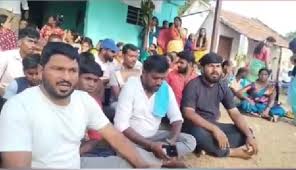
The Dalit community alleges that they face such disrespectful treatment every year. The procession never enters their settlement, and if they do visit the temple, they are forced to stand at a distance. Members of the Dalit community in Machalli, a remote village in Krishnaraja Nagar taluk of Mysuru district, have alleged severe untouchability and caste discrimination surrounding the Madeeshwara Temple and the deity’s Shobha Yatra. According to local residents, it is a long-standing tradition in the village that during the annual festival of Lord Madeeshwara, the bull procession is taken to every home and every settlement. This tradition was not followed in the Dalit settlement during last week’s festival. The Dalit community alleges that they are forced to perform puja in a humiliating and unequal manner. As soon as their festival is over, the idol is immediately removed and taken away, depriving them of the opportunity to worship the deity. Residents of the Dalit neighborhood reported waiting for two to three hours, but no arrangements were made for their worship. The temple doors were closed, and people left. One member said, “This is happening even in the 21st century, which is very sad.” The community alleges that this happens every year. The procession never comes to their settlement, and if they go to the temple, they are forced to stand at a distance. According to the Dalit community, this time the village elders had agreed in a public meeting and promised that full arrangements would be made for the worship in the Dalit settlement as well. Trusting this promise, every Dalit family contributed thousands of rupees for the worship. But when the deity’s procession reached the Dalit settlement, the situation suddenly changed. Within just two minutes, the idol was snatched away, and the worship was not performed. Following this, some elders and young people of the village gathered and openly declared, “They only have 15 houses, what can they do?” Members of the Dalit community allege that they were subjected to severe abuse, death threats, and other atrocities. Dalit residents also stated that they pay taxes and volunteer for public and religious events in the village, yet they are not allowed to enter the temple’s sanctum sanctorum, touch the deity, or worship on an equal footing. The village is home to approximately 60 Dalit families, most of whom are agricultural laborers. Following this incident, members of the Dalit community have protested in the village, demanding immediate action from the district administration and equal rights in the temple. They have also accused the Social Welfare Department and local authorities of failing to reach the village despite repeated complaints. Geetha Sunil Pillai Courtesy: Hindu News
Kharge only leader fit to replace Siddaramaiah if CM change needed: Rayareddy
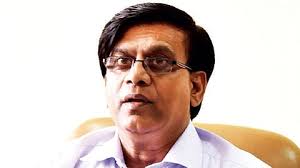
CM’s economic advisor Basavaraja Rayareddy says Siddaramaiah will complete term, calls for cabinet reshuffle by May 30 and targets PM Modi over fuel prices and economy. KOPPAL: If there is a need to change Chief Minister Siddaramaiah, then AICC president Mallikarjun Kharge is the only one qualified to replace him, said the CM’s economic advisor, Basavaraja Rayareddy. “Chief Minister Siddaramaiah will meet (LoP in Lok Sabha) Rahul Gandhi soon and the cabinet reshuffle or expansion in the state can be done by May 30. I believe that Siddaramaiah will continue as CM till the end of the current term. It is not right to change the CM repeatedly. If the cabinet is re-formed, effective governance can be given to people during the remaining two years. We can correct our shortcomings and come to power in 2028 as well,” Rayareddy said at a press conference on Saturday. “We will face the upcoming elections under the leadership of Chief Minister Siddaramaiah and KPCC President D K Shivakumar. Mallikarjun Kharge, who has the same administrative experience as Siddaramaiah, should become the CM.” Asked if he has sought a ministerial berth, Rayareddy said, “I have not asked for anything I promise.” “Prime Minister Narendra Modi has increased the prices of petrol and diesel using the pretext of West Asia war. The country’s rupee has depreciated and the Modi administration has completely failed. He should resign. An economist should become the PM,” he said. Basavaraja Rayareddy Courtesy : TNIE Note: This news is originally published on https:/thenewindianexpress.com/bha and is used purely for non-profit/non-commercial purposes, especially human rights
Why are Dalit organisations staging an indefinite protest for the PTCL Act in Karnataka?

To understand the reasons behind the protests at Freedom Park in Bengaluru, one has to look back at the sordid history of the hostility of the revenue bureaucracy and apathy of the judiciary towards the Karnataka Scheduled Castes and Scheduled Tribes (Prohibition of Transfer of Certain Lands) Act, 1978 (PTCL Act). “Do you see those apartments? That is where our lands used to be,” Krishnamurthy, a resident of Attibele in Bengaluru, said. Growing up in a landless Dalit family, he heard stories about how once his family had owned some land in the village, which was sold off for a petty amount. But nobody in his family knew where those lands were. This was Krishnamurthy’s primary motivation in joining a prominent Dalit organisation, founded by a leader from his own village. After hundreds of visits to the local tehsildar office, he discovered that his grandfather was granted 3 acres of land in 1951 with the condition that the land could never be alienated. But in 1958, the land was sold to a Lingayat landlord of the village. Since then, the land was transacted many times, eventually being bought by a developer who erected residential apartments on it. The land was worth a fortune today, if only Krishnamurthy could get it back. This is where the Karnataka Scheduled Castes and Scheduled Tribes (Prohibition of Transfer of Certain Lands) Act, 1978 (PTCL Act, 1978) came in. This special legislation was enacted to come to the aid of landless families like Krishnamurthy’s, allowing them to reclaim their lands which were alienated in violation of any of the conditions attached to the grant. But there was a problem. The Supreme Court of India had delivered a judgement in Nekkanti Rama Lakshmi vs State of Karnataka (2017), which held that applications for restitution of lands under the PTCL Act, 1978 should be filed without “unreasonable delay”. By the time Krishnamurthy could collect all the necessary documents, 40 years had elapsed since the enactment of this legislation, and he feared that his application would be dismissed on grounds of “unreasonable delay” as had happened to hundreds of others like him, who had become aware about this legislation only recently. For this reason, he was mobilising youths like himself to participate in the indefinite protests at Freedom Park in Bengaluru, when we met him in November 2022. Several Dalit organisations, including his own, were demanding that the government pass an amendment to overcome the difficulties created by the Supreme Court verdict. Eventually, these protests lasted for 208 days (7 months), and while the outgoing BJP government did not heed the demands, the Congress included them in their 10-point poll promises for the Dalit community in the state. When the Siddaramaiah-led Congress government came to power in Karnataka in 2023, one of the first legislative steps it took was to bring an amendment to the PTCL Act, 1978, raising hopes among those like Krishnamurthy that they can now get their lands back. But these hopes have been belied. Dalit organisations have resumed their protest on April 30, with a charter of 15 demands. To understand why such a protest became necessary despite the 2023 amendment, one has to look back at the sordid history of how the hostility of the revenue bureaucracy and apathy of the judiciary towards the objectives of this special legislation has almost entirely hollowed it out. Historical sources of land ownership for Dalits in Karnataka Broadly, there are three sources through which any person can come to own a piece of land – inheritance, purchase, and grant by the government. Historically, the first two channels were closed to Dalits because of the operation of custom, economics, and statutory law, undergirded by their location in the caste system, as noted by Dr BR Ambedkar in Untouchables or the Children of India’s Ghetto (BAWS, Vol 5, p 23): In an agrarian country, farming can be the main source of living. But this source of earning a living is generally not open to the Untouchables. This is so for a variety of reasons. In the first place, purchase of land is beyond their means. Secondly, even if an Untouchable has the money to purchase land s/he has no opportunity to do so. In most parts, the caste Hindus would resent an Untouchable coming forward to purchase land and thereby trying to become the equal of the so-called ‘Touchable’ class of Hindus. Such an act of courage on the part of an Untouchable would be seen as a provocation for harsh collective punishment. An entire community could be targeted for an individual’s transgression. In some parts, Dalits are disabled by law from purchasing land. For instance, in the Province of Punjab there is a law called the Land Alienation Act. This law specifies the communities which can purchase land and the Untouchables are excluded from the list. The result is that in most part the Untouchables are forced to be landless labourers. The reference here is to the Punjab Agricultural Land Alienation Act, 1901 which classified communities into agricultural and non-agricultural, and prohibited acquisition of land by the later sets of communities. Two of the most populous Dalit communities were included in the non-agricultural category, prohibiting transfer of lands to them. While the Dalits were not statutorily prohibited from purchasing land in the Princely State of Mysore, other caste-derived disabilities operated to ensure that here too, they were largely landless labourers. The 1931 Census, considered to be the most comprehensive, showed that while the Depressed Classes comprised only 15% of the population of the state, their share in agricultural labourers was over 36%. Of all the members of Depressed Classes deriving income from agriculture, over 46% were agricultural labourers, while just over 8% were tenant cultivators. Historically, there were two major sources of land ownership among Dalits in the Princely State of Mysore – grants of lands referred to as darkhast lands and gift of lands in lieu of services referred to as inams. The rulers of
Tumakuru rally likely to be transition point for Siddaramaiah govt amid leadership talk

Political analysts said that the event can be interpreted as a farewell to some ministers as Siddaramaiah is planning to visit Delhi soon to seek the approval of the party high command. BENGALURU: Karnataka Chief Minister Siddaramaiah-led Congress government’s big ticket rally on May 20, marking the completion of three years in office in Tumakuru is likely to be a transition point. The rally will be a shot in the arm for the Siddaramaiah camp, lobbying for his continuation as CM and expecting a reshuffle of the cabinet. The achievements of the government will be on full display, which is an attempt at image makeover to nullify any anti-incumbency. It has been happening after the Congress retained Davanagere South and Bagalkot assembly seats in the bypolls. With the rally organised in his home district, Home Minister Dr G Parameshwara, who is with the Siddaramaiah camp and is pitching for the the chief minister’s post under the Dalit quota, will score over Deputy Chief Minister DK Shivakumar, who has kept his hopes up on becoming CM as per a power sharing agreement arrived at soon after the party came to power in 2023. Parameshwara is ensuring that over two lakh people attend the rally in his own show of strength, though it is an official programme. Political analysts said that the event can be interpreted as a farewell to some ministers as Siddaramaiah is planning to visit Delhi soon to seek the approval of the party high command, especially Leader of Opposition in the Lok Sabha Rahul Gandhi, for a cabinet reshuffle after the Kerala chief minister issue is settled. During the rally, around 1.52 lakh beneficiaries will be presented with title deeds for their lands and houses under different schemes. When the government completed two years in office in 2025, Revenue Minister Krishna Byre Gowda had organised a similar event in Haveri. Gowda also claimed that several cases pending in the courts of tahsildars and the sub-divisional Officers have been disposed of. “For example, in May 2020, there were 10,774 expired cases pending in tahsildar courts in the state. By April 2026, these had been reduced to just Similarly, there were 73,624 expired cases pending in the courts of the sub-divisional officers. A majority of the cases have been disposed of, and only 7,721 cases are pending. This means 99.9% of pending cases in tahsildar’s courts have been disposed of,” he said. He also mentioned digitisation initiatives such as e-pauti, ‘podi’, to recognise hamlets as revenue villages. During the rally, title deeds will be issued to 2.2 lakh households. Devaraj B Hirehalli Courtesy : TNIE Note: This news is originally published on https:/thenewindianexpress.com/bha and is used purely for non-profit/non-commercial purposes, especially human rights
Tribal Harassment on IIM Bangalore Campus: Professor and Wife’s ‘Cookie’ Arrives, But Inhumane Torture! Police Haven’t Included SC/ST Act Sections in the FIR
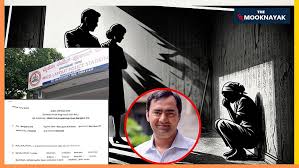
Despite five days having passed since the case was registered, the police have yet to arrest the accused couple, nor has a prestigious institute like IIM Bangalore taken any strict action against its professor despite such serious allegations. Bengaluru – The Indian Institute of Management Bangalore (IIM-B) is once again embroiled in a deep controversy. In 2024, a case was filed at the Mico Layout police station against the then Director of IIM Bangalore and seven other professors for caste discrimination against a Dalit professor, which is currently pending in the High Court. Now, a 23-year-old tribal woman from Churachandpur, Manipur, who worked as a maid in the house of another professor at the same institute, has leveled extremely serious allegations of harassment against him. In her report filed at the Mico Layout police station, the young woman stated that IIM-B professor Amar Sapra and his wife Anshu Sapra kept her hungry and thirsty, denied her adequate food, and subjected her to inhumane torture when she was unable to work due to illness. Despite more than five days having passed since the case was filed, the police have yet to arrest the accused couple, nor has the prestigious institution of IIM Bangalore taken any strict action against its professor despite such serious allegations. Amar Sapra is a faculty member in the Production and Operations Management Department at IIMB, and his wife Anshu runs a nursery school franchise on campus. The FIR lists the location of the incident as IIMB Campus, Bilekahalli. The case involves Naina (name changed), a resident of Churachandpur district in Manipur, who came to Bengaluru in 2019 through a placement agency to work as a babysitter for Professor Amar Sapra’s family. Initially, everything was normal, but gradually the atmosphere at home changed, and the campus became nothing less than a torture chamber for Naina. From 2021 onwards, the professor and his wife’s behavior deteriorated. She was forced to work from 6:30 AM until after midnight. When she fell ill, she was given no medicine or rest; she was pressured to continue working. Her mobile phone was taken away, she was forbidden from talking to her family, and she was not even allowed to leave the campus. Speaking to The Mooknayak, Naina explained that Professor Amar Sapra’s wife, Anshu, was even more brutal than his. Anshu would pull her hair, repeatedly hit her, and even slap her while she was talking to others. According to the FIR, on April 15th, at around 2:30 AM, Anshu pulled Naina’s hair and hit her several times. Naina said, “I didn’t tell anyone out of fear. They would check my phone messages and turn it off to prevent me from going out.” She last visited her home last year after her father’s death, and since then, she hasn’t been able to see her family. On May 4th, the abuse reached its peak when she suffered kidney stone pain, but instead of giving her medicine, the couple locked her in a room, starving her. Naina said she experienced severe pain due to the kidney stone. When she told Anshu, he accused her of “acting” and “creating drama.” At the time, she was on the phone with her mother. Naina said, “Anshu took my phone, my cousin called, and I asked her to speak to Madam. I don’t know what they discussed. After that, Anshu kept accusing me of lying.” Successfully saving her life, she reached the house of a professor living in the neighborhood and asked for help. Seeing Naina’s condition, he fed her, gave her shelter, and allowed her to use his phone. Naina informed her family, and in turn, informed the Kuki Students’ Organization Bangalore (KSOB). The next morning, with the help of KSOB, a complaint was filed at the Mico Layout police station. The police coordinated with the IIM-B administration, held a meeting with the institute’s board of directors, and Naina was safely evacuated. Her outstanding wages were also paid in full. After the FIR was filed on May 6, social activists and community leaders raised serious questions about the police’s actions. The police only registered the case under Section 115(2) of the Criminal Procedure Code (CrPC), i.e., voluntarily causing hurt, and Section 127(2) of the Criminal Procedure Code (CrPC), i.e., wrongful confinement. Naina reported that she was also cheated in her wages. Her contract was for ₹18,000 per month, but in April, she was paid only ₹10,000, citing that she had not worked enough days. A further ₹5,000 was claimed to have been paid to a placement agency. When Naina contacted the agency, they denied any responsibility. KSOB President Seilalmuon Haokip revealed that the agency had been quietly collecting fees from employers without Naina’s knowledge. After the FIR was filed on May 6, social activists and community leaders raised serious questions about the police’s actions. The police registered the case only under Section 115(2) of the Criminal Procedure Code (CrPC), meaning voluntarily causing hurt, and Section 127(2) of the Criminal Procedure Code (CrPC). Sections related to the Scheduled Castes and Scheduled Tribes (Prevention of Atrocities) Act (SC/ST) and harassment of women were deliberately omitted. Social organizations allege that this was not an oversight but a deliberate attempt to shield the accused from strict legal action. Police summoned the victim for spot verification On Sunday, KSOB President Haokip and Naina again went to the police station. The police informed them that a notice had been issued to the accused and that if they failed to cooperate after two notices within 10 to 15 days, they would be arrested. They also stated that a spot verification would be held on May 11th at 2 pm on the campus. Naina, the eldest of three siblings, is the sole earning member of her family and bears the responsibility of supporting her mother and younger siblings. Naina, weeping, says, “I studied until 10th grade but couldn’t take my final exams, so I don’t have a secondary certificate. I don’t know what I’ll do
Karnataka High Court directs continuation of hormone replacement therapy on two transgenders

The petitioners challenged the validity of the Transgender Persons (Protection of Rights) Amendment Act, 2026, and claimed that despite being midway through treatment, the attending doctors are unwilling to continue the prescribed course of therapy. Bengaluru: The High Court of Karnataka has directed the doctors of a private hospital in Bengaluru to continue with hormone replacement therapy (HRT) upon two transgenders as per the existing medical protocol. The petitioners challenged the validity of the Transgender Persons (Protection of Rights) Amendment Act, 2026, and claimed that despite being midway through treatment, the attending doctors are unwilling to continue the prescribed course of therapy. “The concerned doctors and medical authorities shall facilitate continuation of such treatment without interruption. The continuation of treatment shall, however, be subject to the outcome of the present writ petition and any orders that may be passed by the Supreme Court, including in any transfer proceedings initiated by the Union of India,” Justice Sachin Shankar Magadum stated in the interim order passed on Thursday. The petitioners submitted that they are transgender persons identifying as women and are aggrieved by the consequences flowing from the amended definition of “transgender person” under Section 2(k) of the 2026 Amendment Act. The petitioners claimed that they have been undergoing hormone replacement therapy (HRT) in a hospital since November 11, 2023, and have also been issued Transgender Identity Cards. They contend that denial of treatment midway, infringes their fundamental rights guaranteed under Articles 14, 15, 16, 19, and 21 of the Constitution of India. They also relied on an interim order passed by the Kerala High Court in an analogous matter, where similarly placed persons were permitted to continue the therapy and appropriate directions were issued to facilitate uninterrupted treatment. The Additional Solicitor General, appearing for the Union government, submitted that no material is placed on record to demonstrate that the authorities have initiated or proposed coercive action restraining such treatment. It was further submitted that the issue relating to the validity of the amendment is presently sub judice and before the Supreme Court. The Union government is contemplating filing an application seeking transfer of all similar petitions pending before various high courts, the court was informed. Justice Magadum noted that the medical records produced by the petitioners, prima facie, indicate that both have been undergoing the therapy since November 11, 2023. “At this stage, it cannot be disputed that abrupt discontinuation of such ongoing medical treatment may have adverse and detrimental consequences on their physical and mental well-being. It is also not in dispute that the issues raised in the present petition, including the challenge to the amended statutory provision, are engaging the attention of the Supreme Court and are likely to be authoritatively settled. In the facts and circumstances of the case, this court is of the considered view that, pending adjudication of the larger issues, limited interim protection is required to be extended to the petitioners to ensure that ongoing medical treatment is not disrupted,” the court said. Ambarish B Courtesy : DH Note: This news is originally published on https:/deccanherald.com/bha and is used purely for non-profit/non-commercial purposes, especially human rights
Dr G Parameshwara meets Hariprasad, says no leadership issue discussed
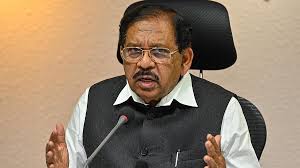
Minister BZ Zameer Ahmed Khan, another close confidant of Siddaramaiah, was also present in the meeting that lasted over 90 minutes. BENGALURU: Even as All-India Congress Committee (AICC) president Mallikarjun Kharge has clarified that the party high command has not taken any decision on change in leadership in Karnataka, the Siddaramaiah camp is continuing its efforts to project the state’s Home Minister Dr G Parameshwara as the next CM. Senior Congress MLC BK Hariprasad, a permanent invitee of the Congress Working Committee and who is said to be close to Congress Parliamentary Party chief Sonia Gandhi, seems to have entered the scene. After meeting Chief Minister Siddaramaiah on Friday evening, Hariprasad held separate confabulations with Parameshwara and asked the latter to be ready to throw his hat into the ring for the CM’s post if the party top brass decides to change the leadership, sources told The New Sunday Express. Minister BZ Zameer Ahmed Khan, another close confidant of Siddaramaiah, was also present in the meeting that lasted over 90 minutes. They chalked out a plan to pitch Parameshwara for the top post under the Dalit quota if the option of making Kharge CM and Deputy CM DK Shivakumar staking claim is ruled out. Hariprasad has information that Kharge is hesitating to take up the Chief Minister post for various reasons, sources said. Parameshwara, however, on Saturday said that the discussion among the trio revolved around the outcome of the West Bengal, Kerala and Tamil Nadu Assembly polls with a little bit of Karnataka politics. “We had a good meal together. Naturally, since we are politicians, we had to discuss politics. There is nothing to hide. Since election results will be declared on Monday, we analysed the situation. We discussed what is happening in West Bengal, Kerala, Tamil Nadu, and the status of our party there. We did not discuss state politics much,” he told reporters. On internal quota for SCs, he said the entire political dynamics has changed in Karnataka and Congress is assessing how things pan out. “For the past 25 years, we have adhered to a specific ideology. Initially, the Congress included all major, minor, and backward communities. But when the Ahinda movement began, the entire dynamics changed. We are seeing developments regarding internal reservations for SC communities and adjustments in ST percentages. Many things are currently unfolding in Karnataka, and we will see what happens next,” he added. Dr G Parameshwara Courtesy : TNIE Note: This news is originally published on https:/thenewindianexpress.com/bha and is used purely for non-profit/non-commercial purposes, especially human rights
No immediate CM change in Karnataka as Congress may stay focused on Kerala

The Siddaramaiah camp had been trying to pitch Home Minister Dr G Parameshwara as the future CM under the Dalit quota. BENGALURU: The Congress high command is likely to remain cautious with regard to a change in leadership in Karnataka, keeping in mind the 2028 assembly polls, winning which will mean first overcoming anti-incumbency. The party leadership is unlikely to accede to pressure from either of the camps headed by Chief Minister Siddaramaiah and DCM DK Shivakumar, and is likely to work out a formula based on caste combination and winnability, according to sources. The top brass, including Congress Parliamentary Party chief Sonia Gandhi and LoP in Lok Sabha Rahul Gandhi, will weigh the options, including that of maintaining status quo by keeping Siddaramaiah as the AHINDA face of the party and DK Shivakumar as KPCC president, besides sending AICC President Mallikarjuna Kharge as consensus CM candidate, sources added. The outcome of the May 4 results of five state assemblies will also have a bearing on the decision. The party high command is likely to get busy if it wins Keralam, where it appears to have an edge, and forms the UDF government. “They have to resolve the issue of the Keralam chief minister if UDF gets a majority, so dealing with Karnataka’s leadership issue will not be a priority,” a Congress leader remarked. The Siddaramaiah camp had been trying to pitch Home Minister Dr G Parameshwara as the future CM under the Dalit quota. A couple of days ago, the latter had welcomed the idea of Kharge becoming the CM, saying party leaders would accept him, given his seniority. Kharge had also clarified that the high command has not taken any decision on the Karnataka issue. “He (Kharge) has said that for now, there is a chief minister, and the question of changing him does not arise at the moment. In our party, the AICC president is the supreme authority, along with Rahul Gandhi, Sonia Gandhi and others. When word comes from the high command, we not only give respect but also accept the order,” Parameshwara told reporters on Friday, adding, “When he (Kharge) says there is no change, it is a full stop (for change in leadership).” He said that since the statement came from Kharge, it is assumed that the top brass must have held deliberations over the issue. “The decision of Kharge, Sonia and Rahul is like ‘prasada’ (sacred offering) to us which we accept,” said DCM DK Shivakumar, reiterating his unwavering loyalty to the Congress leadership. “As a Congressman, I have been very loyal to the party. Our party leaders’ words are very important. We will go by the party’s directions,” he told reporters. Devaraj B Hirehalli Courtesy : TNIE Note: This news is originally published on https:/thenewindianexpress.com/bha and is used purely for non-profit/non-commercial purposes, especially human rights
‘Why Hindu, Dalit, OBC Not Covered’: Tejasvi Surya On Karnataka’s Rs 600 Crore Minority Scheme
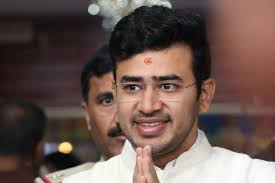
Tejasvi Surya questions Karnataka governments Rs 600 crore plan for minority colonies, alleging religious discrimination, ghettoisation, and violation of Articles 14 and 15 Questioning the Karnataka government’s decision to approve Rs 600 crore for development of minorities’ colonies, BJP MP Tejasvi Surya said, “Under which constitutional provision can public money be earmarked exclusively for “minority colonies” based on religion rather than for all poor and deprived localities based on objective socio-economic criteria?” He further went on to say, “Individuals may have a religion – but since when did roads, drains, streets, and neighbourhoods acquire a religion? On what constitutional basis is the government assigning religious identity to geographies as ‘minority colonies’ and then distributing public money accordingly? Is this not active promotion of ghettoisation on religious lines by the state?” he added. Conducted by the Election Commission of India, SIR is essentially a ground-up verification exercise to ensure that every eligible citizen is on the voter list and every ineligible or duplicate entry is removed. (Image: PTI) “How does a Rs 600 crore religion-linked package comply with Article 14 and Article 15 of the Constitution, which guarantee equality before law and prohibit discrimination by the State on grounds of religion?” Surya questioned, adding, “If the real objective is development of backward areas, why are equally poor Hindu, Dalit, SC/ST, OBC and other underdeveloped colonies not covered under the same framework instead of creating a religion-specific scheme?” Published By : Amrit Burman Courtesy : News18 Note: This news is originally published on https:/news18.com/bha and is used purely for non-profit/non-commercial purposes, especially human rights
Dalit Sena seeks action against Karnataka Minister Boseraju over land ‘encroachment’

In a letter addressed to the CM, Governor and the Forest Minister, Javeed Khan, state organisational secretary of Dalit Sena, alleged that five acres of land recorded as government/reserved forest land were recorded in the name of Boseraju’s wife. Bengaluru: The Dalit Sena has accused Science and Technology Minister N S Boseraju of ‘encroaching’ upon forest and Waqf land and has sought legal action. In a letter addressed to Chief Minister Siddaramaiah, Governor Thaawarchand Gehlot and Forest Minister Eshwar B Khandre, Javeed Khan, state organisational secretary of Dalit Sena, alleged that five acres of land recorded as government/reserved forest land were recorded in the name of Boseraju’s wife. He also alleged that at Manvi town in Raichur district, government land located in the Housing Board Colony was recorded in Boseraju’s name. Khan also noted that after public protests, the district administration and courts had directed that such lands be handed over to the government. He sought legal action against the concerned persons and requested immediate steps to safeguard public property and forest resources. Courtesy : DH Note: This news is originally published on https:/deccanherald.com/bha and is used purely for non-profit/non-commercial purposes, especially human rights