
High command to decide on leadership change or cabinet reshuffle, says Parameshwara
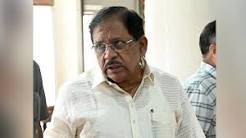
Speaking at a press conference here, G. Parameshwara said the Congress high command is aware of all developments and will take a decision shortly, which everyone will abide by. KALABURAGI: Karnataka Home Minister G. Parameshwaraon Tuesday said the Congress high command will soon take a decision on whether there will be a change of guard in the State or a cabinet reshuffle. Speaking at a press conference here, G. Parameshwara said the Congress high command is aware of all developments and will take a decision shortly, which everyone will abide by. Replying to a question on the frequent visits to New Delhi by groups aligned with Chief Minister Siddaramaiah and Deputy Chief Minister D. K. Shivakumar to meet the party high command, Parameshwara said ministers visit the national capital to hold discussions with Union ministers and senior officials of various departments regarding development works and to seek funds for their respective departments. He added that it is natural for them to meet the party high command during such visits, as Congress leaders treat the high command as their temple. “Whenever they meet the party high command, they will discuss several things, including politics. What is special in it?” he asked, adding that he is not going to Delhi as of now. On the demand to make a Dalit leader the Chief Minister of Karnataka, the Home Minister said it was the desire of the people, including Dalits. Responding to another question on whether ministers in the Siddaramaiah cabinet were lobbying for a Dalit Chief Minister, he denied the claim. On Dalit ministers meeting frequently over dinner, Parameshwara said, “Yes, we are meeting frequently for dinner and the Chief Minister Siddaramaiah has also joined the dinner meeting. Do you consider it wrong?” He added, “During dinner, we discuss many subjects, including politics. There is nothing wrong in it, and we have not asked the high command to make any one among Dalit leaders the Chief Minister. It is left to the Congress high command.” Minister for Medical Education Dr. Sharanaprakash Patil, Kalaburagi North MLA Kaneez Fatima, Kalaburagi South MLA Allamaprabhu Patil, Afzalpur MLA M. Y. Patil, and MLCs Jagadev Guttedar and Tippannappa Kamaknoor were present at the press conference. Ramakrishna Badseshi Courtesy : TNIE Note: This news is originally published on https:/thenewindianexpress.com/bha and is used purely for non-profit/non-commercial purposes, especially human rights
Karnataka: What the Revision of Internal Reservation for Scheduled Castes Means for the Community

Siddaramaiah stated that the earlier notifications issued under a scrapped 6:6:5 ratio will be withdrawn, and new notifications will be issued to start the recruitment process immediately. New Delhi: The Karnataka Cabinet on Friday (April 24) approved a revised internal reservation matrix for Scheduled Castes within the 15% quota, paving the way to resume stalled government recruitment. After a special Cabinet meeting at the Vidhana Soudha chaired by chief minister Siddaramaiah, the state government announced the sub-classification formula for 101 Scheduled Caste (SC) communities. The decision modifies the recommendations of a technical committee, formed on April 16 and headed by the chief secretary, which had initially suggested a distribution of 5.3%, 5.3% and 4.4%. The immediate implementation of this revised matrix will allow the state to begin filling 56,432 government vacancies announced in the budget. Siddaramaiah stated that the earlier notifications issued under a scrapped 6:6:5 ratio will be withdrawn, and new notifications will be issued to start the recruitment process immediately. BREAK UP: The Revised SC Quota Matrix (15% Total) Category 1 (5.25%): Dalit Left factions (Edagai), primarily consisting of Madiga and Adi Jambava allied castes. Category 2 (5.25%): Dalit Right factions (Balagai), primarily consisting of Holeya and Adi Karnataka allied castes. Category 3 (4.5%): Other SC communities, including Bhovi, Lambani, Koracha, Korama, and 59 nomadic (Alemari) groups. Historical and socio-political context The demand for internal reservation stems from historic disparities among Dalits. The most backward groups (the SC ‘left’) have long argued for better opportunities, noting that the blanket 15% quota was disproportionately availed by more dominant sections, such as the SC ‘right’. Historically, Right-hand groups were often linked to landholding and skilled occupations, while Left-hand groups were associated with marginalised work and faced greater social disadvantages. The government’s decision has come amid concerns raised by the Dalit right and “touchable” communities in Category 3, who felt the sub-classification restricted their opportunities in public education and employment. Tracing the background, Siddaramaiah noted that the move fulfils a promise made in the Congress party’s 2023 election manifesto and follows a consensus reached at a Chitradurga convention representing 101 SC communities. He added that the state had previously relied on the findings of the Justice A.J. Sadashiva Commission and the Justice H.N. Nagamohan Das Commission. While the latter’s recommendations were enacted into law, they faced implementation hurdles regarding the roster system. Legal constraints and the ‘backlog’. The state government had previously attempted to implement a 17% SC quota and a 7% Scheduled Tribe (ST) quota. However, to comply with the 50% reservation ceiling mandated by the Supreme Court in the 1992 Indra Sawhney case, the current implementation is capped at 15% and 3%, respectively. Siddaramaiah stated that the additional proposed quota (2% for SCs and 4% for STs) will be maintained as a backlog. “The 6% kept aside will remain as a backlog until the final court decision,” he said, referring to the ongoing case in the Karnataka high court regarding the state’s overall 56% reservation policy introduced by the previous government. Nomadic safeguards and roster rules Addressing concerns from the 59 nomadic communities placed in Category 3 — who had approached the Karnataka high court against the earlier sub-classification — the government stipulated that one in every five posts reserved for this category will be dedicated exclusively to them. If no candidate from a nomadic community is available, the post will revert to other groups within Category 3. Social Welfare Minister H.C. Mahadevappa clarified the roster rules to address previous administrative confusion, noting that “some people instigated and created confusion.” He stated that internal reservation requires adequate vacancies to ensure opportunities for all three categories. If the total number of SC-reserved posts in a recruitment drive is below 15, the internal sub-quotas will not apply, and the posts will be open to all SC candidates based on merit. Political unanimity The chief minister, flanked by Dalit Cabinet colleagues, stated the decision was unanimous. Ministers present included K.H. Muniyappa, G. Parameshwara, H.C. Mahadevappa, Priyank Kharge, and Satish Jarkiholi. Law and parliamentary affairs minister H.K. Patil stated that the law was framed by taking all communities and the House into confidence. The move makes Karnataka the third state, after Haryana and Telangana, to implement SC sub-quotas since the Supreme Court permitted sub-classification. Home minister G. Parameshwara noted that while Haryana, Punjab, Telangana and Andhra Pradesh have similar models, Karnataka’s case is unique due to its 101 distinct SC communities. “The Karnataka model may be emulated as we have shown how to implement it legally, politically, and administratively,” he stated. Courtesy : The Wire Note: This news is originally published on https:/thewire.in/bha and is used purely for non-profit/non-commercial purposes, especially human rights
Grievance meeting: Dalit functionaries seek action over subsidy fraud targeted at women
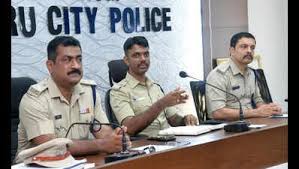
Mangaluru: Dalit functionaries have demanded action against a man accused of duping several women on the pretext of arranging bank subsidies. At the SC/ST grievance meeting held at the city police commissioner’s office on Saturday, Dalit functionary SP Anand alleged that Mohammed Ummar reportedly collected between Rs 10,000 to Rs 20,000 each from around 15-20 women in and around Pandeshwar, assuring them of subsidies. However, the women did not receive any benefits, and the accused allegedly failed to turn up on the promised date. Anand also suspected that more women could have fallen victim to the fraud. Responding to the complaint, DCP (law and order) Mithun HN directed the police station concerned to register a case and initiate action. Paurakarmika Sangha president Anil Kumar alleged that women sanitation workers who had filed a sexual harassment complaint against a Mangaluru City Corporation sanitation inspector, now absconding after an FIR, were being threatened to withdraw the case. Since he claimed that there were call recordings, the DCP directed officials to collect call recordings and register a case. Anand and Anil Kumar also alleged that a senior sanitation worker couple were paid meagre wages without any benefits. To this, DCRE Mangaluru Range SP Simon CA said the matter would be verified upon examining relevant documents and asked leaders to follow up at his office. Concerns were also raised about anti-social elements creating a nuisance in Kudkorigudde and claimed they were not allowed to put up a banner for Ambedkar Jayanti. The DCP said organisers must remove banners and flexes immediately after events and that such conditions should be included while granting permission. On the proposed Ambedkar Circle, ACP (traffic) Najma Farooqi said reports from the traffic police, NITK and MCC engineers had been submitted to the deputy commissioner. DCP (crime and traffic) K Ravishankar suggested that a Dr BR Ambedkar statue could be installed at the ‘V’-shaped junction at the end of Light House Hill Road towards Ambedkar Circle. A representative urged the police to hold grievance meetings at the community level to improve outreach. Leaders also sought justice for a deceased woman, alleging that a sub-contractor had misappropriated funds belonging to her. When a woman raised a past domestic violence incident, the DCP (law & order) directed Surathkal police to visit her house under the Police Mane Mane Beti programme. The DCP (crime) said if SC/ST-related cases are not resolved at the inspector level, leaders should approach ACPs for redressal. Courtesy : TOI Note: This news is originally published on https:/timesofindia.com/bha and is used purely for non-profit/non-commercial purposes, especially human rights
Play documenting stories of oppression showcased in Bengaluru
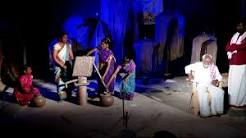
The 33-minute Kannada documentary traces the many socio-political realities faced by Dalits in contemporary India. ‘Song of Ghetto’ (Keri Haadu), directed by Chandrashekara K and produced by city-based arts collective Jangama, won the Best Documentary Award at the P K Rosy Film Festival. The festival is organised as part of the Vaanam Art Festival, an annual initiative during Dalit History Month by acclaimed filmmaker Pa Ranjith’s Neelam Cultural Centre The 33-minute Kannada documentary traces the many socio-political realities faced by Dalits in contemporary India. The film focuses on the lives of a Dalit community in Dindagur of Hassan district — their resistance against untouchability and their fight to claim their fundamental right to enter their village temple The film shows how discrimination persists — from being denied access to temples and eateries to them being barred from drinking water from public tanks, and how caste segregation seeps in like DNA, with children from privileged castes refusing to mingle with their Dalit counterparts. Even as many believe education is a way out, caste continues to shadow their lives when they return to their hometowns. There is significant evidence to show that such practices are seen across the country and not limited to Dindagur. Chandrashekara shot the entire film on his mobile phone. During a workshop conducted by Jangama in the village, he began documenting people’s stories, eventually shaping 17 hours of footage into this documentary. He aims to document more such instances of caste-based oppression across villages. Pranati A S Courtesy : DH Note: This news is originally published on https:/deccanherald.com/bha and is used purely for non-profit/non-commercial purposes, especially human rights
‘Forced to Favour Upper-Caste Accused’: Karnataka Dalit Inspector Alleges Bias in Directorate of Civil Rights Enforcement

A serious controversy has emerged within the Directorate of Civil Rights Enforcement (DCRE) in Karnataka after an inspector alleged caste-based harassment by senior officials in the department responsible for handling atrocities against SC/ST communities. Inspector T. R. Srinivas has accused senior officers of targeting him and other Dalit personnel, raising concerns about functioning and accountability within the department. Allegations of Pressure and Targeting In a letter addressed to Director General of Police Umesh Kumar and shared with the media, Srinivas claimed that he was pressured to act in favour of upper-caste accused in certain cases. In a video statement, he named DCRE Superintendent of Police Karibasangouda and Deputy Superintendent of Police Maheshwaragouda, alleging harassment and misuse of authority. “They forced me to act in favour of upper-caste accused. When I did not comply, false complaints were entertained against me and I was harassed in the name of inquiry,” Srinivas said. Claims of Fake Documents and Rule Violations Srinivas further alleged that although he was not officially relieved from his post, senior officers created “fake documents” to show that he had been relieved, which he said violated an order of the Karnataka Administrative Tribunal. He added that despite serving for 20 years without any adverse remarks, he is now being targeted. “Working for Dalits and serving in the police department itself seems to have become a mistake,” he said, expressing concern over lack of protection for Dalit officers. Appeal to Government In his video, Srinivas also alleged lack of transparency in the department and claimed that decision-making is dominated by upper-caste officials. He appealed to the state government to intervene, warning that if the situation continues, responsibility would lie with top authorities, including the Chief Minister, Home Minister, and the DGP. Narendra Modi Jhalmuri Video Shared by The Observer Post Restricted on Facebook, Instagram “Pursuant to Indian Law” Srinivas had recently been transferred from the DCRE but secured a stay on the transfer from the Karnataka Administrative Tribunal. Department Denies Allegations Meanwhile, SP Karibasangouda has denied all allegations made by Srinivas. Courtesy : TOP Note: This news is originally published on https:/theobserverpost.com/bha and is used purely for non-profit/non-commercial purposes, especially human rights
PIL seeks SIT probe into dalit man’s death in Bengaluru
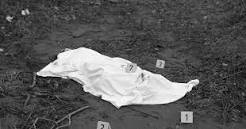
Bengaluru: The high court Wednesday issued notice to the state govt, police, and the Karnataka State Human Rights Commission in response to a public interest litigation (PIL) filed by the People’s Union for Civil Liberties–Karnataka. The petition seeks the constitution of a Special Investigation Team (SIT) to probe the death of 24-year-old Darshan, a Dalit and resident of Vivek Nagar, who died in Nov last year within the limits of Madanayakanahalli police station. He was allegedly picked up by the police on accusations of brandishing a machete to intimidate a Zomato delivery agent. The petitioner organisation contended that the incident amounted to custodial death and required investigation by SIT, arguing that the CID—currently probing the case—would not ensure justice, as no police personnel have been taken into custody so far. In addition to seeking a speedy trial, the petitioner has sought compensation of Rs 50 lakh for Darshan’s legal heirs. It has also requested directions to provide protection to his family members and witnesses in the case. Courtesy : TOI Note: This news is originally published on https:/timesofindia.com/bha and is used purely for non-profit/non-commercial purposes, especially human rights
Dalit groups protest alleged saffronisation of KSOU
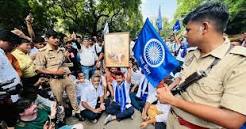
Mysuru: Several Dalit and progressive organisations held a protest in front of the Karnataka State Open University (KSOU) administrative block at Mukthagangotri in Mysuru on Wednesday, accusing the varsity administration of saffronisation of the university. They alleged that VC Sharanappa V Halse allowed the conclave to commemorate 60 years of Deendayal Upadhyaya’s lectures on ‘Ekatma Manav Darshan’ for his personal gains and urged the state govt to take stern action against him. Activists, writers and artists who gathered in front of the university shouted slogans against the VC for allowing the ‘Ekatma Manav Darshan: Bharat’s Worldview’ event, which, they claimed, was anti-democratic and anti-people. They urged the governor to sack the VC pending inquiry over various allegations against him. The agitators urged the state govt to register FIR against the VC for violating its order. BJP MLC AH Vishwanath, who met the agitators, assured them that he will raise the issue with the governor. Later, they submitted a memorandum to the governor through university registrar SK Naveen Kumar. In the memorandum, the agitators alleged that the VC is following communal policies and his decisions are affecting the functioning of the varsity. AHINDA leader Javarappa alleged that even though the KSOU is now facing acute shortage of students, there is no end to the new recruitments. “The university has become a den of corruption. There is no fear of law to those who are committing corruption,” he charged. “Several previous judicial committee investigative reports are lying idle. As a result, corrupt are carrying out misdeeds without the fear of law. There is an urgent need for action against the VC for his various controversial decisions,” he said. Courtesy : TOI Note: This news is originally published on https:/timesofindia.com/bha and is used purely for non-profit/non-commercial purposes, especially human rights
Karnataka Dy CM DK Shivakumar, Randeep Surjewala slam Centre over soaring prices, LPG shortage
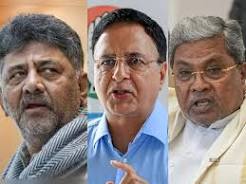
BENGALURU: Karnataka deputy chief minister DK Shivakumar and Congress state in-charge Randeep Singh Surjewala on Tuesday held a joint press conference at the Karnataka Pradesh Congress Committee headquarters, sharply criticising the Centre over soaring prices of essential commodities and alleged rollback of welfare benefits. Shivakumar said citizens are “suffering due to rising prices,” blaming government mistakes and international conflicts for straining households. He highlighted shortages in LPG supply, electricity unreliability, rising firewood dependence, and a Rs 60 hike in cylinder prices. Targeting the Centre’s Ujjwala LPG scheme, he said, “Ujjwala is gone, and they have started the firewood scheme. People now depend on firewood instead of gas. Power and railway fares have also increased.” The deputy CM accused the central government of waging a “price-rise war on ordinary people,” while presenting the Congress-led Karnataka government’s welfare measures as a counter. “Through our five guarantee schemes, we are directly supporting citizens. The Centre blames wars for inflation, but our programmes help people cope with rising costs,” he asserted. Shivakumar alleged the Modi government collected Rs 43 lakh crore in petroleum taxes over 11 years, terming it “brazen loot,” and claimed these funds contributed to high prices. In contrast, he said, Karnataka’s Congress model allocates Rs 1,18,000 crore for direct benefits to citizens. “Two models exist: Karnataka’s guarantees transfer Rs 1,18,000 crore directly to people to protect them from BJP-led inflation, while the Modi government continues to extract taxes and hike prices, looting citizens,” he said. Meanwhile, Leader of Opposition in the Lok Sabha, Rahul Gandhi, on Monday criticised Prime Minister Narendra Modi, highlighting the rupee’s fall, stock market crash, job losses, and economic hardships, calling PM Modi “compromised” in a social media post. “Rupee: Rs 95 + 100 Stocks: Crashing Economy: Collapsed Jobs: Gone Income: Falling Savings: Wiped out Cylinders: Unavailable. Why? PM Compromised,” Rahul Gandhi wrote, adding that the Prime Minister is “desperate to protect himself and his financial structure, but 140 crore Indians know India’s future has been surrendered.” Courtesy : TOI Note: This news is originally published on https:/timesofindia.com/bha and is used purely for non-profit/non-commercial purposes, especially human rights
Samiti seeks probe into SCs population data in Nagamohan Das report
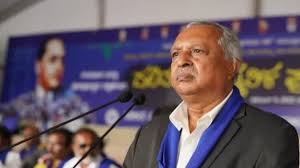
There are discrepancies in data used in the Nagamohan Das Commission report on internal reservation among Scheduled Castes, says S.R. Kollur Stating that there are discrepancies in population data used in the Nagamohan Das Commission report on internal reservation among Scheduled Castes, State coordinator of the Dalit Sangharsh Samiti (Ambedkarite) S.R. Kollur has sought a high-level inquiry to determine accurate figures of various communities coming under the Scheduled Castes. Addressing a press conference here on Monday, Mr. Kollur said that, according to the 1951 State Census, the population of the Dalit right communities was higher than that of the Dalit left communities. However, the commission’s report shows that the Dalit left population is higher, while indicating a decline in the population of Dalit right communities, he said. He said that the reported decline in the Dalit right community population over the years raises questions. He also pointed to differences in the district-wise data of the 2011 Census, particularly in Chitradurga district, where the Dalit right population has been shown to be in very low numbers. Mr. Kollur stated that several Scheduled Castes communities are seeking internal reservation based on their population and any errors in data can result in injustice. He said that higher population figures shown for the Dalit left community have given them priority in the A category, affecting the interests of the Dalit right communities and others. He urged the Siddaramaiah-led State government to order a comprehensive inquiry to determine the exact population of Scheduled Castes and to continue the recruitment process as per the earlier roster system until the issue is resolved. The Hindu Bureau Courtesy : The Hindu Note: This news is originally published on https:/thehindu.com/bha and is used purely for non-profit/non-commercial purposes, especially human rights
After 2-Year Fight, Bengaluru Dalit Couple Enter Basaveshwara Temple Under Police Protection
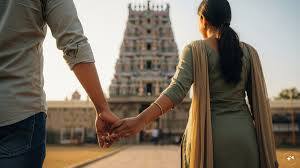
Satish and Shwetha’s ordeal began two years ago when they travelled to the temple in Hulikere village of Maddur taluk in Mandya to perform a ritual for their son When the couple raised objections at being denied temple entry, they found little support locally, with village leaders failing to intervene or ensure access. (AI Generated) When the couple raised objections at being denied temple entry, they found little support locally, with village leaders failing to intervene or ensure access. (AI Generated) After a two-year battle that took them to multiple authorities, including the Human Rights Commission, a Bengaluru-based Dalit couple were finally able to enter the Basaveshwara Temple in Mandya district this week — a reminder that caste-based discrimination in places of worship continues to persist in parts of India despite constitutional guarantees. Satish and Shwetha’s ordeal began two years ago when they travelled to the temple in Hulikere village of Maddur taluk in Mandya to perform a ritual for their son. The priest, however, allegedly denied them entry on the basis of their caste. When the couple raised objections, they found little support locally, with village leaders failing to intervene or ensure access. With no immediate resolution in sight, the couple chose to pursue legal remedies — an often long and arduous process for victims of caste discrimination. They approached multiple authorities, including the Social Welfare Department, the Human Rights Commission, the Civil Rights Enforcement Directorate, and the Mandya district police, seeking enforcement of their basic rights. India’s Constitution guarantees equality before the law under Article 14 and explicitly abolishes ‘untouchability’ under Article 17, making its practise in any form a punishable offence. Additionally, the Scheduled Castes and Scheduled Tribes (Prevention of Atrocities) Act, 1989, criminalises the denial of access to public places, including temples, on caste grounds. Despite this legal framework, incidents of Dalits being denied entry into temples or facing segregation during religious practices continue to be reported from several states, pointing to a gap between law and on-ground implementation. In this case, the couple’s persistence eventually paid off. Officials facilitated their entry into the temple this week under police protection. Accompanied by Maddur Tahsildar Parushuram Sattigeri, Satish and Shwetha were able to offer prayers — an act that should have been routine, but instead became the culmination of a prolonged fight for dignity and equal access. Satish works as a driver, while Shwetha is an accountant in a private company. Their case underscores both the resilience required to challenge entrenched social practices and the continuing need for stricter enforcement of anti-discrimination laws in India. Courtesy : News18 Note: This news is originally published on https:/news18.com/bha and is used purely for non-profit/non-commercial purposes, especially human rights